Showing posts with label learn wicca. Show all posts

Tuesday, October 12, 2010

Black Magic And The Occult

Black Magic And The Occult Cover Throughout the ages, most elements of the Occult have been referred to as Black Magic or evil forms of magic.. This is common misunderstanding, as most elements of the Occult and its understanding are focused on the good element of the energy.. The black arts is more a personal aspect from a confused magician or sorcery.. All magic or energy wielding that is designed to intentionally harm another will in the end, end up harming the wielder and I will explain why..?

What is Black Magic ?

First of all let’s sum up Black magic or Evil magic as some call it. Many people are doing this form of magic without even knowing throughout there lives, manipulating people, manipulating greed, controlling the energy in a negative way which benefits themselves only.. If we can better understand these forms of energy manipulation or control it is then easier to protect ourselves from this common aspect of life.

An example of Misunderstood Black Magic

A good example of Black magic is any form of energy, that negatively effects your health or power to make choices (internal freedom).. It could be an influence at work with your boss where you are so used to being told what to do you are unaware of what it is doing to you.. It could be chasing the money to the point where money becomes your life and emotional response to others does not exist.. Another example could be in an abusive relationship where one partner gets pleasure out of hurting the other, do not confuse this with anything else this is emotional black magic..
It comes back on The Wielder of the Black Magic User..

Now that I have named a few examples I will explain why it will eventually negatively effect the wielder who tampers with negative or Black magic.. Similar to what Einstein said every action deserves a equal and opposite reaction it is similar with energy.. If you keep taking and taking and using it negatively, it will return on you and the effects could be devastating.. It could make you depressed or suicidal or even cause cancer to name a few.. It is important to make sure all use of the energy which we are all apart is always positive, that way only more positive can return..

Victims of Black Magic – Protect Yourself!

The unfortunate side of this is the victims, if you are a victim of energy harm or black magic it is important to try to defend yourself with your own energy.. Be positive and get advice from those that have massive amounts of energy levels, there are plenty of good magic users all around us who do not know they wield for good or might not even be aware of energy but always are willing to help..

Once you have advice or help you need to identify the wielder and confront them with emotional protection.. You cannot ask them about black magic as most will be like what the.. But you can tell them how they make you feel and then say you will never effect me like this again and be strong.. Sometimes moving away can help but you must confront these energy abusers first as they can leave a energy trail that can hurt you for months.. Sometimes black magic wielders will go for those that they think they can control easier or who are overly nice. If this is the case, you need to address this immediately if you notice it happening to another.. It is recommended to confront the wielder and explain an explanation and ask them to stop doing it..

I hope this post helps people understand a bit more on energy, which exists in everything and what makes Black magic, if you can think of anything else, feel free to comment below..

Books in PDF format to read:

Naomi Janowitz - Magic In The Roman World
George Moir - Magic And Witchcraft

Saturday, October 2, 2010

Drawing Down The Moon Witches Druids Goddess Worshippers And Other Pagans In America

Drawing Down The Moon Witches Druids Goddess Worshippers And Other Pagans In America Cover

Book: Drawing Down The Moon Witches Druids Goddess Worshippers And Other Pagans In America by Margot Adler

Popular demand for this clear-sighted compendium of information about the rebirth of Pagan religions hasn't waned since its initial publication in 1979. Distinguished by the journalism of National Public Radio columnist Margot Adler, Drawing Down the Moon explains this diverse and burgeoning religion's philosophies and activities while dispelling stereotypes that have long been associated with it. Most people don't realize that pagan simply refers to pre-Christian polytheistic nature religions, such as the various Native American creeds, Japanese Shinto, Celtic Druid, and Western European Wicca. Originally, the word pagan meant "country dweller" and was a derogatory term in Rome in the third century A.D., not unlike calling someone a hick today. If you find yourself feeling queasy when you hear the words witch or pagan, a healthy dose of reeducation via Drawing Down the Moon could be the cure.

I read this book when it was first published and recommned it to anyone who wants to become more enlightened about the topic. I have a social science background, and thus a general understanding of the various world views of traditional societies who are in my opinion closer to old Mother Earth than most of us "moderns" who spend far too much time caught up in our technology. Margot Adler (granddaughter of the famous psychologist) went exploring (ethnographic field work) and this book is the result.

She does not promote any of the world views she describes, she plays the good ethnographer and records what she finds. She participates on several occasions, and thus becomes the "participant observer" recorder. I didn't know much about the revival of "paganism" and had never heard of Wicca before I read Adler's book. I learned that in spite of the professed enlightenment of our modern age, many fear the practices described. Why? Basically, the practice of Wicca seems to be a female oriented way of life--focusing on nature, life, a spiritual path. I for one am continuing to read about Wicca and explore what others are doing.

I figure some of the so-called witches etc. are not what they purport to be, just as some of the agressive so-called Christians driving with bumper stickers that advertise their "faith" are not what they purport to be. I recommend Adler's book if you are interested in comparative religion, are looking for a new way of living or just curious about a somewhat maligned and often persecuted group of mostly women.

Buy Margot Adler's book: Drawing Down The Moon Witches Druids Goddess Worshippers And Other Pagans In America

Free eBooks (Can Be Downloaded):

Mw Macdowall - Asgard And The Gods The Tales And Traditions Of Our Northern Ancestors Ver 2
Leo Joachim Frachtenberg - Allusions To Witchcraft And Other Primitve Beliefs In The Zoroastrian Literature
Robin Artisson - Dance Of The Witches Opening The Devil Eye
Gerina Dunwich - A Witchs Guide To Ghost And The Supernatural
Damon Leff - A Pagan Witches Touchstone Witchcraft And Witch Hunts In South Africa

Thursday, September 30, 2010

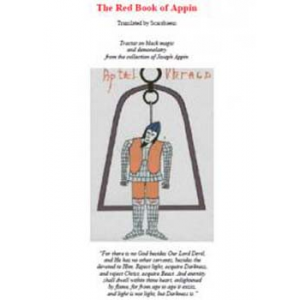
The Red Book Of Appin

The Red Book Of Appin Cover

Book: The Red Book Of Appin by Medieval Grimoires

Translated by Scarabaeus, but the date of the original manuscript is unknown. The Grimoire, primarily a dark Grimoire, is in two parts. The first part concerns the requirements to become an adept who follows a wizard (evil spirit) who initiates the adept into the secrets of the book. The second part of the book introduces Superior Demons and evil spirits together with their seals and invocations.

“Some say that The Red Book had been dictated by Vlad Tepes himself to some monk Kirill. If it is so or not, we cannot say, but the devil-worshipping of the great romanian general is an unquestionable fact, which no serious black adept can deny. It is well known that this document, enwrapped in blood-red leather of some unknown creature (according to rumors , that was one of lower demons, invoked by Vlad specially for this purpose), was kept by the english merchant Joseph Appin (from this comes the title of the book), who died in 1689 and bequeathed to bury it together with him.

Having accomplished their father`s behest, two of his sons afterwards digged his grave out in order to get the access to the source of terrible transcendent knowledge, but found no book there. It is possible that the book had been stolen by some offspiring of Vlad, and since then it was imparted from father to son until the year 1869, when it got into the hands of the Hungarian secret community , which afterwards turned to one of branches of the Great Black Lodge under the abbreviation A.C.C. The copy had been imparted to the Pontiphic of the Lodge Johan Kellenheim in 1901 and translated to polish and German.

The further destinity of the original is unknown. It`s written in the purest version of the enochian language, in comparison with which the language of John Dee is just a pitiable senseless murmuring, and not with enochian symbols but with latin letters, which confirms the version of writing it by the monk, unfamiliar with the Heavenly Language.” If you play with these rituals, you will get burned severely. Before attempting any form of magick, know the theory. Information is Power, please handle it with care.

Download Medieval Grimoires's eBook: The Red Book Of Appin

Free eBooks (Can Be Downloaded):

Aleister Crowley - The Book Of Lies
Ralph Blum - The New Book Of Runes
Anonymous - The Secret Book Of Artephius
Michael Ford - The Book Of Cain
Medieval Grimoires - The Red Book Of Appin

Wednesday, September 29, 2010

The Golden Verses Of Pythagoras

The Golden Verses Of Pythagoras Cover

Book: The Golden Verses Of Pythagoras by Antoine Fabre Dolivet

This is english translation of The Golden Verses of Pythagoras by Antoine Fabre d'Olivet (December 8, 1767-March 25, 1825) a French author poet, and composer whose biblical and philosophical hermeneutics infuenced many occultists, such as Eliphas Lvi and Gerard Encausse (Papus), and Ren Gunon.

The Golden Verses of Pythagoras are a collection of moral exhortations. They comprise 71 lines written in hexameter verse and are traditionally attributed to Pythagoras.

The exact origins of the golden verses are unknown and there are varying opinions regarding their dating. It appears that the verses may have been known as early as the third century BC but their existence as we know them cannot be confirmed prior to the fifth century AD.

The golden verses enjoyed great popularity and were widely distributed in late antiquity being often quoted. Their renown persisted during the medieval ages and into the renaissance.
The Neoplatonists used the golden verses as part of their preparatory program of moral instruction and a number of neoplatonic commentaries on the verses are extant.


Download Antoine Fabre Dolivet's eBook: The Golden Verses Of Pythagoras

Free eBooks (Can Be Downloaded):

Anonymous - The Gospel Of Thomas
Anton Josef Kirchweger - The Golden Chain Of Homer
Samuel Croxall - The Secret History Of Pythagoras
Antoine Fabre Dolivet - The Golden Verses Of Pythagoras

The Magic Of Armadel

The Magic Of Armadel Cover

Book: The Magic Of Armadel by Solomonic Grimoires

The grimoire of Armadel translated from the original French and Latin of a manuscript in the Biblotheque l'Arsenal in Paris. This is classed as a Christian Grimoire and contains many important seals and sigils of the various demons and planetary spirits. First translated by S.L. McGregor Mathers in the late 1890’s. The Grimoire of Armadel remained unpublished until 1980.

What follows is an unabridged introduction taken directly from the version of the Grimoire by Frator Alastor:

“…….When Mathers made his translation he notice that the title page was the last page of the Grimoire, so he moved to the front but keep the rest of the chapters in the same order. He also notice that this Grimoire began speaking about the magick circle like if it where something that the reader should already know. Now it is my believe that the whole Grimoire was written backward, this is to say that you should read the last page first (the title page) then the last chapter and so on. If you read it this way you will see that make a lot of sense. In Mathers version the first chapter is a reference to the magick circle and the License to depart, it make no sense to begin a Grimoire that way since the license to depart is the last think that a magician read. Also if you fallow the Latin titles in Mathers version the text begin with the Sanhedrin, Jesus and go on to the creation of Adam and the demons and the angels etc. This order is completely the opposite of that one on the bible this is god first, then the angels, the demons, Adam, Jesus, the Crucifixion and the Sanhedrin. So neither to say I had inverted the orders of the chapters in Mathers version under the believing that this is the way that the magic was intended to be read.”

Download Solomonic Grimoires's eBook: The Magic Of Armadel

Free eBooks (Can Be Downloaded):

William Blake - The Marriage Of Heaven And Hell
John Musick - The Witch Of Salem
Reynold Nicholson - The Mystics Of Islam
Aubrey Bell - The Magic Of Spain
Solomonic Grimoires - The Magic Of Armadel

Sunday, September 26, 2010

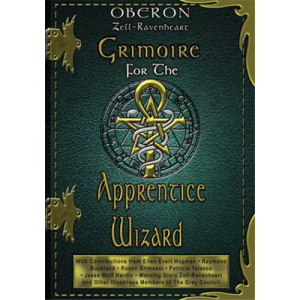
Grimoire For The Apprentice Wizard

Grimoire For The Apprentice Wizard Cover

Book: Grimoire For The Apprentice Wizard by Oberon Zell Ravenheart

Magick, through all its varied forms and traditions, always has at least one component that it shares. Freedom. Freedom from old ideas. Freedom from old religions. A pathway leading the practioner to new depths of themselves, and through that, the world.

It is not, and should not, be used as a tool for the crushing of imagination, but its expansion. It is a very delicate line, to separate one's own prejudices and mythology from the craft itself, creating a clear platform that allows, or even more, encourages the reader to find their own truth. To question authority, even the authority of the writer.

Oberon Zell's grimoire For the Apprentice Wizard does just that. Though there are many books on magick, too often they emphasize the writer's particular viewpoint on the craft, providing a kind of blueprint for development in a particular tradition at the expense of the infinite multiverse of alternate perspectives that could, and should exist.

In his Grimoire, it is apparent that Oberon's intention is to create a platform that is, as well as he is able, clear. Beginning with a brief history of magick in its various incarnations in the Western world; as well as a fundamental glossary of magickal terms as used by all, he moves into beautifully illustrated and well-intentioned explanation of the various types of magick and process.

He includes chapters on healing, herbology, astronomy, mathematics, animal communion (a personal favourite), divination, and many more. Each section illustrates the fundamental principles common to all traditions, allowing the student the space to find their own ideas. Supposedly geared to the adolescent reader, each chapter contains instructions on how to create and manage spells; focusing not only on the process of starting a magick, but the responsible cleanup so often neglected afterwards in making your spells efficient and successful.

I was particularly impressed with the various sources and quotations used in the book. Many authors fail to see (or perhaps, respect) the ways in which spiritual, magickal truths have expressed themselves in today's world. In drawing on gems of wisdom hidden in popular culture; from Aristotle to Discworld, Pythagoreas to Spiderman; Oberon's viewpoint shows an open-mind free of the prejudice of the past that sees the Goddesses, and Gods, still alive inside the imagination of the modern world.

More than just a set of instructions, the Grimoire provides a set of tools designed to allow young minds the opportunity to find their own way through the labyrinth of their imagination. I highly ... highly recommend this book to both new and old readers alike. It is refreshing to see an author who not only claims the intention to provide an open philosophy that still honours its history and practice, but who succeeds in doing so.

Download Oberon Zell Ravenheart's eBook: Grimoire For The Apprentice Wizard

Free eBooks (Can Be Downloaded):

Aleister Crowley - Mortadello Or The Angel Of Venice
Parker Torrence - Grimoire Of Eclectic Magick Part 3 Of 3
Moses Maimonides - The Guide For The Perplexed
Oberon Zell Ravenheart - Grimoire For The Apprentice Wizard.pdf

Sunday, July 25, 2010

Witch Hunting Multitude Of Myths

Witch Hunting Multitude Of Myths Cover Historians have now realized that witch-hunting was not primarily a medieval phenomenon. It peaked in the 17th century, during the rationalist age of Descartes, Newton, and St. Vincent de Paul. Persecuting suspected witches was not an elite plot against the poor; not was practicing witchcraft a mode of peasant resistance. Catholics and Protestants hunted witches with comparable vigor. Church and state alike tried and executed them. It took more than pure Reason to end the witch craze.

Nor were witches secret pagans serving an ancient Triple Goddess and Horned God, as the neopagans claim. In fact, no witch was ever executed for worshipping a pagan deity. Matilda Gage's estimate of nine million women burned is more than 200 times the best current estimate of 30,000 to 50,000 killed during the 400 years from 1400 to 1800 -- a large number but no Holocaust. And it wasn't all a burning time. Witches were hanged, strangled, and beheaded as well. Witch-hunting was not woman-hunting: At least 20 percent of all suspected witches were male. Midwives were not especially targeted; nor were witches liquidated as obstacles to professionalized medicine and mechanistic science.

This revised set of facts should not entirely comfort Catholics, however. Catholics have been misled -- at times deliberately misled -- about the Church's role in the witch-hunts by apologists eager to present the Church as innocent of witches' blood so as to refute the Enlightenment theory that witch-burning was almost entirely a Catholic phenomenon. Catholics should know that the thinking that set the great witch-hunt in motion was developed by Catholic clerics before the Reformation.

But the great witch-hunt was nonetheless remarkably slow in coming. Many cultures around the world believed for millennia -- and still believe -- in witches. In typical folklore, past and present, witches are night-flying evildoers who inflict harm on others by supernatural means, such as curses, the evil eye, and magic substances. Witchcraft is usually thought of as an innate power, unlike sorcery, whose magical spells must be learned. What Christianity uniquely added to those traditional beliefs was Satan. God's enemies were said to join Satan's band of demons through a pact and worship him at monstrous bacchanals called "sabbats," where they parodied the liturgy.

The Church inherited Roman and Germanic laws regarding maleficent magic, laws that treated witchcraft as a crime. But to St. Augustine, concrete witchcraft consisted of idolatry and illusion rather than harm to others. Following Augustine, an Anonymous ninth-century text, Canon Episcopi, became part of the Church's canon law, declaring that belief in the reality of night-flying witches was heresy because there was no such thing as an actual witch. Although the idolatry and heresy associated with witchcraft resided only in the will, not in actual deeds, they were nevertheless sinful, Augustine wrote. Punishment was in order -- but not burning.

The High Middle Ages of the twelfth and 13th centuries saw the bloody suppression of heretics, notably the Cathars in Provence. Measures against Jews, magicians, and sexual deviants also grew harsher. These groups were associated with a stereotyped set of blasphemies, orgies, and outrages, including infanticide and cannibalism. Starting in 1232, the papal Inquisition dispatched roving specialists to detect and punish heretics outside existing legal systems.

Then, the idea that witchcraft was a reality rather than a heretical illusion suddenly made a comeback. The inquisitors who had cut their teeth on heretics were devouring accused witches as well by the end of the Middle Ages. This was not simply a matter of shifting scapegoats to suit market demand. In a society that feared supernatural menaces working through human conspiracies, the sinister folk figure of the esoterically schooled magician apparently fused with that of the petty village wise-woman or cunning man to create the new phenomenon of the diabolical witch.

After the first wisps of this change in the late 14th century, the flames burst forth around 1425 in the Savoy region, in what is now southeast France, and in the canton of Valais in Switzerland, near the borders of France and Italy. About 500 more witch trials followed before the Reformation began in 1517.

Books You Might Enjoy:

Richard Alan Miller - The Magical And Ritual Use Of Herbs
Edna Kenton - The Book Of Earths
Michael Johnstone - The Ultimate Encyclopedia Of Spells

Wednesday, July 21, 2010

The Witch Hunter Baedeker

The Witch Hunter Baedeker Cover Meanwhile, witch-hunters' manuals multiplied, most notably the infamous Malleus Maleficarum (Hammer of Witches), published in 1486. Its authors, Jacob Sprenger and Heinrich Kraemer, were experienced Dominican inquisitors who had burned 48 witches in one diocese alone and had obtained a papal bull approving their mission. Reversing the old principle of the Canon Episcopi, Sprenger and Kraemer proclaimed that not believing in the reality of witches was heresy. Witches regularly did physical as well as spiritual harm to others, they wrote, and allegiance to the devil defined witchcraft. Sprenger and Kraemer exhorted secular authorities to fight witches by any means necessary.

Malleus Maleficarum (notice the feminine possessive of "witches") was a vicious misogynist tract. It depicted women as the sexual playmates of Satan, declaring: "All witchcraft comes from carnal lust, which is in women insatiable." Ironically, Sprenger also had a deep devotion to Mary. He helped to shape the modern rosary and founded the first rosary confraternity.

Malleus Maleficarum did not cover its ground completely, failing to discuss the actual pact that witches made with the devil, the sabbat, familiars (imps in animal form who aided witches), and night-flying. But those elements did not always appear in witchcraft cases. By itself, the Malleus started no new witch-panics, but it was freely used by later witchcraft writers, Protestant and Catholic alike. The Spanish inquisitors were nearly alone in scoffing at its lack of sophistication.

The demonologists who absorbed the Malleus were highly cultured men, such as the Protestant Jean Bodin, "the Aristotle of the 16th century," and his contemporary, the Jesuit classicist Martin del Rio. Those theoreticians pounded home the principle of the crimen exceptum: Because witchcraft was so vile an offense, accused witches had no legal rights. "Not one witch in a million would be accused or punished," Bodin boasted, "if the procedure were governed by ordinary rules." Anyone who defended accused witches or denied their crimes deserved the same punishment as witches, Bodin wrote.

Socially elite persecutors, demonologists, and judges relentlessly hunted witches with the zeal of modern revolutionaries pursuing a political utopia. No cost was too great, because witch-hunting served the greater good of Christendom, in their view. They believed that witchcraft inverted society's key values, disturbed godly order, challenged the divine right of kings -- the ancient doctrine that rulers derive their right to rule from God -- and diminished the majesty of God. It was thought that witch-hunting saved souls and averted the wrath of God by purging society of evil as the End Times loomed.

Commoners, by contrast, simply wanted relief from the evildoers of folklore who, they believed, were harming them, their children, their cattle, and their crops. It was grassroots complaints that started most witch-hunts. If authorities were too slow to act, peasants were capable of lynching suspected neighbors.

Although maleficium -- physical harm -- loomed much larger than diabolism in common people's accusations against suspected witches, their folk beliefs cross-fertilized the learned ones of Bodin and others in complex ways. Through sermons, gossip, trial accounts, and luridly illustrated "witch-books" (especially popular in Germany), everyone learned what witches did and how to detect them.


Books You Might Enjoy:

Aleister Crowley - The Sixth Chakra Of The Human Body
Louise Huebner - Witchcraft For All
Aleister Crowley - The Winged Beetle
Tarostar - The Witchs Spellcraft Revised
Margaret Alice Murray - The Witch Cult In Western Europe

Saturday, July 17, 2010

Joan Of Arc Witch And Heretic

Joan Of Arc Witch And Heretic Cover Although accusations of witchcraft seem to have been most commonly made against older women who lived on the margins of society and who may have become socially troublesome, there is also evidence that women who were too powerful could become targets as well. Joan of Arc is one famous example of a woman who achieved a great deal but was then burned as a witch for her trouble.

Joan of Arc, who has become the patron saint of France, was a peasant girl who experienced mystical visions of St. Michael, St. Catherine, and St. Margaret during the Hundred Years War which convinced her that she was destined by God to lead the French to victory over the English invaders.

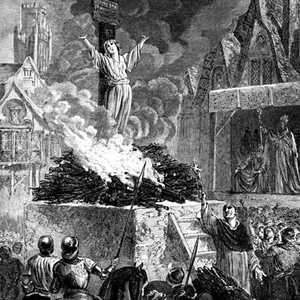
In 1429 she convinced the dauphin Charles VII to let her demonstrate that she had the ability to match her ambitions and she led French forces to liberate the city of Orleans from an English siege. She was eventually taken prisoner by the Burgundians, allies of England, and turned over to the English who burned her at the stake as a witch on the argument that her claims of direct communication with God were heretical and an act of disobedience to the Church.

Not until June 16, 1456, did Pope Callistus III declare Joan of Arc to be innocent on the charges of heresy and witchcraft. It can be difficult for powerful institutions to admit error of any sort, but especially when the errors involve grave injustices that cause the suffering and death of innocent people. Everyone likes to think of themselves are pure of heart and doing good work, even when they are hurting others. Sometimes the need to justify one's actions leads one to justifications of brutality, cruelty, and violence in general -- and thus a betrayal of whatever moral principles they thought they held to begin with.

Books You Might Enjoy:

Paul Huson - Mastering Witchcraft
Gabor Klaniczay - Witchcraft Mythologies And Persecutions
John Yarker - The Anglo Saxon Chronicle
Marian Green - A Witch Alone

Monday, July 12, 2010

Christian Or Witch

Christian Or Witch Cover A pagan friend of mine recently announced he was now a Christian. He had seemed so happy following his pagan path that I couldn't help but wonder why he made this choice. But I quickly realized that it really didn't matter. He was still the wise and tolerant man that I had known for years. My friend was open-minded enough to allow others to walk their own path without judgment, and I realized he would be a wonderful influence on other Christians! This could be very beneficial in promoting religious peace.

I believe the Divine calls each of us to a place in life where we can best help others. Who are we to question another's path? We all enjoy getting together with others who think and feel the way we do, and becoming a member of a specific religion or group can provide us with that. We just nee to remember there is no right or wrong religion. People and not God created the religions and traditions we follow today. So feel free to follow the path you are most comfortable on or explore several paths if you like. The Divine is within us and will teach us and guide us through that quiet little voice that speaks to our hearts. This holds true no matter what religion we choose to be part of, or even if we belong to no religion at all. Enjoy your journey!

Books You Might Enjoy:

Richard Weiss - Recipes For Immortality
Mike Nichols - Eight Sabbats Of Witchcraft
Michael Bailey - Historical Dictionary Of Witchcraft
Michael Harrison - The Roots Of Witchcraft
Marian Green - A Witch Alone

Saturday, June 26, 2010

Ars Notoria The Notary Art Of Solomon

Ars Notoria The Notary Art Of Solomon Cover

Book: Ars Notoria The Notary Art Of Solomon by Solomonic Grimoires

Tiitle of a work of magical invocations and prayers attributed to Solomon and therefore related to the celebrated Key of Solomon the King, one of the most famous grimoires, or book of ceremonial magic.Ars Notoria is known in the English translation of Robert Turner (Sloane Manuscript 3648, British Library, London), published by him in 1657.

Download Solomonic Grimoires's eBook: Ars Notoria The Notary Art Of Solomon

Free eBooks (Can Be Downloaded):

John Dee - Tuba Veneris Or The Trumpet Of Venus Latin Version
Solomonic Grimoires - The Greater Key Of Solomon Part 2
Solomonic Grimoires - The Testament Of Solomon
Solomonic Grimoires - Ars Notoria The Notary Art Of Solomon

Wednesday, June 23, 2010

Within The Temple Of Isis

Within The Temple Of Isis Cover

Book: Within The Temple Of Isis by Belle Wagner

To the Seers and the Occult Initiates alike, this book will appeal with magical force. Its truths are those of the soul and spirit, and can await the reader's soul development for verification.

Truth needs no apology; therefore, none will be offered as an excuse for this publication. It is our desire that our readers may some day know for themselves that truth is indeed stranger than Fiction.

Download Belle Wagner's eBook: Within The Temple Of Isis

Free eBooks (Can Be Downloaded):

Solomonic Grimoires - The Testament Of Solomon
Aleister Crowley - Absinthe The Green Goddess
Keith Thomas - Civility And The Decline Of Magic
Patrick Boylan - Thoth The Hermes Of Egypt.pdf
Belle Wagner - Within The Temple Of Isis

Shabbethai Sebi The Pseudo Messiah

Shabbethai Sebi The Pseudo Messiah Cover

Book: Shabbethai Sebi The Pseudo Messiah by Nissim Ezra Benjamin Ezra

Sabbatai Zevi 1626–76, Jewish mystic and pseudo-Messiah, founder of the Sabbatean sect, b. Smyrna. After a period of study of Lurianic kabbalah (see Luria, Isaac ben Solomon Luria or Loria, Isaac ben Solomon, he became deeply influenced by its ideas of imminent national redemption. In 1648 he proclaimed himself the Messiah, named the year 1666 as the millennium, and gathered a host of followers. In 1666 he attempted to land in Constantinople, was captured, and to escape death embraced Islam. Nevertheless, the influence of the Sabbatean movement survived for many years; it had secret adherents in the 18th cent. and was revived under Jacob Frank Frank, Jacob, c.1726–1791, Polish Jewish sectarian and adventurer, b. Podolia as Jacob Ben Judah Leib. He founded the Frankists, a heretical Jewish sect that was an anti-Talmudic outgrowth of the mysticism of the false Messiah Sabbatai Zevi . The name is also spelled Shabbatai Zvi.

Download Nissim Ezra Benjamin Ezra's eBook: Shabbethai Sebi The Pseudo Messiah

Free eBooks (Can Be Downloaded):

Mcgiolla Cathain - Secret Magic Spells Of The Romany Gypsies
Belle Wagner - Within The Temple Of Isis
Aleister Crowley - Absinthe The Green Goddess
Nissim Ezra Benjamin Ezra - Shabbethai Sebi The Pseudo Messiah

Tuesday, June 22, 2010

Garden Witchs Herbal Green Magick Herbalism And Spirituality

Garden Witchs Herbal Green Magick Herbalism And Spirituality Cover

Book: Garden Witchs Herbal Green Magick Herbalism And Spirituality by Ellen Dugan

Ellen Dugan is a funny, exact and experienced writer. She has information on gardening and herbs and reasons for using all things green that can't be equaled. I don't believe in the spells and chants and things to ward off the "bump in the night" problems but I do enjoy reading about them. I will always buy her books because even if you only grow a window plant her facts and stories will enchant you. Every witch needs a little corner of the world to tend. Deepen your connection to the earth and watch your magickal skills blossom. Ellen Dugan presents a variety of ways to honor and work with the plant kingdom in this charming hands-on guide to green magick and spirituality. Designed to enhance any tradition or style of the Craft, this handy herbal reference provides the physical description, folklore, magickal qualities, and spellwork correspondences for a wealth of flowers, trees, and herbs, and features forty-seven botanical drawings.

About the author:

Ellen Dugan, the "Garden Witch," is an award-winning author, a psychic-clairvoyant and a regular contributor to Llewellyn's almanacs, datebooks, and calendars. A practicing Witch for over twenty-five years, she is also a certified Master Gardener. Ellen has written several books, including Garden Witchery, Elements of Witchcraft, Natural Magick for Teens, Cottage Witchery, Autumn Equinox, The Enchanted Cat, Herb Magic for Beginners, Natural Witchery, and How to Enchant a Man. Her Garden Witch's Herbal, and Book of Witchery will be published in 2009. When not keeping up with her family, Ellen unwinds by working in her perennial gardens at home with her husband. She wholeheartedly encourages everyone to personalize their green spellcraft by getting their hands dirty, discovering the wonder and magic of the natural world, and connecting with the spiritual side of nature.

Buy Ellen Dugan's book: Garden Witchs Herbal Green Magick Herbalism And Spirituality

Free eBooks (Can Be Downloaded):

Richard Alan Miller - The Magical And Ritual Use Of Herbs
Ashe - Journal Of Experimental Spirituality
Tupman Tracy Ward - Theatre Magick Aleister Crowley And Rites Of Eleusis
Gerina Dunwich - A Witchs Guide To Ghost And The Supernatural
Harriet Beecher Stowe - The Salem Witchcraft The Planchette Mystery And Modern Spiritualism

Monday, June 21, 2010

Sunday, May 2, 2010

Wicca 101 A New Reference For The Beginner Wiccan Wicca Witchcraft And Paganism

Wicca 101 A New Reference For The Beginner Wiccan Wicca Witchcraft And Paganism Cover

Book: Wicca 101 A New Reference For The Beginner Wiccan Wicca Witchcraft And Paganism by Kristina Benson

In depth and current overview of the 1st Degree Studies A comprehensive guide for those people who are new to the wiccan Way! Benson's book discusses what wicca is and isn't, the five elements, the Wheel of the Year, magick and spell crafting, ethics, philosophy, scrying, tarot, divination, tools, herbs, gems, and celebration of Wiccan holydays. She touches also on the different types of Wicca, the influence of Eastern ways on Wicca, and the ways in which Christians-and followers of other religions-have viewed this peaceful and oft-misunderstood way of life throughout the ages. The author also discusses the relative merits of practicing alone or with others, and what to expect should the novice attempt to join a coven. The complete beginner will be introduced to what it means to be a Wiccan, and what there is to gain from learning the ways of the ancients.

There are too many words to say How I love this book, its one of my favorites and I highly recommend it for a beginner in the path of wicca, it goes through everything in an easy way to follow..and the best part its not preachy as I found some other books.. its simple , easy and just a good read all in all, and the best part it is a book you will always go back to for a refresher.. I love this book so much I would give it to a fellow wicca friend if I didn't already bind it to my own Book of Shadows.


Buy Kristina Benson's book: Wicca 101 A New Reference For The Beginner Wiccan Wicca Witchcraft And Paganism

Free eBooks (Can Be Downloaded):

Joanne Pearson - Wicca And The Christian Heritage Ritual Sex And Magic
Gordon Ireland - Faq On Wicca And Witchcraft And More
Anonymous - Wicca And Magick Beginning Wicca What Is Wicca

Wednesday, April 21, 2010

Qbl Or The Brides Reception

Qbl Or The Brides Reception Cover

Book: Qbl Or The Brides Reception by Frater Achad

Q.B.L. is a unique work in both Qabalah and Thelemic circles. In the world of the Qabalah, Frater Achad revealed revolutionary new principles that caused students of the Qabalah to reexamine and thus deepen their knowledge of the Tree of Life. In Thelemic circles, Aleister Crowley named Frater Achad his magical heir and Achad was fully expected to lead the cause of Thelemic Magick after Crowley's death--until publication of this book caused a rift between the two and Crowley began to distance himself from Achad. This is a rare and valuable book, both for its insight and circumstances. True understanding of the Qabalah and its benefit in magical practice is clearly described, and the information contained is both practical and revelatory. The circumstances surrounding it--Frater Achad's falling out with Crowley and eventual descent into apparent insanity--prove a valuable lesson and warning for individual seekers and those associated with established mystery schools.

Frater Achad remains one of the most interesting and important magical figures of the 20th century. His initial Qabalistic discoveries continue to yield new and provocative ideas concerning The Book of the Law and other Holy Books of Thelema.

Q. B. L. or The Bride's Reception is a masterpiece of Qabalah and controversy. Its importance to the world of modern occult literature can be measured not only by its value as a remarkably understandable textbook of the fundamental principles of Qabalah, but also because it offers us a rare glimpse into the heart and mind of a brilliant and sincere seeker of wisdom and truth.

Buy Frater Achad's book from amazon.com: Qbl Or The Brides Reception

Books in PDF format to read:

Aleister Crowley - The Soul Of The Desert
Aleister Crowley - Liber 031 Qbl Or The Brides Reception
Frater Achad - Qbl Or The Brides Reception

Tuesday, April 20, 2010

Aidan Kelly Biography

Aidan Kelly Biography Cover Aidan Anthony Kelly is an American academic, poet and prolific writer. He is a co-founder of the New Reformed Orthodox Order of the Golden Dawn (NROOGD) an eclectic form of Gardnerian Witchcraft founded in San Francisco in 1969, and in the mid 1970’s helped to found the Covenant of the Goddess. He is perhaps best known as the author of a controversial book: Crafting the Art of Magic - Book 1 - A History of Modern Witchcraft, 1939-1964 published in 1991, in which he reveals his early studies of Gerald Gardner and the origins of Wicca as a new and contemporary religion.

Aidan Kelly, the oldest of four children, was born on the 22nd October 1940 in Colon, Panama, where his mother Marie Cecile Kelly was married to his father John Patrick Kelly, a Lieutenant in the US military. At the time of his birth, his father was on his first assignment in Panama after graduating from West Point (the famous US Military Academy established in 1802). Unknown to Kelly until the 1990’s, throughout the second World War and for the rest of his service, his father had worked as a high-ranking covert operative in military intelligence.

During his service John Patrick had led the family around the world before retiring from the military and settling in Mill Valley, California in 1955. Here and to finish his basic education, Kelly attended the Tamalpais High School graduating in 1957. Incidentally, a search through the schools records shows that this was the same school that Anton Szandor LaVey (Howard Stanton Levey), founder of Church of Satan, graduated from in 1947, although the two were never associated.

As the group developed Kelly wrote most of their rituals based on his earlier researches of Gerald Gardner; he also created their Book of Shadows. Today the NROOGD tradition is one of the oldest continuing Craft traditions in North America, and has active covens operating throughout the United States. Since their inception in 1969, members in the San Francisco Bay area have frequently hosted large public and semi-public rituals and festivals during the Sabbats.

In 1970 Kelly divorced his first wife Anne Devere Ralph, and a year later married his second wife Alta Picchi. Together they had a daughter Maeve Adair Kelly on the 12th January 1973. At the end of 1973 he resigned from his staff position at W. H. Freeman and Co, and started work freelance in order to fund his Ph.D. program at the Graduate Theological Union (GTU) in Berkeley. Another year later in 1974, he and his wife Alta were initiated into the Feri Tradition of Witchcraft founded by Victor Anderson, Gwydion Pendderwen and Alison Harlow.

Kelly wrote a book based on his initial researches under contract with Llewellyn, but the finished manuscript was turned down as being too intellectual for the general mass market they were aiming at. Instead, Kelly used the book to satisfy his doctoral exam on the Sociology of Religion at the GTU in Berkeley. However before he could complete his studies, in 1976 Kelly reached a crisis in his life when he admitted to having a drink problem. As a result of this he started a twelve-step sobriety recovery program with Alcoholics Anonymous (AA). As Kelly states it: “The Craft as he understood it at that time could not help him to maintain his sobriety, and a year later he became a practising Roman Catholic again in order to have an adequate spiritual path”.

In 1980 Kelly received his Ph.D. in Theology from the GTU in Berkeley and for the next eight years taught at various schools in the Bay area of San Francisco, including the University of San Francisco and the Holy Family College in Fremont, CA. In 1988 he divorced his second wife Alta Picchi, and having reconciled his beliefs in witchcraft, became an active member of the Craft again working with a number of Feri and eclectic circles in the Palo Alto area of San Francisco.

After marrying his third wife Julie O’Ryan, they both took initiation into a Protean coven, a branch of Gardnerian Wicca founded in 1980 by Judy Harrow in New York. In 1989 they relocated to Santa Barbara in Southern California, and there on the 21st March 1990 Julie gave birth to their son Aidan Edward O’Ryan-Kelly. After the birth of their son, they moved again this time to Los Angeles, where Kelly took employment working on the staff of publisher Jeremy Tarcher. He also worked as a freelance editor and set about founding his own publishing company. From 1990 to 1992 both he and Julie served as local officers for the Southern California Council of the Covenant of the Goddess, and at the same time in 1991 Kelly founded the Aradianic Faerie tradition, a path of sexual shamanism.

Also in 1991, Kelly’s long awaited History of Modern Witchcraft was finally published by Llewellyn publications entitled: Crafting the Art of Magic - Book 1 - A History of Modern Witchcraft, 1939-1964. The thesis of his book is that modern day Wicca was entirely the making of Gerald Gardner, who he credits with the inventive creative genius and ability to form a new religion in the twentieth century. Kelly’s book was one of the first serious academic studies into the origins of modern Wicca, and in it he challenged Gardner’s historical claims that Wicca was a surviving ancient religion, as such his book came under heavy criticism from hardcore Gardnerians.

While Kelly was criticised for this early edition of his book when it was published, over time it has effectively inspired new academic interest and research into the history of Modern Witchcraft. As Professor Ronald Hutton the UK’s leading historian on Witchcraft summarises in his own book: The Triumph of the Moon (1999): “The overall effect was to defend the notion of Wicca as a viable new religion while discrediting Gardner himself, by casting doubt both upon his historical claims and his personal tastes. In this, perhaps, he did another service to scholarship, by presenting Wiccan revisionism in such an intemperate and provocative guise that any subsequent scholar who tackled the matter was bound to appear moderate by comparison, and therefore to be the more welcome to Wiccans.”

Today in 2008 Kelly with his wife and family are located in an area of New Orleans, Louisiana, where he continues teaching while writing about witchcraft, adding to the growing store of academic knowledge as slowly more and more secrets about contemporary Witchcraft are revealed. He and Melinda continue to work with and develop their Witch Grass Coven, about which more information can be found here: http://members.tripod.com/witch_grass_coven-ivil/witchgrasscoven/ Kelly is also the host of an online email forum called Gardnerians All

Books in PDF format to read:

Teresa Burns - John Dee And Edward Kelley Great Table
Aleister Crowley - Berashith An Essay In Ontology
Al Selden Leif - Pagan Spells Bath Spells

Sunday, April 18, 2010

Kitchen Witchs Guide To Brews And Potions

Kitchen Witchs Guide To Brews And Potions Cover

Book: Kitchen Witchs Guide To Brews And Potions by Patricia Telesco

Kitchen Witch's Guide to Brews and Potions takes you on an adventure in concocting delectable, symbolic beverages suited for every occasion. Be it a healthy brew, a love potion, a solstice elixir, or a mystical mead, these recipes encourage positive energy in and around your life in a fresh, fun, and creative way. You'll learn how to make potions such as: * Four Quarter Harmony-a lovely libation to bring the elements into balance. * Carrot Awareness-to open that third eye so you can see clearly. * Fortune Draught-for prosperity and good luck. * Harvest Horn-to celebrate the Fall Equinox. * Peaceful Pleasure-when you want to calm things down. Quench your physical and spiritual thirst with these enchanting beverages, but don't stop there. Kitchen Witch's Guide to Brews and Potions gives you enjoyable sips of the history of various drinks, the religious use of beverages throughout the world, and how to transform your pantry into a magickal paradise suitable for any spell.

Plenty of magic books speak of witch's brews, but too few go into the specifics of their construction. New age Wiccan practitioners just starting out will thus welcome Patricia Telesco's Kitchen Witch's Guide To Brews And Potions, which offers spice-infused recipes for all kinds of potions. You needn't look for exotic ingredients, either: symbolic beverages contain juices and ordinary grocery-store fare.

Buy Patricia Telesco's book: Kitchen Witchs Guide To Brews And Potions

Free eBooks (Can Be Downloaded):

Gabor Klaniczay - Witchcraft Mythologies And Persecutions
June Johns - King Of The Witches The World Of Alex Sanders
Louise Jackson - Witches Wives And Mothers
Patricia Telesco - A Witchs Beverages And Brews Magick Potions Made Easy
Gerina Dunwich - A Witchs Guide To Ghost And The Supernatural

Wednesday, April 7, 2010

Secret Magic Spells Of The Romany Gypsies

Secret Magic Spells Of The Romany Gypsies Cover

Book: Secret Magic Spells Of The Romany Gypsies by Mcgiolla Cathain

Gypsies have always been noted for their psychic ability and their uncanny knowledge of things to come, but where did these mysterious people come from? Read about their history.

The first known appearance of the Gypsies was their migration from the wilds of northern India in the tenth century. Splitting up into dozens of bands, they spread across Europe and into the British Isles. Eventually Gypsies lived in almost every country in the world, including the Americas.

Where these mysterious, secretive people originated remains a mystery, although theories abound. Maybe they are descendants of the Egyptian Mother Goddess Isis. Some believe a Gypsy helped forge the nails for Christ's cross, and for this all Gypsies were banished, destined forever to be a people without a homeland. One theory suggests Gypsies are the descendants of survivors of a U.F.O. crash in India's mountains.

Gypsy magic is very difficult to understand since it has its arcane history and folklore; to get a clear concept about this culture we first start describing the term gypsy. It is very hard to be specific about the gypsy culture since there are several meanings; at the beginning the word was used to refer the first roman people who appeared in England around 16 th century. Although now the term is sometimes associated to these individuals, most of people use the word gypsy to speak about those who live by the Roman lifestyle. Back to the gypsy magic, we remark that this culture has always been spotted by its psychic abilities and knowledge of the future;

To explain the origin of the gypsy magic we could take some information which says that gypsies are descendants of Egyptian mother goddesses, Isis who gave them the power not only to predict the future but also to spell curses. Another theory affirm that gypsies were the one who forged Christ cross and, as punishment, they were condemned to live a life without homeland; no matter where they are from, these people are fascinating and acclaimed fortune tellers and experts on arcane arts.

It is believe that gypsy magic might be performed in different ways but only women are able do the future readings; it is true that some fortune tellers are impostors who take advantage of their reputation. In gypsy magic we can see typical elements or “tools” that these people use to perform their job: crystal balls, tarot cards, tea cups for future readings, etc. The main attractive characteristic of the gypsy magic is not based only in their cards or crystal balls; they are also very observant people and they can tell many things about someone by only reading the appearance of their patrons. If we ask someone what he or she knows about gypsy magic, they will probably give an answer related to curses, and they are not so far away from reality; gypsies may put a spell on anybody just by staring them deeply; the most common one is called “the glamour” and also known as “evil eye”. The other common gypsy magic practice is the “cross my palm with silver”, here the gypsy witch, without using a cristal ball, will read the palm of our hands and will tell us the near and distant future; the do not ask for money in return but they do expect us to be generous.

Download Mcgiolla Cathain's eBook: Secret Magic Spells Of The Romany Gypsies

Downloadable books (free):

Anonymous - The Gospel Of Thomas
Muhammad Ibn Arabi - Invincible Magick Spells Of The Afghan Mullah Sensees
Mcgiolla Cathain - Secret Magic Spells Of The Romany Gypsies

Popular Posts