Showing posts with label witchcraft books. Show all posts

Friday, October 8, 2010

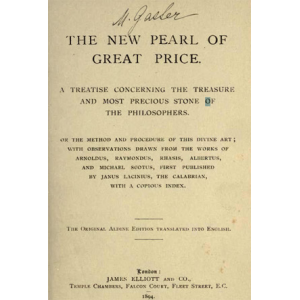
The New Pearl Of Great Price

The New Pearl Of Great Price Cover

Book: The New Pearl Of Great Price by Janus Lacinius Therapus

A treatise concerning the treasure and most precious stone of the philosophers. Or the method and procedure of this divine art ; with observations drawn from the works of Arnoldus, Raymondus, Rhasis, Albertus, and Michael Scotus (1894)

THIS work casts out cruel disease from the human body, disease produced by malignant humours ; and thus you are preserved. It will teach you how to regain the beautiful flower of youth, and how to secure a green and placid old age. All this may be yours, by the favour of the gods. Poverty will be triumphantly put to flight ; your treasure-house will be filled ; you will be able to succour the needy,
and to render the sacrifice of praise to great Jupiter.

TWO features of special interest attach to the " Pearl of Great Price," as written by Bonus of Ferrara, and edited by Janus Lacinius. In the first place, it is one of the earliest works printed on alchemy, and the original is a very beautiful specimen of typography. Concerning the latter point, it is only necessary to say that it was issued from the press of Aldus, appearing in 1546, with the privilege of Pope Paul III. and the Senate of Venice for the space of ten years. This edition is, of course, exceedingly rare, and is highly prized by collectors. In the second place, it is a very clear, methodical, and well-reasoned treatise, comparing favourably in these respects with the bulk of alchemical literature. A reader who is unacquainted with alchemy will probably not appreciate these points,
but any one who, like the present editor, has had occasion to become widely familiar with Hermetic authors, will do honour to the lucidity of Bonus.

Concerning" the adept himself, no biographical materials whatsoever are forthcoming, nor, as in most other cases, is there even a legend to fall back on. He is supposed to have been a native of Lombardy, and to have performed his alchemical labours at Pola, a maritime town of Istria, about 1330. He is sometimes described as Bonus of Ferraria,* and on this and other grounds Tiraboschi't identifies him with the "monk Ferarius".

This work attacks Lenglet du Fresnoy, the historian of alchemy, as an inexact writer, but Tiraboschi had no acquaintance whatsoever with alchemy, and does not seem to have read the Authors whom he endeavours to identify. Imaginative persons might, perhaps, be more inclined to question the equivocal name of Janus, the Calabrian Minorite Friar, and to suspect that his master Bonus was possibly his alter ego.


Download Janus Lacinius Therapus's eBook: The New Pearl Of Great Price

Free eBooks (Can Be Downloaded):

Isaac Bonewits - The Enemies Of Our Enemies
Aleister Crowley - The World Of Tarot
Ralph Blum - The New Book Of Runes
Anonymous - The Magical Library Of Harry Price
Janus Lacinius Therapus - The New Pearl Of Great Price.pdf

Sunday, October 3, 2010

Biddy Early Biography

Biddy Early Biography Cover Biddy Early was a famous Irish seer and healer, a cunning woman of the nineteenth century, often identified as Biddy 'The Healer', 'The Wise Woman' or 'The Witch'. Much of what is known about her has been passed down from oral tradition and blended into myth and folklore, as such, there is much “poetic licence” used to recount her life. However, in real life she does seem to have had some genuine powers of healing and clairvoyance, for she was widely consulted for her cures and council. Many believed she was of the sidhe (fairies).

Born Bridget Ellen Connors in lower Faha near Kilanena in 1798, Biddy was the daughter of a small land farmer, John Thomas Connors and his wife Ellen Early. Biddy is described as being small in statue and pretty, a woman who kept her good looks throughout her life. While married four times, she always used her mother's maiden name, believing that her gifts were inherited through the female line. Her mother taught her all about herbs and how to make potions, just as her own mother had taught her.

At the age of 16 when her parents died, Biddy was evicted from their home and forced to work as a serving girl in the nearby towns of Feakle and Ennis. In 1817 she met and married widower Pat Mally, a middle-aged man from Gurteenreagh, who died a short time later. After the death of her first husband, she married his son, her “stepson”, John Mally with whom she had a son called Paddy. Her son Paddy died when he was just 8 years old, of the fever (typhus), a common sickness in those times. After which Biddy started to use her healing powers, giving out herbal cures tied-up in small sachets, and liquid potions in small bottles with strict instructions for how they should be used.

Biddy’s powers of clairvoyance are credited to a mysterious dark bottle. How this “magic” bottle came into her possession, has since become part of her myth and legend. Some believe her late husband Pat Mally gave it to her before he died, or her son before he died; others believe it came to her from the “sidhe” (fairies). There are some stories that say she was away with the sidhe, and went to live among them for a time as a child. As a little girl it was said she could see and talk to the sidhe in their own language, which was different from Gaelic and that they taught her how to use her gifts.

She was instructed that by looking into the bottle with one eye and keeping the other eye open, she would be able to see what ailed people and view the future. In exchange for this ability, she was never to charge money for her services, or she would lose the power. She could accept gifts, but was to give away whatever was left over from her own needs. She must never allow others to look into the bottle, or else they would either die or go mad. By using the bottle, Biddy always knew when a person was about to visit her, and whether they had gone to a doctor or a priest first. If they had, then she usually refused to treat them unless she was in a good mood.

In 1840, her second husband died of a liver ailment, most likely due to an excess consumption of alcohol. Biddy quickly married again, her third husband was Tom Flannery from Carrowroe in County Clare. She and Tom moved into a cottage on Dromore Hill in Kilbarron, overlooking Kilbarron Lake that locally became known as Biddy Early's Lake. By this time Biddy’s reputation as a healer and seer had spread, for it was here that she created her most powerful cures, and hundreds of people came to seek her out. It is said the road to her house was always full of those traveling to see her.

Biddy also brought relief to animals, and treated them with great care. In her time, the death of an animal could bring particular hardship to people living in a mainly rural farming community. Animals were relyed upon for everyday living, and to lose one could lead to eviction if farming chores were not compelted. Many of the stories about Biddy include tales of her healing a family’s most important horse or cow. She also helped many people restore their wells, often the only source of clean water, to solve problems that women ran into while churning butter. Water and butter were also vital to a peasant’s everyday life.

During the nineteenth century, superstitious belief in fairies and all things apparently supernatural was very strong, and when something happened that appeared to be miraculous, without the aid of the church, it was commonly and easily attributed to witchcraft and the devil. As such the local church viewed Biddy with suspicion, and all the local clergy were totally opposed to her. As her fame spread they even tried to warn off people who went to visit her. One story of the churches opposition occurred in 1865. While visiting friends in Ennis, Biddy was charged with Witchcraft under the 1586 statute, however the case was dismissed due to a lack of sufficient evidence. Many of the local people stood their ground against the clergy, maintaining she did nothing but good works.

In 1868, her third husband Tom died, but Biddy now seventy years old, still only looked fifty, and a year later married her fourth husband Thomas Meaney. However he too got sick and died within the year. Many believed her husbands all died from alcohol abuse, as there was so much whiskey and other strong liquors brought to her in payment. Her husbands did not need to work as she herself provided everything through her healing work. After her last husband died, Biddy’s own health slowly deteriorated, she died in April 1874 with a rosary around her neck and her mysterious dark bottle wrapped in a red shawl beside her.

Before her death and despite their differences, Biddy had befriended one of the local priests and asked him not to let her bottle fall into the wrong hands when she died. According to her wishes, the priest took the bottle and hurled it into Kilbarron Lake. Since then, such was the belief in Biddy’s legend, many attempts to trawl the lake in search of the bottle have been made, but to this day it has never been found.

Free eBooks (Can Be Downloaded):

Michael Prescott - Darklore
Anonymous - The Legal Basis For Wicca
Janus Lacinius Therapus - The New Pearl Of Great Price.pdf

Saturday, October 2, 2010

Fairy Gold

Fairy Gold Cover

Book: Fairy Gold by Basil Crouch

Basil Crouch A.K.A. Basil LaCroix is one of those old-time great Magicians who learned by the pragmatics of worldly travels in lieu of the theoretics found in most books. Basil spent his youth in a circus amongst the main artistes who were pure Romany, all members of the Manouche Tribe who revere Sara the Black Virgin & Jacques deMolay (GrandMaster of the Templars). The leading Witchdoctor taught him many trix of Magick. He also learned many strange Spells from an Australian Aborigine Witchdoctor. In the late 1960's he masterminded 'coven-style' Occult groups consisting of 6 or 7 women, reaching very advanced stages of development, like producing actual Apports using thoughtform entities, just mindblowing stuff. His teachings excited alot of jealousy within Occult Societies who wanted this kind of thing kept secret. (from reader)

Download Basil Crouch's eBook: Fairy Gold

Free eBooks (Can Be Downloaded):

Aleister Crowley - Liber 831 Iod
Franceska De Grandis - Be A Goddess
Aleister Crowley - Gargoyles
Basil Crouch - Fairy Gold

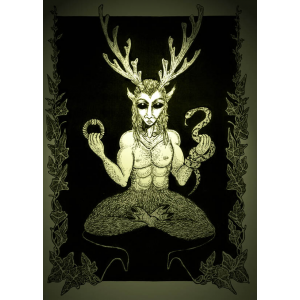
Invocation Of The Horned God

Invocation Of The Horned God Cover By the flame that burneth bright
O Horned One!

We call thy name into the night
O Horned One!

Thee we invoke by the moon led sea
By the standing stone and the twisted tree
Thee we invoke where gather thine own
By the nameless shrine forgotten and lone

Come where the round of the dance is trod
Horn and hoof of the goat-foot God
By moonlit meadow on dusky hill
When the haunted wood is hushed and still

Come to the charm of the chanted prayer
As the moon bewitches the midnight air
Evoke thy powers, that potent bide
In shining stream and secret tide

In fiery flame by starlight pale
In shadowy host that ride the gale
And by the fern-brakes fairy-haunted
Of forests wild and wood enchanted

Come! O Come!
To the heartbeats drum!

Come to us who gather below
When the broad white moon is climbing slow
Through the stars to the heavens height
We hear thy hoofs on the wind of night
As black tree branches shake and sigh
By joy and terror we know thee nigh

We speak the spell thy power unlocks
At Solstice, Sabbat, and Equinox

Word of virtue the veil to rend
From primal dawn to the wide world's end
Since time began---
The blessing of Pan!

Blessed be all in hearth and hold
Blessed in all worth more than gold
Blessed be in strength and love
Blessed be wher'er we rove

Vision fade not from our eyes
Of the pagan paradise
Past the gates of death and birth
Our inheritance of the earth

From our soul the song of spring
Fade not in our wandering

Our life with all life is one,
By blackest night or noonday sun
Eldest of gods, on thee we call
Blessing be on thy creatures all

by Doreen Valiente

Free eBooks (Can Be Downloaded):

John Ronald Tolkien - Introduction To The Elder Edda
Aleister Crowley - The Invocation Of Thoth
James Eschelman - Invocation Of Horus

Tuesday, September 28, 2010

The Pungo Witch

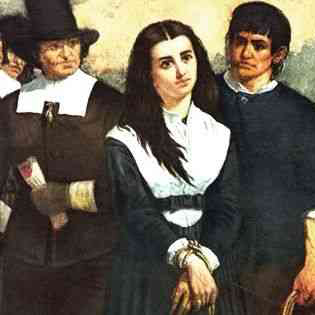
The Pungo Witch Cover The Pungo Witch, as she has come to be called, or in real life, Grace Sherwood, was accused of bewitching a neighbor's crop in 1698. Allegations of other 'witchy' things escalated over time in the Princess Anne County government. Her accusers decided to test her by 'ducking,' or, trial by water, her innocence or guilt determined by whether she floated or drowned. Drowning, by the way, was the GOOD outcome.

On July 10th, 1706 at ten o'clock, Grace Sherwood was tied by her thumbs, cross-bound and dropped into the western branch of the Lynnhaven River near what is now known as Witchduck Point in Virginia. Unfortunately for Sherwood, she floated. Guilty of being a duck? No, guilty of being a witch. She was imprisoned, and eventually released, but Sherwood lived the rest of her life quietly unvindicated, and died in 1740.

I guess they taught her a lesson, huh? Grace Sherwood was a midwife who would often wear men's clothing while working her own homestead. She went to court a dozen times to either defend herself or sue her neighbors for slander, yet never turned her back on a woman in need of her skills. She never married. Thus one can assume that then, as now, a woman who takes care of herself, a confident, competent woman, is suspect at best, ducked at worst, but always, apparently, in need of being taught to mind her place.

In 2006, she was pardoned by the Governor of Virginia, Timothy M Kaine--300 years after her ordeal. The wheels of justice sure do run slow, sometimes, but at least they turn.

Free eBooks (Can Be Downloaded):

Anonymous - The Laws For Witches
Margaret Alice Murray - The God Of The Witches
Alfred Elton Van Vogt - The Witch

Monday, September 27, 2010

Arnold Crowther Biography

Arnold Crowther Biography Cover Arnold Crowther was a skilled stage magician and ventriloquist with interests in paganism and witchcraft. He co-authored two books and a radio series on witchcraft, with his wife Patricia Crowther, and wrote numerous articles for a variety of magazines. His greatest claim to fame though comes as the connecting influence between Gerald B Gardner, and Aleister Crowley.

Born in Chatham, Kent, on the 6th October 1909, Crowther was one side of twin brothers. His mother was Scottish and his father, an optician came from Yorkshire. Crowther from an early age was fascinated with sleight-of-hand magic, ventriloquism, and puppeteering. From the age of eight he began practicing tricks and perfecting his technique in the secrecy of his bedroom. By the time he was twenty he was a professional magic act, working in cabaret, touring around the country and overseas.

His career peaked in 1938-39 when he was invited to entertain Princesses Elizabeth and Margaret at Buckingham Palace. This led him to numerous like engagements entertaining the landed gentry of England, and also into contact with many of the days leading occultists and magicians. At this time Crowther was a Freemason with interests in Buddhism, he didn’t enter the craft until very much later in 1960.

Crowther was a founder member and President of the Puppet Guild, and as a master puppeteer he made over 500 puppets during his career, mainly for use in his ventriloquism act. He also collected unusual puppets and oddities, regularly giving lectures at his Masons Hall, and to other interested societies, on curios from around the world.

Before the start of World War II, Crowther met Gerald Gardner and his wife Donna after they had been to view one of his lectures on curios. He and Gardner became good friends, sharing many similar interests. Crowther soon became a frequent visitor at the Gardner’s London flat, and from there they would venture out together and browse the many antique stalls at the nearby Caledonian Market. Rubbing shoulders with Gardner, Crowther soon became interested in the craft, however Gardner’s coven was still wary of adverse publicity. They felt that Crowther might use craft information in his act, and refused to accept him. Gardner predicted that “a very special person with fair hair” would initiate him when the time was right.

During the war years Crowther joined the Forces Entertainment’s Corps, and entertained troops all over Europe with his show “Black Magic”, the show also included an African Basuto choir. Crowther would perform where and whenever he was required, like on the 10th November 1943 while en-route from Tripoli to Malta, he performed aboard a DC 3 airplane flying at 4,000 feet.

For a time during the war Crowther was stationed in Paris, and there he first learned of his past life as a Tibetan beggar monk. He and an officer went to visit palmist, “Madame Brux”, who invited them to a seance. After introductions the medium went into a trance and began to communicate with a masculine spirit. The spirit claimed to have been Crowthers teacher in a previous life, and was his guide in this present one. The spirit reported that Crowther had been a student in a Tibetan lamasery, he mentioned the name “Younghusband” and that he had been killed in a battle. “Your possessions will be returned to you,” said the medium, and an object fell onto the seance table. It was a Tibetan prayer wheel inscribed with “OM MA NI PAD ME HUNG” (Translation)

After the war had ended other Tibetan objects came into his possession, they included: a butter lamp, a trumpet made from a human thighbone, a drum made of a human skull, and a small rattle hand-drum. An expert explained to Crowther that the “Zi-jed-pa” (The Mild Doer), a homeless medicant class of Yogi regarded as saints, used such items. They believed they would attain Nirvana after death and not have to be reborn again.

That being so, why then had he been reincarnated as Crowther he reasoned? The expert explained that if he, as the monk, had killed someone, then he would have to be reincarnated to balance the karma. Later at an exhibition of Tibetan curios in London, Crowther discovered that a Colonel “Younghusband” had led a military attack against Tibet in 1904. During the attack “Younghusband” had killed another soldier, before he himself was killed.

Crowther returned to the public stage after the war, and continued to tour about the country. During his travels he met and made the acquaintance of Aleister Crowley. It wasn’t long before he introduced his friend Gardner to Crowley on the 1st May 1947. An entry in Crowther’s dairy for that date reads: “Dr. G.B.Gardner Ph.D. Singapore and aleister crowley Prof, a magician, came to tea…”

In 1958 while travelling to perform on the Isle of White, Crowther met a lady “with fair hair”, Patricia Dawson. She was performing in the same show as he, and they soon discovered a mutual interest in witchcraft. Crowther offered to introduce her to his friend Gardner. Over the following two years and after regularly meeting with him, Gardner initiated Patricia on the 6th June 1960 at his home in Castletown, Isle of Man. Patricia in turn initiated Crowther, and the prediction Gardner had made to Crowther many years earlier, came true.

Later that same year on the 8th November 1960, Arnold Crowther and Patricia Dawson where married in a private handfasting ceremony, officiated by Gerald Gardner. The following day on the 9th November they married again in a civil ceremony, this attracted the attention of the media and was heavily publicized. The Crowthers settled in Sheffield and used the media publicity to spread the word about witchcraft, and started many new covens throughout the country.

Crowther passed into the next world on the 1st May 1974. “Or did he”? If from his past life as “Colonel Younghusband”, he revisited as “Arnold Crowther”, has not his karma been corrected? One wonders if he has finally achieved Nirvana?

In addition to his collaborated works with his wife Patricia, Crowther’s other published credits include: “Let’s Put On A Show” (1964), a book of “how-to-do” magic, illustrated by himself. “Linda and the Lollipop Man” (1973), a road safety book for children, and “Hex Certificate” (Late 1970’s), a collection of cartoons he drew on witchcraft themes. His autobiography “Hand in Glove”, has not been published, but was serialized on BBC Radio in Bristol, Sheffield, Medway and Leeds between 1975 and 1977.

Free eBooks (Can Be Downloaded):

Reformed Druids - Anthology 06 The Green Books
Aleister Crowley - Ahab And Other Poems
Anthony Arndt - Asatru The Northern Way
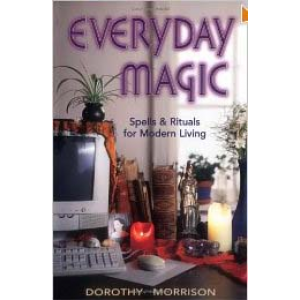
Everyday Magic Spells And Rituals For Modern Living

Everyday Magic Spells And Rituals For Modern Living Cover

Book: Everyday Magic Spells And Rituals For Modern Living by Dorothy Morrison

Is it time for a change? Is it time to improve your life with a better job, a happier home, or more romance? Then you need Everyday Magic by Dorothy Morrison! This is magic for modern Wiccans, and for everyone regardless of their religious affiliation. It is filled with hundreds of spells, chants, rituals, charms and formulas for incenses and oils. Every one is tested and powerful yet easy to use.

Everyday Magic is a well written book and it fit into my everyday living just as if it had been written for me personally. The modern day methods of dealing with the "old ways" of the craft amazed me. To go to a thrift store and pick up a cheap blender instead of trying to do so many herbal blends with the mortar. I was so mermerized with so many of Dorothy's modern gimmicks. Being able to improvise has always been big with me, Dorothy seems to do the same in her book.

Sure, there are spells for romance and prosperity. Those are as important today as they were a thousand years ago. But this book also presents magic that deals with today's problems. Speed up your computer's modem. Make sure your luggage arrives safely; ease labor pains; free yourself from anger; find a parking spot. These are all things we need and that you can do by following the simple instructions in this book!

One of the roadblocks to successful magical workings that many people face is finding the proper oils and incenses. Morrison's solution: Make them yourself! But don't use the old techniques that take hours, days, or even weeks to accomplish. Instead, you'll learn how to use common appliances such as a drip coffee maker, a blender, and a crock pot to create your own powerful incenses, oils, washes, brews, and more. What a practical timesaver!

And saving time in today's world is what this book is all about. Of course, if the spells, charms, rituals and techniques weren't practical and effective, saving time would be meaningless. Well, what you'll learn here is powerful -- and is presented by a woman who has been a Witch for more than 20 years and taught on two continents!

Dorothy Morrison has a daring point of view that magic is not just compatible with technology--the two can actually help one another. Since technology has made our lives more productive, surely it can enhance our magic too. (Have you ever thought of making your herbal infusions in an automatic-drip coffeemaker?) Technological assistance with magic is only part of the story. Morrison has filled a grimoire with charms that protect from car trouble and ensure the safe and timely arrival of luggage while traveling, and spells to keep a computer from crashing, which makes life in the 20th century a little less harrowing. Rather than fighting the progress of the electronic age, Morrison has tapped into the wealth it has to offer, and she shares her discoveries with anyone adventurous enough to try them.

The spells and rituals in here are all based on today's available materials. Trying to find something called dragon's blood was not easy for me. In this book, Dorothy makes it all so simple and still so effective. Spells of interest to the modern twentieth century housemate and businessperson. Spells and rituals that make so much sense and are so easily adaptable for my and others active lives.

I recommend, as I have many times, reading this book. I have read many and find this one to my liking on a high rating of "Way to go, Dorothy Morrison"
Excellent book and will keep an eye and ear open of reports of others from D. Morrison. Age, gender, and type of path are not even a stoppage point here. For all and then some.

Buy Dorothy Morrison's book: Everyday Magic Spells And Rituals For Modern Living

Free eBooks (Can Be Downloaded):

Kveldulf Gundarsson - Teutonic Magic The Magical And Spiritual Practices Of The Germanic Peoples
Tupman Tracy Ward - Theatre Magick Aleister Crowley And Rites Of Eleusis
Richard Alan Miller - The Magical And Ritual Use Of Herbs
Talismagick - Love Spells And Rituals For Love And Relationships

Sunday, September 26, 2010

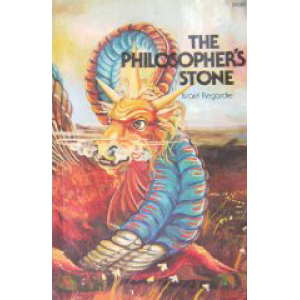
The Philosophers Stone

The Philosophers Stone Cover

Book: The Philosophers Stone by Israel Regardie

My book has been praised as a good meaningful book by some reviewers and by many readers, to judge from the mail I have received during the past thirty years. It is patently an open sesame to one level of interpretation. The Occult Review, now defunct, published a critical review by Archibald Cockren who took me rather severely to task for asserting that alchemical texts should be interpreted solely in terms of psychological and mystical terms. He himself, I subsequently discovered, had written a book Alchemy Rediscovered and Restored. Of course I immediately procured a copy. Since I was peeved by his review, I did not feel that his book had very much to offer—so I dismissed both offhand. I was about to write the editor of The Occult Review a scorching letter, but reason intervened so that fortunately it never got written.

The opportunity is rarely given to an author in his lifetime “to eat crow” and to enjoy it. This lot, it pleases me to say, is mine—after thirty years. Not that I would significantly change much of what I wrote then. I admitted that I had not “proceeded to the praxis” but I felt then and still do that a mystical and psychological interpretation of some alchemical texts was legitimate. There is unequivocally this aspect of the subject. Certainly Jacob Boehme and Henry Khunrath, for example, cannot be interpreted except in these terms.

The Philosophers Stone with these preliminary comments, should answer a wide-felt need which has called forth this new edition. I hope, being in print once more, it will bring new light and knowledge and values to present-day students who may be still groping in the dark areas of the occult towards alchemy, where a guiding hand needs to be extended.
So, to close this Introduction, I must use the ancient Rosicrucian greeting, and the close of a Golden Dawn ritual:
May what we have partaken here sustain us in our search for the Quintessence; the Stone of the Philosophers, True Wisdom and perfect Happiness, the Summum Bonum.


Download Israel Regardie's eBook: The Philosophers Stone

Free eBooks (Can Be Downloaded):

Yogi Ramacharaka - Yogi Philosophy
Louis Claude De Saint Martin - Theosophic Correspondence
Andrew Lang - The Witch And Other Stories
John Mitchell - The Philosophy Of Witchcraft
Israel Regardie - The Philosophers Stone

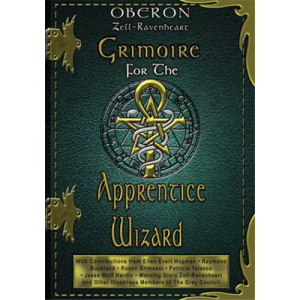
Grimoire For The Apprentice Wizard

Grimoire For The Apprentice Wizard Cover

Book: Grimoire For The Apprentice Wizard by Oberon Zell Ravenheart

Magick, through all its varied forms and traditions, always has at least one component that it shares. Freedom. Freedom from old ideas. Freedom from old religions. A pathway leading the practioner to new depths of themselves, and through that, the world.

It is not, and should not, be used as a tool for the crushing of imagination, but its expansion. It is a very delicate line, to separate one's own prejudices and mythology from the craft itself, creating a clear platform that allows, or even more, encourages the reader to find their own truth. To question authority, even the authority of the writer.

Oberon Zell's grimoire For the Apprentice Wizard does just that. Though there are many books on magick, too often they emphasize the writer's particular viewpoint on the craft, providing a kind of blueprint for development in a particular tradition at the expense of the infinite multiverse of alternate perspectives that could, and should exist.

In his Grimoire, it is apparent that Oberon's intention is to create a platform that is, as well as he is able, clear. Beginning with a brief history of magick in its various incarnations in the Western world; as well as a fundamental glossary of magickal terms as used by all, he moves into beautifully illustrated and well-intentioned explanation of the various types of magick and process.

He includes chapters on healing, herbology, astronomy, mathematics, animal communion (a personal favourite), divination, and many more. Each section illustrates the fundamental principles common to all traditions, allowing the student the space to find their own ideas. Supposedly geared to the adolescent reader, each chapter contains instructions on how to create and manage spells; focusing not only on the process of starting a magick, but the responsible cleanup so often neglected afterwards in making your spells efficient and successful.

I was particularly impressed with the various sources and quotations used in the book. Many authors fail to see (or perhaps, respect) the ways in which spiritual, magickal truths have expressed themselves in today's world. In drawing on gems of wisdom hidden in popular culture; from Aristotle to Discworld, Pythagoreas to Spiderman; Oberon's viewpoint shows an open-mind free of the prejudice of the past that sees the Goddesses, and Gods, still alive inside the imagination of the modern world.

More than just a set of instructions, the Grimoire provides a set of tools designed to allow young minds the opportunity to find their own way through the labyrinth of their imagination. I highly ... highly recommend this book to both new and old readers alike. It is refreshing to see an author who not only claims the intention to provide an open philosophy that still honours its history and practice, but who succeeds in doing so.

Download Oberon Zell Ravenheart's eBook: Grimoire For The Apprentice Wizard

Free eBooks (Can Be Downloaded):

Aleister Crowley - Mortadello Or The Angel Of Venice
Parker Torrence - Grimoire Of Eclectic Magick Part 3 Of 3
Moses Maimonides - The Guide For The Perplexed
Oberon Zell Ravenheart - Grimoire For The Apprentice Wizard.pdf

Monday, August 2, 2010

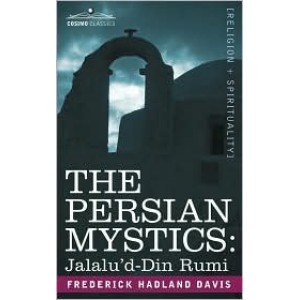
The Persian Mystics Jalaluddin Rumi

The Persian Mystics Jalaluddin Rumi Cover

Book: The Persian Mystics Jalaluddin Rumi by Frederick Hadland Davis

Rumi (1207-1273) was a Persian jurist and theologian best known for being perhaps the finest of all Sufi poets. His writings have been widely translated and remain especially popular in Iran, Afghanistan, and Tajikistan. Though written from a Sufi perspective, Rumi's poems on spiritual growth-here collected and edited by F. Hadland Davis and first published in 1907-cross all cultural and Religious bounds, and can still be heard today in many secular and religious settings.

The Persian Mystics: Jalalu'd-din Rumi includes selections from some of Rumi's most famous works, the "Divani Shamsi Tabriz" and the "Masnavi," as well as passages on his life and work, and the origin and nature of Sufism.

Download Frederick Hadland Davis's eBook: The Persian Mystics Jalaluddin Rumi

Free eBooks (Can Be Downloaded):

Reynold Nicholson - The Mystics Of Islam
Frederick Hadland Davis - The Persian Mystics Jami
Frederick Hadland Davis - The Persian Mystics Jalaluddin Rumi

Sunday, July 25, 2010

Witch Hunting Multitude Of Myths

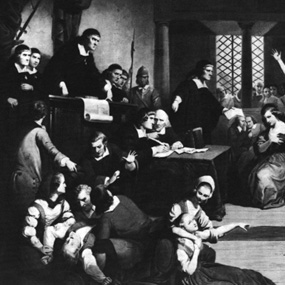
Witch Hunting Multitude Of Myths Cover Historians have now realized that witch-hunting was not primarily a medieval phenomenon. It peaked in the 17th century, during the rationalist age of Descartes, Newton, and St. Vincent de Paul. Persecuting suspected witches was not an elite plot against the poor; not was practicing witchcraft a mode of peasant resistance. Catholics and Protestants hunted witches with comparable vigor. Church and state alike tried and executed them. It took more than pure Reason to end the witch craze.

Nor were witches secret pagans serving an ancient Triple Goddess and Horned God, as the neopagans claim. In fact, no witch was ever executed for worshipping a pagan deity. Matilda Gage's estimate of nine million women burned is more than 200 times the best current estimate of 30,000 to 50,000 killed during the 400 years from 1400 to 1800 -- a large number but no Holocaust. And it wasn't all a burning time. Witches were hanged, strangled, and beheaded as well. Witch-hunting was not woman-hunting: At least 20 percent of all suspected witches were male. Midwives were not especially targeted; nor were witches liquidated as obstacles to professionalized medicine and mechanistic science.

This revised set of facts should not entirely comfort Catholics, however. Catholics have been misled -- at times deliberately misled -- about the Church's role in the witch-hunts by apologists eager to present the Church as innocent of witches' blood so as to refute the Enlightenment theory that witch-burning was almost entirely a Catholic phenomenon. Catholics should know that the thinking that set the great witch-hunt in motion was developed by Catholic clerics before the Reformation.

But the great witch-hunt was nonetheless remarkably slow in coming. Many cultures around the world believed for millennia -- and still believe -- in witches. In typical folklore, past and present, witches are night-flying evildoers who inflict harm on others by supernatural means, such as curses, the evil eye, and magic substances. Witchcraft is usually thought of as an innate power, unlike sorcery, whose magical spells must be learned. What Christianity uniquely added to those traditional beliefs was Satan. God's enemies were said to join Satan's band of demons through a pact and worship him at monstrous bacchanals called "sabbats," where they parodied the liturgy.

The Church inherited Roman and Germanic laws regarding maleficent magic, laws that treated witchcraft as a crime. But to St. Augustine, concrete witchcraft consisted of idolatry and illusion rather than harm to others. Following Augustine, an Anonymous ninth-century text, Canon Episcopi, became part of the Church's canon law, declaring that belief in the reality of night-flying witches was heresy because there was no such thing as an actual witch. Although the idolatry and heresy associated with witchcraft resided only in the will, not in actual deeds, they were nevertheless sinful, Augustine wrote. Punishment was in order -- but not burning.

The High Middle Ages of the twelfth and 13th centuries saw the bloody suppression of heretics, notably the Cathars in Provence. Measures against Jews, magicians, and sexual deviants also grew harsher. These groups were associated with a stereotyped set of blasphemies, orgies, and outrages, including infanticide and cannibalism. Starting in 1232, the papal Inquisition dispatched roving specialists to detect and punish heretics outside existing legal systems.

Then, the idea that witchcraft was a reality rather than a heretical illusion suddenly made a comeback. The inquisitors who had cut their teeth on heretics were devouring accused witches as well by the end of the Middle Ages. This was not simply a matter of shifting scapegoats to suit market demand. In a society that feared supernatural menaces working through human conspiracies, the sinister folk figure of the esoterically schooled magician apparently fused with that of the petty village wise-woman or cunning man to create the new phenomenon of the diabolical witch.

After the first wisps of this change in the late 14th century, the flames burst forth around 1425 in the Savoy region, in what is now southeast France, and in the canton of Valais in Switzerland, near the borders of France and Italy. About 500 more witch trials followed before the Reformation began in 1517.

Books You Might Enjoy:

Richard Alan Miller - The Magical And Ritual Use Of Herbs
Edna Kenton - The Book Of Earths
Michael Johnstone - The Ultimate Encyclopedia Of Spells

Saturday, July 24, 2010

Who Is A Witch

Who Is A Witch Cover The origin of the word witch predates the Anglo-Saxon period. Etymologically, the word has been derived from an Old English masculine noun wicca, the feminine being wicce. The word ‘wicker’ in old German also stood for a soothsayer. A soothsayer is a fortune-teller or psychic.

In routine usage, a witch is a feminine noun for wizard or sorcerer, but the former has different functional connotations from its masculine counterpart. While a wizard or a sorcerer may have some element of manipulativeness in their craft, a witch, though a practitioner of witchcraft, is far from being a crafty person. A witch is essentially a very noble and deeply religious person whose purity of heart combined with spiritual and meditation practices bestow her with a deeply religious and mysterious aura. A witch does not act with any ulterior motives, not to mention any machinations in her pursuits. A witch is a very compassionate person, gifted with supernatural powers and works for the alleviation of pain and suffering of her fellow human beings and brings them the much needed solace and succor.

A highly misunderstood, deeply suspected, much maligned and doggedly hounded person especially during the middle ages, a witch has regained lost ground and has acquired a respectable position in the society. Colloquially, the term witch, applied most often to a female, also includes male practitioners of witchcraft, especially Wicca. Witches believe in certain ethical codes and strictly adhere to them.

A witch engaged in her witchcraft practices spells developed by worshiping many deities primarily the supreme Goddess and sometimes her consort the God. The craft or workings of a witch are used for healing the acute health problems. For curing these problems, she uses the personal powers in combination with energies within candles, stones, herbs and other natural items. Witch practices witchcraft to help better the world and mankind. A witch certainly is not ugly, nefarious, dreadful hag who worships the devil or hurts the people as the stereotype image presents her to be.

A witch derives her strength from Paganism, which is influenced by ancient, primarily pre-Christian and sometimes pre-Judaic religion. A witch has deep faith in the elements of Nature such as earth, fire, nature, air, and water. Fire cleanses and has an aura that transports her into the astral world and enables her to view this world with psychic clarity. Water purifies.connects with the Goddess herself. The air is an all-enveloping blanket of gods. It wraps around the witch and lifts her to the divine immenseness and freedom of the skies. The spirit of the witch gets united with the air and floats freely in the sky. The witch achieves this uplifted state through meditation, perseverance and sometimes she is blissfully born with these talents.

A witch is just as ordinary looking person as any one in your neighborhood. She can be a housewife with kids doing her daily domestic chores. She too has her share of emotions, but they function more at a macro level than at personal. So if she is feeling sad, the sadness is not just due to some personal vested interest, but it is born out of the suffering of the world around her. Another difference between a witch and an ordinary woman is that a witch can commune with her goddess. The commune is just meant to bare her soul reaching a complete state of oneness. A witch may even cry before the alter of her goddess whenever she feels a spiritual vacuum and wants to replenish it with godliness.

A witch performs her craft using many rituals such as worshiping alone or in covens in the alter room. She lights candles, incense, chants incantations and worships her deities or goddesses. She meditates while staring into the candle flames and in the course of meditation, she feels her spirit leaving her body and enters into trance. A witch gets lost in the awesome power of the Fire with her mind dancing with the flames of the candles. Insightful images deluge her head and become a permanent part of her psyche.

Witches also practice necromancy and summon spirits of the dead to gain knowledge of the future events from them. These spirits are called Operative Spirits or the Spirits of divination.

Books You Might Enjoy:

Michael Bailey - Historical Dictionary Of Witchcraft
Howard Phillips Lovecraft - Cults Of Cthulhu
Mike Nichols - Eight Sabbats Of Witchcraft
Louise Huebner - Witchcraft For All
Paul Huson - Mastering Witchcraft

Friday, July 23, 2010

Hubble Bubble Pardoned From Trouble

Hubble Bubble Pardoned From Trouble Cover It's Halloween and, consequently, one of my favorite days of the year. There are some things that have become inexorably linked to this holiday: candy, costumes, watching It's the Great Pumpkin Charlie Brown and, of course, witches.

Modern culture has really taken the witch in interesting places. From the evil Wicked Witch of the West in the original Wizard of Oz to the Not-Really-Wicked-But-Misunderstood Witch of the West Elphaba in the book and play Wicked, it is clear that witches can take on any number of personas. Today, witches can be good, bad, cutesy, goofy, and cunning. But not so long ago, the term "witch" was not taken so lightly.

Here at the Museum of Jewish Heritage, we often talk about scapegoating. If one looks at the history of the witch, this term comes to the fore pretty quickly. In Europe, between approximately 1480 and 1700, between 40,000 and 100,000 women and men were put to death on the charge of witchcraft. Accusations often arose as a result of an unexplained natural phenomenon--such as a failed crop or sick livestock-- or simply out of the malicious desire to seek revenge on another person.

Today, campaigners will petition Justice Secretary Jack Straw to posthumously pardon the 2,400 women and men wrongfully put to death for witchcraft in England and Scotland before the Witchcraft Act put an end to the practice in 1735. (Read full article here.) These campaigners follow the example of Swiss groups who successfully urged the government to pardon Anna Goeldi, the last woman in Europe on record to be put to death for witchcraft in 1782. While such pardons are, of course, entirely symbolic, I think this gesture is an important one. Not only does it officially clear the names of innocent victims, but makes a stand against scapegoating and lets everyone know that this injustice has no place in today's society.

Books You Might Enjoy:

John White - Toward Homo Noeticus
Ea Wallis Budge - Egyptian Ideas Of The Future Life
Aleister Crowley - Songs For Italy

Thursday, July 22, 2010

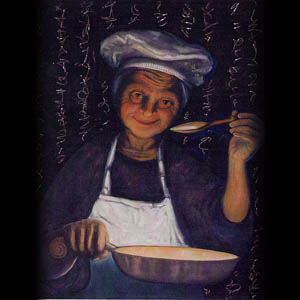
What Is A Kitchen Witch

What Is A Kitchen Witch Cover What is Kitchen Witchery?:

There's a growing movement within modern paganism known as kitchen witchery. The kitchen is, after all, the heart and hearth of many modern households. When you have a gathering in your home, where do most of your guests hang out? Why, the kitchen, of course! Also, thanks to a declining economy, many more people are making meals from scratch and the kitchen has once again become a place where people spend hours, rather than minutes. So it's no surprise that kitchen witchery has seen a rise in popularity.
Meal Prep as Magic:

When you take the time to put meals together from the basic ingredients, you have a magical opportunity at hand. You can infuse every dish with intent and will. A meal can stop being something you dump out of a can, and start being a ritual in and of itself. When you take time to prepare something with your own hands, that lends it sacredness, and will make you want to spend time savoring it with your family, rather than just snarfing it down on your way out the door to soccer practice. By changing the way you view food, its preparation and its consumption, you can craft some practical magic at its simplest level.

Books You Might Enjoy:

Tarostar - The Witchs Spellcraft Revised
Aj Drew - A Wiccan Bible
Michael Harrison - The Roots Of Witchcraft

The Witch Hunts Of Early Modern Europe

The Witch Hunts Of Early Modern Europe Cover For three centuries of early modern European history, diverse societies were consumed by a panic over alleged witches in their midst. Witch-hunts, especially in Central Europe, resulted in the trial, torture, and execution of tens of thousands of victims, about three-quarters of whom were women. Arguably, neither before nor since have adult European women been selectively targeted for such largescale atrocities.

The witch-hunts of early modern Europe took place against a backdrop of rapid social, economic, and religious transformation. As we will see in the modern-day case-studies below, such generalized stress -- including the prevalence of epidemics and natural disasters -- is nearly always central to outbreaks of mass hysteria of this type. Jenny Gibbons' analysis ties the witch-hunts to other "panics" in early modern Europe:

Traditional [tolerant] attitudes towards witchcraft began to change in the 14th century, at the very end of the Middle Ages. ... Early 14th century central Europe was seized by a series of rumor-panics. Some malign conspiracy (Jews and lepers, Moslems, or Jews and witches) was attempting to destroy the Christian kingdoms through magick and poison. After the terrible devastation caused by the Black Death [bubonic plague] (1347-1349), these rumors increased in intensity and focused primarily on witches and "plague-spreaders." Witchcraft cases increased slowly but steadily from the 14th-15th century. The first mass trials appeared in the 15th century. At the beginning of the 16th century, as the first shock-waves from the Reformation hit, the number of witch trials actually dropped. Then, around 1550, the persecution skyrocketed. What we think of as "the Burning Times" -- the crazes, panics, and mass hysteria -- largely occurred in one century, from 1550-1650. In the 17th century, the Great Hunt passed nearly as suddenly as it had arisen. Trials dropped sharply after 1650 and disappeared completely by the end of the 18th century. (Gibbons, "Recent Developments in the Study of the Great European Witch Hunt".)

Gibbons' allusion to the Reformation reminds us that the clash between institutional Catholicism and emergent Protestantism contributed to the collapse of a stable world-view, which eventually led to panic and hyper-suspiciousness on the part of Catholic and Protestant authorities alike. Writes Nachman Ben-Yehuda, "This helps us understand why only the most rapidly developing countries, where the Catholic church was weakest, experienced a virulent witch craze (i.e., Germany, France, Switzerland). Where the Catholic church was strong (Spain, Italy, Portugal) hardly any witch craze occurred ... the Reformation was definitely the first time that the church had to cope with a large-scale threat to its very existence and legitimacy." But Ben-Yehuda adds that "Protestants persecuted witches with almost the same zeal as the Catholics ... Protestants and Catholics alike felt threatened." It is notable that the witch-hunts lost most of their momentum with the end of the Thirty Years War (Peace of Westphalia, 1648), which "gave official recognition and legitimacy to religious pluralism." (Ben-Yehuda, "The European Witch Craze of the 14th to 17th Centuries: A Sociologist's Perspective," American Journal of Sociology, 86: 1 [July 1980], pp. 15, 23.)

Books You Might Enjoy:

John Moore - A Modern Master Extract
Will Herberg - The Writings Of Martin Buber
Nathan Johnston - The Devil And Demonism In Early Modern England
Margaret Alice Murray - The Witch Cult In Western Europe
Diane Purkiss - The Witch In History Early Modern And Twentieth Century Representations

Monday, July 19, 2010

Mother Shipton And The Prophecies Of Mother Shipton

Mother Shipton And The Prophecies Of Mother Shipton Cover Mother Shipton was a Yorkshire witch whose prophecies predicted the fates of several rulers within and just after her lifetime, and who even managed to predict the future after her death amazingly accurately -- including the invention of iron ships, and then the destruction of London, and even the end of the world.

But in all probability, Mother Shipton is a legend, popular first in Yorkshire, England. The prophecies themselves evolved in each re-publication of her story, in different decades and centuries.

In 1862, in Victorian Britain, bookseller Charles Hindley published a prophecy and credited it to a "Mother Shipton," and claimed that it came from a 1684 publication by Richard Head, The Life and Death of Mother Shipton.

The 1684 publication by Richard Head contained many other prophecies, supposedly from a Mother Shipton, but not the one quoted by Hindley in 1862. A 1686 publication about Mother Shipton credited to Edwin Pearson is thought to have been written by Head, as well.

In a 1641 pamphlet on Mother Shipton's prophecies, which is the first known reference to Mother Shipton, she is said to have predicted deaths of famous people accurately, including Cardinal Wolsey.

Another story of Mother Shipton was published in 1645, a comedy about Mother Shipton appeared in 1660, another version of Shipton's life and prophecies was published in 1740 by John Tyrrel, and another was published in 1797.

The 1797 publication attributes a birth date of 1488 and a baptismal name of Ursula Southiel (Sowthiel or Southhill) to Mother Shipton. The 1684 publication by Richard Head gives her mother's name as Agatha and identifies the Devil as her father.

In the 1862 version by Charles Hindley, Mother Shipton predicts the end of the world in 1881. In 1881 there was some panic in Britain as the prophecy had become accepted as true even though in 1873, Charles Hindley confessed that he had made up this prophecy.

In 1740, Mother Shipton, a legendary Yorkshire witch and prophet, was credited with this prophecy of the end of London.

Time shall happen A Ship shall sail upon the River Thames, till it reach the City of London, the Master shall weep, and cry out, Ah! What a flourishing City was this when I left it! Unequalled throughout the World! But now scarce a House is left to entertain us with a Flagon.

In John Tyrrel, Past, Present and To Come: or, Mother Shipton's Yorkshire Prophecy, 1740.

Books You Might Enjoy:

John Dee - The Practice Of Enochian Evocation
Robert Anton Wilson - Prometheus Rising
Graham Hancock - The Message Of The Sphinx
John Dee - The Hieroglyphic Monad French Version
Michael Harrison - The Roots Of Witchcraft

Sunday, July 18, 2010

Male Witches

Male Witches Cover Robin Briggs calculates that 20 to 25 percent of Europeans executed for witchcraft between the 14th and 17th centuries were male. Regional variations are again notable. France was "a fascinating exception to the wider pattern, for over much of the country witchcraft seems to have had no obvious link with gender at all. Of nearly 1,300 witches whose cases went to the parlement of Paris on appeal, just over half were men. ... The great majority of the men accused were poor peasants and artisans, a fairly representative sample of the ordinary population." Briggs adds:

There are some extreme cases in peripheral regions of Europe, with men accounting for 90 percent of the accused in Iceland, 60 percent in Estonia and nearly 50 per cent in Finland. On the other hand, there are regions where 90 per cent or more of known witches were women; these include Hungary, Denmark and England. The fact that many recent writers on the subject have relied on English and north American evidence has probably encouraged an error of perspective here, with the overwhelming predominance of female suspects in these areas (also characterized by low rates of persecution) being assumed to be typical. Nor is it the case that the courts treated male suspects more favourably; the conviction rates are usually much the same for both sexes. (Briggs, Witches & Neighbours: The Social and Cultural Context of European Witchcraft, pp. 260-61.)

Books You Might Enjoy:

Aleister Crowley - White Stains
Carl Mccolman - The Well Read Witch
Margaret Alice Murray - God Of The Whitches
Aristotle - On The Soul
Marian Green - A Witch Alone

Friday, July 16, 2010

How To Became A Witch

How To Became A Witch Cover Witchcraft is taught in various ways. The best way is to find someone who has been a practitioner for several years and find out how they learned. Most metaphysical bookstore have a notice board where you may find postings for pagan gatherings, this might be a good place to start.

Do not be taken in by the "trappings" of "flash" of those you meet. Trust your own instincts to find someone who is honest and trustworthy. If all else fails you can do some of the research yourself. There are a large number of very good books out there to start you on your way, however, you will do best if you are taught by someone. If you are looking for book, anything by Scott Cunningham, Ray Buckland, Amber K, or even Starhawk are excellent starts. Read carefully, take only what you feel comfortable with and ask as many questions as you feel you need to.

Books You Might Enjoy:

John Dee - The Calls Of Enoch
Thomas Moore - Candle Magick For Love
Michael Harrison - The Roots Of Witchcraft
Walter Begley - Biblia Cabalistica
Carl Mccolman - The Well Read Witch

Saturday, July 10, 2010

Are Witches Really Condemned To Hell

Are Witches Really Condemned To Hell Cover If you walk a pagan path, sooner or later you'll be told by a Christian friend or family member that practicing witchcraft or magic will "condemn you to Hell." Christians feel this way because they THINK it's what their Bible teaches. Most will quote the following infamous scripture that appears to support this belief: "Thou shalt not suffer a witch to live" (Exodus 22:18).

Obviously, in the original Hebrew language this word did not mean 'witch'. It actually referred to someone who used poisonous herbs to harm others. In Greek, this same word is translated as 'pharmacopeia'- someone who cast curses, and provided people with poisonous herbs to harm others. Today, we might call that person a drug dealer, and a more accurate modern translation might read 'Thou shalt not suffer a drug dealer to live'. The passage was NOT intended to condemn people who used herbs and magic to help others. So, unless you are dealing in poisonous herbs or drugs with the intent to cause harm, this scripture really does not apply to YOU!

Other passages that appear to condemn Witchcraft are also just victim of poor translation or interpretation. ALL of them refer to specific actions that cause harm in some way. For example, in the scriptures people were told to avoid fortunetellers. This was because most of them were fakes who gave false prophecy for money. THAT action was being condemned. The advice was never ment to denounce prophecy, but rather to encourage people to live in the NOW and place their focus on their current situation rather than worry about future and/or past events. Throughout the scriptures it is very clear that prophecy is considered a Divine gift. If you have this gift, you are blessed, not cursed.

Finally, as most already know, the title Magi or Magician originally meant 'wise-one' and was actually a position that commanded great respect. If you are helping others and making the world around you a better place, you deserve that same respect. Don't let anyone convince you your actions are condemned by the Divine.

Books You Might Enjoy:

John Dee - Testament Of John Dee To John Gwynn
Jaroslav Nemec - Witchcraft And Medicine
Douglas Ezzy - Practising The Witchs Craft Real Magic Under A Southern Sky
Marian Green - A Witch Alone
Kathryn Paulsen - Witches Potions And Spells

Thursday, July 1, 2010

The Earth Path Grounding Your Spirit In The Rhythms Of Nature

The Earth Path Grounding Your Spirit In The Rhythms Of Nature Cover

Book: The Earth Path Grounding Your Spirit In The Rhythms Of Nature by Starhawk

Fans and followers of Starhawk (The Spiral Dance; etc.), a founding member of the Reclaiming Tradition of Witchcraft, will welcome her latest offering. Well organized, each chapter contains reminiscences of personal and group experiences, exercises and suggestions for prayer and ritual. Many of her tenets apply not only to those interested in the practice of Wicca but to readers seeking a better Understanding of the world around them: "Once we have learned to hear, then we can begin to understand. And only after we understand do we begin to speak, to intervene." Yet she astutely cautions: "To change a drum rhythm in a group of drummers, you first have to match it and join with it. But when you are within a system, part of the whole, that system is also changing you. It is difficult to maintain your own rhythm and not simply become part of what you are trying to change." Starhawk presents an array of exercises and practices for sharpening observation and listening skills. She engages readers' spirits and minds through her illustrative storytelling, offering ways to communicate more fully with the world and suggesting ways to act. While those unfamiliar with her passion for protest may find themselves distracted by the all-too-frequent appearance of her political soapbox, they will appreciate her tools for connecting with nature.

This book represents Starhawk's return to that idea, resurrecting the feeling of living in harmony with the Earth and respecting Our Mother as we should. With this book, Starhawk wants to show us that we need to be more than just "aware".

The book looks at our connection with magic, the Four Elements we work with and how it relates to our beliefs and to the earth and its ecology. The book is filled With Stories of her recent workings. It discusses how we connect with each of the elements in nature and provides meditations on the earth, the elements and finding our own place of balance in this world. And all of this is deeply rooted in Goddess Spirituality.

This is a book on personal responsibility to protecting the earth's delicate ecology. This is a book on earth based spirituality. This book is about magic. This is a book about Starhawk and how she has been dealing with all these issues. This is a book about finding where you fit into this whole equation.

As I read through this book, I found myself agreeing with some of the material that Starhawk was discussing. I also found myself disagreeing on some points. This books intention is to raise personal response. As you read the material that Starhawk provides for the mediations and then work through the meditations, the idea is to reflect on your own connections to these ideas, and the workings are meant to provoke personal response. Each person's response will be different, though the material provided for meditation is meant to focus you on specific ideas.

There are many personal stories told by Starhawk about her recent involvement in political actions. Each of these stories, be it the fire protection ritual she is involved with in the opening of the book, or her research about genetically engineered seeds and the World Trade Organization, we see Starhawk's view on personal responsibility carried to many different levels. While there is much here that should be reviewed and her resources for the information provided is extensive (her Select Bibliography is impressive as well) it is up to the individual as to how this affects each of us and how involved we want to be with the processes that Starhawk discusses.

This is a book that combines Starhawk's personal path of spirituality with her own personal path of ecological responsibility. Those who are not familiar with these issues will find that this book can be used as a handbook for personal exploration. It is a book of awareness of the kinds of issues that many of us should at least be familiar. There are many issues addressed here that makes this a good book of information, even though it may seem a bit extreme at times. If you remember how passionate Starhawk is about her chosen path, you can then understand the extremities. This book does allow for you to find your own small part in how all this plays out; you need not be as involved as Starhawk, but you may also find yourself provoked to action by the information provided.

This book is one that should be carefully read, openly discussed, and as you meditate upon the information provided, you will need to know the scope of your own abilities and how deeply your personal responsibility for the issues flows. This book may help you find this.

This is a very good look at Starhawk's recent path of earth based spirituality and responsibility for the earth, and one that every follower of Starhawk's path will want to read.

Buy Starhawk's book: The Earth Path Grounding Your Spirit In The Rhythms Of Nature

Downloadable books (free):

Pt Shriram Sharma Acharya - The Eternity Of Sounds And The Science Of Mantras
Michael De Molinos - The Spiritual Guide The Rich Treasure Of Internal Peace
Johannes Trithemius - The Art Of Drawing Spirits Into Crystals
Frater Achad - The Egyptian Revival Or The Ever Coming Son In The Light Of The Tarot

Popular Posts