Showing posts with label wicca book. Show all posts

Saturday, October 9, 2010

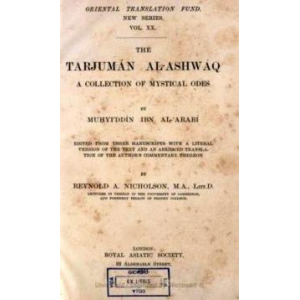
Tarjuman Al Ashwaq A Collection Of Mystical Odes

Tarjuman Al Ashwaq A Collection Of Mystical Odes Cover

Book: Tarjuman Al Ashwaq A Collection Of Mystical Odes by Muhammad Ibn Arabi

The Tarjuman al-Ashwaq (Muhyi al-Din Muhammad ibn 'Ali Ibn al-'Arabi) with the Arabic text, translated by Reynold A. Nicholson Together With a partial translation of the commentary by Ibn 'Arabi'

The Tarjuman al-Ashwaq or "Interpreter of Desires" by Ibn 'Arabi is acknowledged as one of the major works of Sufi literature, alongside those of the great Persian poets Attar, Jalaluddin Rumi, Hafiz and Jami.

In keeping with the poetical tradition of Islam, there is a continuing ambiguity in the verses as to whether they are love poems disguised as mystical odes, or Mystical Odes expressed in the language of human love. The timeless beauty and imagery of the verses cannot be denied, and may be interpreted at many levels. "Gnostics," says Ibn 'Arabi, "cannot impart their feelings to other men; they can only indicate them symbolically to those who have begun to experience the like." In response to the accusation by a religious scholar that these were just sensual poems, Ibn 'Arabi wrote a commentary on the Tarjuman which is partially translated here.

This was one of the first Translations of a book by Ibn 'Arabi into a European langauage, made by the great translator of Rumi's Mathnawi, Reynold A. Nicholson. In both cases his translation was of such outstanding quality that it was more than fifty years before other translators began to try their hands at these texts, and his translations still stand the test of time.

Download Muhammad Ibn Arabi's eBook: Tarjuman Al Ashwaq A Collection Of Mystical Odes

Free eBooks (Can Be Downloaded):

Basil Valentine - Triumphal Chariot Of Antimony
Hilda Roderick Ellis - Road To Hel A Study Of The Conception Of The Dead
Right - Travel In Spiritual Worlds A Complete Guide On Astral Travels
Mark Ludwig Stinson - Heathen Gods A Collection Of Essays Ver 2
Muhammad Ibn Arabi - Tarjuman Al Ashwaq A Collection Of Mystical Odes

Friday, October 8, 2010

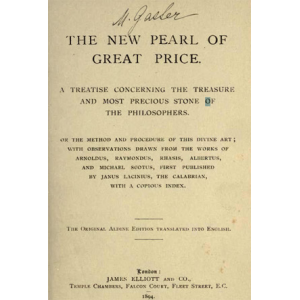
The New Pearl Of Great Price

The New Pearl Of Great Price Cover

Book: The New Pearl Of Great Price by Janus Lacinius Therapus

A treatise concerning the treasure and most precious stone of the philosophers. Or the method and procedure of this divine art ; with observations drawn from the works of Arnoldus, Raymondus, Rhasis, Albertus, and Michael Scotus (1894)

THIS work casts out cruel disease from the human body, disease produced by malignant humours ; and thus you are preserved. It will teach you how to regain the beautiful flower of youth, and how to secure a green and placid old age. All this may be yours, by the favour of the gods. Poverty will be triumphantly put to flight ; your treasure-house will be filled ; you will be able to succour the needy,
and to render the sacrifice of praise to great Jupiter.

TWO features of special interest attach to the " Pearl of Great Price," as written by Bonus of Ferrara, and edited by Janus Lacinius. In the first place, it is one of the earliest works printed on alchemy, and the original is a very beautiful specimen of typography. Concerning the latter point, it is only necessary to say that it was issued from the press of Aldus, appearing in 1546, with the privilege of Pope Paul III. and the Senate of Venice for the space of ten years. This edition is, of course, exceedingly rare, and is highly prized by collectors. In the second place, it is a very clear, methodical, and well-reasoned treatise, comparing favourably in these respects with the bulk of alchemical literature. A reader who is unacquainted with alchemy will probably not appreciate these points,
but any one who, like the present editor, has had occasion to become widely familiar with Hermetic authors, will do honour to the lucidity of Bonus.

Concerning" the adept himself, no biographical materials whatsoever are forthcoming, nor, as in most other cases, is there even a legend to fall back on. He is supposed to have been a native of Lombardy, and to have performed his alchemical labours at Pola, a maritime town of Istria, about 1330. He is sometimes described as Bonus of Ferraria,* and on this and other grounds Tiraboschi't identifies him with the "monk Ferarius".

This work attacks Lenglet du Fresnoy, the historian of alchemy, as an inexact writer, but Tiraboschi had no acquaintance whatsoever with alchemy, and does not seem to have read the Authors whom he endeavours to identify. Imaginative persons might, perhaps, be more inclined to question the equivocal name of Janus, the Calabrian Minorite Friar, and to suspect that his master Bonus was possibly his alter ego.


Download Janus Lacinius Therapus's eBook: The New Pearl Of Great Price

Free eBooks (Can Be Downloaded):

Isaac Bonewits - The Enemies Of Our Enemies
Aleister Crowley - The World Of Tarot
Ralph Blum - The New Book Of Runes
Anonymous - The Magical Library Of Harry Price
Janus Lacinius Therapus - The New Pearl Of Great Price.pdf
Sunday, October 3, 2010

The Witches Chant

The Witches Chant Cover Darksome night and shining moon,
Hearken to the witches’ rune.
East then South, West then North,
Hear! Come! I call thee forth!

By all the powers of land and sea,
Be obedient unto me.
Wand and Pentacle and Sword,
Hearken ye unto my word.

Cords and Censer, Scourge and Knife,
Waken all ye into life.
Powers of the witch’s Blade,
Come ye as the charge is made.

Queen of Heaven, Queen of Hell,
Send your aid unto the spell.
Horned Hunter of the night,
Work my will by magic rite.

By all the powers of land and sea,
As I do say, “So mote it be.”
By all the might of moon and sun,
As I do will, it shall be done.

By Lady Sheba – 1974

Free eBooks (Can Be Downloaded):

Tarostar - The Witchs Spellcraft Revised
George Lyman Kittredge - Notes On Witchcraft
Alfred Elton Van Vogt - The Witch

Biddy Early Biography

Biddy Early Biography Cover Biddy Early was a famous Irish seer and healer, a cunning woman of the nineteenth century, often identified as Biddy 'The Healer', 'The Wise Woman' or 'The Witch'. Much of what is known about her has been passed down from oral tradition and blended into myth and folklore, as such, there is much “poetic licence” used to recount her life. However, in real life she does seem to have had some genuine powers of healing and clairvoyance, for she was widely consulted for her cures and council. Many believed she was of the sidhe (fairies).

Born Bridget Ellen Connors in lower Faha near Kilanena in 1798, Biddy was the daughter of a small land farmer, John Thomas Connors and his wife Ellen Early. Biddy is described as being small in statue and pretty, a woman who kept her good looks throughout her life. While married four times, she always used her mother's maiden name, believing that her gifts were inherited through the female line. Her mother taught her all about herbs and how to make potions, just as her own mother had taught her.

At the age of 16 when her parents died, Biddy was evicted from their home and forced to work as a serving girl in the nearby towns of Feakle and Ennis. In 1817 she met and married widower Pat Mally, a middle-aged man from Gurteenreagh, who died a short time later. After the death of her first husband, she married his son, her “stepson”, John Mally with whom she had a son called Paddy. Her son Paddy died when he was just 8 years old, of the fever (typhus), a common sickness in those times. After which Biddy started to use her healing powers, giving out herbal cures tied-up in small sachets, and liquid potions in small bottles with strict instructions for how they should be used.

Biddy’s powers of clairvoyance are credited to a mysterious dark bottle. How this “magic” bottle came into her possession, has since become part of her myth and legend. Some believe her late husband Pat Mally gave it to her before he died, or her son before he died; others believe it came to her from the “sidhe” (fairies). There are some stories that say she was away with the sidhe, and went to live among them for a time as a child. As a little girl it was said she could see and talk to the sidhe in their own language, which was different from Gaelic and that they taught her how to use her gifts.

She was instructed that by looking into the bottle with one eye and keeping the other eye open, she would be able to see what ailed people and view the future. In exchange for this ability, she was never to charge money for her services, or she would lose the power. She could accept gifts, but was to give away whatever was left over from her own needs. She must never allow others to look into the bottle, or else they would either die or go mad. By using the bottle, Biddy always knew when a person was about to visit her, and whether they had gone to a doctor or a priest first. If they had, then she usually refused to treat them unless she was in a good mood.

In 1840, her second husband died of a liver ailment, most likely due to an excess consumption of alcohol. Biddy quickly married again, her third husband was Tom Flannery from Carrowroe in County Clare. She and Tom moved into a cottage on Dromore Hill in Kilbarron, overlooking Kilbarron Lake that locally became known as Biddy Early's Lake. By this time Biddy’s reputation as a healer and seer had spread, for it was here that she created her most powerful cures, and hundreds of people came to seek her out. It is said the road to her house was always full of those traveling to see her.

Biddy also brought relief to animals, and treated them with great care. In her time, the death of an animal could bring particular hardship to people living in a mainly rural farming community. Animals were relyed upon for everyday living, and to lose one could lead to eviction if farming chores were not compelted. Many of the stories about Biddy include tales of her healing a family’s most important horse or cow. She also helped many people restore their wells, often the only source of clean water, to solve problems that women ran into while churning butter. Water and butter were also vital to a peasant’s everyday life.

During the nineteenth century, superstitious belief in fairies and all things apparently supernatural was very strong, and when something happened that appeared to be miraculous, without the aid of the church, it was commonly and easily attributed to witchcraft and the devil. As such the local church viewed Biddy with suspicion, and all the local clergy were totally opposed to her. As her fame spread they even tried to warn off people who went to visit her. One story of the churches opposition occurred in 1865. While visiting friends in Ennis, Biddy was charged with Witchcraft under the 1586 statute, however the case was dismissed due to a lack of sufficient evidence. Many of the local people stood their ground against the clergy, maintaining she did nothing but good works.

In 1868, her third husband Tom died, but Biddy now seventy years old, still only looked fifty, and a year later married her fourth husband Thomas Meaney. However he too got sick and died within the year. Many believed her husbands all died from alcohol abuse, as there was so much whiskey and other strong liquors brought to her in payment. Her husbands did not need to work as she herself provided everything through her healing work. After her last husband died, Biddy’s own health slowly deteriorated, she died in April 1874 with a rosary around her neck and her mysterious dark bottle wrapped in a red shawl beside her.

Before her death and despite their differences, Biddy had befriended one of the local priests and asked him not to let her bottle fall into the wrong hands when she died. According to her wishes, the priest took the bottle and hurled it into Kilbarron Lake. Since then, such was the belief in Biddy’s legend, many attempts to trawl the lake in search of the bottle have been made, but to this day it has never been found.

Free eBooks (Can Be Downloaded):

Michael Prescott - Darklore
Anonymous - The Legal Basis For Wicca
Janus Lacinius Therapus - The New Pearl Of Great Price.pdf

The Great Rite Invocation

The Great Rite Invocation Cover Assist me to erect the ancient altar
At which in days past all worshipped
The great altar of all things
For in times of old, woman was the altar
Thus was the altar made and placed
And the sacred place was the point within the center of the circle
As we have of old been taught
That the point within the center is the origin of all things
Therefore should we adore it
Therefore whom we adore we also invoke
O circle of stars

Whereof our Father is but the younger brother
Marvel beyond imagination, soul of infinite space
Before whom time is ashamed
The mind bewildered, and the understanding dark
Not unto thee may we attain unless thine image be love
Therefore by seed and root, and stem and bud
And leaf and flower and fruit, do we invoke thee
O Queen of Space, O Jewel of Light
Continuous One of the Heavens

Let it be ever thus
That man speak not of thee as One, but as None
And let them not speak of thee at all
Since thou art continuous
For thou art the point within the Circle, which we adore
The point of life without which we would not be
And in this way truly are erected the holy pillars
In beauty and in strength were they erected
To the wonder and glory of all men

Altar of mysteries manifold, the sacred circle’s secret point
Thus do I sign thee as old, with kisses of my lips anoint
Open for me the secret way, the pathway of intelligence
Beyond the gates of night and day, beyond the bounds of time and sense
Beyond the mysteries aright, the five true points of fellowship
Here where the Lance and Grail unite
And feet, and knees, and breast, and lip

Stewart and Janet Farrar – 1984.

Free eBooks (Can Be Downloaded):

Aleister Crowley - Invocation
Friedrich Adler - The Witchcraft Trial In Moscow
Michael Sharp - The Great Awakening
Aleister Crowley - The Supreme Ritual The Invocation Of Horus
John Dee - The Practice Of Enochian Evocation

Saturday, October 2, 2010

Fairy Gold

Fairy Gold Cover

Book: Fairy Gold by Basil Crouch

Basil Crouch A.K.A. Basil LaCroix is one of those old-time great Magicians who learned by the pragmatics of worldly travels in lieu of the theoretics found in most books. Basil spent his youth in a circus amongst the main artistes who were pure Romany, all members of the Manouche Tribe who revere Sara the Black Virgin & Jacques deMolay (GrandMaster of the Templars). The leading Witchdoctor taught him many trix of Magick. He also learned many strange Spells from an Australian Aborigine Witchdoctor. In the late 1960's he masterminded 'coven-style' Occult groups consisting of 6 or 7 women, reaching very advanced stages of development, like producing actual Apports using thoughtform entities, just mindblowing stuff. His teachings excited alot of jealousy within Occult Societies who wanted this kind of thing kept secret. (from reader)

Download Basil Crouch's eBook: Fairy Gold

Free eBooks (Can Be Downloaded):

Aleister Crowley - Liber 831 Iod
Franceska De Grandis - Be A Goddess
Aleister Crowley - Gargoyles
Basil Crouch - Fairy Gold

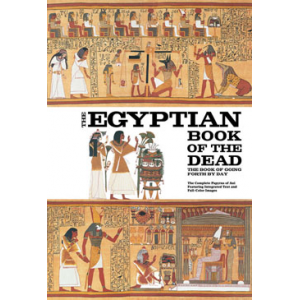
The Egyptian Book Of The Dead

The Egyptian Book Of The Dead Cover

Book: The Egyptian Book Of The Dead by Ea Wallis Budge

"The Egyptian Book of Dead"—the ancient Egyptian title is ‘rw nw prt m hrw’ , roughly translated as “Spells of Going Forth by Day” — was written by the ancient Egyptians as a sort of guide to help newly deceased souls as they crossed over into the afterlife. It was usually written on a papyrus scroll which was sent with the prepared body in its coffin or burial chamber.

German Egyptologist Karl Richard Lepsius first used the title, “Book of the Dead” in a selection of Texts he published in 1842. Since then, the word “Egyptian” has been added and it has become the generally accepted title of the book. E. A. Wallis Budge published this translation in 1901 and, as an important version, it is still in print to this day.

The Book of the Dead was the product of a long process of evolution from the Pyramid Texts of the Old Kingdom (writings on the crypt walls intending to help the dead person) to the Coffin Texts of the Middle Kingdom (similar writings, placed on the outside of a coffin). Eventually, many of these texts were written on papyrus and placed in the burial chamber, or inside the coffin with the mummy.

About one-third of the chapters in The Book of the Dead are derived from the earlier Coffin Texts. The Book of the Dead itself was adapted to The Book of Breathings in the Late Period, but remained popular in its own right until the Roman period.


Download Ea Wallis Budge's eBook: The Egyptian Book Of The Dead

Free eBooks (Can Be Downloaded):

Gerald Gardner - The Garnerian Book Of Shadows
Friedrich Max Muller - The Sacred Books Of The East
Lady Galadriel - The New Book Of The Law
Ea Wallis Budge - The Egyptian Book Of The Dead

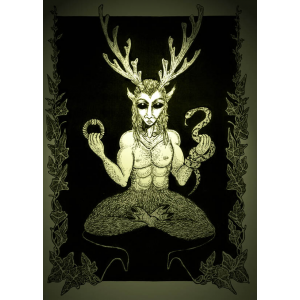
Invocation Of The Horned God

Invocation Of The Horned God Cover By the flame that burneth bright
O Horned One!

We call thy name into the night
O Horned One!

Thee we invoke by the moon led sea
By the standing stone and the twisted tree
Thee we invoke where gather thine own
By the nameless shrine forgotten and lone

Come where the round of the dance is trod
Horn and hoof of the goat-foot God
By moonlit meadow on dusky hill
When the haunted wood is hushed and still

Come to the charm of the chanted prayer
As the moon bewitches the midnight air
Evoke thy powers, that potent bide
In shining stream and secret tide

In fiery flame by starlight pale
In shadowy host that ride the gale
And by the fern-brakes fairy-haunted
Of forests wild and wood enchanted

Come! O Come!
To the heartbeats drum!

Come to us who gather below
When the broad white moon is climbing slow
Through the stars to the heavens height
We hear thy hoofs on the wind of night
As black tree branches shake and sigh
By joy and terror we know thee nigh

We speak the spell thy power unlocks
At Solstice, Sabbat, and Equinox

Word of virtue the veil to rend
From primal dawn to the wide world's end
Since time began---
The blessing of Pan!

Blessed be all in hearth and hold
Blessed in all worth more than gold
Blessed be in strength and love
Blessed be wher'er we rove

Vision fade not from our eyes
Of the pagan paradise
Past the gates of death and birth
Our inheritance of the earth

From our soul the song of spring
Fade not in our wandering

Our life with all life is one,
By blackest night or noonday sun
Eldest of gods, on thee we call
Blessing be on thy creatures all

by Doreen Valiente

Free eBooks (Can Be Downloaded):

John Ronald Tolkien - Introduction To The Elder Edda
Aleister Crowley - The Invocation Of Thoth
James Eschelman - Invocation Of Horus

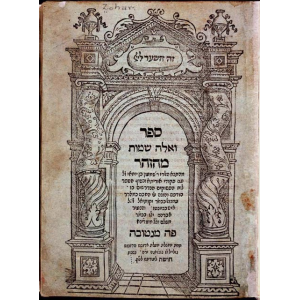
Sefer Ha Zohar Idra Zuta Qadusha Lesser Holy Assembly

Sefer Ha Zohar Idra Zuta Qadusha Lesser Holy Assembly Cover

Book: Sefer Ha Zohar Idra Zuta Qadusha Lesser Holy Assembly by Rabbi Shimon Bar Yochai

Idra Zuta Qadusha (Lesser Holy Assembly), or simply Idra Zuta - the next layer of the core of the five-volume mystical exegesis Sefer HaZohar.

The Sefer HaZohar (Book of Splendor, often referred to simply as "the Zohar") is a five-volume mystical exegesis written in Rashi Aramaic on the five books of the Torah. Like the Sefer Yetzirah, the date and original author of the Zohar are subjects for academic debate. Many qabalistic scholars, such as Gershom Scholem, believe the Zohar to be a new work produced by Moses De Leon, circa 1250 CE in Spain.Scholem, Gershom. Kabbalah, Keter Publishing, Jerusalem, 1974. Others believe that it was dictated by its pivotal figure Rabbi Shimeon Ben Yochai to his son Rabbi Abba in the first century CE, while they and their group of rabbis hid in caves for thirteen years in Piquin, Israel to avoid Roman persecution. Hence, there are also those who would take the intermediary position that De Leon redacted and published a work that had a much earlier time of origin.

The Sefer HaZohar is central to Kabbala that has influenced all mystical movements within Judaism. Many Kabbalists invest it with a sanctity normally accorded only to the Torah and the Talmud. Written mostly in Aramaic, it is believed to be mainly the work of Moses de Leon. The main part of the Zohar provides a mystical and symbolic interpretation of biblical texts, especially the Torah, the book of Ruth, and the Song of Solomon. Other sections deal with the mystery of creation, the problem of evil, and the cosmic significance of prayer and good deeds.

The text of the Zohar is presented as a series of dialogues among a group of rabbis. These rabbis were the embodiments of the various Sefiroth (spheres) on the Tree of Life (see Diagram). Hence, the "flavor" of the respective Sefirah (sphere) colors each rabbi's remarks and questions. Like the Sefer Yetzirah, the Zohar has its own distinct set of names for the Sefiroth, most of which come from the Sefer HaShmoth, and are later echoed in the Torah and Ketuvim (Writings). Those names may be described as various qualities of the Divine, such as Wisdom, Beauty, Glory, and Mercy. The Zoharic names for the Sefiroth are the most commonly known and used among all types of Qabalists.

The body of the five volumes of the Zohar emanates from a core of three extraordinary texts. The innermost layer and heart of the Zohar is a small text called the Sifra Detzniyutha (Book of THAT Which is Concealed). This book contains the single greatest exposition on the negatively existent Mysterious Unknown (called Ayn, and also "The NOT") among all written works of the Mystical Qabalah. The next layer of the core of the Zohar is a text called Idra Rabba Qadusha (Greater Holy Assembly), or simply Idra Rabba; and the third layer of the core is called Idra Zuta Qadusha (Lesser Holy Assembly), or simply Idra Zuta. The Idra Rabba and Idra Zuta expand greatly upon the anthropomorphic allusions introduced in the Sifra Detzniyutha. The "Greater Holy Assembly" is the entire Tree of ten Sefiroth. The "Lesser Holy Assembly" is the upper seven Sefiroth only.

Download Rabbi Shimon Bar Yochai's eBook: Sefer Ha Zohar Idra Zuta Qadusha Lesser Holy Assembly

Free eBooks (Can Be Downloaded):

Solomonic Grimoires - Lemegeton I The Lesser Key Of Solomon Goetia
Aleister Crowley - Liber 017 Fake Liber Iao Or The Book Of Holy Kisses
Rabbi Shimon Bar Yochai - Sefer Ha Zohar Sifra Detzniyutha Book Of That Which Is Concealed
Rabbi Shimon Bar Yochai - Sefer Ha Zohar Idra Rabba Qadusha Greater Holy Assembly
Rabbi Shimon Bar Yochai - Sefer Ha Zohar Idra Zuta Qadusha Lesser Holy Assembly

What Is A Spell

What Is A Spell Cover A spell is a spoken or written formula that when used in an act of magick is intended to cause or influence a particular course of events. Belief in and the use of spells are universal and have been an integral part of religious practices since ancient times. Methods vary according to culture but all spell work is based on ritual.

Spells are closely related to Prayers, which are rituals consisting of a petition to the Gods or deities (whatever the religion or faith) for a desired outcome. It involves the visualization of a goal, a statement of desire for the goal, and ritualized movements of body positions (e.g., the bowing of the head, the clasping of the hands, the closing of the eyes etc). In magick, spells are closely related to various methods of mind power such as: creative visualization, positive thinking, and positive imaging (see “What is Magick”). All of which emphasize our mental images of the goal and our identification with it, repetition of our intent to achieve this goal, projection of our will, and a petition to the spirits, deities, or the divine force for their aid.

These types of spells are commonly used on a daily bases, the simple lighting of a candle starting the ritual process. Such daily spells constitute minor magick's such as: blessings, self-help, positive thoughts and the sending of helpful healing energies to others. Used on a daily bases it is not therefore necessary to undertake the cumbersome task of a full circle casting ritual (see Circle Casting).

Spells can be beneficial or harmful and can be worked on people, animals, and nature. Their purposes are limitless and include: healing, love, money, success, fertility, longevity, and protection from disaster, ill fortune, and evil. They can also be used to exorcise ghosts and spirits, for victory in battle, truth in divination, weather control, and the accomplishment of supernatural feats. When directed against enemies, spells can be used to cause illness, destruction, loss of love, impotence, barrenness, failure and even death. Spells can be cast to affect the self, or directed to affect another person.

A positive spell is often called a blessing, although such archaic terms as bewitchment and enchantment are still sometimes used. Negative spells are generally known as hexes or curses. A binding spell is one intended to prevent harm, avoid danger, or to stop someone from performing particular acts (e.g., halting a murder, preventing a rape, or even stopping the spread of gossip).

In most cultures, Witches, Sorcerers, Witch doctors, Magicians, and other magically empowered peoples, cast both beneficial and harmful spells as the need dictates. However in contemporary Paganism and Witchcraft, a set of ethics exists that prohibits the use of curses and negative spells against another (see the “Wiccan Rede” and the “Three Fold Law”). The acceptability of binding spells is divided, and is widely debated throughout the community.

Free eBooks (Can Be Downloaded):

Anonymous - Hypnotism Spells
Arthur Edward Waite - What Is Alchemy
Stephen Mcnallen - What Is Asatru

Wednesday, September 29, 2010

The Golden Verses Of Pythagoras

The Golden Verses Of Pythagoras Cover

Book: The Golden Verses Of Pythagoras by Antoine Fabre Dolivet

This is english translation of The Golden Verses of Pythagoras by Antoine Fabre d'Olivet (December 8, 1767-March 25, 1825) a French author poet, and composer whose biblical and philosophical hermeneutics infuenced many occultists, such as Eliphas Lvi and Gerard Encausse (Papus), and Ren Gunon.

The Golden Verses of Pythagoras are a collection of moral exhortations. They comprise 71 lines written in hexameter verse and are traditionally attributed to Pythagoras.

The exact origins of the golden verses are unknown and there are varying opinions regarding their dating. It appears that the verses may have been known as early as the third century BC but their existence as we know them cannot be confirmed prior to the fifth century AD.

The golden verses enjoyed great popularity and were widely distributed in late antiquity being often quoted. Their renown persisted during the medieval ages and into the renaissance.
The Neoplatonists used the golden verses as part of their preparatory program of moral instruction and a number of neoplatonic commentaries on the verses are extant.


Download Antoine Fabre Dolivet's eBook: The Golden Verses Of Pythagoras

Free eBooks (Can Be Downloaded):

Anonymous - The Gospel Of Thomas
Anton Josef Kirchweger - The Golden Chain Of Homer
Samuel Croxall - The Secret History Of Pythagoras
Antoine Fabre Dolivet - The Golden Verses Of Pythagoras

Tuesday, September 28, 2010

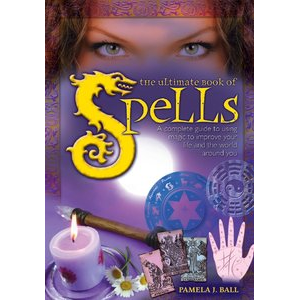
The Ultimate Book Of Spells

The Ultimate Book Of Spells Cover

Book: The Ultimate Book Of Spells by Pamela Ball

The Ultimate book of spells - A Complete Guide to Using Magic to Improve Your Life and the World Around You (2007) Arcturus Publishing ISBN 978-1-84193-577-5

This book is essential reference for anyone wishing to take control of their lives and become confident in the art of spell making...The book includes over 250 spells and techniques, covering every aspect of life and spiritual development. Whether it is creating opportunities for love, doubling your money or protecting your teenage daughter, there is a spell for everyone...With sections on the folkloric history of magic, astrology, divination and mysticism, the book provides the reader with a complete background to the art of magic. The complex social and cultural influence of spells is revealed, as well as their power to enrich and transform modern lives.

The desire to change and improve that which we have has been around for many thousands of years, if not since man first walked the earth. Magic and spell working have always been a part of that, and indeed still are today. Anyone who practises any form of magic, including spell working, needs to be grounded. This means having h feet firmly planted in reality and also having a basic knowledge of what
magic is and is not, what spells can and can’t do and what – with practice – you can do with the tools, information and knowledge you have. This book sets out to give you that information in as succinct a manner as possible.

Download Pamela Ball's eBook: The Ultimate Book Of Spells

Free eBooks (Can Be Downloaded):

Ancient Grimoires - The 6th And 7th Book Of Moses
Anonymous - Book Of Spells
Ancient Grimoires - The 8th Book Of Moses
Michael Johnstone - The Ultimate Encyclopedia Of Spells
Pamela Ball - The Ultimate Book Of Spells.pdf

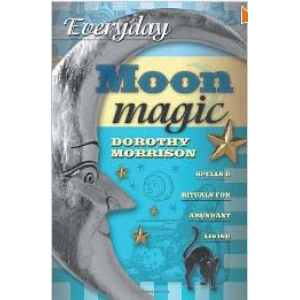
Everyday Moon Magic Spells And Rituals For Abundant Living

Everyday Moon Magic Spells And Rituals For Abundant Living Cover

Book: Everyday Moon Magic Spells And Rituals For Abundant Living by Dorothy Morrison

I've read a couple other Moon books, but this one is by far the best. Why? Because Ms. Morrison (much like another of my favorite authors, Patricia Telesco) has a certain and very special way of making things simple, accessable and right to the point without talking down to the reader, getting lost in Craft mumbo-jumbo or making things harder than they really need to be as I've seen so many times by other authors. There are no lectures, power trips or mind-numbing lists of hard-to-find ingredients here; no lofty words or flowery rituals. In fact, you probably already have many of the ingredients she mentions. This book is practical, useful, wonderfully organized and chock full of Moon facts, spells, rituals and other worthy and interesting tidbits that can indeed be used every day. I found it a fast read, which is good -this way I can get right into things :) If you've been disappointed, bored or overwhelmed by other Moon Magic books, give this one a try. Simply put, this book is a pleasure to read, use and own; it's one I'm sure I'll refer to often. I'm keeing this right next to my much-loved copy of Everyday Magic and will likely be following up with her companion book, Everyday Sun Magic.

That magical, mystical, glorious Moon-invite Her power into your life every day, from fixing your computer to blessing your pets. You'll learn how each Moon phase affects your spellwork, including the seldom-discussed energies of the true Blue Moon, the Black Moon, the void-of-course moon, and the lunar eclipse. Follow the Moon as She traverses each sign of the zodiac, and discover how each astrological phase affects magic, mundane events, and gardening-and how your personal Moon sign affects your magical work. Includes more than 140 modernized spells, chants, and rituals, along with Esbat celebrations for the Full Moon.

Dorothy Morrison has put together in this book a wonderful primer that is chock full of moon lore, moon mystery and moon magic. And because of all the bits of information collected here, even the experienced practitioner will read through this book and come away scratching their head saying "I didn't know that!"

Ms. Morrison includes in this book some of the history of moon lore and moon cycles. Included are bits of 'old sayings' and superstitions as well as names of the monthly moons and what they mean. She reviews the moon phases and effects. Ms. Morrison also discusses astrological terms referencing the moon and what they actually mean. For those who are not familiar or don't remember or are not sure, this section alone is worth the price of the book. Then she takes it a step further by explaining how these references apply in relationship to our magic and our lives. Times and cycles for ritual, magic and spells are also discussed and examined. Empowering moon rituals filled with positive affirmations for the building of personal self esteem, which Ms. Morrison is so good at writing, are here for you to incorporate into your own ritual material. And, of course, no book by Dorothy Morrison would be complete without a whole section of her wonderful spells.

As usual, Dorothy takes all this and puts it into a book that shows you, step by step, how to work this into your everyday life, making it a practical as well as informative book. There is so much more here that I've not included in this review because it would take pages to write about. Needless to say, Ms. Morrison has been thorough in her research. There is a table of contents to help you find what you are looking for as well as a bibliography. Add to that her easy to read format and no nonsense approach to teaching, and you have a winner here.


This is a book that should be considered when you are in the store looking for something practical, informative and just plain good to read and add to your library.

Originally from Texas, Dorothy Morrison now lives the magical life in Maine with her family. Dorothy is a member of the Pagan Poets Society and a charter member of M.A.G.I.C., a magical writers and artists organization. Dorothy is a Wiccan High Priestess of the Georgian Tradition, and has been an avid practitioner of the ancient arts for more than twenty years. She founded the Coven of the Crystal Garden in 1986, and spent many years teaching the Craft of Wicca to students both in the United States and in Australia. A former state championship archer and bow hunter, Dorothys current interests include Tarot work, magical herbalism, stonework, and computer networking.Dorothys work has been published in many journals and magazines, including Circle Network News, SageWoman, and Crone Chronicles. She is the author of the acclaimed Everyday Magic, Magical Needlework, In Praise of the Crone, Yule, Bud, Blossom & Leaf: The Magical Herb Gardeners Handbook, The Craft, and The Craft Companion, among other works..

Buy Dorothy Morrison's book: Everyday Moon Magic Spells And Rituals For Abundant Living

Free eBooks (Can Be Downloaded):

Lady Sabrina - Exploring Wicca The Beliefs Rites And Rituals Of The Wiccan Religion
Benjamin Rowe - A Modified Hexagram Ritual For Enochian Workings
Richard Alan Miller - The Magical And Ritual Use Of Herbs
Talismagick - Love Spells And Rituals For Love And Relationships

Sunday, September 26, 2010

Salem Witch Trials

Salem Witch Trials Cover

Book: Salem Witch Trials by Kirstie Alley

Salem, Massachusetts. A small town--with no clear governing body--became embroiled in a scandal that forever stands as one of the darkest chapters in American history. For those accused of witchcraft by their neighbors and friends, there was little chance of clearing their names; the mass paranoia that ravaged through the community took the lives of 19 innocent men and women. With an all-star cast of Kirstie Alley, Rebecca De Mornay, Kristin Booth, Shirley MacLaine, Peter Ustinov and Alan Bates, Salem Witch Trials dramatically revisits 1692 colonial America and the haunting legacy it holds.

"Salem Witch Trials" is a compelling 2003 CBS mini-series that featured many familiar and veteran actors and for the most part, stayed true to the historical events that came to be known as the Salem Witch Trials.

The mini-series begins on a rather odd note - it is right in the middle of a trial where the afflicted girls [who are the ones accusing people of witchcraft]go into hysterics and start wailing and screaming, then the accused start transforming into 'demons' [with rather striking make-up and 'flying' special effects]. Thankfully, this only lasts a couple of minutes [the production could have done without it], and viewers are taken back via flashback to six months prior where the events began.

The story focuses on the Puritans residing in the village of Salem, Massachusetts, and the year is 1691. There is no charter from England and hence, the Puritans basically govern themselves without any written law. Those who commit crimes or sins are publicly humiliated [there is a scene where women deemed guilty of sinful conduct are paraded naked whilst tied to a wagon]. The family that is the focal point in this series is the Putnam family - Ann Putnam [Kirstie Alley] gives birth to a stillborn child and is full of grief. Her husband Thomas Putnam [Jay O Sanders] is a bitter man, having lost a lot of his land and wealth to others who are more entrepreneurial. They have a son and daughter and young Annie Putnam [Katie Boland] senses the tension between her parents and finds herself being neglected, hence her desire to act out as a means of gaining attention.

The storyline is riveting and moves along at a steady but sure pace, building momentum as the horror unfolds - the acting is also solid and credible - Kirstie Alley's Ann Putnam is a conflicted and tortured soul. Her grief over her dead child causes her to turn to a village medicine woman, Bridgitte Bishop who is later accused as a witch, and this in turn causes her immense guilt [for turning 'away' from God]. She is by turns horrified and self-righteous at the situation in Salem. This is one of Alley's best dramatic performances to date. Henry Czerny's Rev Parris is credibly done, acting out the part of a so-called man of God who decries against self-interest whilst shamelessly practising it for self-preservation. Then there is young Katie Boland as Annie Putnam who incites revulsion for her performance as the misguided accuser.Rebecca de Mornay plays Rev Parris' wife who is mortified by the events in Salem and finally leaves her husband.

There are also veteran actors who have done an incredible job with their roles here - Shirley Maclaine plays the ill-fated Rebecca Nurse, one of the accused who also happens to be a pillar in society, a devout mother and elderly woman who maintains her faith and sense of humor in the bleakest of times. Peter Ustinov plays the Magistrate William Stoughton, a man so absorbed in proving the accused guilty that he never once questions his judgements. And there is Alan Bates playing Gvernor Sir William Phips, who initially acts the dandy and seems disinterested but who eventually realises something is seriously wrong in Salem.

The sets and costumes lend an authentic feel to the story, making the Salem of 1691-'92 come alive onscreen. All in all, this is a first-class production and will appeal to history buffs, educators [though with some nudity I'm not sure if it would be appropriate for classroom viewing] and period & historical drama fans.Highly recommended!

Buy Kirstie Alley's book: Salem Witch Trials

Free eBooks (Can Be Downloaded):

John Musick - The Witch Of Salem
Friedrich Adler - The Witchcraft Trial In Moscow
Marian Green - A Witch Alone

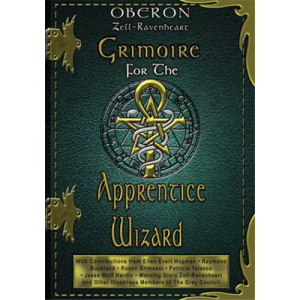
Grimoire For The Apprentice Wizard

Grimoire For The Apprentice Wizard Cover

Book: Grimoire For The Apprentice Wizard by Oberon Zell Ravenheart

Magick, through all its varied forms and traditions, always has at least one component that it shares. Freedom. Freedom from old ideas. Freedom from old religions. A pathway leading the practioner to new depths of themselves, and through that, the world.

It is not, and should not, be used as a tool for the crushing of imagination, but its expansion. It is a very delicate line, to separate one's own prejudices and mythology from the craft itself, creating a clear platform that allows, or even more, encourages the reader to find their own truth. To question authority, even the authority of the writer.

Oberon Zell's grimoire For the Apprentice Wizard does just that. Though there are many books on magick, too often they emphasize the writer's particular viewpoint on the craft, providing a kind of blueprint for development in a particular tradition at the expense of the infinite multiverse of alternate perspectives that could, and should exist.

In his Grimoire, it is apparent that Oberon's intention is to create a platform that is, as well as he is able, clear. Beginning with a brief history of magick in its various incarnations in the Western world; as well as a fundamental glossary of magickal terms as used by all, he moves into beautifully illustrated and well-intentioned explanation of the various types of magick and process.

He includes chapters on healing, herbology, astronomy, mathematics, animal communion (a personal favourite), divination, and many more. Each section illustrates the fundamental principles common to all traditions, allowing the student the space to find their own ideas. Supposedly geared to the adolescent reader, each chapter contains instructions on how to create and manage spells; focusing not only on the process of starting a magick, but the responsible cleanup so often neglected afterwards in making your spells efficient and successful.

I was particularly impressed with the various sources and quotations used in the book. Many authors fail to see (or perhaps, respect) the ways in which spiritual, magickal truths have expressed themselves in today's world. In drawing on gems of wisdom hidden in popular culture; from Aristotle to Discworld, Pythagoreas to Spiderman; Oberon's viewpoint shows an open-mind free of the prejudice of the past that sees the Goddesses, and Gods, still alive inside the imagination of the modern world.

More than just a set of instructions, the Grimoire provides a set of tools designed to allow young minds the opportunity to find their own way through the labyrinth of their imagination. I highly ... highly recommend this book to both new and old readers alike. It is refreshing to see an author who not only claims the intention to provide an open philosophy that still honours its history and practice, but who succeeds in doing so.

Download Oberon Zell Ravenheart's eBook: Grimoire For The Apprentice Wizard

Free eBooks (Can Be Downloaded):

Aleister Crowley - Mortadello Or The Angel Of Venice
Parker Torrence - Grimoire Of Eclectic Magick Part 3 Of 3
Moses Maimonides - The Guide For The Perplexed
Oberon Zell Ravenheart - Grimoire For The Apprentice Wizard.pdf

Thursday, July 29, 2010

Witches And The Book Of Shadows

Witches And The Book Of Shadows Cover The book of shadows is a Witches Bible, a place where spells, rituals, and often inspirations are written. Traditionally most Witches hand write everything into their BoS, however in the high tech age of computers there are many modern witches who put their entire BoS on disc. There are even programs designed to format your computer Book of Shadows. Many Books of Shadow are handed down from past generations. I would recommend that if you are just starting one, you choose a very special and large journal, hard cover, or hand crafted wood, leather, or other sturdy material, rather than a spiral notebook, or writing tablet. This book should be planned with the intent of it being around for a long time and used often.

The BOS usually starts out with a Title Page and may be called something as simple as, My Book of Shadows or something more creative like, My Triple Moon Book of Inspiration. You should include a Dedication page dedicating your work to whichever Goddess, and/or God you recognize, and a Blessing page where you put a simple blessing spell for your Book of Shadows and all the writings within.

It might be a good idea to include a line or two about your book being invisible to non-believers, or some type protection, that will prevent ill events from snoops.

I highly recommend a table of contents, or index section, as you will find it difficult to locate a needed piece of information later on, when your book is full. A section on your chosen path, or your personal philosophy is a good addition.

Your Book of Shadows will usually contain a list of all celebration rituals, especially the Sabats, which are the major turnings of the year. Also you will probably include all the esbats and moon phases of the year. You may want to include a section for celebrating births, deaths, handfastings (marriages), and even add rituals for blessing a new home, a business or a new job. With all these special events, there are correspondences that go with them, such as deities, gems and minerals, herbs, oils, colors, astrological symbols, and planetary influences. As with most celebrations there will be certain foods, decorations, ect.

Books You Might Enjoy:

Gerald Gardner - The Garnerian Book Of Shadows
Idres Shah - The Book Of Power
Sasha Fierce - The Book Of Shadows

Tuesday, July 27, 2010

Witches Misogyny And Patriarchy

Witches Misogyny And Patriarchy Cover The persecution of witches reached its zenith at a time when Christianity's attitudes against sex had long since turned into full-blown misogyny. It is amazing how celibate men became obsessed with the sexuality of women. As it is stated in Malleus Maleficarum: "All witchcraft comes from carnal lust, which is in women insatiable." Another section describes how witches were known to "...collect male organs in great numbers, as many as twenty or thirty members together, and put them in a bird's nest."

Evidently they were not entirely stingy with their collections -- there is the story of a man who went to a witch to have his lost penis restored: "She told the afflicted man to climb a certain tree, and that he might take which he like out of a nest in which there were several members. And when he tried to take a big one, the witch said: You must not take that one; adding, because it belonged to a parish priest."

And some people say that religion isn't really all about wishful thinking!

These sentiments were nothing unique or unusual -- indeed, they are a result of centuries of mean-spirited sexual pathology on the part of church theologians. The philosopher Boethius, for example, wrote in The Consolation of Philosophy that "Woman is a temple built upon a sewer." Later, in the tenth century, Odo of Cluny stated "To embrace a woman is to embrace a sack of manure."

Women were regarded as impediments to true spirituality and union with God, which helps explain why investigators focused on women more than men. The church had a long-standing prejudice against women, and this was given vent when the doctrine of devil worship was emphasized as an enemy which the church had to confront and destroy. This animus hasn't entirely disappeared even today. Women aren't persecuted and tortured, but they are deliberately kept out of positions of authority and responsibility reserved exclusively for men.

Books You Might Enjoy:

William Blake - The Marriage Of Heaven And Hell
Vovim Baghie - The Grand Satanic Ritual
Walter Scott - Letters On Demonology And Witchcraft
Frater Fp - Sigils In Theory And Practice

Friday, July 23, 2010

Hubble Bubble Pardoned From Trouble

Hubble Bubble Pardoned From Trouble Cover It's Halloween and, consequently, one of my favorite days of the year. There are some things that have become inexorably linked to this holiday: candy, costumes, watching It's the Great Pumpkin Charlie Brown and, of course, witches.

Modern culture has really taken the witch in interesting places. From the evil Wicked Witch of the West in the original Wizard of Oz to the Not-Really-Wicked-But-Misunderstood Witch of the West Elphaba in the book and play Wicked, it is clear that witches can take on any number of personas. Today, witches can be good, bad, cutesy, goofy, and cunning. But not so long ago, the term "witch" was not taken so lightly.

Here at the Museum of Jewish Heritage, we often talk about scapegoating. If one looks at the history of the witch, this term comes to the fore pretty quickly. In Europe, between approximately 1480 and 1700, between 40,000 and 100,000 women and men were put to death on the charge of witchcraft. Accusations often arose as a result of an unexplained natural phenomenon--such as a failed crop or sick livestock-- or simply out of the malicious desire to seek revenge on another person.

Today, campaigners will petition Justice Secretary Jack Straw to posthumously pardon the 2,400 women and men wrongfully put to death for witchcraft in England and Scotland before the Witchcraft Act put an end to the practice in 1735. (Read full article here.) These campaigners follow the example of Swiss groups who successfully urged the government to pardon Anna Goeldi, the last woman in Europe on record to be put to death for witchcraft in 1782. While such pardons are, of course, entirely symbolic, I think this gesture is an important one. Not only does it officially clear the names of innocent victims, but makes a stand against scapegoating and lets everyone know that this injustice has no place in today's society.

Books You Might Enjoy:

John White - Toward Homo Noeticus
Ea Wallis Budge - Egyptian Ideas Of The Future Life
Aleister Crowley - Songs For Italy

Thursday, July 22, 2010

The Witch Hunts Of Early Modern Europe

The Witch Hunts Of Early Modern Europe Cover For three centuries of early modern European history, diverse societies were consumed by a panic over alleged witches in their midst. Witch-hunts, especially in Central Europe, resulted in the trial, torture, and execution of tens of thousands of victims, about three-quarters of whom were women. Arguably, neither before nor since have adult European women been selectively targeted for such largescale atrocities.

The witch-hunts of early modern Europe took place against a backdrop of rapid social, economic, and religious transformation. As we will see in the modern-day case-studies below, such generalized stress -- including the prevalence of epidemics and natural disasters -- is nearly always central to outbreaks of mass hysteria of this type. Jenny Gibbons' analysis ties the witch-hunts to other "panics" in early modern Europe:

Traditional [tolerant] attitudes towards witchcraft began to change in the 14th century, at the very end of the Middle Ages. ... Early 14th century central Europe was seized by a series of rumor-panics. Some malign conspiracy (Jews and lepers, Moslems, or Jews and witches) was attempting to destroy the Christian kingdoms through magick and poison. After the terrible devastation caused by the Black Death [bubonic plague] (1347-1349), these rumors increased in intensity and focused primarily on witches and "plague-spreaders." Witchcraft cases increased slowly but steadily from the 14th-15th century. The first mass trials appeared in the 15th century. At the beginning of the 16th century, as the first shock-waves from the Reformation hit, the number of witch trials actually dropped. Then, around 1550, the persecution skyrocketed. What we think of as "the Burning Times" -- the crazes, panics, and mass hysteria -- largely occurred in one century, from 1550-1650. In the 17th century, the Great Hunt passed nearly as suddenly as it had arisen. Trials dropped sharply after 1650 and disappeared completely by the end of the 18th century. (Gibbons, "Recent Developments in the Study of the Great European Witch Hunt".)

Gibbons' allusion to the Reformation reminds us that the clash between institutional Catholicism and emergent Protestantism contributed to the collapse of a stable world-view, which eventually led to panic and hyper-suspiciousness on the part of Catholic and Protestant authorities alike. Writes Nachman Ben-Yehuda, "This helps us understand why only the most rapidly developing countries, where the Catholic church was weakest, experienced a virulent witch craze (i.e., Germany, France, Switzerland). Where the Catholic church was strong (Spain, Italy, Portugal) hardly any witch craze occurred ... the Reformation was definitely the first time that the church had to cope with a large-scale threat to its very existence and legitimacy." But Ben-Yehuda adds that "Protestants persecuted witches with almost the same zeal as the Catholics ... Protestants and Catholics alike felt threatened." It is notable that the witch-hunts lost most of their momentum with the end of the Thirty Years War (Peace of Westphalia, 1648), which "gave official recognition and legitimacy to religious pluralism." (Ben-Yehuda, "The European Witch Craze of the 14th to 17th Centuries: A Sociologist's Perspective," American Journal of Sociology, 86: 1 [July 1980], pp. 15, 23.)

Books You Might Enjoy:

John Moore - A Modern Master Extract
Will Herberg - The Writings Of Martin Buber
Nathan Johnston - The Devil And Demonism In Early Modern England
Margaret Alice Murray - The Witch Cult In Western Europe
Diane Purkiss - The Witch In History Early Modern And Twentieth Century Representations

Sunday, July 18, 2010

Male Witches

Male Witches Cover Robin Briggs calculates that 20 to 25 percent of Europeans executed for witchcraft between the 14th and 17th centuries were male. Regional variations are again notable. France was "a fascinating exception to the wider pattern, for over much of the country witchcraft seems to have had no obvious link with gender at all. Of nearly 1,300 witches whose cases went to the parlement of Paris on appeal, just over half were men. ... The great majority of the men accused were poor peasants and artisans, a fairly representative sample of the ordinary population." Briggs adds:

There are some extreme cases in peripheral regions of Europe, with men accounting for 90 percent of the accused in Iceland, 60 percent in Estonia and nearly 50 per cent in Finland. On the other hand, there are regions where 90 per cent or more of known witches were women; these include Hungary, Denmark and England. The fact that many recent writers on the subject have relied on English and north American evidence has probably encouraged an error of perspective here, with the overwhelming predominance of female suspects in these areas (also characterized by low rates of persecution) being assumed to be typical. Nor is it the case that the courts treated male suspects more favourably; the conviction rates are usually much the same for both sexes. (Briggs, Witches & Neighbours: The Social and Cultural Context of European Witchcraft, pp. 260-61.)

Books You Might Enjoy:

Aleister Crowley - White Stains
Carl Mccolman - The Well Read Witch
Margaret Alice Murray - God Of The Whitches
Aristotle - On The Soul
Marian Green - A Witch Alone

Popular Posts