Showing posts with label free magic books. Show all posts

Tuesday, November 16, 2010

I Am A Witch Or The Reincarnation Of One

I Am A Witch Or The Reincarnation Of One Cover Psychic talents have been linked to hereditary traits, but having those gifts doesn't make you a witch. Anyone can write their own spells, it's your belief that makes the magic, not even the oldest dusty tome will instantly grant wishes, it's your belief that creates it.

You can be both a Wiccan and a witch, these two words are not the same.

One of the biggest sore points among Wiccans is the improper usage of the terms "Wiccan" and "Witch". Too many people use the terms interchangeably, presuming that they both mean the same thing. They do not.

Wiccan
Wicca is just one of many faiths that embrace Magic. Wicca is a religion, and someone who follows that religion is called a Wiccan. Sometimes it can be difficult to accurately define Wicca, and not all Wiccans will define themselves the same way. Observing the 8 Wiccan Sabbats, honoring the Gods and/or Goddesses, creating sacred space for rituals, to name a few. Many traditional Wiccans also feel that belonging to a coven is also a requirement and that those who practice their religion as a solitary, should not refer to themselves as Wiccan. Personally, I'm still not sure on that point. Typical Wiccans also practice magick, and therefore are also witches. You cannot be a "natural Wiccan" any more than you could be a "natural Christian".

Witch
The practice of witchcraft is not associated with any religion, therefore you can be a witch and yet also be a member of any number of religions (or none). Using the natural energies within yourself, along with the energies of herbs, stones or other elements to make changes
around you is considered witchcraft. Though the skills and gifts that are part of witchcraft can be inherited from parents or grandparents, you aren't automatically a witch just because your grandmother may have been one. The use of magick takes practice, experience and learning.
On a side note, a male witch is called a witch, not a warlock.

Pagan
While I'm explaining terminology, I thought I would throw in "Pagan" as well. Paganism refers to a variety of non-Christian/Jewish/ Islamic religions that are usually polytheistic and are often nature-based. Wicca is only one Pagan religion, but there are others such as Santeria,
Asatru, or Shamanism. Many people do not necessarily identify with a specific religion, and just use the broad term "Pagan" to define their spiritual path. Pagan religions are distinct and separate from each other, and it should not be assumed that they are just different names for
the same faith.

The short answer is magic is a lot of work and it takes a long time to become a proficient Witch. If you are interested in this area, submit a followup question and I'll be happy to provide a list of books, websites and ways to meet other Witches.

If this was just a question, I bid you good night.

Blessings!

Books in PDF format to read:

Scott Cunningham - Wicca A Guide For The Solitary Practitioner
Aleister Crowley - Liber 008 The Ritual Proper For The Invocation Of Augoeides
Aleister Crowley - Sephiroth Ha Dborim The Emanations Of Words

Thursday, October 21, 2010

Comselha An Enochian Macrocosmic Ritual

Comselha An Enochian Macrocosmic Ritual Cover

Book: Comselha An Enochian Macrocosmic Ritual by Benjamin Rowe

The purpose of this ritual exercise is to invoke the transcendental power of the Enochian god, to transform it in turn through all the macrocosmic powers within the Elemental Tablets, and to organize them into a balanced form. At the same time, these powers are conditioned so that they express a particular view of the creation of which they are a part. As the final step, these energies are directed so that they energize the magician himself.

The magickal records covering the results of the first use of this exercise are available separately.

I have received several complaints about my published rituals recently. Some complain that they are too elaborate, others that they are too simple, and some question whether they really qualify as magickal rituals in the traditional sense.

The complaints of over-elaborateness stem from the fact that it is impossible to perform any significant part of the works in a single session. This is perfectly correct, and is done deliberately. My experience has been that the rewards given to the magician by the "angels" of the Enochian system are very precisely gauged to the amount of care and effort the magician puts into the work. Works that are planned, rehearsed, and carried out over a period of weeks or months are much more likely to produce significant initiations than any number of single-session efforts. The present work was designed to be performed in stages, with the expectation that each stage will be performed until the powers invoked achieve a self-sustaining presence in the magician’s temple before he passes on to the next stage. It can be expected that the rewards will be commensurate with the effort involved.

Complaints of excessive simplicity derive from lack of the pompous verbiage typically found in formal rituals, and the dearth of advice concerning symbols, implements, and materiel that would help to fire the imagination of the magician. There is a decidedly bare-bones feel to the descriptions. This is perhaps an expression of my own character as a magician; I find that complex pomp and ceremony put me off rather than enhancing the work. I have complete faith that every magician’s imagination and intuition will provide him with enhancements appropriate to his or her own character and style, and so see no need to provide more than the minimum schema necessary to accomplish the work successfully.

The differences between these rituals and more traditional forms derives from the nature of Enochian magick. In most systems, the primary difficulty is in producing a flow of the desired power. The major portions of the rituals are dedicated to simply getting the power to appear. Once it does appear, its direction to the desired end is a relatively simple matter.

In contrast, the Angelic Calls and Names provide a means by which even a beginning magician can easily call up a strong flow of force. But the forces involved are much more ambiguous than in other systems. Each appears to have many different natures depending on the level and orientation from which they are viewed; their manifestations seem to be potentially infinite. The primary work of a ritual must accordingly be to focus, direct, and condition them, through the use of the imagination, so that they manifest in a clear and manageable way. This work conforms to that necessity.

Additionally, the specific form used makes this work something resembling an inverse path-working exercise, going top-down rather than bottom-upwards. And as Frater Azoth has pointed out, there are resemblances to the mandala-workings and chakra-visualizations used in Tibetan Buddhism. They are certainly very similar in intent, though the similarity of form was unintentional.

Download Benjamin Rowe's eBook: Comselha An Enochian Macrocosmic Ritual

Books in PDF format to read:

Josh Norton - Charging An Enochian Tablet
Benjamin Rowe - Comselha An Enochian Macrocosmic Ritual

Monday, October 11, 2010

Crystal Vision Through Crystal Gazing

Crystal Vision Through Crystal Gazing Cover

Book: Crystal Vision Through Crystal Gazing by Frater Achad

1923. Or the Crystal as a Stepping Stone to Clear Vision. A Practical Treatise on the Real Value of Crystal Gazing. Contents: The lesser crystal sphere; The greater crystal sphere; Universal crystalline sphere; A consideration of the ancient methods; Further considerations the methods of Dr. Dee and Sir Edward Kelly; Attainment of Crystal Vision; The ultimate crystal.

Achad writes for two audiences, the exoteric occult dabbler that wants to scry and the esoteric mystic who is gazing more deeply than into an orb of stone. It is a treatise on spiritual growth and finding out who you really are - whether you do it in Meditation With your legs crossed or by staring at a crystal, the results are the same for the student of truth. Fascinating!

I found this book to be more than a guide to crystal gazing. It was a warning for those who do not take things of a spiritual nature seriously. And a guide and tease in that it made you want to go deeper into your own spiritualness, but explained that you would have to search farther as well as develop or evolve into a higher place to receive the answers. This will be required text for my children.

Download Frater Achad's eBook: Crystal Vision Through Crystal Gazing

Downloadable books (free):

Saint Synaptics - Metaclysmia Discordia Or The Chaonomicon
Benjamin Rowe - A Ritual Of The Heptagram
Tom Peete Cross - Witchcraft In North Carolina
Frater Ahyhhgyg - Manipulation Through Astral Correspondences
Frater Achad - Crystal Vision Through Crystal Gazing

Friday, October 8, 2010

The New Pearl Of Great Price

The New Pearl Of Great Price Cover

Book: The New Pearl Of Great Price by Janus Lacinius Therapus

A treatise concerning the treasure and most precious stone of the philosophers. Or the method and procedure of this divine art ; with observations drawn from the works of Arnoldus, Raymondus, Rhasis, Albertus, and Michael Scotus (1894)

THIS work casts out cruel disease from the human body, disease produced by malignant humours ; and thus you are preserved. It will teach you how to regain the beautiful flower of youth, and how to secure a green and placid old age. All this may be yours, by the favour of the gods. Poverty will be triumphantly put to flight ; your treasure-house will be filled ; you will be able to succour the needy,
and to render the sacrifice of praise to great Jupiter.

TWO features of special interest attach to the " Pearl of Great Price," as written by Bonus of Ferrara, and edited by Janus Lacinius. In the first place, it is one of the earliest works printed on alchemy, and the original is a very beautiful specimen of typography. Concerning the latter point, it is only necessary to say that it was issued from the press of Aldus, appearing in 1546, with the privilege of Pope Paul III. and the Senate of Venice for the space of ten years. This edition is, of course, exceedingly rare, and is highly prized by collectors. In the second place, it is a very clear, methodical, and well-reasoned treatise, comparing favourably in these respects with the bulk of alchemical literature. A reader who is unacquainted with alchemy will probably not appreciate these points,
but any one who, like the present editor, has had occasion to become widely familiar with Hermetic authors, will do honour to the lucidity of Bonus.

Concerning" the adept himself, no biographical materials whatsoever are forthcoming, nor, as in most other cases, is there even a legend to fall back on. He is supposed to have been a native of Lombardy, and to have performed his alchemical labours at Pola, a maritime town of Istria, about 1330. He is sometimes described as Bonus of Ferraria,* and on this and other grounds Tiraboschi't identifies him with the "monk Ferarius".

This work attacks Lenglet du Fresnoy, the historian of alchemy, as an inexact writer, but Tiraboschi had no acquaintance whatsoever with alchemy, and does not seem to have read the Authors whom he endeavours to identify. Imaginative persons might, perhaps, be more inclined to question the equivocal name of Janus, the Calabrian Minorite Friar, and to suspect that his master Bonus was possibly his alter ego.


Download Janus Lacinius Therapus's eBook: The New Pearl Of Great Price

Free eBooks (Can Be Downloaded):

Isaac Bonewits - The Enemies Of Our Enemies
Aleister Crowley - The World Of Tarot
Ralph Blum - The New Book Of Runes
Anonymous - The Magical Library Of Harry Price
Janus Lacinius Therapus - The New Pearl Of Great Price.pdf

Sunday, October 3, 2010

The Great Rite Invocation

The Great Rite Invocation Cover Assist me to erect the ancient altar
At which in days past all worshipped
The great altar of all things
For in times of old, woman was the altar
Thus was the altar made and placed
And the sacred place was the point within the center of the circle
As we have of old been taught
That the point within the center is the origin of all things
Therefore should we adore it
Therefore whom we adore we also invoke
O circle of stars

Whereof our Father is but the younger brother
Marvel beyond imagination, soul of infinite space
Before whom time is ashamed
The mind bewildered, and the understanding dark
Not unto thee may we attain unless thine image be love
Therefore by seed and root, and stem and bud
And leaf and flower and fruit, do we invoke thee
O Queen of Space, O Jewel of Light
Continuous One of the Heavens

Let it be ever thus
That man speak not of thee as One, but as None
And let them not speak of thee at all
Since thou art continuous
For thou art the point within the Circle, which we adore
The point of life without which we would not be
And in this way truly are erected the holy pillars
In beauty and in strength were they erected
To the wonder and glory of all men

Altar of mysteries manifold, the sacred circle’s secret point
Thus do I sign thee as old, with kisses of my lips anoint
Open for me the secret way, the pathway of intelligence
Beyond the gates of night and day, beyond the bounds of time and sense
Beyond the mysteries aright, the five true points of fellowship
Here where the Lance and Grail unite
And feet, and knees, and breast, and lip

Stewart and Janet Farrar – 1984.

Free eBooks (Can Be Downloaded):

Aleister Crowley - Invocation
Friedrich Adler - The Witchcraft Trial In Moscow
Michael Sharp - The Great Awakening
Aleister Crowley - The Supreme Ritual The Invocation Of Horus
John Dee - The Practice Of Enochian Evocation

Saturday, October 2, 2010

Drawing Down The Moon Witches Druids Goddess Worshippers And Other Pagans In America

Drawing Down The Moon Witches Druids Goddess Worshippers And Other Pagans In America Cover

Book: Drawing Down The Moon Witches Druids Goddess Worshippers And Other Pagans In America by Margot Adler

Popular demand for this clear-sighted compendium of information about the rebirth of Pagan religions hasn't waned since its initial publication in 1979. Distinguished by the journalism of National Public Radio columnist Margot Adler, Drawing Down the Moon explains this diverse and burgeoning religion's philosophies and activities while dispelling stereotypes that have long been associated with it. Most people don't realize that pagan simply refers to pre-Christian polytheistic nature religions, such as the various Native American creeds, Japanese Shinto, Celtic Druid, and Western European Wicca. Originally, the word pagan meant "country dweller" and was a derogatory term in Rome in the third century A.D., not unlike calling someone a hick today. If you find yourself feeling queasy when you hear the words witch or pagan, a healthy dose of reeducation via Drawing Down the Moon could be the cure.

I read this book when it was first published and recommned it to anyone who wants to become more enlightened about the topic. I have a social science background, and thus a general understanding of the various world views of traditional societies who are in my opinion closer to old Mother Earth than most of us "moderns" who spend far too much time caught up in our technology. Margot Adler (granddaughter of the famous psychologist) went exploring (ethnographic field work) and this book is the result.

She does not promote any of the world views she describes, she plays the good ethnographer and records what she finds. She participates on several occasions, and thus becomes the "participant observer" recorder. I didn't know much about the revival of "paganism" and had never heard of Wicca before I read Adler's book. I learned that in spite of the professed enlightenment of our modern age, many fear the practices described. Why? Basically, the practice of Wicca seems to be a female oriented way of life--focusing on nature, life, a spiritual path. I for one am continuing to read about Wicca and explore what others are doing.

I figure some of the so-called witches etc. are not what they purport to be, just as some of the agressive so-called Christians driving with bumper stickers that advertise their "faith" are not what they purport to be. I recommend Adler's book if you are interested in comparative religion, are looking for a new way of living or just curious about a somewhat maligned and often persecuted group of mostly women.

Buy Margot Adler's book: Drawing Down The Moon Witches Druids Goddess Worshippers And Other Pagans In America

Free eBooks (Can Be Downloaded):

Mw Macdowall - Asgard And The Gods The Tales And Traditions Of Our Northern Ancestors Ver 2
Leo Joachim Frachtenberg - Allusions To Witchcraft And Other Primitve Beliefs In The Zoroastrian Literature
Robin Artisson - Dance Of The Witches Opening The Devil Eye
Gerina Dunwich - A Witchs Guide To Ghost And The Supernatural
Damon Leff - A Pagan Witches Touchstone Witchcraft And Witch Hunts In South Africa

The Egyptian Book Of The Dead

The Egyptian Book Of The Dead Cover

Book: The Egyptian Book Of The Dead by Ea Wallis Budge

"The Egyptian Book of Dead"—the ancient Egyptian title is ‘rw nw prt m hrw’ , roughly translated as “Spells of Going Forth by Day” — was written by the ancient Egyptians as a sort of guide to help newly deceased souls as they crossed over into the afterlife. It was usually written on a papyrus scroll which was sent with the prepared body in its coffin or burial chamber.

German Egyptologist Karl Richard Lepsius first used the title, “Book of the Dead” in a selection of Texts he published in 1842. Since then, the word “Egyptian” has been added and it has become the generally accepted title of the book. E. A. Wallis Budge published this translation in 1901 and, as an important version, it is still in print to this day.

The Book of the Dead was the product of a long process of evolution from the Pyramid Texts of the Old Kingdom (writings on the crypt walls intending to help the dead person) to the Coffin Texts of the Middle Kingdom (similar writings, placed on the outside of a coffin). Eventually, many of these texts were written on papyrus and placed in the burial chamber, or inside the coffin with the mummy.

About one-third of the chapters in The Book of the Dead are derived from the earlier Coffin Texts. The Book of the Dead itself was adapted to The Book of Breathings in the Late Period, but remained popular in its own right until the Roman period.


Download Ea Wallis Budge's eBook: The Egyptian Book Of The Dead

Free eBooks (Can Be Downloaded):

Gerald Gardner - The Garnerian Book Of Shadows
Friedrich Max Muller - The Sacred Books Of The East
Lady Galadriel - The New Book Of The Law
Ea Wallis Budge - The Egyptian Book Of The Dead

Tuesday, September 28, 2010

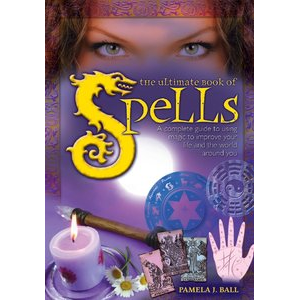
The Ultimate Book Of Spells

The Ultimate Book Of Spells Cover

Book: The Ultimate Book Of Spells by Pamela Ball

The Ultimate book of spells - A Complete Guide to Using Magic to Improve Your Life and the World Around You (2007) Arcturus Publishing ISBN 978-1-84193-577-5

This book is essential reference for anyone wishing to take control of their lives and become confident in the art of spell making...The book includes over 250 spells and techniques, covering every aspect of life and spiritual development. Whether it is creating opportunities for love, doubling your money or protecting your teenage daughter, there is a spell for everyone...With sections on the folkloric history of magic, astrology, divination and mysticism, the book provides the reader with a complete background to the art of magic. The complex social and cultural influence of spells is revealed, as well as their power to enrich and transform modern lives.

The desire to change and improve that which we have has been around for many thousands of years, if not since man first walked the earth. Magic and spell working have always been a part of that, and indeed still are today. Anyone who practises any form of magic, including spell working, needs to be grounded. This means having h feet firmly planted in reality and also having a basic knowledge of what
magic is and is not, what spells can and can’t do and what – with practice – you can do with the tools, information and knowledge you have. This book sets out to give you that information in as succinct a manner as possible.

Download Pamela Ball's eBook: The Ultimate Book Of Spells

Free eBooks (Can Be Downloaded):

Ancient Grimoires - The 6th And 7th Book Of Moses
Anonymous - Book Of Spells
Ancient Grimoires - The 8th Book Of Moses
Michael Johnstone - The Ultimate Encyclopedia Of Spells
Pamela Ball - The Ultimate Book Of Spells.pdf

The Pungo Witch

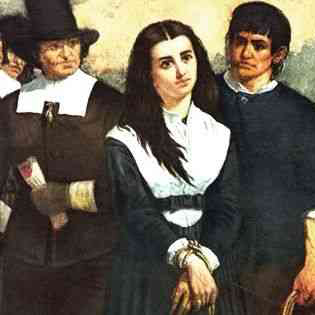
The Pungo Witch Cover The Pungo Witch, as she has come to be called, or in real life, Grace Sherwood, was accused of bewitching a neighbor's crop in 1698. Allegations of other 'witchy' things escalated over time in the Princess Anne County government. Her accusers decided to test her by 'ducking,' or, trial by water, her innocence or guilt determined by whether she floated or drowned. Drowning, by the way, was the GOOD outcome.

On July 10th, 1706 at ten o'clock, Grace Sherwood was tied by her thumbs, cross-bound and dropped into the western branch of the Lynnhaven River near what is now known as Witchduck Point in Virginia. Unfortunately for Sherwood, she floated. Guilty of being a duck? No, guilty of being a witch. She was imprisoned, and eventually released, but Sherwood lived the rest of her life quietly unvindicated, and died in 1740.

I guess they taught her a lesson, huh? Grace Sherwood was a midwife who would often wear men's clothing while working her own homestead. She went to court a dozen times to either defend herself or sue her neighbors for slander, yet never turned her back on a woman in need of her skills. She never married. Thus one can assume that then, as now, a woman who takes care of herself, a confident, competent woman, is suspect at best, ducked at worst, but always, apparently, in need of being taught to mind her place.

In 2006, she was pardoned by the Governor of Virginia, Timothy M Kaine--300 years after her ordeal. The wheels of justice sure do run slow, sometimes, but at least they turn.

Free eBooks (Can Be Downloaded):

Anonymous - The Laws For Witches
Margaret Alice Murray - The God Of The Witches
Alfred Elton Van Vogt - The Witch

Maxine Sanders Queen Of The Witches

Maxine Sanders Queen Of The Witches Cover Maxine Sanders is the famous Alexandrian High Priestess from England . I strongly identify with her, for I believe she was born with the Witchblood. As a teenager in the 1960’s, she defied the stereotype of the hag witch with the youth, beauty, and charisma of the Enchantress. Partnered with Alex Sanders, she was instrumental in bringing the old religion to public consciousness and the eventual quasi-acceptability we have today. Her lifetime of dedication to the Mysteries as healer, teacher, Initiator, and muse in the face social antagonism, media sensationalism, public adulation and envy, makes for one of the truly remarkable life stories of our time.

Free eBooks (Can Be Downloaded):

Bernard King - Meanings Of The Runes
Thomas Potts - Discovery Of Witches
George Lincoln Burr - Narratives Of The Witchcraft Cases
Michael Magee - Robin Hood And The Witches
Margaret Alice Murray - The God Of The Witches

Monday, September 27, 2010

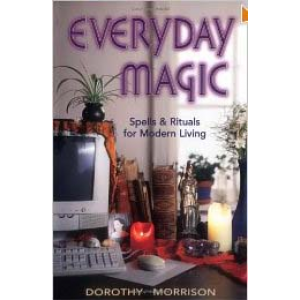
Everyday Magic Spells And Rituals For Modern Living

Everyday Magic Spells And Rituals For Modern Living Cover

Book: Everyday Magic Spells And Rituals For Modern Living by Dorothy Morrison

Is it time for a change? Is it time to improve your life with a better job, a happier home, or more romance? Then you need Everyday Magic by Dorothy Morrison! This is magic for modern Wiccans, and for everyone regardless of their religious affiliation. It is filled with hundreds of spells, chants, rituals, charms and formulas for incenses and oils. Every one is tested and powerful yet easy to use.

Everyday Magic is a well written book and it fit into my everyday living just as if it had been written for me personally. The modern day methods of dealing with the "old ways" of the craft amazed me. To go to a thrift store and pick up a cheap blender instead of trying to do so many herbal blends with the mortar. I was so mermerized with so many of Dorothy's modern gimmicks. Being able to improvise has always been big with me, Dorothy seems to do the same in her book.

Sure, there are spells for romance and prosperity. Those are as important today as they were a thousand years ago. But this book also presents magic that deals with today's problems. Speed up your computer's modem. Make sure your luggage arrives safely; ease labor pains; free yourself from anger; find a parking spot. These are all things we need and that you can do by following the simple instructions in this book!

One of the roadblocks to successful magical workings that many people face is finding the proper oils and incenses. Morrison's solution: Make them yourself! But don't use the old techniques that take hours, days, or even weeks to accomplish. Instead, you'll learn how to use common appliances such as a drip coffee maker, a blender, and a crock pot to create your own powerful incenses, oils, washes, brews, and more. What a practical timesaver!

And saving time in today's world is what this book is all about. Of course, if the spells, charms, rituals and techniques weren't practical and effective, saving time would be meaningless. Well, what you'll learn here is powerful -- and is presented by a woman who has been a Witch for more than 20 years and taught on two continents!

Dorothy Morrison has a daring point of view that magic is not just compatible with technology--the two can actually help one another. Since technology has made our lives more productive, surely it can enhance our magic too. (Have you ever thought of making your herbal infusions in an automatic-drip coffeemaker?) Technological assistance with magic is only part of the story. Morrison has filled a grimoire with charms that protect from car trouble and ensure the safe and timely arrival of luggage while traveling, and spells to keep a computer from crashing, which makes life in the 20th century a little less harrowing. Rather than fighting the progress of the electronic age, Morrison has tapped into the wealth it has to offer, and she shares her discoveries with anyone adventurous enough to try them.

The spells and rituals in here are all based on today's available materials. Trying to find something called dragon's blood was not easy for me. In this book, Dorothy makes it all so simple and still so effective. Spells of interest to the modern twentieth century housemate and businessperson. Spells and rituals that make so much sense and are so easily adaptable for my and others active lives.

I recommend, as I have many times, reading this book. I have read many and find this one to my liking on a high rating of "Way to go, Dorothy Morrison"
Excellent book and will keep an eye and ear open of reports of others from D. Morrison. Age, gender, and type of path are not even a stoppage point here. For all and then some.

Buy Dorothy Morrison's book: Everyday Magic Spells And Rituals For Modern Living

Free eBooks (Can Be Downloaded):

Kveldulf Gundarsson - Teutonic Magic The Magical And Spiritual Practices Of The Germanic Peoples
Tupman Tracy Ward - Theatre Magick Aleister Crowley And Rites Of Eleusis
Richard Alan Miller - The Magical And Ritual Use Of Herbs
Talismagick - Love Spells And Rituals For Love And Relationships

Sunday, September 26, 2010

Carl Llewellyn Weschcke Biography

Carl Llewellyn Weschcke Biography Cover Carl Weschcke is president of Llewellyn Worldwide Ltd, one of the largest publishers of occult and New Age books in the world. He is also a Magician, a Tantric practitioner, a Pagan and a former Wiccan High Priest who played a leading role in the rise and spread of Wicca and Neo-Paganism in America during the 1960’s and 70’s.

Weschcke was born into a Roman Catholic family on the 10th of September 1930 in St. Paul, Minnesota. Early in his life his paternal grandfather, who at the time was vice-president of the American Theosophical Society, exposed him to metaphysics and the occult. For his 12th birthday he presented the young Weschcke with his own astrological chart, after and guided by his grandfather, he became fascinated with astronomy, religion, the occult and reincarnation. His parents were vegetarian naturalists who practiced mind reading techniques, and were happy to discuss occult subjects with him. Even one of the houses they lived in had strange and mysterious thumps and bangs in the night, which were attributed to the ghosts of the deceased former owners. Such were the influences that shaped Weschcke’s early life and future path.

Weschcke was educated at the St. Paul Academy and graduated in 1948. He then went on to study at the Babson Business Institute in Massachusetts graduating in 1951 with a Bachelor of Science degree in Business Administration. After graduating he went to work in the family’s Pharmaceutical business, but found the work unfulfilling. He had a dream of becoming a publisher, which led him back to school studying for a doctorate in philosophy at the University of Minnesota. However, his longing to get involved with publishing caused him to leave the university before completing his course, and in 1960 he purchased the little known Llewellyn Publishing Co.

The Llewellyn Publishing Co. was the brainchild of the Welsh astrologer, Lewellyn George, who founded the Llewellyn Publishing Co. in Portland, Oregon during 1901. At that time it was a small mail order business with a limited focus specializing in selling three Astrology books and Calendars. Lewellyn George later moved the company to Los Angeles where he died in 1954. Weschche purchased the business in 1960 and moved it to St. Paul in Minnesota where he began to rebuild it. He quickly expanded the business to include a complete line of books on Astrology and the Occult, and within a decade was publishing some thirty to fifty titles a year, including audio and videotapes. He also launched a series of magazines including: New Dimension, Gnostica, Astrology Now, New Times and New World.

In 1973, Weschcke helped to form and organize the 'Council of American Witches' and became its first Chairman. During his brief tenure as Chairman he drafted the now famous 'Thirteen Principles of Belief' statement, which he considers his proudest accomplishment for the Craft. The statement was later incorporated into the U.S. Army’s handbook for Chaplains. That same year his wife gave birth to their son who they named Gabriel.

By the mid-1970’s Weschcke began to wind down his public activities, feeling his publishing business was starting to stagnate. Weschcke believed his constant media publicity and its resulting attention was the cause of it, and so resolved to do something about it. Selling the haunted mansion on Summit Avenue he moved the family to the country where he could spend and devote more time to them. He restructured the business by closing the bookstore, dropping the festivals and increasing the number of book titles they were publishing. He also included computer software to his range of audio and videotapes.

The Weschckes continue to support the Wiccan and Pagan communities primarily through their publishing, and many of their Authors are sent out to organized conferences and activities. Today, most of their time is taken up by the demands of their business, which by the mid 1990’s had grown into a medium sized publishing house issuing about 100 new titles a year, spanning the general Spirituality and New Age markets. Their son Gabriel, holds a master’s degree in publishing science from Pace University, New York, and now works for the business as its regional sales manger.

Weschcke holds two honorary doctorates, one in magick, and was for a time the Grandmaster of Aurum Solis, an international magickal Order originally founded in England in 1897, but now based in St. Paul. He withdrew from the Order in 1991 and is currently not affiliated with any group. His media prominence during the 1960's and 70's did much to bring Wicca and paganism into the light of acceptability in a skeptical American society.

Free eBooks (Can Be Downloaded):

Valentina Izmirlieva - All The Names Of The Lord
Ann Moura - Green Witchcraft
Michael Night Sky - Carl Liewellyn Weschcke Bringing Magick To The Masses

Tuesday, August 17, 2010

The Mysterious Pentagram

The Mysterious Pentagram Cover The Pentagram means different things to different people. Some may argue as to what it represents, but I will tell you the real meanings of it. The Pentagram right side up represents God ruling over the world of matter. The 5 points represent the 5 places that Christ was wounded. This is why Devils are afraid of it! It also represents the Microcosmic man with his arms stretched out.

Let us not forget that it also represents the elements Spirit, Water, Air, Earth, and Fire as shown below.
This is used by most people in Witchcraft.

Now there is also the upside-down Pentagram. It represents Satan or the world of matter ruling over God. It is the same as denouncing God. To wear it is to attract evil around you. It will not bring good spirits around you. Normally it is only worn by Satanists or devil worshipers. So if you wish to attract good spirits around you... wear it right side up!

Many mainstream religion believers think that they are both evil and represent the Devil. But that is because they are so... ignorant and blind to the fact that there is a difference. It shows their lack of study on the true facts of history. I wear the right side up Pentagram and I personally have had many people come up to me and ask me if I am a Devil worshiper! This really pisses me off! But I explain the reality to them.

Free eBooks (Can Be Downloaded):

Reynold Nicholson - The Mystics Of Islam
Greg Wotton - A Mystery Of The Pentalpha
Captain William Morgan - The Mysteries Of Freemasonry
Franz Cumont - The Mysteries Of Mithra

Monday, August 2, 2010

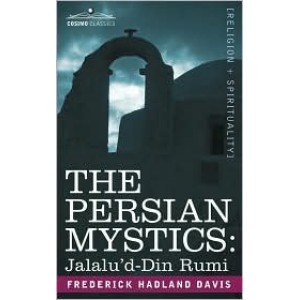
The Persian Mystics Jalaluddin Rumi

The Persian Mystics Jalaluddin Rumi Cover

Book: The Persian Mystics Jalaluddin Rumi by Frederick Hadland Davis

Rumi (1207-1273) was a Persian jurist and theologian best known for being perhaps the finest of all Sufi poets. His writings have been widely translated and remain especially popular in Iran, Afghanistan, and Tajikistan. Though written from a Sufi perspective, Rumi's poems on spiritual growth-here collected and edited by F. Hadland Davis and first published in 1907-cross all cultural and Religious bounds, and can still be heard today in many secular and religious settings.

The Persian Mystics: Jalalu'd-din Rumi includes selections from some of Rumi's most famous works, the "Divani Shamsi Tabriz" and the "Masnavi," as well as passages on his life and work, and the origin and nature of Sufism.

Download Frederick Hadland Davis's eBook: The Persian Mystics Jalaluddin Rumi

Free eBooks (Can Be Downloaded):

Reynold Nicholson - The Mystics Of Islam
Frederick Hadland Davis - The Persian Mystics Jami
Frederick Hadland Davis - The Persian Mystics Jalaluddin Rumi

Wednesday, July 28, 2010

Good Witch Or Bad Witch

Good Witch Or Bad Witch Cover There are many types of witches. That is a fact. However, most witches do not use their powers or abilities for inflicting harm unto others. This is a very common misconception. A large amount of witches use their abilities to aid others in not only soul-searching tasks but to rid and teach how to rid negative energies from one's life. We are often judged as worshipers of a "devil" or "Satan." That is a big contradiction to most of us. A majority of witches do not even believe in a "God of the Devils" aka "Satan." However, we are often scrutinized for stating this because some will say (just as in the olden times) "If you believe in the devil, you are a worshiper...If you say you don't....you are more susceptible to his powers." It is a TOTAL catch 22 for all witches. That was also the method used in the witch Trials.

One suggestion: Please don't ask a witch if he or she "is a good witch or a bad witch." That is just the same as asking a Christian if "they are a good Christian or a bad Christian." Besides, you may get an answer you didn't expect!

Books You Might Enjoy:

Zoroaster - The Chaldean Oracles
Ro Winstedt - Shaman Saiva And Sufi
Carl Mccolman - The Well Read Witch
Anonymous - Witchcraft A Guide To Magic

Saturday, July 24, 2010

Who Was Responsible For Great Witches Hunt

Who Was Responsible For Great Witches Hunt Cover The medieval witch-hunts have long been depicted as part of a "war against women" conducted exclusively or overwhelmingly by men, especially those in positions of central authority. Deborah Willis notes that "more polemical" feminist accounts "are likely to portray the witch as a heroic protofeminist resisting patriarchal oppression and a wholly innocent victim of a male-authored reign of terror designed to keep women in their place." (Willis, Malevolent Nurture, p. 12.)

In fact, the stigmatizing, victimizing, and murdering of accused "witches" is more accurately seen as a collaborative enterprise between men and women at the local level. "The historical record suggests that both men and women found it easiest to fix these fantasies [of witchcraft], and turn them into horrible reality, when they were attached to women. It is really crucial to understand that misogyny in this sense was not reserved to men alone, but could be just as intense among women." Most of the accusations originated in "conflicts [that] normally opposed one woman to another, with men liable to become involved only at a later stage as ancillaries to the original dispute." Briggs adds that "most informal accusations were made by women against other women, ... [and only] leaked slowly across to the men who controlled the political structures of local society." At the trial level, his research on the French province of Lorraine found that

women did testify in large numbers against other women, making up 43 per cent of witnesses in these cases on average, and predominating in 30 per cent of them. ... A more sophisticated count for the English Home Circuit by Clive Holmes shows that the proportion of women witnesses rose from around 38 per cent in the last years of Queen Elizabeth to 53 per cent after the Restoration. ... It appears that women were active in building up reputations by gossip, deploying counter-magic and accusing suspects; crystallization into formal prosecution, however, needed the intervention of men, preferably of fairly high status in the community." (Briggs, Witches & Neighbours, pp. 264-65, 270, 273, 282.)

Deborah Willis's study of "Witch-Hunting and Maternal Power in Early Modern England" similarly finds it "clear ... that women were actively involved in making witchcraft accusations against their female neighbours":

[Alan] Macfarlane finds that as many women as men informed against witches in the 291 Essex cases he studied; about 55 percent of those who believed they had been bewitched were female. The number of witchcraft quarrels that began between women may actually have been higher; in some cases, it appears that the husband as "head of household" came forward to make statements on behalf of his wife, although the central quarrel had taken place between her and another woman. ... It may, then, be misleading to equate "informants" with "accusers": the person who gave a statement to authorities was not necessarily the person directly quarreling with the witch. Other studies support a figure in the range of 60 percent. In Peter Rushton's examination of slander cases in the Durham church courts, women took action against other women who had labeled them witches in 61 percent of the cases. ... J.A. Sharpe also notes the prevalence of women as accusers in seventeenth-century Yorkshire cases, concluding that "on a village level witchcraft seems to have been something peculiarly enmeshed in women's quarrels." To a considerable extent, then, village-level witch-hunting was women's work. (Willis, Malevolent Nurture, pp. 35-36.)

These comments and data serve as a reminder that gendercide against women may be initiated and perpetrated, substantially or predominantly, by "other women," just as gendercide against men is carried out overwhelmingly by "other men." The case of female infanticide can also be cited in this regard. Patriarchal power, however, was ubiquitous at all later stages of witchcraft proceedings. Men were exclusively the prosecutors, judges, jailers, and executioners -- of women and men alike -- in Europe's emerging modern legal system.

Books You Might Enjoy:

Thomas Moore - Candle Magick For Love
Richard Weiss - Recipes For Immortality
Marian Green - A Witch Alone
Thomas Muldoon - Numerology For The 21st Century
Janet Farrar - A Witches Bible The Complete Witches Handbook

Who Is A Witch

Who Is A Witch Cover The origin of the word witch predates the Anglo-Saxon period. Etymologically, the word has been derived from an Old English masculine noun wicca, the feminine being wicce. The word ‘wicker’ in old German also stood for a soothsayer. A soothsayer is a fortune-teller or psychic.

In routine usage, a witch is a feminine noun for wizard or sorcerer, but the former has different functional connotations from its masculine counterpart. While a wizard or a sorcerer may have some element of manipulativeness in their craft, a witch, though a practitioner of witchcraft, is far from being a crafty person. A witch is essentially a very noble and deeply religious person whose purity of heart combined with spiritual and meditation practices bestow her with a deeply religious and mysterious aura. A witch does not act with any ulterior motives, not to mention any machinations in her pursuits. A witch is a very compassionate person, gifted with supernatural powers and works for the alleviation of pain and suffering of her fellow human beings and brings them the much needed solace and succor.

A highly misunderstood, deeply suspected, much maligned and doggedly hounded person especially during the middle ages, a witch has regained lost ground and has acquired a respectable position in the society. Colloquially, the term witch, applied most often to a female, also includes male practitioners of witchcraft, especially Wicca. Witches believe in certain ethical codes and strictly adhere to them.

A witch engaged in her witchcraft practices spells developed by worshiping many deities primarily the supreme Goddess and sometimes her consort the God. The craft or workings of a witch are used for healing the acute health problems. For curing these problems, she uses the personal powers in combination with energies within candles, stones, herbs and other natural items. Witch practices witchcraft to help better the world and mankind. A witch certainly is not ugly, nefarious, dreadful hag who worships the devil or hurts the people as the stereotype image presents her to be.

A witch derives her strength from Paganism, which is influenced by ancient, primarily pre-Christian and sometimes pre-Judaic religion. A witch has deep faith in the elements of Nature such as earth, fire, nature, air, and water. Fire cleanses and has an aura that transports her into the astral world and enables her to view this world with psychic clarity. Water purifies.connects with the Goddess herself. The air is an all-enveloping blanket of gods. It wraps around the witch and lifts her to the divine immenseness and freedom of the skies. The spirit of the witch gets united with the air and floats freely in the sky. The witch achieves this uplifted state through meditation, perseverance and sometimes she is blissfully born with these talents.

A witch is just as ordinary looking person as any one in your neighborhood. She can be a housewife with kids doing her daily domestic chores. She too has her share of emotions, but they function more at a macro level than at personal. So if she is feeling sad, the sadness is not just due to some personal vested interest, but it is born out of the suffering of the world around her. Another difference between a witch and an ordinary woman is that a witch can commune with her goddess. The commune is just meant to bare her soul reaching a complete state of oneness. A witch may even cry before the alter of her goddess whenever she feels a spiritual vacuum and wants to replenish it with godliness.

A witch performs her craft using many rituals such as worshiping alone or in covens in the alter room. She lights candles, incense, chants incantations and worships her deities or goddesses. She meditates while staring into the candle flames and in the course of meditation, she feels her spirit leaving her body and enters into trance. A witch gets lost in the awesome power of the Fire with her mind dancing with the flames of the candles. Insightful images deluge her head and become a permanent part of her psyche.

Witches also practice necromancy and summon spirits of the dead to gain knowledge of the future events from them. These spirits are called Operative Spirits or the Spirits of divination.

Books You Might Enjoy:

Michael Bailey - Historical Dictionary Of Witchcraft
Howard Phillips Lovecraft - Cults Of Cthulhu
Mike Nichols - Eight Sabbats Of Witchcraft
Louise Huebner - Witchcraft For All
Paul Huson - Mastering Witchcraft

Thursday, July 22, 2010

What Is A Kitchen Witch

What Is A Kitchen Witch Cover What is Kitchen Witchery?:

There's a growing movement within modern paganism known as kitchen witchery. The kitchen is, after all, the heart and hearth of many modern households. When you have a gathering in your home, where do most of your guests hang out? Why, the kitchen, of course! Also, thanks to a declining economy, many more people are making meals from scratch and the kitchen has once again become a place where people spend hours, rather than minutes. So it's no surprise that kitchen witchery has seen a rise in popularity.
Meal Prep as Magic:

When you take the time to put meals together from the basic ingredients, you have a magical opportunity at hand. You can infuse every dish with intent and will. A meal can stop being something you dump out of a can, and start being a ritual in and of itself. When you take time to prepare something with your own hands, that lends it sacredness, and will make you want to spend time savoring it with your family, rather than just snarfing it down on your way out the door to soccer practice. By changing the way you view food, its preparation and its consumption, you can craft some practical magic at its simplest level.

Books You Might Enjoy:

Tarostar - The Witchs Spellcraft Revised
Aj Drew - A Wiccan Bible
Michael Harrison - The Roots Of Witchcraft

Wednesday, July 21, 2010

The Witch Of Tradition

The Witch Of Tradition Cover FOURTEEN years ago a very distinguished literary colleague of George Bernard Shaw said to me: "Shaw is in senile decay." Ten years later I went to see Shaw's "Joan"; and I concluded that if the dramatic feeling, the mastery of stage-craft, the agility and sureness of insight into human nature, of that remarkable play were symptoms of advanced senility I would reconsider my design to avoid that normal period of existence.

And the play just as plainly indicates the strength or stubbornness of its author in its chief defect; it is an historical play and it is entirely unhistorical. Many years ago Shaw decided that historians do not know how to write history, and he would teach them. Unfortunately, in order to grasp the truth of a single personality of an earlier and different age one has laboriously to learn a mass of detail about that age, and labor of that kind does not fascinate men of febrile imagination. Shaw cannot write history.

Was Joan of Arc a witch? Shaw may have heard that there are a few quite scholarly people who think it possible that she was. Scholarly people, he would say, can believe anything. He robustly excludes the very possibility. The charge of witchcraft against "the Maid" was a mere pretext of priests and politicians; and Shaw, in his scorn of science and Rationalism, so surprisingly exonerates the priests and the Inquisition in his play that a Catholic weekly actually announced that he was about to enter the Church.

The murder of Joan was plotted by soldiers and statesmen -- English soldiers and statesmen, of course and the poor priests were bullied and cajoled into a tragicomic trial for witchcraft.

It was quite plain that Mr. Shaw does not know that our idea of witchcraft has been radically altered. He does not even know that one of the characters he introduced into his play, Gilles de Rais, the original "Bluebeard," was, not the indolent court-fop and trifler be makes him, but a very stern and earnest young man, Joan's most intimate friend, and a witch. Probably Shaw does not know that there were male witches as well as female, and that the child in her mother's arms, the maid of fifteen or the winsome young mother of twenty-two, might be a witch just as easily as the old wrinkled dame who lived in a cottage on the edge of the wood and gathered her herbs by the light of the moon.

It is this new conception of witchcraft, which we will explain in this chapter, and will apply to the trial of Joan of Arc, that brings the subject within the program of religious controversy which I am realizing. This horrid massacre of women age by age was tragic enough even on the old conception of witches. Any old dame, widow or spinster, who was wise enough to wish to avoid the cackle of her empty-headed neighbors was apt to be suspected of witchcraft. The child who fell ill -- inoculated by the open drain or cess-pool by the door -- had passed her in the street, and so had clearly been bewitched. The mother who had a miscarriage, the farmer whose pigs sickened. ... The witch! Drown her out of hand, or, less humanely, let the priest see to it; and then the horrors of trial and torture will be added to the injury of death.

This thing occurring during many centuries all over Christendom concerns us just as much as does the beauty of a cathedral. I am not indicting the Church: not merely gathering all the dishonoring facts which can be picked here and there out of the history of medieval Europe. We are seriously studying the effect upon civilization of the acceptance and world-establishment of Christianity. It created a new frame of mind, a new outlook on life, a new character; and this new spirit expressed itself in, amongst other things, the torture and burning or drowning of some hundreds of thousands, if not millions, of men and women on the ground that they were witches. And the crime was directly inspired by the new religion. The sole inspirations of the murderous attitude were belief in the devil and the express statement of the Bible that witches were in league with evil spirits and must be put to death. In the fully developed law of the Church witchcraft was heresy. It was a religious crime.

This was dreadful enough even if we suppose, as is commonly supposed, that the murdered women were yellow, soured, misanthropic old dames from whom death was in any case not far distant. No doubt a poor, brooding, solitary old woman would be more likely than any other in the village to incur popular suspicion. Harenet, one of the earliest English denouncers of the belief in witchcraft (though no modern book ever mentions him), before the end of the seventeenth century thus ironically reminded the witch-hunters of one common type of their prey:

An old woman with a wrinkled face, a furrowed brow, a hairy lip, a gobber tooth, a squint eye, a squeaking voice, or a scolding tongue, having a ragged coat on her back, a spindle in her hand, and a dog by her side -- a wretched, infirm and impotent creature, pelted and persecuted by all the neighbors because the farmer's cart had stuck in the gateway, or some idle boy had pretended to spit needles and pins for the sake of a holiday from school or work.

Life was hell to these old dames for near a thousand years after the establishment of the religion which is said to have uplifted woman.

Yet Catholic literary men and priests and Protestant preachers, who are rarely serious students of history, find this old-hag theory of witchcraft convenient. Sorry for the old ladies, of course, but ... You can understand it, can't you? The edge of your resentment is dulled. The glib word-spinners remind you of the vivid faith of those heroic days -- the greater sensitiveness to the devil's work in the world -- the living fear of God, and so on. In other works I tell enough about the real Middle Ages to spoil this pretty argument.

But a worse error of these apologists, the popular fallacy which is still all but universal in Christendom, is to suppose that the witches were even for the greater part old women. Thousands of reports of witch-trials have now been studied, and from the hundreds that I have myself read at least in summary, I should say that feeble old dames were a comparatively small minority. Maids in their teens, like Joan of Arc, are appallingly common amongst the victims. Young women in their twenties and thirties, strong and defiant of the priests, seem to be almost in the majority. Men are frequent amongst them; and the men include numbers of priests, nobles, lawyers, etc. Let me quote the translation of a letter written at Wiirzburg during the persecution there in 1629:

There are still four hundred in the city, high and low, of every rank and sex -- nay, even clerics -- so strongly accused that they may be arrested any hour. Some out of all offices and faculties must be executed; clerics, counselors, doctors, city officials and court assessors. There are law students to be arrested. The prince-bishop has over forty students here who are to be pastors; thirteen or fourteen of these are said to be witches. A few days ago a dean was arrested; two others who were summoned have fled. The notary of our church consistory, a very learned man, was yesterday arrested and put to torture. In a word, a third part of the city is involved. A week ago a maiden of nineteen was put to death, of whom it is everywhere said that she was the fairest in the whole city and was held by everybody a girl of singular modesty and purity. She will be followed by seven or eight others of the fairest. There are three hundred children of three or four years of age who are said to have had intercourse with the devil. I have seen put to death children of ten, promising students of ten, twelve, fourteen, fifteen, etc.

This is not a page from some history of witchcraft in which the writer is rhetorically embroidering a statement of a contemporary chronicle. It is part of a letter written at the time, the year 1629, in the city of Wiirzburg itself, and by no less a person than the bishop's chancellor. No more veracious document could be imagined. And it is just by chance that in a single city out of hundreds we get this contemporary and authoritative account of the terror that for a time blanched the faces of the citizens.

This single passage must, although it belongs to an exceptionally ferocious period of witch-hunting, convince any reader at once that the popular idea of witchcraft is entirely false. I say "popular," but it is singular how slow even scholars, historians and scientists, have been to grasp the remarkable significance of the witch-movement. In the latest edition of the "Encyclopedia Britannica," which is certainly the finest work of general reference to which the public can turn for information, the article on "Witchcraft" is totally inadequate. The author is a competent ethnographer, yet he writes almost entirely from the traditional point of view. Only in the last few lines he mentions the very suggestive fact, without perceiving its significance, that in Italy today witchcraft is still called la vecchia religione "the old religion" -- and that in its historical phenomena we must recognize a stratum of popular beliefs which are "derived in the main from pagan sources.

The "New International Encyclopedia" is no better, and the generally very able and informing "Dictionary of Religion and Ethics" entirely omits the subject. Yet one point which is quite fatal to the popular conception has been established in every history of witchcraft. This is that witches were not merely, or even usually, old women whose repulsive forms or isolated lives drew popular suspicion upon them. The fairest maids of a town were just as liable to be dragged before the Roman Inquisition or the Protestant bishop as was the old dame who lived alone on the outskirts of the village. Hundreds, if not thousands, of maids like Joan of Arc were drowned or burned at the stake as witches. Women of all ages, from the babe upward, were arraigned. Women of every rank figure in the lists of victims. Men also of every rank and degree of education or illiteracy enter the chronicle. Theologians, lawyers, nobles, and leaders of armies are found as well as peasants and artisans.

And it will further transpire that even the young women met the sentence of death in the same spirit as the girl-martyrs -- the very few genuine girl-martyrs -- of the early Church. They spat at the religion of their Christian persecutors. They had, they said, a higher religion, and would die rather than abjure it. The Church, it is true, in most cases left them no opinion. By a refinement of brutality it enjoined that they should be fiendishly tortured to extract confessions; then, in order to have a formal assurance of their guilt, it held that confessions thus wrung from them in the agony of torture were "voluntary confessions"; and finally it said that, since conversions professed out of fear of torture were unreliable, the witches might and ought to be put to death. Most of them, therefore, suffered death in silence. But in numberless cases they defied their tormentors and murderers, and boasted that they died for a greater faith than the belief in Jesus.

Hence there is an increasing tendency to regard witchcraft as an organized religion. The best history of witchcraft is Dr. W.G. Soldan's "Geschichte der Hexenprozesse," as edited by Max Bauer in 1911: a fine two-volume work superbly illustrated, which has unfortunately not been translated. In the final chapter the Authors discuss all the views of witchcraft during the last hundred years, and they fail to realize its full significance. They are disposed to regard too many details as mere concessions under torture to the queries of the judges or as hysterical illusions.

Much sounder, though it is little more than an account of trials in England, is Miss M.A. Murray's "The Witch-Cult in Western Europe" (1921). Miss Murray, of London University, has written a model work within her limits: candid and scholarly. The reader will find it a revelation and, in spite of the tragedy, a most entertaining work. Her conclusion is (p. 1 2):

The evidence proves that underlying the Christian religion was a cult practiced by many classes of the community, chiefly however by the more ignorant or those in the less thickly inhabited parts of the country. It can be traced back to pre-christian times and appears to be the ancient religion of western Europe. The god, anthropomorphic or theriomorphic, was worshiped in well-defined rites; the organization was highly developed; and the ritual is analogous to many other ancient rituals. The dates of the chief festivals suggest that the religion belonged to a race which had not reached the agricultural stage. ... It was a definite religion with beliefs, ritual, and organization as highly developed as that of any other cult in the world.

In saying that it was chiefly the religion of the more ignorant, Miss Murray seems to have forgotten that at least ninety-five percent of the people of Europe were then illiterate, and she, perhaps gives a wrong impression as to the survival of the religion from pre-christian times.

While psychologists have been busy applying their formulae to the mind of the witch -- and have generally come to wrong conclusions -- historians have been collecting the scattered evidence, analyzing the reports of trials, and constructing an entirely new idea of the witch-movement. It was the strongest and most widespread in the most enlightened, or least illiterate, centuries of the Middle Ages. The solution is that the medieval Church was right in its idea. Witchcraft was organized heresy, a formidable revolt against Christianity.

Books You Might Enjoy:

Kathryn Paulsen - Witches Potions And Spells
Will Herberg - The Writings Of Martin Buber
Phil Hine - Aspects Of Evocation

Monday, July 19, 2010

Mother Shipton And The Prophecies Of Mother Shipton

Mother Shipton And The Prophecies Of Mother Shipton Cover Mother Shipton was a Yorkshire witch whose prophecies predicted the fates of several rulers within and just after her lifetime, and who even managed to predict the future after her death amazingly accurately -- including the invention of iron ships, and then the destruction of London, and even the end of the world.

But in all probability, Mother Shipton is a legend, popular first in Yorkshire, England. The prophecies themselves evolved in each re-publication of her story, in different decades and centuries.

In 1862, in Victorian Britain, bookseller Charles Hindley published a prophecy and credited it to a "Mother Shipton," and claimed that it came from a 1684 publication by Richard Head, The Life and Death of Mother Shipton.

The 1684 publication by Richard Head contained many other prophecies, supposedly from a Mother Shipton, but not the one quoted by Hindley in 1862. A 1686 publication about Mother Shipton credited to Edwin Pearson is thought to have been written by Head, as well.

In a 1641 pamphlet on Mother Shipton's prophecies, which is the first known reference to Mother Shipton, she is said to have predicted deaths of famous people accurately, including Cardinal Wolsey.

Another story of Mother Shipton was published in 1645, a comedy about Mother Shipton appeared in 1660, another version of Shipton's life and prophecies was published in 1740 by John Tyrrel, and another was published in 1797.

The 1797 publication attributes a birth date of 1488 and a baptismal name of Ursula Southiel (Sowthiel or Southhill) to Mother Shipton. The 1684 publication by Richard Head gives her mother's name as Agatha and identifies the Devil as her father.

In the 1862 version by Charles Hindley, Mother Shipton predicts the end of the world in 1881. In 1881 there was some panic in Britain as the prophecy had become accepted as true even though in 1873, Charles Hindley confessed that he had made up this prophecy.

In 1740, Mother Shipton, a legendary Yorkshire witch and prophet, was credited with this prophecy of the end of London.

Time shall happen A Ship shall sail upon the River Thames, till it reach the City of London, the Master shall weep, and cry out, Ah! What a flourishing City was this when I left it! Unequalled throughout the World! But now scarce a House is left to entertain us with a Flagon.

In John Tyrrel, Past, Present and To Come: or, Mother Shipton's Yorkshire Prophecy, 1740.

Books You Might Enjoy:

John Dee - The Practice Of Enochian Evocation
Robert Anton Wilson - Prometheus Rising
Graham Hancock - The Message Of The Sphinx
John Dee - The Hieroglyphic Monad French Version
Michael Harrison - The Roots Of Witchcraft

Popular Posts