Showing posts with label site witch. Show all posts

Sunday, October 3, 2010

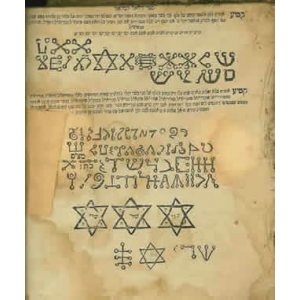
The Book Of Raziel The Angel Or Sefer Raziel Hamalakh

The Book Of Raziel The Angel Or Sefer Raziel Hamalakh Cover

Book: The Book Of Raziel The Angel Or Sefer Raziel Hamalakh by Medieval Grimoires

The Book of Raziel the Angel is a medieval Hebrew Grimoire originally written in Hebrew and Aramaic. We understand that ther is a Latin translation titled Liber Razielis Archangeli, produced under Alfonso X in the 13th century. Like many other mystical manuscripts the Book of Raziel has suffered many from the production of many versions.

The Grimoire contains five Books which cover such secrets as, the mysteries of creation, the production of magical talismans, the angels, the Zodiac, Gematria and the names of God. It draws heavily on the Sepher Yetzirah and Sepher Ha-Razim.

The Book was reputed to have been given to Adam by the Angel Raziel in order to teach Adam the spiritual laws of nature, knowledge of the planets, stars and the spiritual laws of creation. Raziel also taught Adam the knowledge of the power of speech, thought, the Hebrew alphabet and how to co-exist harmously with the physical and spiritual worlds.

The Book is still available today, and a Hebrew version may be obtained from any good Jewish bookshop for it is still believed that the book has power. However, it is forbidden to open the book or read it because of its inherent power. Therefore many keep their copies sealed. Finally, by tradition no charge may be taken for the book!

Download Medieval Grimoires's eBook: The Book Of Raziel The Angel Or Sefer Raziel Hamalakh

Free eBooks (Can Be Downloaded):

Benjamin Rowe - The Book Of The Seniors
Michal Jerabek - The Book Of Enoch Vol V The Epistle Of Enoch
Medieval Grimoires - The Book Of Raziel The Angel Or Sefer Raziel Hamalakh

Biddy Early Biography

Biddy Early Biography Cover Biddy Early was a famous Irish seer and healer, a cunning woman of the nineteenth century, often identified as Biddy 'The Healer', 'The Wise Woman' or 'The Witch'. Much of what is known about her has been passed down from oral tradition and blended into myth and folklore, as such, there is much “poetic licence” used to recount her life. However, in real life she does seem to have had some genuine powers of healing and clairvoyance, for she was widely consulted for her cures and council. Many believed she was of the sidhe (fairies).

Born Bridget Ellen Connors in lower Faha near Kilanena in 1798, Biddy was the daughter of a small land farmer, John Thomas Connors and his wife Ellen Early. Biddy is described as being small in statue and pretty, a woman who kept her good looks throughout her life. While married four times, she always used her mother's maiden name, believing that her gifts were inherited through the female line. Her mother taught her all about herbs and how to make potions, just as her own mother had taught her.

At the age of 16 when her parents died, Biddy was evicted from their home and forced to work as a serving girl in the nearby towns of Feakle and Ennis. In 1817 she met and married widower Pat Mally, a middle-aged man from Gurteenreagh, who died a short time later. After the death of her first husband, she married his son, her “stepson”, John Mally with whom she had a son called Paddy. Her son Paddy died when he was just 8 years old, of the fever (typhus), a common sickness in those times. After which Biddy started to use her healing powers, giving out herbal cures tied-up in small sachets, and liquid potions in small bottles with strict instructions for how they should be used.

Biddy’s powers of clairvoyance are credited to a mysterious dark bottle. How this “magic” bottle came into her possession, has since become part of her myth and legend. Some believe her late husband Pat Mally gave it to her before he died, or her son before he died; others believe it came to her from the “sidhe” (fairies). There are some stories that say she was away with the sidhe, and went to live among them for a time as a child. As a little girl it was said she could see and talk to the sidhe in their own language, which was different from Gaelic and that they taught her how to use her gifts.

She was instructed that by looking into the bottle with one eye and keeping the other eye open, she would be able to see what ailed people and view the future. In exchange for this ability, she was never to charge money for her services, or she would lose the power. She could accept gifts, but was to give away whatever was left over from her own needs. She must never allow others to look into the bottle, or else they would either die or go mad. By using the bottle, Biddy always knew when a person was about to visit her, and whether they had gone to a doctor or a priest first. If they had, then she usually refused to treat them unless she was in a good mood.

In 1840, her second husband died of a liver ailment, most likely due to an excess consumption of alcohol. Biddy quickly married again, her third husband was Tom Flannery from Carrowroe in County Clare. She and Tom moved into a cottage on Dromore Hill in Kilbarron, overlooking Kilbarron Lake that locally became known as Biddy Early's Lake. By this time Biddy’s reputation as a healer and seer had spread, for it was here that she created her most powerful cures, and hundreds of people came to seek her out. It is said the road to her house was always full of those traveling to see her.

Biddy also brought relief to animals, and treated them with great care. In her time, the death of an animal could bring particular hardship to people living in a mainly rural farming community. Animals were relyed upon for everyday living, and to lose one could lead to eviction if farming chores were not compelted. Many of the stories about Biddy include tales of her healing a family’s most important horse or cow. She also helped many people restore their wells, often the only source of clean water, to solve problems that women ran into while churning butter. Water and butter were also vital to a peasant’s everyday life.

During the nineteenth century, superstitious belief in fairies and all things apparently supernatural was very strong, and when something happened that appeared to be miraculous, without the aid of the church, it was commonly and easily attributed to witchcraft and the devil. As such the local church viewed Biddy with suspicion, and all the local clergy were totally opposed to her. As her fame spread they even tried to warn off people who went to visit her. One story of the churches opposition occurred in 1865. While visiting friends in Ennis, Biddy was charged with Witchcraft under the 1586 statute, however the case was dismissed due to a lack of sufficient evidence. Many of the local people stood their ground against the clergy, maintaining she did nothing but good works.

In 1868, her third husband Tom died, but Biddy now seventy years old, still only looked fifty, and a year later married her fourth husband Thomas Meaney. However he too got sick and died within the year. Many believed her husbands all died from alcohol abuse, as there was so much whiskey and other strong liquors brought to her in payment. Her husbands did not need to work as she herself provided everything through her healing work. After her last husband died, Biddy’s own health slowly deteriorated, she died in April 1874 with a rosary around her neck and her mysterious dark bottle wrapped in a red shawl beside her.

Before her death and despite their differences, Biddy had befriended one of the local priests and asked him not to let her bottle fall into the wrong hands when she died. According to her wishes, the priest took the bottle and hurled it into Kilbarron Lake. Since then, such was the belief in Biddy’s legend, many attempts to trawl the lake in search of the bottle have been made, but to this day it has never been found.

Free eBooks (Can Be Downloaded):

Michael Prescott - Darklore
Anonymous - The Legal Basis For Wicca
Janus Lacinius Therapus - The New Pearl Of Great Price.pdf

Saturday, October 2, 2010

The Fifth Sacred Thing

The Fifth Sacred Thing Cover

Book: The Fifth Sacred Thing by Starhawk

I love this book. I didn't like it at first, but I decided to give it an hour before I made up my mind. Now I am really glad I stuck with it, because it is one of the richest, most thought-provoking books I have ever read.

I had this book on my shelf for several years before I actually read it. Although it obviously sounded good enough at the time I bought it, I feared that it would be preachy and overbearing. It was nothing of the sort. The characters are complex; flawed at times, saintly at others. The story is compelling, combining plots about the personal growth of the various characters, adventure stories as Bird escapes from prison and Madrone ventures into the southern wilds to help the freedom fighters, and the ultimate show down between the San Franciscans and the Stewards. It is a bit simplistic, perhaps, but that didn't stop me from wishing things in reality were more like they are in Maya and Madrone's world. The attempts to portray this world as one free of any racial or sexual bigotry do get a bit heavy handed at times, but never so much that it interfered with my enjoyment of the story. I would recommend this book to anyone, and in fact immediately after I finished Ran out and bought a copy to give as a gift this Christmas.

One of the greatest questions is - how do people resist the violent advances of others without becoming violent themselves? We can look to others for inspiration - HH the Dalai Lama, Gandhi, MLK - there have been a few who have managed to hold on to their ideals despite the crimes inflicted upon them. But how do we do this ourselves? How do we maintain peace within ourselves?

This book discusses these issues on a societal level, but the wisdom you will gain can be applied on a personal level. You will likely find yourself rethinking how you view numerous things - from illness to monogamy.

And the story is interesting and creative, with characters you will come to care about. This is a fantastic book. Go ahead and give it some time - you will probably love it, too!

Buy Starhawk's book: The Fifth Sacred Thing

Free eBooks (Can Be Downloaded):

Friedrich Max Muller - The Sacred Books Of The East
Solomonic Grimoires - The Book Of Secrets
Aleister Crowley - His Secret Sin

The Egyptian Book Of The Dead

The Egyptian Book Of The Dead Cover

Book: The Egyptian Book Of The Dead by Ea Wallis Budge

"The Egyptian Book of Dead"—the ancient Egyptian title is ‘rw nw prt m hrw’ , roughly translated as “Spells of Going Forth by Day” — was written by the ancient Egyptians as a sort of guide to help newly deceased souls as they crossed over into the afterlife. It was usually written on a papyrus scroll which was sent with the prepared body in its coffin or burial chamber.

German Egyptologist Karl Richard Lepsius first used the title, “Book of the Dead” in a selection of Texts he published in 1842. Since then, the word “Egyptian” has been added and it has become the generally accepted title of the book. E. A. Wallis Budge published this translation in 1901 and, as an important version, it is still in print to this day.

The Book of the Dead was the product of a long process of evolution from the Pyramid Texts of the Old Kingdom (writings on the crypt walls intending to help the dead person) to the Coffin Texts of the Middle Kingdom (similar writings, placed on the outside of a coffin). Eventually, many of these texts were written on papyrus and placed in the burial chamber, or inside the coffin with the mummy.

About one-third of the chapters in The Book of the Dead are derived from the earlier Coffin Texts. The Book of the Dead itself was adapted to The Book of Breathings in the Late Period, but remained popular in its own right until the Roman period.


Download Ea Wallis Budge's eBook: The Egyptian Book Of The Dead

Free eBooks (Can Be Downloaded):

Gerald Gardner - The Garnerian Book Of Shadows
Friedrich Max Muller - The Sacred Books Of The East
Lady Galadriel - The New Book Of The Law
Ea Wallis Budge - The Egyptian Book Of The Dead

Wednesday, September 29, 2010

Historical Summary Of The European Witch Hunts

Historical  Summary Of The European Witch Hunts Cover The European witch Craze started roughly during conclusion of the 15th century and peaked during the first half of the seventeenth century. The belief that women were sinful and had the power of the devil within them developed out of the Middle Ages. The Reformation further promoted the idea of a satanic kingdom of evil on earth with which to justify persecutions. Theologians sought to prove that accused witches represented the devil.

The first and most significant written cumulative concept of witchcraft available to a large audience was the Malleus Maleficarum written by Sprenger and Kraemer. It was first published in 1486 and reprinted fourteen times before 1520. The document made an important contribution to the widespread witch hunt. Most people accused of witchcraft were rural, poor, and single women. The hunts are often seen as a massive effort to keep women in their place. Women were seen as evil, and unclean people whose weakness could summon the devil for sexual intercourse.

The Malleus Maleficarum document ignited a widespread hunt for the so-called witches described in it. During the hunt, witches were accused of "impractical" and "traceless" crimes such as intercourse with the devil, unregistered babies from hidden pregnancies who were supposedly eaten or sacrificed, and even natural disasters. However there is no record of any solid evidence for any of these accused crimes.

Often these hunts were instigated by hysterical children, or nuns who accused relatives, and neighbors of these outrageous crimes. Witnesses were often bribed or threatened in order to prosecute the accused. The accused would then be tortured until they confessed. The methods of torture were very cruel and painful, and almost all who were put through the various devices would confess. In some cases the accused would die of torture, and very few survived the ordeal without confessing. However, the accused was set free if they survived the torture without a confession. After the forced confession, the trial took place. These trials were run by genuine believers of witchcraft. The aim of the trial was to exterminate the witches as conspirators with the devil. When the accused was declared guilty, they were usually executed.

Although, there are many estimates as to how many actual people were killed during these hunts, most estimates show the number well below the one-million mark. The actual number of documented executions, is generally considered to be under one hundred thousand. Of all that were executed, only a minority were men, and of those men, many are those who tried to protect accused women from the hunters.

Free eBooks (Can Be Downloaded):

Sharynne Nicmacha - The Star Of Life A Historical And Spiritual History Of The Pentagram
Martin Van Buren Perley - A Short History Of The Salem Village Witchcraft Trials
Tuesday Lobsang Rampa - Wisdom Of The Ancients
Michael Bailey - Historical Dictionary Of Witchcraft
Charles Kirkpatrick Sharpe - A Historical Account Of The Belief In Witchcraft In Scotland

Sunday, September 26, 2010

Salem Witch Trials

Salem Witch Trials Cover

Book: Salem Witch Trials by Kirstie Alley

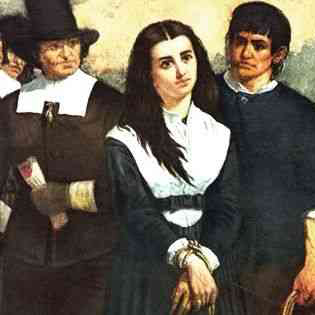
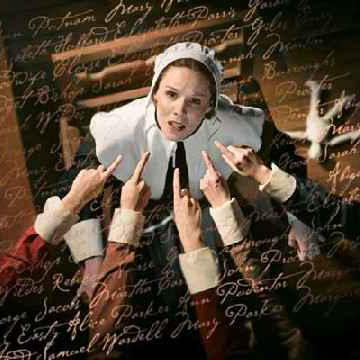
Salem, Massachusetts. A small town--with no clear governing body--became embroiled in a scandal that forever stands as one of the darkest chapters in American history. For those accused of witchcraft by their neighbors and friends, there was little chance of clearing their names; the mass paranoia that ravaged through the community took the lives of 19 innocent men and women. With an all-star cast of Kirstie Alley, Rebecca De Mornay, Kristin Booth, Shirley MacLaine, Peter Ustinov and Alan Bates, Salem Witch Trials dramatically revisits 1692 colonial America and the haunting legacy it holds.

"Salem Witch Trials" is a compelling 2003 CBS mini-series that featured many familiar and veteran actors and for the most part, stayed true to the historical events that came to be known as the Salem Witch Trials.

The mini-series begins on a rather odd note - it is right in the middle of a trial where the afflicted girls [who are the ones accusing people of witchcraft]go into hysterics and start wailing and screaming, then the accused start transforming into 'demons' [with rather striking make-up and 'flying' special effects]. Thankfully, this only lasts a couple of minutes [the production could have done without it], and viewers are taken back via flashback to six months prior where the events began.

The story focuses on the Puritans residing in the village of Salem, Massachusetts, and the year is 1691. There is no charter from England and hence, the Puritans basically govern themselves without any written law. Those who commit crimes or sins are publicly humiliated [there is a scene where women deemed guilty of sinful conduct are paraded naked whilst tied to a wagon]. The family that is the focal point in this series is the Putnam family - Ann Putnam [Kirstie Alley] gives birth to a stillborn child and is full of grief. Her husband Thomas Putnam [Jay O Sanders] is a bitter man, having lost a lot of his land and wealth to others who are more entrepreneurial. They have a son and daughter and young Annie Putnam [Katie Boland] senses the tension between her parents and finds herself being neglected, hence her desire to act out as a means of gaining attention.

The storyline is riveting and moves along at a steady but sure pace, building momentum as the horror unfolds - the acting is also solid and credible - Kirstie Alley's Ann Putnam is a conflicted and tortured soul. Her grief over her dead child causes her to turn to a village medicine woman, Bridgitte Bishop who is later accused as a witch, and this in turn causes her immense guilt [for turning 'away' from God]. She is by turns horrified and self-righteous at the situation in Salem. This is one of Alley's best dramatic performances to date. Henry Czerny's Rev Parris is credibly done, acting out the part of a so-called man of God who decries against self-interest whilst shamelessly practising it for self-preservation. Then there is young Katie Boland as Annie Putnam who incites revulsion for her performance as the misguided accuser.Rebecca de Mornay plays Rev Parris' wife who is mortified by the events in Salem and finally leaves her husband.

There are also veteran actors who have done an incredible job with their roles here - Shirley Maclaine plays the ill-fated Rebecca Nurse, one of the accused who also happens to be a pillar in society, a devout mother and elderly woman who maintains her faith and sense of humor in the bleakest of times. Peter Ustinov plays the Magistrate William Stoughton, a man so absorbed in proving the accused guilty that he never once questions his judgements. And there is Alan Bates playing Gvernor Sir William Phips, who initially acts the dandy and seems disinterested but who eventually realises something is seriously wrong in Salem.

The sets and costumes lend an authentic feel to the story, making the Salem of 1691-'92 come alive onscreen. All in all, this is a first-class production and will appeal to history buffs, educators [though with some nudity I'm not sure if it would be appropriate for classroom viewing] and period & historical drama fans.Highly recommended!

Buy Kirstie Alley's book: Salem Witch Trials

Free eBooks (Can Be Downloaded):

John Musick - The Witch Of Salem
Friedrich Adler - The Witchcraft Trial In Moscow
Marian Green - A Witch Alone

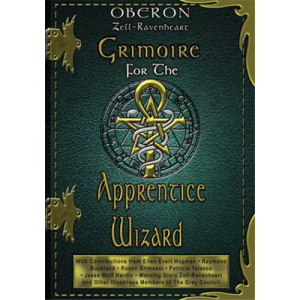
Grimoire For The Apprentice Wizard

Grimoire For The Apprentice Wizard Cover

Book: Grimoire For The Apprentice Wizard by Oberon Zell Ravenheart

Magick, through all its varied forms and traditions, always has at least one component that it shares. Freedom. Freedom from old ideas. Freedom from old religions. A pathway leading the practioner to new depths of themselves, and through that, the world.

It is not, and should not, be used as a tool for the crushing of imagination, but its expansion. It is a very delicate line, to separate one's own prejudices and mythology from the craft itself, creating a clear platform that allows, or even more, encourages the reader to find their own truth. To question authority, even the authority of the writer.

Oberon Zell's grimoire For the Apprentice Wizard does just that. Though there are many books on magick, too often they emphasize the writer's particular viewpoint on the craft, providing a kind of blueprint for development in a particular tradition at the expense of the infinite multiverse of alternate perspectives that could, and should exist.

In his Grimoire, it is apparent that Oberon's intention is to create a platform that is, as well as he is able, clear. Beginning with a brief history of magick in its various incarnations in the Western world; as well as a fundamental glossary of magickal terms as used by all, he moves into beautifully illustrated and well-intentioned explanation of the various types of magick and process.

He includes chapters on healing, herbology, astronomy, mathematics, animal communion (a personal favourite), divination, and many more. Each section illustrates the fundamental principles common to all traditions, allowing the student the space to find their own ideas. Supposedly geared to the adolescent reader, each chapter contains instructions on how to create and manage spells; focusing not only on the process of starting a magick, but the responsible cleanup so often neglected afterwards in making your spells efficient and successful.

I was particularly impressed with the various sources and quotations used in the book. Many authors fail to see (or perhaps, respect) the ways in which spiritual, magickal truths have expressed themselves in today's world. In drawing on gems of wisdom hidden in popular culture; from Aristotle to Discworld, Pythagoreas to Spiderman; Oberon's viewpoint shows an open-mind free of the prejudice of the past that sees the Goddesses, and Gods, still alive inside the imagination of the modern world.

More than just a set of instructions, the Grimoire provides a set of tools designed to allow young minds the opportunity to find their own way through the labyrinth of their imagination. I highly ... highly recommend this book to both new and old readers alike. It is refreshing to see an author who not only claims the intention to provide an open philosophy that still honours its history and practice, but who succeeds in doing so.

Download Oberon Zell Ravenheart's eBook: Grimoire For The Apprentice Wizard

Free eBooks (Can Be Downloaded):

Aleister Crowley - Mortadello Or The Angel Of Venice
Parker Torrence - Grimoire Of Eclectic Magick Part 3 Of 3
Moses Maimonides - The Guide For The Perplexed
Oberon Zell Ravenheart - Grimoire For The Apprentice Wizard.pdf

Tuesday, August 17, 2010

The Mysterious Pentagram

The Mysterious Pentagram Cover The Pentagram means different things to different people. Some may argue as to what it represents, but I will tell you the real meanings of it. The Pentagram right side up represents God ruling over the world of matter. The 5 points represent the 5 places that Christ was wounded. This is why Devils are afraid of it! It also represents the Microcosmic man with his arms stretched out.

Let us not forget that it also represents the elements Spirit, Water, Air, Earth, and Fire as shown below.
This is used by most people in Witchcraft.

Now there is also the upside-down Pentagram. It represents Satan or the world of matter ruling over God. It is the same as denouncing God. To wear it is to attract evil around you. It will not bring good spirits around you. Normally it is only worn by Satanists or devil worshipers. So if you wish to attract good spirits around you... wear it right side up!

Many mainstream religion believers think that they are both evil and represent the Devil. But that is because they are so... ignorant and blind to the fact that there is a difference. It shows their lack of study on the true facts of history. I wear the right side up Pentagram and I personally have had many people come up to me and ask me if I am a Devil worshiper! This really pisses me off! But I explain the reality to them.

Free eBooks (Can Be Downloaded):

Reynold Nicholson - The Mystics Of Islam
Greg Wotton - A Mystery Of The Pentalpha
Captain William Morgan - The Mysteries Of Freemasonry
Franz Cumont - The Mysteries Of Mithra

Monday, August 2, 2010

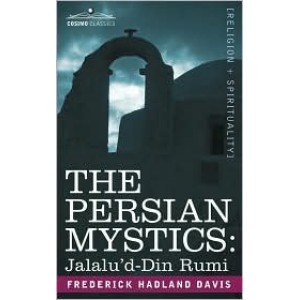
The Persian Mystics Jalaluddin Rumi

The Persian Mystics Jalaluddin Rumi Cover

Book: The Persian Mystics Jalaluddin Rumi by Frederick Hadland Davis

Rumi (1207-1273) was a Persian jurist and theologian best known for being perhaps the finest of all Sufi poets. His writings have been widely translated and remain especially popular in Iran, Afghanistan, and Tajikistan. Though written from a Sufi perspective, Rumi's poems on spiritual growth-here collected and edited by F. Hadland Davis and first published in 1907-cross all cultural and Religious bounds, and can still be heard today in many secular and religious settings.

The Persian Mystics: Jalalu'd-din Rumi includes selections from some of Rumi's most famous works, the "Divani Shamsi Tabriz" and the "Masnavi," as well as passages on his life and work, and the origin and nature of Sufism.

Download Frederick Hadland Davis's eBook: The Persian Mystics Jalaluddin Rumi

Free eBooks (Can Be Downloaded):

Reynold Nicholson - The Mystics Of Islam
Frederick Hadland Davis - The Persian Mystics Jami
Frederick Hadland Davis - The Persian Mystics Jalaluddin Rumi

Wednesday, July 28, 2010

Good Witch Or Bad Witch

Good Witch Or Bad Witch Cover There are many types of witches. That is a fact. However, most witches do not use their powers or abilities for inflicting harm unto others. This is a very common misconception. A large amount of witches use their abilities to aid others in not only soul-searching tasks but to rid and teach how to rid negative energies from one's life. We are often judged as worshipers of a "devil" or "Satan." That is a big contradiction to most of us. A majority of witches do not even believe in a "God of the Devils" aka "Satan." However, we are often scrutinized for stating this because some will say (just as in the olden times) "If you believe in the devil, you are a worshiper...If you say you don't....you are more susceptible to his powers." It is a TOTAL catch 22 for all witches. That was also the method used in the witch Trials.

One suggestion: Please don't ask a witch if he or she "is a good witch or a bad witch." That is just the same as asking a Christian if "they are a good Christian or a bad Christian." Besides, you may get an answer you didn't expect!

Books You Might Enjoy:

Zoroaster - The Chaldean Oracles
Ro Winstedt - Shaman Saiva And Sufi
Carl Mccolman - The Well Read Witch
Anonymous - Witchcraft A Guide To Magic

Monday, July 26, 2010

Witch Hunts Today

Witch Hunts Today Cover Few people are aware that witch-hunts still claim thousands of lives every year, especially in the countries of sub-Saharan Africa, and above all in South Africa.

Witch-hunts in South Africa have become "a national scourge," according to Phumele Ntombele-Nzimande of the country's Commission on Gender Equality. (Quoted in Gilbert Lewthwaite, "South Africans go on witch hunts," Baltimore Sun, September 27, 1998.) The phenomenon is centered in the country's poverty-stricken Northern Province, where "legislators counted 204 witchcraft-related killings [from 1985-95] ... Police counted 312 for the same period. Everybody agreed both numbers were gross underestimates." (Neely Tucker, "Season of the Witch Haunts Africa," The Toronto Star, August 1, 1999.) In 1996 The Observer (UK) reported that "the precise statistics are not known, but the deaths from witch-burning episodes number in the hundreds each year and the trend appears to be on the rise." (David Beresford, "Ancient superstitions, fear of witches cast spell on new nation," reprinted in The Ottawa Citizen, June 18, 1996.)

As with its European predecessor, witch-hunting in South Africa is closely tied not only to prevailing superstitions, but to socio-economic pressures, natural disasters, and personal jealousies. In the Northern Province, "among the poorly educated rural residents, traditional healers and clairvoyants claiming supernatural powers hold broad sway. And hunger, poverty, and unemployment can create jealousies that can quickly turn to anger and vengeance." (Lewthwaite, "South Africans go on witch hunts.") Likewise, Peter Alexander reports that "In a region of intense poverty and little education, villagers are quick to blame any adverse act of fate on black magic." These traditional tendencies have been exacerbated by a recent hysteria (extending to Kenya and Zimbabwe) over the very real phenomenon of "ritual killings related to witchcraft," which "include the removal of organs and limbs from the victims -- the genitals, hands or the head, all of which are believed to bring good luck." (Alexander, "'Witches' get protection from superstitious mobs," The Daily Telegraph, May 26, 1997.) Such ritual murders often bring "retribution" against innocents accused of witchcraft.

The intensity of the persecution and vigilantism in South Africa has reached such levels that no fewer than ten villages have been established in the Northern Province, populated exclusively by accused "witches" whose lives are at risk in their home communities. One such settlement, Helena, counted among its residents 62-year-old Esther Rasesemola, who "was accused in 1990 of being a witch after lightning struck her village":

A group of people visited the Inkanga [village witch-doctor] to see who was responsible. When they returned, it was my brother-in-law who told the rest of the village that I was responsible. He owed me money and I think he did it to get rid of me because he did not want to pay the money back. People in the village became convinced I was a witch. They came to my house at night and burnt it down and took all my belongings. Then they put me in a truck and drove me to a deserted place and dropped me off with my husband and my three children. They told me never to come back to the village or they would kill me. My husband died two years after we were expelled. My children have gone away and now I have nothing. I don't believe in witchcraft. It is just superstitious belief. (Quoted in Alexander, "'Witches' get protection.")

Gilbert Lewthwaite of the Baltimore Sun described the case of Violet Dangale, a 42-year-old woman who "was driven from her home 30 months ago by relatives and neighbours who accused her of being a witch growing rich from the work of zombies, as the 'living dead' are known." Now she was "penniless and in fear for her life," living in Tshilamba, another of the refuges for accused witches. Her "main accuser was her uncle. He first accused her father of using zombies to enrich himself. Then he turned on her, suggesting that she enjoyed her share of the family's wealth through witchcraft. ... As the accusations and threats grew stronger, the Dangale family fled their homes in Dzimauli." "They said I was a witch," Dangale told Lewthwaite. "I don't know anything about witchcraft. I don't believe in zombies. Since I was born, I never saw a zombie." (Lewthwaite, "South Africans go on witch hunts.")

Both of these women were luckier than 65-year-old Linah Seabi, "a sorghum beer brewer ... [who] was charged with killing an elderly woman with a poisonous potion. More than 200 villagers stormed Seabi's house in late May [1991], beat her and burned her to death with straw thatch from the roof of her house." (Nina Shapiro, "Wave of witch hunts sweeps South African countryside," The Toronto Star, September 19, 1991.) In December 1998, "Francina Sebatsana, 75, and Desia Mamafa, 55 ... were burned to death on pyres of wood in the village of Wydhoek," in the Northern Province, for alleged witchcraft. "Eleven men, ages 21 to 50" were charged with her murder. (Lewthwaite, "South Africans go on witch hunts.")

The gendering of the European witch-hunts appears to be closely duplicated in the South African case. As the above accounts suggest, "traditionally, it is women who are accused of witchcraft" (Alexander, "'Witches' get police protection"). Especially vulnerable are "defenceless elderly women, against whom the actions are taken without resistance," according to Northern Province Premier Ngoako Ramatlhodi. "That women most often are the victims of witch hunts stems from attitudes toward gender," writes Nina Shapiro of The Toronto Star:

"In our culture, men go out in the afternoon, women remain in the home," said Russell Molefe, a local journalist. People believe women sit at home concocting potions, he said. Older women are suspected, according to Lebowa police lieutenant Mohlabi Tlomatsana, simply because they are alive. "People will think 'Why has she not died? Probably because she is a witch.'" (Shapiro, "Wave of witch hunts.")

However, as in the European case-study, "these days almost a third of victims of men" (Alexander, "'Witches' get police protection.") Nonetheless, approximately 30 percent of accused witches are male -- reflecting men's prominence as nangas, or traditional healers. Anton La Guardia describes the case of "Credo Mutwa, southern Africa's best-known practising healer ... [who] said he had been accosted by a mob and stabbed several times. He lay bleeding on the ground and waited helplessly to die as his assailants poured petrol and prepared to set it alight. Mr. Mutwa ... said he was saved by the same superstition which was about to claim his life. 'A young man shouted, "His ghost will haunt you." They vanished, leaving me like a fish on dry land.'" (La Guardia, "South Africa's non-political witch-hunts," The Daily Telegraph, September 9, 1998.)

As in all these campaigns, it is difficult to assign particular responsibility for fuelling the anti-witch hysteria. Although they may themselves be accused of witchcraft, it is also generally the nangas who are called upon to point out "suspicious" persons who can be accused as witches: according to one South African police sergeant, "Generally, if people believe there is a witch in their village, they will consult the [witch-doctor]. He or she will then 'sniff out' the witch. The person who is accused will then be killed or ordered to leave the village." (Alexander, "'Witches' get police protection.") Village males usually carry out the murders and other acts of terrorism. But as in the European case-study, patterns of gossip and rumour are central to the process -- and to shielding the perpetrators from justice. South African police inspector Matome Mamabolo reports: "If someone is accused of murdering a witch, the community tends to support them by supplying money for an advocate when the case comes to court. There is a solidarity there -- after all, that person is accused of ridding the village of a witch." (Quoted in Alexander, "'Witches' get police protection.")

Much the same pattern is evident in Tanzania, Zimbabwe, and Kenya, although the gender of the victims may be more even. In August 1999, Paul Harris of the Sunday Telegraph reported that

Lynch mobs have killed hundreds of Tanzanians whom they accuse of witchcraft as black magic hysteria sweeps East Africa. Most of the usually elderly victims have been beaten or burnt to death by gangs of youths. Some old women have been singled out simply because they have red eyes -- regarded as a sign of sorcery by their assailants. The condition is actually caused by years of toiling in smoky kitchens cooking family meals. ... Police say 357 suspected witches have been killed in the past 18 months, but the Ministry of Home Affairs believes that the true figure is much higher. A departmental survey said as many as 5,000 people were lynched between 1994 and 1998. (Paul Harris, "Hundreds burnt to death in Tanzanian witch-hunt," Sunday Telegraph, August 22, 1999.)

In Zimbabwe, as in neighbouring South Africa, the witch-hunts also seem closely related to "the black market demand for human body parts, which are used in making evil potions." The upsurge in such practices, the ritual murders they require, and the vengefulness that results against accused "witches," are all linked to the country's precipitous economic decline. "It's obvious the cause is economic," says Gordon Chavanduka, head of the Zimbabwe National Traditional Healers Association (which counts 50,000 members). "The worse the economy gets, the more political tension there is in society, the more frustrated and frightened people get. They turn to witchcraft to gain riches or to hurt their enemies." (Neely Tucker, "Season of the witch haunts Africa," The Toronto Star, August 1, 1999.)

In the Kenyan case, as was also true in a handful of European countries, the witch-hunts appear predominantly to target males. A British sociologist, J.F.M. Middleton, records the conviction of the Lugbara tribe of Kenya that

a witch is a man [emphasis added] who perverts a mystical power of kinship for his own selfish ends and is therefore an evil person. Witches in general are given both physical and moral attributes: a witch has greyish skin, red eyes, a physical deformity; he may travel about upside down; he is bad tempered, secretive, petty and jealous; he is thought to practice incest and cannibalism. The distinction between witchcraft, a mystical activity, and sorcery, the use of material objects, was widespread in eastern Africa, Dr. Middleton said. When, as in Lugbara, the basic principles of organization were unilineal descent and seniority by generation it would be expected that men were believed to practise witchcraft, whereas women should have the less important role of sorcerer. ("How to recognize witches," The Times [UK], September 5, 1997.)

In Kenya in 1993, killings among the Gusii tribe were occurring at the rate of one a week. "In most cases ... village mobs several hundred strong locked the victims inside thatch-roof houses and set them on fire. ... According to tribal elders, the Gusii have always executed people found to be witches. Sanslaus Anunda, a 99-year-old tribal elder, said that during his youth, villagers had a foolproof method for determining guilt. The most respected men in the community would call a meeting. Next, they would smear local herbs on the hands of the suspect and that of a second, innocent man [emphasis added]. Both men would be ordered to dip their hands into a pot of boiling water, then return in five days. If the suspect was a witch, burns would appear on his hands. However, Anunda insists, the innocent man's hands would remain unscarred." (Tammerlin Drummong, "Kenya: Dozens die in witch hunts," The Ottawa Citizen, August 28, 1993.)

A trend of predominantly male victimization may also be evident in West Africa, where a bizarre wave of accusations of "penis-snatching" has come to light. The Reuters news agency reported in 1996 that "eight men in Accra, Ghana, were accused of using witchcraft to snatch penises. Their motivation was allegedly to return the sexual organs in return for cash. Mobs attacked them ... two died and six were seriously injured. The police examined all the alleged victims and found their genitals intact. ... [But] the 'victims' believed that sorcerers only had to touch them to make the genitals shrink or disappear completely." ("'Witches' steal penises in Ghana," Reuters dispatch, January 17, 1996.) D. Trull reported in 1997 that "the killings of alleged 'penis snatchers'" had been reported "along the west coast from Cameroon to Nigeria." (See Trull, "Witches Protection Program".)

Books You Might Enjoy:

Phil Hine - Aspects Of Evocation
Aleister Crowley - The Sixth Chakra Of The Human Body
Richard Johnson - The Zodiac Stellar Stories
Gerald Gardner - Witchcraft Today

Saturday, July 24, 2010

Who Is A Witch

Who Is A Witch Cover The origin of the word witch predates the Anglo-Saxon period. Etymologically, the word has been derived from an Old English masculine noun wicca, the feminine being wicce. The word ‘wicker’ in old German also stood for a soothsayer. A soothsayer is a fortune-teller or psychic.

In routine usage, a witch is a feminine noun for wizard or sorcerer, but the former has different functional connotations from its masculine counterpart. While a wizard or a sorcerer may have some element of manipulativeness in their craft, a witch, though a practitioner of witchcraft, is far from being a crafty person. A witch is essentially a very noble and deeply religious person whose purity of heart combined with spiritual and meditation practices bestow her with a deeply religious and mysterious aura. A witch does not act with any ulterior motives, not to mention any machinations in her pursuits. A witch is a very compassionate person, gifted with supernatural powers and works for the alleviation of pain and suffering of her fellow human beings and brings them the much needed solace and succor.

A highly misunderstood, deeply suspected, much maligned and doggedly hounded person especially during the middle ages, a witch has regained lost ground and has acquired a respectable position in the society. Colloquially, the term witch, applied most often to a female, also includes male practitioners of witchcraft, especially Wicca. Witches believe in certain ethical codes and strictly adhere to them.

A witch engaged in her witchcraft practices spells developed by worshiping many deities primarily the supreme Goddess and sometimes her consort the God. The craft or workings of a witch are used for healing the acute health problems. For curing these problems, she uses the personal powers in combination with energies within candles, stones, herbs and other natural items. Witch practices witchcraft to help better the world and mankind. A witch certainly is not ugly, nefarious, dreadful hag who worships the devil or hurts the people as the stereotype image presents her to be.

A witch derives her strength from Paganism, which is influenced by ancient, primarily pre-Christian and sometimes pre-Judaic religion. A witch has deep faith in the elements of Nature such as earth, fire, nature, air, and water. Fire cleanses and has an aura that transports her into the astral world and enables her to view this world with psychic clarity. Water purifies.connects with the Goddess herself. The air is an all-enveloping blanket of gods. It wraps around the witch and lifts her to the divine immenseness and freedom of the skies. The spirit of the witch gets united with the air and floats freely in the sky. The witch achieves this uplifted state through meditation, perseverance and sometimes she is blissfully born with these talents.

A witch is just as ordinary looking person as any one in your neighborhood. She can be a housewife with kids doing her daily domestic chores. She too has her share of emotions, but they function more at a macro level than at personal. So if she is feeling sad, the sadness is not just due to some personal vested interest, but it is born out of the suffering of the world around her. Another difference between a witch and an ordinary woman is that a witch can commune with her goddess. The commune is just meant to bare her soul reaching a complete state of oneness. A witch may even cry before the alter of her goddess whenever she feels a spiritual vacuum and wants to replenish it with godliness.

A witch performs her craft using many rituals such as worshiping alone or in covens in the alter room. She lights candles, incense, chants incantations and worships her deities or goddesses. She meditates while staring into the candle flames and in the course of meditation, she feels her spirit leaving her body and enters into trance. A witch gets lost in the awesome power of the Fire with her mind dancing with the flames of the candles. Insightful images deluge her head and become a permanent part of her psyche.

Witches also practice necromancy and summon spirits of the dead to gain knowledge of the future events from them. These spirits are called Operative Spirits or the Spirits of divination.

Books You Might Enjoy:

Michael Bailey - Historical Dictionary Of Witchcraft
Howard Phillips Lovecraft - Cults Of Cthulhu
Mike Nichols - Eight Sabbats Of Witchcraft
Louise Huebner - Witchcraft For All
Paul Huson - Mastering Witchcraft

Thursday, July 22, 2010

What Is A Kitchen Witch

What Is A Kitchen Witch Cover What is Kitchen Witchery?:

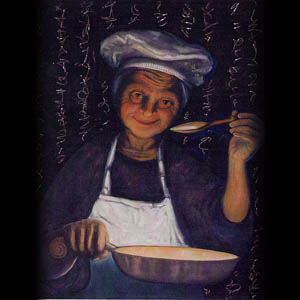
There's a growing movement within modern paganism known as kitchen witchery. The kitchen is, after all, the heart and hearth of many modern households. When you have a gathering in your home, where do most of your guests hang out? Why, the kitchen, of course! Also, thanks to a declining economy, many more people are making meals from scratch and the kitchen has once again become a place where people spend hours, rather than minutes. So it's no surprise that kitchen witchery has seen a rise in popularity.
Meal Prep as Magic:

When you take the time to put meals together from the basic ingredients, you have a magical opportunity at hand. You can infuse every dish with intent and will. A meal can stop being something you dump out of a can, and start being a ritual in and of itself. When you take time to prepare something with your own hands, that lends it sacredness, and will make you want to spend time savoring it with your family, rather than just snarfing it down on your way out the door to soccer practice. By changing the way you view food, its preparation and its consumption, you can craft some practical magic at its simplest level.

Books You Might Enjoy:

Tarostar - The Witchs Spellcraft Revised
Aj Drew - A Wiccan Bible
Michael Harrison - The Roots Of Witchcraft

Tuesday, July 20, 2010

The Real Witch

The Real Witch Cover A complete account of the ingredients of the witch-idea or even of the genuine witch-cult would fill a volume like this. We should have to go back to the very dawn of religion or, if the theory of Sir J.G. Frazer is correct, before its dawn. Frazer holds that magic preceded religion. I contend that magic and the belief in spirits developed separately. But they are blended in the early idea of the witch: a man or woman who receives magical powers by a league with evil spirits.

Something corresponding to the witch is found, and is dreaded and abhorred, in every stage of human evolution. The spirits of the dead were very soon regarded as in very large part malignant and malevolent, and certain persons were held to act in conjunction with them and practice "black magic"; to raise destructive storms, to blight crops or cattle, to cause disease, sterility, or death. Sometimes this persisted quite apart from belief in spirits. The Romans were not much more definite than the Babylonians in their beliefs about a future life, yet they believed very emphatically in magic and its evil powers. The magician was exposed to a sentence of death in Roman law and was often executed. The ground of the law was, of course, purely secular. The practicer of black magic was dangerous to the community.

The Babylonians and Assyrians (and Persians) believed that myriads of evil spirits or devils hovered about the face of the earth and caused all the evils of humanity; and that there was a special class of these malignant beings who moved about at night, inspired bad dreams, and even sucked the blood of sleepers. This belief in legions of devils passed through the Jews, into Christianity, and the particular belief in night-prowlers and blood-suckers or entrail-suckers (vampires, harpies, etc.) obtained currency amongst the Greeks and Romans. The Greek and Latin word strix, which properly means the screech-owl (so naturally associated with the legend), was applied to these dreaded night- birds.

The Fathers of the Church, particularly St. Augustine, the most influential of them all, denounced magic as "pagan" and as a collusion with the devils. The synods of Elvira (306), Ancyra (314), and Laodicea (375), and the sermons of St. Chrysostom and the other great preachers, show that the new Christians brought with them the magical practices as well as the vices of the pagan world. It does not seem to have been enough to denounce these as pagan, so St. Augustine worked out a more deadly theory: the diviner or magician, in whose powers he firmly believed, was in league with the devil. And the Bible was quite clear about such people. It (Leviticus xx, 27 and Exodus xxii, 18) defined a witch as one who "hath a familiar spirit" and condemned him or her to death. Moreover, the Latin and Catholic Bible translates verse 5 of Psalm xcvi (Psalm xcv in the Catholic Bible): "The gods of the heathen are devils." paganism and devilism coincided.

The change was lamentable and is responsible for the ghastly tragedy of later years. The Roman persecution of magicians was based entirely on the belief that they had abnormal powers and the progress of enlightenment might have undermined this belief. But if magic meant collusion with the devil, belief in it was sure to be magnified very considerably under a religion which taught that the world swarmed with devils. It was precisely the elaboration of this devil-doctrine by the great theologians of the Middle Ages which caused the appalling witch-massacres of the fifteenth, sixteenth, and seventeenth centuries. What surprises one at first is that there was comparatively little persecution of witches before the thirteenth century. It was this wonderful thirteenth century, of which modern Catholics are so proud, that inaugurated the massacres on a large scale. A famous philosopher has called it the most stupid century in the whole of the Middle Ages, and certainly it was the most tyrannical, most superstitious, and most sanguinary.

As far as magic is concerned, the Church never wavered, and the practice of its children never relaxed. The situation is analogous to that of the virtue of chastity. The law was clear: the practice almost universally ignored it. On the other hand, there was no consistent attitude in the Church in regard to the striga (as the strix was now called), the blood-sucking nocturnal creature. The Salic Law in south Germany sentenced the atriga to death. The Lombard Law treated the idea as a superstition. Under Charlemagne a synod held at Paderborn in 785 enacted (canon 6): "Whosoever, deceived by the devil, believes, as the pagans did, that any person is a witch and can devour men, and therefore burns that person, and gives her flesh to others to eat, shall be put to death." individual churchmen were just as much at variance. Some believed in the striga: others did not.

Characteristically, what the Church was concerned about most was magic of an erotic nature. In 860 the great archbishop of Rheims, Hincmar, held a solemn inquiry into this, as the king's concubine was supposed to have used such magic on the queen, and he concluded that it was genuine deviltry. On the whole, there were few executions of witches until the eleventh century, when we begin to find isolated executions more frequently in the chronicles.

I am, however, more concerned with the other aspects of witchcraft: the suggestion of an organization contained in the belief that witches flew in the air at night in droves or to an appointed gathering place. It is usually said that there was no organization of witches until the thirteenth century, which would be quite inconsistent with the view that witchcraft was the ancient pagan religion of Europe. The historical truth is not so simple, and it is interesting.

At the end of the tenth century Abbot Regino made a large collection of Church laws and canons, and one of these is concerned with witches. Where and when this canon was passed we do not know. Some scholars trace it to the Synod of Ancyra, in 314, which is impossible, for the Roman world was then almost entirely pagan. It seems to come from some synod of the sixth century. It says:

And we must not overlook this, that certain wicked women, who have turned aside to Satan, seduced by the illusions and phantasms of the demons, believe and profess that during the night they ride with Diana the goddess of the pagans [another version says, or with Herodias] and an innumerable crowd of women on certain beasts, and pass over great spaces of the earth during the night, obeying her commands as their mistress, and on certain nights are summoned to her service. Would that these had perished in their perfidy and had not dragged many with them to destruction! For an innumerable multitude, deceived by this false opinion, believe that these things are true and so depart from the faith and fall into the error of the pagans, believing that there is some divinity apart from the one God, (Migne edition.)

The abbot goes on to say that all this is the work of the devil who assumes various forms to tempt silly women. The law is reproduced again a few years later in the collection of Bishop Burkhard of Worms (Decreta, bk. ix, chap. 5), who adds the vampire- idea: that women claim that they can, even while they lie in bed with their husbands, fly out in the air and suck the heart and entrails out of other men who are abed.

A life of Pope Damasus (of the fourth century) pretends that as early as 367 a Roman synod took cognizance of these women who rode on beasts at night with Herodias. This life is probably spurious, but it is clear that by the sixth century (to which the canon seems to belong) there was something very like organized witchcraft in Europe. We will not press the words "innumerable multitude," but clearly numbers of women met by night to honor Diana, the goddess of the moon and of fertility.

This does not surprise us. Europe never voluntarily accepted Christianity. Paganism was driven into dark corners, but age by age the Church had to thunder against it. The women in particular clung to their Diana, if not to the still older mother-earth goddess. Sterility was a curse in those days, however convenient it may seem to moderns. Everything that could counteract it and beat the blood- magic, the aid of a goddess, or even the mutual inspiration of a human orgy -- was treasured. The cold advice of Christianity to pray to Mary, was found less effective in practice and less congenial than the nocturnal adventure, But it had to be conducted with secrecy and cunning, and it seemed as if the women must fly through the air to the point of assembly.

Where I venture to differ from Miss Murray is when she supposes that these more or less organized gatherings persisted and reappeared as the witches of the fifteenth and sixteenth centuries. The Dianists disappear, and for centuries the Church deals only with individual magicians, male or female. But a new element was meantime entering European life, and the reader will find that it throws a fascinating light upon witchcraft. It is usual to say that Thomas Aquinas with his absurd demonology, and the Inquisition with its terrible scent for heresy, created witchcraft. Let us try another line.

The true religious history of Europe has never yet been written. Possibly the full truth will never be known, as there has been so much suppression and distortion of facts; but we do know that the accepted version is false. Christianity was imposed by force upon a reluctant world. The current idea of a "conversion" of the Roman world to it is not more false than the almost universal belief that it was meekly accepted, if not profoundly cherished, until modern times. Although our forefathers were robbed of their schools and detained for ages in the densest ignorance, it is to their credit that age after age they, in immense multitudes, rebelled against the corrupt priestcraft and the absurd legend of the Christian religion. It is only by the bloody use of force on a colossal scale that the Church maintained its dominion for so many centuries.

Witchcraft was one expression of the constant effort of the race to rid itself of the religion imposed on it. One of the chief rival religions to Christianity in the fourth century had been Manichaeism, and the writings of St. Augustine, who was at first a Manichaean, but later one of the worst slanderers of the religion, show us how heroically its adherents fought for their creed even long after imperial decrees had declared, under pain of confiscation and death, that Christianity was to be the sole religion of the empire.

I need say of it here only that it was an ascetic religion, and that it was based essentially on the ancient Persian belief in two supreme principles, one of light and goodness, the other of darkness and evil. Manichaeism was crushed by the aid of the imperial troops but Manichaean ideas were destined still to play a great part in Europe. And one aspect of the religion deserves special notice. It has been, I suppose, the custom of religious bodies from time immemorial to slander and vilify rival bodies. The Romans themselves put the darkest interpretations on the secret gatherings of the Christians; they were said to indulge in sensual orgies, to worship a god with an ass's head and to kill babies for sacramental purposes. So in time the Christians vilified the Manichees; though St. Jerome candidly admits that they were men and women of far stricter virtue than the Christians themselves. Augustine, however, was chiefly instrumental in defaming them.

In writing his life, I discovered a carefully overlooked passage in which, posing as the first Inquisitor, he made a public examination of two Manichees. The first was a girl of twelve, and from the lips of this child the pious elderly bishop drew the confession, by leading questions, that the Manichees made their sacrament of human semen and flour. The second victim was a sacred virgin of the sect, and Augustine at once charged her with what he had put into the mouth of the little girl. To make the sacrament, he said, she had lain nude on the ground, a little heap of flour beside her, and the priests had ... She protested that she was a virgin, but Augustine's midwives examined her and declared that she was not. Then, Augustine says, she confessed the whole "abominable crime"; in other words, she escaped the drastic punishment of her heresy by letting the bishop have his way and feigning conversion. Later we hear of similar examinations on Manichaean women and confessions of intercourse with "the devil" (probably meaning his representative, the Manichaean priest).

Here, I am convinced, is the origin of one of the ingredients of the early myth of the witch; though in the fully developed witch-cult there was unquestionably a large amount of "intercourse with the devil." However that may be, the Manichaean ideas were merely thrust out of sight, and they broke out again from time to time. One of the most famous heretics of the Greek Church, Paul of Samosata, was the son of a Manichaean mother and his heresy combined the Manichaean principle of two supreme powers with an early form of Protestantism or evangelical Christianity. The Greek Church and Empire -- which, let us remember, had never been tainted by barbarian invasions -- were now, in the eighth century, appallingly corrupt, and this purer religion, as it was, spread widely, especially among the Armenians. Emperor after emperor tried to suppress it. The Empress Theodora put to death no less than one hundred thousand members of the sect; or, in a few years, made fifty times as many martyrs as the pagans had in three centuries. Finally, in the tenth century, no less than two hundred thousand members of the sect were transplanted from Armenia to Thrace, to form a living bulwark against the encroachments of the Bulgars.

But within a short time the worthy Paulicians had spread their gospel peacefully among the Bulgars, and Europe was confronted with a new heresy, the Bogomiles. You have probably never heard of the Bogomiles, but you will surely have heard of those famous heretics of the south of France, the Albigensians, who were drowned by the greatest of the Popes, Innocent III, in their own blood. They (and the Waldensians, the Cathari, the Patarenes, and other obscure bodies of the time) were inspired by the Bogomiles and had the same tincture of Manichaean ideas. The orthodox Catholics of France called them bougres (Bulgars) and it was thus that the innocent name of a people became the worst swear-word of French and English tongues. They were reproached with having a pope in Bulgaria. In short, from the tenth century onward this revolt against orthodox Christianity and its corrupt priests and monks spread over Europe like a prairie fire.

The reader will already have perceived that here we have the clue to the appearance of witchcraft as a secret and organized cult. The Dianists of the sixth and seventh centuries had gone, and until the twelfth century we find only a few isolated executions of witches for practicing black magic. In the twelfth century these become more frequent. In the thirteenth century the swords of the troops and the fires of the Inquisition suppress heresy; and from that time on witchcraft is recognized by the Church as a secret heresy and a widespread organization.

The Paulicians, Bogomiles, Albigensians, etc., were, as usual, slandered by the orthodox. Psellus, one of the leading Greek orthodox writers of the tenth century, wrote a book "On the Operations of the Devils," in which he included almost as many fables as in his lives of the martyrs. The heretics, he says, used to meet at night by candle light and invoke the devils. When these appeared in the shape of animals, the lights were extinguished and the worshipers indulged in an orgy of sexuality with the devils and with each other. This amiable story passed all over Europe and was applied to the heretics everywhere. It will be enough to quote a letter of Pope Gregory IX to show the connection with witchcraft. In 1233 Gregory wrote to the bishops of Germany, urging them to seek out and persecute the heretics. The letter (given in the Latin in the "Annales" of Ravnaldus, year 1233, p. 89) is one of those weird compositions which bring a smile to the lips when one hears Catholics claim some special divine interest in their church and its popes, but it is too long to be quoted here in full.

The Pope says that amongst these heretics "when a neophyte is received there appears to him a kind of frog," though some say it is a toad. Some kiss it shamelessly on the buttocks, others on the mouth, drawing the tongue and spittle of the animal into their mouths. Sometimes this toad is "as big as a goose or a duck." The neophyte next encounters a "man of extraordinary paleness, with deep black eyes, and so thin that his skin seems to be stretched over his bones." The neophyte kisses him and finds that he is "as cold as ice." The worshipers then sit to table, and a large black cat comes out of a statue, and all of them in the order of their dignity, kiss its buttocks. After a time the lights are extinguished and there is the usual orgy of sexual intercourse. If, the Pope gravely explains, there are more men than women, or women than men, they resort to sodomy. The candles are relit, and they sit again at table, when from a dark corner of the room comes a man "shining like the sun from the loins upward, but rough as a cat below." To this devil the neophyte is presented, and the faithful also give consecrated hosts which they have stolen from the churches where they have communicated.

This is almost exactly an account of a witch meeting, and the Pope adds another significant detail. These heretics, he says, declare that God is a tyrant, and that he unjustly condemned Lucifer to hell. Lucifer is the real creator of the world and prince of men, and in the end he will regain his place.

In point of fact, the Paulicians and Bogomiles and their kin had quaintly mixed the old Persian belief with some of the speculations of the Gnostics. The ancient Persians had believed that the evil principle had created matter which was evil. To Christians the evil principle was Lucifer, and the new heretics contended that Lucifer was one of the two sons of God, unjustly cast off by an overbearing father. He became their "prince" and "lord," and (unlike the Persians) they believed that he would ultimately triumph. This belief either led to or was due to -- the details are necessarily obscure, as we know the tenets only from bitter enemies -- another departure from Manichaeism. The Manichaeans had been very ascetic, deeming the flesh (as part of the creation of the evil principle) an evil thing; and it is clear that the Albigensians and other European heretics also led strict lives. But the glorification of Lucifer meant that matter and the flesh could scarcely be regarded as evil, and a reaction into orgies was inevitable. The witches, at least, had such orgies.

Here we have almost the whole of the ingredients of the witch- cult before our eyes. John of Salisbury, bishop of Chartres in the twelfth century, and others refused to believe in the striga. Pope Silvester II (Gerbert) was himself accused of magic. Moorish influence was beginning to teach Europe the elements of wisdom. And, curiously enough, it was the crown of this new development, the Scholastic movement, which completed the evolution of the witch and let loose the murderous forces of the Church.

Books You Might Enjoy:

John Dee - The Calls Of Enoch
Phil Hine - Oven Ready Chaos
Marian Green - A Witch Alone
Carl Mccolman - The Well Read Witch
Sunday, July 18, 2010

Killing Witches As The Best Way To Kill Witchcraft

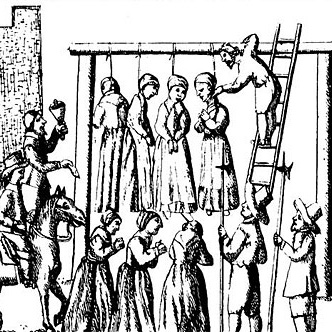
Killing Witches As The Best Way To Kill Witchcraft Cover Burning and hanging were the most popular forms of execution for accused witches in medieval Europe. Burning seems to have been most common in continental Europe while hanging was more common in Britain -- and thus also in the American colonies later as well. The death penalty was imposed on a wide variety of crimes in this era, but witchcraft in particular was punished by death on the basis of Exodus 22:18: "Thou shalt not suffer a witch to live" and Leviticus 20:27: "A man also or woman that hath a familiar spirit, or that is a wizard, shall surely be put to death: they shall stone them with stones."

The heretics who were the earlier targets of the Inquisition were almost never executed at first. They typically had a chance to repent and submit to the Church; only after relapsing into heresy did they generally become subject to execution. Even then, they might still be given another chance to repent. Witches received almost the exact opposite treatment: execution was typically applied after the first accusation and only rarely were accused witches allowed to go free after repenting.

This helps demonstrate the level of threat which the Church made out of witches and witchcraft. Witches couldn't be allowed to live no matter what -- not even if they were willing to admit all that they were accused of and fully repent. Their evil was too much of an existential threat to Christian society and they had to be completely excised, not unlike cancer which has to be cut out lest it kill the entire body. There was simply no tolerance or patience for the witches -- they had to be eliminated, whatever the cost.

Some have claimed that as many as nine million women were executed as witches, even though few could possibly have been truly guilty of witchcraft, and that because this represented a deliberate attempt to kill women generally it should be dubbed a "Women's Holocaust." More recent research demonstrates that many accused witches were men, not just women, and that number of those executed is far lower. Estimates today range from 60,000 to 40,000. Even if we are especially pessimistic, we probably can't go higher than 100,000 people killed across all Europe and over an extended period of time. That's obviously very bad, but not quite a "Holocaust."

Books You Might Enjoy:

William Godwin - The Lives Of The Necromancers
Dr Leo Martello - Weird Ways Of Witchcraft
William Butler Yeats - The Secret Rose And Rosa Alchemica
Allen Greenfield - A True History Of Witchcraft
Michael Harrison - The Roots Of Witchcraft

Saturday, July 17, 2010

How To Make A Witchs Ladder

How To Make A Witchs Ladder Cover A witch's ladder is one of those nifty things we sometimes hear about but rarely see. Its purpose is similar to that of a rosary - it's basically a tool for meditation and ritual, in which different colors are used as symbols for one's intent. It's also used as a counting tool, because in some spell workings there is a need to repeat the working a particular number of times. You can use the ladder to keep track of your count, running the feathers or beads along as you do so. Traditionally, the witch's ladder is made with red, white and black yarn, and then nine different colored feathers woven in.

Here's How:

1. Realistically speaking, it makes more sense to use yarn colors that have a significance to you and your working. Also, finding nine differently colored feathers can be tricky if you're looking for them out in the wild -- you can't just go plucking feathers from local endangered species -- and that means a trip to the craft store and some oddly tinted feathers. I'd recommend using either found feathers of any color, or something else entirely -- beads, buttons (see our discussion on the magical uses of buttons), bits of wood, shells, or other items you have around your home.

2. To make your basic witch's ladder, you'll need:
* Yarn or cord in three different colors
* Nine items that are similar in property but in different colors (nine beads, nine shells, nine buttons, etc)

Cut the yarn so that you have three different pieces in a workable length - usually a yard or so is good. Although you can use the traditional red, white and black, there's no hard and fast rule that says you must. Tie the ends of the three pieces of yarn together in a knot.

3. Begin braiding the yarn together, tying the feathers or beads into the yarn, and securing each in place with a sturdy knot. Some people like to chant or count as they braid and add the feathers. If you wish, you can say something like this variation on the traditional chant:

By knot of one, the spell's begun.
By knot of two, the magic comes true.
By knot of three, so it shall be.
By knot of four, this power is stored.
By knot of five, my will shall drive.
By knot of six, the spell I fix.
By knot of seven, the future I leaven.
By knot of eight, my will be fate.
By knot of nine, what is done is mine.

4. As the feathers are tied into knots, focus your intent and goal. As you tie the final and ninth knot, all your energy should be directed into the cords, the knots and the feathers. The energy is literally stored within the knots of the witch's ladder. When you've completed the string and added all nine feathers or beads, you can either knot the end and hang the ladder up, or you can tie the two ends together forming a circle.

If you'd like your ladder to be more like a rosary string, I'd highly recommend picking up a copy of pagan Prayer Beads by John Michael Greer and Clare Vaughn.

What You Need:

* Yarn or cord in three different colors
* 9 Feathers or other items to braid into your ladder

Books You Might Enjoy:

June Johns - King Of The Witches The World Of Alex Sanders
Heinrich Kramer - The Malleus Maleficarum Or The Witch Hammer
Tarostar - The Witchs Spellcraft Revised
Paul Huson - Mastering Witchcraft
Marian Green - A Witch Alone

Saturday, June 26, 2010

The 13 Principles Of Wiccan Belief

The 13 Principles Of Wiccan Belief Cover 1.We practice rites to attune ourselves with the natural rhythm of life forces marked by the phases of the Moon and the seasonal Quarters and Cross Quarters.

2.We recognize that our intelligence gives us a unique responsibility toward our environment. We seek to live in harmony with nature in ecological balance offering fulfillment to life and consciousness within an evolutionary concept.

3.We acknowledge a depth of power far greater than that apparent to the average person. Because it is far greater than ordinary it is sometimes called ‘supernatural’, but we see it as lying within that which is naturally potential to all.

4.We conceive of the Creative Power in the universe as manifesting through polarity – as masculine and feminine – and that this same Creative Power lies in all people and functions through the interaction of the masculine and the feminine. We value neither above the other knowing each to be supportive of the other. We value sex as pleasure as the symbol and embodiment of life, and as one of the sources of energy used in magical practice and religious worship.

5.We recognize both outer worlds and inner, or psychological worlds sometimes known as the Spiritual World, the Collective Unconsciousness, the Inner Planes etc – and we see in the interaction of these two dimensions the basis for paranormal phenomena and magical exercises. We neglect neither dimension for the other, seeing both as necessary for our fulfillment.

6.We do not recognize any authoritarian hierarchy, but do honor those who teach, respect those who share their greater knowledge and wisdom, and acknowledge those who have courageously given of themselves in leadership.

7.We see religion, magick and wisdom in living as being united in the way one views the world and lives within it – a world view and philosophy of life which we identify as witchcraft – the Wiccan Way.

8.Calling oneself ‘Witch’ does not make a Witch – but neither does heredity itself, nor the collecting of titles, degrees and initiations. A Witch seek to control the forces within her/himself that make life possible in order to live wisely and without harm to others and in harmony with nature.

9.We believe in the affirmation and fulfillment of life in a continuation of evolution and development of consciousness giving meaning to the Universe we know and our personal role within it.

10.Our only animosity towards Christianity, or towards any other religion or philosophy of life, is to the extent that its institutions have claimed to be ‘the only way’ and have sought to deny freedom to others and to suppress other ways of religious practice and belief.

11. As American Witches, we are not threatened by debates on the history of the craft, the origins of various terms, the legitimacy of various aspects of different traditions. We are concerned with our present and our future.

12.We do not accept the concept of absolute evil, nor do we worship any entity known as ‘Satan’ or ‘the Devil’ as defined by Christian tradition. We do not seek power through the suffering of others, nor accept that personal benefit can be derived only by denial to another.

13.We believe that we should seek within Nature that which is contributory to our health and well-being.

Free eBooks (Can Be Downloaded):

Michael Harrison - The Roots Of Witchcraft
Anonymous - Basic Principles Of The Craft
Howard Williams - The Superstitions Of Witchcraft

Monday, May 17, 2010

The Alexandrian Book Of Shadows

The Alexandrian Book Of Shadows Cover

Book: The Alexandrian Book Of Shadows by Sekhet Sophia

Alexandrian Book of Shadows Public Domain Version of the Alexandrian Book of Shadows, by Sekhet Sophia (1990)

Founded by Alexander Sanders and his (then) wife Maxine, the Alexandrian tradition is very similar to Gardnerian. Alex Sanders claimed to have been initiated by his grandmother in 1933, and his tradition is somewhat more liberal than traditional Gardnerian Wicca. While eclectic, Alexandrian rituals are still formal and based in ceremonial magick, with highly polarized references to the sexual dichotomy of male/female. Still, the Alexandrians have relaxed some of the more stringent Gardnerian teachings, i.e., the requirement of ritual nudity being made optional under Alexandrian teachings. Alexandrian Wheel of the Year revolves around the struggles of the Oak King and Holly King, generally as depicted through ritual dramas. Though the rituals portray mainly the God in His ever-changing nature and the main spokespeople for both Gardnerian and Alexandrian Traditions have been male, the primacy of the High Priestess (and, thereby, the Goddess) is supposedly held as the highest authority in both trads.

Download Sekhet Sophia's eBook: The Alexandrian Book Of Shadows

Books in PDF format to read:

Gerald Gardner - The Garnerian Book Of Shadows
Sekhet Sophia - The Alexandrian Book Of Shadows

Wednesday, April 21, 2010

Qbl Or The Brides Reception

Qbl Or The Brides Reception Cover

Book: Qbl Or The Brides Reception by Frater Achad

Q.B.L. is a unique work in both Qabalah and Thelemic circles. In the world of the Qabalah, Frater Achad revealed revolutionary new principles that caused students of the Qabalah to reexamine and thus deepen their knowledge of the Tree of Life. In Thelemic circles, Aleister Crowley named Frater Achad his magical heir and Achad was fully expected to lead the cause of Thelemic Magick after Crowley's death--until publication of this book caused a rift between the two and Crowley began to distance himself from Achad. This is a rare and valuable book, both for its insight and circumstances. True understanding of the Qabalah and its benefit in magical practice is clearly described, and the information contained is both practical and revelatory. The circumstances surrounding it--Frater Achad's falling out with Crowley and eventual descent into apparent insanity--prove a valuable lesson and warning for individual seekers and those associated with established mystery schools.

Frater Achad remains one of the most interesting and important magical figures of the 20th century. His initial Qabalistic discoveries continue to yield new and provocative ideas concerning The Book of the Law and other Holy Books of Thelema.

Q. B. L. or The Bride's Reception is a masterpiece of Qabalah and controversy. Its importance to the world of modern occult literature can be measured not only by its value as a remarkably understandable textbook of the fundamental principles of Qabalah, but also because it offers us a rare glimpse into the heart and mind of a brilliant and sincere seeker of wisdom and truth.

Buy Frater Achad's book from amazon.com: Qbl Or The Brides Reception

Books in PDF format to read:

Aleister Crowley - The Soul Of The Desert
Aleister Crowley - Liber 031 Qbl Or The Brides Reception
Frater Achad - Qbl Or The Brides Reception

Popular Posts