Showing posts with label black magic. Show all posts

Saturday, October 9, 2010

Tarjuman Al Ashwaq A Collection Of Mystical Odes

Tarjuman Al Ashwaq A Collection Of Mystical Odes Cover

Book: Tarjuman Al Ashwaq A Collection Of Mystical Odes by Muhammad Ibn Arabi

The Tarjuman al-Ashwaq (Muhyi al-Din Muhammad ibn 'Ali Ibn al-'Arabi) with the Arabic text, translated by Reynold A. Nicholson Together With a partial translation of the commentary by Ibn 'Arabi'

The Tarjuman al-Ashwaq or "Interpreter of Desires" by Ibn 'Arabi is acknowledged as one of the major works of Sufi literature, alongside those of the great Persian poets Attar, Jalaluddin Rumi, Hafiz and Jami.

In keeping with the poetical tradition of Islam, there is a continuing ambiguity in the verses as to whether they are love poems disguised as mystical odes, or Mystical Odes expressed in the language of human love. The timeless beauty and imagery of the verses cannot be denied, and may be interpreted at many levels. "Gnostics," says Ibn 'Arabi, "cannot impart their feelings to other men; they can only indicate them symbolically to those who have begun to experience the like." In response to the accusation by a religious scholar that these were just sensual poems, Ibn 'Arabi wrote a commentary on the Tarjuman which is partially translated here.

This was one of the first Translations of a book by Ibn 'Arabi into a European langauage, made by the great translator of Rumi's Mathnawi, Reynold A. Nicholson. In both cases his translation was of such outstanding quality that it was more than fifty years before other translators began to try their hands at these texts, and his translations still stand the test of time.

Download Muhammad Ibn Arabi's eBook: Tarjuman Al Ashwaq A Collection Of Mystical Odes

Free eBooks (Can Be Downloaded):

Basil Valentine - Triumphal Chariot Of Antimony
Hilda Roderick Ellis - Road To Hel A Study Of The Conception Of The Dead
Right - Travel In Spiritual Worlds A Complete Guide On Astral Travels
Mark Ludwig Stinson - Heathen Gods A Collection Of Essays Ver 2
Muhammad Ibn Arabi - Tarjuman Al Ashwaq A Collection Of Mystical Odes

Sunday, October 3, 2010

The Book Of Raziel The Angel Or Sefer Raziel Hamalakh

The Book Of Raziel The Angel Or Sefer Raziel Hamalakh Cover

Book: The Book Of Raziel The Angel Or Sefer Raziel Hamalakh by Medieval Grimoires

The Book of Raziel the Angel is a medieval Hebrew Grimoire originally written in Hebrew and Aramaic. We understand that ther is a Latin translation titled Liber Razielis Archangeli, produced under Alfonso X in the 13th century. Like many other mystical manuscripts the Book of Raziel has suffered many from the production of many versions.

The Grimoire contains five Books which cover such secrets as, the mysteries of creation, the production of magical talismans, the angels, the Zodiac, Gematria and the names of God. It draws heavily on the Sepher Yetzirah and Sepher Ha-Razim.

The Book was reputed to have been given to Adam by the Angel Raziel in order to teach Adam the spiritual laws of nature, knowledge of the planets, stars and the spiritual laws of creation. Raziel also taught Adam the knowledge of the power of speech, thought, the Hebrew alphabet and how to co-exist harmously with the physical and spiritual worlds.

The Book is still available today, and a Hebrew version may be obtained from any good Jewish bookshop for it is still believed that the book has power. However, it is forbidden to open the book or read it because of its inherent power. Therefore many keep their copies sealed. Finally, by tradition no charge may be taken for the book!

Download Medieval Grimoires's eBook: The Book Of Raziel The Angel Or Sefer Raziel Hamalakh

Free eBooks (Can Be Downloaded):

Benjamin Rowe - The Book Of The Seniors
Michal Jerabek - The Book Of Enoch Vol V The Epistle Of Enoch
Medieval Grimoires - The Book Of Raziel The Angel Or Sefer Raziel Hamalakh

The Garnerian Book Of Shadows

The Garnerian Book Of Shadows Cover

Book: The Garnerian Book Of Shadows by Gerald Gardner

This is the text of the Gardnerian Book of Shadows. In one sense, this is the central sacred text of the Wicca religion. However, it is important to point out that there is no 'official' Book of Shadows. Typically each coven has a hand-written copy of a Book of Shadows, sometimes in cypher or code, which reflects its own practices and knowledge. This particular text is derived from a file posted on the Internet in the early 90s, and quotes previously published material which was known to be in use by Gardner and his group.

The book of shadows was attributed by Gardner to an ancient, clandestine witch cult, which he claimed to have been initiated into. However, modern researchers have concluded that it was composed by Gardner. The text shows influences from English and Celtic Folk-lore, the Enochian system of John Dee, Thelema, the Golden Dawn, Stregaria, Tantric Yoga, the KJV Bible and even Kipling. This version organizes the material in chronological order and has estimated dates for each section, ranging from 1949 to 1961.

The copyright status of this text can best be described as 'orphaned.' This version was compiled by Aidan A. Kelly. It was originally posted on the Internet in the mid-90s as part of the Internet book of shadows material. Text in square brackets is Kelly's commentary.

Download Gerald Gardner's eBook: The Garnerian Book Of Shadows

Free eBooks (Can Be Downloaded):

Franz Bardon - The Golden Book Of Wisdom
Sasha Fierce - The Book Of Shadows
Sekhet Sophia - The Alexandrian Book Of Shadows
Gerald Gardner - The Garnerian Book Of Shadows

The Great Rite Invocation

The Great Rite Invocation Cover Assist me to erect the ancient altar
At which in days past all worshipped
The great altar of all things
For in times of old, woman was the altar
Thus was the altar made and placed
And the sacred place was the point within the center of the circle
As we have of old been taught
That the point within the center is the origin of all things
Therefore should we adore it
Therefore whom we adore we also invoke
O circle of stars

Whereof our Father is but the younger brother
Marvel beyond imagination, soul of infinite space
Before whom time is ashamed
The mind bewildered, and the understanding dark
Not unto thee may we attain unless thine image be love
Therefore by seed and root, and stem and bud
And leaf and flower and fruit, do we invoke thee
O Queen of Space, O Jewel of Light
Continuous One of the Heavens

Let it be ever thus
That man speak not of thee as One, but as None
And let them not speak of thee at all
Since thou art continuous
For thou art the point within the Circle, which we adore
The point of life without which we would not be
And in this way truly are erected the holy pillars
In beauty and in strength were they erected
To the wonder and glory of all men

Altar of mysteries manifold, the sacred circle’s secret point
Thus do I sign thee as old, with kisses of my lips anoint
Open for me the secret way, the pathway of intelligence
Beyond the gates of night and day, beyond the bounds of time and sense
Beyond the mysteries aright, the five true points of fellowship
Here where the Lance and Grail unite
And feet, and knees, and breast, and lip

Stewart and Janet Farrar – 1984.

Free eBooks (Can Be Downloaded):

Aleister Crowley - Invocation
Friedrich Adler - The Witchcraft Trial In Moscow
Michael Sharp - The Great Awakening
Aleister Crowley - The Supreme Ritual The Invocation Of Horus
John Dee - The Practice Of Enochian Evocation

Saturday, October 2, 2010

Secrets Of The Black Temple

Secrets Of The Black Temple Cover

Book: Secrets Of The Black Temple by Basil Crouch

Warning this book can be dangerous. Persons in ill health or suffering any mental illness should not have access to this book. Be warned this is a not fiction book it can lead into dark waters if the instructions are not followed. I cannot be help responsible for any damage or ill health through reading this book. You alone are responsible for your actions (Basil E. Crouch)

Download Basil Crouch's eBook: Secrets Of The Black Temple

Free eBooks (Can Be Downloaded):

Opus Majus - The Book Of The Black Serpent
Walter Gibson - Witchcraft A History Of The Black Art
Carroll Runyon - The Secret Of The Dark Mirror
Basil Crouch - Secrets Of The Black Temple

Fairy Gold

Fairy Gold Cover

Book: Fairy Gold by Basil Crouch

Basil Crouch A.K.A. Basil LaCroix is one of those old-time great Magicians who learned by the pragmatics of worldly travels in lieu of the theoretics found in most books. Basil spent his youth in a circus amongst the main artistes who were pure Romany, all members of the Manouche Tribe who revere Sara the Black Virgin & Jacques deMolay (GrandMaster of the Templars). The leading Witchdoctor taught him many trix of Magick. He also learned many strange Spells from an Australian Aborigine Witchdoctor. In the late 1960's he masterminded 'coven-style' Occult groups consisting of 6 or 7 women, reaching very advanced stages of development, like producing actual Apports using thoughtform entities, just mindblowing stuff. His teachings excited alot of jealousy within Occult Societies who wanted this kind of thing kept secret. (from reader)

Download Basil Crouch's eBook: Fairy Gold

Free eBooks (Can Be Downloaded):

Aleister Crowley - Liber 831 Iod
Franceska De Grandis - Be A Goddess
Aleister Crowley - Gargoyles
Basil Crouch - Fairy Gold

The Egyptian Book Of The Dead

The Egyptian Book Of The Dead Cover

Book: The Egyptian Book Of The Dead by Ea Wallis Budge

"The Egyptian Book of Dead"—the ancient Egyptian title is ‘rw nw prt m hrw’ , roughly translated as “Spells of Going Forth by Day” — was written by the ancient Egyptians as a sort of guide to help newly deceased souls as they crossed over into the afterlife. It was usually written on a papyrus scroll which was sent with the prepared body in its coffin or burial chamber.

German Egyptologist Karl Richard Lepsius first used the title, “Book of the Dead” in a selection of Texts he published in 1842. Since then, the word “Egyptian” has been added and it has become the generally accepted title of the book. E. A. Wallis Budge published this translation in 1901 and, as an important version, it is still in print to this day.

The Book of the Dead was the product of a long process of evolution from the Pyramid Texts of the Old Kingdom (writings on the crypt walls intending to help the dead person) to the Coffin Texts of the Middle Kingdom (similar writings, placed on the outside of a coffin). Eventually, many of these texts were written on papyrus and placed in the burial chamber, or inside the coffin with the mummy.

About one-third of the chapters in The Book of the Dead are derived from the earlier Coffin Texts. The Book of the Dead itself was adapted to The Book of Breathings in the Late Period, but remained popular in its own right until the Roman period.


Download Ea Wallis Budge's eBook: The Egyptian Book Of The Dead

Free eBooks (Can Be Downloaded):

Gerald Gardner - The Garnerian Book Of Shadows
Friedrich Max Muller - The Sacred Books Of The East
Lady Galadriel - The New Book Of The Law
Ea Wallis Budge - The Egyptian Book Of The Dead

Invocation Of The Horned God

Invocation Of The Horned God Cover By the flame that burneth bright
O Horned One!

We call thy name into the night
O Horned One!

Thee we invoke by the moon led sea
By the standing stone and the twisted tree
Thee we invoke where gather thine own
By the nameless shrine forgotten and lone

Come where the round of the dance is trod
Horn and hoof of the goat-foot God
By moonlit meadow on dusky hill
When the haunted wood is hushed and still

Come to the charm of the chanted prayer
As the moon bewitches the midnight air
Evoke thy powers, that potent bide
In shining stream and secret tide

In fiery flame by starlight pale
In shadowy host that ride the gale
And by the fern-brakes fairy-haunted
Of forests wild and wood enchanted

Come! O Come!
To the heartbeats drum!

Come to us who gather below
When the broad white moon is climbing slow
Through the stars to the heavens height
We hear thy hoofs on the wind of night
As black tree branches shake and sigh
By joy and terror we know thee nigh

We speak the spell thy power unlocks
At Solstice, Sabbat, and Equinox

Word of virtue the veil to rend
From primal dawn to the wide world's end
Since time began---
The blessing of Pan!

Blessed be all in hearth and hold
Blessed in all worth more than gold
Blessed be in strength and love
Blessed be wher'er we rove

Vision fade not from our eyes
Of the pagan paradise
Past the gates of death and birth
Our inheritance of the earth

From our soul the song of spring
Fade not in our wandering

Our life with all life is one,
By blackest night or noonday sun
Eldest of gods, on thee we call
Blessing be on thy creatures all

by Doreen Valiente

Free eBooks (Can Be Downloaded):

John Ronald Tolkien - Introduction To The Elder Edda
Aleister Crowley - The Invocation Of Thoth
James Eschelman - Invocation Of Horus

Thursday, September 30, 2010

The Devil Notebook

The Devil Notebook Cover

Book: The Devil Notebook by Anton Szandor Lavey

Anton Szandor LaVey was a man full of biting wit, iconoclastic insight and, above all, a most astute and adroit observer of human folly and misinterpretation, himself being subjected to the latter more than anyone in recent memory.

In this book, published after two decades of inactivity (to the world of print), LaVey sheds light on many interesting topics, bringing his usual dose of sardonic humor to the printed page.

A particular essay comes to mind when I think of this book- it's called "Hatha Toilet Seat Meditaion," and if it doesn't solicit laughter from you, nothing will. For those of you who are familiar with it, I'm certain you're grinning right now. For those who aren't, read the book and find out why.

Other essays focus on some pretty forbiding topics, and the level of candor expressed by LaVey never lets us forget that while the media may have portrayed him as several things- none of which were especially flattering- we will continue to respect him for the insight he shared with us, remembering the first time we read the "Satanic Bible," a book that for many of us described the thoughts we'd always thought, but never knew anyone else did.

In general The Devil Notebook is very useful and practical black magic book that does explain (with some deals hidden) the ways of satanic practices. The author knows the material, and its well laid out with clear - but as I say some missing - instructions. However, the book does deliver much material. I read an interesting but rare satanic gem called the Question of Lucifer, about how far Lucifer has penetrated into the upper ranks of power and elite. It was fascinating, and very, very scary, depending on if you are on the White or black magic side. That book unknowingly exposed some satanic secrets and left a lot open for us to see, more than the author expected - if you are willing to read it. Be warned!

Download Anton Szandor Lavey's eBook: The Devil Notebook

Free eBooks (Can Be Downloaded):

Mark Mirabello - The Odin Brotherhood
Rabbi Michael Laitman - The Open Book
Anton Szandor Lavey - The Devil Notebook

Tuesday, September 28, 2010

The Ultimate Book Of Spells

The Ultimate Book Of Spells Cover

Book: The Ultimate Book Of Spells by Pamela Ball

The Ultimate book of spells - A Complete Guide to Using Magic to Improve Your Life and the World Around You (2007) Arcturus Publishing ISBN 978-1-84193-577-5

This book is essential reference for anyone wishing to take control of their lives and become confident in the art of spell making...The book includes over 250 spells and techniques, covering every aspect of life and spiritual development. Whether it is creating opportunities for love, doubling your money or protecting your teenage daughter, there is a spell for everyone...With sections on the folkloric history of magic, astrology, divination and mysticism, the book provides the reader with a complete background to the art of magic. The complex social and cultural influence of spells is revealed, as well as their power to enrich and transform modern lives.

The desire to change and improve that which we have has been around for many thousands of years, if not since man first walked the earth. Magic and spell working have always been a part of that, and indeed still are today. Anyone who practises any form of magic, including spell working, needs to be grounded. This means having h feet firmly planted in reality and also having a basic knowledge of what
magic is and is not, what spells can and can’t do and what – with practice – you can do with the tools, information and knowledge you have. This book sets out to give you that information in as succinct a manner as possible.

Download Pamela Ball's eBook: The Ultimate Book Of Spells

Free eBooks (Can Be Downloaded):

Ancient Grimoires - The 6th And 7th Book Of Moses
Anonymous - Book Of Spells
Ancient Grimoires - The 8th Book Of Moses
Michael Johnstone - The Ultimate Encyclopedia Of Spells
Pamela Ball - The Ultimate Book Of Spells.pdf

The Pungo Witch

The Pungo Witch Cover The Pungo Witch, as she has come to be called, or in real life, Grace Sherwood, was accused of bewitching a neighbor's crop in 1698. Allegations of other 'witchy' things escalated over time in the Princess Anne County government. Her accusers decided to test her by 'ducking,' or, trial by water, her innocence or guilt determined by whether she floated or drowned. Drowning, by the way, was the GOOD outcome.

On July 10th, 1706 at ten o'clock, Grace Sherwood was tied by her thumbs, cross-bound and dropped into the western branch of the Lynnhaven River near what is now known as Witchduck Point in Virginia. Unfortunately for Sherwood, she floated. Guilty of being a duck? No, guilty of being a witch. She was imprisoned, and eventually released, but Sherwood lived the rest of her life quietly unvindicated, and died in 1740.

I guess they taught her a lesson, huh? Grace Sherwood was a midwife who would often wear men's clothing while working her own homestead. She went to court a dozen times to either defend herself or sue her neighbors for slander, yet never turned her back on a woman in need of her skills. She never married. Thus one can assume that then, as now, a woman who takes care of herself, a confident, competent woman, is suspect at best, ducked at worst, but always, apparently, in need of being taught to mind her place.

In 2006, she was pardoned by the Governor of Virginia, Timothy M Kaine--300 years after her ordeal. The wheels of justice sure do run slow, sometimes, but at least they turn.

Free eBooks (Can Be Downloaded):

Anonymous - The Laws For Witches
Margaret Alice Murray - The God Of The Witches
Alfred Elton Van Vogt - The Witch

The 8th Book Of Moses

The 8th Book Of Moses Cover

Book: The 8th Book Of Moses by Ancient Grimoires

The Eighth Book of Moses, a magical treatise that otherwise has nothing to do with Moses and which is found in Greek Magical Papyrus (PGM) xiii in two versions. The end of this papyrus also mentions the "Hidden Book of Moses Concerning the Great Name," which may be another lost Moses work.

Download Ancient Grimoires's eBook: The 8th Book Of Moses

Free eBooks (Can Be Downloaded):

Solomonic Grimoires - The Book Of Secrets
Ancient Grimoires - The 6th And 7th Book Of Moses
Ancient Grimoires - The 8th Book Of Moses

Monday, September 27, 2010

Arnold Crowther Biography

Arnold Crowther Biography Cover Arnold Crowther was a skilled stage magician and ventriloquist with interests in paganism and witchcraft. He co-authored two books and a radio series on witchcraft, with his wife Patricia Crowther, and wrote numerous articles for a variety of magazines. His greatest claim to fame though comes as the connecting influence between Gerald B Gardner, and Aleister Crowley.

Born in Chatham, Kent, on the 6th October 1909, Crowther was one side of twin brothers. His mother was Scottish and his father, an optician came from Yorkshire. Crowther from an early age was fascinated with sleight-of-hand magic, ventriloquism, and puppeteering. From the age of eight he began practicing tricks and perfecting his technique in the secrecy of his bedroom. By the time he was twenty he was a professional magic act, working in cabaret, touring around the country and overseas.

His career peaked in 1938-39 when he was invited to entertain Princesses Elizabeth and Margaret at Buckingham Palace. This led him to numerous like engagements entertaining the landed gentry of England, and also into contact with many of the days leading occultists and magicians. At this time Crowther was a Freemason with interests in Buddhism, he didn’t enter the craft until very much later in 1960.

Crowther was a founder member and President of the Puppet Guild, and as a master puppeteer he made over 500 puppets during his career, mainly for use in his ventriloquism act. He also collected unusual puppets and oddities, regularly giving lectures at his Masons Hall, and to other interested societies, on curios from around the world.

Before the start of World War II, Crowther met Gerald Gardner and his wife Donna after they had been to view one of his lectures on curios. He and Gardner became good friends, sharing many similar interests. Crowther soon became a frequent visitor at the Gardner’s London flat, and from there they would venture out together and browse the many antique stalls at the nearby Caledonian Market. Rubbing shoulders with Gardner, Crowther soon became interested in the craft, however Gardner’s coven was still wary of adverse publicity. They felt that Crowther might use craft information in his act, and refused to accept him. Gardner predicted that “a very special person with fair hair” would initiate him when the time was right.

During the war years Crowther joined the Forces Entertainment’s Corps, and entertained troops all over Europe with his show “Black Magic”, the show also included an African Basuto choir. Crowther would perform where and whenever he was required, like on the 10th November 1943 while en-route from Tripoli to Malta, he performed aboard a DC 3 airplane flying at 4,000 feet.

For a time during the war Crowther was stationed in Paris, and there he first learned of his past life as a Tibetan beggar monk. He and an officer went to visit palmist, “Madame Brux”, who invited them to a seance. After introductions the medium went into a trance and began to communicate with a masculine spirit. The spirit claimed to have been Crowthers teacher in a previous life, and was his guide in this present one. The spirit reported that Crowther had been a student in a Tibetan lamasery, he mentioned the name “Younghusband” and that he had been killed in a battle. “Your possessions will be returned to you,” said the medium, and an object fell onto the seance table. It was a Tibetan prayer wheel inscribed with “OM MA NI PAD ME HUNG” (Translation)

After the war had ended other Tibetan objects came into his possession, they included: a butter lamp, a trumpet made from a human thighbone, a drum made of a human skull, and a small rattle hand-drum. An expert explained to Crowther that the “Zi-jed-pa” (The Mild Doer), a homeless medicant class of Yogi regarded as saints, used such items. They believed they would attain Nirvana after death and not have to be reborn again.

That being so, why then had he been reincarnated as Crowther he reasoned? The expert explained that if he, as the monk, had killed someone, then he would have to be reincarnated to balance the karma. Later at an exhibition of Tibetan curios in London, Crowther discovered that a Colonel “Younghusband” had led a military attack against Tibet in 1904. During the attack “Younghusband” had killed another soldier, before he himself was killed.

Crowther returned to the public stage after the war, and continued to tour about the country. During his travels he met and made the acquaintance of Aleister Crowley. It wasn’t long before he introduced his friend Gardner to Crowley on the 1st May 1947. An entry in Crowther’s dairy for that date reads: “Dr. G.B.Gardner Ph.D. Singapore and aleister crowley Prof, a magician, came to tea…”

In 1958 while travelling to perform on the Isle of White, Crowther met a lady “with fair hair”, Patricia Dawson. She was performing in the same show as he, and they soon discovered a mutual interest in witchcraft. Crowther offered to introduce her to his friend Gardner. Over the following two years and after regularly meeting with him, Gardner initiated Patricia on the 6th June 1960 at his home in Castletown, Isle of Man. Patricia in turn initiated Crowther, and the prediction Gardner had made to Crowther many years earlier, came true.

Later that same year on the 8th November 1960, Arnold Crowther and Patricia Dawson where married in a private handfasting ceremony, officiated by Gerald Gardner. The following day on the 9th November they married again in a civil ceremony, this attracted the attention of the media and was heavily publicized. The Crowthers settled in Sheffield and used the media publicity to spread the word about witchcraft, and started many new covens throughout the country.

Crowther passed into the next world on the 1st May 1974. “Or did he”? If from his past life as “Colonel Younghusband”, he revisited as “Arnold Crowther”, has not his karma been corrected? One wonders if he has finally achieved Nirvana?

In addition to his collaborated works with his wife Patricia, Crowther’s other published credits include: “Let’s Put On A Show” (1964), a book of “how-to-do” magic, illustrated by himself. “Linda and the Lollipop Man” (1973), a road safety book for children, and “Hex Certificate” (Late 1970’s), a collection of cartoons he drew on witchcraft themes. His autobiography “Hand in Glove”, has not been published, but was serialized on BBC Radio in Bristol, Sheffield, Medway and Leeds between 1975 and 1977.

Free eBooks (Can Be Downloaded):

Reformed Druids - Anthology 06 The Green Books
Aleister Crowley - Ahab And Other Poems
Anthony Arndt - Asatru The Northern Way

Moon Eclipses

Moon Eclipses Cover A lunar eclipse occurs whenever the moon passes through some portion of the Earth’s shadow. This can only occur when the Sun, Earth and Moon are aligned exactly, or very closely, with the Earth in the middle. As such there is always a Full Moon on the night of a lunar eclipse. Every year there are at least two partial lunar eclipses, while total eclipses are much less common. The type and length of an eclipse depends upon the moon’s location relative to its orbit of the earth. As of writing this article the most recent total eclipse occurred on the 21st February 2008. The next eclipse, allbeit a partial one, will occur on the 16th August 2008. The next total eclipse is due on the 21st December 2010. Unlike a solar eclipse, which can only be seen from a number of small areas around the world, a lunar eclipse can be seen from anywhere on the night side of the Earth.

Free eBooks (Can Be Downloaded):

Charlotte Fell Smith - John Dee
Charles Baize - Pagan Scriptures
Nicolas Schreck - Demons Of The Flesh

Sunday, September 26, 2010

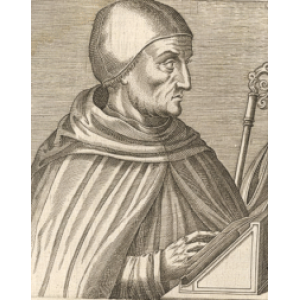
Albertus Magnus Biography

Albertus Magnus Biography Cover Albertus Magnus (1193-1206? - 1280) also known as “Albert the Great” was a German scholar of theology, philosophy, natural science, medicine, alchemy, astrology, chemistry and physics. He was also an alleged magician who believed in the benefits of botany, claiming that various plants, rocks and amethysts improved clairvoyance. He was known as “Doctor Universalis” (“Universal Doctor”) because of the breadth of his knowledge, and was especially noted for introducing Greek and Arabic science and philosophy to the medieval world. He was the most prolific writer of his century and was the only scholar of his time to be called “the Great”, a title that was used even before his death.

Albertus Magnus was born Albert de Groot, in Lauingen, Bavaria, the eldest son of the Count of Bollstadt, a military lord in the service of Emperor Frederick II. Later contemporaries such as Roger Bacon (1214-1294) applied the latinised name of “Albertus Magnus” out of respect for his immense reputation as a scholar and philosopher. Nothing about his primary or preparatory education is known but it is thought he was privately tutored at home before being sent to Bologna University in Italy for his formal education. He then moved to Padua University where he studied the liberal arts and teachings of the Greek philosopher Aristotle.

While there in 1223, he was recruited by the Blessed Jordan of Saxony, the second Master General of the recently formed Dominican Order of Friar Preachers (founded by St Dominic in 1214), who was doing the rounds of major universities in Europe recruiting the best young scholars into the Dominican Order. The Order at that time was less than ten years old, and had only been granted ecclesiastical approval in 1216. Magnus was ordained in a Dominican convent house in Cologne, Germany, from where he quickly advanced through the ranks of the Order.

After leaving Padua, Magnus taught theology at several convent houses throughout Germany including: Regensburg, Freiburg, Strasbourg, Hildesheim and lastly at the convent house in Cologne, were he reinterpreted Peter Lombard’s “Book of the Sentences” (Magister Sententiarum), the theological textbook used in most of the medieval universities. He then moved on to the University of Paris were he became Master of Theology in 1245.

His most famous pupil at the University of Paris was Thomas Aquinas, who later in 1248 joined him at the new Studium Generale in Cologne, in which Magnus was appointed Regent and were Aquinas became his second professor and Magister Studentium (Master of Students). Magnus went on to become an influential Church administrator, teacher and preacher, and travelled throughout Western Europe on behalf of the Dominican Order.

In 1254 Magnus was made provincial of the Dominican Order in Germany, and in 1256 journeyed to Rome to defend the Mendicant Orders against an attack by William of St. Amour, who sought to have the Dominican’s right to alms removed. Magnus succeeded in having his book treatise “De novissimis temporum periculis” condemned by Pope Alexander IV on the 05th October 1256. During his short stay in Rome, he also filled the position of Master of the Sacred Palace, from were he preached on the Gospel of St. John and the Canonical Epistles.

A year later in 1257, Magnus resigned the office of Provincial in Germany to devote himself to his studies and teaching, although he remained a leading force in the Order. At a General meeting of the Dominicans held in Valenciennes, France in 1258, with Thomas Aquinas and Peter of Tarentasia (later Pope Innocent V), he drew up rules for the direction of studies and determined the future system of graduation to be used throughout the Order.

In 1260 Magnus was called by the Pope Alexander IV to serve as the Bishop of Regensburg, a position he resigned from in 1262, in order return to his convent in Cologne, there once again to concentrate on his scholarly interests. However from 1263 to 1264 he was made a legate of Pope Urban IV, and sent to preach the crusades throughout Germany and Bohemia, where subsequently he lectured at Wurzburg and at Strasbourg.

On his journeys around Europe, Magnus showed an intense interest in natural phenomena, and was consumed by the scientific writings of Aristotle. He examined his works, commented on them, and occasionally contradicted them based on the evidence of his own observations. In his laboratory in Cologne he carried out his own experiments in chemistry, mineralogy and physics, and built up a collection of plants, insects and chemical compounds. Of his experiments he is said to have discovered the metallic element of arsenic, caustic potash, and was the first person to determine the chemical composition of cinnabar, minium and white lead.

As a theologian and philosopher, Magnus was outstanding among his contemporaries but not as innovative as his star pupil Thomas Aquinas. Magnus attempted to bring Aristotelian doctrines together with Christian teachings, and in his Summa Theologiae (1270) he maintained that human reason could not contradict revelation, but defended the philosopher’s right to investigate divine mysteries.

In 1274 Magnus was called by Pope Gregory X to attend the ecumenical Council of Lyon, where he had to defend the orthodoxy of his former pupil Thomas Aquinas and the Aristotelian doctrines that both he and Aquinas held to be true. While there he received the sad news that Aquinas had died on his way to the same Council. The news was a heavy blow to Magnus who declared, “that a shining light of the Church had been extinguished”. In 1277 when it was announced that critics wished to condemn and writings of Aquinas, believing that his teachings were too favourable to unbelieving philosophers, Magnus again travelled to Paris to defend his good name.

Magnus suffered serious health problems in 1278 and later died in Cologne on the 15th of November 1280. He was buried in a crypt tomb at the Dominican Church of St. Andreas in Cologne, while his relics were held at Cologne Cathedral. Much later in 1622 he was beatified, and later still declared a Saint by Pope Pius XI in 1931, at which time he was also acclaimed an official Doctor of the Church. In 1941 Pope Pius XII made him the Patron Saint of Natural Sciences.

In the centuries after his death, many myths and stories were told about Magnus the alchemist and magician. On the subject of alchemy and chemistry, he had written mant treaties, including: Alchemy; Metals and Materials; the Secrets of Chemistry; the Origin of Metals; the Origins of Compounds, and Concordance, which is a collection of Observations on the philospher's stone. Other alchemical and chemistry topics were collected under the name of Theatrum Chemicum.

Magnus believed that stones had occult properties, as he related in his work De mineralibus. However there is little actual evidence that he personally performed alchemical experiments. Most of the modern myths are the result of later works, such as the alchemical work known as the Secreta Alberti or the Experimenta Alberti, which were falsely attributed to Magnus by their authors in order to increase their prestige through association. According to one myth, Magnus is said to have discovered the Philosopher’s Stone and passed it on to his pupil Thomas Aquinas. While Magnus made observations about the stone in his writings, he does not mention ever discovering or owning it, although he did record that he witnessed the creation of gold by “transmutation”.

Magnus was also deeply interested in astrology, as were most academics in his day. In the high Middle Ages and well into the early modern period, few intellectuals questioned the basic theories of astrology i.e. that humans lived within a web of celestial influences that affect their bodies, and motivates them to behave in certain ways. They believed that astrology could be used to predict the probable future of a human being. Magnus made this a central component of his philosophical system, arguing that an understanding of celestial influences could help us to live our lives more in accord with Christian precepts. His astrological beliefs can be found in a work he authored around 1260, now known as the Speculum astronomiae. However, details of these beliefs can be found in almost everything he wrote, from his early Summa de bono to his last work the Summa theologiae.

The works of Albertus Magnus represents the entire body of European knowledge, as was extent during his time, not only in theology but also in philosophy and the natural sciences. His importance to the history of medieval academia consists in his bringing Aristotelian doctrines to the fore against the reactionary tendencies of his contemporaries. But it was by his writings on the natural sciences that he exercised his greatest influence. Albertus Magnus must be regarded as unique in his time for having made accessible and available the Aristotelian knowledge of nature and for having enriched it by his own observations. A pre-eminent place in the history of science was accorded to him when because of his achievements, he was canonised and made the Patron Saint of Natural Sciences.

Free eBooks (Can Be Downloaded):

Aleister Crowley - Liber 132 Liber Apotheosis
Anonymous - The Lawes Against Witches
Aleister Crowley - Liber 011 Nu With Commentary
Aleister Crowley - Eight Lectures On Yoga
Aleister Crowley - Liber 666 The Master Therion A Biographical Note
The Philosophers Stone

The Philosophers Stone Cover

Book: The Philosophers Stone by Israel Regardie

My book has been praised as a good meaningful book by some reviewers and by many readers, to judge from the mail I have received during the past thirty years. It is patently an open sesame to one level of interpretation. The Occult Review, now defunct, published a critical review by Archibald Cockren who took me rather severely to task for asserting that alchemical texts should be interpreted solely in terms of psychological and mystical terms. He himself, I subsequently discovered, had written a book Alchemy Rediscovered and Restored. Of course I immediately procured a copy. Since I was peeved by his review, I did not feel that his book had very much to offer—so I dismissed both offhand. I was about to write the editor of The Occult Review a scorching letter, but reason intervened so that fortunately it never got written.

The opportunity is rarely given to an author in his lifetime “to eat crow” and to enjoy it. This lot, it pleases me to say, is mine—after thirty years. Not that I would significantly change much of what I wrote then. I admitted that I had not “proceeded to the praxis” but I felt then and still do that a mystical and psychological interpretation of some alchemical texts was legitimate. There is unequivocally this aspect of the subject. Certainly Jacob Boehme and Henry Khunrath, for example, cannot be interpreted except in these terms.

The Philosophers Stone with these preliminary comments, should answer a wide-felt need which has called forth this new edition. I hope, being in print once more, it will bring new light and knowledge and values to present-day students who may be still groping in the dark areas of the occult towards alchemy, where a guiding hand needs to be extended.
So, to close this Introduction, I must use the ancient Rosicrucian greeting, and the close of a Golden Dawn ritual:
May what we have partaken here sustain us in our search for the Quintessence; the Stone of the Philosophers, True Wisdom and perfect Happiness, the Summum Bonum.


Download Israel Regardie's eBook: The Philosophers Stone

Free eBooks (Can Be Downloaded):

Yogi Ramacharaka - Yogi Philosophy
Louis Claude De Saint Martin - Theosophic Correspondence
Andrew Lang - The Witch And Other Stories
John Mitchell - The Philosophy Of Witchcraft
Israel Regardie - The Philosophers Stone

Invincible Magick Spells Of The Afghan Mullah Sensees

Invincible Magick Spells Of The Afghan Mullah Sensees Cover

Book: Invincible Magick Spells Of The Afghan Mullah Sensees by Muhammad Ibn Arabi

All the spells and signs are from the mountains of Afghanistan and the surrounding areas. All have been handed down from generation to generation, student to student. All are in their original form and have not been translated or altered so as to preserve the originality and power.

Download Muhammad Ibn Arabi's eBook: Invincible Magick Spells Of The Afghan Mullah Sensees

Free eBooks (Can Be Downloaded):

Peter Carroll - The Magical Pact Of The Illuminnates Of Thanateros
Medieval Grimoires - The Black Pullet Or The Hen With The Golden Eggs
Mcgiolla Cathain - Secret Magic Spells Of The Romany Gypsies
Muhammad Ibn Arabi - Invincible Magick Spells Of The Afghan Mullah Sensees

Tuesday, August 17, 2010

The Mysterious Pentagram

The Mysterious Pentagram Cover The Pentagram means different things to different people. Some may argue as to what it represents, but I will tell you the real meanings of it. The Pentagram right side up represents God ruling over the world of matter. The 5 points represent the 5 places that Christ was wounded. This is why Devils are afraid of it! It also represents the Microcosmic man with his arms stretched out.

Let us not forget that it also represents the elements Spirit, Water, Air, Earth, and Fire as shown below.
This is used by most people in Witchcraft.

Now there is also the upside-down Pentagram. It represents Satan or the world of matter ruling over God. It is the same as denouncing God. To wear it is to attract evil around you. It will not bring good spirits around you. Normally it is only worn by Satanists or devil worshipers. So if you wish to attract good spirits around you... wear it right side up!

Many mainstream religion believers think that they are both evil and represent the Devil. But that is because they are so... ignorant and blind to the fact that there is a difference. It shows their lack of study on the true facts of history. I wear the right side up Pentagram and I personally have had many people come up to me and ask me if I am a Devil worshiper! This really pisses me off! But I explain the reality to them.

Free eBooks (Can Be Downloaded):

Reynold Nicholson - The Mystics Of Islam
Greg Wotton - A Mystery Of The Pentalpha
Captain William Morgan - The Mysteries Of Freemasonry
Franz Cumont - The Mysteries Of Mithra

Thursday, July 29, 2010

Your Magical Name

Your Magical Name Cover Why a Magical Name?:
Ah, the magical name. So many people find wicca and decide right off the bat that they’re going to name themselves Lady Such-and-Such or Lord Whatsis. Go to a pagan event and you’ll meet more fifteen-year-old Lady Morganas than you can shake a stick at. And it’s virtually guaranteed that within about three months, Lady Morgana will decide her magical name, sometimes called a craft name, is really supposed to be Starfluffle or Moongypsy, and she’ll change it.

In fact, she’ll probably change it two to three times a year.

The Name-of-the-Month Club:
This odd phenomenon, known as the Name-of-the-Month Syndrome, happens most often because the person in question hasn’t taken the time to research and learn, which is crucial to finding the right magical name.

A magical name is unique to the practitioner, and there are several ways to find yours. When you find the right name, you’ll keep it for a long time. In some traditions, it‘s customary to wait until you‘ve studied a year and a day before claiming your magical name. Some Pagans have two magical names -- one which they use in public and one which is known only to the gods and members of the person’s coven.

Think Long-Range:
One method by which people sometimes find their magical name is to simply choose something they like. A problem with this method is that what we like on one day, we may find silly a year down the road. If you’re going to choose a name based on whether it sounds cool or not, stop and think about it. What is it about the name that appeals to you? Ten years from now, are still going to feel comfortable saying, “Hi, I‘m Fairypuddle,” when you meet a new person?

Names with Meaning:
Choose a name not only for its sound, but its attributes as well. For example, someone wishing to convey strength in their name might include “oak“ or “iron“ as part of their moniker. A person who is highly creative might select a name that reflects their art or craft. You may want to choose a name based rooted in folklore or mythology. Many people include the name of an animal that resonates with them. A cautionary note here: in the Pagan community, certain animals pop up all the time. You’ll meet two dozen Ravens and just as many Cats, but it’s unlikely you’ll encounter anyone calling himself Wombat or Penguin.

Names to Avoid:
Another bit of advice -- generally, the titles Lord and Lady are reserved for people who are elders or have a significant amount of leadership experience under their belt. To name oneself Lady So-and-So without any credentials is considered presumptuous by many Pagans. Likewise, in many traditions it’s seen as hubris to give oneself the name of a deity. You may want to choose a name that indicates your dedication to a god or goddess, but don’t co-opt their names. It’s just rude. If you're a dedicant to Apollo, don't call yourself Master Apollo, call yourself something like Apollonius instead.

Using Your Birth Number:
Another popular method of finding a magical name is to choose one that corresponds with your birth number. To find your birth number, begin by adding the digits of your birth date.

If your birthday was September 1, 1966, you would start with the numbers 911966 = 9 + 1 + 1 + 9 + 6 + 6 = 32.

Now take those two numbers (3 and 2), and bring it down to a single digit: 3 + 2 = 5. That number -- in this case, 5 -- is your birth number.

Use the grid below to find a name that corresponds to the number 5, by calculating the sum of the corresponding letters.

1 = A, J, S

2 = B, K, T

3 = C, L, U

4 = D, M, V

5 = E, N, W

6 = F, O, X

7 = G, P, Y

8 = H, Q, Z

9 = I, R

Let’s say you’ve decide you like the name Willow. Using the letters in “Willow” you would take the numbers 5 + 9 + 3 + 3 + 6 + 5 = 32. From there, 3 + 2 = 5. If the name you like doesn’t match your birth numbers, try some creative or alternate spellings to see what happens.

A Gift from the Gods:
In some cases, you may be fortunate enough to have your new name bestowed upon you by a god or goddess. In these instances, you may encounter someone in a dream or a vision who tells you, “Your name is Such-and-such.” While you may choose to add to it or come up with a variation on it later, if this happens to you, accept the name as the gift that it is.

Whatever method you end up using, think carefully before you finalize your new name. While it’s okay to change your name later on as you evolve spiritually, changing your name every few weeks or every time you see a new episode of “Charmed” is probably not the best course of action. Find the name that is right for you -- and when it IS the right one, you will know.


Books You Might Enjoy:

Anonymous - Meditation Of The Four Magickal Weapons
Jarl Fossum - Seth In The Magical Texts
Anonymous - The Mystical Qabbalah
Kenneth Grant - Magical Revival
Aninymous - The Angelical Alphabet

Monday, July 26, 2010

Witch Hunting Panic And Torture

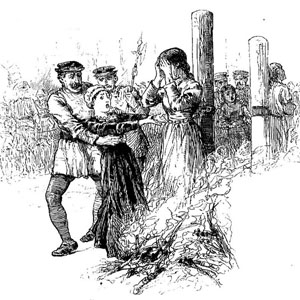
Witch Hunting Panic And Torture Cover Witch-hunting could be endemic or epidemic. Its dynamics varied. Small panics (fewer than 20 victims) tended to occur in villages worried about maleficium. Their victims were often poor, obnoxious persons whose removal the rest of the community applauded.

If small panics fed on long-smoldering fears about neighbors, large ones exploded without warning, killing people of all classes and conditions and rupturing social bonds. The worst examples of this were in Germany, where unlimited use of torture (in defiance of imperial law) produced an ever-expanding wave of denunciations. To object was to court death.

Large witch-panics started with the usual obscure suspects and worked up the social scale to prosperous citizens, reputable matrons, high-ranking clerics, town officials, and even judges. The longer a panic lasted, the higher was the proportion of male and wealthy victims.

According to the Dutch Jesuit Cornelius van Loos, confiscations from suspected witches in large panics could "coin gold and silver from human blood," Youngsters were legally old enough to burn as soon as they could distinguish "gold from an apple." Children as young as nine were burned in Wurzburg, including the bishop's nephew, and boys ages three and four were imprisoned as Satan's catamites.

Some of the German trials were marred by collusion, bribes, and rape. Unspeakable tortures were routine -- 17 different kinds were authorized by "the Saxon lawgiver," Benedikt Carpzov, during the 17th century. Confessing "without torture" in Germany meant without torture that drew blood. Nearly all who underwent this broke, even the blameless.

Yet witches sometimes did turn themselves in and confess spontaneously, the equivalent of today's "suicide by police." The same melancholy, frustration, and despair that they claimed had driven them into the devil's arms brought them willingly to the stake. They had apparently come to believe the wish-fulfillment fantasies of pleasure and revenge enacted in the theaters of their minds. Nevertheless, they still hoped to save their souls through pain.

A few brave men spoke up for justice. In 1563, Johann Weyer, a Protestant court physician, drew attention to the cruelty of the trials and the mental incompetence of many of the accused. English country gentleman Reginald Scot mocked witchcraft as popish nonsense in 1584. In 1631, the Jesuit Friedrich von Spec, confessor to witches burned at Mainz, proclaimed them innocent victims. Van Loos, witness to the horrors of witchcraft trials at Trier, had his manuscript confiscated in 1592 before it could be published and was himself imprisoned and banished.

Ironically, a Spanish inquisitor named Alonso Salazar y Frias mounted the most dramatic challenge to witch-hunting. In 1609, a panic among French Basques in the western Pyrenees on the Bay of Biscay spilled over into the Navarra region in Spain, where six accused witches went to the stake. But Salazar, who had been a judge in that trial, became skeptical as the panic widened to engulf 1,800 suspects, 1,500 of them children. Basque witches' confessions included such incredible details as familiars in the form of costumed toads that child-witches herded with little crooks during sabbats.

Salazar cross-checked testimony, had supposed magic substances tested, and applied logic to conclude that the alleged witches were simply an artifact of witch-hunting. "There were neither witches nor bewitched until they were talked and written about," he reported in 1610. With stubborn practice, Salazar wrested a decision from his superiors that freed the accused in 1614. The Spanish Inquisition never executed another witch; nor did it permit secular authorities to do so after an outbreak in Catalonia that saw more than 300 witches hanged between 1616 and 1619. What could have erupted into Europe's worst witch-panic was extinguished by one man.


Books You Might Enjoy:

Max Heindel - Teachings Of An Initiate
Richard Johnson - The Zodiac Stellar Stories
Stephen William Hawking - Space And Time Warps

Popular Posts