Showing posts with label books on witchcraft. Show all posts

Thursday, October 21, 2010

Comselha An Enochian Macrocosmic Ritual

Comselha An Enochian Macrocosmic Ritual Cover

Book: Comselha An Enochian Macrocosmic Ritual by Benjamin Rowe

The purpose of this ritual exercise is to invoke the transcendental power of the Enochian god, to transform it in turn through all the macrocosmic powers within the Elemental Tablets, and to organize them into a balanced form. At the same time, these powers are conditioned so that they express a particular view of the creation of which they are a part. As the final step, these energies are directed so that they energize the magician himself.

The magickal records covering the results of the first use of this exercise are available separately.

I have received several complaints about my published rituals recently. Some complain that they are too elaborate, others that they are too simple, and some question whether they really qualify as magickal rituals in the traditional sense.

The complaints of over-elaborateness stem from the fact that it is impossible to perform any significant part of the works in a single session. This is perfectly correct, and is done deliberately. My experience has been that the rewards given to the magician by the "angels" of the Enochian system are very precisely gauged to the amount of care and effort the magician puts into the work. Works that are planned, rehearsed, and carried out over a period of weeks or months are much more likely to produce significant initiations than any number of single-session efforts. The present work was designed to be performed in stages, with the expectation that each stage will be performed until the powers invoked achieve a self-sustaining presence in the magician’s temple before he passes on to the next stage. It can be expected that the rewards will be commensurate with the effort involved.

Complaints of excessive simplicity derive from lack of the pompous verbiage typically found in formal rituals, and the dearth of advice concerning symbols, implements, and materiel that would help to fire the imagination of the magician. There is a decidedly bare-bones feel to the descriptions. This is perhaps an expression of my own character as a magician; I find that complex pomp and ceremony put me off rather than enhancing the work. I have complete faith that every magician’s imagination and intuition will provide him with enhancements appropriate to his or her own character and style, and so see no need to provide more than the minimum schema necessary to accomplish the work successfully.

The differences between these rituals and more traditional forms derives from the nature of Enochian magick. In most systems, the primary difficulty is in producing a flow of the desired power. The major portions of the rituals are dedicated to simply getting the power to appear. Once it does appear, its direction to the desired end is a relatively simple matter.

In contrast, the Angelic Calls and Names provide a means by which even a beginning magician can easily call up a strong flow of force. But the forces involved are much more ambiguous than in other systems. Each appears to have many different natures depending on the level and orientation from which they are viewed; their manifestations seem to be potentially infinite. The primary work of a ritual must accordingly be to focus, direct, and condition them, through the use of the imagination, so that they manifest in a clear and manageable way. This work conforms to that necessity.

Additionally, the specific form used makes this work something resembling an inverse path-working exercise, going top-down rather than bottom-upwards. And as Frater Azoth has pointed out, there are resemblances to the mandala-workings and chakra-visualizations used in Tibetan Buddhism. They are certainly very similar in intent, though the similarity of form was unintentional.

Download Benjamin Rowe's eBook: Comselha An Enochian Macrocosmic Ritual

Books in PDF format to read:

Josh Norton - Charging An Enochian Tablet
Benjamin Rowe - Comselha An Enochian Macrocosmic Ritual

Friday, October 8, 2010

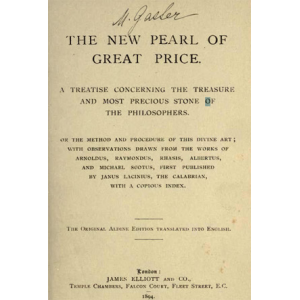
The New Pearl Of Great Price

The New Pearl Of Great Price Cover

Book: The New Pearl Of Great Price by Janus Lacinius Therapus

A treatise concerning the treasure and most precious stone of the philosophers. Or the method and procedure of this divine art ; with observations drawn from the works of Arnoldus, Raymondus, Rhasis, Albertus, and Michael Scotus (1894)

THIS work casts out cruel disease from the human body, disease produced by malignant humours ; and thus you are preserved. It will teach you how to regain the beautiful flower of youth, and how to secure a green and placid old age. All this may be yours, by the favour of the gods. Poverty will be triumphantly put to flight ; your treasure-house will be filled ; you will be able to succour the needy,
and to render the sacrifice of praise to great Jupiter.

TWO features of special interest attach to the " Pearl of Great Price," as written by Bonus of Ferrara, and edited by Janus Lacinius. In the first place, it is one of the earliest works printed on alchemy, and the original is a very beautiful specimen of typography. Concerning the latter point, it is only necessary to say that it was issued from the press of Aldus, appearing in 1546, with the privilege of Pope Paul III. and the Senate of Venice for the space of ten years. This edition is, of course, exceedingly rare, and is highly prized by collectors. In the second place, it is a very clear, methodical, and well-reasoned treatise, comparing favourably in these respects with the bulk of alchemical literature. A reader who is unacquainted with alchemy will probably not appreciate these points,
but any one who, like the present editor, has had occasion to become widely familiar with Hermetic authors, will do honour to the lucidity of Bonus.

Concerning" the adept himself, no biographical materials whatsoever are forthcoming, nor, as in most other cases, is there even a legend to fall back on. He is supposed to have been a native of Lombardy, and to have performed his alchemical labours at Pola, a maritime town of Istria, about 1330. He is sometimes described as Bonus of Ferraria,* and on this and other grounds Tiraboschi't identifies him with the "monk Ferarius".

This work attacks Lenglet du Fresnoy, the historian of alchemy, as an inexact writer, but Tiraboschi had no acquaintance whatsoever with alchemy, and does not seem to have read the Authors whom he endeavours to identify. Imaginative persons might, perhaps, be more inclined to question the equivocal name of Janus, the Calabrian Minorite Friar, and to suspect that his master Bonus was possibly his alter ego.


Download Janus Lacinius Therapus's eBook: The New Pearl Of Great Price

Free eBooks (Can Be Downloaded):

Isaac Bonewits - The Enemies Of Our Enemies
Aleister Crowley - The World Of Tarot
Ralph Blum - The New Book Of Runes
Anonymous - The Magical Library Of Harry Price
Janus Lacinius Therapus - The New Pearl Of Great Price.pdf

Sunday, October 3, 2010

The Sword Of Moses An Ancient Hebrew Aramaic Book Of Magic

The Sword Of Moses An Ancient Hebrew Aramaic Book Of Magic Cover

Book: The Sword Of Moses An Ancient Hebrew Aramaic Book Of Magic by Moses Gaster

Sword of Moses (originaly SEPHER REZIAL HEMELAK - The Book of the Angel Rezial) - RARE 19th century edition was printed in Yozefof in 1873, it is a tall hardback with a GORGEOUS recent Fine binding, leather spine (rich Harmatan goat) on marbled boards, THE TEXT IS COMPLETELY IN HEBREW , with lovely decorative border on title page, there are a few tiny wormholes, also four pages are trimmed at bottom (which does not affect the text at all), otherwise an unusually Nice copy, extremely attractive, tight recent binding, one full page plate plus several diagrams of ancient Hebrew talismans.

This is the famous magical Hebrew grimoire text, sometime called The Sefer Razial or Raziel, and according to Hebrew legend, the Sepher Raziel was presented to Adam in the Garden of Eden, given by the hand of God and delivered by the angel Rezial. The myth suggests that this is the first book ever written, and of direct divine provenance. A diverse compendium of ancient Hebrew magical lore, this book was quite possibly the original source for later, traditional literature on angelic hierarchy, astrology, Qabalah and Gematria. Moses Gaster mentions this in his introduction to the Sword of Moses (1896) suggesting that the Sepher Rezial could be a primary source for many magic and qabalistic books of the Middle Ages. Sepher Rezial Hemelach is a compilation of five books, being The Book of the Vestment, The Book of the Great Rezial, The Holy Names, The Book of the Mysteries (Sepher HaRazim), and The Book of the Signs of the Zodiac. It includes extensive explanatory text on the holy names of God, the divisions of Heaven and Hell, the names and hierarchy of the angels and spirits, as well as symbolic intepretations of both the Book of Genesis and Sepher Yetzirah. It also includes material on astronomy, astrology, Gematria and various magical talismans, most notably those used for protection during childbirth.

Of interest to students of the occult, kabbalah ( qabala - qabalah ) and ritual magic, also the works of Arthur Edward Waite, Eliphas Levi and Aleister Crowley.

Download Moses Gaster's eBook: The Sword Of Moses An Ancient Hebrew Aramaic Book Of Magic

Free eBooks (Can Be Downloaded):

William Butler Yeats - The Secret Rose And Rosa Alchemica
Eliphas Levi - The Doctrine Of Transcendental Magic
Lincoln Order Of Neuromancers - Apikorsus An Essay On The Diverse Practices Of Chaos Magick
Lisa Mcsherry - The Alchemy Of Abundance Practical Money Magic
Moses Gaster - The Sword Of Moses An Ancient Hebrew Aramaic Book Of Magic

Saturday, October 2, 2010

Secrets Of The Black Temple

Secrets Of The Black Temple Cover

Book: Secrets Of The Black Temple by Basil Crouch

Warning this book can be dangerous. Persons in ill health or suffering any mental illness should not have access to this book. Be warned this is a not fiction book it can lead into dark waters if the instructions are not followed. I cannot be help responsible for any damage or ill health through reading this book. You alone are responsible for your actions (Basil E. Crouch)

Download Basil Crouch's eBook: Secrets Of The Black Temple

Free eBooks (Can Be Downloaded):

Opus Majus - The Book Of The Black Serpent
Walter Gibson - Witchcraft A History Of The Black Art
Carroll Runyon - The Secret Of The Dark Mirror
Basil Crouch - Secrets Of The Black Temple

Thursday, September 30, 2010

Arbatel Of Magic Or The Spiritual Wisdom Of The Ancients

Arbatel Of Magic Or The Spiritual Wisdom Of The Ancients Cover

Book: Arbatel Of Magic Or The Spiritual Wisdom Of The Ancients by Medieval Grimoires

A magical ritual published at Basle in 1575. The text is in Latin and appears to have been influenced by Paracelsus. It is of Christian, not Jewish, origin, and although the authorship is unknown, it is probably the work of an Italian. Only one of its nine volumes still exists: dealing with the institutions of magic, the work is entitled Isagoge, which means "essential or necessary instruction."

The book introduces the ritual of the Olympic spirits who dwell in the air and among the stars and who govern the world. There are, we are told, 196 Olympic provinces in the universe: thus Aratron has 49; Bethor, 42; Phaleg 35; Och, 28; Hagith, 21; Ophiel, 14; and Phul, 7. Each of the Olympic spirits rules alternately for 490 years. They have natural sway over certain departments of the material world, but outside these departments they perform the same operations magically.

Thus Och, the ruler of solar affairs, presides over the preparation of gold naturally in the soil. At the same time, he presides magically over the preparation of that metal by means of alchemy. The Arbatel states that the sources of occult wisdom are to be found in God, spiritual essences, and corporeal creatures, as well as in nature, but also in the apostate spirits and in the ministers of punishment in Hell and the elementary spirits. The secrets of all magic reside in these, but magicians are born, not made, although they are assisted by contemplation and the love of God.

It is sufficient to describe the powers and offices of one of these spirits. Aratron governs those things that are ascribed astrologically to Saturn. He can convert any living thing into stone, can change coals into treasure, gives familiar spirits to men, and teaches alchemy, magic, medicine, and the secret of invisibility and long life. He should be invoked on a Saturday in the first hour of the day. The Arbatel was said to be one of the best authorities on spiritual essences and their powers and degrees.

Download Medieval Grimoires's eBook: Arbatel Of Magic Or The Spiritual Wisdom Of The Ancients

Free eBooks (Can Be Downloaded):

Frater Astrum - Temple Of Flame The Ritual Opening Of The Veil
Eliphas Levi - The Magic Ritual Of The Sanctum Regnum
Medieval Grimoires - Libellus Magicus Or The True Magical Work Of The Jesuits
Medieval Grimoires - Arbatel Of Magic Or The Spiritual Wisdom Of The Ancients

Sunday, September 26, 2010

The Art Of Hypnotism Self Hypnosis And Hypnotizing Others

The Art Of Hypnotism Self Hypnosis And Hypnotizing Others Cover Many years ago I went to a Hypnotist to learn the Art. He taught me how to hypnotize myself and others. It is actually an easy process involving very little study and practice. You must remember.... not everyone can be hypnotized. Some people are so wrapped up in their thoughts of every day worries that they can not simply concentrate. In order to be hypnotized... you must be able to relax and clear your mind just the same as you would during meditation..
I would suggest trying it on yourself before trying it on others. Here are the steps to hypnotizing yourself....

1. Sit on a couch in the upright position and close your eyes and your arms at your side or in your lap. Do not move around. Just sit there and relax for a minute.

2. Clear your mind of all thoughts. How do you do this?.... simply imagine a big Dumpster or a very large metal box on your mental screen. Then see it open and put all your thoughts and worries in it one by one.... bills... your lovelife.... problems.... your children.... your job... everything you can think of. Then close the lid and lock it! Then push it off your mental screen.

3. Now sit there quietly with no thoughts for a minute. When you are ready to start... do not forget to tell yourself as you go through each part of the body that you are becoming more and more relaxed as you go. YOU MUST TELL YOURSELF THIS!

4. Now... start with your head.... imagine every part of your head relaxing... start with your eyes.... then go to your ears.... the mouth... all your facial muscles. spend time with each part to make sure it is fully relaxed.

5. Now go to your neck and do the same.

6. Now go to your whole chest and stomach region and start with your heart... slow it down and make it at peace. Relax all you chest muscles and then your stomach area.

7. Now relax your arms feeling them going limp. Relax every muscle in your arms one by one including your fingers.

8. Next go to the groin area and relax all the muscle there.

9. Now it is time to do your legs.... start with the thighs and work your way down to the feet relaxing each and every toe.

By this time you should be like a big lump of silly putty... totally relaxed and and at peace. Now here comes the fun part. This is where you will get to hypnotize yourself and see if it really works.....

1. Site there with you arms in you lap and or at your side and tell yourself that your right arm is getting very light. It is getting very, very light. Keep telling yourself this and feel how it is getting lighter. Tell yourself that it is getting so light that is is staring to raise up off your lap. Feel it it getting light as you keep telling yourself this and feel it raising up off you lap. It is getting lighter by the second and it is raising up higher and higher until it is up in the air.

2. Once you have achieved this and your arm is up in the air you may tell yourself it is getting heavy again and lower it to your lap. You will now tell yourself that you will awaken fully refreshed with energy and a clear mind.

3. Open your eyes and evaluate what you have done. Write down your experience in your magical journal. If you did not have success... try again later that day and keep trying until you are satisfied. If it never works for you.... you may be one of those who cannot be hypnotized.

Now.... this method can be used on someone else. Try it on your best friend... except you are the one who will be telling them to relax each part of their body. Then do the arm raising stunt with them and see if it works. Remember.... as you go through each part of the body with them... tell them they are getting more and more relaxed and sleepy. If this works then you can try more difficult things like making them do funny things...

Remember... DO NOT MAKE PEOPLE DO THINGS THAT WILL HURT THEM OR OTHERS!

You can also use this method to remember things and program yourself to lose weight or study better or what ever you so choose!

If you have been successful.... Congratulations! You now know how to Hypnotize!

Free eBooks (Can Be Downloaded):

Wouter Hanegraaff - Dictionary Of Gnosis And Western Esotericism
Ernest Abraham Hart - Hypnotism Mesmerism And The New Witchcraft
Israel Regardie - The Art Of True Healing
Robert Ambelain - Martinism History And Doctrine

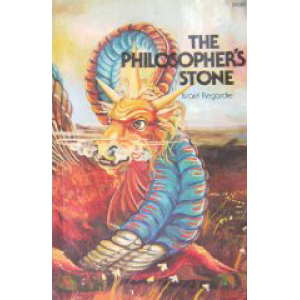
The Philosophers Stone

The Philosophers Stone Cover

Book: The Philosophers Stone by Israel Regardie

My book has been praised as a good meaningful book by some reviewers and by many readers, to judge from the mail I have received during the past thirty years. It is patently an open sesame to one level of interpretation. The Occult Review, now defunct, published a critical review by Archibald Cockren who took me rather severely to task for asserting that alchemical texts should be interpreted solely in terms of psychological and mystical terms. He himself, I subsequently discovered, had written a book Alchemy Rediscovered and Restored. Of course I immediately procured a copy. Since I was peeved by his review, I did not feel that his book had very much to offer—so I dismissed both offhand. I was about to write the editor of The Occult Review a scorching letter, but reason intervened so that fortunately it never got written.

The opportunity is rarely given to an author in his lifetime “to eat crow” and to enjoy it. This lot, it pleases me to say, is mine—after thirty years. Not that I would significantly change much of what I wrote then. I admitted that I had not “proceeded to the praxis” but I felt then and still do that a mystical and psychological interpretation of some alchemical texts was legitimate. There is unequivocally this aspect of the subject. Certainly Jacob Boehme and Henry Khunrath, for example, cannot be interpreted except in these terms.

The Philosophers Stone with these preliminary comments, should answer a wide-felt need which has called forth this new edition. I hope, being in print once more, it will bring new light and knowledge and values to present-day students who may be still groping in the dark areas of the occult towards alchemy, where a guiding hand needs to be extended.
So, to close this Introduction, I must use the ancient Rosicrucian greeting, and the close of a Golden Dawn ritual:
May what we have partaken here sustain us in our search for the Quintessence; the Stone of the Philosophers, True Wisdom and perfect Happiness, the Summum Bonum.


Download Israel Regardie's eBook: The Philosophers Stone

Free eBooks (Can Be Downloaded):

Yogi Ramacharaka - Yogi Philosophy
Louis Claude De Saint Martin - Theosophic Correspondence
Andrew Lang - The Witch And Other Stories
John Mitchell - The Philosophy Of Witchcraft
Israel Regardie - The Philosophers Stone

Salem Witch Trials

Salem Witch Trials Cover

Book: Salem Witch Trials by Kirstie Alley

Salem, Massachusetts. A small town--with no clear governing body--became embroiled in a scandal that forever stands as one of the darkest chapters in American history. For those accused of witchcraft by their neighbors and friends, there was little chance of clearing their names; the mass paranoia that ravaged through the community took the lives of 19 innocent men and women. With an all-star cast of Kirstie Alley, Rebecca De Mornay, Kristin Booth, Shirley MacLaine, Peter Ustinov and Alan Bates, Salem Witch Trials dramatically revisits 1692 colonial America and the haunting legacy it holds.

"Salem Witch Trials" is a compelling 2003 CBS mini-series that featured many familiar and veteran actors and for the most part, stayed true to the historical events that came to be known as the Salem Witch Trials.

The mini-series begins on a rather odd note - it is right in the middle of a trial where the afflicted girls [who are the ones accusing people of witchcraft]go into hysterics and start wailing and screaming, then the accused start transforming into 'demons' [with rather striking make-up and 'flying' special effects]. Thankfully, this only lasts a couple of minutes [the production could have done without it], and viewers are taken back via flashback to six months prior where the events began.

The story focuses on the Puritans residing in the village of Salem, Massachusetts, and the year is 1691. There is no charter from England and hence, the Puritans basically govern themselves without any written law. Those who commit crimes or sins are publicly humiliated [there is a scene where women deemed guilty of sinful conduct are paraded naked whilst tied to a wagon]. The family that is the focal point in this series is the Putnam family - Ann Putnam [Kirstie Alley] gives birth to a stillborn child and is full of grief. Her husband Thomas Putnam [Jay O Sanders] is a bitter man, having lost a lot of his land and wealth to others who are more entrepreneurial. They have a son and daughter and young Annie Putnam [Katie Boland] senses the tension between her parents and finds herself being neglected, hence her desire to act out as a means of gaining attention.

The storyline is riveting and moves along at a steady but sure pace, building momentum as the horror unfolds - the acting is also solid and credible - Kirstie Alley's Ann Putnam is a conflicted and tortured soul. Her grief over her dead child causes her to turn to a village medicine woman, Bridgitte Bishop who is later accused as a witch, and this in turn causes her immense guilt [for turning 'away' from God]. She is by turns horrified and self-righteous at the situation in Salem. This is one of Alley's best dramatic performances to date. Henry Czerny's Rev Parris is credibly done, acting out the part of a so-called man of God who decries against self-interest whilst shamelessly practising it for self-preservation. Then there is young Katie Boland as Annie Putnam who incites revulsion for her performance as the misguided accuser.Rebecca de Mornay plays Rev Parris' wife who is mortified by the events in Salem and finally leaves her husband.

There are also veteran actors who have done an incredible job with their roles here - Shirley Maclaine plays the ill-fated Rebecca Nurse, one of the accused who also happens to be a pillar in society, a devout mother and elderly woman who maintains her faith and sense of humor in the bleakest of times. Peter Ustinov plays the Magistrate William Stoughton, a man so absorbed in proving the accused guilty that he never once questions his judgements. And there is Alan Bates playing Gvernor Sir William Phips, who initially acts the dandy and seems disinterested but who eventually realises something is seriously wrong in Salem.

The sets and costumes lend an authentic feel to the story, making the Salem of 1691-'92 come alive onscreen. All in all, this is a first-class production and will appeal to history buffs, educators [though with some nudity I'm not sure if it would be appropriate for classroom viewing] and period & historical drama fans.Highly recommended!

Buy Kirstie Alley's book: Salem Witch Trials

Free eBooks (Can Be Downloaded):

John Musick - The Witch Of Salem
Friedrich Adler - The Witchcraft Trial In Moscow
Marian Green - A Witch Alone

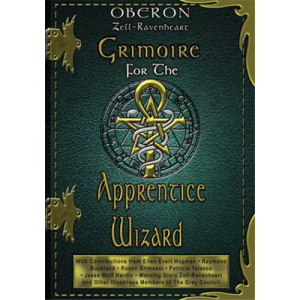
Grimoire For The Apprentice Wizard

Grimoire For The Apprentice Wizard Cover

Book: Grimoire For The Apprentice Wizard by Oberon Zell Ravenheart

Magick, through all its varied forms and traditions, always has at least one component that it shares. Freedom. Freedom from old ideas. Freedom from old religions. A pathway leading the practioner to new depths of themselves, and through that, the world.

It is not, and should not, be used as a tool for the crushing of imagination, but its expansion. It is a very delicate line, to separate one's own prejudices and mythology from the craft itself, creating a clear platform that allows, or even more, encourages the reader to find their own truth. To question authority, even the authority of the writer.

Oberon Zell's grimoire For the Apprentice Wizard does just that. Though there are many books on magick, too often they emphasize the writer's particular viewpoint on the craft, providing a kind of blueprint for development in a particular tradition at the expense of the infinite multiverse of alternate perspectives that could, and should exist.

In his Grimoire, it is apparent that Oberon's intention is to create a platform that is, as well as he is able, clear. Beginning with a brief history of magick in its various incarnations in the Western world; as well as a fundamental glossary of magickal terms as used by all, he moves into beautifully illustrated and well-intentioned explanation of the various types of magick and process.

He includes chapters on healing, herbology, astronomy, mathematics, animal communion (a personal favourite), divination, and many more. Each section illustrates the fundamental principles common to all traditions, allowing the student the space to find their own ideas. Supposedly geared to the adolescent reader, each chapter contains instructions on how to create and manage spells; focusing not only on the process of starting a magick, but the responsible cleanup so often neglected afterwards in making your spells efficient and successful.

I was particularly impressed with the various sources and quotations used in the book. Many authors fail to see (or perhaps, respect) the ways in which spiritual, magickal truths have expressed themselves in today's world. In drawing on gems of wisdom hidden in popular culture; from Aristotle to Discworld, Pythagoreas to Spiderman; Oberon's viewpoint shows an open-mind free of the prejudice of the past that sees the Goddesses, and Gods, still alive inside the imagination of the modern world.

More than just a set of instructions, the Grimoire provides a set of tools designed to allow young minds the opportunity to find their own way through the labyrinth of their imagination. I highly ... highly recommend this book to both new and old readers alike. It is refreshing to see an author who not only claims the intention to provide an open philosophy that still honours its history and practice, but who succeeds in doing so.

Download Oberon Zell Ravenheart's eBook: Grimoire For The Apprentice Wizard

Free eBooks (Can Be Downloaded):

Aleister Crowley - Mortadello Or The Angel Of Venice
Parker Torrence - Grimoire Of Eclectic Magick Part 3 Of 3
Moses Maimonides - The Guide For The Perplexed
Oberon Zell Ravenheart - Grimoire For The Apprentice Wizard.pdf

Thursday, July 29, 2010

Witches And The Book Of Shadows

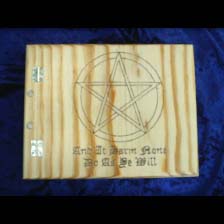
Witches And The Book Of Shadows Cover The book of shadows is a Witches Bible, a place where spells, rituals, and often inspirations are written. Traditionally most Witches hand write everything into their BoS, however in the high tech age of computers there are many modern witches who put their entire BoS on disc. There are even programs designed to format your computer Book of Shadows. Many Books of Shadow are handed down from past generations. I would recommend that if you are just starting one, you choose a very special and large journal, hard cover, or hand crafted wood, leather, or other sturdy material, rather than a spiral notebook, or writing tablet. This book should be planned with the intent of it being around for a long time and used often.

The BOS usually starts out with a Title Page and may be called something as simple as, My Book of Shadows or something more creative like, My Triple Moon Book of Inspiration. You should include a Dedication page dedicating your work to whichever Goddess, and/or God you recognize, and a Blessing page where you put a simple blessing spell for your Book of Shadows and all the writings within.

It might be a good idea to include a line or two about your book being invisible to non-believers, or some type protection, that will prevent ill events from snoops.

I highly recommend a table of contents, or index section, as you will find it difficult to locate a needed piece of information later on, when your book is full. A section on your chosen path, or your personal philosophy is a good addition.

Your Book of Shadows will usually contain a list of all celebration rituals, especially the Sabats, which are the major turnings of the year. Also you will probably include all the esbats and moon phases of the year. You may want to include a section for celebrating births, deaths, handfastings (marriages), and even add rituals for blessing a new home, a business or a new job. With all these special events, there are correspondences that go with them, such as deities, gems and minerals, herbs, oils, colors, astrological symbols, and planetary influences. As with most celebrations there will be certain foods, decorations, ect.

Books You Might Enjoy:

Gerald Gardner - The Garnerian Book Of Shadows
Idres Shah - The Book Of Power
Sasha Fierce - The Book Of Shadows

Tuesday, July 27, 2010

Witches Misogyny And Patriarchy

Witches Misogyny And Patriarchy Cover The persecution of witches reached its zenith at a time when Christianity's attitudes against sex had long since turned into full-blown misogyny. It is amazing how celibate men became obsessed with the sexuality of women. As it is stated in Malleus Maleficarum: "All witchcraft comes from carnal lust, which is in women insatiable." Another section describes how witches were known to "...collect male organs in great numbers, as many as twenty or thirty members together, and put them in a bird's nest."

Evidently they were not entirely stingy with their collections -- there is the story of a man who went to a witch to have his lost penis restored: "She told the afflicted man to climb a certain tree, and that he might take which he like out of a nest in which there were several members. And when he tried to take a big one, the witch said: You must not take that one; adding, because it belonged to a parish priest."

And some people say that religion isn't really all about wishful thinking!

These sentiments were nothing unique or unusual -- indeed, they are a result of centuries of mean-spirited sexual pathology on the part of church theologians. The philosopher Boethius, for example, wrote in The Consolation of Philosophy that "Woman is a temple built upon a sewer." Later, in the tenth century, Odo of Cluny stated "To embrace a woman is to embrace a sack of manure."

Women were regarded as impediments to true spirituality and union with God, which helps explain why investigators focused on women more than men. The church had a long-standing prejudice against women, and this was given vent when the doctrine of devil worship was emphasized as an enemy which the church had to confront and destroy. This animus hasn't entirely disappeared even today. Women aren't persecuted and tortured, but they are deliberately kept out of positions of authority and responsibility reserved exclusively for men.

Books You Might Enjoy:

William Blake - The Marriage Of Heaven And Hell
Vovim Baghie - The Grand Satanic Ritual
Walter Scott - Letters On Demonology And Witchcraft
Frater Fp - Sigils In Theory And Practice

Wednesday, July 21, 2010

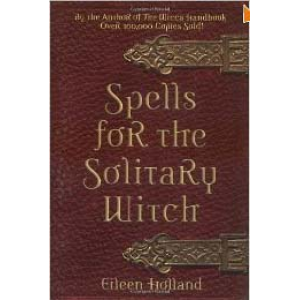
Spells For The Solitary Witch

Spells For The Solitary Witch Cover

Book: Spells For The Solitary Witch by Eileen Holland

This book "Spells for the Solitary Witch" focuses on spells and spell work specifically for the Solitary Practitioner. Clear and easy to follow, Spells for the Solitary Witch explains how to prepare and cast spells 87 spells in all together with the materials needed for each spell and the incantations to say that will ensure the best results. Tailored to the needs of solitary witches, Holland suggests alternatives to hard-to-find ingredients, as well as directions about where to find specific ingredients crucial to a spells success.

Written by a solitary witch and Wiccan priestess herself, Spells For The Solitary Witch is a simple walkthrough of ways to release hidden power for health, wellness, emotional enrichiment, and environmental harmony. Chapters discuss magick and its applications in love, life enhancement, and problem solving, as well as magickal candle gardens, tea potions, and more. Detailed instructions, specific incantations, detailed how-to's down to where one can easily obtain sesame oil or Tiger Balm, and much more make Spells For The Solitary Witch ideal for novice and experienced spellcasters alike.

Again we are presented with Ms. Holland's easy to read and follow style of writing. She lays her book out according to the kind of spells you may want to do, and lists her spells according to what you want to accomplish when working your spells.

I have to say her opening section, entitled :Before you Begin" is exceptional in explaining basic spellwork, what it is, what is magic, ethics when working magic, personal responsibility and terminology. This is an excellent reference on it's own and should be suggested to all beginning spellworkers as a point of essential reference. I wish Ms. Holland would have expanded this section, as she did it so well, but it does stand on it's own as a very good overview.

The sections on actual spellworking are divided into seven chapters, covering "Inner Work, "Goals, Hopes, Wishes", "Love", "Life Enhancement", "Problem Solving", "Magickal Candle Gardens", and "Tea Potions".

Each section has a selection of spells for various situations. Under "Inner Work" we find spells for acceptance, getting over it, even personal power talisman, a tool for building self-confidence. Each spell has complete instructions and directions on how to use the spells for each intent. A list of needs is followed by preparation and the actual spell working, which may include an incantation, ritual, and sometimes an "afterward" or review of what should be the focus and how you should react to the spellworking. With the Talisman, she discusses creating these talisman, the proper signs for you, day workings and Correspondences, and all you would need to know to create and use a personal talisman.

Going forward into the various chapters, each chapter contains spells referencing the chapter title. In "Goals, Hopes, Wishes" we have spells for goals you wish to reach, spells for special wishes, interview charms; all with discussions on your intents to what you want to achieve and how to work the spell.

The "Love" section has workings for personal enhancement, to bring love into your life. The "Life Enhancement" chapter has spells for home blessings, abundance, fertility, joy, and protection to name a few. "Problem Solving" covers dealing with major mistakes, fearsome problems, problematic persons and hard times.

What I note in her spells is that when a spell calls for a "potion" as in her Tragedy Potion (for someone who has just encountered a tragedy in their life and you offer them this potion to help calm nerves and help them center and balance) the ingredients are noted and the appropriate cautions are given. In this case, she gives a recipe for a hot cup of cocoa, with some oil of peppermint. She notes "Note: this potion isn't for you if you are lactose-intolerant, allergic to chocolate or peppermint or have any medical reason that precludes its use." Wise words from a wise witch.

The book contains many notes of wisdom. "Magickal Candle Gardens" focuses on candle magic to assist persons in need. The garden is built indoors, containing candles arranged for your specific purpose and using candles of specific shapes and size depending on the needs. After going over the plans and the layout, it looks to be something even I would consider as a special magical working, being attractive, practical and very especially magical.

The last chapter is about "Tea Potions" specifically, and again, contains potions to work on yourself for specific situations you may encounter, such as personal health, luck, creativity and success to name a few. She works some of the potions with runes, others with chant. The only note I have here is that she did not repeat her good advice about being allergic to certain herbs, as most of these teas are herbal in their base. Please use your own digression when preparing these teas and if allergic, then look for a substitute.

Eileen Holland is a solitary eclectic witch, a Wiccan priestess who calls her path Goddess Wicca. She is the author of several books about magick and witchcraft, including Spells for the Solitary Witch and the best-selling The Wicca Handbook. Eileen is the webmaster of www.open-sesame.com, a popular long-running Wiccan web-site. She lives in upstate New York.

Buy Eileen Holland's book: Spells For The Solitary Witch

Downloadable books (free):

Anonymous - Welcome To The Secrets Of The Root Witch
Scott Cunningham - Wicca A Guide For The Solitary Practitioner
Shanddaramon - Self Initiation For The Solitary Witch

The Witch Hunter Baedeker

The Witch Hunter Baedeker Cover Meanwhile, witch-hunters' manuals multiplied, most notably the infamous Malleus Maleficarum (Hammer of Witches), published in 1486. Its authors, Jacob Sprenger and Heinrich Kraemer, were experienced Dominican inquisitors who had burned 48 witches in one diocese alone and had obtained a papal bull approving their mission. Reversing the old principle of the Canon Episcopi, Sprenger and Kraemer proclaimed that not believing in the reality of witches was heresy. Witches regularly did physical as well as spiritual harm to others, they wrote, and allegiance to the devil defined witchcraft. Sprenger and Kraemer exhorted secular authorities to fight witches by any means necessary.

Malleus Maleficarum (notice the feminine possessive of "witches") was a vicious misogynist tract. It depicted women as the sexual playmates of Satan, declaring: "All witchcraft comes from carnal lust, which is in women insatiable." Ironically, Sprenger also had a deep devotion to Mary. He helped to shape the modern rosary and founded the first rosary confraternity.

Malleus Maleficarum did not cover its ground completely, failing to discuss the actual pact that witches made with the devil, the sabbat, familiars (imps in animal form who aided witches), and night-flying. But those elements did not always appear in witchcraft cases. By itself, the Malleus started no new witch-panics, but it was freely used by later witchcraft writers, Protestant and Catholic alike. The Spanish inquisitors were nearly alone in scoffing at its lack of sophistication.

The demonologists who absorbed the Malleus were highly cultured men, such as the Protestant Jean Bodin, "the Aristotle of the 16th century," and his contemporary, the Jesuit classicist Martin del Rio. Those theoreticians pounded home the principle of the crimen exceptum: Because witchcraft was so vile an offense, accused witches had no legal rights. "Not one witch in a million would be accused or punished," Bodin boasted, "if the procedure were governed by ordinary rules." Anyone who defended accused witches or denied their crimes deserved the same punishment as witches, Bodin wrote.

Socially elite persecutors, demonologists, and judges relentlessly hunted witches with the zeal of modern revolutionaries pursuing a political utopia. No cost was too great, because witch-hunting served the greater good of Christendom, in their view. They believed that witchcraft inverted society's key values, disturbed godly order, challenged the divine right of kings -- the ancient doctrine that rulers derive their right to rule from God -- and diminished the majesty of God. It was thought that witch-hunting saved souls and averted the wrath of God by purging society of evil as the End Times loomed.

Commoners, by contrast, simply wanted relief from the evildoers of folklore who, they believed, were harming them, their children, their cattle, and their crops. It was grassroots complaints that started most witch-hunts. If authorities were too slow to act, peasants were capable of lynching suspected neighbors.

Although maleficium -- physical harm -- loomed much larger than diabolism in common people's accusations against suspected witches, their folk beliefs cross-fertilized the learned ones of Bodin and others in complex ways. Through sermons, gossip, trial accounts, and luridly illustrated "witch-books" (especially popular in Germany), everyone learned what witches did and how to detect them.


Books You Might Enjoy:

Aleister Crowley - The Sixth Chakra Of The Human Body
Louise Huebner - Witchcraft For All
Aleister Crowley - The Winged Beetle
Tarostar - The Witchs Spellcraft Revised
Margaret Alice Murray - The Witch Cult In Western Europe

The Witch Of Tradition

The Witch Of Tradition Cover FOURTEEN years ago a very distinguished literary colleague of George Bernard Shaw said to me: "Shaw is in senile decay." Ten years later I went to see Shaw's "Joan"; and I concluded that if the dramatic feeling, the mastery of stage-craft, the agility and sureness of insight into human nature, of that remarkable play were symptoms of advanced senility I would reconsider my design to avoid that normal period of existence.

And the play just as plainly indicates the strength or stubbornness of its author in its chief defect; it is an historical play and it is entirely unhistorical. Many years ago Shaw decided that historians do not know how to write history, and he would teach them. Unfortunately, in order to grasp the truth of a single personality of an earlier and different age one has laboriously to learn a mass of detail about that age, and labor of that kind does not fascinate men of febrile imagination. Shaw cannot write history.

Was Joan of Arc a witch? Shaw may have heard that there are a few quite scholarly people who think it possible that she was. Scholarly people, he would say, can believe anything. He robustly excludes the very possibility. The charge of witchcraft against "the Maid" was a mere pretext of priests and politicians; and Shaw, in his scorn of science and Rationalism, so surprisingly exonerates the priests and the Inquisition in his play that a Catholic weekly actually announced that he was about to enter the Church.

The murder of Joan was plotted by soldiers and statesmen -- English soldiers and statesmen, of course and the poor priests were bullied and cajoled into a tragicomic trial for witchcraft.

It was quite plain that Mr. Shaw does not know that our idea of witchcraft has been radically altered. He does not even know that one of the characters he introduced into his play, Gilles de Rais, the original "Bluebeard," was, not the indolent court-fop and trifler be makes him, but a very stern and earnest young man, Joan's most intimate friend, and a witch. Probably Shaw does not know that there were male witches as well as female, and that the child in her mother's arms, the maid of fifteen or the winsome young mother of twenty-two, might be a witch just as easily as the old wrinkled dame who lived in a cottage on the edge of the wood and gathered her herbs by the light of the moon.

It is this new conception of witchcraft, which we will explain in this chapter, and will apply to the trial of Joan of Arc, that brings the subject within the program of religious controversy which I am realizing. This horrid massacre of women age by age was tragic enough even on the old conception of witches. Any old dame, widow or spinster, who was wise enough to wish to avoid the cackle of her empty-headed neighbors was apt to be suspected of witchcraft. The child who fell ill -- inoculated by the open drain or cess-pool by the door -- had passed her in the street, and so had clearly been bewitched. The mother who had a miscarriage, the farmer whose pigs sickened. ... The witch! Drown her out of hand, or, less humanely, let the priest see to it; and then the horrors of trial and torture will be added to the injury of death.

This thing occurring during many centuries all over Christendom concerns us just as much as does the beauty of a cathedral. I am not indicting the Church: not merely gathering all the dishonoring facts which can be picked here and there out of the history of medieval Europe. We are seriously studying the effect upon civilization of the acceptance and world-establishment of Christianity. It created a new frame of mind, a new outlook on life, a new character; and this new spirit expressed itself in, amongst other things, the torture and burning or drowning of some hundreds of thousands, if not millions, of men and women on the ground that they were witches. And the crime was directly inspired by the new religion. The sole inspirations of the murderous attitude were belief in the devil and the express statement of the Bible that witches were in league with evil spirits and must be put to death. In the fully developed law of the Church witchcraft was heresy. It was a religious crime.

This was dreadful enough even if we suppose, as is commonly supposed, that the murdered women were yellow, soured, misanthropic old dames from whom death was in any case not far distant. No doubt a poor, brooding, solitary old woman would be more likely than any other in the village to incur popular suspicion. Harenet, one of the earliest English denouncers of the belief in witchcraft (though no modern book ever mentions him), before the end of the seventeenth century thus ironically reminded the witch-hunters of one common type of their prey:

An old woman with a wrinkled face, a furrowed brow, a hairy lip, a gobber tooth, a squint eye, a squeaking voice, or a scolding tongue, having a ragged coat on her back, a spindle in her hand, and a dog by her side -- a wretched, infirm and impotent creature, pelted and persecuted by all the neighbors because the farmer's cart had stuck in the gateway, or some idle boy had pretended to spit needles and pins for the sake of a holiday from school or work.

Life was hell to these old dames for near a thousand years after the establishment of the religion which is said to have uplifted woman.

Yet Catholic literary men and priests and Protestant preachers, who are rarely serious students of history, find this old-hag theory of witchcraft convenient. Sorry for the old ladies, of course, but ... You can understand it, can't you? The edge of your resentment is dulled. The glib word-spinners remind you of the vivid faith of those heroic days -- the greater sensitiveness to the devil's work in the world -- the living fear of God, and so on. In other works I tell enough about the real Middle Ages to spoil this pretty argument.

But a worse error of these apologists, the popular fallacy which is still all but universal in Christendom, is to suppose that the witches were even for the greater part old women. Thousands of reports of witch-trials have now been studied, and from the hundreds that I have myself read at least in summary, I should say that feeble old dames were a comparatively small minority. Maids in their teens, like Joan of Arc, are appallingly common amongst the victims. Young women in their twenties and thirties, strong and defiant of the priests, seem to be almost in the majority. Men are frequent amongst them; and the men include numbers of priests, nobles, lawyers, etc. Let me quote the translation of a letter written at Wiirzburg during the persecution there in 1629:

There are still four hundred in the city, high and low, of every rank and sex -- nay, even clerics -- so strongly accused that they may be arrested any hour. Some out of all offices and faculties must be executed; clerics, counselors, doctors, city officials and court assessors. There are law students to be arrested. The prince-bishop has over forty students here who are to be pastors; thirteen or fourteen of these are said to be witches. A few days ago a dean was arrested; two others who were summoned have fled. The notary of our church consistory, a very learned man, was yesterday arrested and put to torture. In a word, a third part of the city is involved. A week ago a maiden of nineteen was put to death, of whom it is everywhere said that she was the fairest in the whole city and was held by everybody a girl of singular modesty and purity. She will be followed by seven or eight others of the fairest. There are three hundred children of three or four years of age who are said to have had intercourse with the devil. I have seen put to death children of ten, promising students of ten, twelve, fourteen, fifteen, etc.

This is not a page from some history of witchcraft in which the writer is rhetorically embroidering a statement of a contemporary chronicle. It is part of a letter written at the time, the year 1629, in the city of Wiirzburg itself, and by no less a person than the bishop's chancellor. No more veracious document could be imagined. And it is just by chance that in a single city out of hundreds we get this contemporary and authoritative account of the terror that for a time blanched the faces of the citizens.

This single passage must, although it belongs to an exceptionally ferocious period of witch-hunting, convince any reader at once that the popular idea of witchcraft is entirely false. I say "popular," but it is singular how slow even scholars, historians and scientists, have been to grasp the remarkable significance of the witch-movement. In the latest edition of the "Encyclopedia Britannica," which is certainly the finest work of general reference to which the public can turn for information, the article on "Witchcraft" is totally inadequate. The author is a competent ethnographer, yet he writes almost entirely from the traditional point of view. Only in the last few lines he mentions the very suggestive fact, without perceiving its significance, that in Italy today witchcraft is still called la vecchia religione "the old religion" -- and that in its historical phenomena we must recognize a stratum of popular beliefs which are "derived in the main from pagan sources.

The "New International Encyclopedia" is no better, and the generally very able and informing "Dictionary of Religion and Ethics" entirely omits the subject. Yet one point which is quite fatal to the popular conception has been established in every history of witchcraft. This is that witches were not merely, or even usually, old women whose repulsive forms or isolated lives drew popular suspicion upon them. The fairest maids of a town were just as liable to be dragged before the Roman Inquisition or the Protestant bishop as was the old dame who lived alone on the outskirts of the village. Hundreds, if not thousands, of maids like Joan of Arc were drowned or burned at the stake as witches. Women of all ages, from the babe upward, were arraigned. Women of every rank figure in the lists of victims. Men also of every rank and degree of education or illiteracy enter the chronicle. Theologians, lawyers, nobles, and leaders of armies are found as well as peasants and artisans.

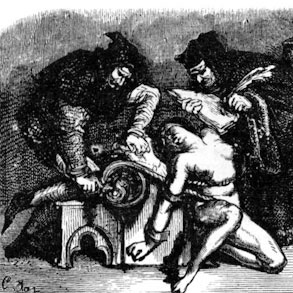
And it will further transpire that even the young women met the sentence of death in the same spirit as the girl-martyrs -- the very few genuine girl-martyrs -- of the early Church. They spat at the religion of their Christian persecutors. They had, they said, a higher religion, and would die rather than abjure it. The Church, it is true, in most cases left them no opinion. By a refinement of brutality it enjoined that they should be fiendishly tortured to extract confessions; then, in order to have a formal assurance of their guilt, it held that confessions thus wrung from them in the agony of torture were "voluntary confessions"; and finally it said that, since conversions professed out of fear of torture were unreliable, the witches might and ought to be put to death. Most of them, therefore, suffered death in silence. But in numberless cases they defied their tormentors and murderers, and boasted that they died for a greater faith than the belief in Jesus.

Hence there is an increasing tendency to regard witchcraft as an organized religion. The best history of witchcraft is Dr. W.G. Soldan's "Geschichte der Hexenprozesse," as edited by Max Bauer in 1911: a fine two-volume work superbly illustrated, which has unfortunately not been translated. In the final chapter the Authors discuss all the views of witchcraft during the last hundred years, and they fail to realize its full significance. They are disposed to regard too many details as mere concessions under torture to the queries of the judges or as hysterical illusions.

Much sounder, though it is little more than an account of trials in England, is Miss M.A. Murray's "The Witch-Cult in Western Europe" (1921). Miss Murray, of London University, has written a model work within her limits: candid and scholarly. The reader will find it a revelation and, in spite of the tragedy, a most entertaining work. Her conclusion is (p. 1 2):

The evidence proves that underlying the Christian religion was a cult practiced by many classes of the community, chiefly however by the more ignorant or those in the less thickly inhabited parts of the country. It can be traced back to pre-christian times and appears to be the ancient religion of western Europe. The god, anthropomorphic or theriomorphic, was worshiped in well-defined rites; the organization was highly developed; and the ritual is analogous to many other ancient rituals. The dates of the chief festivals suggest that the religion belonged to a race which had not reached the agricultural stage. ... It was a definite religion with beliefs, ritual, and organization as highly developed as that of any other cult in the world.

In saying that it was chiefly the religion of the more ignorant, Miss Murray seems to have forgotten that at least ninety-five percent of the people of Europe were then illiterate, and she, perhaps gives a wrong impression as to the survival of the religion from pre-christian times.

While psychologists have been busy applying their formulae to the mind of the witch -- and have generally come to wrong conclusions -- historians have been collecting the scattered evidence, analyzing the reports of trials, and constructing an entirely new idea of the witch-movement. It was the strongest and most widespread in the most enlightened, or least illiterate, centuries of the Middle Ages. The solution is that the medieval Church was right in its idea. Witchcraft was organized heresy, a formidable revolt against Christianity.

Books You Might Enjoy:

Kathryn Paulsen - Witches Potions And Spells
Will Herberg - The Writings Of Martin Buber
Phil Hine - Aspects Of Evocation
Monday, July 19, 2010

Mother Shipton And The Prophecies Of Mother Shipton

Mother Shipton And The Prophecies Of Mother Shipton Cover Mother Shipton was a Yorkshire witch whose prophecies predicted the fates of several rulers within and just after her lifetime, and who even managed to predict the future after her death amazingly accurately -- including the invention of iron ships, and then the destruction of London, and even the end of the world.

But in all probability, Mother Shipton is a legend, popular first in Yorkshire, England. The prophecies themselves evolved in each re-publication of her story, in different decades and centuries.

In 1862, in Victorian Britain, bookseller Charles Hindley published a prophecy and credited it to a "Mother Shipton," and claimed that it came from a 1684 publication by Richard Head, The Life and Death of Mother Shipton.

The 1684 publication by Richard Head contained many other prophecies, supposedly from a Mother Shipton, but not the one quoted by Hindley in 1862. A 1686 publication about Mother Shipton credited to Edwin Pearson is thought to have been written by Head, as well.

In a 1641 pamphlet on Mother Shipton's prophecies, which is the first known reference to Mother Shipton, she is said to have predicted deaths of famous people accurately, including Cardinal Wolsey.

Another story of Mother Shipton was published in 1645, a comedy about Mother Shipton appeared in 1660, another version of Shipton's life and prophecies was published in 1740 by John Tyrrel, and another was published in 1797.

The 1797 publication attributes a birth date of 1488 and a baptismal name of Ursula Southiel (Sowthiel or Southhill) to Mother Shipton. The 1684 publication by Richard Head gives her mother's name as Agatha and identifies the Devil as her father.

In the 1862 version by Charles Hindley, Mother Shipton predicts the end of the world in 1881. In 1881 there was some panic in Britain as the prophecy had become accepted as true even though in 1873, Charles Hindley confessed that he had made up this prophecy.

In 1740, Mother Shipton, a legendary Yorkshire witch and prophet, was credited with this prophecy of the end of London.

Time shall happen A Ship shall sail upon the River Thames, till it reach the City of London, the Master shall weep, and cry out, Ah! What a flourishing City was this when I left it! Unequalled throughout the World! But now scarce a House is left to entertain us with a Flagon.

In John Tyrrel, Past, Present and To Come: or, Mother Shipton's Yorkshire Prophecy, 1740.

Books You Might Enjoy:

John Dee - The Practice Of Enochian Evocation
Robert Anton Wilson - Prometheus Rising
Graham Hancock - The Message Of The Sphinx
John Dee - The Hieroglyphic Monad French Version
Michael Harrison - The Roots Of Witchcraft

Sunday, July 18, 2010

Male Witches

Male Witches Cover Robin Briggs calculates that 20 to 25 percent of Europeans executed for witchcraft between the 14th and 17th centuries were male. Regional variations are again notable. France was "a fascinating exception to the wider pattern, for over much of the country witchcraft seems to have had no obvious link with gender at all. Of nearly 1,300 witches whose cases went to the parlement of Paris on appeal, just over half were men. ... The great majority of the men accused were poor peasants and artisans, a fairly representative sample of the ordinary population." Briggs adds:

There are some extreme cases in peripheral regions of Europe, with men accounting for 90 percent of the accused in Iceland, 60 percent in Estonia and nearly 50 per cent in Finland. On the other hand, there are regions where 90 per cent or more of known witches were women; these include Hungary, Denmark and England. The fact that many recent writers on the subject have relied on English and north American evidence has probably encouraged an error of perspective here, with the overwhelming predominance of female suspects in these areas (also characterized by low rates of persecution) being assumed to be typical. Nor is it the case that the courts treated male suspects more favourably; the conviction rates are usually much the same for both sexes. (Briggs, Witches & Neighbours: The Social and Cultural Context of European Witchcraft, pp. 260-61.)

Books You Might Enjoy:

Aleister Crowley - White Stains
Carl Mccolman - The Well Read Witch
Margaret Alice Murray - God Of The Whitches
Aristotle - On The Soul
Marian Green - A Witch Alone

Killing Witches As The Best Way To Kill Witchcraft

Killing Witches As The Best Way To Kill Witchcraft Cover Burning and hanging were the most popular forms of execution for accused witches in medieval Europe. Burning seems to have been most common in continental Europe while hanging was more common in Britain -- and thus also in the American colonies later as well. The death penalty was imposed on a wide variety of crimes in this era, but witchcraft in particular was punished by death on the basis of Exodus 22:18: "Thou shalt not suffer a witch to live" and Leviticus 20:27: "A man also or woman that hath a familiar spirit, or that is a wizard, shall surely be put to death: they shall stone them with stones."

The heretics who were the earlier targets of the Inquisition were almost never executed at first. They typically had a chance to repent and submit to the Church; only after relapsing into heresy did they generally become subject to execution. Even then, they might still be given another chance to repent. Witches received almost the exact opposite treatment: execution was typically applied after the first accusation and only rarely were accused witches allowed to go free after repenting.

This helps demonstrate the level of threat which the Church made out of witches and witchcraft. Witches couldn't be allowed to live no matter what -- not even if they were willing to admit all that they were accused of and fully repent. Their evil was too much of an existential threat to Christian society and they had to be completely excised, not unlike cancer which has to be cut out lest it kill the entire body. There was simply no tolerance or patience for the witches -- they had to be eliminated, whatever the cost.

Some have claimed that as many as nine million women were executed as witches, even though few could possibly have been truly guilty of witchcraft, and that because this represented a deliberate attempt to kill women generally it should be dubbed a "Women's Holocaust." More recent research demonstrates that many accused witches were men, not just women, and that number of those executed is far lower. Estimates today range from 60,000 to 40,000. Even if we are especially pessimistic, we probably can't go higher than 100,000 people killed across all Europe and over an extended period of time. That's obviously very bad, but not quite a "Holocaust."

Books You Might Enjoy:

William Godwin - The Lives Of The Necromancers
Dr Leo Martello - Weird Ways Of Witchcraft
William Butler Yeats - The Secret Rose And Rosa Alchemica
Allen Greenfield - A True History Of Witchcraft
Michael Harrison - The Roots Of Witchcraft

Saturday, July 17, 2010

Joan Of Arc Witch And Heretic

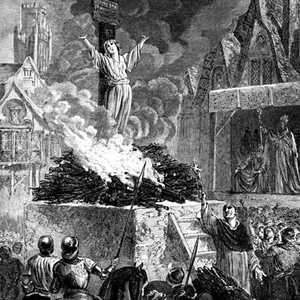
Joan Of Arc Witch And Heretic Cover Although accusations of witchcraft seem to have been most commonly made against older women who lived on the margins of society and who may have become socially troublesome, there is also evidence that women who were too powerful could become targets as well. Joan of Arc is one famous example of a woman who achieved a great deal but was then burned as a witch for her trouble.

Joan of Arc, who has become the patron saint of France, was a peasant girl who experienced mystical visions of St. Michael, St. Catherine, and St. Margaret during the Hundred Years War which convinced her that she was destined by God to lead the French to victory over the English invaders.

In 1429 she convinced the dauphin Charles VII to let her demonstrate that she had the ability to match her ambitions and she led French forces to liberate the city of Orleans from an English siege. She was eventually taken prisoner by the Burgundians, allies of England, and turned over to the English who burned her at the stake as a witch on the argument that her claims of direct communication with God were heretical and an act of disobedience to the Church.

Not until June 16, 1456, did Pope Callistus III declare Joan of Arc to be innocent on the charges of heresy and witchcraft. It can be difficult for powerful institutions to admit error of any sort, but especially when the errors involve grave injustices that cause the suffering and death of innocent people. Everyone likes to think of themselves are pure of heart and doing good work, even when they are hurting others. Sometimes the need to justify one's actions leads one to justifications of brutality, cruelty, and violence in general -- and thus a betrayal of whatever moral principles they thought they held to begin with.

Books You Might Enjoy:

Paul Huson - Mastering Witchcraft
Gabor Klaniczay - Witchcraft Mythologies And Persecutions
John Yarker - The Anglo Saxon Chronicle
Marian Green - A Witch Alone

How To Make A Witchs Ladder

How To Make A Witchs Ladder Cover A witch's ladder is one of those nifty things we sometimes hear about but rarely see. Its purpose is similar to that of a rosary - it's basically a tool for meditation and ritual, in which different colors are used as symbols for one's intent. It's also used as a counting tool, because in some spell workings there is a need to repeat the working a particular number of times. You can use the ladder to keep track of your count, running the feathers or beads along as you do so. Traditionally, the witch's ladder is made with red, white and black yarn, and then nine different colored feathers woven in.

Here's How:

1. Realistically speaking, it makes more sense to use yarn colors that have a significance to you and your working. Also, finding nine differently colored feathers can be tricky if you're looking for them out in the wild -- you can't just go plucking feathers from local endangered species -- and that means a trip to the craft store and some oddly tinted feathers. I'd recommend using either found feathers of any color, or something else entirely -- beads, buttons (see our discussion on the magical uses of buttons), bits of wood, shells, or other items you have around your home.

2. To make your basic witch's ladder, you'll need:
* Yarn or cord in three different colors
* Nine items that are similar in property but in different colors (nine beads, nine shells, nine buttons, etc)

Cut the yarn so that you have three different pieces in a workable length - usually a yard or so is good. Although you can use the traditional red, white and black, there's no hard and fast rule that says you must. Tie the ends of the three pieces of yarn together in a knot.

3. Begin braiding the yarn together, tying the feathers or beads into the yarn, and securing each in place with a sturdy knot. Some people like to chant or count as they braid and add the feathers. If you wish, you can say something like this variation on the traditional chant:

By knot of one, the spell's begun.
By knot of two, the magic comes true.
By knot of three, so it shall be.
By knot of four, this power is stored.
By knot of five, my will shall drive.
By knot of six, the spell I fix.
By knot of seven, the future I leaven.
By knot of eight, my will be fate.
By knot of nine, what is done is mine.

4. As the feathers are tied into knots, focus your intent and goal. As you tie the final and ninth knot, all your energy should be directed into the cords, the knots and the feathers. The energy is literally stored within the knots of the witch's ladder. When you've completed the string and added all nine feathers or beads, you can either knot the end and hang the ladder up, or you can tie the two ends together forming a circle.

If you'd like your ladder to be more like a rosary string, I'd highly recommend picking up a copy of pagan Prayer Beads by John Michael Greer and Clare Vaughn.

What You Need:

* Yarn or cord in three different colors
* 9 Feathers or other items to braid into your ladder

Books You Might Enjoy:

June Johns - King Of The Witches The World Of Alex Sanders
Heinrich Kramer - The Malleus Maleficarum Or The Witch Hammer
Tarostar - The Witchs Spellcraft Revised
Paul Huson - Mastering Witchcraft
Marian Green - A Witch Alone

Friday, July 16, 2010

How To Became A Witch

How To Became A Witch Cover Witchcraft is taught in various ways. The best way is to find someone who has been a practitioner for several years and find out how they learned. Most metaphysical bookstore have a notice board where you may find postings for pagan gatherings, this might be a good place to start.

Do not be taken in by the "trappings" of "flash" of those you meet. Trust your own instincts to find someone who is honest and trustworthy. If all else fails you can do some of the research yourself. There are a large number of very good books out there to start you on your way, however, you will do best if you are taught by someone. If you are looking for book, anything by Scott Cunningham, Ray Buckland, Amber K, or even Starhawk are excellent starts. Read carefully, take only what you feel comfortable with and ask as many questions as you feel you need to.

Books You Might Enjoy:

John Dee - The Calls Of Enoch
Thomas Moore - Candle Magick For Love
Michael Harrison - The Roots Of Witchcraft
Walter Begley - Biblia Cabalistica
Carl Mccolman - The Well Read Witch

Popular Posts