Showing posts with label pagan books. Show all posts

Sunday, October 31, 2010

The Persian Mystics Jami

The Persian Mystics Jami Cover

Book: The Persian Mystics Jami by Frederick Hadland Davis

Jami (1414-1492), a scholar and mystic, is considered by many to be one of the greatest Persian poets of the 15th century. This volume, edited by F. Hadland Davis and first published in 1908, contains selections from some of Jami's best-known works. "Salaman and Absal" examines the earthly love ("the love that binds and fetters and is corruptible") of the eponymous star-crossed lovers and contrasts it with "incorruptible" celestial love. The "Lawa'ih" is a treatise on Sufism. "Yusuf and Zulaikha" tells of Zulaikha's unrequited love for Yusuf, and the "Baharistan" is a book of verse and prose written as a series of eight "gardens." A brief biography of Jami and some additional Information on each of the selections are included in this timeless work.

This is a basic Introduction to Jami the Persian Sufi poet. The first part of the book covers his life, a brief biography of Jami. The next chapters cover some of his most famous works the story of Salman and Absal, the Lawa'ih, the story of Yusuf and Zulakha and the Baharistan. The final part of the book are selections from the above 4 books translated.

While this is a nice Little Book it is very brief and covers only the most basic of the life and works of Jami. The author however, has remained faithful to the teachings of Jami and has done a fairly good job in explaining the teachings of Jami to the reader and providing him/her with a fair introduction to further reading.

Download Frederick Hadland Davis's eBook: The Persian Mystics Jami

Downloadable books (free):

Max Heindel - The Rosicrucian Mysteries
Frederick Hadland Davis - The Persian Mystics Jalaluddin Rumi
Frederick Hadland Davis - The Persian Mystics Jami

Thursday, October 21, 2010

Wicca For Beginners Fundamentals Of Philosophy And Practice

Wicca For Beginners Fundamentals Of Philosophy And Practice Cover

Book: Wicca For Beginners Fundamentals Of Philosophy And Practice by Thea Sabin

In her first book-length work, Sabin presents a first-rate, fresh and thorough addition to the burgeoning field of earth-based Spiritual Practice volumes. Sometimes using examples that young people can relate to (SATs, dying grandmothers), she opens the door to this path for people of all ages who want concrete beginnings to "work actively and spiritually to develop as a person." Sabin covers well the familiar territory of the calendar, circle, pentagram, tools, etc., but she shines distinctively in several areas. The first is in Wiccan history, written in a light, informative style that magically mines depth, breadth and brevity. Another is in the emphasis on personal will and ethical practices that transcend reliance on external paraphernalia. She also deftly shows how the various tools and spells can be put into use, but always encourages practitioners to utilize their own experiences, environment and spiritual intelligence to shape their practice. Especially helpful are the criteria to assess groups and potential teachers, and the volume is capped by a fine bibliography. Sabin advocates consistent study, practice and evolved learning. Gently admonishing her reader not to become a "one-book wonder," Sabin has nearly voided her own advice with this important first effort that is perfect for novice Wiccans.

As a teacher of Wicca for many years, I'm always looking for better materials to use for training. I am grateful to Ms. Sabin for providing what will undoubtedly be the introductory book I will recommend for the foreseeable future. She presents the basics without pushing any given path or tradition, often presenting varying Interpretations and viewpoints in a non-judgemental manner. This is a solid foundation for seekers to use as a springboard to whatever flavor of Wicca they choose to explore. I appreciate that she addresses ethics within Wicca, which many authors seem to avoid, or present in a highly simplistic manner. The book is clearly meant for beginners, hence the title, and is possibly the best overall introduction I have yet seen.

I bought this book to learn more about the Wiccan Religion as my girlfriend is wiccan and I had no prior (correct) knowledge of the religion. This book offers an excellent intro to the history, philosophy and basic practices of the religion as the title suggest. Its also doesn't read like a textbook so its fun and to read. In general I would reccomend this book to anyone just starting out who wants to learn more about the religion.

Buy Thea Sabin's book: Wicca For Beginners Fundamentals Of Philosophy And Practice

Free eBooks (Can Be Downloaded):

Henry Cornelius Agrippa - Occult Philosophy And Magick Book I
Johannes Kepler - Concerning The More Certain Fundamentals Of Astrology
Anonymous - Wicca Beliefs And Practices

Sunday, October 3, 2010

The Great Rite Invocation

The Great Rite Invocation Cover Assist me to erect the ancient altar
At which in days past all worshipped
The great altar of all things
For in times of old, woman was the altar
Thus was the altar made and placed
And the sacred place was the point within the center of the circle
As we have of old been taught
That the point within the center is the origin of all things
Therefore should we adore it
Therefore whom we adore we also invoke
O circle of stars

Whereof our Father is but the younger brother
Marvel beyond imagination, soul of infinite space
Before whom time is ashamed
The mind bewildered, and the understanding dark
Not unto thee may we attain unless thine image be love
Therefore by seed and root, and stem and bud
And leaf and flower and fruit, do we invoke thee
O Queen of Space, O Jewel of Light
Continuous One of the Heavens

Let it be ever thus
That man speak not of thee as One, but as None
And let them not speak of thee at all
Since thou art continuous
For thou art the point within the Circle, which we adore
The point of life without which we would not be
And in this way truly are erected the holy pillars
In beauty and in strength were they erected
To the wonder and glory of all men

Altar of mysteries manifold, the sacred circle’s secret point
Thus do I sign thee as old, with kisses of my lips anoint
Open for me the secret way, the pathway of intelligence
Beyond the gates of night and day, beyond the bounds of time and sense
Beyond the mysteries aright, the five true points of fellowship
Here where the Lance and Grail unite
And feet, and knees, and breast, and lip

Stewart and Janet Farrar – 1984.

Free eBooks (Can Be Downloaded):

Aleister Crowley - Invocation
Friedrich Adler - The Witchcraft Trial In Moscow
Michael Sharp - The Great Awakening
Aleister Crowley - The Supreme Ritual The Invocation Of Horus
John Dee - The Practice Of Enochian Evocation

Saturday, October 2, 2010

Drawing Down The Moon Witches Druids Goddess Worshippers And Other Pagans In America

Drawing Down The Moon Witches Druids Goddess Worshippers And Other Pagans In America Cover

Book: Drawing Down The Moon Witches Druids Goddess Worshippers And Other Pagans In America by Margot Adler

Popular demand for this clear-sighted compendium of information about the rebirth of Pagan religions hasn't waned since its initial publication in 1979. Distinguished by the journalism of National Public Radio columnist Margot Adler, Drawing Down the Moon explains this diverse and burgeoning religion's philosophies and activities while dispelling stereotypes that have long been associated with it. Most people don't realize that pagan simply refers to pre-Christian polytheistic nature religions, such as the various Native American creeds, Japanese Shinto, Celtic Druid, and Western European Wicca. Originally, the word pagan meant "country dweller" and was a derogatory term in Rome in the third century A.D., not unlike calling someone a hick today. If you find yourself feeling queasy when you hear the words witch or pagan, a healthy dose of reeducation via Drawing Down the Moon could be the cure.

I read this book when it was first published and recommned it to anyone who wants to become more enlightened about the topic. I have a social science background, and thus a general understanding of the various world views of traditional societies who are in my opinion closer to old Mother Earth than most of us "moderns" who spend far too much time caught up in our technology. Margot Adler (granddaughter of the famous psychologist) went exploring (ethnographic field work) and this book is the result.

She does not promote any of the world views she describes, she plays the good ethnographer and records what she finds. She participates on several occasions, and thus becomes the "participant observer" recorder. I didn't know much about the revival of "paganism" and had never heard of Wicca before I read Adler's book. I learned that in spite of the professed enlightenment of our modern age, many fear the practices described. Why? Basically, the practice of Wicca seems to be a female oriented way of life--focusing on nature, life, a spiritual path. I for one am continuing to read about Wicca and explore what others are doing.

I figure some of the so-called witches etc. are not what they purport to be, just as some of the agressive so-called Christians driving with bumper stickers that advertise their "faith" are not what they purport to be. I recommend Adler's book if you are interested in comparative religion, are looking for a new way of living or just curious about a somewhat maligned and often persecuted group of mostly women.

Buy Margot Adler's book: Drawing Down The Moon Witches Druids Goddess Worshippers And Other Pagans In America

Free eBooks (Can Be Downloaded):

Mw Macdowall - Asgard And The Gods The Tales And Traditions Of Our Northern Ancestors Ver 2
Leo Joachim Frachtenberg - Allusions To Witchcraft And Other Primitve Beliefs In The Zoroastrian Literature
Robin Artisson - Dance Of The Witches Opening The Devil Eye
Gerina Dunwich - A Witchs Guide To Ghost And The Supernatural
Damon Leff - A Pagan Witches Touchstone Witchcraft And Witch Hunts In South Africa

The Fifth Sacred Thing

The Fifth Sacred Thing Cover

Book: The Fifth Sacred Thing by Starhawk

I love this book. I didn't like it at first, but I decided to give it an hour before I made up my mind. Now I am really glad I stuck with it, because it is one of the richest, most thought-provoking books I have ever read.

I had this book on my shelf for several years before I actually read it. Although it obviously sounded good enough at the time I bought it, I feared that it would be preachy and overbearing. It was nothing of the sort. The characters are complex; flawed at times, saintly at others. The story is compelling, combining plots about the personal growth of the various characters, adventure stories as Bird escapes from prison and Madrone ventures into the southern wilds to help the freedom fighters, and the ultimate show down between the San Franciscans and the Stewards. It is a bit simplistic, perhaps, but that didn't stop me from wishing things in reality were more like they are in Maya and Madrone's world. The attempts to portray this world as one free of any racial or sexual bigotry do get a bit heavy handed at times, but never so much that it interfered with my enjoyment of the story. I would recommend this book to anyone, and in fact immediately after I finished Ran out and bought a copy to give as a gift this Christmas.

One of the greatest questions is - how do people resist the violent advances of others without becoming violent themselves? We can look to others for inspiration - HH the Dalai Lama, Gandhi, MLK - there have been a few who have managed to hold on to their ideals despite the crimes inflicted upon them. But how do we do this ourselves? How do we maintain peace within ourselves?

This book discusses these issues on a societal level, but the wisdom you will gain can be applied on a personal level. You will likely find yourself rethinking how you view numerous things - from illness to monogamy.

And the story is interesting and creative, with characters you will come to care about. This is a fantastic book. Go ahead and give it some time - you will probably love it, too!

Buy Starhawk's book: The Fifth Sacred Thing

Free eBooks (Can Be Downloaded):

Friedrich Max Muller - The Sacred Books Of The East
Solomonic Grimoires - The Book Of Secrets
Aleister Crowley - His Secret Sin

What Is A Spell

What Is A Spell Cover A spell is a spoken or written formula that when used in an act of magick is intended to cause or influence a particular course of events. Belief in and the use of spells are universal and have been an integral part of religious practices since ancient times. Methods vary according to culture but all spell work is based on ritual.

Spells are closely related to Prayers, which are rituals consisting of a petition to the Gods or deities (whatever the religion or faith) for a desired outcome. It involves the visualization of a goal, a statement of desire for the goal, and ritualized movements of body positions (e.g., the bowing of the head, the clasping of the hands, the closing of the eyes etc). In magick, spells are closely related to various methods of mind power such as: creative visualization, positive thinking, and positive imaging (see “What is Magick”). All of which emphasize our mental images of the goal and our identification with it, repetition of our intent to achieve this goal, projection of our will, and a petition to the spirits, deities, or the divine force for their aid.

These types of spells are commonly used on a daily bases, the simple lighting of a candle starting the ritual process. Such daily spells constitute minor magick's such as: blessings, self-help, positive thoughts and the sending of helpful healing energies to others. Used on a daily bases it is not therefore necessary to undertake the cumbersome task of a full circle casting ritual (see Circle Casting).

Spells can be beneficial or harmful and can be worked on people, animals, and nature. Their purposes are limitless and include: healing, love, money, success, fertility, longevity, and protection from disaster, ill fortune, and evil. They can also be used to exorcise ghosts and spirits, for victory in battle, truth in divination, weather control, and the accomplishment of supernatural feats. When directed against enemies, spells can be used to cause illness, destruction, loss of love, impotence, barrenness, failure and even death. Spells can be cast to affect the self, or directed to affect another person.

A positive spell is often called a blessing, although such archaic terms as bewitchment and enchantment are still sometimes used. Negative spells are generally known as hexes or curses. A binding spell is one intended to prevent harm, avoid danger, or to stop someone from performing particular acts (e.g., halting a murder, preventing a rape, or even stopping the spread of gossip).

In most cultures, Witches, Sorcerers, Witch doctors, Magicians, and other magically empowered peoples, cast both beneficial and harmful spells as the need dictates. However in contemporary Paganism and Witchcraft, a set of ethics exists that prohibits the use of curses and negative spells against another (see the “Wiccan Rede” and the “Three Fold Law”). The acceptability of binding spells is divided, and is widely debated throughout the community.

Free eBooks (Can Be Downloaded):

Anonymous - Hypnotism Spells
Arthur Edward Waite - What Is Alchemy
Stephen Mcnallen - What Is Asatru

Thursday, September 30, 2010

Arbatel Of Magic Or The Spiritual Wisdom Of The Ancients

Arbatel Of Magic Or The Spiritual Wisdom Of The Ancients Cover

Book: Arbatel Of Magic Or The Spiritual Wisdom Of The Ancients by Medieval Grimoires

A magical ritual published at Basle in 1575. The text is in Latin and appears to have been influenced by Paracelsus. It is of Christian, not Jewish, origin, and although the authorship is unknown, it is probably the work of an Italian. Only one of its nine volumes still exists: dealing with the institutions of magic, the work is entitled Isagoge, which means "essential or necessary instruction."

The book introduces the ritual of the Olympic spirits who dwell in the air and among the stars and who govern the world. There are, we are told, 196 Olympic provinces in the universe: thus Aratron has 49; Bethor, 42; Phaleg 35; Och, 28; Hagith, 21; Ophiel, 14; and Phul, 7. Each of the Olympic spirits rules alternately for 490 years. They have natural sway over certain departments of the material world, but outside these departments they perform the same operations magically.

Thus Och, the ruler of solar affairs, presides over the preparation of gold naturally in the soil. At the same time, he presides magically over the preparation of that metal by means of alchemy. The Arbatel states that the sources of occult wisdom are to be found in God, spiritual essences, and corporeal creatures, as well as in nature, but also in the apostate spirits and in the ministers of punishment in Hell and the elementary spirits. The secrets of all magic reside in these, but magicians are born, not made, although they are assisted by contemplation and the love of God.

It is sufficient to describe the powers and offices of one of these spirits. Aratron governs those things that are ascribed astrologically to Saturn. He can convert any living thing into stone, can change coals into treasure, gives familiar spirits to men, and teaches alchemy, magic, medicine, and the secret of invisibility and long life. He should be invoked on a Saturday in the first hour of the day. The Arbatel was said to be one of the best authorities on spiritual essences and their powers and degrees.

Download Medieval Grimoires's eBook: Arbatel Of Magic Or The Spiritual Wisdom Of The Ancients

Free eBooks (Can Be Downloaded):

Frater Astrum - Temple Of Flame The Ritual Opening Of The Veil
Eliphas Levi - The Magic Ritual Of The Sanctum Regnum
Medieval Grimoires - Libellus Magicus Or The True Magical Work Of The Jesuits
Medieval Grimoires - Arbatel Of Magic Or The Spiritual Wisdom Of The Ancients

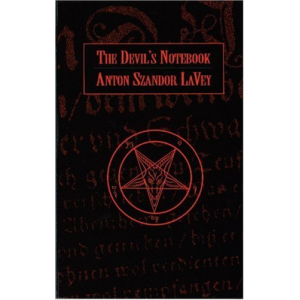
The Devil Notebook

The Devil Notebook Cover

Book: The Devil Notebook by Anton Szandor Lavey

Anton Szandor LaVey was a man full of biting wit, iconoclastic insight and, above all, a most astute and adroit observer of human folly and misinterpretation, himself being subjected to the latter more than anyone in recent memory.

In this book, published after two decades of inactivity (to the world of print), LaVey sheds light on many interesting topics, bringing his usual dose of sardonic humor to the printed page.

A particular essay comes to mind when I think of this book- it's called "Hatha Toilet Seat Meditaion," and if it doesn't solicit laughter from you, nothing will. For those of you who are familiar with it, I'm certain you're grinning right now. For those who aren't, read the book and find out why.

Other essays focus on some pretty forbiding topics, and the level of candor expressed by LaVey never lets us forget that while the media may have portrayed him as several things- none of which were especially flattering- we will continue to respect him for the insight he shared with us, remembering the first time we read the "Satanic Bible," a book that for many of us described the thoughts we'd always thought, but never knew anyone else did.

In general The Devil Notebook is very useful and practical black magic book that does explain (with some deals hidden) the ways of satanic practices. The author knows the material, and its well laid out with clear - but as I say some missing - instructions. However, the book does deliver much material. I read an interesting but rare satanic gem called the Question of Lucifer, about how far Lucifer has penetrated into the upper ranks of power and elite. It was fascinating, and very, very scary, depending on if you are on the White or black magic side. That book unknowingly exposed some satanic secrets and left a lot open for us to see, more than the author expected - if you are willing to read it. Be warned!

Download Anton Szandor Lavey's eBook: The Devil Notebook

Free eBooks (Can Be Downloaded):

Mark Mirabello - The Odin Brotherhood
Rabbi Michael Laitman - The Open Book
Anton Szandor Lavey - The Devil Notebook

Wednesday, September 29, 2010

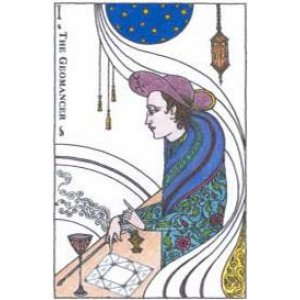
Astronomical Geomancy

Astronomical Geomancy Cover

Book: Astronomical Geomancy by Gerald Cremonensis

Astrological geomancy is an ancient method of divination. The word geomancy means earth divination and is believed to have come from the use of sand to generate the geomantic figures, the basis of prediction in geomancy. This also accounts for its Arabic name, ilm al-raml, literally the science or wisdom of the sand.

In the modern era the ancient art of divinatory geomancy has been confused with Chinese feng shui which is not a method of divination, but a science of spatial arrangement, architecture and landscaping. Divinatory geomancy has also had its name appropriated by the modern New Age study of ley lines and earth "energies" which are also not techniques of divination.
Contemporary practitioners of the traditional Western art of geomancy have taken to referring to it as divinatory or astrological geomancy to differentiate it from these more modern uses of the term. Astrological geomancy is a particularly appropriate term as much of the divinatory methodology used in geomancy comes from traditional astrology.

The origins of geomancy are shrouded in mystery, but the first manuscripts describing the practice appear in the 9th century AD in the advanced Islamic civilization of the Middle East. From there it spread to Europe in the 11th and 12th centuries as part of the reception of many arts and sciences, including the occult arts of astrology, alchemy and magic by the rapidly civilizing West. Known in Arabic as ilm al-raml, literally the science or wisdom of the sand, geomancy became quite popular as a divinatory technique because of its ease of learning and use. Here is an interesting article in pdf form by the Dutch academic Wim van Binsbergen on the Astrological Origin of Islamic Geomancy. Because of its close connection to astrology, geomancy has been called "the Daughter of Astrology" and known as terrestial astrology.

Download Gerald Cremonensis's eBook: Astronomical Geomancy

Free eBooks (Can Be Downloaded):

Anonymous - Gerald Cremonensis On Astrological Geomancy
Henry Cornelius Agrippa - Of Geomancy
Nick Farrell - Notes On Geomancy
Gerald Cremonensis - Astronomical Geomancy

The Magic Of Armadel

The Magic Of Armadel Cover

Book: The Magic Of Armadel by Solomonic Grimoires

The grimoire of Armadel translated from the original French and Latin of a manuscript in the Biblotheque l'Arsenal in Paris. This is classed as a Christian Grimoire and contains many important seals and sigils of the various demons and planetary spirits. First translated by S.L. McGregor Mathers in the late 1890’s. The Grimoire of Armadel remained unpublished until 1980.

What follows is an unabridged introduction taken directly from the version of the Grimoire by Frator Alastor:

“…….When Mathers made his translation he notice that the title page was the last page of the Grimoire, so he moved to the front but keep the rest of the chapters in the same order. He also notice that this Grimoire began speaking about the magick circle like if it where something that the reader should already know. Now it is my believe that the whole Grimoire was written backward, this is to say that you should read the last page first (the title page) then the last chapter and so on. If you read it this way you will see that make a lot of sense. In Mathers version the first chapter is a reference to the magick circle and the License to depart, it make no sense to begin a Grimoire that way since the license to depart is the last think that a magician read. Also if you fallow the Latin titles in Mathers version the text begin with the Sanhedrin, Jesus and go on to the creation of Adam and the demons and the angels etc. This order is completely the opposite of that one on the bible this is god first, then the angels, the demons, Adam, Jesus, the Crucifixion and the Sanhedrin. So neither to say I had inverted the orders of the chapters in Mathers version under the believing that this is the way that the magic was intended to be read.”

Download Solomonic Grimoires's eBook: The Magic Of Armadel

Free eBooks (Can Be Downloaded):

William Blake - The Marriage Of Heaven And Hell
John Musick - The Witch Of Salem
Reynold Nicholson - The Mystics Of Islam
Aubrey Bell - The Magic Of Spain
Solomonic Grimoires - The Magic Of Armadel

Tuesday, September 28, 2010

The Pungo Witch

The Pungo Witch Cover The Pungo Witch, as she has come to be called, or in real life, Grace Sherwood, was accused of bewitching a neighbor's crop in 1698. Allegations of other 'witchy' things escalated over time in the Princess Anne County government. Her accusers decided to test her by 'ducking,' or, trial by water, her innocence or guilt determined by whether she floated or drowned. Drowning, by the way, was the GOOD outcome.

On July 10th, 1706 at ten o'clock, Grace Sherwood was tied by her thumbs, cross-bound and dropped into the western branch of the Lynnhaven River near what is now known as Witchduck Point in Virginia. Unfortunately for Sherwood, she floated. Guilty of being a duck? No, guilty of being a witch. She was imprisoned, and eventually released, but Sherwood lived the rest of her life quietly unvindicated, and died in 1740.

I guess they taught her a lesson, huh? Grace Sherwood was a midwife who would often wear men's clothing while working her own homestead. She went to court a dozen times to either defend herself or sue her neighbors for slander, yet never turned her back on a woman in need of her skills. She never married. Thus one can assume that then, as now, a woman who takes care of herself, a confident, competent woman, is suspect at best, ducked at worst, but always, apparently, in need of being taught to mind her place.

In 2006, she was pardoned by the Governor of Virginia, Timothy M Kaine--300 years after her ordeal. The wheels of justice sure do run slow, sometimes, but at least they turn.

Free eBooks (Can Be Downloaded):

Anonymous - The Laws For Witches
Margaret Alice Murray - The God Of The Witches
Alfred Elton Van Vogt - The Witch

Monday, September 27, 2010

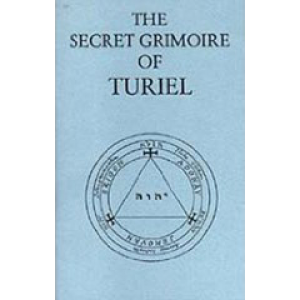
The Secret Grimoire Of Turiel

The Secret Grimoire Of Turiel Cover

Book: The Secret Grimoire Of Turiel by Medieval Grimoires

Turiel in the Book of Enoch

Turiel in later translations was the 18th Watcher of the 20 leaders of the 200 fallen angels that are mentioned in an ancient work called the Book of Enoch. The name is believed to originate from tuwr, el (God) meaning "rock of God". The translation taken from Michael Knibbs work on the Ethiopic Book of Enoch is "Mountain of God" or "Rock of God".

Grimoire of Turiel

There is a grimoire called "The Secret Grimoire of Turiel" in which the magician is given instructions on how to contact Turiel. It was believed to have been written in about 1518, but may have been copied from something older. It came to light in 1927 after being sold to Marius Malchus in Spain by a defrocked priest and was then translated into English from the original Latin. However, since Turiel is only previously mentioned in the Book of Enoch, it is unlikely that Turiel would have been known in the west before the rediscovery of the Book of Enoch in the early 17th century. No version previous of 1927 has been brought to the public.

Download Medieval Grimoires's eBook: The Secret Grimoire Of Turiel

Free eBooks (Can Be Downloaded):

Anonymous - The Secret Book Of Artephius
Yacki Raizizun - The Secret Of Dreams
Parker Torrence - The Craft Grimoire Of Eclectic Magic
Austin Osman Spare - The Zoetic Grimoire Of Zos
Medieval Grimoires - The Secret Grimoire Of Turiel

Sunday, September 26, 2010

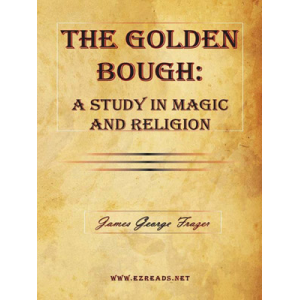
The Golden Bough A Study Of Magic And Religion

The Golden Bough A Study Of Magic And Religion Cover

Book: The Golden Bough A Study Of Magic And Religion by Sir James George Frazer

The Golden Bough: A Study in Magic and Religion is a wide-ranging, comparative study of mythology and religion, written by Scottish anthropologist Sir James George Frazer (1854–1941). It first was published in two volumes in 1890; the third edition, published 1906–15, comprised twelve volumes. It was aimed at a broad literate audience raised on tales as told in such publications as Thomas Bulfinch's The Age of Fable, or Stories of Gods and Heroes (1855). It offered a modernist approach to discussing religion, treating it dispassionately as a cultural phenomenon rather than from a theological perspective. The impact of The Golden Bough on contemporary European literature was substantial.

The book scandalized the British public upon its first publication, because it included the Christian story of Jesus in its comparative study, thus inviting an agnostic reading of the Lamb of God as a relic of a pagan religion. Frazer removed his analysis of the Crucifixion to a speculative appendix for the third edition, and it was entirely missing from the single-volume abridged edition.

Its influence on the emerging discipline of anthropology was pervasive and undeniable. For example, Bronislaw Malinowski, stricken with tuberculosis shortly after receiving his doctorate in physics and mathematics, read Frazer's work in the original English to distract himself from his illness. "No sooner had I read this great work than I became immersed in it and enslaved by it. I realized then that anthropology, as presented by Sir James Frazer, is a great science, worthy of as much devotion as any of her elder and more exact studies and I became bound to the service of Frazerian anthropology."

Despite whatever controversy the work may have generated, and its critical reception amongst other scholars, The Golden Bough had a tremendous effect on the literature of the period. Robert Graves adapted Frazer's concept of the dying king who is sacrificed for the good of the kingdom to the romantic idea of the poet's necessary suffering for the sake of his Muse-Goddess in his Frazer-esque book on poetry, rituals, and myths, The White Goddess, which was published in 1948. William Butler Yeats makes reference to it in his poem, "Sailing to Byzantium." H. P. Lovecraft mentions the book in his short story "The Call of Cthulhu." T. S. Eliot acknowledged indebtedness to Frazer in his first note to his poem The Waste Land. William Carlos Williams references it as well in Book Two, part two, of his extended poem in five books, Paterson. James Joyce, Ernest Hemingway, D. H. Lawrence, Aleister Crowley, Ezra Pound, Mary Renault, Joseph Campbell, Naomi Mitchison (in her The Corn King and the Spring Queen), and Camille Paglia are but a few authors deeply influenced by The Golden Bough. Its literary impact has given it continued life, even as its direct influence in anthropology has waned.

Download Sir James George Frazer's eBook: The Golden Bough A Study Of Magic And Religion

Free eBooks (Can Be Downloaded):

Lynn Thorndike - A History Of Magic And Experimental Science
Robert Ellwood - The Encyclopedia Of World Religions
Susan Greenwood - The Nature Of Magic An Anthropology Of Consciousness
Don Karr - The Study Of Solomonic Magic In English
Sir James George Frazer - The Golden Bough A Study Of Magic And Religion

The Art Of Hypnotism Self Hypnosis And Hypnotizing Others

The Art Of Hypnotism Self Hypnosis And Hypnotizing Others Cover Many years ago I went to a Hypnotist to learn the Art. He taught me how to hypnotize myself and others. It is actually an easy process involving very little study and practice. You must remember.... not everyone can be hypnotized. Some people are so wrapped up in their thoughts of every day worries that they can not simply concentrate. In order to be hypnotized... you must be able to relax and clear your mind just the same as you would during meditation..
I would suggest trying it on yourself before trying it on others. Here are the steps to hypnotizing yourself....

1. Sit on a couch in the upright position and close your eyes and your arms at your side or in your lap. Do not move around. Just sit there and relax for a minute.

2. Clear your mind of all thoughts. How do you do this?.... simply imagine a big Dumpster or a very large metal box on your mental screen. Then see it open and put all your thoughts and worries in it one by one.... bills... your lovelife.... problems.... your children.... your job... everything you can think of. Then close the lid and lock it! Then push it off your mental screen.

3. Now sit there quietly with no thoughts for a minute. When you are ready to start... do not forget to tell yourself as you go through each part of the body that you are becoming more and more relaxed as you go. YOU MUST TELL YOURSELF THIS!

4. Now... start with your head.... imagine every part of your head relaxing... start with your eyes.... then go to your ears.... the mouth... all your facial muscles. spend time with each part to make sure it is fully relaxed.

5. Now go to your neck and do the same.

6. Now go to your whole chest and stomach region and start with your heart... slow it down and make it at peace. Relax all you chest muscles and then your stomach area.

7. Now relax your arms feeling them going limp. Relax every muscle in your arms one by one including your fingers.

8. Next go to the groin area and relax all the muscle there.

9. Now it is time to do your legs.... start with the thighs and work your way down to the feet relaxing each and every toe.

By this time you should be like a big lump of silly putty... totally relaxed and and at peace. Now here comes the fun part. This is where you will get to hypnotize yourself and see if it really works.....

1. Site there with you arms in you lap and or at your side and tell yourself that your right arm is getting very light. It is getting very, very light. Keep telling yourself this and feel how it is getting lighter. Tell yourself that it is getting so light that is is staring to raise up off your lap. Feel it it getting light as you keep telling yourself this and feel it raising up off you lap. It is getting lighter by the second and it is raising up higher and higher until it is up in the air.

2. Once you have achieved this and your arm is up in the air you may tell yourself it is getting heavy again and lower it to your lap. You will now tell yourself that you will awaken fully refreshed with energy and a clear mind.

3. Open your eyes and evaluate what you have done. Write down your experience in your magical journal. If you did not have success... try again later that day and keep trying until you are satisfied. If it never works for you.... you may be one of those who cannot be hypnotized.

Now.... this method can be used on someone else. Try it on your best friend... except you are the one who will be telling them to relax each part of their body. Then do the arm raising stunt with them and see if it works. Remember.... as you go through each part of the body with them... tell them they are getting more and more relaxed and sleepy. If this works then you can try more difficult things like making them do funny things...

Remember... DO NOT MAKE PEOPLE DO THINGS THAT WILL HURT THEM OR OTHERS!

You can also use this method to remember things and program yourself to lose weight or study better or what ever you so choose!

If you have been successful.... Congratulations! You now know how to Hypnotize!

Free eBooks (Can Be Downloaded):

Wouter Hanegraaff - Dictionary Of Gnosis And Western Esotericism
Ernest Abraham Hart - Hypnotism Mesmerism And The New Witchcraft
Israel Regardie - The Art Of True Healing
Robert Ambelain - Martinism History And Doctrine

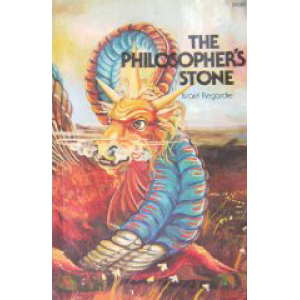
The Philosophers Stone

The Philosophers Stone Cover

Book: The Philosophers Stone by Israel Regardie

My book has been praised as a good meaningful book by some reviewers and by many readers, to judge from the mail I have received during the past thirty years. It is patently an open sesame to one level of interpretation. The Occult Review, now defunct, published a critical review by Archibald Cockren who took me rather severely to task for asserting that alchemical texts should be interpreted solely in terms of psychological and mystical terms. He himself, I subsequently discovered, had written a book Alchemy Rediscovered and Restored. Of course I immediately procured a copy. Since I was peeved by his review, I did not feel that his book had very much to offer—so I dismissed both offhand. I was about to write the editor of The Occult Review a scorching letter, but reason intervened so that fortunately it never got written.

The opportunity is rarely given to an author in his lifetime “to eat crow” and to enjoy it. This lot, it pleases me to say, is mine—after thirty years. Not that I would significantly change much of what I wrote then. I admitted that I had not “proceeded to the praxis” but I felt then and still do that a mystical and psychological interpretation of some alchemical texts was legitimate. There is unequivocally this aspect of the subject. Certainly Jacob Boehme and Henry Khunrath, for example, cannot be interpreted except in these terms.

The Philosophers Stone with these preliminary comments, should answer a wide-felt need which has called forth this new edition. I hope, being in print once more, it will bring new light and knowledge and values to present-day students who may be still groping in the dark areas of the occult towards alchemy, where a guiding hand needs to be extended.
So, to close this Introduction, I must use the ancient Rosicrucian greeting, and the close of a Golden Dawn ritual:
May what we have partaken here sustain us in our search for the Quintessence; the Stone of the Philosophers, True Wisdom and perfect Happiness, the Summum Bonum.


Download Israel Regardie's eBook: The Philosophers Stone

Free eBooks (Can Be Downloaded):

Yogi Ramacharaka - Yogi Philosophy
Louis Claude De Saint Martin - Theosophic Correspondence
Andrew Lang - The Witch And Other Stories
John Mitchell - The Philosophy Of Witchcraft
Israel Regardie - The Philosophers Stone

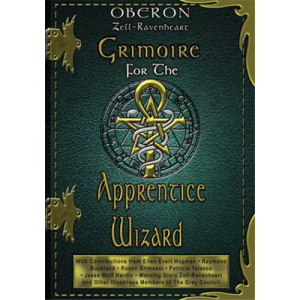
Grimoire For The Apprentice Wizard

Grimoire For The Apprentice Wizard Cover

Book: Grimoire For The Apprentice Wizard by Oberon Zell Ravenheart

Magick, through all its varied forms and traditions, always has at least one component that it shares. Freedom. Freedom from old ideas. Freedom from old religions. A pathway leading the practioner to new depths of themselves, and through that, the world.

It is not, and should not, be used as a tool for the crushing of imagination, but its expansion. It is a very delicate line, to separate one's own prejudices and mythology from the craft itself, creating a clear platform that allows, or even more, encourages the reader to find their own truth. To question authority, even the authority of the writer.

Oberon Zell's grimoire For the Apprentice Wizard does just that. Though there are many books on magick, too often they emphasize the writer's particular viewpoint on the craft, providing a kind of blueprint for development in a particular tradition at the expense of the infinite multiverse of alternate perspectives that could, and should exist.

In his Grimoire, it is apparent that Oberon's intention is to create a platform that is, as well as he is able, clear. Beginning with a brief history of magick in its various incarnations in the Western world; as well as a fundamental glossary of magickal terms as used by all, he moves into beautifully illustrated and well-intentioned explanation of the various types of magick and process.

He includes chapters on healing, herbology, astronomy, mathematics, animal communion (a personal favourite), divination, and many more. Each section illustrates the fundamental principles common to all traditions, allowing the student the space to find their own ideas. Supposedly geared to the adolescent reader, each chapter contains instructions on how to create and manage spells; focusing not only on the process of starting a magick, but the responsible cleanup so often neglected afterwards in making your spells efficient and successful.

I was particularly impressed with the various sources and quotations used in the book. Many authors fail to see (or perhaps, respect) the ways in which spiritual, magickal truths have expressed themselves in today's world. In drawing on gems of wisdom hidden in popular culture; from Aristotle to Discworld, Pythagoreas to Spiderman; Oberon's viewpoint shows an open-mind free of the prejudice of the past that sees the Goddesses, and Gods, still alive inside the imagination of the modern world.

More than just a set of instructions, the Grimoire provides a set of tools designed to allow young minds the opportunity to find their own way through the labyrinth of their imagination. I highly ... highly recommend this book to both new and old readers alike. It is refreshing to see an author who not only claims the intention to provide an open philosophy that still honours its history and practice, but who succeeds in doing so.

Download Oberon Zell Ravenheart's eBook: Grimoire For The Apprentice Wizard

Free eBooks (Can Be Downloaded):

Aleister Crowley - Mortadello Or The Angel Of Venice
Parker Torrence - Grimoire Of Eclectic Magick Part 3 Of 3
Moses Maimonides - The Guide For The Perplexed
Oberon Zell Ravenheart - Grimoire For The Apprentice Wizard.pdf

Sunday, September 19, 2010

The Continental Tarots

The Continental Tarots Cover

Book: The Continental Tarots by Christine Payne Towler

In the essay titled "The Major Arcana" I emphasize that "Something happened" to the Tarot in the late 1600s, when a new trend emerged in the images of the Major Arcana. I point to the Marseilles family of decks and the Etteilla Tarots to illustrate my point.

The images shown by Antoine Court de Gebelin in his book Le Monde Primitif further validates this idea.The remainder of this essay is about exploring "what happened." Let's review the situation of Tarot in the first half of the 1600s. Since the early 1400s, both handmade and woodblock Tarots showed a remarkable constancy of internal structure even though some packs were either edited or expanded to meet the needs of the various games for which they were created.

Tarot appeared in 72-card form in Italy around 1450, although this model may represents "splice" between preexisting symbol sets: the twenty-two Hebrew alphabet-keyed set called the Major Arcana, and the Turkish Mamluk cards of unknown provenance, a 15th century version of which can be seen in Volume 2 of Stuart Kaplan's Encyclopedia of Tarot (see essay on the Minor Arcana).

Kaplan also explains that the numerical order the Arcana appear in now is carried over from the French pack by Catelin Geofroy, published in 1557 (Vol. 1, p. 65). Some earlier fragmentary Tarots show Roman numerals on some of their Major Arcana, but not all of them, and not in the order we are now familiar with. Those very old woodblock decks tend instead to follow the list enumerated in a sermon written by an Italian friar in the late 15th century (see illustration opposite page 1 in Volume 1 of Kaplan's Encyclopedia of Tarot). There is also another order derived from the Charles VI pack that keeps Temperence, Fortitude and Justice together in a group. A very small minority of Tarots follow this order, including Etteilla’s Tarots.

Download Christine Payne Towler's eBook: The Continental Tarots

Downloadable books (free):

Pyotr Demianovich Ouspenskii - The Symbolism Of The Tarot
Robert Wang - The Qabalistic Tarot
Samuel Liddell Macgregor Mathers - The Tarot
Aleister Crowley - The Zodiac And The Tarot
Christine Payne Towler - The Continental Tarots

Thursday, July 29, 2010

Your Magical Name

Your Magical Name Cover Why a Magical Name?:
Ah, the magical name. So many people find wicca and decide right off the bat that they’re going to name themselves Lady Such-and-Such or Lord Whatsis. Go to a pagan event and you’ll meet more fifteen-year-old Lady Morganas than you can shake a stick at. And it’s virtually guaranteed that within about three months, Lady Morgana will decide her magical name, sometimes called a craft name, is really supposed to be Starfluffle or Moongypsy, and she’ll change it.

In fact, she’ll probably change it two to three times a year.

The Name-of-the-Month Club:
This odd phenomenon, known as the Name-of-the-Month Syndrome, happens most often because the person in question hasn’t taken the time to research and learn, which is crucial to finding the right magical name.

A magical name is unique to the practitioner, and there are several ways to find yours. When you find the right name, you’ll keep it for a long time. In some traditions, it‘s customary to wait until you‘ve studied a year and a day before claiming your magical name. Some Pagans have two magical names -- one which they use in public and one which is known only to the gods and members of the person’s coven.

Think Long-Range:
One method by which people sometimes find their magical name is to simply choose something they like. A problem with this method is that what we like on one day, we may find silly a year down the road. If you’re going to choose a name based on whether it sounds cool or not, stop and think about it. What is it about the name that appeals to you? Ten years from now, are still going to feel comfortable saying, “Hi, I‘m Fairypuddle,” when you meet a new person?

Names with Meaning:
Choose a name not only for its sound, but its attributes as well. For example, someone wishing to convey strength in their name might include “oak“ or “iron“ as part of their moniker. A person who is highly creative might select a name that reflects their art or craft. You may want to choose a name based rooted in folklore or mythology. Many people include the name of an animal that resonates with them. A cautionary note here: in the Pagan community, certain animals pop up all the time. You’ll meet two dozen Ravens and just as many Cats, but it’s unlikely you’ll encounter anyone calling himself Wombat or Penguin.

Names to Avoid:
Another bit of advice -- generally, the titles Lord and Lady are reserved for people who are elders or have a significant amount of leadership experience under their belt. To name oneself Lady So-and-So without any credentials is considered presumptuous by many Pagans. Likewise, in many traditions it’s seen as hubris to give oneself the name of a deity. You may want to choose a name that indicates your dedication to a god or goddess, but don’t co-opt their names. It’s just rude. If you're a dedicant to Apollo, don't call yourself Master Apollo, call yourself something like Apollonius instead.

Using Your Birth Number:
Another popular method of finding a magical name is to choose one that corresponds with your birth number. To find your birth number, begin by adding the digits of your birth date.

If your birthday was September 1, 1966, you would start with the numbers 911966 = 9 + 1 + 1 + 9 + 6 + 6 = 32.

Now take those two numbers (3 and 2), and bring it down to a single digit: 3 + 2 = 5. That number -- in this case, 5 -- is your birth number.

Use the grid below to find a name that corresponds to the number 5, by calculating the sum of the corresponding letters.

1 = A, J, S

2 = B, K, T

3 = C, L, U

4 = D, M, V

5 = E, N, W

6 = F, O, X

7 = G, P, Y

8 = H, Q, Z

9 = I, R

Let’s say you’ve decide you like the name Willow. Using the letters in “Willow” you would take the numbers 5 + 9 + 3 + 3 + 6 + 5 = 32. From there, 3 + 2 = 5. If the name you like doesn’t match your birth numbers, try some creative or alternate spellings to see what happens.

A Gift from the Gods:
In some cases, you may be fortunate enough to have your new name bestowed upon you by a god or goddess. In these instances, you may encounter someone in a dream or a vision who tells you, “Your name is Such-and-such.” While you may choose to add to it or come up with a variation on it later, if this happens to you, accept the name as the gift that it is.

Whatever method you end up using, think carefully before you finalize your new name. While it’s okay to change your name later on as you evolve spiritually, changing your name every few weeks or every time you see a new episode of “Charmed” is probably not the best course of action. Find the name that is right for you -- and when it IS the right one, you will know.


Books You Might Enjoy:

Anonymous - Meditation Of The Four Magickal Weapons
Jarl Fossum - Seth In The Magical Texts
Anonymous - The Mystical Qabbalah
Kenneth Grant - Magical Revival
Aninymous - The Angelical Alphabet

Witches And The Book Of Shadows

Witches And The Book Of Shadows Cover The book of shadows is a Witches Bible, a place where spells, rituals, and often inspirations are written. Traditionally most Witches hand write everything into their BoS, however in the high tech age of computers there are many modern witches who put their entire BoS on disc. There are even programs designed to format your computer Book of Shadows. Many Books of Shadow are handed down from past generations. I would recommend that if you are just starting one, you choose a very special and large journal, hard cover, or hand crafted wood, leather, or other sturdy material, rather than a spiral notebook, or writing tablet. This book should be planned with the intent of it being around for a long time and used often.

The BOS usually starts out with a Title Page and may be called something as simple as, My Book of Shadows or something more creative like, My Triple Moon Book of Inspiration. You should include a Dedication page dedicating your work to whichever Goddess, and/or God you recognize, and a Blessing page where you put a simple blessing spell for your Book of Shadows and all the writings within.

It might be a good idea to include a line or two about your book being invisible to non-believers, or some type protection, that will prevent ill events from snoops.

I highly recommend a table of contents, or index section, as you will find it difficult to locate a needed piece of information later on, when your book is full. A section on your chosen path, or your personal philosophy is a good addition.

Your Book of Shadows will usually contain a list of all celebration rituals, especially the Sabats, which are the major turnings of the year. Also you will probably include all the esbats and moon phases of the year. You may want to include a section for celebrating births, deaths, handfastings (marriages), and even add rituals for blessing a new home, a business or a new job. With all these special events, there are correspondences that go with them, such as deities, gems and minerals, herbs, oils, colors, astrological symbols, and planetary influences. As with most celebrations there will be certain foods, decorations, ect.

Books You Might Enjoy:

Gerald Gardner - The Garnerian Book Of Shadows
Idres Shah - The Book Of Power
Sasha Fierce - The Book Of Shadows

Wednesday, July 28, 2010

Do Witches Really Cast Hexes

Do Witches Really Cast Hexes Cover People commonly personify witches as evil and all they do is curse and hex others. wiccans are strictly opposed to hexes and curses. Traditional witches (or "Trad Witches") do not have limitations. However, if the thought arises of casting a hex or curse we must ask ourselves if it ethical and completely necessary. Any witch will tell you that if it is regarding defense of loved ones and family the answer is often yes. On the other hand, if it relates to using magick against someone because they cut you off on the highway, then for the majority, the answer is no. See the section in this lens "Black & White Magick" for more on this. Also, for more information about magick, the natural powers of the universe, how to do spells and much more, visit Modern-Witchcraftand especially, Guide for Spells and How To's About Safely Using Magick for Success.

Books You Might Enjoy:

Jarl Fossum - Seth In The Magical Texts
Lau Soon Wah - The Powerful And Deadly Spells Of The Javanese
Julius Evola - Against The Neopagans
Anonymous - The Emerald Tablet Of Hermes

Popular Posts