Showing posts with label magick spells. Show all posts

Tuesday, November 16, 2010

I Am A Witch Or The Reincarnation Of One

I Am A Witch Or The Reincarnation Of One Cover Psychic talents have been linked to hereditary traits, but having those gifts doesn't make you a witch. Anyone can write their own spells, it's your belief that makes the magic, not even the oldest dusty tome will instantly grant wishes, it's your belief that creates it.

You can be both a Wiccan and a witch, these two words are not the same.

One of the biggest sore points among Wiccans is the improper usage of the terms "Wiccan" and "Witch". Too many people use the terms interchangeably, presuming that they both mean the same thing. They do not.

Wiccan
Wicca is just one of many faiths that embrace Magic. Wicca is a religion, and someone who follows that religion is called a Wiccan. Sometimes it can be difficult to accurately define Wicca, and not all Wiccans will define themselves the same way. Observing the 8 Wiccan Sabbats, honoring the Gods and/or Goddesses, creating sacred space for rituals, to name a few. Many traditional Wiccans also feel that belonging to a coven is also a requirement and that those who practice their religion as a solitary, should not refer to themselves as Wiccan. Personally, I'm still not sure on that point. Typical Wiccans also practice magick, and therefore are also witches. You cannot be a "natural Wiccan" any more than you could be a "natural Christian".

Witch
The practice of witchcraft is not associated with any religion, therefore you can be a witch and yet also be a member of any number of religions (or none). Using the natural energies within yourself, along with the energies of herbs, stones or other elements to make changes
around you is considered witchcraft. Though the skills and gifts that are part of witchcraft can be inherited from parents or grandparents, you aren't automatically a witch just because your grandmother may have been one. The use of magick takes practice, experience and learning.
On a side note, a male witch is called a witch, not a warlock.

Pagan
While I'm explaining terminology, I thought I would throw in "Pagan" as well. Paganism refers to a variety of non-Christian/Jewish/ Islamic religions that are usually polytheistic and are often nature-based. Wicca is only one Pagan religion, but there are others such as Santeria,
Asatru, or Shamanism. Many people do not necessarily identify with a specific religion, and just use the broad term "Pagan" to define their spiritual path. Pagan religions are distinct and separate from each other, and it should not be assumed that they are just different names for
the same faith.

The short answer is magic is a lot of work and it takes a long time to become a proficient Witch. If you are interested in this area, submit a followup question and I'll be happy to provide a list of books, websites and ways to meet other Witches.

If this was just a question, I bid you good night.

Blessings!

Books in PDF format to read:

Scott Cunningham - Wicca A Guide For The Solitary Practitioner
Aleister Crowley - Liber 008 The Ritual Proper For The Invocation Of Augoeides
Aleister Crowley - Sephiroth Ha Dborim The Emanations Of Words

Saturday, October 9, 2010

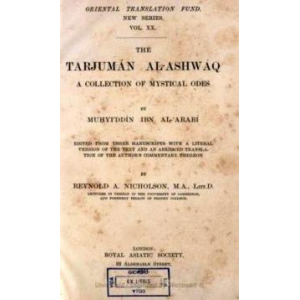
Tarjuman Al Ashwaq A Collection Of Mystical Odes

Tarjuman Al Ashwaq A Collection Of Mystical Odes Cover

Book: Tarjuman Al Ashwaq A Collection Of Mystical Odes by Muhammad Ibn Arabi

The Tarjuman al-Ashwaq (Muhyi al-Din Muhammad ibn 'Ali Ibn al-'Arabi) with the Arabic text, translated by Reynold A. Nicholson Together With a partial translation of the commentary by Ibn 'Arabi'

The Tarjuman al-Ashwaq or "Interpreter of Desires" by Ibn 'Arabi is acknowledged as one of the major works of Sufi literature, alongside those of the great Persian poets Attar, Jalaluddin Rumi, Hafiz and Jami.

In keeping with the poetical tradition of Islam, there is a continuing ambiguity in the verses as to whether they are love poems disguised as mystical odes, or Mystical Odes expressed in the language of human love. The timeless beauty and imagery of the verses cannot be denied, and may be interpreted at many levels. "Gnostics," says Ibn 'Arabi, "cannot impart their feelings to other men; they can only indicate them symbolically to those who have begun to experience the like." In response to the accusation by a religious scholar that these were just sensual poems, Ibn 'Arabi wrote a commentary on the Tarjuman which is partially translated here.

This was one of the first Translations of a book by Ibn 'Arabi into a European langauage, made by the great translator of Rumi's Mathnawi, Reynold A. Nicholson. In both cases his translation was of such outstanding quality that it was more than fifty years before other translators began to try their hands at these texts, and his translations still stand the test of time.

Download Muhammad Ibn Arabi's eBook: Tarjuman Al Ashwaq A Collection Of Mystical Odes

Free eBooks (Can Be Downloaded):

Basil Valentine - Triumphal Chariot Of Antimony
Hilda Roderick Ellis - Road To Hel A Study Of The Conception Of The Dead
Right - Travel In Spiritual Worlds A Complete Guide On Astral Travels
Mark Ludwig Stinson - Heathen Gods A Collection Of Essays Ver 2
Muhammad Ibn Arabi - Tarjuman Al Ashwaq A Collection Of Mystical Odes

Sunday, October 3, 2010

The Witches Chant

The Witches Chant Cover Darksome night and shining moon,
Hearken to the witches’ rune.
East then South, West then North,
Hear! Come! I call thee forth!

By all the powers of land and sea,
Be obedient unto me.
Wand and Pentacle and Sword,
Hearken ye unto my word.

Cords and Censer, Scourge and Knife,
Waken all ye into life.
Powers of the witch’s Blade,
Come ye as the charge is made.

Queen of Heaven, Queen of Hell,
Send your aid unto the spell.
Horned Hunter of the night,
Work my will by magic rite.

By all the powers of land and sea,
As I do say, “So mote it be.”
By all the might of moon and sun,
As I do will, it shall be done.

By Lady Sheba – 1974

Free eBooks (Can Be Downloaded):

Tarostar - The Witchs Spellcraft Revised
George Lyman Kittredge - Notes On Witchcraft
Alfred Elton Van Vogt - The Witch

The Great Rite Invocation

The Great Rite Invocation Cover Assist me to erect the ancient altar
At which in days past all worshipped
The great altar of all things
For in times of old, woman was the altar
Thus was the altar made and placed
And the sacred place was the point within the center of the circle
As we have of old been taught
That the point within the center is the origin of all things
Therefore should we adore it
Therefore whom we adore we also invoke
O circle of stars

Whereof our Father is but the younger brother
Marvel beyond imagination, soul of infinite space
Before whom time is ashamed
The mind bewildered, and the understanding dark
Not unto thee may we attain unless thine image be love
Therefore by seed and root, and stem and bud
And leaf and flower and fruit, do we invoke thee
O Queen of Space, O Jewel of Light
Continuous One of the Heavens

Let it be ever thus
That man speak not of thee as One, but as None
And let them not speak of thee at all
Since thou art continuous
For thou art the point within the Circle, which we adore
The point of life without which we would not be
And in this way truly are erected the holy pillars
In beauty and in strength were they erected
To the wonder and glory of all men

Altar of mysteries manifold, the sacred circle’s secret point
Thus do I sign thee as old, with kisses of my lips anoint
Open for me the secret way, the pathway of intelligence
Beyond the gates of night and day, beyond the bounds of time and sense
Beyond the mysteries aright, the five true points of fellowship
Here where the Lance and Grail unite
And feet, and knees, and breast, and lip

Stewart and Janet Farrar – 1984.

Free eBooks (Can Be Downloaded):

Aleister Crowley - Invocation
Friedrich Adler - The Witchcraft Trial In Moscow
Michael Sharp - The Great Awakening
Aleister Crowley - The Supreme Ritual The Invocation Of Horus
John Dee - The Practice Of Enochian Evocation

Saturday, October 2, 2010

Fairy Gold

Fairy Gold Cover

Book: Fairy Gold by Basil Crouch

Basil Crouch A.K.A. Basil LaCroix is one of those old-time great Magicians who learned by the pragmatics of worldly travels in lieu of the theoretics found in most books. Basil spent his youth in a circus amongst the main artistes who were pure Romany, all members of the Manouche Tribe who revere Sara the Black Virgin & Jacques deMolay (GrandMaster of the Templars). The leading Witchdoctor taught him many trix of Magick. He also learned many strange Spells from an Australian Aborigine Witchdoctor. In the late 1960's he masterminded 'coven-style' Occult groups consisting of 6 or 7 women, reaching very advanced stages of development, like producing actual Apports using thoughtform entities, just mindblowing stuff. His teachings excited alot of jealousy within Occult Societies who wanted this kind of thing kept secret. (from reader)

Download Basil Crouch's eBook: Fairy Gold

Free eBooks (Can Be Downloaded):

Aleister Crowley - Liber 831 Iod
Franceska De Grandis - Be A Goddess
Aleister Crowley - Gargoyles
Basil Crouch - Fairy Gold

The Fifth Sacred Thing

The Fifth Sacred Thing Cover

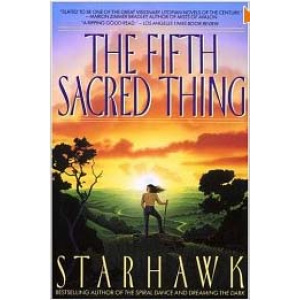
Book: The Fifth Sacred Thing by Starhawk

I love this book. I didn't like it at first, but I decided to give it an hour before I made up my mind. Now I am really glad I stuck with it, because it is one of the richest, most thought-provoking books I have ever read.

I had this book on my shelf for several years before I actually read it. Although it obviously sounded good enough at the time I bought it, I feared that it would be preachy and overbearing. It was nothing of the sort. The characters are complex; flawed at times, saintly at others. The story is compelling, combining plots about the personal growth of the various characters, adventure stories as Bird escapes from prison and Madrone ventures into the southern wilds to help the freedom fighters, and the ultimate show down between the San Franciscans and the Stewards. It is a bit simplistic, perhaps, but that didn't stop me from wishing things in reality were more like they are in Maya and Madrone's world. The attempts to portray this world as one free of any racial or sexual bigotry do get a bit heavy handed at times, but never so much that it interfered with my enjoyment of the story. I would recommend this book to anyone, and in fact immediately after I finished Ran out and bought a copy to give as a gift this Christmas.

One of the greatest questions is - how do people resist the violent advances of others without becoming violent themselves? We can look to others for inspiration - HH the Dalai Lama, Gandhi, MLK - there have been a few who have managed to hold on to their ideals despite the crimes inflicted upon them. But how do we do this ourselves? How do we maintain peace within ourselves?

This book discusses these issues on a societal level, but the wisdom you will gain can be applied on a personal level. You will likely find yourself rethinking how you view numerous things - from illness to monogamy.

And the story is interesting and creative, with characters you will come to care about. This is a fantastic book. Go ahead and give it some time - you will probably love it, too!

Buy Starhawk's book: The Fifth Sacred Thing

Free eBooks (Can Be Downloaded):

Friedrich Max Muller - The Sacred Books Of The East
Solomonic Grimoires - The Book Of Secrets
Aleister Crowley - His Secret Sin

What Is A Spell

What Is A Spell Cover A spell is a spoken or written formula that when used in an act of magick is intended to cause or influence a particular course of events. Belief in and the use of spells are universal and have been an integral part of religious practices since ancient times. Methods vary according to culture but all spell work is based on ritual.

Spells are closely related to Prayers, which are rituals consisting of a petition to the Gods or deities (whatever the religion or faith) for a desired outcome. It involves the visualization of a goal, a statement of desire for the goal, and ritualized movements of body positions (e.g., the bowing of the head, the clasping of the hands, the closing of the eyes etc). In magick, spells are closely related to various methods of mind power such as: creative visualization, positive thinking, and positive imaging (see “What is Magick”). All of which emphasize our mental images of the goal and our identification with it, repetition of our intent to achieve this goal, projection of our will, and a petition to the spirits, deities, or the divine force for their aid.

These types of spells are commonly used on a daily bases, the simple lighting of a candle starting the ritual process. Such daily spells constitute minor magick's such as: blessings, self-help, positive thoughts and the sending of helpful healing energies to others. Used on a daily bases it is not therefore necessary to undertake the cumbersome task of a full circle casting ritual (see Circle Casting).

Spells can be beneficial or harmful and can be worked on people, animals, and nature. Their purposes are limitless and include: healing, love, money, success, fertility, longevity, and protection from disaster, ill fortune, and evil. They can also be used to exorcise ghosts and spirits, for victory in battle, truth in divination, weather control, and the accomplishment of supernatural feats. When directed against enemies, spells can be used to cause illness, destruction, loss of love, impotence, barrenness, failure and even death. Spells can be cast to affect the self, or directed to affect another person.

A positive spell is often called a blessing, although such archaic terms as bewitchment and enchantment are still sometimes used. Negative spells are generally known as hexes or curses. A binding spell is one intended to prevent harm, avoid danger, or to stop someone from performing particular acts (e.g., halting a murder, preventing a rape, or even stopping the spread of gossip).

In most cultures, Witches, Sorcerers, Witch doctors, Magicians, and other magically empowered peoples, cast both beneficial and harmful spells as the need dictates. However in contemporary Paganism and Witchcraft, a set of ethics exists that prohibits the use of curses and negative spells against another (see the “Wiccan Rede” and the “Three Fold Law”). The acceptability of binding spells is divided, and is widely debated throughout the community.

Free eBooks (Can Be Downloaded):

Anonymous - Hypnotism Spells
Arthur Edward Waite - What Is Alchemy
Stephen Mcnallen - What Is Asatru

Thursday, September 30, 2010

Of Occult Philosophy Or Of Magical Ceremonies The Book Iv

Of Occult Philosophy Or Of Magical Ceremonies The Book Iv Cover

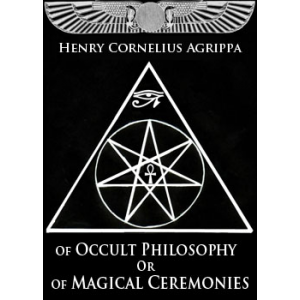
Book: Of Occult Philosophy Or Of Magical Ceremonies The Book Iv by Henry Cornelius Agrippa

Of Occult philosophy Or Of Magical Ceremonies The Book IV of The Three Book of Occult Philosphy by Henry Cornelius Agrippa

The Three Book of Occult Philosphy purports to be the work of Henry Agrippa, the 16th century author of "Three Books of Occult Philosophy". But the 4th Book was obviously not written by Agrippa and bears no resemblance to his style of writing. Although it can be traced back to the 16th century as it is mentioned by Agrippa's student, Johann Weyer in his "De Praestigiis Daemonum", the work remains of uncertain provencance.

In part a partial summary of some of Agrippa's writings, this facsimile of the English translation by the 17th century Cambridge scholar Robert Turner, comprises spurious essays on Geomancy and Magick under the name of Agrippa, The Heptameron of Peter of Abano, and books on Astrology and Demonolgy, concluding with the Arbatel, a largely Judeo-Christian outlook on the dangers of magic.

It is a very quick and easy read, despite the portions dealing with Geomancy and Astrology that even those serious about such subjects would find largely frustrating and incomprehensible.

The work largely remains of pure historical interest with not much of serious substance to an undertanding of Magic and Occult Philiosphy.

This volume is a facsimile of Robert Turner's English translation (1654); the original volume first appeared (in Latin) in Marburg around 1554. The original volume included a large number of short texts of varying interest, but Robert Turner's (1654) (for unclear reasons) decided only to translate a few of them. This edition includes 6 short texts: Of Geomancy (H.C. Agrippa); Of Occult philosophy the Three Book (pseudo-Agrippa); Heptameron or Magical Elements (pseudo-Peter de Abano); Isagoge: An Introductory Discourse on the Nature of ... Spirits... (Georg Pictorius Villinganus); Of Astronomical Geomancy (Gerard of Cremona); and the Anonymous Arbatel of Magic. Only the Geomancy is actually by Agrippa, and it doesn't fit well with the other texts. The Three Book is, as another reviewer noted, certainly spurious; it purports to be Agrippa's "secret key" to the Occult Philosophy, of which he spoke in a letter to a friend. The Heptameron and the Arbatel are grimoires of some interest for those interested in black magic, as indeed is the Three Book itself; the Isagoge is a rather dull dialogue about spirits; and the Astronomical Geomancy is more or less impenetrable but perhaps interesting in a peculiar way. There have been a number of reprints of this volume, some now surprisingly valuable despite their modernity; all, however, have trimmed out one or more of the already few texts. As such, this is probably the best edition available. It is, like all Kessinger products, a cheaply-bound xerox facsimile of the original 17th-century text, but it's readable and includes everything. If you collect grimoires or magical texts, this is a very famous one, and you ought to have it; copies of the various Latin printings turn up with some regularity, and those with access to Latin would do better with those, although they are of course quite expensive. If you're looking for works by Agrippa, the Geomancy is all you'll find here, but it's interesting in a number of respects. If you want to know about Agrippa's ceremonial magic, however, you need to read book 3 of the Occult Philosophy, available in a nice Llewellyn edition.

Download Henry Cornelius Agrippa's eBook: Of Occult Philosophy Or Of Magical Ceremonies The Book Iv

Free eBooks (Can Be Downloaded):

Henry Cornelius Agrippa - Occult Philosophy And Magick Book Iii
Henry Cornelius Agrippa - Occult Philosophy And Magick Book Ii
Henry Cornelius Agrippa - Occult Philosophy And Magick Book I
Henry Cornelius Agrippa - Occult Philosophy And Magick Book Iv
Henry Cornelius Agrippa - Of Occult Philosophy Or Of Magical Ceremonies The Book Iv

Monday, September 27, 2010

The Secret Grimoire Of Turiel

The Secret Grimoire Of Turiel Cover

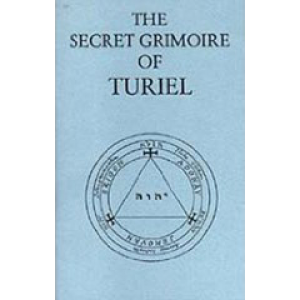
Book: The Secret Grimoire Of Turiel by Medieval Grimoires

Turiel in the Book of Enoch

Turiel in later translations was the 18th Watcher of the 20 leaders of the 200 fallen angels that are mentioned in an ancient work called the Book of Enoch. The name is believed to originate from tuwr, el (God) meaning "rock of God". The translation taken from Michael Knibbs work on the Ethiopic Book of Enoch is "Mountain of God" or "Rock of God".

Grimoire of Turiel

There is a grimoire called "The Secret Grimoire of Turiel" in which the magician is given instructions on how to contact Turiel. It was believed to have been written in about 1518, but may have been copied from something older. It came to light in 1927 after being sold to Marius Malchus in Spain by a defrocked priest and was then translated into English from the original Latin. However, since Turiel is only previously mentioned in the Book of Enoch, it is unlikely that Turiel would have been known in the west before the rediscovery of the Book of Enoch in the early 17th century. No version previous of 1927 has been brought to the public.

Download Medieval Grimoires's eBook: The Secret Grimoire Of Turiel

Free eBooks (Can Be Downloaded):

Anonymous - The Secret Book Of Artephius
Yacki Raizizun - The Secret Of Dreams
Parker Torrence - The Craft Grimoire Of Eclectic Magic
Austin Osman Spare - The Zoetic Grimoire Of Zos
Medieval Grimoires - The Secret Grimoire Of Turiel

Sunday, September 26, 2010

Carl Llewellyn Weschcke Biography

Carl Llewellyn Weschcke Biography Cover Carl Weschcke is president of Llewellyn Worldwide Ltd, one of the largest publishers of occult and New Age books in the world. He is also a Magician, a Tantric practitioner, a Pagan and a former Wiccan High Priest who played a leading role in the rise and spread of Wicca and Neo-Paganism in America during the 1960’s and 70’s.

Weschcke was born into a Roman Catholic family on the 10th of September 1930 in St. Paul, Minnesota. Early in his life his paternal grandfather, who at the time was vice-president of the American Theosophical Society, exposed him to metaphysics and the occult. For his 12th birthday he presented the young Weschcke with his own astrological chart, after and guided by his grandfather, he became fascinated with astronomy, religion, the occult and reincarnation. His parents were vegetarian naturalists who practiced mind reading techniques, and were happy to discuss occult subjects with him. Even one of the houses they lived in had strange and mysterious thumps and bangs in the night, which were attributed to the ghosts of the deceased former owners. Such were the influences that shaped Weschcke’s early life and future path.

Weschcke was educated at the St. Paul Academy and graduated in 1948. He then went on to study at the Babson Business Institute in Massachusetts graduating in 1951 with a Bachelor of Science degree in Business Administration. After graduating he went to work in the family’s Pharmaceutical business, but found the work unfulfilling. He had a dream of becoming a publisher, which led him back to school studying for a doctorate in philosophy at the University of Minnesota. However, his longing to get involved with publishing caused him to leave the university before completing his course, and in 1960 he purchased the little known Llewellyn Publishing Co.

The Llewellyn Publishing Co. was the brainchild of the Welsh astrologer, Lewellyn George, who founded the Llewellyn Publishing Co. in Portland, Oregon during 1901. At that time it was a small mail order business with a limited focus specializing in selling three Astrology books and Calendars. Lewellyn George later moved the company to Los Angeles where he died in 1954. Weschche purchased the business in 1960 and moved it to St. Paul in Minnesota where he began to rebuild it. He quickly expanded the business to include a complete line of books on Astrology and the Occult, and within a decade was publishing some thirty to fifty titles a year, including audio and videotapes. He also launched a series of magazines including: New Dimension, Gnostica, Astrology Now, New Times and New World.

In 1973, Weschcke helped to form and organize the 'Council of American Witches' and became its first Chairman. During his brief tenure as Chairman he drafted the now famous 'Thirteen Principles of Belief' statement, which he considers his proudest accomplishment for the Craft. The statement was later incorporated into the U.S. Army’s handbook for Chaplains. That same year his wife gave birth to their son who they named Gabriel.

By the mid-1970’s Weschcke began to wind down his public activities, feeling his publishing business was starting to stagnate. Weschcke believed his constant media publicity and its resulting attention was the cause of it, and so resolved to do something about it. Selling the haunted mansion on Summit Avenue he moved the family to the country where he could spend and devote more time to them. He restructured the business by closing the bookstore, dropping the festivals and increasing the number of book titles they were publishing. He also included computer software to his range of audio and videotapes.

The Weschckes continue to support the Wiccan and Pagan communities primarily through their publishing, and many of their Authors are sent out to organized conferences and activities. Today, most of their time is taken up by the demands of their business, which by the mid 1990’s had grown into a medium sized publishing house issuing about 100 new titles a year, spanning the general Spirituality and New Age markets. Their son Gabriel, holds a master’s degree in publishing science from Pace University, New York, and now works for the business as its regional sales manger.

Weschcke holds two honorary doctorates, one in magick, and was for a time the Grandmaster of Aurum Solis, an international magickal Order originally founded in England in 1897, but now based in St. Paul. He withdrew from the Order in 1991 and is currently not affiliated with any group. His media prominence during the 1960's and 70's did much to bring Wicca and paganism into the light of acceptability in a skeptical American society.

Free eBooks (Can Be Downloaded):

Valentina Izmirlieva - All The Names Of The Lord
Ann Moura - Green Witchcraft
Michael Night Sky - Carl Liewellyn Weschcke Bringing Magick To The Masses

Sunday, September 19, 2010

The Continental Tarots

The Continental Tarots Cover

Book: The Continental Tarots by Christine Payne Towler

In the essay titled "The Major Arcana" I emphasize that "Something happened" to the Tarot in the late 1600s, when a new trend emerged in the images of the Major Arcana. I point to the Marseilles family of decks and the Etteilla Tarots to illustrate my point.

The images shown by Antoine Court de Gebelin in his book Le Monde Primitif further validates this idea.The remainder of this essay is about exploring "what happened." Let's review the situation of Tarot in the first half of the 1600s. Since the early 1400s, both handmade and woodblock Tarots showed a remarkable constancy of internal structure even though some packs were either edited or expanded to meet the needs of the various games for which they were created.

Tarot appeared in 72-card form in Italy around 1450, although this model may represents "splice" between preexisting symbol sets: the twenty-two Hebrew alphabet-keyed set called the Major Arcana, and the Turkish Mamluk cards of unknown provenance, a 15th century version of which can be seen in Volume 2 of Stuart Kaplan's Encyclopedia of Tarot (see essay on the Minor Arcana).

Kaplan also explains that the numerical order the Arcana appear in now is carried over from the French pack by Catelin Geofroy, published in 1557 (Vol. 1, p. 65). Some earlier fragmentary Tarots show Roman numerals on some of their Major Arcana, but not all of them, and not in the order we are now familiar with. Those very old woodblock decks tend instead to follow the list enumerated in a sermon written by an Italian friar in the late 15th century (see illustration opposite page 1 in Volume 1 of Kaplan's Encyclopedia of Tarot). There is also another order derived from the Charles VI pack that keeps Temperence, Fortitude and Justice together in a group. A very small minority of Tarots follow this order, including Etteilla’s Tarots.

Download Christine Payne Towler's eBook: The Continental Tarots

Downloadable books (free):

Pyotr Demianovich Ouspenskii - The Symbolism Of The Tarot
Robert Wang - The Qabalistic Tarot
Samuel Liddell Macgregor Mathers - The Tarot
Aleister Crowley - The Zodiac And The Tarot
Christine Payne Towler - The Continental Tarots

Monday, August 2, 2010

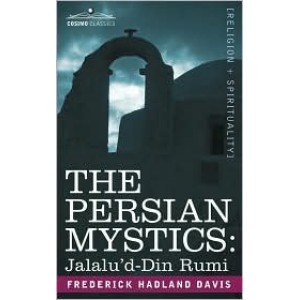
The Persian Mystics Jalaluddin Rumi

The Persian Mystics Jalaluddin Rumi Cover

Book: The Persian Mystics Jalaluddin Rumi by Frederick Hadland Davis

Rumi (1207-1273) was a Persian jurist and theologian best known for being perhaps the finest of all Sufi poets. His writings have been widely translated and remain especially popular in Iran, Afghanistan, and Tajikistan. Though written from a Sufi perspective, Rumi's poems on spiritual growth-here collected and edited by F. Hadland Davis and first published in 1907-cross all cultural and Religious bounds, and can still be heard today in many secular and religious settings.

The Persian Mystics: Jalalu'd-din Rumi includes selections from some of Rumi's most famous works, the "Divani Shamsi Tabriz" and the "Masnavi," as well as passages on his life and work, and the origin and nature of Sufism.

Download Frederick Hadland Davis's eBook: The Persian Mystics Jalaluddin Rumi

Free eBooks (Can Be Downloaded):

Reynold Nicholson - The Mystics Of Islam
Frederick Hadland Davis - The Persian Mystics Jami
Frederick Hadland Davis - The Persian Mystics Jalaluddin Rumi

Wednesday, July 28, 2010

Do Witches Really Cast Hexes

Do Witches Really Cast Hexes Cover People commonly personify witches as evil and all they do is curse and hex others. wiccans are strictly opposed to hexes and curses. Traditional witches (or "Trad Witches") do not have limitations. However, if the thought arises of casting a hex or curse we must ask ourselves if it ethical and completely necessary. Any witch will tell you that if it is regarding defense of loved ones and family the answer is often yes. On the other hand, if it relates to using magick against someone because they cut you off on the highway, then for the majority, the answer is no. See the section in this lens "Black & White Magick" for more on this. Also, for more information about magick, the natural powers of the universe, how to do spells and much more, visit Modern-Witchcraftand especially, Guide for Spells and How To's About Safely Using Magick for Success.

Books You Might Enjoy:

Jarl Fossum - Seth In The Magical Texts
Lau Soon Wah - The Powerful And Deadly Spells Of The Javanese
Julius Evola - Against The Neopagans
Anonymous - The Emerald Tablet Of Hermes

Saturday, July 24, 2010

Who Is A Witch

Who Is A Witch Cover The origin of the word witch predates the Anglo-Saxon period. Etymologically, the word has been derived from an Old English masculine noun wicca, the feminine being wicce. The word ‘wicker’ in old German also stood for a soothsayer. A soothsayer is a fortune-teller or psychic.

In routine usage, a witch is a feminine noun for wizard or sorcerer, but the former has different functional connotations from its masculine counterpart. While a wizard or a sorcerer may have some element of manipulativeness in their craft, a witch, though a practitioner of witchcraft, is far from being a crafty person. A witch is essentially a very noble and deeply religious person whose purity of heart combined with spiritual and meditation practices bestow her with a deeply religious and mysterious aura. A witch does not act with any ulterior motives, not to mention any machinations in her pursuits. A witch is a very compassionate person, gifted with supernatural powers and works for the alleviation of pain and suffering of her fellow human beings and brings them the much needed solace and succor.

A highly misunderstood, deeply suspected, much maligned and doggedly hounded person especially during the middle ages, a witch has regained lost ground and has acquired a respectable position in the society. Colloquially, the term witch, applied most often to a female, also includes male practitioners of witchcraft, especially Wicca. Witches believe in certain ethical codes and strictly adhere to them.

A witch engaged in her witchcraft practices spells developed by worshiping many deities primarily the supreme Goddess and sometimes her consort the God. The craft or workings of a witch are used for healing the acute health problems. For curing these problems, she uses the personal powers in combination with energies within candles, stones, herbs and other natural items. Witch practices witchcraft to help better the world and mankind. A witch certainly is not ugly, nefarious, dreadful hag who worships the devil or hurts the people as the stereotype image presents her to be.

A witch derives her strength from Paganism, which is influenced by ancient, primarily pre-Christian and sometimes pre-Judaic religion. A witch has deep faith in the elements of Nature such as earth, fire, nature, air, and water. Fire cleanses and has an aura that transports her into the astral world and enables her to view this world with psychic clarity. Water purifies.connects with the Goddess herself. The air is an all-enveloping blanket of gods. It wraps around the witch and lifts her to the divine immenseness and freedom of the skies. The spirit of the witch gets united with the air and floats freely in the sky. The witch achieves this uplifted state through meditation, perseverance and sometimes she is blissfully born with these talents.

A witch is just as ordinary looking person as any one in your neighborhood. She can be a housewife with kids doing her daily domestic chores. She too has her share of emotions, but they function more at a macro level than at personal. So if she is feeling sad, the sadness is not just due to some personal vested interest, but it is born out of the suffering of the world around her. Another difference between a witch and an ordinary woman is that a witch can commune with her goddess. The commune is just meant to bare her soul reaching a complete state of oneness. A witch may even cry before the alter of her goddess whenever she feels a spiritual vacuum and wants to replenish it with godliness.

A witch performs her craft using many rituals such as worshiping alone or in covens in the alter room. She lights candles, incense, chants incantations and worships her deities or goddesses. She meditates while staring into the candle flames and in the course of meditation, she feels her spirit leaving her body and enters into trance. A witch gets lost in the awesome power of the Fire with her mind dancing with the flames of the candles. Insightful images deluge her head and become a permanent part of her psyche.

Witches also practice necromancy and summon spirits of the dead to gain knowledge of the future events from them. These spirits are called Operative Spirits or the Spirits of divination.

Books You Might Enjoy:

Michael Bailey - Historical Dictionary Of Witchcraft
Howard Phillips Lovecraft - Cults Of Cthulhu
Mike Nichols - Eight Sabbats Of Witchcraft
Louise Huebner - Witchcraft For All
Paul Huson - Mastering Witchcraft

Friday, July 23, 2010

Hubble Bubble Pardoned From Trouble

Hubble Bubble Pardoned From Trouble Cover It's Halloween and, consequently, one of my favorite days of the year. There are some things that have become inexorably linked to this holiday: candy, costumes, watching It's the Great Pumpkin Charlie Brown and, of course, witches.

Modern culture has really taken the witch in interesting places. From the evil Wicked Witch of the West in the original Wizard of Oz to the Not-Really-Wicked-But-Misunderstood Witch of the West Elphaba in the book and play Wicked, it is clear that witches can take on any number of personas. Today, witches can be good, bad, cutesy, goofy, and cunning. But not so long ago, the term "witch" was not taken so lightly.

Here at the Museum of Jewish Heritage, we often talk about scapegoating. If one looks at the history of the witch, this term comes to the fore pretty quickly. In Europe, between approximately 1480 and 1700, between 40,000 and 100,000 women and men were put to death on the charge of witchcraft. Accusations often arose as a result of an unexplained natural phenomenon--such as a failed crop or sick livestock-- or simply out of the malicious desire to seek revenge on another person.

Today, campaigners will petition Justice Secretary Jack Straw to posthumously pardon the 2,400 women and men wrongfully put to death for witchcraft in England and Scotland before the Witchcraft Act put an end to the practice in 1735. (Read full article here.) These campaigners follow the example of Swiss groups who successfully urged the government to pardon Anna Goeldi, the last woman in Europe on record to be put to death for witchcraft in 1782. While such pardons are, of course, entirely symbolic, I think this gesture is an important one. Not only does it officially clear the names of innocent victims, but makes a stand against scapegoating and lets everyone know that this injustice has no place in today's society.

Books You Might Enjoy:

John White - Toward Homo Noeticus
Ea Wallis Budge - Egyptian Ideas Of The Future Life
Aleister Crowley - Songs For Italy

Thursday, July 22, 2010

The Witch Hunts Of Early Modern Europe

The Witch Hunts Of Early Modern Europe Cover For three centuries of early modern European history, diverse societies were consumed by a panic over alleged witches in their midst. Witch-hunts, especially in Central Europe, resulted in the trial, torture, and execution of tens of thousands of victims, about three-quarters of whom were women. Arguably, neither before nor since have adult European women been selectively targeted for such largescale atrocities.

The witch-hunts of early modern Europe took place against a backdrop of rapid social, economic, and religious transformation. As we will see in the modern-day case-studies below, such generalized stress -- including the prevalence of epidemics and natural disasters -- is nearly always central to outbreaks of mass hysteria of this type. Jenny Gibbons' analysis ties the witch-hunts to other "panics" in early modern Europe:

Traditional [tolerant] attitudes towards witchcraft began to change in the 14th century, at the very end of the Middle Ages. ... Early 14th century central Europe was seized by a series of rumor-panics. Some malign conspiracy (Jews and lepers, Moslems, or Jews and witches) was attempting to destroy the Christian kingdoms through magick and poison. After the terrible devastation caused by the Black Death [bubonic plague] (1347-1349), these rumors increased in intensity and focused primarily on witches and "plague-spreaders." Witchcraft cases increased slowly but steadily from the 14th-15th century. The first mass trials appeared in the 15th century. At the beginning of the 16th century, as the first shock-waves from the Reformation hit, the number of witch trials actually dropped. Then, around 1550, the persecution skyrocketed. What we think of as "the Burning Times" -- the crazes, panics, and mass hysteria -- largely occurred in one century, from 1550-1650. In the 17th century, the Great Hunt passed nearly as suddenly as it had arisen. Trials dropped sharply after 1650 and disappeared completely by the end of the 18th century. (Gibbons, "Recent Developments in the Study of the Great European Witch Hunt".)

Gibbons' allusion to the Reformation reminds us that the clash between institutional Catholicism and emergent Protestantism contributed to the collapse of a stable world-view, which eventually led to panic and hyper-suspiciousness on the part of Catholic and Protestant authorities alike. Writes Nachman Ben-Yehuda, "This helps us understand why only the most rapidly developing countries, where the Catholic church was weakest, experienced a virulent witch craze (i.e., Germany, France, Switzerland). Where the Catholic church was strong (Spain, Italy, Portugal) hardly any witch craze occurred ... the Reformation was definitely the first time that the church had to cope with a large-scale threat to its very existence and legitimacy." But Ben-Yehuda adds that "Protestants persecuted witches with almost the same zeal as the Catholics ... Protestants and Catholics alike felt threatened." It is notable that the witch-hunts lost most of their momentum with the end of the Thirty Years War (Peace of Westphalia, 1648), which "gave official recognition and legitimacy to religious pluralism." (Ben-Yehuda, "The European Witch Craze of the 14th to 17th Centuries: A Sociologist's Perspective," American Journal of Sociology, 86: 1 [July 1980], pp. 15, 23.)

Books You Might Enjoy:

John Moore - A Modern Master Extract
Will Herberg - The Writings Of Martin Buber
Nathan Johnston - The Devil And Demonism In Early Modern England
Margaret Alice Murray - The Witch Cult In Western Europe
Diane Purkiss - The Witch In History Early Modern And Twentieth Century Representations

Thursday, July 15, 2010

How Many Died In Great Witches Hunt

How Many Died In Great Witches Hunt Cover "The most dramatic [recent] changes in our vision of the Great Hunt [have] centered on the death toll," notes Jenny Gibbons. She points out that estimates made prior to the mid-1970s, when detailed research into trial records began, "were almost 100% pure speculation." (Gibbons, Recent Developments.) "On the wilder shores of the feminist and witch-cult movements," writes Robin Briggs, "a potent myth has become established, to the effect that 9 million women were burned as witches in Europe; gendercide rather than genocide. [See, e.g., the witch-hunt documentary "The Burning Times".] This is an overestimate by a factor of up to 200, for the most reasonable modern estimates suggest perhaps 100,000 trials between 1450 and 1750, with something between 40,000 and 50,000 executions, of which 20 to 25 per cent were men." Briggs adds that "these figures are chilling enough, but they have to be set in the context of what was probably the harshest period of capital punishments in European history." (Briggs, Witches & Neighbours, p. 8.)

Brian Levack's book The Witch-Hunt in Early Modern Europe arrives at roughly similar conclusions. Levack "surveyed regional studies and found that there were approximately 110,000 witch trials. Levack focused on recorded trials, not executions, because in many cases we have evidence that a trial occurred but no indication of its outcomes. On average, 48% of trials ended in an execution, [and] therefore he estimated 60,000 witches died. This is slightly higher than 48% to reflect the fact that Germany, the center of the persecution, killed more than 48% of its witches." (Gibbons, Recent Developments.)

Nonetheless, in the view of Gendercide Watch, even such a reduced and diffused death-toll should be considered "gendercidal," in that it inflicted mass gender-selective killing on European women. Such killing does not need to be totalizing, either in its ambitions or its impact, to meet the definitions of gendercide and genocide that we use. Indeed, it is arguable that at no other time in European history have adult women been targeted selectively, on such a scale, for torture and annihilation.

Books You Might Enjoy:

Janet Farrar - A Witches Bible The Complete Witches Handbook
Paul Huson - Mastering Witchcraft
Carl Mccolman - The Well Read Witch
Marian Green - A Witch Alone

Wednesday, June 23, 2010

Within The Temple Of Isis

Within The Temple Of Isis Cover

Book: Within The Temple Of Isis by Belle Wagner

To the Seers and the Occult Initiates alike, this book will appeal with magical force. Its truths are those of the soul and spirit, and can await the reader's soul development for verification.

Truth needs no apology; therefore, none will be offered as an excuse for this publication. It is our desire that our readers may some day know for themselves that truth is indeed stranger than Fiction.

Download Belle Wagner's eBook: Within The Temple Of Isis

Free eBooks (Can Be Downloaded):

Solomonic Grimoires - The Testament Of Solomon
Aleister Crowley - Absinthe The Green Goddess
Keith Thomas - Civility And The Decline Of Magic
Patrick Boylan - Thoth The Hermes Of Egypt.pdf
Belle Wagner - Within The Temple Of Isis

Tuesday, June 22, 2010

Garden Witchs Herbal Green Magick Herbalism And Spirituality

Garden Witchs Herbal Green Magick Herbalism And Spirituality Cover

Book: Garden Witchs Herbal Green Magick Herbalism And Spirituality by Ellen Dugan

Ellen Dugan is a funny, exact and experienced writer. She has information on gardening and herbs and reasons for using all things green that can't be equaled. I don't believe in the spells and chants and things to ward off the "bump in the night" problems but I do enjoy reading about them. I will always buy her books because even if you only grow a window plant her facts and stories will enchant you. Every witch needs a little corner of the world to tend. Deepen your connection to the earth and watch your magickal skills blossom. Ellen Dugan presents a variety of ways to honor and work with the plant kingdom in this charming hands-on guide to green magick and spirituality. Designed to enhance any tradition or style of the Craft, this handy herbal reference provides the physical description, folklore, magickal qualities, and spellwork correspondences for a wealth of flowers, trees, and herbs, and features forty-seven botanical drawings.

About the author:

Ellen Dugan, the "Garden Witch," is an award-winning author, a psychic-clairvoyant and a regular contributor to Llewellyn's almanacs, datebooks, and calendars. A practicing Witch for over twenty-five years, she is also a certified Master Gardener. Ellen has written several books, including Garden Witchery, Elements of Witchcraft, Natural Magick for Teens, Cottage Witchery, Autumn Equinox, The Enchanted Cat, Herb Magic for Beginners, Natural Witchery, and How to Enchant a Man. Her Garden Witch's Herbal, and Book of Witchery will be published in 2009. When not keeping up with her family, Ellen unwinds by working in her perennial gardens at home with her husband. She wholeheartedly encourages everyone to personalize their green spellcraft by getting their hands dirty, discovering the wonder and magic of the natural world, and connecting with the spiritual side of nature.

Buy Ellen Dugan's book: Garden Witchs Herbal Green Magick Herbalism And Spirituality

Free eBooks (Can Be Downloaded):

Richard Alan Miller - The Magical And Ritual Use Of Herbs
Ashe - Journal Of Experimental Spirituality
Tupman Tracy Ward - Theatre Magick Aleister Crowley And Rites Of Eleusis
Gerina Dunwich - A Witchs Guide To Ghost And The Supernatural
Harriet Beecher Stowe - The Salem Witchcraft The Planchette Mystery And Modern Spiritualism

Friday, May 28, 2010

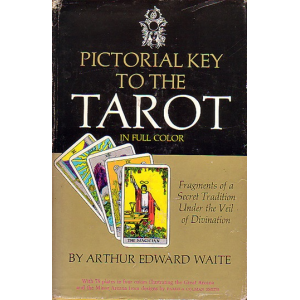
The Pictorial Key To The Tarot

The Pictorial Key To The Tarot Cover

Book: The Pictorial Key To The Tarot by Arthur Edward Waite

"The Pictorial Key to the Tarot" is A. E. Waite's influential guide to Tarot symbolism, published in England in conjunction with the Rider-Waite-Smith deck. While Waite was an occultist, he was very concerned with the accuracy of the symbols he used for his deck, and he did much research into the traditions, interpretations, and history behind the cards.

The best known and best selling Introductory work on the use of the occult Tarot Cards for Divination and fortune telling, with pointers toward their further use in spiritual training. A real help to those who want to learn how to read tarot in questons of love, money, and luck.

Originally published in 1910.


Download Arthur Edward Waite's eBook: The Pictorial Key To The Tarot

Free eBooks (Can Be Downloaded):

Ea Wallis Budge - The Egyptian Book Of The Dead
Aleister Crowley - The World Of Tarot
Arthur Edward Waite - The Pictorial Symbols Of Alchemy
Aleister Crowley - The Zodiac And The Tarot
Arthur Edward Waite - The Pictorial Key To The Tarot

Popular Posts