Showing posts with label wicca love. Show all posts

Saturday, October 2, 2010

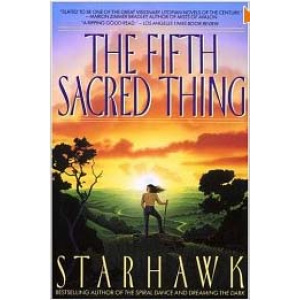
The Fifth Sacred Thing

The Fifth Sacred Thing Cover

Book: The Fifth Sacred Thing by Starhawk

I love this book. I didn't like it at first, but I decided to give it an hour before I made up my mind. Now I am really glad I stuck with it, because it is one of the richest, most thought-provoking books I have ever read.

I had this book on my shelf for several years before I actually read it. Although it obviously sounded good enough at the time I bought it, I feared that it would be preachy and overbearing. It was nothing of the sort. The characters are complex; flawed at times, saintly at others. The story is compelling, combining plots about the personal growth of the various characters, adventure stories as Bird escapes from prison and Madrone ventures into the southern wilds to help the freedom fighters, and the ultimate show down between the San Franciscans and the Stewards. It is a bit simplistic, perhaps, but that didn't stop me from wishing things in reality were more like they are in Maya and Madrone's world. The attempts to portray this world as one free of any racial or sexual bigotry do get a bit heavy handed at times, but never so much that it interfered with my enjoyment of the story. I would recommend this book to anyone, and in fact immediately after I finished Ran out and bought a copy to give as a gift this Christmas.

One of the greatest questions is - how do people resist the violent advances of others without becoming violent themselves? We can look to others for inspiration - HH the Dalai Lama, Gandhi, MLK - there have been a few who have managed to hold on to their ideals despite the crimes inflicted upon them. But how do we do this ourselves? How do we maintain peace within ourselves?

This book discusses these issues on a societal level, but the wisdom you will gain can be applied on a personal level. You will likely find yourself rethinking how you view numerous things - from illness to monogamy.

And the story is interesting and creative, with characters you will come to care about. This is a fantastic book. Go ahead and give it some time - you will probably love it, too!

Buy Starhawk's book: The Fifth Sacred Thing

Free eBooks (Can Be Downloaded):

Friedrich Max Muller - The Sacred Books Of The East
Solomonic Grimoires - The Book Of Secrets
Aleister Crowley - His Secret Sin

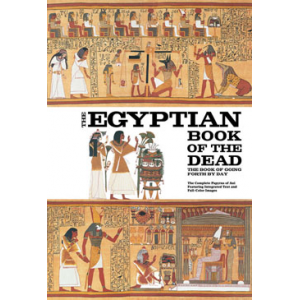
The Egyptian Book Of The Dead

The Egyptian Book Of The Dead Cover

Book: The Egyptian Book Of The Dead by Ea Wallis Budge

"The Egyptian Book of Dead"—the ancient Egyptian title is ‘rw nw prt m hrw’ , roughly translated as “Spells of Going Forth by Day” — was written by the ancient Egyptians as a sort of guide to help newly deceased souls as they crossed over into the afterlife. It was usually written on a papyrus scroll which was sent with the prepared body in its coffin or burial chamber.

German Egyptologist Karl Richard Lepsius first used the title, “Book of the Dead” in a selection of Texts he published in 1842. Since then, the word “Egyptian” has been added and it has become the generally accepted title of the book. E. A. Wallis Budge published this translation in 1901 and, as an important version, it is still in print to this day.

The Book of the Dead was the product of a long process of evolution from the Pyramid Texts of the Old Kingdom (writings on the crypt walls intending to help the dead person) to the Coffin Texts of the Middle Kingdom (similar writings, placed on the outside of a coffin). Eventually, many of these texts were written on papyrus and placed in the burial chamber, or inside the coffin with the mummy.

About one-third of the chapters in The Book of the Dead are derived from the earlier Coffin Texts. The Book of the Dead itself was adapted to The Book of Breathings in the Late Period, but remained popular in its own right until the Roman period.


Download Ea Wallis Budge's eBook: The Egyptian Book Of The Dead

Free eBooks (Can Be Downloaded):

Gerald Gardner - The Garnerian Book Of Shadows
Friedrich Max Muller - The Sacred Books Of The East
Lady Galadriel - The New Book Of The Law
Ea Wallis Budge - The Egyptian Book Of The Dead

Monday, September 27, 2010

Arnold Crowther Biography

Arnold Crowther Biography Cover Arnold Crowther was a skilled stage magician and ventriloquist with interests in paganism and witchcraft. He co-authored two books and a radio series on witchcraft, with his wife Patricia Crowther, and wrote numerous articles for a variety of magazines. His greatest claim to fame though comes as the connecting influence between Gerald B Gardner, and Aleister Crowley.

Born in Chatham, Kent, on the 6th October 1909, Crowther was one side of twin brothers. His mother was Scottish and his father, an optician came from Yorkshire. Crowther from an early age was fascinated with sleight-of-hand magic, ventriloquism, and puppeteering. From the age of eight he began practicing tricks and perfecting his technique in the secrecy of his bedroom. By the time he was twenty he was a professional magic act, working in cabaret, touring around the country and overseas.

His career peaked in 1938-39 when he was invited to entertain Princesses Elizabeth and Margaret at Buckingham Palace. This led him to numerous like engagements entertaining the landed gentry of England, and also into contact with many of the days leading occultists and magicians. At this time Crowther was a Freemason with interests in Buddhism, he didn’t enter the craft until very much later in 1960.

Crowther was a founder member and President of the Puppet Guild, and as a master puppeteer he made over 500 puppets during his career, mainly for use in his ventriloquism act. He also collected unusual puppets and oddities, regularly giving lectures at his Masons Hall, and to other interested societies, on curios from around the world.

Before the start of World War II, Crowther met Gerald Gardner and his wife Donna after they had been to view one of his lectures on curios. He and Gardner became good friends, sharing many similar interests. Crowther soon became a frequent visitor at the Gardner’s London flat, and from there they would venture out together and browse the many antique stalls at the nearby Caledonian Market. Rubbing shoulders with Gardner, Crowther soon became interested in the craft, however Gardner’s coven was still wary of adverse publicity. They felt that Crowther might use craft information in his act, and refused to accept him. Gardner predicted that “a very special person with fair hair” would initiate him when the time was right.

During the war years Crowther joined the Forces Entertainment’s Corps, and entertained troops all over Europe with his show “Black Magic”, the show also included an African Basuto choir. Crowther would perform where and whenever he was required, like on the 10th November 1943 while en-route from Tripoli to Malta, he performed aboard a DC 3 airplane flying at 4,000 feet.

For a time during the war Crowther was stationed in Paris, and there he first learned of his past life as a Tibetan beggar monk. He and an officer went to visit palmist, “Madame Brux”, who invited them to a seance. After introductions the medium went into a trance and began to communicate with a masculine spirit. The spirit claimed to have been Crowthers teacher in a previous life, and was his guide in this present one. The spirit reported that Crowther had been a student in a Tibetan lamasery, he mentioned the name “Younghusband” and that he had been killed in a battle. “Your possessions will be returned to you,” said the medium, and an object fell onto the seance table. It was a Tibetan prayer wheel inscribed with “OM MA NI PAD ME HUNG” (Translation)

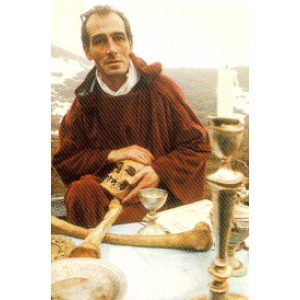
After the war had ended other Tibetan objects came into his possession, they included: a butter lamp, a trumpet made from a human thighbone, a drum made of a human skull, and a small rattle hand-drum. An expert explained to Crowther that the “Zi-jed-pa” (The Mild Doer), a homeless medicant class of Yogi regarded as saints, used such items. They believed they would attain Nirvana after death and not have to be reborn again.

That being so, why then had he been reincarnated as Crowther he reasoned? The expert explained that if he, as the monk, had killed someone, then he would have to be reincarnated to balance the karma. Later at an exhibition of Tibetan curios in London, Crowther discovered that a Colonel “Younghusband” had led a military attack against Tibet in 1904. During the attack “Younghusband” had killed another soldier, before he himself was killed.

Crowther returned to the public stage after the war, and continued to tour about the country. During his travels he met and made the acquaintance of Aleister Crowley. It wasn’t long before he introduced his friend Gardner to Crowley on the 1st May 1947. An entry in Crowther’s dairy for that date reads: “Dr. G.B.Gardner Ph.D. Singapore and aleister crowley Prof, a magician, came to tea…”

In 1958 while travelling to perform on the Isle of White, Crowther met a lady “with fair hair”, Patricia Dawson. She was performing in the same show as he, and they soon discovered a mutual interest in witchcraft. Crowther offered to introduce her to his friend Gardner. Over the following two years and after regularly meeting with him, Gardner initiated Patricia on the 6th June 1960 at his home in Castletown, Isle of Man. Patricia in turn initiated Crowther, and the prediction Gardner had made to Crowther many years earlier, came true.

Later that same year on the 8th November 1960, Arnold Crowther and Patricia Dawson where married in a private handfasting ceremony, officiated by Gerald Gardner. The following day on the 9th November they married again in a civil ceremony, this attracted the attention of the media and was heavily publicized. The Crowthers settled in Sheffield and used the media publicity to spread the word about witchcraft, and started many new covens throughout the country.

Crowther passed into the next world on the 1st May 1974. “Or did he”? If from his past life as “Colonel Younghusband”, he revisited as “Arnold Crowther”, has not his karma been corrected? One wonders if he has finally achieved Nirvana?

In addition to his collaborated works with his wife Patricia, Crowther’s other published credits include: “Let’s Put On A Show” (1964), a book of “how-to-do” magic, illustrated by himself. “Linda and the Lollipop Man” (1973), a road safety book for children, and “Hex Certificate” (Late 1970’s), a collection of cartoons he drew on witchcraft themes. His autobiography “Hand in Glove”, has not been published, but was serialized on BBC Radio in Bristol, Sheffield, Medway and Leeds between 1975 and 1977.

Free eBooks (Can Be Downloaded):

Reformed Druids - Anthology 06 The Green Books
Aleister Crowley - Ahab And Other Poems
Anthony Arndt - Asatru The Northern Way
The Book Of Forbidden Knowledge

The Book Of Forbidden Knowledge Cover

Book: The Book Of Forbidden Knowledge by Basil Crouch

This is the most dangerous book you will ever hold in you hands. It is books of secret rituals. The ceremonies are powerful beyond belief. They can be dangerous if treared lightly, but if directions are faithfully followed then no barm should befall you. After reading this books you life will never be same, its magic will change you life merely by reading it.

Whoosover steps one foot on this pathway stays forever. It is beyond life, beyond death, beyond eternity, beyond heaven, it it taught in the beginning so shall it remain until the stars fall from sky, and all life on Earth is destroyed.

This books deals with life and death, it deals with health and sickness, it deals with wealth, it can make you rich beyond you wildest dreams; it can also destriy you, body and mind, so be warned. Treat it with care and understanding, use it to better you life, use it for become rich, better station in life, and if necessary use it to destroy your enemies.

Buy Basil Crouch's book: The Book Of Forbidden Knowledge

Free eBooks (Can Be Downloaded):

Sasha Fierce - The Book Of Shadows
Idres Shah - The Book Of Power
Anonymous - Black Book Of Forbidden Knowledge Lucid Dreaming
Basil Crouch - The Book Of Forbidden Knowledge

Moon Eclipses

Moon Eclipses Cover A lunar eclipse occurs whenever the moon passes through some portion of the Earth’s shadow. This can only occur when the Sun, Earth and Moon are aligned exactly, or very closely, with the Earth in the middle. As such there is always a Full Moon on the night of a lunar eclipse. Every year there are at least two partial lunar eclipses, while total eclipses are much less common. The type and length of an eclipse depends upon the moon’s location relative to its orbit of the earth. As of writing this article the most recent total eclipse occurred on the 21st February 2008. The next eclipse, allbeit a partial one, will occur on the 16th August 2008. The next total eclipse is due on the 21st December 2010. Unlike a solar eclipse, which can only be seen from a number of small areas around the world, a lunar eclipse can be seen from anywhere on the night side of the Earth.

Free eBooks (Can Be Downloaded):

Charlotte Fell Smith - John Dee
Charles Baize - Pagan Scriptures
Nicolas Schreck - Demons Of The Flesh

Everyday Magic Spells And Rituals For Modern Living

Everyday Magic Spells And Rituals For Modern Living Cover

Book: Everyday Magic Spells And Rituals For Modern Living by Dorothy Morrison

Is it time for a change? Is it time to improve your life with a better job, a happier home, or more romance? Then you need Everyday Magic by Dorothy Morrison! This is magic for modern Wiccans, and for everyone regardless of their religious affiliation. It is filled with hundreds of spells, chants, rituals, charms and formulas for incenses and oils. Every one is tested and powerful yet easy to use.

Everyday Magic is a well written book and it fit into my everyday living just as if it had been written for me personally. The modern day methods of dealing with the "old ways" of the craft amazed me. To go to a thrift store and pick up a cheap blender instead of trying to do so many herbal blends with the mortar. I was so mermerized with so many of Dorothy's modern gimmicks. Being able to improvise has always been big with me, Dorothy seems to do the same in her book.

Sure, there are spells for romance and prosperity. Those are as important today as they were a thousand years ago. But this book also presents magic that deals with today's problems. Speed up your computer's modem. Make sure your luggage arrives safely; ease labor pains; free yourself from anger; find a parking spot. These are all things we need and that you can do by following the simple instructions in this book!

One of the roadblocks to successful magical workings that many people face is finding the proper oils and incenses. Morrison's solution: Make them yourself! But don't use the old techniques that take hours, days, or even weeks to accomplish. Instead, you'll learn how to use common appliances such as a drip coffee maker, a blender, and a crock pot to create your own powerful incenses, oils, washes, brews, and more. What a practical timesaver!

And saving time in today's world is what this book is all about. Of course, if the spells, charms, rituals and techniques weren't practical and effective, saving time would be meaningless. Well, what you'll learn here is powerful -- and is presented by a woman who has been a Witch for more than 20 years and taught on two continents!

Dorothy Morrison has a daring point of view that magic is not just compatible with technology--the two can actually help one another. Since technology has made our lives more productive, surely it can enhance our magic too. (Have you ever thought of making your herbal infusions in an automatic-drip coffeemaker?) Technological assistance with magic is only part of the story. Morrison has filled a grimoire with charms that protect from car trouble and ensure the safe and timely arrival of luggage while traveling, and spells to keep a computer from crashing, which makes life in the 20th century a little less harrowing. Rather than fighting the progress of the electronic age, Morrison has tapped into the wealth it has to offer, and she shares her discoveries with anyone adventurous enough to try them.

The spells and rituals in here are all based on today's available materials. Trying to find something called dragon's blood was not easy for me. In this book, Dorothy makes it all so simple and still so effective. Spells of interest to the modern twentieth century housemate and businessperson. Spells and rituals that make so much sense and are so easily adaptable for my and others active lives.

I recommend, as I have many times, reading this book. I have read many and find this one to my liking on a high rating of "Way to go, Dorothy Morrison"
Excellent book and will keep an eye and ear open of reports of others from D. Morrison. Age, gender, and type of path are not even a stoppage point here. For all and then some.

Buy Dorothy Morrison's book: Everyday Magic Spells And Rituals For Modern Living

Free eBooks (Can Be Downloaded):

Kveldulf Gundarsson - Teutonic Magic The Magical And Spiritual Practices Of The Germanic Peoples
Tupman Tracy Ward - Theatre Magick Aleister Crowley And Rites Of Eleusis
Richard Alan Miller - The Magical And Ritual Use Of Herbs
Talismagick - Love Spells And Rituals For Love And Relationships

Sunday, September 26, 2010

Alex Sanders Biography

Alex Sanders Biography Cover Alex Sanders – the “King of the Witches” as he became known - was responsible for founding the Alexandrian Tradition of Wicca, now one of the main traditions of the Wicca/Witchcraft movement. But his reign was fraught with criticism and controversy.

Alex Sanders was born Orrel Alexander Carter on the 06th June 1926 in a house on Moon St, Birkenhead. He was the eldest of six children to parents Hannah and Harold Carter. His father Harold Carter was a music hall entertainer who suffered from alcoholism, and soon after the birth of Alex, moved the family to Grape St in Manchester, there he unofficially changed the family name to Sanders. Alex was unaware of his official surname until he applied for a passport later in life, at which time he officailly changed his name to Sanders by deed poll.

As a young boy Sanders suffered with tuberculosis and would regularly visit with his grandmother in Wales, where he could benefit from the Welsh fresh air. At the age of seven, he is believed to have happened upon his grandmother “Mary Biddy” performing some sort of pagan ritual. Taken by surprise she immediately swore young Sanders to secrecy, and initiated him on the spot claiming, “Now, you are one of us”. Thus he became her student and started on the path of the Old Religion.

Sanders was a natural psychic who learned all he could from his grandmother. He claimed that she gave him her “Book of Shadows” to copy and taught him all the rites and magic of the witches including clairvoyance by scrying in inky water and using his grandmother's crystal. Sanders also claimed that following the Blitz during WWII and just a few months before her death at age 74, his grandmother conferred upon him the second and third grade initiations involving ritual sex. After her death he tried to contact other witches, and though failing continued with his studies while working for a time as a healer in Spiritualist Churches under the pseudonym of Paul Dallas.

In the early 60’s, Sanders is reported to have sought entrance to some Gardnerian covens (see Gerald Gardner), including that run by "Patricia and Arnold Crowther", who refused to accept him. Not to be put off so easily, he somehow managed to obtain a copy of the Gardnerian Book of Shadows. This he copied (badly from all accounts) and embellished it with a few of his own amendments. He then used this as the bases to found his own coven, claiming it to be a copy of his grandmother’s Book of Shadows.

Sanders was a born showman who avidly courted publicity. In September of 1962 he even succeeded in convincing the Manchester Evening News to run a front-page article about Wicca. As a result he soon attracted a large following. During this period Sanders and his coven worked from his home at 24 Egerton Road North, Chorlton-cum-Hardy, Manchester. One of his initiates was "Maxine Morris", a Roman Catholic 20 years his junior. After her initiation, they handfasted and she became his High Priestess. They were married in a civil ceremony in 1968 and moved into a basement flat near Nottinghill Gate, London. Later that same year, Maxine bore him a daughter they called "Maya".

From their new home the Sanders’ ran his London coven and taught training classes, he claimed to have initiated more than 1,623 witches working in 100 covens around the country, all-practicing what had become known as the Alexandrian Tradition. At one meeting, a gathering of sixteen of his covens, Sanders was bestowed with the title of “King of the Witches”. Sanders frequently appeared in ritual photos as robed or wearing only a loincloth while Witches surrounding him were naked. His explanation for this was that the old “Witch laws” required that the Elder of a coven should be easily identifiable from the other coven members.

In 1968-69, Sanders with Maxine appeared in and gave technical advice on a film called “Legend of the Witches”. During the press preview of the film, they met with and were introduced to "Stewart Farrar", then a reporter for the Reveille. Stewart would later be initiated by Maxine, and move on to become famous himself as a witch and author.

Without doubt Alex Sanders was a controversial and flamboyant man, who without scruples plagiarized the work of others to embellish he own. Whither he did so with malice, remains a question? Personally I don’t think so. More I assume through innocuous indifference, and mainly for the benefit of his students, even though it resulted in criticism from many in the craft. He was also without doubt a very skilled witch, and powerful magician, whose contribution to the newly evolving movement, brought witchcraft back into the public arena and changed the face of Wicca. He helped to influence many newcomers entering the craft and Alexandrian Wicca remains today one of the largest traditions of the craft.

Free eBooks (Can Be Downloaded):

Aleister Crowley - Alice An Adultery
Albert Pike - Morals And Dogma
Aleister Crowley - Alexandra

Monday, August 2, 2010

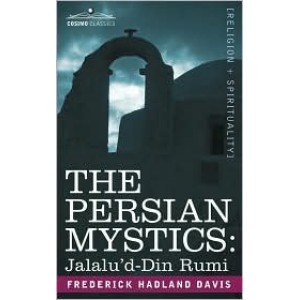
The Persian Mystics Jalaluddin Rumi

The Persian Mystics Jalaluddin Rumi Cover

Book: The Persian Mystics Jalaluddin Rumi by Frederick Hadland Davis

Rumi (1207-1273) was a Persian jurist and theologian best known for being perhaps the finest of all Sufi poets. His writings have been widely translated and remain especially popular in Iran, Afghanistan, and Tajikistan. Though written from a Sufi perspective, Rumi's poems on spiritual growth-here collected and edited by F. Hadland Davis and first published in 1907-cross all cultural and Religious bounds, and can still be heard today in many secular and religious settings.

The Persian Mystics: Jalalu'd-din Rumi includes selections from some of Rumi's most famous works, the "Divani Shamsi Tabriz" and the "Masnavi," as well as passages on his life and work, and the origin and nature of Sufism.

Download Frederick Hadland Davis's eBook: The Persian Mystics Jalaluddin Rumi

Free eBooks (Can Be Downloaded):

Reynold Nicholson - The Mystics Of Islam
Frederick Hadland Davis - The Persian Mystics Jami
Frederick Hadland Davis - The Persian Mystics Jalaluddin Rumi

Thursday, July 29, 2010

Your Magical Name

Your Magical Name Cover Why a Magical Name?:
Ah, the magical name. So many people find wicca and decide right off the bat that they’re going to name themselves Lady Such-and-Such or Lord Whatsis. Go to a pagan event and you’ll meet more fifteen-year-old Lady Morganas than you can shake a stick at. And it’s virtually guaranteed that within about three months, Lady Morgana will decide her magical name, sometimes called a craft name, is really supposed to be Starfluffle or Moongypsy, and she’ll change it.

In fact, she’ll probably change it two to three times a year.

The Name-of-the-Month Club:
This odd phenomenon, known as the Name-of-the-Month Syndrome, happens most often because the person in question hasn’t taken the time to research and learn, which is crucial to finding the right magical name.

A magical name is unique to the practitioner, and there are several ways to find yours. When you find the right name, you’ll keep it for a long time. In some traditions, it‘s customary to wait until you‘ve studied a year and a day before claiming your magical name. Some Pagans have two magical names -- one which they use in public and one which is known only to the gods and members of the person’s coven.

Think Long-Range:
One method by which people sometimes find their magical name is to simply choose something they like. A problem with this method is that what we like on one day, we may find silly a year down the road. If you’re going to choose a name based on whether it sounds cool or not, stop and think about it. What is it about the name that appeals to you? Ten years from now, are still going to feel comfortable saying, “Hi, I‘m Fairypuddle,” when you meet a new person?

Names with Meaning:
Choose a name not only for its sound, but its attributes as well. For example, someone wishing to convey strength in their name might include “oak“ or “iron“ as part of their moniker. A person who is highly creative might select a name that reflects their art or craft. You may want to choose a name based rooted in folklore or mythology. Many people include the name of an animal that resonates with them. A cautionary note here: in the Pagan community, certain animals pop up all the time. You’ll meet two dozen Ravens and just as many Cats, but it’s unlikely you’ll encounter anyone calling himself Wombat or Penguin.

Names to Avoid:
Another bit of advice -- generally, the titles Lord and Lady are reserved for people who are elders or have a significant amount of leadership experience under their belt. To name oneself Lady So-and-So without any credentials is considered presumptuous by many Pagans. Likewise, in many traditions it’s seen as hubris to give oneself the name of a deity. You may want to choose a name that indicates your dedication to a god or goddess, but don’t co-opt their names. It’s just rude. If you're a dedicant to Apollo, don't call yourself Master Apollo, call yourself something like Apollonius instead.

Using Your Birth Number:
Another popular method of finding a magical name is to choose one that corresponds with your birth number. To find your birth number, begin by adding the digits of your birth date.

If your birthday was September 1, 1966, you would start with the numbers 911966 = 9 + 1 + 1 + 9 + 6 + 6 = 32.

Now take those two numbers (3 and 2), and bring it down to a single digit: 3 + 2 = 5. That number -- in this case, 5 -- is your birth number.

Use the grid below to find a name that corresponds to the number 5, by calculating the sum of the corresponding letters.

1 = A, J, S

2 = B, K, T

3 = C, L, U

4 = D, M, V

5 = E, N, W

6 = F, O, X

7 = G, P, Y

8 = H, Q, Z

9 = I, R

Let’s say you’ve decide you like the name Willow. Using the letters in “Willow” you would take the numbers 5 + 9 + 3 + 3 + 6 + 5 = 32. From there, 3 + 2 = 5. If the name you like doesn’t match your birth numbers, try some creative or alternate spellings to see what happens.

A Gift from the Gods:
In some cases, you may be fortunate enough to have your new name bestowed upon you by a god or goddess. In these instances, you may encounter someone in a dream or a vision who tells you, “Your name is Such-and-such.” While you may choose to add to it or come up with a variation on it later, if this happens to you, accept the name as the gift that it is.

Whatever method you end up using, think carefully before you finalize your new name. While it’s okay to change your name later on as you evolve spiritually, changing your name every few weeks or every time you see a new episode of “Charmed” is probably not the best course of action. Find the name that is right for you -- and when it IS the right one, you will know.


Books You Might Enjoy:

Anonymous - Meditation Of The Four Magickal Weapons
Jarl Fossum - Seth In The Magical Texts
Anonymous - The Mystical Qabbalah
Kenneth Grant - Magical Revival
Aninymous - The Angelical Alphabet

Wednesday, July 28, 2010

Do Witches Really Cast Hexes

Do Witches Really Cast Hexes Cover People commonly personify witches as evil and all they do is curse and hex others. wiccans are strictly opposed to hexes and curses. Traditional witches (or "Trad Witches") do not have limitations. However, if the thought arises of casting a hex or curse we must ask ourselves if it ethical and completely necessary. Any witch will tell you that if it is regarding defense of loved ones and family the answer is often yes. On the other hand, if it relates to using magick against someone because they cut you off on the highway, then for the majority, the answer is no. See the section in this lens "Black & White Magick" for more on this. Also, for more information about magick, the natural powers of the universe, how to do spells and much more, visit Modern-Witchcraftand especially, Guide for Spells and How To's About Safely Using Magick for Success.

Books You Might Enjoy:

Jarl Fossum - Seth In The Magical Texts
Lau Soon Wah - The Powerful And Deadly Spells Of The Javanese
Julius Evola - Against The Neopagans
Anonymous - The Emerald Tablet Of Hermes

Sunday, July 25, 2010

Witch Hunting Multitude Of Myths

Witch Hunting Multitude Of Myths Cover Historians have now realized that witch-hunting was not primarily a medieval phenomenon. It peaked in the 17th century, during the rationalist age of Descartes, Newton, and St. Vincent de Paul. Persecuting suspected witches was not an elite plot against the poor; not was practicing witchcraft a mode of peasant resistance. Catholics and Protestants hunted witches with comparable vigor. Church and state alike tried and executed them. It took more than pure Reason to end the witch craze.

Nor were witches secret pagans serving an ancient Triple Goddess and Horned God, as the neopagans claim. In fact, no witch was ever executed for worshipping a pagan deity. Matilda Gage's estimate of nine million women burned is more than 200 times the best current estimate of 30,000 to 50,000 killed during the 400 years from 1400 to 1800 -- a large number but no Holocaust. And it wasn't all a burning time. Witches were hanged, strangled, and beheaded as well. Witch-hunting was not woman-hunting: At least 20 percent of all suspected witches were male. Midwives were not especially targeted; nor were witches liquidated as obstacles to professionalized medicine and mechanistic science.

This revised set of facts should not entirely comfort Catholics, however. Catholics have been misled -- at times deliberately misled -- about the Church's role in the witch-hunts by apologists eager to present the Church as innocent of witches' blood so as to refute the Enlightenment theory that witch-burning was almost entirely a Catholic phenomenon. Catholics should know that the thinking that set the great witch-hunt in motion was developed by Catholic clerics before the Reformation.

But the great witch-hunt was nonetheless remarkably slow in coming. Many cultures around the world believed for millennia -- and still believe -- in witches. In typical folklore, past and present, witches are night-flying evildoers who inflict harm on others by supernatural means, such as curses, the evil eye, and magic substances. Witchcraft is usually thought of as an innate power, unlike sorcery, whose magical spells must be learned. What Christianity uniquely added to those traditional beliefs was Satan. God's enemies were said to join Satan's band of demons through a pact and worship him at monstrous bacchanals called "sabbats," where they parodied the liturgy.

The Church inherited Roman and Germanic laws regarding maleficent magic, laws that treated witchcraft as a crime. But to St. Augustine, concrete witchcraft consisted of idolatry and illusion rather than harm to others. Following Augustine, an Anonymous ninth-century text, Canon Episcopi, became part of the Church's canon law, declaring that belief in the reality of night-flying witches was heresy because there was no such thing as an actual witch. Although the idolatry and heresy associated with witchcraft resided only in the will, not in actual deeds, they were nevertheless sinful, Augustine wrote. Punishment was in order -- but not burning.

The High Middle Ages of the twelfth and 13th centuries saw the bloody suppression of heretics, notably the Cathars in Provence. Measures against Jews, magicians, and sexual deviants also grew harsher. These groups were associated with a stereotyped set of blasphemies, orgies, and outrages, including infanticide and cannibalism. Starting in 1232, the papal Inquisition dispatched roving specialists to detect and punish heretics outside existing legal systems.

Then, the idea that witchcraft was a reality rather than a heretical illusion suddenly made a comeback. The inquisitors who had cut their teeth on heretics were devouring accused witches as well by the end of the Middle Ages. This was not simply a matter of shifting scapegoats to suit market demand. In a society that feared supernatural menaces working through human conspiracies, the sinister folk figure of the esoterically schooled magician apparently fused with that of the petty village wise-woman or cunning man to create the new phenomenon of the diabolical witch.

After the first wisps of this change in the late 14th century, the flames burst forth around 1425 in the Savoy region, in what is now southeast France, and in the canton of Valais in Switzerland, near the borders of France and Italy. About 500 more witch trials followed before the Reformation began in 1517.

Books You Might Enjoy:

Richard Alan Miller - The Magical And Ritual Use Of Herbs
Edna Kenton - The Book Of Earths
Michael Johnstone - The Ultimate Encyclopedia Of Spells

Witch Hunts And Persecution In America

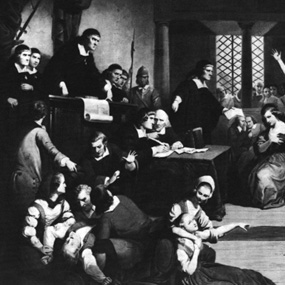
Witch Hunts And Persecution In America Cover As most Americans know, witch hunts also affected the American colonies. The Salem witch trials pursued the Massachusetts Puritans have entered American consciousness as being much more then just the killing of witches. They, like the trials of Europe, have become a symbol. In our case, the witch trials have become a symbol of what can go wrong when mobs of ignorant people go crazy, especially when egged on by just as ignorant and/or power hungry leaders.

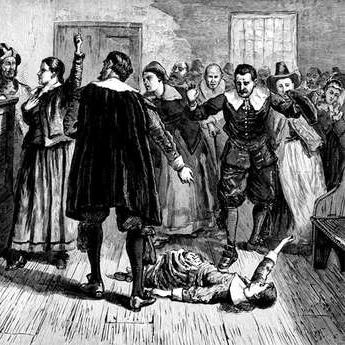
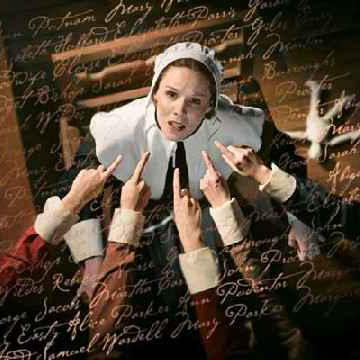
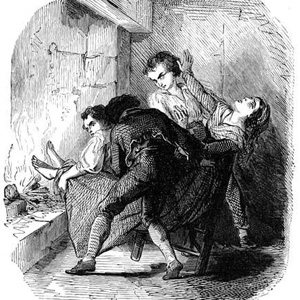
The Salem story began in 1692 when a few girls, who had become friendly with a slave woman named Tituba, began acting very strangely -- hysterical screaming, falling into convulsions, barking like dogs, etc. Soon other girls began acting in a similar manner and of course they all must have been possessed by demons. Three woman, including Tituba, were promptly accused of witchcraft. The result was much like the European experience, with a chain-reaction of confessions, denouncements, and more arrests.

In an effort to help combat the witch menace, courts relaxed traditional rules of evidence and procedure -- after all, witches are a terrible menace and must be stopped. In place of the normal rules and methods, the courts used what was common among Inquisitors in Europe -- scouring the womens' bodies for marks, numb spots, etc. Also accepted were "spectral sources" of evidence -- if someone had a vision of a woman being a witch, that was good enough for the judges.

The people who were mostly killed were not those who submitted quickly and obediently to authorities. Only those who were defiant or hostile were put to death. If you admitted being a witch and repented, you had a very good chance of living. If you denied being a witch and insisted that you had rights which must be acknowledged, you were on a quick path to execution. Your chances were also bad if you were a woman -- especially if you were an older, deviant, troublesome or somehow disorderly woman.

In the end, nineteen people were executed, two died in prison and one man was pressed to death under rocks. This is a better record than what we see in Europe, but that isn't saying very much. The religious and political authorities clearly used the witch trials to impose their own ideas of order and righteousness upon the local populace. As in Europe, violence was a tool used by religion and religious people to enforce uniformity and conformity in the face of dissent and social disorder.

Books You Might Enjoy:

Mira Ray - Minerals And Gems In Indian Alchemy
Anonymous - Protection Of Space
Gabor Klaniczay - Witchcraft Mythologies And Persecutions

Saturday, July 24, 2010

Who Is A Witch

Who Is A Witch Cover The origin of the word witch predates the Anglo-Saxon period. Etymologically, the word has been derived from an Old English masculine noun wicca, the feminine being wicce. The word ‘wicker’ in old German also stood for a soothsayer. A soothsayer is a fortune-teller or psychic.

In routine usage, a witch is a feminine noun for wizard or sorcerer, but the former has different functional connotations from its masculine counterpart. While a wizard or a sorcerer may have some element of manipulativeness in their craft, a witch, though a practitioner of witchcraft, is far from being a crafty person. A witch is essentially a very noble and deeply religious person whose purity of heart combined with spiritual and meditation practices bestow her with a deeply religious and mysterious aura. A witch does not act with any ulterior motives, not to mention any machinations in her pursuits. A witch is a very compassionate person, gifted with supernatural powers and works for the alleviation of pain and suffering of her fellow human beings and brings them the much needed solace and succor.

A highly misunderstood, deeply suspected, much maligned and doggedly hounded person especially during the middle ages, a witch has regained lost ground and has acquired a respectable position in the society. Colloquially, the term witch, applied most often to a female, also includes male practitioners of witchcraft, especially Wicca. Witches believe in certain ethical codes and strictly adhere to them.

A witch engaged in her witchcraft practices spells developed by worshiping many deities primarily the supreme Goddess and sometimes her consort the God. The craft or workings of a witch are used for healing the acute health problems. For curing these problems, she uses the personal powers in combination with energies within candles, stones, herbs and other natural items. Witch practices witchcraft to help better the world and mankind. A witch certainly is not ugly, nefarious, dreadful hag who worships the devil or hurts the people as the stereotype image presents her to be.

A witch derives her strength from Paganism, which is influenced by ancient, primarily pre-Christian and sometimes pre-Judaic religion. A witch has deep faith in the elements of Nature such as earth, fire, nature, air, and water. Fire cleanses and has an aura that transports her into the astral world and enables her to view this world with psychic clarity. Water purifies.connects with the Goddess herself. The air is an all-enveloping blanket of gods. It wraps around the witch and lifts her to the divine immenseness and freedom of the skies. The spirit of the witch gets united with the air and floats freely in the sky. The witch achieves this uplifted state through meditation, perseverance and sometimes she is blissfully born with these talents.

A witch is just as ordinary looking person as any one in your neighborhood. She can be a housewife with kids doing her daily domestic chores. She too has her share of emotions, but they function more at a macro level than at personal. So if she is feeling sad, the sadness is not just due to some personal vested interest, but it is born out of the suffering of the world around her. Another difference between a witch and an ordinary woman is that a witch can commune with her goddess. The commune is just meant to bare her soul reaching a complete state of oneness. A witch may even cry before the alter of her goddess whenever she feels a spiritual vacuum and wants to replenish it with godliness.

A witch performs her craft using many rituals such as worshiping alone or in covens in the alter room. She lights candles, incense, chants incantations and worships her deities or goddesses. She meditates while staring into the candle flames and in the course of meditation, she feels her spirit leaving her body and enters into trance. A witch gets lost in the awesome power of the Fire with her mind dancing with the flames of the candles. Insightful images deluge her head and become a permanent part of her psyche.

Witches also practice necromancy and summon spirits of the dead to gain knowledge of the future events from them. These spirits are called Operative Spirits or the Spirits of divination.

Books You Might Enjoy:

Michael Bailey - Historical Dictionary Of Witchcraft
Howard Phillips Lovecraft - Cults Of Cthulhu
Mike Nichols - Eight Sabbats Of Witchcraft
Louise Huebner - Witchcraft For All
Paul Huson - Mastering Witchcraft

Monday, July 19, 2010

Prosecuting Witches As A Way Of Attacking Social Problems

Prosecuting Witches As A Way Of Attacking Social Problems Cover Jews and heretics were often treated as scapegoats for other social problems and witches ended up no different. Regions with the most social and political unrest also happened to be those with the greatest problem with witches. Every social, political, and natural problem was blamed on witches. Crop failure? Witches did it. Well gone bad? Witches poisoned it. Political unrest and rebellion? Witches are behind it. Strife in the community? Witches are influencing people.

Lest anyone imagine that the persecution of witches has been relegated to the distant past, it must be noted that witch hunts -- and killings -- continue well into our own "enlightened" times. The church's creation of witchcraft and devil worship has exacted a heavy and bloody toll on humanity which still has not yet been fully paid.

In 1928, a Hungarian family was acquitted of killing an old woman they thought was a witch. In 1976, a poor German woman was suspected of being a witch and keeping familiars, so people in the small town ostracized her, pelted her with stones, and killed her animals. In 1977 in France, a man was killed for suspected sorcery. In 1981, a mob stoned a woman to death in Mexico because they believed that her witchcraft incited an attack on the Pope.

In Africa today, fears of witchcraft cause the persecution and death of people on a regular basis. Parents who fear that their children are possessed or are witches either kill them or turn them out into the streets. Government authorities have tried to put a stop to such nonsense, but they haven't had much luck. Both traditional African religion and Christianity contain enough to feed people's superstitious fears and this leads to others being harmed.

It's not just allegations of witchcraft which causes people to behave like this. Many other things can become the object of hysterical persecutions and prosecutions. Sometimes the alleged threats are genuine and sometimes they are not; in either case, the threats are magnified to such a degree that people no longer feel bound by traditional standards of justice or morality in order to confront their enemies. The consequences are almost always violence and suffering pursued in the name of good and God.

Books You Might Enjoy:

Scott Cunningham - Living Wicca A Further Guide For The Solitary Practitioner
Kathryn Paulsen - Witches Potions And Spells
June Johns - King Of The Witches The World Of Alex Sanders
Scott Cunningham - Wicca A Guide For The Solitary Practitioner

Sunday, July 18, 2010

Killing Witches As The Best Way To Kill Witchcraft

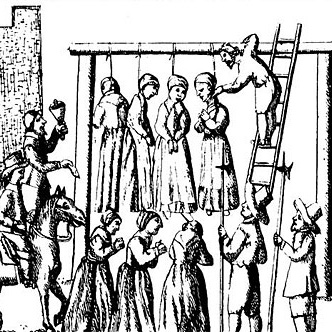
Killing Witches As The Best Way To Kill Witchcraft Cover Burning and hanging were the most popular forms of execution for accused witches in medieval Europe. Burning seems to have been most common in continental Europe while hanging was more common in Britain -- and thus also in the American colonies later as well. The death penalty was imposed on a wide variety of crimes in this era, but witchcraft in particular was punished by death on the basis of Exodus 22:18: "Thou shalt not suffer a witch to live" and Leviticus 20:27: "A man also or woman that hath a familiar spirit, or that is a wizard, shall surely be put to death: they shall stone them with stones."

The heretics who were the earlier targets of the Inquisition were almost never executed at first. They typically had a chance to repent and submit to the Church; only after relapsing into heresy did they generally become subject to execution. Even then, they might still be given another chance to repent. Witches received almost the exact opposite treatment: execution was typically applied after the first accusation and only rarely were accused witches allowed to go free after repenting.

This helps demonstrate the level of threat which the Church made out of witches and witchcraft. Witches couldn't be allowed to live no matter what -- not even if they were willing to admit all that they were accused of and fully repent. Their evil was too much of an existential threat to Christian society and they had to be completely excised, not unlike cancer which has to be cut out lest it kill the entire body. There was simply no tolerance or patience for the witches -- they had to be eliminated, whatever the cost.

Some have claimed that as many as nine million women were executed as witches, even though few could possibly have been truly guilty of witchcraft, and that because this represented a deliberate attempt to kill women generally it should be dubbed a "Women's Holocaust." More recent research demonstrates that many accused witches were men, not just women, and that number of those executed is far lower. Estimates today range from 60,000 to 40,000. Even if we are especially pessimistic, we probably can't go higher than 100,000 people killed across all Europe and over an extended period of time. That's obviously very bad, but not quite a "Holocaust."

Books You Might Enjoy:

William Godwin - The Lives Of The Necromancers
Dr Leo Martello - Weird Ways Of Witchcraft
William Butler Yeats - The Secret Rose And Rosa Alchemica
Allen Greenfield - A True History Of Witchcraft
Michael Harrison - The Roots Of Witchcraft

Saturday, July 17, 2010

Joan Of Arc Witch And Heretic

Joan Of Arc Witch And Heretic Cover Although accusations of witchcraft seem to have been most commonly made against older women who lived on the margins of society and who may have become socially troublesome, there is also evidence that women who were too powerful could become targets as well. Joan of Arc is one famous example of a woman who achieved a great deal but was then burned as a witch for her trouble.

Joan of Arc, who has become the patron saint of France, was a peasant girl who experienced mystical visions of St. Michael, St. Catherine, and St. Margaret during the Hundred Years War which convinced her that she was destined by God to lead the French to victory over the English invaders.

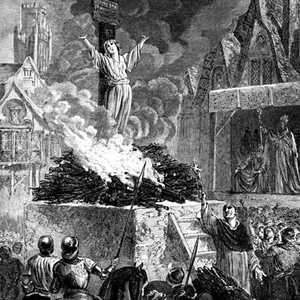
In 1429 she convinced the dauphin Charles VII to let her demonstrate that she had the ability to match her ambitions and she led French forces to liberate the city of Orleans from an English siege. She was eventually taken prisoner by the Burgundians, allies of England, and turned over to the English who burned her at the stake as a witch on the argument that her claims of direct communication with God were heretical and an act of disobedience to the Church.

Not until June 16, 1456, did Pope Callistus III declare Joan of Arc to be innocent on the charges of heresy and witchcraft. It can be difficult for powerful institutions to admit error of any sort, but especially when the errors involve grave injustices that cause the suffering and death of innocent people. Everyone likes to think of themselves are pure of heart and doing good work, even when they are hurting others. Sometimes the need to justify one's actions leads one to justifications of brutality, cruelty, and violence in general -- and thus a betrayal of whatever moral principles they thought they held to begin with.

Books You Might Enjoy:

Paul Huson - Mastering Witchcraft
Gabor Klaniczay - Witchcraft Mythologies And Persecutions
John Yarker - The Anglo Saxon Chronicle
Marian Green - A Witch Alone

Thursday, July 15, 2010

How Many Died In Great Witches Hunt

How Many Died In Great Witches Hunt Cover "The most dramatic [recent] changes in our vision of the Great Hunt [have] centered on the death toll," notes Jenny Gibbons. She points out that estimates made prior to the mid-1970s, when detailed research into trial records began, "were almost 100% pure speculation." (Gibbons, Recent Developments.) "On the wilder shores of the feminist and witch-cult movements," writes Robin Briggs, "a potent myth has become established, to the effect that 9 million women were burned as witches in Europe; gendercide rather than genocide. [See, e.g., the witch-hunt documentary "The Burning Times".] This is an overestimate by a factor of up to 200, for the most reasonable modern estimates suggest perhaps 100,000 trials between 1450 and 1750, with something between 40,000 and 50,000 executions, of which 20 to 25 per cent were men." Briggs adds that "these figures are chilling enough, but they have to be set in the context of what was probably the harshest period of capital punishments in European history." (Briggs, Witches & Neighbours, p. 8.)

Brian Levack's book The Witch-Hunt in Early Modern Europe arrives at roughly similar conclusions. Levack "surveyed regional studies and found that there were approximately 110,000 witch trials. Levack focused on recorded trials, not executions, because in many cases we have evidence that a trial occurred but no indication of its outcomes. On average, 48% of trials ended in an execution, [and] therefore he estimated 60,000 witches died. This is slightly higher than 48% to reflect the fact that Germany, the center of the persecution, killed more than 48% of its witches." (Gibbons, Recent Developments.)

Nonetheless, in the view of Gendercide Watch, even such a reduced and diffused death-toll should be considered "gendercidal," in that it inflicted mass gender-selective killing on European women. Such killing does not need to be totalizing, either in its ambitions or its impact, to meet the definitions of gendercide and genocide that we use. Indeed, it is arguable that at no other time in European history have adult women been targeted selectively, on such a scale, for torture and annihilation.

Books You Might Enjoy:

Janet Farrar - A Witches Bible The Complete Witches Handbook
Paul Huson - Mastering Witchcraft
Carl Mccolman - The Well Read Witch
Marian Green - A Witch Alone

Saturday, May 22, 2010

To Be Wiccan Is To Be A Free

To Be Wiccan Is To Be A Free Cover Religion is one of the freedoms. People are born with here. It was one of the reasons the Puritans traveled from Britain to America in the 1600’s. Historically, the Puritans did not want to convert to Roman Catholicism. During that time, they were discriminated against for their beliefs, however, it is no different from today. Presently, many people are still criticized for their beliefs, and the religion most criticized is Wicca, mostly by the Christian and Roman Catholic religions. Studying both religions briefly, both, in general, are similar. In the United States, there are about 135,000 people who identified themselves as Wiccan, according to American religious Identification Survey.

Sometimes referred to as the Old Religion, Wicca was popularized in the 1950’s by Gerald Gardner, hence the Garnerian Wicca tradition. Other traditions with specific rituals and practices include Eclectic Wicca, Traditional Wicca, and Green Wicca.

Like the Ten Commandments within the Christian religion, Wiccans have their own text as well, called The Wiccan Rede. In addition, they have a book full of religious texts called The Book of Shadows, as well as the Holy Bible for Christians.

Many believe that the Wiccan Religion comprises of only spells, incantations, and rituals. Most Wiccans communicate with nature spiritually on a daily basis as part of their daily ritual. It does not exactly mean Wiccans brew potions or casts spells during the late hours of night. Like the Christian Christmas holiday, Wiccans celebrate Yule, in which they feast and exchange gifts as well. Also like Christians, Wiccans also have a church to worship their divinities, and recite texts from their Book of Shadows.

The basic concept of Wicca is duotheistic: One God and one Goddess. Some Wiccans being monotheistic, they keep constant contact with their divinities through meditation or any other form of divination. With every Sabbat and full-moon Esbats, they have certain rituals they tend to that correspond to that certain Sabbat or Esbat. There are eight Sabbats: Yule, Imbolc, Ostara (Easter), Beltane, Litha, Lughnassadh, Mabon, and Samhain (Halloween).

Judging from texts, sabbats, and certain ritualistic procedures, Wicca is no different from any other religion that exist here in the United States. With a more open mind, more people will be able to accept others for their religious beliefs. If not, then history will become the present, only more discreetly.

Books in PDF format to read:

Kaatryn Macmorgan Douglas - All One Wicca Book 2 A Grimoire
Charles Wentworth Upham - Salem Witchcraft And Cotton Mather A Reply
Aj Drew - A Wiccan Bible

Monday, May 17, 2010

The Alexandrian Book Of Shadows

The Alexandrian Book Of Shadows Cover

Book: The Alexandrian Book Of Shadows by Sekhet Sophia

Alexandrian Book of Shadows Public Domain Version of the Alexandrian Book of Shadows, by Sekhet Sophia (1990)

Founded by Alexander Sanders and his (then) wife Maxine, the Alexandrian tradition is very similar to Gardnerian. Alex Sanders claimed to have been initiated by his grandmother in 1933, and his tradition is somewhat more liberal than traditional Gardnerian Wicca. While eclectic, Alexandrian rituals are still formal and based in ceremonial magick, with highly polarized references to the sexual dichotomy of male/female. Still, the Alexandrians have relaxed some of the more stringent Gardnerian teachings, i.e., the requirement of ritual nudity being made optional under Alexandrian teachings. Alexandrian Wheel of the Year revolves around the struggles of the Oak King and Holly King, generally as depicted through ritual dramas. Though the rituals portray mainly the God in His ever-changing nature and the main spokespeople for both Gardnerian and Alexandrian Traditions have been male, the primacy of the High Priestess (and, thereby, the Goddess) is supposedly held as the highest authority in both trads.

Download Sekhet Sophia's eBook: The Alexandrian Book Of Shadows

Books in PDF format to read:

Gerald Gardner - The Garnerian Book Of Shadows
Sekhet Sophia - The Alexandrian Book Of Shadows

Sunday, May 2, 2010

Wicca 101 A New Reference For The Beginner Wiccan Wicca Witchcraft And Paganism

Wicca 101 A New Reference For The Beginner Wiccan Wicca Witchcraft And Paganism Cover

Book: Wicca 101 A New Reference For The Beginner Wiccan Wicca Witchcraft And Paganism by Kristina Benson

In depth and current overview of the 1st Degree Studies A comprehensive guide for those people who are new to the wiccan Way! Benson's book discusses what wicca is and isn't, the five elements, the Wheel of the Year, magick and spell crafting, ethics, philosophy, scrying, tarot, divination, tools, herbs, gems, and celebration of Wiccan holydays. She touches also on the different types of Wicca, the influence of Eastern ways on Wicca, and the ways in which Christians-and followers of other religions-have viewed this peaceful and oft-misunderstood way of life throughout the ages. The author also discusses the relative merits of practicing alone or with others, and what to expect should the novice attempt to join a coven. The complete beginner will be introduced to what it means to be a Wiccan, and what there is to gain from learning the ways of the ancients.

There are too many words to say How I love this book, its one of my favorites and I highly recommend it for a beginner in the path of wicca, it goes through everything in an easy way to follow..and the best part its not preachy as I found some other books.. its simple , easy and just a good read all in all, and the best part it is a book you will always go back to for a refresher.. I love this book so much I would give it to a fellow wicca friend if I didn't already bind it to my own Book of Shadows.


Buy Kristina Benson's book: Wicca 101 A New Reference For The Beginner Wiccan Wicca Witchcraft And Paganism

Free eBooks (Can Be Downloaded):

Joanne Pearson - Wicca And The Christian Heritage Ritual Sex And Magic
Gordon Ireland - Faq On Wicca And Witchcraft And More
Anonymous - Wicca And Magick Beginning Wicca What Is Wicca

Popular Posts