Showing posts with label magic ebook. Show all posts

Friday, October 8, 2010

The New Pearl Of Great Price

The New Pearl Of Great Price Cover

Book: The New Pearl Of Great Price by Janus Lacinius Therapus

A treatise concerning the treasure and most precious stone of the philosophers. Or the method and procedure of this divine art ; with observations drawn from the works of Arnoldus, Raymondus, Rhasis, Albertus, and Michael Scotus (1894)

THIS work casts out cruel disease from the human body, disease produced by malignant humours ; and thus you are preserved. It will teach you how to regain the beautiful flower of youth, and how to secure a green and placid old age. All this may be yours, by the favour of the gods. Poverty will be triumphantly put to flight ; your treasure-house will be filled ; you will be able to succour the needy,
and to render the sacrifice of praise to great Jupiter.

TWO features of special interest attach to the " Pearl of Great Price," as written by Bonus of Ferrara, and edited by Janus Lacinius. In the first place, it is one of the earliest works printed on alchemy, and the original is a very beautiful specimen of typography. Concerning the latter point, it is only necessary to say that it was issued from the press of Aldus, appearing in 1546, with the privilege of Pope Paul III. and the Senate of Venice for the space of ten years. This edition is, of course, exceedingly rare, and is highly prized by collectors. In the second place, it is a very clear, methodical, and well-reasoned treatise, comparing favourably in these respects with the bulk of alchemical literature. A reader who is unacquainted with alchemy will probably not appreciate these points,
but any one who, like the present editor, has had occasion to become widely familiar with Hermetic authors, will do honour to the lucidity of Bonus.

Concerning" the adept himself, no biographical materials whatsoever are forthcoming, nor, as in most other cases, is there even a legend to fall back on. He is supposed to have been a native of Lombardy, and to have performed his alchemical labours at Pola, a maritime town of Istria, about 1330. He is sometimes described as Bonus of Ferraria,* and on this and other grounds Tiraboschi't identifies him with the "monk Ferarius".

This work attacks Lenglet du Fresnoy, the historian of alchemy, as an inexact writer, but Tiraboschi had no acquaintance whatsoever with alchemy, and does not seem to have read the Authors whom he endeavours to identify. Imaginative persons might, perhaps, be more inclined to question the equivocal name of Janus, the Calabrian Minorite Friar, and to suspect that his master Bonus was possibly his alter ego.


Download Janus Lacinius Therapus's eBook: The New Pearl Of Great Price

Free eBooks (Can Be Downloaded):

Isaac Bonewits - The Enemies Of Our Enemies
Aleister Crowley - The World Of Tarot
Ralph Blum - The New Book Of Runes
Anonymous - The Magical Library Of Harry Price
Janus Lacinius Therapus - The New Pearl Of Great Price.pdf

Tuesday, October 5, 2010

Solitary Wicca For Life Complete Guide To Mastering The Craft On Your Own

Solitary Wicca For Life Complete Guide To Mastering The Craft On Your Own Cover

Book: Solitary Wicca For Life Complete Guide To Mastering The Craft On Your Own by Arin Murphy Hiscock

If you prefer a solitary approach to worship and Witchcraft, this is the book for you. You need sound guidance and tools as you work alone to deepen your knowledge and strengthen your abilities.

Author Arin Murphy-Hiscock provides you with everything you need to take your spiritual practice to the next level. Solitary Wicca for Life encourages you to reach beyond the ordinary and create a unique path of worship, using techniques that go further than other texts:

- Advanced Circle Casting-advanced techniques and applications, plus methods for creating sacred space when a circle isn't necessary
- Enriching Ritual-tools and techniques that bring new depth to personal practice, including sacred drama, masks, ritual garb, and symbols
- Crafting Liturgy-Wiccan ritual defined stage by stage, as well as guidelines for writing invocations, prayers, meditations, and personalized rituals for esbats, sabbats, rites of passage, and more
- Drawing Down Deities-invoking deities for guidance, communion, worship, etc.
- Growing as a Solitary Wiccan-the means by which you'll enhance your spiritual growth and reach out to the world at large.

Solitary Wicca for Life is the essential reference handbook you need to reach deeper, go farther, and strengthen your solitary path-one day at a time.

I read lots of Wicca 101 books, especially those that seem to be aimed at the Solitary Practitioner. With many of them, I will find some points that I think the average solitary practitioner may relate to, or that someone, somewhere, will relate to. Many times, however, the material does not "click" with my own personal beliefs, or they do not take the "Traditional Path" when it comes to Wicca, but rather they are "Wiccanish". This is OK for someone else, but not necessarily for me. But I do not judge by my standards alone, but rather the viewpoint that everyone needs material that will relate to them personally.

Reading this book, however, there was more material here that I found I agreed with, related to and found to be "Traditional" with a Solitary spin than other books of this kind. And this, to me, was a big plus.

Ms. Murphy-Hiscock has taken Wicca back to the roots and explores adaptation to the Solitary way of practice. This is a Wicca 101 book, so it makes a good first handbook for the average new Solitary practitioner and yet, it provides some material that the advanced practitioner may want to review because of its accuracy, to augment their Wiccan practice, to add elements of the Traditional or just because it is well written and has much to ponder and contemplate.

I especially enjoyed her overview of Wicca Origins, and her separation of Traditional Wicca from the Eclectic practices that Wicca has evolved into. She covers well the Tenets of Wicca, discusses common metaphors and myths and separates some of the more widely accepted but none the less mistaken beliefs and practices that have crept into modern Wicca. She gives you a good idea of how to go back to the beginning, re-examine the issues and maybe take away a better representation of what it is that Wicca is really all about.

Arin Murphy-Hiscock has been a practicing Wiccan for ten years, five of those years as a solitary practitioner. She is the series editor of the For Life series and the author of Power Spellcraft for Life: The Art of Crafting and Casting for Positive Change. She lives in Montreal, Canada.

Buy Arin Murphy Hiscock's book: Solitary Wicca For Life Complete Guide To Mastering The Craft On Your Own

Free eBooks (Can Be Downloaded):

Pauline Bradford Mackie Hopkins - Ye Lyttle Salem Maide A Story Of Witchcraft Ocr Version
Janet Farrar - A Witches Bible The Complete Witches Handbook
Anthony Arndt - Blotar A Brief Guide To Asatru Ritual
Aj Drew - Wicca For Couples Making Magick Together
Right - Travel In Spiritual Worlds A Complete Guide On Astral Travels

Sunday, October 3, 2010

The Garnerian Book Of Shadows

The Garnerian Book Of Shadows Cover

Book: The Garnerian Book Of Shadows by Gerald Gardner

This is the text of the Gardnerian Book of Shadows. In one sense, this is the central sacred text of the Wicca religion. However, it is important to point out that there is no 'official' Book of Shadows. Typically each coven has a hand-written copy of a Book of Shadows, sometimes in cypher or code, which reflects its own practices and knowledge. This particular text is derived from a file posted on the Internet in the early 90s, and quotes previously published material which was known to be in use by Gardner and his group.

The book of shadows was attributed by Gardner to an ancient, clandestine witch cult, which he claimed to have been initiated into. However, modern researchers have concluded that it was composed by Gardner. The text shows influences from English and Celtic Folk-lore, the Enochian system of John Dee, Thelema, the Golden Dawn, Stregaria, Tantric Yoga, the KJV Bible and even Kipling. This version organizes the material in chronological order and has estimated dates for each section, ranging from 1949 to 1961.

The copyright status of this text can best be described as 'orphaned.' This version was compiled by Aidan A. Kelly. It was originally posted on the Internet in the mid-90s as part of the Internet book of shadows material. Text in square brackets is Kelly's commentary.

Download Gerald Gardner's eBook: The Garnerian Book Of Shadows

Free eBooks (Can Be Downloaded):

Franz Bardon - The Golden Book Of Wisdom
Sasha Fierce - The Book Of Shadows
Sekhet Sophia - The Alexandrian Book Of Shadows
Gerald Gardner - The Garnerian Book Of Shadows

Saturday, October 2, 2010

Drawing Down The Moon Witches Druids Goddess Worshippers And Other Pagans In America

Drawing Down The Moon Witches Druids Goddess Worshippers And Other Pagans In America Cover

Book: Drawing Down The Moon Witches Druids Goddess Worshippers And Other Pagans In America by Margot Adler

Popular demand for this clear-sighted compendium of information about the rebirth of Pagan religions hasn't waned since its initial publication in 1979. Distinguished by the journalism of National Public Radio columnist Margot Adler, Drawing Down the Moon explains this diverse and burgeoning religion's philosophies and activities while dispelling stereotypes that have long been associated with it. Most people don't realize that pagan simply refers to pre-Christian polytheistic nature religions, such as the various Native American creeds, Japanese Shinto, Celtic Druid, and Western European Wicca. Originally, the word pagan meant "country dweller" and was a derogatory term in Rome in the third century A.D., not unlike calling someone a hick today. If you find yourself feeling queasy when you hear the words witch or pagan, a healthy dose of reeducation via Drawing Down the Moon could be the cure.

I read this book when it was first published and recommned it to anyone who wants to become more enlightened about the topic. I have a social science background, and thus a general understanding of the various world views of traditional societies who are in my opinion closer to old Mother Earth than most of us "moderns" who spend far too much time caught up in our technology. Margot Adler (granddaughter of the famous psychologist) went exploring (ethnographic field work) and this book is the result.

She does not promote any of the world views she describes, she plays the good ethnographer and records what she finds. She participates on several occasions, and thus becomes the "participant observer" recorder. I didn't know much about the revival of "paganism" and had never heard of Wicca before I read Adler's book. I learned that in spite of the professed enlightenment of our modern age, many fear the practices described. Why? Basically, the practice of Wicca seems to be a female oriented way of life--focusing on nature, life, a spiritual path. I for one am continuing to read about Wicca and explore what others are doing.

I figure some of the so-called witches etc. are not what they purport to be, just as some of the agressive so-called Christians driving with bumper stickers that advertise their "faith" are not what they purport to be. I recommend Adler's book if you are interested in comparative religion, are looking for a new way of living or just curious about a somewhat maligned and often persecuted group of mostly women.

Buy Margot Adler's book: Drawing Down The Moon Witches Druids Goddess Worshippers And Other Pagans In America

Free eBooks (Can Be Downloaded):

Mw Macdowall - Asgard And The Gods The Tales And Traditions Of Our Northern Ancestors Ver 2
Leo Joachim Frachtenberg - Allusions To Witchcraft And Other Primitve Beliefs In The Zoroastrian Literature
Robin Artisson - Dance Of The Witches Opening The Devil Eye
Gerina Dunwich - A Witchs Guide To Ghost And The Supernatural
Damon Leff - A Pagan Witches Touchstone Witchcraft And Witch Hunts In South Africa

Fairy Gold

Fairy Gold Cover

Book: Fairy Gold by Basil Crouch

Basil Crouch A.K.A. Basil LaCroix is one of those old-time great Magicians who learned by the pragmatics of worldly travels in lieu of the theoretics found in most books. Basil spent his youth in a circus amongst the main artistes who were pure Romany, all members of the Manouche Tribe who revere Sara the Black Virgin & Jacques deMolay (GrandMaster of the Templars). The leading Witchdoctor taught him many trix of Magick. He also learned many strange Spells from an Australian Aborigine Witchdoctor. In the late 1960's he masterminded 'coven-style' Occult groups consisting of 6 or 7 women, reaching very advanced stages of development, like producing actual Apports using thoughtform entities, just mindblowing stuff. His teachings excited alot of jealousy within Occult Societies who wanted this kind of thing kept secret. (from reader)

Download Basil Crouch's eBook: Fairy Gold

Free eBooks (Can Be Downloaded):

Aleister Crowley - Liber 831 Iod
Franceska De Grandis - Be A Goddess
Aleister Crowley - Gargoyles
Basil Crouch - Fairy Gold

The Fifth Sacred Thing

The Fifth Sacred Thing Cover

Book: The Fifth Sacred Thing by Starhawk

I love this book. I didn't like it at first, but I decided to give it an hour before I made up my mind. Now I am really glad I stuck with it, because it is one of the richest, most thought-provoking books I have ever read.

I had this book on my shelf for several years before I actually read it. Although it obviously sounded good enough at the time I bought it, I feared that it would be preachy and overbearing. It was nothing of the sort. The characters are complex; flawed at times, saintly at others. The story is compelling, combining plots about the personal growth of the various characters, adventure stories as Bird escapes from prison and Madrone ventures into the southern wilds to help the freedom fighters, and the ultimate show down between the San Franciscans and the Stewards. It is a bit simplistic, perhaps, but that didn't stop me from wishing things in reality were more like they are in Maya and Madrone's world. The attempts to portray this world as one free of any racial or sexual bigotry do get a bit heavy handed at times, but never so much that it interfered with my enjoyment of the story. I would recommend this book to anyone, and in fact immediately after I finished Ran out and bought a copy to give as a gift this Christmas.

One of the greatest questions is - how do people resist the violent advances of others without becoming violent themselves? We can look to others for inspiration - HH the Dalai Lama, Gandhi, MLK - there have been a few who have managed to hold on to their ideals despite the crimes inflicted upon them. But how do we do this ourselves? How do we maintain peace within ourselves?

This book discusses these issues on a societal level, but the wisdom you will gain can be applied on a personal level. You will likely find yourself rethinking how you view numerous things - from illness to monogamy.

And the story is interesting and creative, with characters you will come to care about. This is a fantastic book. Go ahead and give it some time - you will probably love it, too!

Buy Starhawk's book: The Fifth Sacred Thing

Free eBooks (Can Be Downloaded):

Friedrich Max Muller - The Sacred Books Of The East
Solomonic Grimoires - The Book Of Secrets
Aleister Crowley - His Secret Sin

The Egyptian Book Of The Dead

The Egyptian Book Of The Dead Cover

Book: The Egyptian Book Of The Dead by Ea Wallis Budge

"The Egyptian Book of Dead"—the ancient Egyptian title is ‘rw nw prt m hrw’ , roughly translated as “Spells of Going Forth by Day” — was written by the ancient Egyptians as a sort of guide to help newly deceased souls as they crossed over into the afterlife. It was usually written on a papyrus scroll which was sent with the prepared body in its coffin or burial chamber.

German Egyptologist Karl Richard Lepsius first used the title, “Book of the Dead” in a selection of Texts he published in 1842. Since then, the word “Egyptian” has been added and it has become the generally accepted title of the book. E. A. Wallis Budge published this translation in 1901 and, as an important version, it is still in print to this day.

The Book of the Dead was the product of a long process of evolution from the Pyramid Texts of the Old Kingdom (writings on the crypt walls intending to help the dead person) to the Coffin Texts of the Middle Kingdom (similar writings, placed on the outside of a coffin). Eventually, many of these texts were written on papyrus and placed in the burial chamber, or inside the coffin with the mummy.

About one-third of the chapters in The Book of the Dead are derived from the earlier Coffin Texts. The Book of the Dead itself was adapted to The Book of Breathings in the Late Period, but remained popular in its own right until the Roman period.


Download Ea Wallis Budge's eBook: The Egyptian Book Of The Dead

Free eBooks (Can Be Downloaded):

Gerald Gardner - The Garnerian Book Of Shadows
Friedrich Max Muller - The Sacred Books Of The East
Lady Galadriel - The New Book Of The Law
Ea Wallis Budge - The Egyptian Book Of The Dead

What Is A Spell

What Is A Spell Cover A spell is a spoken or written formula that when used in an act of magick is intended to cause or influence a particular course of events. Belief in and the use of spells are universal and have been an integral part of religious practices since ancient times. Methods vary according to culture but all spell work is based on ritual.

Spells are closely related to Prayers, which are rituals consisting of a petition to the Gods or deities (whatever the religion or faith) for a desired outcome. It involves the visualization of a goal, a statement of desire for the goal, and ritualized movements of body positions (e.g., the bowing of the head, the clasping of the hands, the closing of the eyes etc). In magick, spells are closely related to various methods of mind power such as: creative visualization, positive thinking, and positive imaging (see “What is Magick”). All of which emphasize our mental images of the goal and our identification with it, repetition of our intent to achieve this goal, projection of our will, and a petition to the spirits, deities, or the divine force for their aid.

These types of spells are commonly used on a daily bases, the simple lighting of a candle starting the ritual process. Such daily spells constitute minor magick's such as: blessings, self-help, positive thoughts and the sending of helpful healing energies to others. Used on a daily bases it is not therefore necessary to undertake the cumbersome task of a full circle casting ritual (see Circle Casting).

Spells can be beneficial or harmful and can be worked on people, animals, and nature. Their purposes are limitless and include: healing, love, money, success, fertility, longevity, and protection from disaster, ill fortune, and evil. They can also be used to exorcise ghosts and spirits, for victory in battle, truth in divination, weather control, and the accomplishment of supernatural feats. When directed against enemies, spells can be used to cause illness, destruction, loss of love, impotence, barrenness, failure and even death. Spells can be cast to affect the self, or directed to affect another person.

A positive spell is often called a blessing, although such archaic terms as bewitchment and enchantment are still sometimes used. Negative spells are generally known as hexes or curses. A binding spell is one intended to prevent harm, avoid danger, or to stop someone from performing particular acts (e.g., halting a murder, preventing a rape, or even stopping the spread of gossip).

In most cultures, Witches, Sorcerers, Witch doctors, Magicians, and other magically empowered peoples, cast both beneficial and harmful spells as the need dictates. However in contemporary Paganism and Witchcraft, a set of ethics exists that prohibits the use of curses and negative spells against another (see the “Wiccan Rede” and the “Three Fold Law”). The acceptability of binding spells is divided, and is widely debated throughout the community.

Free eBooks (Can Be Downloaded):

Anonymous - Hypnotism Spells
Arthur Edward Waite - What Is Alchemy
Stephen Mcnallen - What Is Asatru

Thursday, September 30, 2010

The Red Book Of Appin

The Red Book Of Appin Cover

Book: The Red Book Of Appin by Medieval Grimoires

Translated by Scarabaeus, but the date of the original manuscript is unknown. The Grimoire, primarily a dark Grimoire, is in two parts. The first part concerns the requirements to become an adept who follows a wizard (evil spirit) who initiates the adept into the secrets of the book. The second part of the book introduces Superior Demons and evil spirits together with their seals and invocations.

“Some say that The Red Book had been dictated by Vlad Tepes himself to some monk Kirill. If it is so or not, we cannot say, but the devil-worshipping of the great romanian general is an unquestionable fact, which no serious black adept can deny. It is well known that this document, enwrapped in blood-red leather of some unknown creature (according to rumors , that was one of lower demons, invoked by Vlad specially for this purpose), was kept by the english merchant Joseph Appin (from this comes the title of the book), who died in 1689 and bequeathed to bury it together with him.

Having accomplished their father`s behest, two of his sons afterwards digged his grave out in order to get the access to the source of terrible transcendent knowledge, but found no book there. It is possible that the book had been stolen by some offspiring of Vlad, and since then it was imparted from father to son until the year 1869, when it got into the hands of the Hungarian secret community , which afterwards turned to one of branches of the Great Black Lodge under the abbreviation A.C.C. The copy had been imparted to the Pontiphic of the Lodge Johan Kellenheim in 1901 and translated to polish and German.

The further destinity of the original is unknown. It`s written in the purest version of the enochian language, in comparison with which the language of John Dee is just a pitiable senseless murmuring, and not with enochian symbols but with latin letters, which confirms the version of writing it by the monk, unfamiliar with the Heavenly Language.” If you play with these rituals, you will get burned severely. Before attempting any form of magick, know the theory. Information is Power, please handle it with care.

Download Medieval Grimoires's eBook: The Red Book Of Appin

Free eBooks (Can Be Downloaded):

Aleister Crowley - The Book Of Lies
Ralph Blum - The New Book Of Runes
Anonymous - The Secret Book Of Artephius
Michael Ford - The Book Of Cain
Medieval Grimoires - The Red Book Of Appin

Wednesday, September 29, 2010

Historical Summary Of The European Witch Hunts

Historical  Summary Of The European Witch Hunts Cover The European witch Craze started roughly during conclusion of the 15th century and peaked during the first half of the seventeenth century. The belief that women were sinful and had the power of the devil within them developed out of the Middle Ages. The Reformation further promoted the idea of a satanic kingdom of evil on earth with which to justify persecutions. Theologians sought to prove that accused witches represented the devil.

The first and most significant written cumulative concept of witchcraft available to a large audience was the Malleus Maleficarum written by Sprenger and Kraemer. It was first published in 1486 and reprinted fourteen times before 1520. The document made an important contribution to the widespread witch hunt. Most people accused of witchcraft were rural, poor, and single women. The hunts are often seen as a massive effort to keep women in their place. Women were seen as evil, and unclean people whose weakness could summon the devil for sexual intercourse.

The Malleus Maleficarum document ignited a widespread hunt for the so-called witches described in it. During the hunt, witches were accused of "impractical" and "traceless" crimes such as intercourse with the devil, unregistered babies from hidden pregnancies who were supposedly eaten or sacrificed, and even natural disasters. However there is no record of any solid evidence for any of these accused crimes.

Often these hunts were instigated by hysterical children, or nuns who accused relatives, and neighbors of these outrageous crimes. Witnesses were often bribed or threatened in order to prosecute the accused. The accused would then be tortured until they confessed. The methods of torture were very cruel and painful, and almost all who were put through the various devices would confess. In some cases the accused would die of torture, and very few survived the ordeal without confessing. However, the accused was set free if they survived the torture without a confession. After the forced confession, the trial took place. These trials were run by genuine believers of witchcraft. The aim of the trial was to exterminate the witches as conspirators with the devil. When the accused was declared guilty, they were usually executed.

Although, there are many estimates as to how many actual people were killed during these hunts, most estimates show the number well below the one-million mark. The actual number of documented executions, is generally considered to be under one hundred thousand. Of all that were executed, only a minority were men, and of those men, many are those who tried to protect accused women from the hunters.

Free eBooks (Can Be Downloaded):

Sharynne Nicmacha - The Star Of Life A Historical And Spiritual History Of The Pentagram
Martin Van Buren Perley - A Short History Of The Salem Village Witchcraft Trials
Tuesday Lobsang Rampa - Wisdom Of The Ancients
Michael Bailey - Historical Dictionary Of Witchcraft
Charles Kirkpatrick Sharpe - A Historical Account Of The Belief In Witchcraft In Scotland

Tuesday, September 28, 2010

Everyday Moon Magic Spells And Rituals For Abundant Living

Everyday Moon Magic Spells And Rituals For Abundant Living Cover

Book: Everyday Moon Magic Spells And Rituals For Abundant Living by Dorothy Morrison

I've read a couple other Moon books, but this one is by far the best. Why? Because Ms. Morrison (much like another of my favorite authors, Patricia Telesco) has a certain and very special way of making things simple, accessable and right to the point without talking down to the reader, getting lost in Craft mumbo-jumbo or making things harder than they really need to be as I've seen so many times by other authors. There are no lectures, power trips or mind-numbing lists of hard-to-find ingredients here; no lofty words or flowery rituals. In fact, you probably already have many of the ingredients she mentions. This book is practical, useful, wonderfully organized and chock full of Moon facts, spells, rituals and other worthy and interesting tidbits that can indeed be used every day. I found it a fast read, which is good -this way I can get right into things :) If you've been disappointed, bored or overwhelmed by other Moon Magic books, give this one a try. Simply put, this book is a pleasure to read, use and own; it's one I'm sure I'll refer to often. I'm keeing this right next to my much-loved copy of Everyday Magic and will likely be following up with her companion book, Everyday Sun Magic.

That magical, mystical, glorious Moon-invite Her power into your life every day, from fixing your computer to blessing your pets. You'll learn how each Moon phase affects your spellwork, including the seldom-discussed energies of the true Blue Moon, the Black Moon, the void-of-course moon, and the lunar eclipse. Follow the Moon as She traverses each sign of the zodiac, and discover how each astrological phase affects magic, mundane events, and gardening-and how your personal Moon sign affects your magical work. Includes more than 140 modernized spells, chants, and rituals, along with Esbat celebrations for the Full Moon.

Dorothy Morrison has put together in this book a wonderful primer that is chock full of moon lore, moon mystery and moon magic. And because of all the bits of information collected here, even the experienced practitioner will read through this book and come away scratching their head saying "I didn't know that!"

Ms. Morrison includes in this book some of the history of moon lore and moon cycles. Included are bits of 'old sayings' and superstitions as well as names of the monthly moons and what they mean. She reviews the moon phases and effects. Ms. Morrison also discusses astrological terms referencing the moon and what they actually mean. For those who are not familiar or don't remember or are not sure, this section alone is worth the price of the book. Then she takes it a step further by explaining how these references apply in relationship to our magic and our lives. Times and cycles for ritual, magic and spells are also discussed and examined. Empowering moon rituals filled with positive affirmations for the building of personal self esteem, which Ms. Morrison is so good at writing, are here for you to incorporate into your own ritual material. And, of course, no book by Dorothy Morrison would be complete without a whole section of her wonderful spells.

As usual, Dorothy takes all this and puts it into a book that shows you, step by step, how to work this into your everyday life, making it a practical as well as informative book. There is so much more here that I've not included in this review because it would take pages to write about. Needless to say, Ms. Morrison has been thorough in her research. There is a table of contents to help you find what you are looking for as well as a bibliography. Add to that her easy to read format and no nonsense approach to teaching, and you have a winner here.


This is a book that should be considered when you are in the store looking for something practical, informative and just plain good to read and add to your library.

Originally from Texas, Dorothy Morrison now lives the magical life in Maine with her family. Dorothy is a member of the Pagan Poets Society and a charter member of M.A.G.I.C., a magical writers and artists organization. Dorothy is a Wiccan High Priestess of the Georgian Tradition, and has been an avid practitioner of the ancient arts for more than twenty years. She founded the Coven of the Crystal Garden in 1986, and spent many years teaching the Craft of Wicca to students both in the United States and in Australia. A former state championship archer and bow hunter, Dorothys current interests include Tarot work, magical herbalism, stonework, and computer networking.Dorothys work has been published in many journals and magazines, including Circle Network News, SageWoman, and Crone Chronicles. She is the author of the acclaimed Everyday Magic, Magical Needlework, In Praise of the Crone, Yule, Bud, Blossom & Leaf: The Magical Herb Gardeners Handbook, The Craft, and The Craft Companion, among other works..

Buy Dorothy Morrison's book: Everyday Moon Magic Spells And Rituals For Abundant Living

Free eBooks (Can Be Downloaded):

Lady Sabrina - Exploring Wicca The Beliefs Rites And Rituals Of The Wiccan Religion
Benjamin Rowe - A Modified Hexagram Ritual For Enochian Workings
Richard Alan Miller - The Magical And Ritual Use Of Herbs
Talismagick - Love Spells And Rituals For Love And Relationships

Maxine Sanders Queen Of The Witches

Maxine Sanders Queen Of The Witches Cover Maxine Sanders is the famous Alexandrian High Priestess from England . I strongly identify with her, for I believe she was born with the Witchblood. As a teenager in the 1960’s, she defied the stereotype of the hag witch with the youth, beauty, and charisma of the Enchantress. Partnered with Alex Sanders, she was instrumental in bringing the old religion to public consciousness and the eventual quasi-acceptability we have today. Her lifetime of dedication to the Mysteries as healer, teacher, Initiator, and muse in the face social antagonism, media sensationalism, public adulation and envy, makes for one of the truly remarkable life stories of our time.

Free eBooks (Can Be Downloaded):

Bernard King - Meanings Of The Runes
Thomas Potts - Discovery Of Witches
George Lincoln Burr - Narratives Of The Witchcraft Cases
Michael Magee - Robin Hood And The Witches
Margaret Alice Murray - The God Of The Witches

Sunday, September 26, 2010

Alex Sanders Biography

Alex Sanders Biography Cover Alex Sanders – the “King of the Witches” as he became known - was responsible for founding the Alexandrian Tradition of Wicca, now one of the main traditions of the Wicca/Witchcraft movement. But his reign was fraught with criticism and controversy.

Alex Sanders was born Orrel Alexander Carter on the 06th June 1926 in a house on Moon St, Birkenhead. He was the eldest of six children to parents Hannah and Harold Carter. His father Harold Carter was a music hall entertainer who suffered from alcoholism, and soon after the birth of Alex, moved the family to Grape St in Manchester, there he unofficially changed the family name to Sanders. Alex was unaware of his official surname until he applied for a passport later in life, at which time he officailly changed his name to Sanders by deed poll.

As a young boy Sanders suffered with tuberculosis and would regularly visit with his grandmother in Wales, where he could benefit from the Welsh fresh air. At the age of seven, he is believed to have happened upon his grandmother “Mary Biddy” performing some sort of pagan ritual. Taken by surprise she immediately swore young Sanders to secrecy, and initiated him on the spot claiming, “Now, you are one of us”. Thus he became her student and started on the path of the Old Religion.

Sanders was a natural psychic who learned all he could from his grandmother. He claimed that she gave him her “Book of Shadows” to copy and taught him all the rites and magic of the witches including clairvoyance by scrying in inky water and using his grandmother's crystal. Sanders also claimed that following the Blitz during WWII and just a few months before her death at age 74, his grandmother conferred upon him the second and third grade initiations involving ritual sex. After her death he tried to contact other witches, and though failing continued with his studies while working for a time as a healer in Spiritualist Churches under the pseudonym of Paul Dallas.

In the early 60’s, Sanders is reported to have sought entrance to some Gardnerian covens (see Gerald Gardner), including that run by "Patricia and Arnold Crowther", who refused to accept him. Not to be put off so easily, he somehow managed to obtain a copy of the Gardnerian Book of Shadows. This he copied (badly from all accounts) and embellished it with a few of his own amendments. He then used this as the bases to found his own coven, claiming it to be a copy of his grandmother’s Book of Shadows.

Sanders was a born showman who avidly courted publicity. In September of 1962 he even succeeded in convincing the Manchester Evening News to run a front-page article about Wicca. As a result he soon attracted a large following. During this period Sanders and his coven worked from his home at 24 Egerton Road North, Chorlton-cum-Hardy, Manchester. One of his initiates was "Maxine Morris", a Roman Catholic 20 years his junior. After her initiation, they handfasted and she became his High Priestess. They were married in a civil ceremony in 1968 and moved into a basement flat near Nottinghill Gate, London. Later that same year, Maxine bore him a daughter they called "Maya".

From their new home the Sanders’ ran his London coven and taught training classes, he claimed to have initiated more than 1,623 witches working in 100 covens around the country, all-practicing what had become known as the Alexandrian Tradition. At one meeting, a gathering of sixteen of his covens, Sanders was bestowed with the title of “King of the Witches”. Sanders frequently appeared in ritual photos as robed or wearing only a loincloth while Witches surrounding him were naked. His explanation for this was that the old “Witch laws” required that the Elder of a coven should be easily identifiable from the other coven members.

In 1968-69, Sanders with Maxine appeared in and gave technical advice on a film called “Legend of the Witches”. During the press preview of the film, they met with and were introduced to "Stewart Farrar", then a reporter for the Reveille. Stewart would later be initiated by Maxine, and move on to become famous himself as a witch and author.

Without doubt Alex Sanders was a controversial and flamboyant man, who without scruples plagiarized the work of others to embellish he own. Whither he did so with malice, remains a question? Personally I don’t think so. More I assume through innocuous indifference, and mainly for the benefit of his students, even though it resulted in criticism from many in the craft. He was also without doubt a very skilled witch, and powerful magician, whose contribution to the newly evolving movement, brought witchcraft back into the public arena and changed the face of Wicca. He helped to influence many newcomers entering the craft and Alexandrian Wicca remains today one of the largest traditions of the craft.

Free eBooks (Can Be Downloaded):

Aleister Crowley - Alice An Adultery
Albert Pike - Morals And Dogma
Aleister Crowley - Alexandra

Sunday, September 19, 2010

The Continental Tarots

The Continental Tarots Cover

Book: The Continental Tarots by Christine Payne Towler

In the essay titled "The Major Arcana" I emphasize that "Something happened" to the Tarot in the late 1600s, when a new trend emerged in the images of the Major Arcana. I point to the Marseilles family of decks and the Etteilla Tarots to illustrate my point.

The images shown by Antoine Court de Gebelin in his book Le Monde Primitif further validates this idea.The remainder of this essay is about exploring "what happened." Let's review the situation of Tarot in the first half of the 1600s. Since the early 1400s, both handmade and woodblock Tarots showed a remarkable constancy of internal structure even though some packs were either edited or expanded to meet the needs of the various games for which they were created.

Tarot appeared in 72-card form in Italy around 1450, although this model may represents "splice" between preexisting symbol sets: the twenty-two Hebrew alphabet-keyed set called the Major Arcana, and the Turkish Mamluk cards of unknown provenance, a 15th century version of which can be seen in Volume 2 of Stuart Kaplan's Encyclopedia of Tarot (see essay on the Minor Arcana).

Kaplan also explains that the numerical order the Arcana appear in now is carried over from the French pack by Catelin Geofroy, published in 1557 (Vol. 1, p. 65). Some earlier fragmentary Tarots show Roman numerals on some of their Major Arcana, but not all of them, and not in the order we are now familiar with. Those very old woodblock decks tend instead to follow the list enumerated in a sermon written by an Italian friar in the late 15th century (see illustration opposite page 1 in Volume 1 of Kaplan's Encyclopedia of Tarot). There is also another order derived from the Charles VI pack that keeps Temperence, Fortitude and Justice together in a group. A very small minority of Tarots follow this order, including Etteilla’s Tarots.

Download Christine Payne Towler's eBook: The Continental Tarots

Downloadable books (free):

Pyotr Demianovich Ouspenskii - The Symbolism Of The Tarot
Robert Wang - The Qabalistic Tarot
Samuel Liddell Macgregor Mathers - The Tarot
Aleister Crowley - The Zodiac And The Tarot
Christine Payne Towler - The Continental Tarots

Monday, August 2, 2010

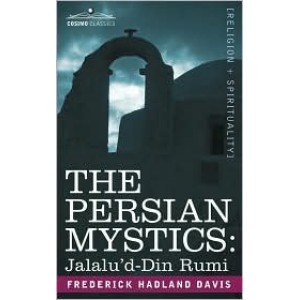
The Persian Mystics Jalaluddin Rumi

The Persian Mystics Jalaluddin Rumi Cover

Book: The Persian Mystics Jalaluddin Rumi by Frederick Hadland Davis

Rumi (1207-1273) was a Persian jurist and theologian best known for being perhaps the finest of all Sufi poets. His writings have been widely translated and remain especially popular in Iran, Afghanistan, and Tajikistan. Though written from a Sufi perspective, Rumi's poems on spiritual growth-here collected and edited by F. Hadland Davis and first published in 1907-cross all cultural and Religious bounds, and can still be heard today in many secular and religious settings.

The Persian Mystics: Jalalu'd-din Rumi includes selections from some of Rumi's most famous works, the "Divani Shamsi Tabriz" and the "Masnavi," as well as passages on his life and work, and the origin and nature of Sufism.

Download Frederick Hadland Davis's eBook: The Persian Mystics Jalaluddin Rumi

Free eBooks (Can Be Downloaded):

Reynold Nicholson - The Mystics Of Islam
Frederick Hadland Davis - The Persian Mystics Jami
Frederick Hadland Davis - The Persian Mystics Jalaluddin Rumi

Thursday, July 29, 2010

Witches And The Book Of Shadows

Witches And The Book Of Shadows Cover The book of shadows is a Witches Bible, a place where spells, rituals, and often inspirations are written. Traditionally most Witches hand write everything into their BoS, however in the high tech age of computers there are many modern witches who put their entire BoS on disc. There are even programs designed to format your computer Book of Shadows. Many Books of Shadow are handed down from past generations. I would recommend that if you are just starting one, you choose a very special and large journal, hard cover, or hand crafted wood, leather, or other sturdy material, rather than a spiral notebook, or writing tablet. This book should be planned with the intent of it being around for a long time and used often.

The BOS usually starts out with a Title Page and may be called something as simple as, My Book of Shadows or something more creative like, My Triple Moon Book of Inspiration. You should include a Dedication page dedicating your work to whichever Goddess, and/or God you recognize, and a Blessing page where you put a simple blessing spell for your Book of Shadows and all the writings within.

It might be a good idea to include a line or two about your book being invisible to non-believers, or some type protection, that will prevent ill events from snoops.

I highly recommend a table of contents, or index section, as you will find it difficult to locate a needed piece of information later on, when your book is full. A section on your chosen path, or your personal philosophy is a good addition.

Your Book of Shadows will usually contain a list of all celebration rituals, especially the Sabats, which are the major turnings of the year. Also you will probably include all the esbats and moon phases of the year. You may want to include a section for celebrating births, deaths, handfastings (marriages), and even add rituals for blessing a new home, a business or a new job. With all these special events, there are correspondences that go with them, such as deities, gems and minerals, herbs, oils, colors, astrological symbols, and planetary influences. As with most celebrations there will be certain foods, decorations, ect.

Books You Might Enjoy:

Gerald Gardner - The Garnerian Book Of Shadows
Idres Shah - The Book Of Power
Sasha Fierce - The Book Of Shadows

Wednesday, July 28, 2010

Good Witch Or Bad Witch

Good Witch Or Bad Witch Cover There are many types of witches. That is a fact. However, most witches do not use their powers or abilities for inflicting harm unto others. This is a very common misconception. A large amount of witches use their abilities to aid others in not only soul-searching tasks but to rid and teach how to rid negative energies from one's life. We are often judged as worshipers of a "devil" or "Satan." That is a big contradiction to most of us. A majority of witches do not even believe in a "God of the Devils" aka "Satan." However, we are often scrutinized for stating this because some will say (just as in the olden times) "If you believe in the devil, you are a worshiper...If you say you don't....you are more susceptible to his powers." It is a TOTAL catch 22 for all witches. That was also the method used in the witch Trials.

One suggestion: Please don't ask a witch if he or she "is a good witch or a bad witch." That is just the same as asking a Christian if "they are a good Christian or a bad Christian." Besides, you may get an answer you didn't expect!

Books You Might Enjoy:

Zoroaster - The Chaldean Oracles
Ro Winstedt - Shaman Saiva And Sufi
Carl Mccolman - The Well Read Witch
Anonymous - Witchcraft A Guide To Magic

Do Witches Really Cast Hexes

Do Witches Really Cast Hexes Cover People commonly personify witches as evil and all they do is curse and hex others. wiccans are strictly opposed to hexes and curses. Traditional witches (or "Trad Witches") do not have limitations. However, if the thought arises of casting a hex or curse we must ask ourselves if it ethical and completely necessary. Any witch will tell you that if it is regarding defense of loved ones and family the answer is often yes. On the other hand, if it relates to using magick against someone because they cut you off on the highway, then for the majority, the answer is no. See the section in this lens "Black & White Magick" for more on this. Also, for more information about magick, the natural powers of the universe, how to do spells and much more, visit Modern-Witchcraftand especially, Guide for Spells and How To's About Safely Using Magick for Success.

Books You Might Enjoy:

Jarl Fossum - Seth In The Magical Texts
Lau Soon Wah - The Powerful And Deadly Spells Of The Javanese
Julius Evola - Against The Neopagans
Anonymous - The Emerald Tablet Of Hermes

Tuesday, July 27, 2010

Witches Misogyny And Patriarchy

Witches Misogyny And Patriarchy Cover The persecution of witches reached its zenith at a time when Christianity's attitudes against sex had long since turned into full-blown misogyny. It is amazing how celibate men became obsessed with the sexuality of women. As it is stated in Malleus Maleficarum: "All witchcraft comes from carnal lust, which is in women insatiable." Another section describes how witches were known to "...collect male organs in great numbers, as many as twenty or thirty members together, and put them in a bird's nest."

Evidently they were not entirely stingy with their collections -- there is the story of a man who went to a witch to have his lost penis restored: "She told the afflicted man to climb a certain tree, and that he might take which he like out of a nest in which there were several members. And when he tried to take a big one, the witch said: You must not take that one; adding, because it belonged to a parish priest."

And some people say that religion isn't really all about wishful thinking!

These sentiments were nothing unique or unusual -- indeed, they are a result of centuries of mean-spirited sexual pathology on the part of church theologians. The philosopher Boethius, for example, wrote in The Consolation of Philosophy that "Woman is a temple built upon a sewer." Later, in the tenth century, Odo of Cluny stated "To embrace a woman is to embrace a sack of manure."

Women were regarded as impediments to true spirituality and union with God, which helps explain why investigators focused on women more than men. The church had a long-standing prejudice against women, and this was given vent when the doctrine of devil worship was emphasized as an enemy which the church had to confront and destroy. This animus hasn't entirely disappeared even today. Women aren't persecuted and tortured, but they are deliberately kept out of positions of authority and responsibility reserved exclusively for men.

Books You Might Enjoy:

William Blake - The Marriage Of Heaven And Hell
Vovim Baghie - The Grand Satanic Ritual
Walter Scott - Letters On Demonology And Witchcraft
Frater Fp - Sigils In Theory And Practice

Monday, July 26, 2010

Witch Hunts Today

Witch Hunts Today Cover Few people are aware that witch-hunts still claim thousands of lives every year, especially in the countries of sub-Saharan Africa, and above all in South Africa.

Witch-hunts in South Africa have become "a national scourge," according to Phumele Ntombele-Nzimande of the country's Commission on Gender Equality. (Quoted in Gilbert Lewthwaite, "South Africans go on witch hunts," Baltimore Sun, September 27, 1998.) The phenomenon is centered in the country's poverty-stricken Northern Province, where "legislators counted 204 witchcraft-related killings [from 1985-95] ... Police counted 312 for the same period. Everybody agreed both numbers were gross underestimates." (Neely Tucker, "Season of the Witch Haunts Africa," The Toronto Star, August 1, 1999.) In 1996 The Observer (UK) reported that "the precise statistics are not known, but the deaths from witch-burning episodes number in the hundreds each year and the trend appears to be on the rise." (David Beresford, "Ancient superstitions, fear of witches cast spell on new nation," reprinted in The Ottawa Citizen, June 18, 1996.)

As with its European predecessor, witch-hunting in South Africa is closely tied not only to prevailing superstitions, but to socio-economic pressures, natural disasters, and personal jealousies. In the Northern Province, "among the poorly educated rural residents, traditional healers and clairvoyants claiming supernatural powers hold broad sway. And hunger, poverty, and unemployment can create jealousies that can quickly turn to anger and vengeance." (Lewthwaite, "South Africans go on witch hunts.") Likewise, Peter Alexander reports that "In a region of intense poverty and little education, villagers are quick to blame any adverse act of fate on black magic." These traditional tendencies have been exacerbated by a recent hysteria (extending to Kenya and Zimbabwe) over the very real phenomenon of "ritual killings related to witchcraft," which "include the removal of organs and limbs from the victims -- the genitals, hands or the head, all of which are believed to bring good luck." (Alexander, "'Witches' get protection from superstitious mobs," The Daily Telegraph, May 26, 1997.) Such ritual murders often bring "retribution" against innocents accused of witchcraft.

The intensity of the persecution and vigilantism in South Africa has reached such levels that no fewer than ten villages have been established in the Northern Province, populated exclusively by accused "witches" whose lives are at risk in their home communities. One such settlement, Helena, counted among its residents 62-year-old Esther Rasesemola, who "was accused in 1990 of being a witch after lightning struck her village":

A group of people visited the Inkanga [village witch-doctor] to see who was responsible. When they returned, it was my brother-in-law who told the rest of the village that I was responsible. He owed me money and I think he did it to get rid of me because he did not want to pay the money back. People in the village became convinced I was a witch. They came to my house at night and burnt it down and took all my belongings. Then they put me in a truck and drove me to a deserted place and dropped me off with my husband and my three children. They told me never to come back to the village or they would kill me. My husband died two years after we were expelled. My children have gone away and now I have nothing. I don't believe in witchcraft. It is just superstitious belief. (Quoted in Alexander, "'Witches' get protection.")

Gilbert Lewthwaite of the Baltimore Sun described the case of Violet Dangale, a 42-year-old woman who "was driven from her home 30 months ago by relatives and neighbours who accused her of being a witch growing rich from the work of zombies, as the 'living dead' are known." Now she was "penniless and in fear for her life," living in Tshilamba, another of the refuges for accused witches. Her "main accuser was her uncle. He first accused her father of using zombies to enrich himself. Then he turned on her, suggesting that she enjoyed her share of the family's wealth through witchcraft. ... As the accusations and threats grew stronger, the Dangale family fled their homes in Dzimauli." "They said I was a witch," Dangale told Lewthwaite. "I don't know anything about witchcraft. I don't believe in zombies. Since I was born, I never saw a zombie." (Lewthwaite, "South Africans go on witch hunts.")

Both of these women were luckier than 65-year-old Linah Seabi, "a sorghum beer brewer ... [who] was charged with killing an elderly woman with a poisonous potion. More than 200 villagers stormed Seabi's house in late May [1991], beat her and burned her to death with straw thatch from the roof of her house." (Nina Shapiro, "Wave of witch hunts sweeps South African countryside," The Toronto Star, September 19, 1991.) In December 1998, "Francina Sebatsana, 75, and Desia Mamafa, 55 ... were burned to death on pyres of wood in the village of Wydhoek," in the Northern Province, for alleged witchcraft. "Eleven men, ages 21 to 50" were charged with her murder. (Lewthwaite, "South Africans go on witch hunts.")

The gendering of the European witch-hunts appears to be closely duplicated in the South African case. As the above accounts suggest, "traditionally, it is women who are accused of witchcraft" (Alexander, "'Witches' get police protection"). Especially vulnerable are "defenceless elderly women, against whom the actions are taken without resistance," according to Northern Province Premier Ngoako Ramatlhodi. "That women most often are the victims of witch hunts stems from attitudes toward gender," writes Nina Shapiro of The Toronto Star:

"In our culture, men go out in the afternoon, women remain in the home," said Russell Molefe, a local journalist. People believe women sit at home concocting potions, he said. Older women are suspected, according to Lebowa police lieutenant Mohlabi Tlomatsana, simply because they are alive. "People will think 'Why has she not died? Probably because she is a witch.'" (Shapiro, "Wave of witch hunts.")

However, as in the European case-study, "these days almost a third of victims of men" (Alexander, "'Witches' get police protection.") Nonetheless, approximately 30 percent of accused witches are male -- reflecting men's prominence as nangas, or traditional healers. Anton La Guardia describes the case of "Credo Mutwa, southern Africa's best-known practising healer ... [who] said he had been accosted by a mob and stabbed several times. He lay bleeding on the ground and waited helplessly to die as his assailants poured petrol and prepared to set it alight. Mr. Mutwa ... said he was saved by the same superstition which was about to claim his life. 'A young man shouted, "His ghost will haunt you." They vanished, leaving me like a fish on dry land.'" (La Guardia, "South Africa's non-political witch-hunts," The Daily Telegraph, September 9, 1998.)

As in all these campaigns, it is difficult to assign particular responsibility for fuelling the anti-witch hysteria. Although they may themselves be accused of witchcraft, it is also generally the nangas who are called upon to point out "suspicious" persons who can be accused as witches: according to one South African police sergeant, "Generally, if people believe there is a witch in their village, they will consult the [witch-doctor]. He or she will then 'sniff out' the witch. The person who is accused will then be killed or ordered to leave the village." (Alexander, "'Witches' get police protection.") Village males usually carry out the murders and other acts of terrorism. But as in the European case-study, patterns of gossip and rumour are central to the process -- and to shielding the perpetrators from justice. South African police inspector Matome Mamabolo reports: "If someone is accused of murdering a witch, the community tends to support them by supplying money for an advocate when the case comes to court. There is a solidarity there -- after all, that person is accused of ridding the village of a witch." (Quoted in Alexander, "'Witches' get police protection.")

Much the same pattern is evident in Tanzania, Zimbabwe, and Kenya, although the gender of the victims may be more even. In August 1999, Paul Harris of the Sunday Telegraph reported that

Lynch mobs have killed hundreds of Tanzanians whom they accuse of witchcraft as black magic hysteria sweeps East Africa. Most of the usually elderly victims have been beaten or burnt to death by gangs of youths. Some old women have been singled out simply because they have red eyes -- regarded as a sign of sorcery by their assailants. The condition is actually caused by years of toiling in smoky kitchens cooking family meals. ... Police say 357 suspected witches have been killed in the past 18 months, but the Ministry of Home Affairs believes that the true figure is much higher. A departmental survey said as many as 5,000 people were lynched between 1994 and 1998. (Paul Harris, "Hundreds burnt to death in Tanzanian witch-hunt," Sunday Telegraph, August 22, 1999.)

In Zimbabwe, as in neighbouring South Africa, the witch-hunts also seem closely related to "the black market demand for human body parts, which are used in making evil potions." The upsurge in such practices, the ritual murders they require, and the vengefulness that results against accused "witches," are all linked to the country's precipitous economic decline. "It's obvious the cause is economic," says Gordon Chavanduka, head of the Zimbabwe National Traditional Healers Association (which counts 50,000 members). "The worse the economy gets, the more political tension there is in society, the more frustrated and frightened people get. They turn to witchcraft to gain riches or to hurt their enemies." (Neely Tucker, "Season of the witch haunts Africa," The Toronto Star, August 1, 1999.)

In the Kenyan case, as was also true in a handful of European countries, the witch-hunts appear predominantly to target males. A British sociologist, J.F.M. Middleton, records the conviction of the Lugbara tribe of Kenya that

a witch is a man [emphasis added] who perverts a mystical power of kinship for his own selfish ends and is therefore an evil person. Witches in general are given both physical and moral attributes: a witch has greyish skin, red eyes, a physical deformity; he may travel about upside down; he is bad tempered, secretive, petty and jealous; he is thought to practice incest and cannibalism. The distinction between witchcraft, a mystical activity, and sorcery, the use of material objects, was widespread in eastern Africa, Dr. Middleton said. When, as in Lugbara, the basic principles of organization were unilineal descent and seniority by generation it would be expected that men were believed to practise witchcraft, whereas women should have the less important role of sorcerer. ("How to recognize witches," The Times [UK], September 5, 1997.)

In Kenya in 1993, killings among the Gusii tribe were occurring at the rate of one a week. "In most cases ... village mobs several hundred strong locked the victims inside thatch-roof houses and set them on fire. ... According to tribal elders, the Gusii have always executed people found to be witches. Sanslaus Anunda, a 99-year-old tribal elder, said that during his youth, villagers had a foolproof method for determining guilt. The most respected men in the community would call a meeting. Next, they would smear local herbs on the hands of the suspect and that of a second, innocent man [emphasis added]. Both men would be ordered to dip their hands into a pot of boiling water, then return in five days. If the suspect was a witch, burns would appear on his hands. However, Anunda insists, the innocent man's hands would remain unscarred." (Tammerlin Drummong, "Kenya: Dozens die in witch hunts," The Ottawa Citizen, August 28, 1993.)

A trend of predominantly male victimization may also be evident in West Africa, where a bizarre wave of accusations of "penis-snatching" has come to light. The Reuters news agency reported in 1996 that "eight men in Accra, Ghana, were accused of using witchcraft to snatch penises. Their motivation was allegedly to return the sexual organs in return for cash. Mobs attacked them ... two died and six were seriously injured. The police examined all the alleged victims and found their genitals intact. ... [But] the 'victims' believed that sorcerers only had to touch them to make the genitals shrink or disappear completely." ("'Witches' steal penises in Ghana," Reuters dispatch, January 17, 1996.) D. Trull reported in 1997 that "the killings of alleged 'penis snatchers'" had been reported "along the west coast from Cameroon to Nigeria." (See Trull, "Witches Protection Program".)

Books You Might Enjoy:

Phil Hine - Aspects Of Evocation
Aleister Crowley - The Sixth Chakra Of The Human Body
Richard Johnson - The Zodiac Stellar Stories
Gerald Gardner - Witchcraft Today

Popular Posts