Showing posts with label love spell. Show all posts

Thursday, October 21, 2010

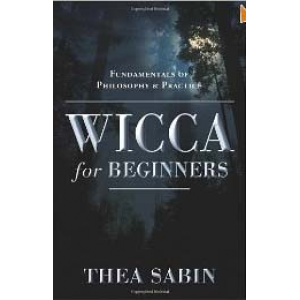
Wicca For Beginners Fundamentals Of Philosophy And Practice

Wicca For Beginners Fundamentals Of Philosophy And Practice Cover

Book: Wicca For Beginners Fundamentals Of Philosophy And Practice by Thea Sabin

In her first book-length work, Sabin presents a first-rate, fresh and thorough addition to the burgeoning field of earth-based Spiritual Practice volumes. Sometimes using examples that young people can relate to (SATs, dying grandmothers), she opens the door to this path for people of all ages who want concrete beginnings to "work actively and spiritually to develop as a person." Sabin covers well the familiar territory of the calendar, circle, pentagram, tools, etc., but she shines distinctively in several areas. The first is in Wiccan history, written in a light, informative style that magically mines depth, breadth and brevity. Another is in the emphasis on personal will and ethical practices that transcend reliance on external paraphernalia. She also deftly shows how the various tools and spells can be put into use, but always encourages practitioners to utilize their own experiences, environment and spiritual intelligence to shape their practice. Especially helpful are the criteria to assess groups and potential teachers, and the volume is capped by a fine bibliography. Sabin advocates consistent study, practice and evolved learning. Gently admonishing her reader not to become a "one-book wonder," Sabin has nearly voided her own advice with this important first effort that is perfect for novice Wiccans.

As a teacher of Wicca for many years, I'm always looking for better materials to use for training. I am grateful to Ms. Sabin for providing what will undoubtedly be the introductory book I will recommend for the foreseeable future. She presents the basics without pushing any given path or tradition, often presenting varying Interpretations and viewpoints in a non-judgemental manner. This is a solid foundation for seekers to use as a springboard to whatever flavor of Wicca they choose to explore. I appreciate that she addresses ethics within Wicca, which many authors seem to avoid, or present in a highly simplistic manner. The book is clearly meant for beginners, hence the title, and is possibly the best overall introduction I have yet seen.

I bought this book to learn more about the Wiccan Religion as my girlfriend is wiccan and I had no prior (correct) knowledge of the religion. This book offers an excellent intro to the history, philosophy and basic practices of the religion as the title suggest. Its also doesn't read like a textbook so its fun and to read. In general I would reccomend this book to anyone just starting out who wants to learn more about the religion.

Buy Thea Sabin's book: Wicca For Beginners Fundamentals Of Philosophy And Practice

Free eBooks (Can Be Downloaded):

Henry Cornelius Agrippa - Occult Philosophy And Magick Book I
Johannes Kepler - Concerning The More Certain Fundamentals Of Astrology
Anonymous - Wicca Beliefs And Practices

Saturday, October 9, 2010

Tarjuman Al Ashwaq A Collection Of Mystical Odes

Tarjuman Al Ashwaq A Collection Of Mystical Odes Cover

Book: Tarjuman Al Ashwaq A Collection Of Mystical Odes by Muhammad Ibn Arabi

The Tarjuman al-Ashwaq (Muhyi al-Din Muhammad ibn 'Ali Ibn al-'Arabi) with the Arabic text, translated by Reynold A. Nicholson Together With a partial translation of the commentary by Ibn 'Arabi'

The Tarjuman al-Ashwaq or "Interpreter of Desires" by Ibn 'Arabi is acknowledged as one of the major works of Sufi literature, alongside those of the great Persian poets Attar, Jalaluddin Rumi, Hafiz and Jami.

In keeping with the poetical tradition of Islam, there is a continuing ambiguity in the verses as to whether they are love poems disguised as mystical odes, or Mystical Odes expressed in the language of human love. The timeless beauty and imagery of the verses cannot be denied, and may be interpreted at many levels. "Gnostics," says Ibn 'Arabi, "cannot impart their feelings to other men; they can only indicate them symbolically to those who have begun to experience the like." In response to the accusation by a religious scholar that these were just sensual poems, Ibn 'Arabi wrote a commentary on the Tarjuman which is partially translated here.

This was one of the first Translations of a book by Ibn 'Arabi into a European langauage, made by the great translator of Rumi's Mathnawi, Reynold A. Nicholson. In both cases his translation was of such outstanding quality that it was more than fifty years before other translators began to try their hands at these texts, and his translations still stand the test of time.

Download Muhammad Ibn Arabi's eBook: Tarjuman Al Ashwaq A Collection Of Mystical Odes

Free eBooks (Can Be Downloaded):

Basil Valentine - Triumphal Chariot Of Antimony
Hilda Roderick Ellis - Road To Hel A Study Of The Conception Of The Dead
Right - Travel In Spiritual Worlds A Complete Guide On Astral Travels
Mark Ludwig Stinson - Heathen Gods A Collection Of Essays Ver 2
Muhammad Ibn Arabi - Tarjuman Al Ashwaq A Collection Of Mystical Odes

Sunday, October 3, 2010

The Great Rite Invocation

The Great Rite Invocation Cover Assist me to erect the ancient altar
At which in days past all worshipped
The great altar of all things
For in times of old, woman was the altar
Thus was the altar made and placed
And the sacred place was the point within the center of the circle
As we have of old been taught
That the point within the center is the origin of all things
Therefore should we adore it
Therefore whom we adore we also invoke
O circle of stars

Whereof our Father is but the younger brother
Marvel beyond imagination, soul of infinite space
Before whom time is ashamed
The mind bewildered, and the understanding dark
Not unto thee may we attain unless thine image be love
Therefore by seed and root, and stem and bud
And leaf and flower and fruit, do we invoke thee
O Queen of Space, O Jewel of Light
Continuous One of the Heavens

Let it be ever thus
That man speak not of thee as One, but as None
And let them not speak of thee at all
Since thou art continuous
For thou art the point within the Circle, which we adore
The point of life without which we would not be
And in this way truly are erected the holy pillars
In beauty and in strength were they erected
To the wonder and glory of all men

Altar of mysteries manifold, the sacred circle’s secret point
Thus do I sign thee as old, with kisses of my lips anoint
Open for me the secret way, the pathway of intelligence
Beyond the gates of night and day, beyond the bounds of time and sense
Beyond the mysteries aright, the five true points of fellowship
Here where the Lance and Grail unite
And feet, and knees, and breast, and lip

Stewart and Janet Farrar – 1984.

Free eBooks (Can Be Downloaded):

Aleister Crowley - Invocation
Friedrich Adler - The Witchcraft Trial In Moscow
Michael Sharp - The Great Awakening
Aleister Crowley - The Supreme Ritual The Invocation Of Horus
John Dee - The Practice Of Enochian Evocation

Saturday, October 2, 2010

Secrets Of The Black Temple

Secrets Of The Black Temple Cover

Book: Secrets Of The Black Temple by Basil Crouch

Warning this book can be dangerous. Persons in ill health or suffering any mental illness should not have access to this book. Be warned this is a not fiction book it can lead into dark waters if the instructions are not followed. I cannot be help responsible for any damage or ill health through reading this book. You alone are responsible for your actions (Basil E. Crouch)

Download Basil Crouch's eBook: Secrets Of The Black Temple

Free eBooks (Can Be Downloaded):

Opus Majus - The Book Of The Black Serpent
Walter Gibson - Witchcraft A History Of The Black Art
Carroll Runyon - The Secret Of The Dark Mirror
Basil Crouch - Secrets Of The Black Temple

The Egyptian Book Of The Dead

The Egyptian Book Of The Dead Cover

Book: The Egyptian Book Of The Dead by Ea Wallis Budge

"The Egyptian Book of Dead"—the ancient Egyptian title is ‘rw nw prt m hrw’ , roughly translated as “Spells of Going Forth by Day” — was written by the ancient Egyptians as a sort of guide to help newly deceased souls as they crossed over into the afterlife. It was usually written on a papyrus scroll which was sent with the prepared body in its coffin or burial chamber.

German Egyptologist Karl Richard Lepsius first used the title, “Book of the Dead” in a selection of Texts he published in 1842. Since then, the word “Egyptian” has been added and it has become the generally accepted title of the book. E. A. Wallis Budge published this translation in 1901 and, as an important version, it is still in print to this day.

The Book of the Dead was the product of a long process of evolution from the Pyramid Texts of the Old Kingdom (writings on the crypt walls intending to help the dead person) to the Coffin Texts of the Middle Kingdom (similar writings, placed on the outside of a coffin). Eventually, many of these texts were written on papyrus and placed in the burial chamber, or inside the coffin with the mummy.

About one-third of the chapters in The Book of the Dead are derived from the earlier Coffin Texts. The Book of the Dead itself was adapted to The Book of Breathings in the Late Period, but remained popular in its own right until the Roman period.


Download Ea Wallis Budge's eBook: The Egyptian Book Of The Dead

Free eBooks (Can Be Downloaded):

Gerald Gardner - The Garnerian Book Of Shadows
Friedrich Max Muller - The Sacred Books Of The East
Lady Galadriel - The New Book Of The Law
Ea Wallis Budge - The Egyptian Book Of The Dead

What Is A Spell

What Is A Spell Cover A spell is a spoken or written formula that when used in an act of magick is intended to cause or influence a particular course of events. Belief in and the use of spells are universal and have been an integral part of religious practices since ancient times. Methods vary according to culture but all spell work is based on ritual.

Spells are closely related to Prayers, which are rituals consisting of a petition to the Gods or deities (whatever the religion or faith) for a desired outcome. It involves the visualization of a goal, a statement of desire for the goal, and ritualized movements of body positions (e.g., the bowing of the head, the clasping of the hands, the closing of the eyes etc). In magick, spells are closely related to various methods of mind power such as: creative visualization, positive thinking, and positive imaging (see “What is Magick”). All of which emphasize our mental images of the goal and our identification with it, repetition of our intent to achieve this goal, projection of our will, and a petition to the spirits, deities, or the divine force for their aid.

These types of spells are commonly used on a daily bases, the simple lighting of a candle starting the ritual process. Such daily spells constitute minor magick's such as: blessings, self-help, positive thoughts and the sending of helpful healing energies to others. Used on a daily bases it is not therefore necessary to undertake the cumbersome task of a full circle casting ritual (see Circle Casting).

Spells can be beneficial or harmful and can be worked on people, animals, and nature. Their purposes are limitless and include: healing, love, money, success, fertility, longevity, and protection from disaster, ill fortune, and evil. They can also be used to exorcise ghosts and spirits, for victory in battle, truth in divination, weather control, and the accomplishment of supernatural feats. When directed against enemies, spells can be used to cause illness, destruction, loss of love, impotence, barrenness, failure and even death. Spells can be cast to affect the self, or directed to affect another person.

A positive spell is often called a blessing, although such archaic terms as bewitchment and enchantment are still sometimes used. Negative spells are generally known as hexes or curses. A binding spell is one intended to prevent harm, avoid danger, or to stop someone from performing particular acts (e.g., halting a murder, preventing a rape, or even stopping the spread of gossip).

In most cultures, Witches, Sorcerers, Witch doctors, Magicians, and other magically empowered peoples, cast both beneficial and harmful spells as the need dictates. However in contemporary Paganism and Witchcraft, a set of ethics exists that prohibits the use of curses and negative spells against another (see the “Wiccan Rede” and the “Three Fold Law”). The acceptability of binding spells is divided, and is widely debated throughout the community.

Free eBooks (Can Be Downloaded):

Anonymous - Hypnotism Spells
Arthur Edward Waite - What Is Alchemy
Stephen Mcnallen - What Is Asatru

Thursday, September 30, 2010

Arbatel Of Magic Or The Spiritual Wisdom Of The Ancients

Arbatel Of Magic Or The Spiritual Wisdom Of The Ancients Cover

Book: Arbatel Of Magic Or The Spiritual Wisdom Of The Ancients by Medieval Grimoires

A magical ritual published at Basle in 1575. The text is in Latin and appears to have been influenced by Paracelsus. It is of Christian, not Jewish, origin, and although the authorship is unknown, it is probably the work of an Italian. Only one of its nine volumes still exists: dealing with the institutions of magic, the work is entitled Isagoge, which means "essential or necessary instruction."

The book introduces the ritual of the Olympic spirits who dwell in the air and among the stars and who govern the world. There are, we are told, 196 Olympic provinces in the universe: thus Aratron has 49; Bethor, 42; Phaleg 35; Och, 28; Hagith, 21; Ophiel, 14; and Phul, 7. Each of the Olympic spirits rules alternately for 490 years. They have natural sway over certain departments of the material world, but outside these departments they perform the same operations magically.

Thus Och, the ruler of solar affairs, presides over the preparation of gold naturally in the soil. At the same time, he presides magically over the preparation of that metal by means of alchemy. The Arbatel states that the sources of occult wisdom are to be found in God, spiritual essences, and corporeal creatures, as well as in nature, but also in the apostate spirits and in the ministers of punishment in Hell and the elementary spirits. The secrets of all magic reside in these, but magicians are born, not made, although they are assisted by contemplation and the love of God.

It is sufficient to describe the powers and offices of one of these spirits. Aratron governs those things that are ascribed astrologically to Saturn. He can convert any living thing into stone, can change coals into treasure, gives familiar spirits to men, and teaches alchemy, magic, medicine, and the secret of invisibility and long life. He should be invoked on a Saturday in the first hour of the day. The Arbatel was said to be one of the best authorities on spiritual essences and their powers and degrees.

Download Medieval Grimoires's eBook: Arbatel Of Magic Or The Spiritual Wisdom Of The Ancients

Free eBooks (Can Be Downloaded):

Frater Astrum - Temple Of Flame The Ritual Opening Of The Veil
Eliphas Levi - The Magic Ritual Of The Sanctum Regnum
Medieval Grimoires - Libellus Magicus Or The True Magical Work Of The Jesuits
Medieval Grimoires - Arbatel Of Magic Or The Spiritual Wisdom Of The Ancients

The Devil Notebook

The Devil Notebook Cover

Book: The Devil Notebook by Anton Szandor Lavey

Anton Szandor LaVey was a man full of biting wit, iconoclastic insight and, above all, a most astute and adroit observer of human folly and misinterpretation, himself being subjected to the latter more than anyone in recent memory.

In this book, published after two decades of inactivity (to the world of print), LaVey sheds light on many interesting topics, bringing his usual dose of sardonic humor to the printed page.

A particular essay comes to mind when I think of this book- it's called "Hatha Toilet Seat Meditaion," and if it doesn't solicit laughter from you, nothing will. For those of you who are familiar with it, I'm certain you're grinning right now. For those who aren't, read the book and find out why.

Other essays focus on some pretty forbiding topics, and the level of candor expressed by LaVey never lets us forget that while the media may have portrayed him as several things- none of which were especially flattering- we will continue to respect him for the insight he shared with us, remembering the first time we read the "Satanic Bible," a book that for many of us described the thoughts we'd always thought, but never knew anyone else did.

In general The Devil Notebook is very useful and practical black magic book that does explain (with some deals hidden) the ways of satanic practices. The author knows the material, and its well laid out with clear - but as I say some missing - instructions. However, the book does deliver much material. I read an interesting but rare satanic gem called the Question of Lucifer, about how far Lucifer has penetrated into the upper ranks of power and elite. It was fascinating, and very, very scary, depending on if you are on the White or black magic side. That book unknowingly exposed some satanic secrets and left a lot open for us to see, more than the author expected - if you are willing to read it. Be warned!

Download Anton Szandor Lavey's eBook: The Devil Notebook

Free eBooks (Can Be Downloaded):

Mark Mirabello - The Odin Brotherhood
Rabbi Michael Laitman - The Open Book
Anton Szandor Lavey - The Devil Notebook

Of Occult Philosophy Or Of Magical Ceremonies The Book Iv

Of Occult Philosophy Or Of Magical Ceremonies The Book Iv Cover

Book: Of Occult Philosophy Or Of Magical Ceremonies The Book Iv by Henry Cornelius Agrippa

Of Occult philosophy Or Of Magical Ceremonies The Book IV of The Three Book of Occult Philosphy by Henry Cornelius Agrippa

The Three Book of Occult Philosphy purports to be the work of Henry Agrippa, the 16th century author of "Three Books of Occult Philosophy". But the 4th Book was obviously not written by Agrippa and bears no resemblance to his style of writing. Although it can be traced back to the 16th century as it is mentioned by Agrippa's student, Johann Weyer in his "De Praestigiis Daemonum", the work remains of uncertain provencance.

In part a partial summary of some of Agrippa's writings, this facsimile of the English translation by the 17th century Cambridge scholar Robert Turner, comprises spurious essays on Geomancy and Magick under the name of Agrippa, The Heptameron of Peter of Abano, and books on Astrology and Demonolgy, concluding with the Arbatel, a largely Judeo-Christian outlook on the dangers of magic.

It is a very quick and easy read, despite the portions dealing with Geomancy and Astrology that even those serious about such subjects would find largely frustrating and incomprehensible.

The work largely remains of pure historical interest with not much of serious substance to an undertanding of Magic and Occult Philiosphy.

This volume is a facsimile of Robert Turner's English translation (1654); the original volume first appeared (in Latin) in Marburg around 1554. The original volume included a large number of short texts of varying interest, but Robert Turner's (1654) (for unclear reasons) decided only to translate a few of them. This edition includes 6 short texts: Of Geomancy (H.C. Agrippa); Of Occult philosophy the Three Book (pseudo-Agrippa); Heptameron or Magical Elements (pseudo-Peter de Abano); Isagoge: An Introductory Discourse on the Nature of ... Spirits... (Georg Pictorius Villinganus); Of Astronomical Geomancy (Gerard of Cremona); and the Anonymous Arbatel of Magic. Only the Geomancy is actually by Agrippa, and it doesn't fit well with the other texts. The Three Book is, as another reviewer noted, certainly spurious; it purports to be Agrippa's "secret key" to the Occult Philosophy, of which he spoke in a letter to a friend. The Heptameron and the Arbatel are grimoires of some interest for those interested in black magic, as indeed is the Three Book itself; the Isagoge is a rather dull dialogue about spirits; and the Astronomical Geomancy is more or less impenetrable but perhaps interesting in a peculiar way. There have been a number of reprints of this volume, some now surprisingly valuable despite their modernity; all, however, have trimmed out one or more of the already few texts. As such, this is probably the best edition available. It is, like all Kessinger products, a cheaply-bound xerox facsimile of the original 17th-century text, but it's readable and includes everything. If you collect grimoires or magical texts, this is a very famous one, and you ought to have it; copies of the various Latin printings turn up with some regularity, and those with access to Latin would do better with those, although they are of course quite expensive. If you're looking for works by Agrippa, the Geomancy is all you'll find here, but it's interesting in a number of respects. If you want to know about Agrippa's ceremonial magic, however, you need to read book 3 of the Occult Philosophy, available in a nice Llewellyn edition.

Download Henry Cornelius Agrippa's eBook: Of Occult Philosophy Or Of Magical Ceremonies The Book Iv

Free eBooks (Can Be Downloaded):

Henry Cornelius Agrippa - Occult Philosophy And Magick Book Iii
Henry Cornelius Agrippa - Occult Philosophy And Magick Book Ii
Henry Cornelius Agrippa - Occult Philosophy And Magick Book I
Henry Cornelius Agrippa - Occult Philosophy And Magick Book Iv
Henry Cornelius Agrippa - Of Occult Philosophy Or Of Magical Ceremonies The Book Iv

Tuesday, September 28, 2010

Maxine Sanders Queen Of The Witches

Maxine Sanders Queen Of The Witches Cover Maxine Sanders is the famous Alexandrian High Priestess from England . I strongly identify with her, for I believe she was born with the Witchblood. As a teenager in the 1960’s, she defied the stereotype of the hag witch with the youth, beauty, and charisma of the Enchantress. Partnered with Alex Sanders, she was instrumental in bringing the old religion to public consciousness and the eventual quasi-acceptability we have today. Her lifetime of dedication to the Mysteries as healer, teacher, Initiator, and muse in the face social antagonism, media sensationalism, public adulation and envy, makes for one of the truly remarkable life stories of our time.

Free eBooks (Can Be Downloaded):

Bernard King - Meanings Of The Runes
Thomas Potts - Discovery Of Witches
George Lincoln Burr - Narratives Of The Witchcraft Cases
Michael Magee - Robin Hood And The Witches
Margaret Alice Murray - The God Of The Witches

Monday, September 27, 2010

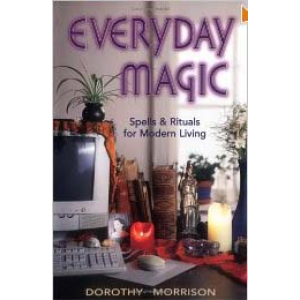
Everyday Magic Spells And Rituals For Modern Living

Everyday Magic Spells And Rituals For Modern Living Cover

Book: Everyday Magic Spells And Rituals For Modern Living by Dorothy Morrison

Is it time for a change? Is it time to improve your life with a better job, a happier home, or more romance? Then you need Everyday Magic by Dorothy Morrison! This is magic for modern Wiccans, and for everyone regardless of their religious affiliation. It is filled with hundreds of spells, chants, rituals, charms and formulas for incenses and oils. Every one is tested and powerful yet easy to use.

Everyday Magic is a well written book and it fit into my everyday living just as if it had been written for me personally. The modern day methods of dealing with the "old ways" of the craft amazed me. To go to a thrift store and pick up a cheap blender instead of trying to do so many herbal blends with the mortar. I was so mermerized with so many of Dorothy's modern gimmicks. Being able to improvise has always been big with me, Dorothy seems to do the same in her book.

Sure, there are spells for romance and prosperity. Those are as important today as they were a thousand years ago. But this book also presents magic that deals with today's problems. Speed up your computer's modem. Make sure your luggage arrives safely; ease labor pains; free yourself from anger; find a parking spot. These are all things we need and that you can do by following the simple instructions in this book!

One of the roadblocks to successful magical workings that many people face is finding the proper oils and incenses. Morrison's solution: Make them yourself! But don't use the old techniques that take hours, days, or even weeks to accomplish. Instead, you'll learn how to use common appliances such as a drip coffee maker, a blender, and a crock pot to create your own powerful incenses, oils, washes, brews, and more. What a practical timesaver!

And saving time in today's world is what this book is all about. Of course, if the spells, charms, rituals and techniques weren't practical and effective, saving time would be meaningless. Well, what you'll learn here is powerful -- and is presented by a woman who has been a Witch for more than 20 years and taught on two continents!

Dorothy Morrison has a daring point of view that magic is not just compatible with technology--the two can actually help one another. Since technology has made our lives more productive, surely it can enhance our magic too. (Have you ever thought of making your herbal infusions in an automatic-drip coffeemaker?) Technological assistance with magic is only part of the story. Morrison has filled a grimoire with charms that protect from car trouble and ensure the safe and timely arrival of luggage while traveling, and spells to keep a computer from crashing, which makes life in the 20th century a little less harrowing. Rather than fighting the progress of the electronic age, Morrison has tapped into the wealth it has to offer, and she shares her discoveries with anyone adventurous enough to try them.

The spells and rituals in here are all based on today's available materials. Trying to find something called dragon's blood was not easy for me. In this book, Dorothy makes it all so simple and still so effective. Spells of interest to the modern twentieth century housemate and businessperson. Spells and rituals that make so much sense and are so easily adaptable for my and others active lives.

I recommend, as I have many times, reading this book. I have read many and find this one to my liking on a high rating of "Way to go, Dorothy Morrison"
Excellent book and will keep an eye and ear open of reports of others from D. Morrison. Age, gender, and type of path are not even a stoppage point here. For all and then some.

Buy Dorothy Morrison's book: Everyday Magic Spells And Rituals For Modern Living

Free eBooks (Can Be Downloaded):

Kveldulf Gundarsson - Teutonic Magic The Magical And Spiritual Practices Of The Germanic Peoples
Tupman Tracy Ward - Theatre Magick Aleister Crowley And Rites Of Eleusis
Richard Alan Miller - The Magical And Ritual Use Of Herbs
Talismagick - Love Spells And Rituals For Love And Relationships

Sunday, September 26, 2010

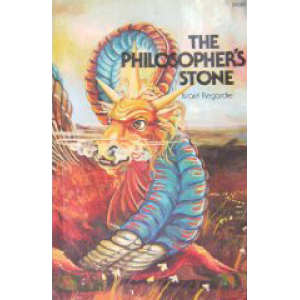
The Philosophers Stone

The Philosophers Stone Cover

Book: The Philosophers Stone by Israel Regardie

My book has been praised as a good meaningful book by some reviewers and by many readers, to judge from the mail I have received during the past thirty years. It is patently an open sesame to one level of interpretation. The Occult Review, now defunct, published a critical review by Archibald Cockren who took me rather severely to task for asserting that alchemical texts should be interpreted solely in terms of psychological and mystical terms. He himself, I subsequently discovered, had written a book Alchemy Rediscovered and Restored. Of course I immediately procured a copy. Since I was peeved by his review, I did not feel that his book had very much to offer—so I dismissed both offhand. I was about to write the editor of The Occult Review a scorching letter, but reason intervened so that fortunately it never got written.

The opportunity is rarely given to an author in his lifetime “to eat crow” and to enjoy it. This lot, it pleases me to say, is mine—after thirty years. Not that I would significantly change much of what I wrote then. I admitted that I had not “proceeded to the praxis” but I felt then and still do that a mystical and psychological interpretation of some alchemical texts was legitimate. There is unequivocally this aspect of the subject. Certainly Jacob Boehme and Henry Khunrath, for example, cannot be interpreted except in these terms.

The Philosophers Stone with these preliminary comments, should answer a wide-felt need which has called forth this new edition. I hope, being in print once more, it will bring new light and knowledge and values to present-day students who may be still groping in the dark areas of the occult towards alchemy, where a guiding hand needs to be extended.
So, to close this Introduction, I must use the ancient Rosicrucian greeting, and the close of a Golden Dawn ritual:
May what we have partaken here sustain us in our search for the Quintessence; the Stone of the Philosophers, True Wisdom and perfect Happiness, the Summum Bonum.


Download Israel Regardie's eBook: The Philosophers Stone

Free eBooks (Can Be Downloaded):

Yogi Ramacharaka - Yogi Philosophy
Louis Claude De Saint Martin - Theosophic Correspondence
Andrew Lang - The Witch And Other Stories
John Mitchell - The Philosophy Of Witchcraft
Israel Regardie - The Philosophers Stone

Sunday, August 22, 2010

Am I Really A Witch

Am I Really A Witch Cover According to some old Elizabethan superstition, if you possess all of these you were considered to be a witch.

Superstition 1 - Witches were able to fly ( this explained how witches could move quickly across impossible distances. A broomstick was then added to the superstition as these became common household Articles used by women) - Well, I do clean with a broom (me).

Superstition 2 - A witch was often portrayed as an old crone or hag ( with no man to defend her against accusations of witchcraft) - I don't have a man (yet) and I do feel old these days (me).

Superstition 3 - Witches are closely associated with living alone (house in the wood) - I live alone in a place made of wood (me).

Superstition 4 - Witches were known to keep animals like the Cat, Frog, Pig, Raven, Goat, Wolf, Goose, Crow, Bat and Mouse which were believed to be the forms adopted by a Witches Familiar (an evil spirit, in animal form, who was used by the witch to perform evil deeds and cast malevolent spells) - I do own three cats and you know if I could, I would own every one of these (me).

Superstition 5 - Witches brewed magic potions over a cauldron (Wise women had knowledge of herbs such as mandrake, datura, monkshood, cannabis, belladonna, henbane and hemlock) - And I love cooking and brewing up good food and some include herbs (me).

And last but not least, my very own and I bet you haven't noticed this...I do have a mole on my nose. Fact. :)

EEEEK! I'M A WITCH! I quote Practical Magic....."there's a little witch in all of us". :) Are you one? :)

Books You Might Enjoy:

Anonymous - So My Kid Is A Witch
Carl Mccolman - The Well Read Witch
Marian Green - A Witch Alone

Tuesday, August 17, 2010

The Mysterious Pentagram

The Mysterious Pentagram Cover The Pentagram means different things to different people. Some may argue as to what it represents, but I will tell you the real meanings of it. The Pentagram right side up represents God ruling over the world of matter. The 5 points represent the 5 places that Christ was wounded. This is why Devils are afraid of it! It also represents the Microcosmic man with his arms stretched out.

Let us not forget that it also represents the elements Spirit, Water, Air, Earth, and Fire as shown below.
This is used by most people in Witchcraft.

Now there is also the upside-down Pentagram. It represents Satan or the world of matter ruling over God. It is the same as denouncing God. To wear it is to attract evil around you. It will not bring good spirits around you. Normally it is only worn by Satanists or devil worshipers. So if you wish to attract good spirits around you... wear it right side up!

Many mainstream religion believers think that they are both evil and represent the Devil. But that is because they are so... ignorant and blind to the fact that there is a difference. It shows their lack of study on the true facts of history. I wear the right side up Pentagram and I personally have had many people come up to me and ask me if I am a Devil worshiper! This really pisses me off! But I explain the reality to them.

Free eBooks (Can Be Downloaded):

Reynold Nicholson - The Mystics Of Islam
Greg Wotton - A Mystery Of The Pentalpha
Captain William Morgan - The Mysteries Of Freemasonry
Franz Cumont - The Mysteries Of Mithra

Thursday, July 29, 2010

Your Magical Name

Your Magical Name Cover Why a Magical Name?:
Ah, the magical name. So many people find wicca and decide right off the bat that they’re going to name themselves Lady Such-and-Such or Lord Whatsis. Go to a pagan event and you’ll meet more fifteen-year-old Lady Morganas than you can shake a stick at. And it’s virtually guaranteed that within about three months, Lady Morgana will decide her magical name, sometimes called a craft name, is really supposed to be Starfluffle or Moongypsy, and she’ll change it.

In fact, she’ll probably change it two to three times a year.

The Name-of-the-Month Club:
This odd phenomenon, known as the Name-of-the-Month Syndrome, happens most often because the person in question hasn’t taken the time to research and learn, which is crucial to finding the right magical name.

A magical name is unique to the practitioner, and there are several ways to find yours. When you find the right name, you’ll keep it for a long time. In some traditions, it‘s customary to wait until you‘ve studied a year and a day before claiming your magical name. Some Pagans have two magical names -- one which they use in public and one which is known only to the gods and members of the person’s coven.

Think Long-Range:
One method by which people sometimes find their magical name is to simply choose something they like. A problem with this method is that what we like on one day, we may find silly a year down the road. If you’re going to choose a name based on whether it sounds cool or not, stop and think about it. What is it about the name that appeals to you? Ten years from now, are still going to feel comfortable saying, “Hi, I‘m Fairypuddle,” when you meet a new person?

Names with Meaning:
Choose a name not only for its sound, but its attributes as well. For example, someone wishing to convey strength in their name might include “oak“ or “iron“ as part of their moniker. A person who is highly creative might select a name that reflects their art or craft. You may want to choose a name based rooted in folklore or mythology. Many people include the name of an animal that resonates with them. A cautionary note here: in the Pagan community, certain animals pop up all the time. You’ll meet two dozen Ravens and just as many Cats, but it’s unlikely you’ll encounter anyone calling himself Wombat or Penguin.

Names to Avoid:
Another bit of advice -- generally, the titles Lord and Lady are reserved for people who are elders or have a significant amount of leadership experience under their belt. To name oneself Lady So-and-So without any credentials is considered presumptuous by many Pagans. Likewise, in many traditions it’s seen as hubris to give oneself the name of a deity. You may want to choose a name that indicates your dedication to a god or goddess, but don’t co-opt their names. It’s just rude. If you're a dedicant to Apollo, don't call yourself Master Apollo, call yourself something like Apollonius instead.

Using Your Birth Number:
Another popular method of finding a magical name is to choose one that corresponds with your birth number. To find your birth number, begin by adding the digits of your birth date.

If your birthday was September 1, 1966, you would start with the numbers 911966 = 9 + 1 + 1 + 9 + 6 + 6 = 32.

Now take those two numbers (3 and 2), and bring it down to a single digit: 3 + 2 = 5. That number -- in this case, 5 -- is your birth number.

Use the grid below to find a name that corresponds to the number 5, by calculating the sum of the corresponding letters.

1 = A, J, S

2 = B, K, T

3 = C, L, U

4 = D, M, V

5 = E, N, W

6 = F, O, X

7 = G, P, Y

8 = H, Q, Z

9 = I, R

Let’s say you’ve decide you like the name Willow. Using the letters in “Willow” you would take the numbers 5 + 9 + 3 + 3 + 6 + 5 = 32. From there, 3 + 2 = 5. If the name you like doesn’t match your birth numbers, try some creative or alternate spellings to see what happens.

A Gift from the Gods:
In some cases, you may be fortunate enough to have your new name bestowed upon you by a god or goddess. In these instances, you may encounter someone in a dream or a vision who tells you, “Your name is Such-and-such.” While you may choose to add to it or come up with a variation on it later, if this happens to you, accept the name as the gift that it is.

Whatever method you end up using, think carefully before you finalize your new name. While it’s okay to change your name later on as you evolve spiritually, changing your name every few weeks or every time you see a new episode of “Charmed” is probably not the best course of action. Find the name that is right for you -- and when it IS the right one, you will know.


Books You Might Enjoy:

Anonymous - Meditation Of The Four Magickal Weapons
Jarl Fossum - Seth In The Magical Texts
Anonymous - The Mystical Qabbalah
Kenneth Grant - Magical Revival
Aninymous - The Angelical Alphabet

Wednesday, July 28, 2010

Do Witches Really Cast Hexes

Do Witches Really Cast Hexes Cover People commonly personify witches as evil and all they do is curse and hex others. wiccans are strictly opposed to hexes and curses. Traditional witches (or "Trad Witches") do not have limitations. However, if the thought arises of casting a hex or curse we must ask ourselves if it ethical and completely necessary. Any witch will tell you that if it is regarding defense of loved ones and family the answer is often yes. On the other hand, if it relates to using magick against someone because they cut you off on the highway, then for the majority, the answer is no. See the section in this lens "Black & White Magick" for more on this. Also, for more information about magick, the natural powers of the universe, how to do spells and much more, visit Modern-Witchcraftand especially, Guide for Spells and How To's About Safely Using Magick for Success.

Books You Might Enjoy:

Jarl Fossum - Seth In The Magical Texts
Lau Soon Wah - The Powerful And Deadly Spells Of The Javanese
Julius Evola - Against The Neopagans
Anonymous - The Emerald Tablet Of Hermes

Sunday, July 25, 2010

Witch Hunts And Persecution In America

Witch Hunts And Persecution In America Cover As most Americans know, witch hunts also affected the American colonies. The Salem witch trials pursued the Massachusetts Puritans have entered American consciousness as being much more then just the killing of witches. They, like the trials of Europe, have become a symbol. In our case, the witch trials have become a symbol of what can go wrong when mobs of ignorant people go crazy, especially when egged on by just as ignorant and/or power hungry leaders.

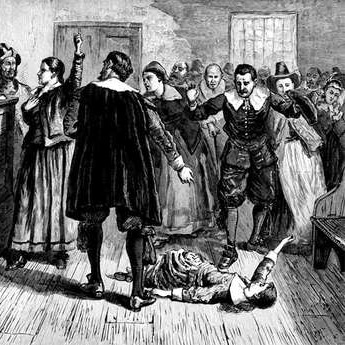
The Salem story began in 1692 when a few girls, who had become friendly with a slave woman named Tituba, began acting very strangely -- hysterical screaming, falling into convulsions, barking like dogs, etc. Soon other girls began acting in a similar manner and of course they all must have been possessed by demons. Three woman, including Tituba, were promptly accused of witchcraft. The result was much like the European experience, with a chain-reaction of confessions, denouncements, and more arrests.

In an effort to help combat the witch menace, courts relaxed traditional rules of evidence and procedure -- after all, witches are a terrible menace and must be stopped. In place of the normal rules and methods, the courts used what was common among Inquisitors in Europe -- scouring the womens' bodies for marks, numb spots, etc. Also accepted were "spectral sources" of evidence -- if someone had a vision of a woman being a witch, that was good enough for the judges.

The people who were mostly killed were not those who submitted quickly and obediently to authorities. Only those who were defiant or hostile were put to death. If you admitted being a witch and repented, you had a very good chance of living. If you denied being a witch and insisted that you had rights which must be acknowledged, you were on a quick path to execution. Your chances were also bad if you were a woman -- especially if you were an older, deviant, troublesome or somehow disorderly woman.

In the end, nineteen people were executed, two died in prison and one man was pressed to death under rocks. This is a better record than what we see in Europe, but that isn't saying very much. The religious and political authorities clearly used the witch trials to impose their own ideas of order and righteousness upon the local populace. As in Europe, violence was a tool used by religion and religious people to enforce uniformity and conformity in the face of dissent and social disorder.

Books You Might Enjoy:

Mira Ray - Minerals And Gems In Indian Alchemy
Anonymous - Protection Of Space
Gabor Klaniczay - Witchcraft Mythologies And Persecutions

Saturday, July 24, 2010

Who Was Responsible For Great Witches Hunt

Who Was Responsible For Great Witches Hunt Cover The medieval witch-hunts have long been depicted as part of a "war against women" conducted exclusively or overwhelmingly by men, especially those in positions of central authority. Deborah Willis notes that "more polemical" feminist accounts "are likely to portray the witch as a heroic protofeminist resisting patriarchal oppression and a wholly innocent victim of a male-authored reign of terror designed to keep women in their place." (Willis, Malevolent Nurture, p. 12.)

In fact, the stigmatizing, victimizing, and murdering of accused "witches" is more accurately seen as a collaborative enterprise between men and women at the local level. "The historical record suggests that both men and women found it easiest to fix these fantasies [of witchcraft], and turn them into horrible reality, when they were attached to women. It is really crucial to understand that misogyny in this sense was not reserved to men alone, but could be just as intense among women." Most of the accusations originated in "conflicts [that] normally opposed one woman to another, with men liable to become involved only at a later stage as ancillaries to the original dispute." Briggs adds that "most informal accusations were made by women against other women, ... [and only] leaked slowly across to the men who controlled the political structures of local society." At the trial level, his research on the French province of Lorraine found that

women did testify in large numbers against other women, making up 43 per cent of witnesses in these cases on average, and predominating in 30 per cent of them. ... A more sophisticated count for the English Home Circuit by Clive Holmes shows that the proportion of women witnesses rose from around 38 per cent in the last years of Queen Elizabeth to 53 per cent after the Restoration. ... It appears that women were active in building up reputations by gossip, deploying counter-magic and accusing suspects; crystallization into formal prosecution, however, needed the intervention of men, preferably of fairly high status in the community." (Briggs, Witches & Neighbours, pp. 264-65, 270, 273, 282.)

Deborah Willis's study of "Witch-Hunting and Maternal Power in Early Modern England" similarly finds it "clear ... that women were actively involved in making witchcraft accusations against their female neighbours":

[Alan] Macfarlane finds that as many women as men informed against witches in the 291 Essex cases he studied; about 55 percent of those who believed they had been bewitched were female. The number of witchcraft quarrels that began between women may actually have been higher; in some cases, it appears that the husband as "head of household" came forward to make statements on behalf of his wife, although the central quarrel had taken place between her and another woman. ... It may, then, be misleading to equate "informants" with "accusers": the person who gave a statement to authorities was not necessarily the person directly quarreling with the witch. Other studies support a figure in the range of 60 percent. In Peter Rushton's examination of slander cases in the Durham church courts, women took action against other women who had labeled them witches in 61 percent of the cases. ... J.A. Sharpe also notes the prevalence of women as accusers in seventeenth-century Yorkshire cases, concluding that "on a village level witchcraft seems to have been something peculiarly enmeshed in women's quarrels." To a considerable extent, then, village-level witch-hunting was women's work. (Willis, Malevolent Nurture, pp. 35-36.)

These comments and data serve as a reminder that gendercide against women may be initiated and perpetrated, substantially or predominantly, by "other women," just as gendercide against men is carried out overwhelmingly by "other men." The case of female infanticide can also be cited in this regard. Patriarchal power, however, was ubiquitous at all later stages of witchcraft proceedings. Men were exclusively the prosecutors, judges, jailers, and executioners -- of women and men alike -- in Europe's emerging modern legal system.

Books You Might Enjoy:

Thomas Moore - Candle Magick For Love
Richard Weiss - Recipes For Immortality
Marian Green - A Witch Alone
Thomas Muldoon - Numerology For The 21st Century
Janet Farrar - A Witches Bible The Complete Witches Handbook

Thursday, July 22, 2010

The Witch Hunts Of Early Modern Europe

The Witch Hunts Of Early Modern Europe Cover For three centuries of early modern European history, diverse societies were consumed by a panic over alleged witches in their midst. Witch-hunts, especially in Central Europe, resulted in the trial, torture, and execution of tens of thousands of victims, about three-quarters of whom were women. Arguably, neither before nor since have adult European women been selectively targeted for such largescale atrocities.

The witch-hunts of early modern Europe took place against a backdrop of rapid social, economic, and religious transformation. As we will see in the modern-day case-studies below, such generalized stress -- including the prevalence of epidemics and natural disasters -- is nearly always central to outbreaks of mass hysteria of this type. Jenny Gibbons' analysis ties the witch-hunts to other "panics" in early modern Europe:

Traditional [tolerant] attitudes towards witchcraft began to change in the 14th century, at the very end of the Middle Ages. ... Early 14th century central Europe was seized by a series of rumor-panics. Some malign conspiracy (Jews and lepers, Moslems, or Jews and witches) was attempting to destroy the Christian kingdoms through magick and poison. After the terrible devastation caused by the Black Death [bubonic plague] (1347-1349), these rumors increased in intensity and focused primarily on witches and "plague-spreaders." Witchcraft cases increased slowly but steadily from the 14th-15th century. The first mass trials appeared in the 15th century. At the beginning of the 16th century, as the first shock-waves from the Reformation hit, the number of witch trials actually dropped. Then, around 1550, the persecution skyrocketed. What we think of as "the Burning Times" -- the crazes, panics, and mass hysteria -- largely occurred in one century, from 1550-1650. In the 17th century, the Great Hunt passed nearly as suddenly as it had arisen. Trials dropped sharply after 1650 and disappeared completely by the end of the 18th century. (Gibbons, "Recent Developments in the Study of the Great European Witch Hunt".)

Gibbons' allusion to the Reformation reminds us that the clash between institutional Catholicism and emergent Protestantism contributed to the collapse of a stable world-view, which eventually led to panic and hyper-suspiciousness on the part of Catholic and Protestant authorities alike. Writes Nachman Ben-Yehuda, "This helps us understand why only the most rapidly developing countries, where the Catholic church was weakest, experienced a virulent witch craze (i.e., Germany, France, Switzerland). Where the Catholic church was strong (Spain, Italy, Portugal) hardly any witch craze occurred ... the Reformation was definitely the first time that the church had to cope with a large-scale threat to its very existence and legitimacy." But Ben-Yehuda adds that "Protestants persecuted witches with almost the same zeal as the Catholics ... Protestants and Catholics alike felt threatened." It is notable that the witch-hunts lost most of their momentum with the end of the Thirty Years War (Peace of Westphalia, 1648), which "gave official recognition and legitimacy to religious pluralism." (Ben-Yehuda, "The European Witch Craze of the 14th to 17th Centuries: A Sociologist's Perspective," American Journal of Sociology, 86: 1 [July 1980], pp. 15, 23.)

Books You Might Enjoy:

John Moore - A Modern Master Extract
Will Herberg - The Writings Of Martin Buber
Nathan Johnston - The Devil And Demonism In Early Modern England
Margaret Alice Murray - The Witch Cult In Western Europe
Diane Purkiss - The Witch In History Early Modern And Twentieth Century Representations

Wednesday, July 21, 2010

The Witch Of Tradition

The Witch Of Tradition Cover FOURTEEN years ago a very distinguished literary colleague of George Bernard Shaw said to me: "Shaw is in senile decay." Ten years later I went to see Shaw's "Joan"; and I concluded that if the dramatic feeling, the mastery of stage-craft, the agility and sureness of insight into human nature, of that remarkable play were symptoms of advanced senility I would reconsider my design to avoid that normal period of existence.

And the play just as plainly indicates the strength or stubbornness of its author in its chief defect; it is an historical play and it is entirely unhistorical. Many years ago Shaw decided that historians do not know how to write history, and he would teach them. Unfortunately, in order to grasp the truth of a single personality of an earlier and different age one has laboriously to learn a mass of detail about that age, and labor of that kind does not fascinate men of febrile imagination. Shaw cannot write history.

Was Joan of Arc a witch? Shaw may have heard that there are a few quite scholarly people who think it possible that she was. Scholarly people, he would say, can believe anything. He robustly excludes the very possibility. The charge of witchcraft against "the Maid" was a mere pretext of priests and politicians; and Shaw, in his scorn of science and Rationalism, so surprisingly exonerates the priests and the Inquisition in his play that a Catholic weekly actually announced that he was about to enter the Church.

The murder of Joan was plotted by soldiers and statesmen -- English soldiers and statesmen, of course and the poor priests were bullied and cajoled into a tragicomic trial for witchcraft.

It was quite plain that Mr. Shaw does not know that our idea of witchcraft has been radically altered. He does not even know that one of the characters he introduced into his play, Gilles de Rais, the original "Bluebeard," was, not the indolent court-fop and trifler be makes him, but a very stern and earnest young man, Joan's most intimate friend, and a witch. Probably Shaw does not know that there were male witches as well as female, and that the child in her mother's arms, the maid of fifteen or the winsome young mother of twenty-two, might be a witch just as easily as the old wrinkled dame who lived in a cottage on the edge of the wood and gathered her herbs by the light of the moon.

It is this new conception of witchcraft, which we will explain in this chapter, and will apply to the trial of Joan of Arc, that brings the subject within the program of religious controversy which I am realizing. This horrid massacre of women age by age was tragic enough even on the old conception of witches. Any old dame, widow or spinster, who was wise enough to wish to avoid the cackle of her empty-headed neighbors was apt to be suspected of witchcraft. The child who fell ill -- inoculated by the open drain or cess-pool by the door -- had passed her in the street, and so had clearly been bewitched. The mother who had a miscarriage, the farmer whose pigs sickened. ... The witch! Drown her out of hand, or, less humanely, let the priest see to it; and then the horrors of trial and torture will be added to the injury of death.

This thing occurring during many centuries all over Christendom concerns us just as much as does the beauty of a cathedral. I am not indicting the Church: not merely gathering all the dishonoring facts which can be picked here and there out of the history of medieval Europe. We are seriously studying the effect upon civilization of the acceptance and world-establishment of Christianity. It created a new frame of mind, a new outlook on life, a new character; and this new spirit expressed itself in, amongst other things, the torture and burning or drowning of some hundreds of thousands, if not millions, of men and women on the ground that they were witches. And the crime was directly inspired by the new religion. The sole inspirations of the murderous attitude were belief in the devil and the express statement of the Bible that witches were in league with evil spirits and must be put to death. In the fully developed law of the Church witchcraft was heresy. It was a religious crime.

This was dreadful enough even if we suppose, as is commonly supposed, that the murdered women were yellow, soured, misanthropic old dames from whom death was in any case not far distant. No doubt a poor, brooding, solitary old woman would be more likely than any other in the village to incur popular suspicion. Harenet, one of the earliest English denouncers of the belief in witchcraft (though no modern book ever mentions him), before the end of the seventeenth century thus ironically reminded the witch-hunters of one common type of their prey:

An old woman with a wrinkled face, a furrowed brow, a hairy lip, a gobber tooth, a squint eye, a squeaking voice, or a scolding tongue, having a ragged coat on her back, a spindle in her hand, and a dog by her side -- a wretched, infirm and impotent creature, pelted and persecuted by all the neighbors because the farmer's cart had stuck in the gateway, or some idle boy had pretended to spit needles and pins for the sake of a holiday from school or work.

Life was hell to these old dames for near a thousand years after the establishment of the religion which is said to have uplifted woman.

Yet Catholic literary men and priests and Protestant preachers, who are rarely serious students of history, find this old-hag theory of witchcraft convenient. Sorry for the old ladies, of course, but ... You can understand it, can't you? The edge of your resentment is dulled. The glib word-spinners remind you of the vivid faith of those heroic days -- the greater sensitiveness to the devil's work in the world -- the living fear of God, and so on. In other works I tell enough about the real Middle Ages to spoil this pretty argument.

But a worse error of these apologists, the popular fallacy which is still all but universal in Christendom, is to suppose that the witches were even for the greater part old women. Thousands of reports of witch-trials have now been studied, and from the hundreds that I have myself read at least in summary, I should say that feeble old dames were a comparatively small minority. Maids in their teens, like Joan of Arc, are appallingly common amongst the victims. Young women in their twenties and thirties, strong and defiant of the priests, seem to be almost in the majority. Men are frequent amongst them; and the men include numbers of priests, nobles, lawyers, etc. Let me quote the translation of a letter written at Wiirzburg during the persecution there in 1629:

There are still four hundred in the city, high and low, of every rank and sex -- nay, even clerics -- so strongly accused that they may be arrested any hour. Some out of all offices and faculties must be executed; clerics, counselors, doctors, city officials and court assessors. There are law students to be arrested. The prince-bishop has over forty students here who are to be pastors; thirteen or fourteen of these are said to be witches. A few days ago a dean was arrested; two others who were summoned have fled. The notary of our church consistory, a very learned man, was yesterday arrested and put to torture. In a word, a third part of the city is involved. A week ago a maiden of nineteen was put to death, of whom it is everywhere said that she was the fairest in the whole city and was held by everybody a girl of singular modesty and purity. She will be followed by seven or eight others of the fairest. There are three hundred children of three or four years of age who are said to have had intercourse with the devil. I have seen put to death children of ten, promising students of ten, twelve, fourteen, fifteen, etc.

This is not a page from some history of witchcraft in which the writer is rhetorically embroidering a statement of a contemporary chronicle. It is part of a letter written at the time, the year 1629, in the city of Wiirzburg itself, and by no less a person than the bishop's chancellor. No more veracious document could be imagined. And it is just by chance that in a single city out of hundreds we get this contemporary and authoritative account of the terror that for a time blanched the faces of the citizens.

This single passage must, although it belongs to an exceptionally ferocious period of witch-hunting, convince any reader at once that the popular idea of witchcraft is entirely false. I say "popular," but it is singular how slow even scholars, historians and scientists, have been to grasp the remarkable significance of the witch-movement. In the latest edition of the "Encyclopedia Britannica," which is certainly the finest work of general reference to which the public can turn for information, the article on "Witchcraft" is totally inadequate. The author is a competent ethnographer, yet he writes almost entirely from the traditional point of view. Only in the last few lines he mentions the very suggestive fact, without perceiving its significance, that in Italy today witchcraft is still called la vecchia religione "the old religion" -- and that in its historical phenomena we must recognize a stratum of popular beliefs which are "derived in the main from pagan sources.

The "New International Encyclopedia" is no better, and the generally very able and informing "Dictionary of Religion and Ethics" entirely omits the subject. Yet one point which is quite fatal to the popular conception has been established in every history of witchcraft. This is that witches were not merely, or even usually, old women whose repulsive forms or isolated lives drew popular suspicion upon them. The fairest maids of a town were just as liable to be dragged before the Roman Inquisition or the Protestant bishop as was the old dame who lived alone on the outskirts of the village. Hundreds, if not thousands, of maids like Joan of Arc were drowned or burned at the stake as witches. Women of all ages, from the babe upward, were arraigned. Women of every rank figure in the lists of victims. Men also of every rank and degree of education or illiteracy enter the chronicle. Theologians, lawyers, nobles, and leaders of armies are found as well as peasants and artisans.

And it will further transpire that even the young women met the sentence of death in the same spirit as the girl-martyrs -- the very few genuine girl-martyrs -- of the early Church. They spat at the religion of their Christian persecutors. They had, they said, a higher religion, and would die rather than abjure it. The Church, it is true, in most cases left them no opinion. By a refinement of brutality it enjoined that they should be fiendishly tortured to extract confessions; then, in order to have a formal assurance of their guilt, it held that confessions thus wrung from them in the agony of torture were "voluntary confessions"; and finally it said that, since conversions professed out of fear of torture were unreliable, the witches might and ought to be put to death. Most of them, therefore, suffered death in silence. But in numberless cases they defied their tormentors and murderers, and boasted that they died for a greater faith than the belief in Jesus.

Hence there is an increasing tendency to regard witchcraft as an organized religion. The best history of witchcraft is Dr. W.G. Soldan's "Geschichte der Hexenprozesse," as edited by Max Bauer in 1911: a fine two-volume work superbly illustrated, which has unfortunately not been translated. In the final chapter the Authors discuss all the views of witchcraft during the last hundred years, and they fail to realize its full significance. They are disposed to regard too many details as mere concessions under torture to the queries of the judges or as hysterical illusions.

Much sounder, though it is little more than an account of trials in England, is Miss M.A. Murray's "The Witch-Cult in Western Europe" (1921). Miss Murray, of London University, has written a model work within her limits: candid and scholarly. The reader will find it a revelation and, in spite of the tragedy, a most entertaining work. Her conclusion is (p. 1 2):

The evidence proves that underlying the Christian religion was a cult practiced by many classes of the community, chiefly however by the more ignorant or those in the less thickly inhabited parts of the country. It can be traced back to pre-christian times and appears to be the ancient religion of western Europe. The god, anthropomorphic or theriomorphic, was worshiped in well-defined rites; the organization was highly developed; and the ritual is analogous to many other ancient rituals. The dates of the chief festivals suggest that the religion belonged to a race which had not reached the agricultural stage. ... It was a definite religion with beliefs, ritual, and organization as highly developed as that of any other cult in the world.

In saying that it was chiefly the religion of the more ignorant, Miss Murray seems to have forgotten that at least ninety-five percent of the people of Europe were then illiterate, and she, perhaps gives a wrong impression as to the survival of the religion from pre-christian times.

While psychologists have been busy applying their formulae to the mind of the witch -- and have generally come to wrong conclusions -- historians have been collecting the scattered evidence, analyzing the reports of trials, and constructing an entirely new idea of the witch-movement. It was the strongest and most widespread in the most enlightened, or least illiterate, centuries of the Middle Ages. The solution is that the medieval Church was right in its idea. Witchcraft was organized heresy, a formidable revolt against Christianity.

Books You Might Enjoy:

Kathryn Paulsen - Witches Potions And Spells
Will Herberg - The Writings Of Martin Buber
Phil Hine - Aspects Of Evocation

Popular Posts