Showing posts with label wiccan book. Show all posts

Tuesday, October 5, 2010

Solitary Wicca For Life Complete Guide To Mastering The Craft On Your Own

Solitary Wicca For Life Complete Guide To Mastering The Craft On Your Own Cover

Book: Solitary Wicca For Life Complete Guide To Mastering The Craft On Your Own by Arin Murphy Hiscock

If you prefer a solitary approach to worship and Witchcraft, this is the book for you. You need sound guidance and tools as you work alone to deepen your knowledge and strengthen your abilities.

Author Arin Murphy-Hiscock provides you with everything you need to take your spiritual practice to the next level. Solitary Wicca for Life encourages you to reach beyond the ordinary and create a unique path of worship, using techniques that go further than other texts:

- Advanced Circle Casting-advanced techniques and applications, plus methods for creating sacred space when a circle isn't necessary
- Enriching Ritual-tools and techniques that bring new depth to personal practice, including sacred drama, masks, ritual garb, and symbols
- Crafting Liturgy-Wiccan ritual defined stage by stage, as well as guidelines for writing invocations, prayers, meditations, and personalized rituals for esbats, sabbats, rites of passage, and more
- Drawing Down Deities-invoking deities for guidance, communion, worship, etc.
- Growing as a Solitary Wiccan-the means by which you'll enhance your spiritual growth and reach out to the world at large.

Solitary Wicca for Life is the essential reference handbook you need to reach deeper, go farther, and strengthen your solitary path-one day at a time.

I read lots of Wicca 101 books, especially those that seem to be aimed at the Solitary Practitioner. With many of them, I will find some points that I think the average solitary practitioner may relate to, or that someone, somewhere, will relate to. Many times, however, the material does not "click" with my own personal beliefs, or they do not take the "Traditional Path" when it comes to Wicca, but rather they are "Wiccanish". This is OK for someone else, but not necessarily for me. But I do not judge by my standards alone, but rather the viewpoint that everyone needs material that will relate to them personally.

Reading this book, however, there was more material here that I found I agreed with, related to and found to be "Traditional" with a Solitary spin than other books of this kind. And this, to me, was a big plus.

Ms. Murphy-Hiscock has taken Wicca back to the roots and explores adaptation to the Solitary way of practice. This is a Wicca 101 book, so it makes a good first handbook for the average new Solitary practitioner and yet, it provides some material that the advanced practitioner may want to review because of its accuracy, to augment their Wiccan practice, to add elements of the Traditional or just because it is well written and has much to ponder and contemplate.

I especially enjoyed her overview of Wicca Origins, and her separation of Traditional Wicca from the Eclectic practices that Wicca has evolved into. She covers well the Tenets of Wicca, discusses common metaphors and myths and separates some of the more widely accepted but none the less mistaken beliefs and practices that have crept into modern Wicca. She gives you a good idea of how to go back to the beginning, re-examine the issues and maybe take away a better representation of what it is that Wicca is really all about.

Arin Murphy-Hiscock has been a practicing Wiccan for ten years, five of those years as a solitary practitioner. She is the series editor of the For Life series and the author of Power Spellcraft for Life: The Art of Crafting and Casting for Positive Change. She lives in Montreal, Canada.

Buy Arin Murphy Hiscock's book: Solitary Wicca For Life Complete Guide To Mastering The Craft On Your Own

Free eBooks (Can Be Downloaded):

Pauline Bradford Mackie Hopkins - Ye Lyttle Salem Maide A Story Of Witchcraft Ocr Version
Janet Farrar - A Witches Bible The Complete Witches Handbook
Anthony Arndt - Blotar A Brief Guide To Asatru Ritual
Aj Drew - Wicca For Couples Making Magick Together
Right - Travel In Spiritual Worlds A Complete Guide On Astral Travels

Sunday, October 3, 2010

Biddy Early Biography

Biddy Early Biography Cover Biddy Early was a famous Irish seer and healer, a cunning woman of the nineteenth century, often identified as Biddy 'The Healer', 'The Wise Woman' or 'The Witch'. Much of what is known about her has been passed down from oral tradition and blended into myth and folklore, as such, there is much “poetic licence” used to recount her life. However, in real life she does seem to have had some genuine powers of healing and clairvoyance, for she was widely consulted for her cures and council. Many believed she was of the sidhe (fairies).

Born Bridget Ellen Connors in lower Faha near Kilanena in 1798, Biddy was the daughter of a small land farmer, John Thomas Connors and his wife Ellen Early. Biddy is described as being small in statue and pretty, a woman who kept her good looks throughout her life. While married four times, she always used her mother's maiden name, believing that her gifts were inherited through the female line. Her mother taught her all about herbs and how to make potions, just as her own mother had taught her.

At the age of 16 when her parents died, Biddy was evicted from their home and forced to work as a serving girl in the nearby towns of Feakle and Ennis. In 1817 she met and married widower Pat Mally, a middle-aged man from Gurteenreagh, who died a short time later. After the death of her first husband, she married his son, her “stepson”, John Mally with whom she had a son called Paddy. Her son Paddy died when he was just 8 years old, of the fever (typhus), a common sickness in those times. After which Biddy started to use her healing powers, giving out herbal cures tied-up in small sachets, and liquid potions in small bottles with strict instructions for how they should be used.

Biddy’s powers of clairvoyance are credited to a mysterious dark bottle. How this “magic” bottle came into her possession, has since become part of her myth and legend. Some believe her late husband Pat Mally gave it to her before he died, or her son before he died; others believe it came to her from the “sidhe” (fairies). There are some stories that say she was away with the sidhe, and went to live among them for a time as a child. As a little girl it was said she could see and talk to the sidhe in their own language, which was different from Gaelic and that they taught her how to use her gifts.

She was instructed that by looking into the bottle with one eye and keeping the other eye open, she would be able to see what ailed people and view the future. In exchange for this ability, she was never to charge money for her services, or she would lose the power. She could accept gifts, but was to give away whatever was left over from her own needs. She must never allow others to look into the bottle, or else they would either die or go mad. By using the bottle, Biddy always knew when a person was about to visit her, and whether they had gone to a doctor or a priest first. If they had, then she usually refused to treat them unless she was in a good mood.

In 1840, her second husband died of a liver ailment, most likely due to an excess consumption of alcohol. Biddy quickly married again, her third husband was Tom Flannery from Carrowroe in County Clare. She and Tom moved into a cottage on Dromore Hill in Kilbarron, overlooking Kilbarron Lake that locally became known as Biddy Early's Lake. By this time Biddy’s reputation as a healer and seer had spread, for it was here that she created her most powerful cures, and hundreds of people came to seek her out. It is said the road to her house was always full of those traveling to see her.

Biddy also brought relief to animals, and treated them with great care. In her time, the death of an animal could bring particular hardship to people living in a mainly rural farming community. Animals were relyed upon for everyday living, and to lose one could lead to eviction if farming chores were not compelted. Many of the stories about Biddy include tales of her healing a family’s most important horse or cow. She also helped many people restore their wells, often the only source of clean water, to solve problems that women ran into while churning butter. Water and butter were also vital to a peasant’s everyday life.

During the nineteenth century, superstitious belief in fairies and all things apparently supernatural was very strong, and when something happened that appeared to be miraculous, without the aid of the church, it was commonly and easily attributed to witchcraft and the devil. As such the local church viewed Biddy with suspicion, and all the local clergy were totally opposed to her. As her fame spread they even tried to warn off people who went to visit her. One story of the churches opposition occurred in 1865. While visiting friends in Ennis, Biddy was charged with Witchcraft under the 1586 statute, however the case was dismissed due to a lack of sufficient evidence. Many of the local people stood their ground against the clergy, maintaining she did nothing but good works.

In 1868, her third husband Tom died, but Biddy now seventy years old, still only looked fifty, and a year later married her fourth husband Thomas Meaney. However he too got sick and died within the year. Many believed her husbands all died from alcohol abuse, as there was so much whiskey and other strong liquors brought to her in payment. Her husbands did not need to work as she herself provided everything through her healing work. After her last husband died, Biddy’s own health slowly deteriorated, she died in April 1874 with a rosary around her neck and her mysterious dark bottle wrapped in a red shawl beside her.

Before her death and despite their differences, Biddy had befriended one of the local priests and asked him not to let her bottle fall into the wrong hands when she died. According to her wishes, the priest took the bottle and hurled it into Kilbarron Lake. Since then, such was the belief in Biddy’s legend, many attempts to trawl the lake in search of the bottle have been made, but to this day it has never been found.

Free eBooks (Can Be Downloaded):

Michael Prescott - Darklore
Anonymous - The Legal Basis For Wicca
Janus Lacinius Therapus - The New Pearl Of Great Price.pdf

Thursday, September 30, 2010

The Sacred Magic Of Abramelin The Mage Book 3

The Sacred Magic Of Abramelin The Mage Book 3 Cover

Book: The Sacred Magic Of Abramelin The Mage Book 3 by Abramelin The Mage

Volume III of The Book of the Sacred Magic of Abramelin the Mage.

The Book of Abramelin tells the story of an Egyptian mage named Abramelin, or Abra-Melin, who taught a system of magic to Abraham of Worms, a German Jew presumed to have lived from c.1362 - c.1458. The system of magic from this book regained popularity in the 19th and 20th centuries due to the efforts of Mathers' translation, The Book of the Sacred Magic of Abramelin the Mage, its import within the Hermetic Order of the Golden Dawn, and later within the mystical system of Thelema (created in 1904 by Aleister Crowley).

Unfortunately, Mathers used the least-reliable manuscript copy as the basis for his translation, and it contains many errors and omissions. The later English translation by Georg Dehn and Steven Guth, based on the earliest and most complete sources, is more scholarly and comprehensive. Dehn attributed authorship of The Book of Abramelin to Rabbi Yaakov Moelin (Hebrew ca. 1365–1427), a German Jewish Talmudist.

Structure of the book

The grimoire is framed as a sort of epistolary novel or autobiography in which Abraham of Worms describes his journey from Germany to Egypt and reveals Abramelin's magical and Kabbalistic secrets to his son Lamech. Internally the text dates itself to the year 1458.

The story involves Abraham of Worms passing his magical and Kabbalistic secrets on to his son, and tells how he acquired his knowledge. Abraham recounts how he found Abramelin The Mage living in the desert outside an Egyptian town, Arachi or Araki, which borders the Nile. Abramelin's home sat atop a small hill surrounded by trees. He was an Egyptian mage and taught a powerful form of Kabbalistic magic to Abraham. He was a "venerable aged man", and very courteous and kind. He discussed nothing but "the Fear of God", leading a well-regulated life, and the evils of the "acquisition of riches and goods."

Abramelin extracted a promise from Abraham that he would give up his "false dogmas" and live "in the Way and Law of the Lord." He then gave Abraham two manuscript books to copy for himself, asking for ten gold florins, which he took with the intention of distributing to seventy-two poor persons in Arachi. Upon his return fifteen days later, after having disposed of the payment money, Abramelin extracted an oath from Abraham to "serve and fear" the Lord, and to "live and die in His most Holy Law." After this, Abramelin gave Abraham the "Divine Science" and "True Magic" embedded within the two manuscripts, which he was to follow and give to only those whom he knew well.

Origin of the manuscript

The book exists in the form of six manuscripts and an early printed edition. The provenance of the text has not been definitively identified. The earliest manuscripts are two versions that date from about 1608, are written in German and are now found in Wolfenbuttel Another two manuscripts are in Dresden, and date from about 1700 and 1750 respectively.

The first printed version, also in German, dates to 1725 and was printed in Cologne by Peter Hammer. A partial copy in Hebrew is found in the Bodleian Library in Oxford, and dates from around 1740. A manuscript copy existed in French in the Bibliotheque de l'Arsenal in Paris, an institution founded in 1797. The French copy has since disappeared, but is available on microfilm.

All German copies of the text consist of four books: an autobiographical account of the travels of Abraham of Worms to Egypt, a book of assorted materials from the corpus of the practical Kabbalah (including some which is duplicated in the German-Jewish grimoire called "The Sixth and 7th Books of Moses") and the two books of magic given by Abramelin to Abraham. The well-known English translation by S.L. MacGregor Mathers from the French Manuscript in Paris contains only three of the four books. The Hebrew version in Oxford is limited to Book One, without reference to the further books.

Of all the extant sources, the German manuscripts in Wolfenbuttel and Dresden are taken by scholars to be the authoritative texts. According to respected Kabbalah scholar Gershom Scholem, the Hebrew version in Oxford was translated into Hebrew from German. An analysis of the spelling and language usage in the French manuscript indicates that it dates to the 18th century, and that it was also likely copied from a German original. Although the author quotes from the Jewish Book of Psalms, the version given is not from the Hebrew; rather, it is from the Latin Vulgate, a translation of the Bible employed by Roman Catholics at that time.

The German esoteric scholar Georg Dehn has argued that the author of The Book of Abramelin was Rabbi Yaakov Moelin (Hebrew 1365–1427), a German Jewish Talmudist and posek (authority on Jewish law). (ref Georg Dehn, The Book of Abramelin: A New Translation, transl. by Steven Guth, Ibis Publishing, 2006)

Magic word squares

The practical magic of Abramelin (found in both Book III of the French text, and Book IV of the German original) centers around a set of talismans composed of magic word squares. These are similar to traditional magic squares, though the latter are usually composed of numbers, while Abramelin's squares contain letters. Commonly word squares are used as puzzles or as teaching aids for students. In the context of Abramelin, the focus becomes mystical—so that each square should contain words or names that relate to the magical goal of the square. A parallel is found in the famous Sator Arepo Tenet Opera Rotas word square, an altered version of which is also found among Abramelin's squares.

For example, a square entitled "To walk under water for as long as you want" contains the word MAIAM, the Hebrew and Arabic word for "water". A square for recovering treasures of jewelry begins with the word TIPHARAH (a variant of Tiferet), which can mean "golden ring" in Hebrew and is also the name of the sphere of "Beauty" on the Kabbalistic Tree of Life.

Download Abramelin The Mage's eBook: The Sacred Magic Of Abramelin The Mage Book 3

Free eBooks (Can Be Downloaded):

Aleister Crowley - The Sixth Chakra Of The Human Body
Manly Palmer Hall - The Secret Teachings Of All Ages
Solomonic Grimoires - The Magic Of Armadel
Abramelin The Mage - The Sacred Magic Of Abramelin The Mage Book 2
Abramelin The Mage - The Sacred Magic Of Abramelin The Mage Book 3

Wednesday, September 29, 2010

Historical Summary Of The European Witch Hunts

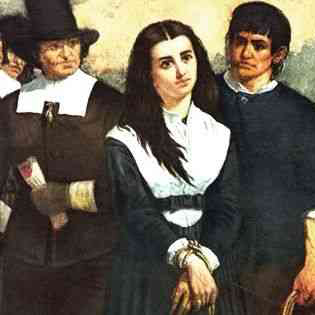
Historical  Summary Of The European Witch Hunts Cover The European witch Craze started roughly during conclusion of the 15th century and peaked during the first half of the seventeenth century. The belief that women were sinful and had the power of the devil within them developed out of the Middle Ages. The Reformation further promoted the idea of a satanic kingdom of evil on earth with which to justify persecutions. Theologians sought to prove that accused witches represented the devil.

The first and most significant written cumulative concept of witchcraft available to a large audience was the Malleus Maleficarum written by Sprenger and Kraemer. It was first published in 1486 and reprinted fourteen times before 1520. The document made an important contribution to the widespread witch hunt. Most people accused of witchcraft were rural, poor, and single women. The hunts are often seen as a massive effort to keep women in their place. Women were seen as evil, and unclean people whose weakness could summon the devil for sexual intercourse.

The Malleus Maleficarum document ignited a widespread hunt for the so-called witches described in it. During the hunt, witches were accused of "impractical" and "traceless" crimes such as intercourse with the devil, unregistered babies from hidden pregnancies who were supposedly eaten or sacrificed, and even natural disasters. However there is no record of any solid evidence for any of these accused crimes.

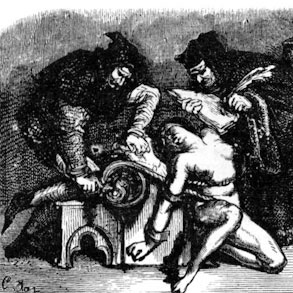
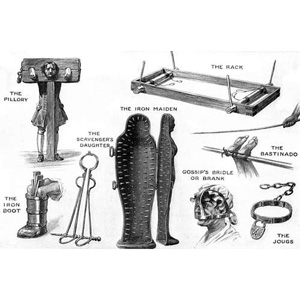
Often these hunts were instigated by hysterical children, or nuns who accused relatives, and neighbors of these outrageous crimes. Witnesses were often bribed or threatened in order to prosecute the accused. The accused would then be tortured until they confessed. The methods of torture were very cruel and painful, and almost all who were put through the various devices would confess. In some cases the accused would die of torture, and very few survived the ordeal without confessing. However, the accused was set free if they survived the torture without a confession. After the forced confession, the trial took place. These trials were run by genuine believers of witchcraft. The aim of the trial was to exterminate the witches as conspirators with the devil. When the accused was declared guilty, they were usually executed.

Although, there are many estimates as to how many actual people were killed during these hunts, most estimates show the number well below the one-million mark. The actual number of documented executions, is generally considered to be under one hundred thousand. Of all that were executed, only a minority were men, and of those men, many are those who tried to protect accused women from the hunters.

Free eBooks (Can Be Downloaded):

Sharynne Nicmacha - The Star Of Life A Historical And Spiritual History Of The Pentagram
Martin Van Buren Perley - A Short History Of The Salem Village Witchcraft Trials
Tuesday Lobsang Rampa - Wisdom Of The Ancients
Michael Bailey - Historical Dictionary Of Witchcraft
Charles Kirkpatrick Sharpe - A Historical Account Of The Belief In Witchcraft In Scotland

Tuesday, September 28, 2010

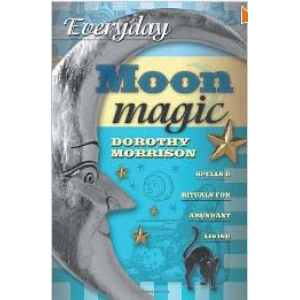
Everyday Moon Magic Spells And Rituals For Abundant Living

Everyday Moon Magic Spells And Rituals For Abundant Living Cover

Book: Everyday Moon Magic Spells And Rituals For Abundant Living by Dorothy Morrison

I've read a couple other Moon books, but this one is by far the best. Why? Because Ms. Morrison (much like another of my favorite authors, Patricia Telesco) has a certain and very special way of making things simple, accessable and right to the point without talking down to the reader, getting lost in Craft mumbo-jumbo or making things harder than they really need to be as I've seen so many times by other authors. There are no lectures, power trips or mind-numbing lists of hard-to-find ingredients here; no lofty words or flowery rituals. In fact, you probably already have many of the ingredients she mentions. This book is practical, useful, wonderfully organized and chock full of Moon facts, spells, rituals and other worthy and interesting tidbits that can indeed be used every day. I found it a fast read, which is good -this way I can get right into things :) If you've been disappointed, bored or overwhelmed by other Moon Magic books, give this one a try. Simply put, this book is a pleasure to read, use and own; it's one I'm sure I'll refer to often. I'm keeing this right next to my much-loved copy of Everyday Magic and will likely be following up with her companion book, Everyday Sun Magic.

That magical, mystical, glorious Moon-invite Her power into your life every day, from fixing your computer to blessing your pets. You'll learn how each Moon phase affects your spellwork, including the seldom-discussed energies of the true Blue Moon, the Black Moon, the void-of-course moon, and the lunar eclipse. Follow the Moon as She traverses each sign of the zodiac, and discover how each astrological phase affects magic, mundane events, and gardening-and how your personal Moon sign affects your magical work. Includes more than 140 modernized spells, chants, and rituals, along with Esbat celebrations for the Full Moon.

Dorothy Morrison has put together in this book a wonderful primer that is chock full of moon lore, moon mystery and moon magic. And because of all the bits of information collected here, even the experienced practitioner will read through this book and come away scratching their head saying "I didn't know that!"

Ms. Morrison includes in this book some of the history of moon lore and moon cycles. Included are bits of 'old sayings' and superstitions as well as names of the monthly moons and what they mean. She reviews the moon phases and effects. Ms. Morrison also discusses astrological terms referencing the moon and what they actually mean. For those who are not familiar or don't remember or are not sure, this section alone is worth the price of the book. Then she takes it a step further by explaining how these references apply in relationship to our magic and our lives. Times and cycles for ritual, magic and spells are also discussed and examined. Empowering moon rituals filled with positive affirmations for the building of personal self esteem, which Ms. Morrison is so good at writing, are here for you to incorporate into your own ritual material. And, of course, no book by Dorothy Morrison would be complete without a whole section of her wonderful spells.

As usual, Dorothy takes all this and puts it into a book that shows you, step by step, how to work this into your everyday life, making it a practical as well as informative book. There is so much more here that I've not included in this review because it would take pages to write about. Needless to say, Ms. Morrison has been thorough in her research. There is a table of contents to help you find what you are looking for as well as a bibliography. Add to that her easy to read format and no nonsense approach to teaching, and you have a winner here.


This is a book that should be considered when you are in the store looking for something practical, informative and just plain good to read and add to your library.

Originally from Texas, Dorothy Morrison now lives the magical life in Maine with her family. Dorothy is a member of the Pagan Poets Society and a charter member of M.A.G.I.C., a magical writers and artists organization. Dorothy is a Wiccan High Priestess of the Georgian Tradition, and has been an avid practitioner of the ancient arts for more than twenty years. She founded the Coven of the Crystal Garden in 1986, and spent many years teaching the Craft of Wicca to students both in the United States and in Australia. A former state championship archer and bow hunter, Dorothys current interests include Tarot work, magical herbalism, stonework, and computer networking.Dorothys work has been published in many journals and magazines, including Circle Network News, SageWoman, and Crone Chronicles. She is the author of the acclaimed Everyday Magic, Magical Needlework, In Praise of the Crone, Yule, Bud, Blossom & Leaf: The Magical Herb Gardeners Handbook, The Craft, and The Craft Companion, among other works..

Buy Dorothy Morrison's book: Everyday Moon Magic Spells And Rituals For Abundant Living

Free eBooks (Can Be Downloaded):

Lady Sabrina - Exploring Wicca The Beliefs Rites And Rituals Of The Wiccan Religion
Benjamin Rowe - A Modified Hexagram Ritual For Enochian Workings
Richard Alan Miller - The Magical And Ritual Use Of Herbs
Talismagick - Love Spells And Rituals For Love And Relationships

Maxine Sanders Queen Of The Witches

Maxine Sanders Queen Of The Witches Cover Maxine Sanders is the famous Alexandrian High Priestess from England . I strongly identify with her, for I believe she was born with the Witchblood. As a teenager in the 1960’s, she defied the stereotype of the hag witch with the youth, beauty, and charisma of the Enchantress. Partnered with Alex Sanders, she was instrumental in bringing the old religion to public consciousness and the eventual quasi-acceptability we have today. Her lifetime of dedication to the Mysteries as healer, teacher, Initiator, and muse in the face social antagonism, media sensationalism, public adulation and envy, makes for one of the truly remarkable life stories of our time.

Free eBooks (Can Be Downloaded):

Bernard King - Meanings Of The Runes
Thomas Potts - Discovery Of Witches
George Lincoln Burr - Narratives Of The Witchcraft Cases
Michael Magee - Robin Hood And The Witches
Margaret Alice Murray - The God Of The Witches

Monday, September 27, 2010

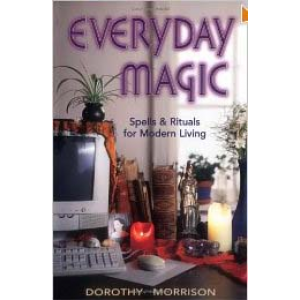
Everyday Magic Spells And Rituals For Modern Living

Everyday Magic Spells And Rituals For Modern Living Cover

Book: Everyday Magic Spells And Rituals For Modern Living by Dorothy Morrison

Is it time for a change? Is it time to improve your life with a better job, a happier home, or more romance? Then you need Everyday Magic by Dorothy Morrison! This is magic for modern Wiccans, and for everyone regardless of their religious affiliation. It is filled with hundreds of spells, chants, rituals, charms and formulas for incenses and oils. Every one is tested and powerful yet easy to use.

Everyday Magic is a well written book and it fit into my everyday living just as if it had been written for me personally. The modern day methods of dealing with the "old ways" of the craft amazed me. To go to a thrift store and pick up a cheap blender instead of trying to do so many herbal blends with the mortar. I was so mermerized with so many of Dorothy's modern gimmicks. Being able to improvise has always been big with me, Dorothy seems to do the same in her book.

Sure, there are spells for romance and prosperity. Those are as important today as they were a thousand years ago. But this book also presents magic that deals with today's problems. Speed up your computer's modem. Make sure your luggage arrives safely; ease labor pains; free yourself from anger; find a parking spot. These are all things we need and that you can do by following the simple instructions in this book!

One of the roadblocks to successful magical workings that many people face is finding the proper oils and incenses. Morrison's solution: Make them yourself! But don't use the old techniques that take hours, days, or even weeks to accomplish. Instead, you'll learn how to use common appliances such as a drip coffee maker, a blender, and a crock pot to create your own powerful incenses, oils, washes, brews, and more. What a practical timesaver!

And saving time in today's world is what this book is all about. Of course, if the spells, charms, rituals and techniques weren't practical and effective, saving time would be meaningless. Well, what you'll learn here is powerful -- and is presented by a woman who has been a Witch for more than 20 years and taught on two continents!

Dorothy Morrison has a daring point of view that magic is not just compatible with technology--the two can actually help one another. Since technology has made our lives more productive, surely it can enhance our magic too. (Have you ever thought of making your herbal infusions in an automatic-drip coffeemaker?) Technological assistance with magic is only part of the story. Morrison has filled a grimoire with charms that protect from car trouble and ensure the safe and timely arrival of luggage while traveling, and spells to keep a computer from crashing, which makes life in the 20th century a little less harrowing. Rather than fighting the progress of the electronic age, Morrison has tapped into the wealth it has to offer, and she shares her discoveries with anyone adventurous enough to try them.

The spells and rituals in here are all based on today's available materials. Trying to find something called dragon's blood was not easy for me. In this book, Dorothy makes it all so simple and still so effective. Spells of interest to the modern twentieth century housemate and businessperson. Spells and rituals that make so much sense and are so easily adaptable for my and others active lives.

I recommend, as I have many times, reading this book. I have read many and find this one to my liking on a high rating of "Way to go, Dorothy Morrison"
Excellent book and will keep an eye and ear open of reports of others from D. Morrison. Age, gender, and type of path are not even a stoppage point here. For all and then some.

Buy Dorothy Morrison's book: Everyday Magic Spells And Rituals For Modern Living

Free eBooks (Can Be Downloaded):

Kveldulf Gundarsson - Teutonic Magic The Magical And Spiritual Practices Of The Germanic Peoples
Tupman Tracy Ward - Theatre Magick Aleister Crowley And Rites Of Eleusis
Richard Alan Miller - The Magical And Ritual Use Of Herbs
Talismagick - Love Spells And Rituals For Love And Relationships

Sunday, September 26, 2010

Alex Sanders Biography

Alex Sanders Biography Cover Alex Sanders – the “King of the Witches” as he became known - was responsible for founding the Alexandrian Tradition of Wicca, now one of the main traditions of the Wicca/Witchcraft movement. But his reign was fraught with criticism and controversy.

Alex Sanders was born Orrel Alexander Carter on the 06th June 1926 in a house on Moon St, Birkenhead. He was the eldest of six children to parents Hannah and Harold Carter. His father Harold Carter was a music hall entertainer who suffered from alcoholism, and soon after the birth of Alex, moved the family to Grape St in Manchester, there he unofficially changed the family name to Sanders. Alex was unaware of his official surname until he applied for a passport later in life, at which time he officailly changed his name to Sanders by deed poll.

As a young boy Sanders suffered with tuberculosis and would regularly visit with his grandmother in Wales, where he could benefit from the Welsh fresh air. At the age of seven, he is believed to have happened upon his grandmother “Mary Biddy” performing some sort of pagan ritual. Taken by surprise she immediately swore young Sanders to secrecy, and initiated him on the spot claiming, “Now, you are one of us”. Thus he became her student and started on the path of the Old Religion.

Sanders was a natural psychic who learned all he could from his grandmother. He claimed that she gave him her “Book of Shadows” to copy and taught him all the rites and magic of the witches including clairvoyance by scrying in inky water and using his grandmother's crystal. Sanders also claimed that following the Blitz during WWII and just a few months before her death at age 74, his grandmother conferred upon him the second and third grade initiations involving ritual sex. After her death he tried to contact other witches, and though failing continued with his studies while working for a time as a healer in Spiritualist Churches under the pseudonym of Paul Dallas.

In the early 60’s, Sanders is reported to have sought entrance to some Gardnerian covens (see Gerald Gardner), including that run by "Patricia and Arnold Crowther", who refused to accept him. Not to be put off so easily, he somehow managed to obtain a copy of the Gardnerian Book of Shadows. This he copied (badly from all accounts) and embellished it with a few of his own amendments. He then used this as the bases to found his own coven, claiming it to be a copy of his grandmother’s Book of Shadows.

Sanders was a born showman who avidly courted publicity. In September of 1962 he even succeeded in convincing the Manchester Evening News to run a front-page article about Wicca. As a result he soon attracted a large following. During this period Sanders and his coven worked from his home at 24 Egerton Road North, Chorlton-cum-Hardy, Manchester. One of his initiates was "Maxine Morris", a Roman Catholic 20 years his junior. After her initiation, they handfasted and she became his High Priestess. They were married in a civil ceremony in 1968 and moved into a basement flat near Nottinghill Gate, London. Later that same year, Maxine bore him a daughter they called "Maya".

From their new home the Sanders’ ran his London coven and taught training classes, he claimed to have initiated more than 1,623 witches working in 100 covens around the country, all-practicing what had become known as the Alexandrian Tradition. At one meeting, a gathering of sixteen of his covens, Sanders was bestowed with the title of “King of the Witches”. Sanders frequently appeared in ritual photos as robed or wearing only a loincloth while Witches surrounding him were naked. His explanation for this was that the old “Witch laws” required that the Elder of a coven should be easily identifiable from the other coven members.

In 1968-69, Sanders with Maxine appeared in and gave technical advice on a film called “Legend of the Witches”. During the press preview of the film, they met with and were introduced to "Stewart Farrar", then a reporter for the Reveille. Stewart would later be initiated by Maxine, and move on to become famous himself as a witch and author.

Without doubt Alex Sanders was a controversial and flamboyant man, who without scruples plagiarized the work of others to embellish he own. Whither he did so with malice, remains a question? Personally I don’t think so. More I assume through innocuous indifference, and mainly for the benefit of his students, even though it resulted in criticism from many in the craft. He was also without doubt a very skilled witch, and powerful magician, whose contribution to the newly evolving movement, brought witchcraft back into the public arena and changed the face of Wicca. He helped to influence many newcomers entering the craft and Alexandrian Wicca remains today one of the largest traditions of the craft.

Free eBooks (Can Be Downloaded):

Aleister Crowley - Alice An Adultery
Albert Pike - Morals And Dogma
Aleister Crowley - Alexandra

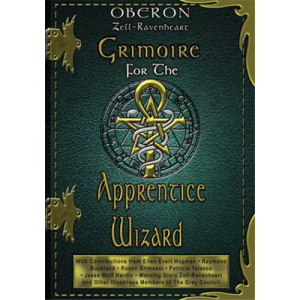
Grimoire For The Apprentice Wizard

Grimoire For The Apprentice Wizard Cover

Book: Grimoire For The Apprentice Wizard by Oberon Zell Ravenheart

Magick, through all its varied forms and traditions, always has at least one component that it shares. Freedom. Freedom from old ideas. Freedom from old religions. A pathway leading the practioner to new depths of themselves, and through that, the world.

It is not, and should not, be used as a tool for the crushing of imagination, but its expansion. It is a very delicate line, to separate one's own prejudices and mythology from the craft itself, creating a clear platform that allows, or even more, encourages the reader to find their own truth. To question authority, even the authority of the writer.

Oberon Zell's grimoire For the Apprentice Wizard does just that. Though there are many books on magick, too often they emphasize the writer's particular viewpoint on the craft, providing a kind of blueprint for development in a particular tradition at the expense of the infinite multiverse of alternate perspectives that could, and should exist.

In his Grimoire, it is apparent that Oberon's intention is to create a platform that is, as well as he is able, clear. Beginning with a brief history of magick in its various incarnations in the Western world; as well as a fundamental glossary of magickal terms as used by all, he moves into beautifully illustrated and well-intentioned explanation of the various types of magick and process.

He includes chapters on healing, herbology, astronomy, mathematics, animal communion (a personal favourite), divination, and many more. Each section illustrates the fundamental principles common to all traditions, allowing the student the space to find their own ideas. Supposedly geared to the adolescent reader, each chapter contains instructions on how to create and manage spells; focusing not only on the process of starting a magick, but the responsible cleanup so often neglected afterwards in making your spells efficient and successful.

I was particularly impressed with the various sources and quotations used in the book. Many authors fail to see (or perhaps, respect) the ways in which spiritual, magickal truths have expressed themselves in today's world. In drawing on gems of wisdom hidden in popular culture; from Aristotle to Discworld, Pythagoreas to Spiderman; Oberon's viewpoint shows an open-mind free of the prejudice of the past that sees the Goddesses, and Gods, still alive inside the imagination of the modern world.

More than just a set of instructions, the Grimoire provides a set of tools designed to allow young minds the opportunity to find their own way through the labyrinth of their imagination. I highly ... highly recommend this book to both new and old readers alike. It is refreshing to see an author who not only claims the intention to provide an open philosophy that still honours its history and practice, but who succeeds in doing so.

Download Oberon Zell Ravenheart's eBook: Grimoire For The Apprentice Wizard

Free eBooks (Can Be Downloaded):

Aleister Crowley - Mortadello Or The Angel Of Venice
Parker Torrence - Grimoire Of Eclectic Magick Part 3 Of 3
Moses Maimonides - The Guide For The Perplexed
Oberon Zell Ravenheart - Grimoire For The Apprentice Wizard.pdf

Sunday, August 22, 2010

Am I Really A Witch

Am I Really A Witch Cover According to some old Elizabethan superstition, if you possess all of these you were considered to be a witch.

Superstition 1 - Witches were able to fly ( this explained how witches could move quickly across impossible distances. A broomstick was then added to the superstition as these became common household Articles used by women) - Well, I do clean with a broom (me).

Superstition 2 - A witch was often portrayed as an old crone or hag ( with no man to defend her against accusations of witchcraft) - I don't have a man (yet) and I do feel old these days (me).

Superstition 3 - Witches are closely associated with living alone (house in the wood) - I live alone in a place made of wood (me).

Superstition 4 - Witches were known to keep animals like the Cat, Frog, Pig, Raven, Goat, Wolf, Goose, Crow, Bat and Mouse which were believed to be the forms adopted by a Witches Familiar (an evil spirit, in animal form, who was used by the witch to perform evil deeds and cast malevolent spells) - I do own three cats and you know if I could, I would own every one of these (me).

Superstition 5 - Witches brewed magic potions over a cauldron (Wise women had knowledge of herbs such as mandrake, datura, monkshood, cannabis, belladonna, henbane and hemlock) - And I love cooking and brewing up good food and some include herbs (me).

And last but not least, my very own and I bet you haven't noticed this...I do have a mole on my nose. Fact. :)

EEEEK! I'M A WITCH! I quote Practical Magic....."there's a little witch in all of us". :) Are you one? :)

Books You Might Enjoy:

Anonymous - So My Kid Is A Witch
Carl Mccolman - The Well Read Witch
Marian Green - A Witch Alone

Friday, August 13, 2010

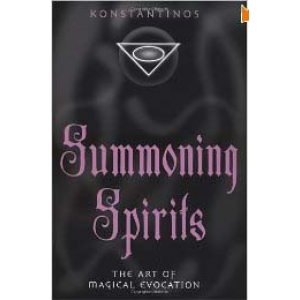
Summoning Spirits The Art Of Magical Evocation

Summoning Spirits The Art Of Magical Evocation Cover

Book: Summoning Spirits The Art Of Magical Evocation by Konstantinos

If you are interested in summoning up elementals,Planetary spirits, Angels and Goetic beings this is the book to get. Though I do a diffrent ceremony for goetic spirits. I do use the methods in this book for the other beings. The auther gives very good and solid information on the Elementals, Angels, Planetary spirits and Goetic beings. But dont be decieved sometimes evoking these beings are not very easy at all. Be prepared for successes as well as failures. This is a great book to get on the subject of evoking these forces. Now you can learn how to evoke and communicate with 50 spirit entities and make use of their abilities, when you get Summoning Spirits by Konstantinos.

Evoking spirits is one of the Most Powerful magical techniques you can use-but, until now, most of the material available on evocation has been virtually unusable because it was written by those with little practical evocation experience. Summoning Spirits was written by a practicing magician who has successfully performed many evocations. With his guidance and clear directions, performing evocations will be easy and safe for anyone.

- Learn to safely evoke powerful spirits to aid you with any task
- Create sigils charged with the energy of spirits to magnify the effects of your evocations
- Make an etheric egregore, a manufactured spirit that will perform the task of your choice
- Perform easy exercises to train your magical abilities and to develop clairvoyance and clairaudience
- Construct, prepare, and use special magical tools to aid your evocations

Summoning Spirits is a complete manual for evoking entities to effect positive changes in your life. Learn how the spirits that dwell on the other planes can be evoked to the astral and physical planes to help you obtain mystical abilities, locate hidden "treasure," and even command a spirit "army" to protect your home while you're away.

Summoning Spirits describes the specific attributes and abilities of 50 entities that you can evoke to uncover valuable knowledge, and who will help you succeed in nearly any task, magical or mundane.

Whether you need help to face life's challenges or to work a minor miracle, you will find the art of Magical Evocation a tremendously potent tool for change. Included are information and theory, as well as full instructions for all the rituals you will need to prepare for and then evoke spirits. No other book makes this ancient magical technique as easy to understand and use, as does this one. That's why you must get Summoning Spirits.

"Summoning Spirits" is the one of best books I have read so far in regards to the ancient and powerful art of magickal evocation. Although I have only just recently purchased this book, I have found it to be very informative, educational and interesting. As an individual aspiring to master this ancient magickal art, and science, I had found Konstantinos's advice and guidance quite beneficial about only working with benevolent spirits such as Angelic, Planetary and Elementary entities. However, I will be looking forward to summoning the Goetic entities as well, as I believe that a magician should have a 'magickal and spiritual balance' between both benevolent and malevolent entities, in addition to mastering them. All in all, a great book for a magician wishing to practice magickal evocation. In addition, I am especially looking forward to evoking the divine and beautiful Archangels and striving to unite and become 'one' with Divinity, which Konstantinos mentions is the 'true' defintion and purpose of magick. A truly magickal and spiritually inspiring book. I know that I will always enjoy and value keeping it as part of my personal magickal library to cherish, reflect upon, and treasure the ancient magickal wisdom and power within it.

Buy Konstantinos's book: Summoning Spirits The Art Of Magical Evocation

Free eBooks (Can Be Downloaded):

Jarl Fossum - Seth In The Magical Texts
Phil Hine - Aspects Of Evocation
John Dee - The Practice Of Enochian Evocation
Malcolm Mcgrath - Practical Magickal Evocation
Konstantinos - Summoning Spirits The Art Of Magical Evocation

Thursday, July 29, 2010

Witches And The Book Of Shadows

Witches And The Book Of Shadows Cover The book of shadows is a Witches Bible, a place where spells, rituals, and often inspirations are written. Traditionally most Witches hand write everything into their BoS, however in the high tech age of computers there are many modern witches who put their entire BoS on disc. There are even programs designed to format your computer Book of Shadows. Many Books of Shadow are handed down from past generations. I would recommend that if you are just starting one, you choose a very special and large journal, hard cover, or hand crafted wood, leather, or other sturdy material, rather than a spiral notebook, or writing tablet. This book should be planned with the intent of it being around for a long time and used often.

The BOS usually starts out with a Title Page and may be called something as simple as, My Book of Shadows or something more creative like, My Triple Moon Book of Inspiration. You should include a Dedication page dedicating your work to whichever Goddess, and/or God you recognize, and a Blessing page where you put a simple blessing spell for your Book of Shadows and all the writings within.

It might be a good idea to include a line or two about your book being invisible to non-believers, or some type protection, that will prevent ill events from snoops.

I highly recommend a table of contents, or index section, as you will find it difficult to locate a needed piece of information later on, when your book is full. A section on your chosen path, or your personal philosophy is a good addition.

Your Book of Shadows will usually contain a list of all celebration rituals, especially the Sabats, which are the major turnings of the year. Also you will probably include all the esbats and moon phases of the year. You may want to include a section for celebrating births, deaths, handfastings (marriages), and even add rituals for blessing a new home, a business or a new job. With all these special events, there are correspondences that go with them, such as deities, gems and minerals, herbs, oils, colors, astrological symbols, and planetary influences. As with most celebrations there will be certain foods, decorations, ect.

Books You Might Enjoy:

Gerald Gardner - The Garnerian Book Of Shadows
Idres Shah - The Book Of Power
Sasha Fierce - The Book Of Shadows

Wednesday, July 28, 2010

Good Witch Or Bad Witch

Good Witch Or Bad Witch Cover There are many types of witches. That is a fact. However, most witches do not use their powers or abilities for inflicting harm unto others. This is a very common misconception. A large amount of witches use their abilities to aid others in not only soul-searching tasks but to rid and teach how to rid negative energies from one's life. We are often judged as worshipers of a "devil" or "Satan." That is a big contradiction to most of us. A majority of witches do not even believe in a "God of the Devils" aka "Satan." However, we are often scrutinized for stating this because some will say (just as in the olden times) "If you believe in the devil, you are a worshiper...If you say you don't....you are more susceptible to his powers." It is a TOTAL catch 22 for all witches. That was also the method used in the witch Trials.

One suggestion: Please don't ask a witch if he or she "is a good witch or a bad witch." That is just the same as asking a Christian if "they are a good Christian or a bad Christian." Besides, you may get an answer you didn't expect!

Books You Might Enjoy:

Zoroaster - The Chaldean Oracles
Ro Winstedt - Shaman Saiva And Sufi
Carl Mccolman - The Well Read Witch
Anonymous - Witchcraft A Guide To Magic

Tuesday, July 27, 2010

Witches Misogyny And Patriarchy

Witches Misogyny And Patriarchy Cover The persecution of witches reached its zenith at a time when Christianity's attitudes against sex had long since turned into full-blown misogyny. It is amazing how celibate men became obsessed with the sexuality of women. As it is stated in Malleus Maleficarum: "All witchcraft comes from carnal lust, which is in women insatiable." Another section describes how witches were known to "...collect male organs in great numbers, as many as twenty or thirty members together, and put them in a bird's nest."

Evidently they were not entirely stingy with their collections -- there is the story of a man who went to a witch to have his lost penis restored: "She told the afflicted man to climb a certain tree, and that he might take which he like out of a nest in which there were several members. And when he tried to take a big one, the witch said: You must not take that one; adding, because it belonged to a parish priest."

And some people say that religion isn't really all about wishful thinking!

These sentiments were nothing unique or unusual -- indeed, they are a result of centuries of mean-spirited sexual pathology on the part of church theologians. The philosopher Boethius, for example, wrote in The Consolation of Philosophy that "Woman is a temple built upon a sewer." Later, in the tenth century, Odo of Cluny stated "To embrace a woman is to embrace a sack of manure."

Women were regarded as impediments to true spirituality and union with God, which helps explain why investigators focused on women more than men. The church had a long-standing prejudice against women, and this was given vent when the doctrine of devil worship was emphasized as an enemy which the church had to confront and destroy. This animus hasn't entirely disappeared even today. Women aren't persecuted and tortured, but they are deliberately kept out of positions of authority and responsibility reserved exclusively for men.

Books You Might Enjoy:

William Blake - The Marriage Of Heaven And Hell
Vovim Baghie - The Grand Satanic Ritual
Walter Scott - Letters On Demonology And Witchcraft
Frater Fp - Sigils In Theory And Practice

Saturday, July 24, 2010

Who Was Responsible For Great Witches Hunt

Who Was Responsible For Great Witches Hunt Cover The medieval witch-hunts have long been depicted as part of a "war against women" conducted exclusively or overwhelmingly by men, especially those in positions of central authority. Deborah Willis notes that "more polemical" feminist accounts "are likely to portray the witch as a heroic protofeminist resisting patriarchal oppression and a wholly innocent victim of a male-authored reign of terror designed to keep women in their place." (Willis, Malevolent Nurture, p. 12.)

In fact, the stigmatizing, victimizing, and murdering of accused "witches" is more accurately seen as a collaborative enterprise between men and women at the local level. "The historical record suggests that both men and women found it easiest to fix these fantasies [of witchcraft], and turn them into horrible reality, when they were attached to women. It is really crucial to understand that misogyny in this sense was not reserved to men alone, but could be just as intense among women." Most of the accusations originated in "conflicts [that] normally opposed one woman to another, with men liable to become involved only at a later stage as ancillaries to the original dispute." Briggs adds that "most informal accusations were made by women against other women, ... [and only] leaked slowly across to the men who controlled the political structures of local society." At the trial level, his research on the French province of Lorraine found that

women did testify in large numbers against other women, making up 43 per cent of witnesses in these cases on average, and predominating in 30 per cent of them. ... A more sophisticated count for the English Home Circuit by Clive Holmes shows that the proportion of women witnesses rose from around 38 per cent in the last years of Queen Elizabeth to 53 per cent after the Restoration. ... It appears that women were active in building up reputations by gossip, deploying counter-magic and accusing suspects; crystallization into formal prosecution, however, needed the intervention of men, preferably of fairly high status in the community." (Briggs, Witches & Neighbours, pp. 264-65, 270, 273, 282.)

Deborah Willis's study of "Witch-Hunting and Maternal Power in Early Modern England" similarly finds it "clear ... that women were actively involved in making witchcraft accusations against their female neighbours":

[Alan] Macfarlane finds that as many women as men informed against witches in the 291 Essex cases he studied; about 55 percent of those who believed they had been bewitched were female. The number of witchcraft quarrels that began between women may actually have been higher; in some cases, it appears that the husband as "head of household" came forward to make statements on behalf of his wife, although the central quarrel had taken place between her and another woman. ... It may, then, be misleading to equate "informants" with "accusers": the person who gave a statement to authorities was not necessarily the person directly quarreling with the witch. Other studies support a figure in the range of 60 percent. In Peter Rushton's examination of slander cases in the Durham church courts, women took action against other women who had labeled them witches in 61 percent of the cases. ... J.A. Sharpe also notes the prevalence of women as accusers in seventeenth-century Yorkshire cases, concluding that "on a village level witchcraft seems to have been something peculiarly enmeshed in women's quarrels." To a considerable extent, then, village-level witch-hunting was women's work. (Willis, Malevolent Nurture, pp. 35-36.)

These comments and data serve as a reminder that gendercide against women may be initiated and perpetrated, substantially or predominantly, by "other women," just as gendercide against men is carried out overwhelmingly by "other men." The case of female infanticide can also be cited in this regard. Patriarchal power, however, was ubiquitous at all later stages of witchcraft proceedings. Men were exclusively the prosecutors, judges, jailers, and executioners -- of women and men alike -- in Europe's emerging modern legal system.

Books You Might Enjoy:

Thomas Moore - Candle Magick For Love
Richard Weiss - Recipes For Immortality
Marian Green - A Witch Alone
Thomas Muldoon - Numerology For The 21st Century
Janet Farrar - A Witches Bible The Complete Witches Handbook

Monday, July 19, 2010

Prosecuting Witches As A Way Of Attacking Social Problems

Prosecuting Witches As A Way Of Attacking Social Problems Cover Jews and heretics were often treated as scapegoats for other social problems and witches ended up no different. Regions with the most social and political unrest also happened to be those with the greatest problem with witches. Every social, political, and natural problem was blamed on witches. Crop failure? Witches did it. Well gone bad? Witches poisoned it. Political unrest and rebellion? Witches are behind it. Strife in the community? Witches are influencing people.

Lest anyone imagine that the persecution of witches has been relegated to the distant past, it must be noted that witch hunts -- and killings -- continue well into our own "enlightened" times. The church's creation of witchcraft and devil worship has exacted a heavy and bloody toll on humanity which still has not yet been fully paid.

In 1928, a Hungarian family was acquitted of killing an old woman they thought was a witch. In 1976, a poor German woman was suspected of being a witch and keeping familiars, so people in the small town ostracized her, pelted her with stones, and killed her animals. In 1977 in France, a man was killed for suspected sorcery. In 1981, a mob stoned a woman to death in Mexico because they believed that her witchcraft incited an attack on the Pope.

In Africa today, fears of witchcraft cause the persecution and death of people on a regular basis. Parents who fear that their children are possessed or are witches either kill them or turn them out into the streets. Government authorities have tried to put a stop to such nonsense, but they haven't had much luck. Both traditional African religion and Christianity contain enough to feed people's superstitious fears and this leads to others being harmed.

It's not just allegations of witchcraft which causes people to behave like this. Many other things can become the object of hysterical persecutions and prosecutions. Sometimes the alleged threats are genuine and sometimes they are not; in either case, the threats are magnified to such a degree that people no longer feel bound by traditional standards of justice or morality in order to confront their enemies. The consequences are almost always violence and suffering pursued in the name of good and God.

Books You Might Enjoy:

Scott Cunningham - Living Wicca A Further Guide For The Solitary Practitioner
Kathryn Paulsen - Witches Potions And Spells
June Johns - King Of The Witches The World Of Alex Sanders
Scott Cunningham - Wicca A Guide For The Solitary Practitioner

Sunday, July 18, 2010

Killing Witches As The Best Way To Kill Witchcraft

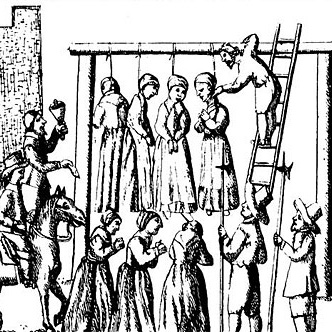
Killing Witches As The Best Way To Kill Witchcraft Cover Burning and hanging were the most popular forms of execution for accused witches in medieval Europe. Burning seems to have been most common in continental Europe while hanging was more common in Britain -- and thus also in the American colonies later as well. The death penalty was imposed on a wide variety of crimes in this era, but witchcraft in particular was punished by death on the basis of Exodus 22:18: "Thou shalt not suffer a witch to live" and Leviticus 20:27: "A man also or woman that hath a familiar spirit, or that is a wizard, shall surely be put to death: they shall stone them with stones."

The heretics who were the earlier targets of the Inquisition were almost never executed at first. They typically had a chance to repent and submit to the Church; only after relapsing into heresy did they generally become subject to execution. Even then, they might still be given another chance to repent. Witches received almost the exact opposite treatment: execution was typically applied after the first accusation and only rarely were accused witches allowed to go free after repenting.

This helps demonstrate the level of threat which the Church made out of witches and witchcraft. Witches couldn't be allowed to live no matter what -- not even if they were willing to admit all that they were accused of and fully repent. Their evil was too much of an existential threat to Christian society and they had to be completely excised, not unlike cancer which has to be cut out lest it kill the entire body. There was simply no tolerance or patience for the witches -- they had to be eliminated, whatever the cost.

Some have claimed that as many as nine million women were executed as witches, even though few could possibly have been truly guilty of witchcraft, and that because this represented a deliberate attempt to kill women generally it should be dubbed a "Women's Holocaust." More recent research demonstrates that many accused witches were men, not just women, and that number of those executed is far lower. Estimates today range from 60,000 to 40,000. Even if we are especially pessimistic, we probably can't go higher than 100,000 people killed across all Europe and over an extended period of time. That's obviously very bad, but not quite a "Holocaust."

Books You Might Enjoy:

William Godwin - The Lives Of The Necromancers
Dr Leo Martello - Weird Ways Of Witchcraft
William Butler Yeats - The Secret Rose And Rosa Alchemica
Allen Greenfield - A True History Of Witchcraft
Michael Harrison - The Roots Of Witchcraft

Thursday, July 15, 2010

How To Prevent A Witch From Entering To Your Home

How To Prevent A Witch From Entering To Your Home Cover - "If someone comes and you don't want them to come back, put salt and black pepper on the carpet. When they leave, take a broom and sweep it out the door, and they will not come back." Negro
- If someone comes to your house and you think they are putting an evil spirit on you, just as soon as they leave, sprinkle salt all around the chair they were sitting on and put a little on the seat of the chair, and they can't do you any harm." German.
- "If you don't want anyone to come back when they leave the house, throw some salt on their back." Negro.
- "If someone comes to your house and you don't trust them, as they leave throw a handful of salt after them and say, 'In the Name of the Father, Son and Holy Ghost. Don't come back.' And they won't." Negro.
- "If someone come to your house you don't want them to come back, throw a handful of salt at them and say, 'In the Name of the Father, Son and Holy Ghost; move on' -- and they say they will never come back again." German.
- "If someone come to your house and you don't want them to come back, take salt and sulphur and mix good, and throw that on their back as they are leaving and they will not bother you again." Negro.
- "If someone comes to your house and you think they are a witch and you don't want them to come in, lay an old shoe in the door; and if she is a witch, they cannot step over the shoe." German.
- "If you don't want enemies to come around your house and put a spell on you, wash your front door every Monday morning with pee." Negro.


Books You Might Enjoy:

John Dee - The Private Diary Of Dr John Dee
Louis Claude De Saint Martin - Natural Table Part Xiii From Genesis To The Flood
Marian Green - A Witch Alone
Douglas Ezzy - Practising The Witchs Craft Real Magic Under A Southern Sky
Margaret Alice Murray - The Witch Cult In Western Europe

Tuesday, July 13, 2010

Crafty Witches

Crafty Witches Cover It’s a beautiful day, you’re walking through your local weekend market, and lo-and-behold, you spy the perfect “witchy” themed item that would look marvelous hanging above your altar. You whip out your pocket book only to have your vision dashed by a hefty price tag. If you’re anything like me, it’s a scenario you’re only too familiar with…but help is on the way!

The truth is, you don’t have to be a master woodcrafter or be able to knit with your eyes closed in order to make witchcraft or pagan themed items for your home. All you need is a few simple supplies, and a little bit of time…of course, if you have kids, you can cut the time in half by letting them help you.

If you follow these few simple steps, you’ll be amazed at what you can create, even if you think you’re hopeless at crafting anything!

The first step is to ask yourself “what would I like to make?”

There are countless websites out there that offer free crafting patterns, and crafting kits are also available for those who prefer the simpler approach. For the most part, patterns and kits are meant only for personal use…designers generally frown upon those who “copy and re-sell” their work, not to mention the karmic kickbacks of such actions can be harsh. Designers not only like to see their work enjoyed by others, but it’s also satisfying to know that their designs have inspired others to create their own similar, yet unique craft items. One thing designers do enjoy, is having a picture of the item they inspired you to create sent to them, along with a little note of thanks. It’s a small gesture that really goes a long way.

Okay, you’ve got an idea, now you need the materials. If you have your own backyard, craft materials may literally be “at your doorstep”. Twigs, leaves, flowers, feathers, vines, stones, etc., all of these things can be used. I’ve seen some incredibly life-like animals painted on large stones, and twigs and dried leaves incorporated into a woven wall hanging. If you live close to the beach, then you’ve got a literal treasure trove of craft materials at your feet…given they’re washed properly!

Op Shops are another invaluable resource for cheap craft materials. If you look, there’s usually a bin full of material scraps, wool, knitting needles, and craft books. Old wooden platters or bowls can be sanded down and repainted for altar tools; and if you have a really good look at what’s on the shelves, you may just find that goblet, bell, or “offering dish” that you’ve been searching for. Those old beanbag lap tables make wonderful and easily “hide-able” altars.

If it just so happens that you can afford to spend a little extra, then a trip to the craft shop is always a “pick-me-up”. From jewelry making to polymer clay and back again, even the most fussy of crafters can find what they need and then some.

Can’t afford the craft shop?

The Reject Shop and The Warehouse, along with most of the little “$2” shops, always have inexpensive acrylic, watercolor, and oil paint kits, as well as scrapbooking and other papercraft supplies. They even have unpainted wooden items now and then, it never hurts to keep checking back.

So you see, you don’t have to rush out and spend a fortune on that must have one of a kind item, when you can quite easily make your own “one of a kind” at home for half the price. Of course, if you can run out and spend…then by all means do so, just don’t forget that it’s a special kind of feeling you get when someone points out and admires something that you’ve created.


Books You Might Enjoy:

Michal Jerabek - The Book Of Enoch Vol I The Watchers
Aj Drew - A Wiccan Bible
Robert Anton Wilson - Prometheus Rising
Tarostar - The Witchs Spellcraft Revised
Marian Green - A Witch Alone

Confessing Witches Under Torture

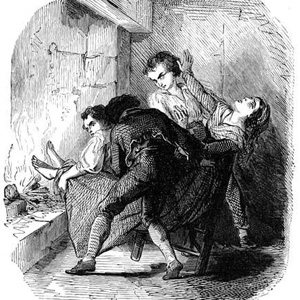
Confessing Witches Under Torture Cover Confessions of witchcraft, extracted under torture or threat of torture, commonly came attached to denouncements of other possible witches, keeping the Inquisitors in business. In Spain, church records tell the story of Maria of Ituren admitting under torture that she and sister witches turned themselves into horses and galloped through the sky. In a district of France, 600 women admitted to copulating with demons. Some entire villages in Europe were may have been exterminated.

Although the children of heretics and Jews had never experienced much in the way of mercy from Inquisitors, the children of convicted witches suffered even more horribly. These kids were themselves prosecuted for witchcraft -- girls after the age of nine and a half, boys after the age of ten and a half. Even younger children could be tortured to elicit testimony against parents.

A French judge is reported to have regretted being so lenient when he sentenced young kids to be flogged while they watched their parents burn instead of sentencing them to burn as well. Children may not be easily culpable for heresy or their parents' heresy, but they could certainly be influenced by or even possessed by Satan. The only hope of saving their souls was to torture their bodies to drive out the satanic influences.

Voluntary testimony from someone as young as two could be admitted despite it not being treated as valid in other cases. This was a sign of just how serious the threat of witches was perceived to be. Witches and witchcraft, both of which were in the service of Satan, threatened the very existence of Christian society, the Christian church, and Christians themselves. Normal standards of justice, evidence, and trials were abandoned because no one wanted to take the chance that respecting traditional rights and standards would allow the guilty to escape punishment.

Books You Might Enjoy:

Paul Huson - Mastering Witchcraft
Scott Cunningham - Wicca A Guide For The Solitary Practitioner
Gerina Dunwich - A Witchs Guide To Ghost And The Supernatural

Popular Posts