Showing posts with label witch website. Show all posts

Sunday, October 31, 2010

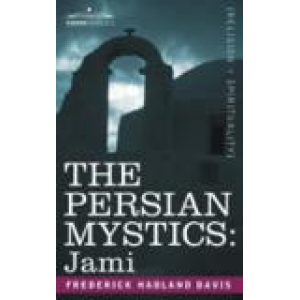
The Persian Mystics Jami

The Persian Mystics Jami Cover

Book: The Persian Mystics Jami by Frederick Hadland Davis

Jami (1414-1492), a scholar and mystic, is considered by many to be one of the greatest Persian poets of the 15th century. This volume, edited by F. Hadland Davis and first published in 1908, contains selections from some of Jami's best-known works. "Salaman and Absal" examines the earthly love ("the love that binds and fetters and is corruptible") of the eponymous star-crossed lovers and contrasts it with "incorruptible" celestial love. The "Lawa'ih" is a treatise on Sufism. "Yusuf and Zulaikha" tells of Zulaikha's unrequited love for Yusuf, and the "Baharistan" is a book of verse and prose written as a series of eight "gardens." A brief biography of Jami and some additional Information on each of the selections are included in this timeless work.

This is a basic Introduction to Jami the Persian Sufi poet. The first part of the book covers his life, a brief biography of Jami. The next chapters cover some of his most famous works the story of Salman and Absal, the Lawa'ih, the story of Yusuf and Zulakha and the Baharistan. The final part of the book are selections from the above 4 books translated.

While this is a nice Little Book it is very brief and covers only the most basic of the life and works of Jami. The author however, has remained faithful to the teachings of Jami and has done a fairly good job in explaining the teachings of Jami to the reader and providing him/her with a fair introduction to further reading.

Download Frederick Hadland Davis's eBook: The Persian Mystics Jami

Downloadable books (free):

Max Heindel - The Rosicrucian Mysteries
Frederick Hadland Davis - The Persian Mystics Jalaluddin Rumi
Frederick Hadland Davis - The Persian Mystics Jami

Monday, October 11, 2010

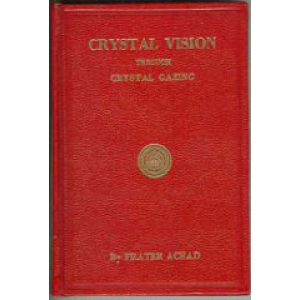
Crystal Vision Through Crystal Gazing

Crystal Vision Through Crystal Gazing Cover

Book: Crystal Vision Through Crystal Gazing by Frater Achad

1923. Or the Crystal as a Stepping Stone to Clear Vision. A Practical Treatise on the Real Value of Crystal Gazing. Contents: The lesser crystal sphere; The greater crystal sphere; Universal crystalline sphere; A consideration of the ancient methods; Further considerations the methods of Dr. Dee and Sir Edward Kelly; Attainment of Crystal Vision; The ultimate crystal.

Achad writes for two audiences, the exoteric occult dabbler that wants to scry and the esoteric mystic who is gazing more deeply than into an orb of stone. It is a treatise on spiritual growth and finding out who you really are - whether you do it in Meditation With your legs crossed or by staring at a crystal, the results are the same for the student of truth. Fascinating!

I found this book to be more than a guide to crystal gazing. It was a warning for those who do not take things of a spiritual nature seriously. And a guide and tease in that it made you want to go deeper into your own spiritualness, but explained that you would have to search farther as well as develop or evolve into a higher place to receive the answers. This will be required text for my children.

Download Frater Achad's eBook: Crystal Vision Through Crystal Gazing

Downloadable books (free):

Saint Synaptics - Metaclysmia Discordia Or The Chaonomicon
Benjamin Rowe - A Ritual Of The Heptagram
Tom Peete Cross - Witchcraft In North Carolina
Frater Ahyhhgyg - Manipulation Through Astral Correspondences
Frater Achad - Crystal Vision Through Crystal Gazing

Sunday, October 3, 2010

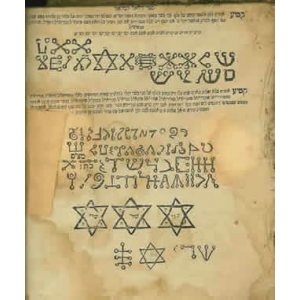
The Book Of Raziel The Angel Or Sefer Raziel Hamalakh

The Book Of Raziel The Angel Or Sefer Raziel Hamalakh Cover

Book: The Book Of Raziel The Angel Or Sefer Raziel Hamalakh by Medieval Grimoires

The Book of Raziel the Angel is a medieval Hebrew Grimoire originally written in Hebrew and Aramaic. We understand that ther is a Latin translation titled Liber Razielis Archangeli, produced under Alfonso X in the 13th century. Like many other mystical manuscripts the Book of Raziel has suffered many from the production of many versions.

The Grimoire contains five Books which cover such secrets as, the mysteries of creation, the production of magical talismans, the angels, the Zodiac, Gematria and the names of God. It draws heavily on the Sepher Yetzirah and Sepher Ha-Razim.

The Book was reputed to have been given to Adam by the Angel Raziel in order to teach Adam the spiritual laws of nature, knowledge of the planets, stars and the spiritual laws of creation. Raziel also taught Adam the knowledge of the power of speech, thought, the Hebrew alphabet and how to co-exist harmously with the physical and spiritual worlds.

The Book is still available today, and a Hebrew version may be obtained from any good Jewish bookshop for it is still believed that the book has power. However, it is forbidden to open the book or read it because of its inherent power. Therefore many keep their copies sealed. Finally, by tradition no charge may be taken for the book!

Download Medieval Grimoires's eBook: The Book Of Raziel The Angel Or Sefer Raziel Hamalakh

Free eBooks (Can Be Downloaded):

Benjamin Rowe - The Book Of The Seniors
Michal Jerabek - The Book Of Enoch Vol V The Epistle Of Enoch
Medieval Grimoires - The Book Of Raziel The Angel Or Sefer Raziel Hamalakh

The Great Rite Invocation

The Great Rite Invocation Cover Assist me to erect the ancient altar
At which in days past all worshipped
The great altar of all things
For in times of old, woman was the altar
Thus was the altar made and placed
And the sacred place was the point within the center of the circle
As we have of old been taught
That the point within the center is the origin of all things
Therefore should we adore it
Therefore whom we adore we also invoke
O circle of stars

Whereof our Father is but the younger brother
Marvel beyond imagination, soul of infinite space
Before whom time is ashamed
The mind bewildered, and the understanding dark
Not unto thee may we attain unless thine image be love
Therefore by seed and root, and stem and bud
And leaf and flower and fruit, do we invoke thee
O Queen of Space, O Jewel of Light
Continuous One of the Heavens

Let it be ever thus
That man speak not of thee as One, but as None
And let them not speak of thee at all
Since thou art continuous
For thou art the point within the Circle, which we adore
The point of life without which we would not be
And in this way truly are erected the holy pillars
In beauty and in strength were they erected
To the wonder and glory of all men

Altar of mysteries manifold, the sacred circle’s secret point
Thus do I sign thee as old, with kisses of my lips anoint
Open for me the secret way, the pathway of intelligence
Beyond the gates of night and day, beyond the bounds of time and sense
Beyond the mysteries aright, the five true points of fellowship
Here where the Lance and Grail unite
And feet, and knees, and breast, and lip

Stewart and Janet Farrar – 1984.

Free eBooks (Can Be Downloaded):

Aleister Crowley - Invocation
Friedrich Adler - The Witchcraft Trial In Moscow
Michael Sharp - The Great Awakening
Aleister Crowley - The Supreme Ritual The Invocation Of Horus
John Dee - The Practice Of Enochian Evocation

Saturday, October 2, 2010

The Egyptian Book Of The Dead

The Egyptian Book Of The Dead Cover

Book: The Egyptian Book Of The Dead by Ea Wallis Budge

"The Egyptian Book of Dead"—the ancient Egyptian title is ‘rw nw prt m hrw’ , roughly translated as “Spells of Going Forth by Day” — was written by the ancient Egyptians as a sort of guide to help newly deceased souls as they crossed over into the afterlife. It was usually written on a papyrus scroll which was sent with the prepared body in its coffin or burial chamber.

German Egyptologist Karl Richard Lepsius first used the title, “Book of the Dead” in a selection of Texts he published in 1842. Since then, the word “Egyptian” has been added and it has become the generally accepted title of the book. E. A. Wallis Budge published this translation in 1901 and, as an important version, it is still in print to this day.

The Book of the Dead was the product of a long process of evolution from the Pyramid Texts of the Old Kingdom (writings on the crypt walls intending to help the dead person) to the Coffin Texts of the Middle Kingdom (similar writings, placed on the outside of a coffin). Eventually, many of these texts were written on papyrus and placed in the burial chamber, or inside the coffin with the mummy.

About one-third of the chapters in The Book of the Dead are derived from the earlier Coffin Texts. The Book of the Dead itself was adapted to The Book of Breathings in the Late Period, but remained popular in its own right until the Roman period.


Download Ea Wallis Budge's eBook: The Egyptian Book Of The Dead

Free eBooks (Can Be Downloaded):

Gerald Gardner - The Garnerian Book Of Shadows
Friedrich Max Muller - The Sacred Books Of The East
Lady Galadriel - The New Book Of The Law
Ea Wallis Budge - The Egyptian Book Of The Dead

Thursday, September 30, 2010

The Devil Notebook

The Devil Notebook Cover

Book: The Devil Notebook by Anton Szandor Lavey

Anton Szandor LaVey was a man full of biting wit, iconoclastic insight and, above all, a most astute and adroit observer of human folly and misinterpretation, himself being subjected to the latter more than anyone in recent memory.

In this book, published after two decades of inactivity (to the world of print), LaVey sheds light on many interesting topics, bringing his usual dose of sardonic humor to the printed page.

A particular essay comes to mind when I think of this book- it's called "Hatha Toilet Seat Meditaion," and if it doesn't solicit laughter from you, nothing will. For those of you who are familiar with it, I'm certain you're grinning right now. For those who aren't, read the book and find out why.

Other essays focus on some pretty forbiding topics, and the level of candor expressed by LaVey never lets us forget that while the media may have portrayed him as several things- none of which were especially flattering- we will continue to respect him for the insight he shared with us, remembering the first time we read the "Satanic Bible," a book that for many of us described the thoughts we'd always thought, but never knew anyone else did.

In general The Devil Notebook is very useful and practical black magic book that does explain (with some deals hidden) the ways of satanic practices. The author knows the material, and its well laid out with clear - but as I say some missing - instructions. However, the book does deliver much material. I read an interesting but rare satanic gem called the Question of Lucifer, about how far Lucifer has penetrated into the upper ranks of power and elite. It was fascinating, and very, very scary, depending on if you are on the White or black magic side. That book unknowingly exposed some satanic secrets and left a lot open for us to see, more than the author expected - if you are willing to read it. Be warned!

Download Anton Szandor Lavey's eBook: The Devil Notebook

Free eBooks (Can Be Downloaded):

Mark Mirabello - The Odin Brotherhood
Rabbi Michael Laitman - The Open Book
Anton Szandor Lavey - The Devil Notebook

The Sacred Magic Of Abramelin The Mage Book 3

The Sacred Magic Of Abramelin The Mage Book 3 Cover

Book: The Sacred Magic Of Abramelin The Mage Book 3 by Abramelin The Mage

Volume III of The Book of the Sacred Magic of Abramelin the Mage.

The Book of Abramelin tells the story of an Egyptian mage named Abramelin, or Abra-Melin, who taught a system of magic to Abraham of Worms, a German Jew presumed to have lived from c.1362 - c.1458. The system of magic from this book regained popularity in the 19th and 20th centuries due to the efforts of Mathers' translation, The Book of the Sacred Magic of Abramelin the Mage, its import within the Hermetic Order of the Golden Dawn, and later within the mystical system of Thelema (created in 1904 by Aleister Crowley).

Unfortunately, Mathers used the least-reliable manuscript copy as the basis for his translation, and it contains many errors and omissions. The later English translation by Georg Dehn and Steven Guth, based on the earliest and most complete sources, is more scholarly and comprehensive. Dehn attributed authorship of The Book of Abramelin to Rabbi Yaakov Moelin (Hebrew ca. 1365–1427), a German Jewish Talmudist.

Structure of the book

The grimoire is framed as a sort of epistolary novel or autobiography in which Abraham of Worms describes his journey from Germany to Egypt and reveals Abramelin's magical and Kabbalistic secrets to his son Lamech. Internally the text dates itself to the year 1458.

The story involves Abraham of Worms passing his magical and Kabbalistic secrets on to his son, and tells how he acquired his knowledge. Abraham recounts how he found Abramelin The Mage living in the desert outside an Egyptian town, Arachi or Araki, which borders the Nile. Abramelin's home sat atop a small hill surrounded by trees. He was an Egyptian mage and taught a powerful form of Kabbalistic magic to Abraham. He was a "venerable aged man", and very courteous and kind. He discussed nothing but "the Fear of God", leading a well-regulated life, and the evils of the "acquisition of riches and goods."

Abramelin extracted a promise from Abraham that he would give up his "false dogmas" and live "in the Way and Law of the Lord." He then gave Abraham two manuscript books to copy for himself, asking for ten gold florins, which he took with the intention of distributing to seventy-two poor persons in Arachi. Upon his return fifteen days later, after having disposed of the payment money, Abramelin extracted an oath from Abraham to "serve and fear" the Lord, and to "live and die in His most Holy Law." After this, Abramelin gave Abraham the "Divine Science" and "True Magic" embedded within the two manuscripts, which he was to follow and give to only those whom he knew well.

Origin of the manuscript

The book exists in the form of six manuscripts and an early printed edition. The provenance of the text has not been definitively identified. The earliest manuscripts are two versions that date from about 1608, are written in German and are now found in Wolfenbuttel Another two manuscripts are in Dresden, and date from about 1700 and 1750 respectively.

The first printed version, also in German, dates to 1725 and was printed in Cologne by Peter Hammer. A partial copy in Hebrew is found in the Bodleian Library in Oxford, and dates from around 1740. A manuscript copy existed in French in the Bibliotheque de l'Arsenal in Paris, an institution founded in 1797. The French copy has since disappeared, but is available on microfilm.

All German copies of the text consist of four books: an autobiographical account of the travels of Abraham of Worms to Egypt, a book of assorted materials from the corpus of the practical Kabbalah (including some which is duplicated in the German-Jewish grimoire called "The Sixth and 7th Books of Moses") and the two books of magic given by Abramelin to Abraham. The well-known English translation by S.L. MacGregor Mathers from the French Manuscript in Paris contains only three of the four books. The Hebrew version in Oxford is limited to Book One, without reference to the further books.

Of all the extant sources, the German manuscripts in Wolfenbuttel and Dresden are taken by scholars to be the authoritative texts. According to respected Kabbalah scholar Gershom Scholem, the Hebrew version in Oxford was translated into Hebrew from German. An analysis of the spelling and language usage in the French manuscript indicates that it dates to the 18th century, and that it was also likely copied from a German original. Although the author quotes from the Jewish Book of Psalms, the version given is not from the Hebrew; rather, it is from the Latin Vulgate, a translation of the Bible employed by Roman Catholics at that time.

The German esoteric scholar Georg Dehn has argued that the author of The Book of Abramelin was Rabbi Yaakov Moelin (Hebrew 1365–1427), a German Jewish Talmudist and posek (authority on Jewish law). (ref Georg Dehn, The Book of Abramelin: A New Translation, transl. by Steven Guth, Ibis Publishing, 2006)

Magic word squares

The practical magic of Abramelin (found in both Book III of the French text, and Book IV of the German original) centers around a set of talismans composed of magic word squares. These are similar to traditional magic squares, though the latter are usually composed of numbers, while Abramelin's squares contain letters. Commonly word squares are used as puzzles or as teaching aids for students. In the context of Abramelin, the focus becomes mystical—so that each square should contain words or names that relate to the magical goal of the square. A parallel is found in the famous Sator Arepo Tenet Opera Rotas word square, an altered version of which is also found among Abramelin's squares.

For example, a square entitled "To walk under water for as long as you want" contains the word MAIAM, the Hebrew and Arabic word for "water". A square for recovering treasures of jewelry begins with the word TIPHARAH (a variant of Tiferet), which can mean "golden ring" in Hebrew and is also the name of the sphere of "Beauty" on the Kabbalistic Tree of Life.

Download Abramelin The Mage's eBook: The Sacred Magic Of Abramelin The Mage Book 3

Free eBooks (Can Be Downloaded):

Aleister Crowley - The Sixth Chakra Of The Human Body
Manly Palmer Hall - The Secret Teachings Of All Ages
Solomonic Grimoires - The Magic Of Armadel
Abramelin The Mage - The Sacred Magic Of Abramelin The Mage Book 2
Abramelin The Mage - The Sacred Magic Of Abramelin The Mage Book 3

Monday, September 27, 2010

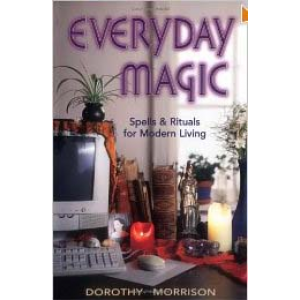
Everyday Magic Spells And Rituals For Modern Living

Everyday Magic Spells And Rituals For Modern Living Cover

Book: Everyday Magic Spells And Rituals For Modern Living by Dorothy Morrison

Is it time for a change? Is it time to improve your life with a better job, a happier home, or more romance? Then you need Everyday Magic by Dorothy Morrison! This is magic for modern Wiccans, and for everyone regardless of their religious affiliation. It is filled with hundreds of spells, chants, rituals, charms and formulas for incenses and oils. Every one is tested and powerful yet easy to use.

Everyday Magic is a well written book and it fit into my everyday living just as if it had been written for me personally. The modern day methods of dealing with the "old ways" of the craft amazed me. To go to a thrift store and pick up a cheap blender instead of trying to do so many herbal blends with the mortar. I was so mermerized with so many of Dorothy's modern gimmicks. Being able to improvise has always been big with me, Dorothy seems to do the same in her book.

Sure, there are spells for romance and prosperity. Those are as important today as they were a thousand years ago. But this book also presents magic that deals with today's problems. Speed up your computer's modem. Make sure your luggage arrives safely; ease labor pains; free yourself from anger; find a parking spot. These are all things we need and that you can do by following the simple instructions in this book!

One of the roadblocks to successful magical workings that many people face is finding the proper oils and incenses. Morrison's solution: Make them yourself! But don't use the old techniques that take hours, days, or even weeks to accomplish. Instead, you'll learn how to use common appliances such as a drip coffee maker, a blender, and a crock pot to create your own powerful incenses, oils, washes, brews, and more. What a practical timesaver!

And saving time in today's world is what this book is all about. Of course, if the spells, charms, rituals and techniques weren't practical and effective, saving time would be meaningless. Well, what you'll learn here is powerful -- and is presented by a woman who has been a Witch for more than 20 years and taught on two continents!

Dorothy Morrison has a daring point of view that magic is not just compatible with technology--the two can actually help one another. Since technology has made our lives more productive, surely it can enhance our magic too. (Have you ever thought of making your herbal infusions in an automatic-drip coffeemaker?) Technological assistance with magic is only part of the story. Morrison has filled a grimoire with charms that protect from car trouble and ensure the safe and timely arrival of luggage while traveling, and spells to keep a computer from crashing, which makes life in the 20th century a little less harrowing. Rather than fighting the progress of the electronic age, Morrison has tapped into the wealth it has to offer, and she shares her discoveries with anyone adventurous enough to try them.

The spells and rituals in here are all based on today's available materials. Trying to find something called dragon's blood was not easy for me. In this book, Dorothy makes it all so simple and still so effective. Spells of interest to the modern twentieth century housemate and businessperson. Spells and rituals that make so much sense and are so easily adaptable for my and others active lives.

I recommend, as I have many times, reading this book. I have read many and find this one to my liking on a high rating of "Way to go, Dorothy Morrison"
Excellent book and will keep an eye and ear open of reports of others from D. Morrison. Age, gender, and type of path are not even a stoppage point here. For all and then some.

Buy Dorothy Morrison's book: Everyday Magic Spells And Rituals For Modern Living

Free eBooks (Can Be Downloaded):

Kveldulf Gundarsson - Teutonic Magic The Magical And Spiritual Practices Of The Germanic Peoples
Tupman Tracy Ward - Theatre Magick Aleister Crowley And Rites Of Eleusis
Richard Alan Miller - The Magical And Ritual Use Of Herbs
Talismagick - Love Spells And Rituals For Love And Relationships

Sunday, September 26, 2010

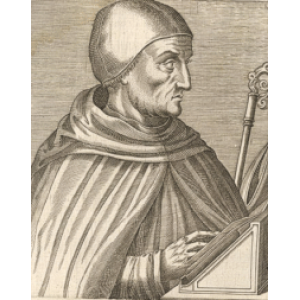
Albertus Magnus Biography

Albertus Magnus Biography Cover Albertus Magnus (1193-1206? - 1280) also known as “Albert the Great” was a German scholar of theology, philosophy, natural science, medicine, alchemy, astrology, chemistry and physics. He was also an alleged magician who believed in the benefits of botany, claiming that various plants, rocks and amethysts improved clairvoyance. He was known as “Doctor Universalis” (“Universal Doctor”) because of the breadth of his knowledge, and was especially noted for introducing Greek and Arabic science and philosophy to the medieval world. He was the most prolific writer of his century and was the only scholar of his time to be called “the Great”, a title that was used even before his death.

Albertus Magnus was born Albert de Groot, in Lauingen, Bavaria, the eldest son of the Count of Bollstadt, a military lord in the service of Emperor Frederick II. Later contemporaries such as Roger Bacon (1214-1294) applied the latinised name of “Albertus Magnus” out of respect for his immense reputation as a scholar and philosopher. Nothing about his primary or preparatory education is known but it is thought he was privately tutored at home before being sent to Bologna University in Italy for his formal education. He then moved to Padua University where he studied the liberal arts and teachings of the Greek philosopher Aristotle.

While there in 1223, he was recruited by the Blessed Jordan of Saxony, the second Master General of the recently formed Dominican Order of Friar Preachers (founded by St Dominic in 1214), who was doing the rounds of major universities in Europe recruiting the best young scholars into the Dominican Order. The Order at that time was less than ten years old, and had only been granted ecclesiastical approval in 1216. Magnus was ordained in a Dominican convent house in Cologne, Germany, from where he quickly advanced through the ranks of the Order.

After leaving Padua, Magnus taught theology at several convent houses throughout Germany including: Regensburg, Freiburg, Strasbourg, Hildesheim and lastly at the convent house in Cologne, were he reinterpreted Peter Lombard’s “Book of the Sentences” (Magister Sententiarum), the theological textbook used in most of the medieval universities. He then moved on to the University of Paris were he became Master of Theology in 1245.

His most famous pupil at the University of Paris was Thomas Aquinas, who later in 1248 joined him at the new Studium Generale in Cologne, in which Magnus was appointed Regent and were Aquinas became his second professor and Magister Studentium (Master of Students). Magnus went on to become an influential Church administrator, teacher and preacher, and travelled throughout Western Europe on behalf of the Dominican Order.

In 1254 Magnus was made provincial of the Dominican Order in Germany, and in 1256 journeyed to Rome to defend the Mendicant Orders against an attack by William of St. Amour, who sought to have the Dominican’s right to alms removed. Magnus succeeded in having his book treatise “De novissimis temporum periculis” condemned by Pope Alexander IV on the 05th October 1256. During his short stay in Rome, he also filled the position of Master of the Sacred Palace, from were he preached on the Gospel of St. John and the Canonical Epistles.

A year later in 1257, Magnus resigned the office of Provincial in Germany to devote himself to his studies and teaching, although he remained a leading force in the Order. At a General meeting of the Dominicans held in Valenciennes, France in 1258, with Thomas Aquinas and Peter of Tarentasia (later Pope Innocent V), he drew up rules for the direction of studies and determined the future system of graduation to be used throughout the Order.

In 1260 Magnus was called by the Pope Alexander IV to serve as the Bishop of Regensburg, a position he resigned from in 1262, in order return to his convent in Cologne, there once again to concentrate on his scholarly interests. However from 1263 to 1264 he was made a legate of Pope Urban IV, and sent to preach the crusades throughout Germany and Bohemia, where subsequently he lectured at Wurzburg and at Strasbourg.

On his journeys around Europe, Magnus showed an intense interest in natural phenomena, and was consumed by the scientific writings of Aristotle. He examined his works, commented on them, and occasionally contradicted them based on the evidence of his own observations. In his laboratory in Cologne he carried out his own experiments in chemistry, mineralogy and physics, and built up a collection of plants, insects and chemical compounds. Of his experiments he is said to have discovered the metallic element of arsenic, caustic potash, and was the first person to determine the chemical composition of cinnabar, minium and white lead.

As a theologian and philosopher, Magnus was outstanding among his contemporaries but not as innovative as his star pupil Thomas Aquinas. Magnus attempted to bring Aristotelian doctrines together with Christian teachings, and in his Summa Theologiae (1270) he maintained that human reason could not contradict revelation, but defended the philosopher’s right to investigate divine mysteries.

In 1274 Magnus was called by Pope Gregory X to attend the ecumenical Council of Lyon, where he had to defend the orthodoxy of his former pupil Thomas Aquinas and the Aristotelian doctrines that both he and Aquinas held to be true. While there he received the sad news that Aquinas had died on his way to the same Council. The news was a heavy blow to Magnus who declared, “that a shining light of the Church had been extinguished”. In 1277 when it was announced that critics wished to condemn and writings of Aquinas, believing that his teachings were too favourable to unbelieving philosophers, Magnus again travelled to Paris to defend his good name.

Magnus suffered serious health problems in 1278 and later died in Cologne on the 15th of November 1280. He was buried in a crypt tomb at the Dominican Church of St. Andreas in Cologne, while his relics were held at Cologne Cathedral. Much later in 1622 he was beatified, and later still declared a Saint by Pope Pius XI in 1931, at which time he was also acclaimed an official Doctor of the Church. In 1941 Pope Pius XII made him the Patron Saint of Natural Sciences.

In the centuries after his death, many myths and stories were told about Magnus the alchemist and magician. On the subject of alchemy and chemistry, he had written mant treaties, including: Alchemy; Metals and Materials; the Secrets of Chemistry; the Origin of Metals; the Origins of Compounds, and Concordance, which is a collection of Observations on the philospher's stone. Other alchemical and chemistry topics were collected under the name of Theatrum Chemicum.

Magnus believed that stones had occult properties, as he related in his work De mineralibus. However there is little actual evidence that he personally performed alchemical experiments. Most of the modern myths are the result of later works, such as the alchemical work known as the Secreta Alberti or the Experimenta Alberti, which were falsely attributed to Magnus by their authors in order to increase their prestige through association. According to one myth, Magnus is said to have discovered the Philosopher’s Stone and passed it on to his pupil Thomas Aquinas. While Magnus made observations about the stone in his writings, he does not mention ever discovering or owning it, although he did record that he witnessed the creation of gold by “transmutation”.

Magnus was also deeply interested in astrology, as were most academics in his day. In the high Middle Ages and well into the early modern period, few intellectuals questioned the basic theories of astrology i.e. that humans lived within a web of celestial influences that affect their bodies, and motivates them to behave in certain ways. They believed that astrology could be used to predict the probable future of a human being. Magnus made this a central component of his philosophical system, arguing that an understanding of celestial influences could help us to live our lives more in accord with Christian precepts. His astrological beliefs can be found in a work he authored around 1260, now known as the Speculum astronomiae. However, details of these beliefs can be found in almost everything he wrote, from his early Summa de bono to his last work the Summa theologiae.

The works of Albertus Magnus represents the entire body of European knowledge, as was extent during his time, not only in theology but also in philosophy and the natural sciences. His importance to the history of medieval academia consists in his bringing Aristotelian doctrines to the fore against the reactionary tendencies of his contemporaries. But it was by his writings on the natural sciences that he exercised his greatest influence. Albertus Magnus must be regarded as unique in his time for having made accessible and available the Aristotelian knowledge of nature and for having enriched it by his own observations. A pre-eminent place in the history of science was accorded to him when because of his achievements, he was canonised and made the Patron Saint of Natural Sciences.

Free eBooks (Can Be Downloaded):

Aleister Crowley - Liber 132 Liber Apotheosis
Anonymous - The Lawes Against Witches
Aleister Crowley - Liber 011 Nu With Commentary
Aleister Crowley - Eight Lectures On Yoga
Aleister Crowley - Liber 666 The Master Therion A Biographical Note

The Art Of Hypnotism Self Hypnosis And Hypnotizing Others

The Art Of Hypnotism Self Hypnosis And Hypnotizing Others Cover Many years ago I went to a Hypnotist to learn the Art. He taught me how to hypnotize myself and others. It is actually an easy process involving very little study and practice. You must remember.... not everyone can be hypnotized. Some people are so wrapped up in their thoughts of every day worries that they can not simply concentrate. In order to be hypnotized... you must be able to relax and clear your mind just the same as you would during meditation..
I would suggest trying it on yourself before trying it on others. Here are the steps to hypnotizing yourself....

1. Sit on a couch in the upright position and close your eyes and your arms at your side or in your lap. Do not move around. Just sit there and relax for a minute.

2. Clear your mind of all thoughts. How do you do this?.... simply imagine a big Dumpster or a very large metal box on your mental screen. Then see it open and put all your thoughts and worries in it one by one.... bills... your lovelife.... problems.... your children.... your job... everything you can think of. Then close the lid and lock it! Then push it off your mental screen.

3. Now sit there quietly with no thoughts for a minute. When you are ready to start... do not forget to tell yourself as you go through each part of the body that you are becoming more and more relaxed as you go. YOU MUST TELL YOURSELF THIS!

4. Now... start with your head.... imagine every part of your head relaxing... start with your eyes.... then go to your ears.... the mouth... all your facial muscles. spend time with each part to make sure it is fully relaxed.

5. Now go to your neck and do the same.

6. Now go to your whole chest and stomach region and start with your heart... slow it down and make it at peace. Relax all you chest muscles and then your stomach area.

7. Now relax your arms feeling them going limp. Relax every muscle in your arms one by one including your fingers.

8. Next go to the groin area and relax all the muscle there.

9. Now it is time to do your legs.... start with the thighs and work your way down to the feet relaxing each and every toe.

By this time you should be like a big lump of silly putty... totally relaxed and and at peace. Now here comes the fun part. This is where you will get to hypnotize yourself and see if it really works.....

1. Site there with you arms in you lap and or at your side and tell yourself that your right arm is getting very light. It is getting very, very light. Keep telling yourself this and feel how it is getting lighter. Tell yourself that it is getting so light that is is staring to raise up off your lap. Feel it it getting light as you keep telling yourself this and feel it raising up off you lap. It is getting lighter by the second and it is raising up higher and higher until it is up in the air.

2. Once you have achieved this and your arm is up in the air you may tell yourself it is getting heavy again and lower it to your lap. You will now tell yourself that you will awaken fully refreshed with energy and a clear mind.

3. Open your eyes and evaluate what you have done. Write down your experience in your magical journal. If you did not have success... try again later that day and keep trying until you are satisfied. If it never works for you.... you may be one of those who cannot be hypnotized.

Now.... this method can be used on someone else. Try it on your best friend... except you are the one who will be telling them to relax each part of their body. Then do the arm raising stunt with them and see if it works. Remember.... as you go through each part of the body with them... tell them they are getting more and more relaxed and sleepy. If this works then you can try more difficult things like making them do funny things...

Remember... DO NOT MAKE PEOPLE DO THINGS THAT WILL HURT THEM OR OTHERS!

You can also use this method to remember things and program yourself to lose weight or study better or what ever you so choose!

If you have been successful.... Congratulations! You now know how to Hypnotize!

Free eBooks (Can Be Downloaded):

Wouter Hanegraaff - Dictionary Of Gnosis And Western Esotericism
Ernest Abraham Hart - Hypnotism Mesmerism And The New Witchcraft
Israel Regardie - The Art Of True Healing
Robert Ambelain - Martinism History And Doctrine

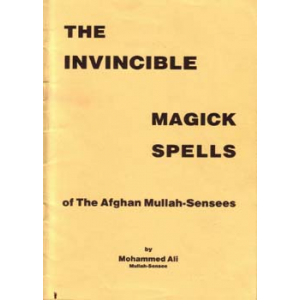
Invincible Magick Spells Of The Afghan Mullah Sensees

Invincible Magick Spells Of The Afghan Mullah Sensees Cover

Book: Invincible Magick Spells Of The Afghan Mullah Sensees by Muhammad Ibn Arabi

All the spells and signs are from the mountains of Afghanistan and the surrounding areas. All have been handed down from generation to generation, student to student. All are in their original form and have not been translated or altered so as to preserve the originality and power.

Download Muhammad Ibn Arabi's eBook: Invincible Magick Spells Of The Afghan Mullah Sensees

Free eBooks (Can Be Downloaded):

Peter Carroll - The Magical Pact Of The Illuminnates Of Thanateros
Medieval Grimoires - The Black Pullet Or The Hen With The Golden Eggs
Mcgiolla Cathain - Secret Magic Spells Of The Romany Gypsies
Muhammad Ibn Arabi - Invincible Magick Spells Of The Afghan Mullah Sensees

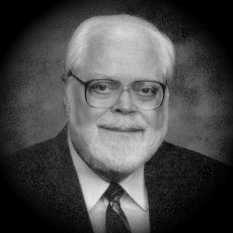
Carl Llewellyn Weschcke Biography

Carl Llewellyn Weschcke Biography Cover Carl Weschcke is president of Llewellyn Worldwide Ltd, one of the largest publishers of occult and New Age books in the world. He is also a Magician, a Tantric practitioner, a Pagan and a former Wiccan High Priest who played a leading role in the rise and spread of Wicca and Neo-Paganism in America during the 1960’s and 70’s.

Weschcke was born into a Roman Catholic family on the 10th of September 1930 in St. Paul, Minnesota. Early in his life his paternal grandfather, who at the time was vice-president of the American Theosophical Society, exposed him to metaphysics and the occult. For his 12th birthday he presented the young Weschcke with his own astrological chart, after and guided by his grandfather, he became fascinated with astronomy, religion, the occult and reincarnation. His parents were vegetarian naturalists who practiced mind reading techniques, and were happy to discuss occult subjects with him. Even one of the houses they lived in had strange and mysterious thumps and bangs in the night, which were attributed to the ghosts of the deceased former owners. Such were the influences that shaped Weschcke’s early life and future path.

Weschcke was educated at the St. Paul Academy and graduated in 1948. He then went on to study at the Babson Business Institute in Massachusetts graduating in 1951 with a Bachelor of Science degree in Business Administration. After graduating he went to work in the family’s Pharmaceutical business, but found the work unfulfilling. He had a dream of becoming a publisher, which led him back to school studying for a doctorate in philosophy at the University of Minnesota. However, his longing to get involved with publishing caused him to leave the university before completing his course, and in 1960 he purchased the little known Llewellyn Publishing Co.

The Llewellyn Publishing Co. was the brainchild of the Welsh astrologer, Lewellyn George, who founded the Llewellyn Publishing Co. in Portland, Oregon during 1901. At that time it was a small mail order business with a limited focus specializing in selling three Astrology books and Calendars. Lewellyn George later moved the company to Los Angeles where he died in 1954. Weschche purchased the business in 1960 and moved it to St. Paul in Minnesota where he began to rebuild it. He quickly expanded the business to include a complete line of books on Astrology and the Occult, and within a decade was publishing some thirty to fifty titles a year, including audio and videotapes. He also launched a series of magazines including: New Dimension, Gnostica, Astrology Now, New Times and New World.

In 1973, Weschcke helped to form and organize the 'Council of American Witches' and became its first Chairman. During his brief tenure as Chairman he drafted the now famous 'Thirteen Principles of Belief' statement, which he considers his proudest accomplishment for the Craft. The statement was later incorporated into the U.S. Army’s handbook for Chaplains. That same year his wife gave birth to their son who they named Gabriel.

By the mid-1970’s Weschcke began to wind down his public activities, feeling his publishing business was starting to stagnate. Weschcke believed his constant media publicity and its resulting attention was the cause of it, and so resolved to do something about it. Selling the haunted mansion on Summit Avenue he moved the family to the country where he could spend and devote more time to them. He restructured the business by closing the bookstore, dropping the festivals and increasing the number of book titles they were publishing. He also included computer software to his range of audio and videotapes.

The Weschckes continue to support the Wiccan and Pagan communities primarily through their publishing, and many of their Authors are sent out to organized conferences and activities. Today, most of their time is taken up by the demands of their business, which by the mid 1990’s had grown into a medium sized publishing house issuing about 100 new titles a year, spanning the general Spirituality and New Age markets. Their son Gabriel, holds a master’s degree in publishing science from Pace University, New York, and now works for the business as its regional sales manger.

Weschcke holds two honorary doctorates, one in magick, and was for a time the Grandmaster of Aurum Solis, an international magickal Order originally founded in England in 1897, but now based in St. Paul. He withdrew from the Order in 1991 and is currently not affiliated with any group. His media prominence during the 1960's and 70's did much to bring Wicca and paganism into the light of acceptability in a skeptical American society.

Free eBooks (Can Be Downloaded):

Valentina Izmirlieva - All The Names Of The Lord
Ann Moura - Green Witchcraft
Michael Night Sky - Carl Liewellyn Weschcke Bringing Magick To The Masses

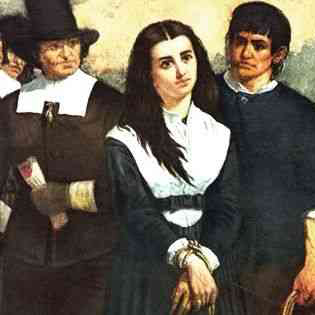
Salem Witch Trials

Salem Witch Trials Cover

Book: Salem Witch Trials by Kirstie Alley

Salem, Massachusetts. A small town--with no clear governing body--became embroiled in a scandal that forever stands as one of the darkest chapters in American history. For those accused of witchcraft by their neighbors and friends, there was little chance of clearing their names; the mass paranoia that ravaged through the community took the lives of 19 innocent men and women. With an all-star cast of Kirstie Alley, Rebecca De Mornay, Kristin Booth, Shirley MacLaine, Peter Ustinov and Alan Bates, Salem Witch Trials dramatically revisits 1692 colonial America and the haunting legacy it holds.

"Salem Witch Trials" is a compelling 2003 CBS mini-series that featured many familiar and veteran actors and for the most part, stayed true to the historical events that came to be known as the Salem Witch Trials.

The mini-series begins on a rather odd note - it is right in the middle of a trial where the afflicted girls [who are the ones accusing people of witchcraft]go into hysterics and start wailing and screaming, then the accused start transforming into 'demons' [with rather striking make-up and 'flying' special effects]. Thankfully, this only lasts a couple of minutes [the production could have done without it], and viewers are taken back via flashback to six months prior where the events began.

The story focuses on the Puritans residing in the village of Salem, Massachusetts, and the year is 1691. There is no charter from England and hence, the Puritans basically govern themselves without any written law. Those who commit crimes or sins are publicly humiliated [there is a scene where women deemed guilty of sinful conduct are paraded naked whilst tied to a wagon]. The family that is the focal point in this series is the Putnam family - Ann Putnam [Kirstie Alley] gives birth to a stillborn child and is full of grief. Her husband Thomas Putnam [Jay O Sanders] is a bitter man, having lost a lot of his land and wealth to others who are more entrepreneurial. They have a son and daughter and young Annie Putnam [Katie Boland] senses the tension between her parents and finds herself being neglected, hence her desire to act out as a means of gaining attention.

The storyline is riveting and moves along at a steady but sure pace, building momentum as the horror unfolds - the acting is also solid and credible - Kirstie Alley's Ann Putnam is a conflicted and tortured soul. Her grief over her dead child causes her to turn to a village medicine woman, Bridgitte Bishop who is later accused as a witch, and this in turn causes her immense guilt [for turning 'away' from God]. She is by turns horrified and self-righteous at the situation in Salem. This is one of Alley's best dramatic performances to date. Henry Czerny's Rev Parris is credibly done, acting out the part of a so-called man of God who decries against self-interest whilst shamelessly practising it for self-preservation. Then there is young Katie Boland as Annie Putnam who incites revulsion for her performance as the misguided accuser.Rebecca de Mornay plays Rev Parris' wife who is mortified by the events in Salem and finally leaves her husband.

There are also veteran actors who have done an incredible job with their roles here - Shirley Maclaine plays the ill-fated Rebecca Nurse, one of the accused who also happens to be a pillar in society, a devout mother and elderly woman who maintains her faith and sense of humor in the bleakest of times. Peter Ustinov plays the Magistrate William Stoughton, a man so absorbed in proving the accused guilty that he never once questions his judgements. And there is Alan Bates playing Gvernor Sir William Phips, who initially acts the dandy and seems disinterested but who eventually realises something is seriously wrong in Salem.

The sets and costumes lend an authentic feel to the story, making the Salem of 1691-'92 come alive onscreen. All in all, this is a first-class production and will appeal to history buffs, educators [though with some nudity I'm not sure if it would be appropriate for classroom viewing] and period & historical drama fans.Highly recommended!

Buy Kirstie Alley's book: Salem Witch Trials

Free eBooks (Can Be Downloaded):

John Musick - The Witch Of Salem
Friedrich Adler - The Witchcraft Trial In Moscow
Marian Green - A Witch Alone

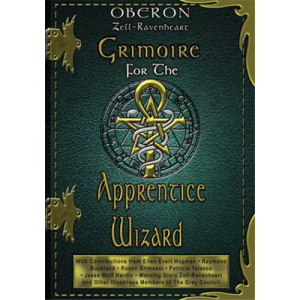
Grimoire For The Apprentice Wizard

Grimoire For The Apprentice Wizard Cover

Book: Grimoire For The Apprentice Wizard by Oberon Zell Ravenheart

Magick, through all its varied forms and traditions, always has at least one component that it shares. Freedom. Freedom from old ideas. Freedom from old religions. A pathway leading the practioner to new depths of themselves, and through that, the world.

It is not, and should not, be used as a tool for the crushing of imagination, but its expansion. It is a very delicate line, to separate one's own prejudices and mythology from the craft itself, creating a clear platform that allows, or even more, encourages the reader to find their own truth. To question authority, even the authority of the writer.

Oberon Zell's grimoire For the Apprentice Wizard does just that. Though there are many books on magick, too often they emphasize the writer's particular viewpoint on the craft, providing a kind of blueprint for development in a particular tradition at the expense of the infinite multiverse of alternate perspectives that could, and should exist.

In his Grimoire, it is apparent that Oberon's intention is to create a platform that is, as well as he is able, clear. Beginning with a brief history of magick in its various incarnations in the Western world; as well as a fundamental glossary of magickal terms as used by all, he moves into beautifully illustrated and well-intentioned explanation of the various types of magick and process.

He includes chapters on healing, herbology, astronomy, mathematics, animal communion (a personal favourite), divination, and many more. Each section illustrates the fundamental principles common to all traditions, allowing the student the space to find their own ideas. Supposedly geared to the adolescent reader, each chapter contains instructions on how to create and manage spells; focusing not only on the process of starting a magick, but the responsible cleanup so often neglected afterwards in making your spells efficient and successful.

I was particularly impressed with the various sources and quotations used in the book. Many authors fail to see (or perhaps, respect) the ways in which spiritual, magickal truths have expressed themselves in today's world. In drawing on gems of wisdom hidden in popular culture; from Aristotle to Discworld, Pythagoreas to Spiderman; Oberon's viewpoint shows an open-mind free of the prejudice of the past that sees the Goddesses, and Gods, still alive inside the imagination of the modern world.

More than just a set of instructions, the Grimoire provides a set of tools designed to allow young minds the opportunity to find their own way through the labyrinth of their imagination. I highly ... highly recommend this book to both new and old readers alike. It is refreshing to see an author who not only claims the intention to provide an open philosophy that still honours its history and practice, but who succeeds in doing so.

Download Oberon Zell Ravenheart's eBook: Grimoire For The Apprentice Wizard

Free eBooks (Can Be Downloaded):

Aleister Crowley - Mortadello Or The Angel Of Venice
Parker Torrence - Grimoire Of Eclectic Magick Part 3 Of 3
Moses Maimonides - The Guide For The Perplexed
Oberon Zell Ravenheart - Grimoire For The Apprentice Wizard.pdf

Sunday, August 22, 2010

Am I Really A Witch

Am I Really A Witch Cover According to some old Elizabethan superstition, if you possess all of these you were considered to be a witch.

Superstition 1 - Witches were able to fly ( this explained how witches could move quickly across impossible distances. A broomstick was then added to the superstition as these became common household Articles used by women) - Well, I do clean with a broom (me).

Superstition 2 - A witch was often portrayed as an old crone or hag ( with no man to defend her against accusations of witchcraft) - I don't have a man (yet) and I do feel old these days (me).

Superstition 3 - Witches are closely associated with living alone (house in the wood) - I live alone in a place made of wood (me).

Superstition 4 - Witches were known to keep animals like the Cat, Frog, Pig, Raven, Goat, Wolf, Goose, Crow, Bat and Mouse which were believed to be the forms adopted by a Witches Familiar (an evil spirit, in animal form, who was used by the witch to perform evil deeds and cast malevolent spells) - I do own three cats and you know if I could, I would own every one of these (me).

Superstition 5 - Witches brewed magic potions over a cauldron (Wise women had knowledge of herbs such as mandrake, datura, monkshood, cannabis, belladonna, henbane and hemlock) - And I love cooking and brewing up good food and some include herbs (me).

And last but not least, my very own and I bet you haven't noticed this...I do have a mole on my nose. Fact. :)

EEEEK! I'M A WITCH! I quote Practical Magic....."there's a little witch in all of us". :) Are you one? :)

Books You Might Enjoy:

Anonymous - So My Kid Is A Witch
Carl Mccolman - The Well Read Witch
Marian Green - A Witch Alone

Wednesday, July 28, 2010

Good Witch Or Bad Witch

Good Witch Or Bad Witch Cover There are many types of witches. That is a fact. However, most witches do not use their powers or abilities for inflicting harm unto others. This is a very common misconception. A large amount of witches use their abilities to aid others in not only soul-searching tasks but to rid and teach how to rid negative energies from one's life. We are often judged as worshipers of a "devil" or "Satan." That is a big contradiction to most of us. A majority of witches do not even believe in a "God of the Devils" aka "Satan." However, we are often scrutinized for stating this because some will say (just as in the olden times) "If you believe in the devil, you are a worshiper...If you say you don't....you are more susceptible to his powers." It is a TOTAL catch 22 for all witches. That was also the method used in the witch Trials.

One suggestion: Please don't ask a witch if he or she "is a good witch or a bad witch." That is just the same as asking a Christian if "they are a good Christian or a bad Christian." Besides, you may get an answer you didn't expect!

Books You Might Enjoy:

Zoroaster - The Chaldean Oracles
Ro Winstedt - Shaman Saiva And Sufi
Carl Mccolman - The Well Read Witch

Anonymous - Witchcraft A Guide To Magic

Tuesday, July 20, 2010

The Real Witch

The Real Witch Cover A complete account of the ingredients of the witch-idea or even of the genuine witch-cult would fill a volume like this. We should have to go back to the very dawn of religion or, if the theory of Sir J.G. Frazer is correct, before its dawn. Frazer holds that magic preceded religion. I contend that magic and the belief in spirits developed separately. But they are blended in the early idea of the witch: a man or woman who receives magical powers by a league with evil spirits.

Something corresponding to the witch is found, and is dreaded and abhorred, in every stage of human evolution. The spirits of the dead were very soon regarded as in very large part malignant and malevolent, and certain persons were held to act in conjunction with them and practice "black magic"; to raise destructive storms, to blight crops or cattle, to cause disease, sterility, or death. Sometimes this persisted quite apart from belief in spirits. The Romans were not much more definite than the Babylonians in their beliefs about a future life, yet they believed very emphatically in magic and its evil powers. The magician was exposed to a sentence of death in Roman law and was often executed. The ground of the law was, of course, purely secular. The practicer of black magic was dangerous to the community.

The Babylonians and Assyrians (and Persians) believed that myriads of evil spirits or devils hovered about the face of the earth and caused all the evils of humanity; and that there was a special class of these malignant beings who moved about at night, inspired bad dreams, and even sucked the blood of sleepers. This belief in legions of devils passed through the Jews, into Christianity, and the particular belief in night-prowlers and blood-suckers or entrail-suckers (vampires, harpies, etc.) obtained currency amongst the Greeks and Romans. The Greek and Latin word strix, which properly means the screech-owl (so naturally associated with the legend), was applied to these dreaded night- birds.

The Fathers of the Church, particularly St. Augustine, the most influential of them all, denounced magic as "pagan" and as a collusion with the devils. The synods of Elvira (306), Ancyra (314), and Laodicea (375), and the sermons of St. Chrysostom and the other great preachers, show that the new Christians brought with them the magical practices as well as the vices of the pagan world. It does not seem to have been enough to denounce these as pagan, so St. Augustine worked out a more deadly theory: the diviner or magician, in whose powers he firmly believed, was in league with the devil. And the Bible was quite clear about such people. It (Leviticus xx, 27 and Exodus xxii, 18) defined a witch as one who "hath a familiar spirit" and condemned him or her to death. Moreover, the Latin and Catholic Bible translates verse 5 of Psalm xcvi (Psalm xcv in the Catholic Bible): "The gods of the heathen are devils." paganism and devilism coincided.

The change was lamentable and is responsible for the ghastly tragedy of later years. The Roman persecution of magicians was based entirely on the belief that they had abnormal powers and the progress of enlightenment might have undermined this belief. But if magic meant collusion with the devil, belief in it was sure to be magnified very considerably under a religion which taught that the world swarmed with devils. It was precisely the elaboration of this devil-doctrine by the great theologians of the Middle Ages which caused the appalling witch-massacres of the fifteenth, sixteenth, and seventeenth centuries. What surprises one at first is that there was comparatively little persecution of witches before the thirteenth century. It was this wonderful thirteenth century, of which modern Catholics are so proud, that inaugurated the massacres on a large scale. A famous philosopher has called it the most stupid century in the whole of the Middle Ages, and certainly it was the most tyrannical, most superstitious, and most sanguinary.

As far as magic is concerned, the Church never wavered, and the practice of its children never relaxed. The situation is analogous to that of the virtue of chastity. The law was clear: the practice almost universally ignored it. On the other hand, there was no consistent attitude in the Church in regard to the striga (as the strix was now called), the blood-sucking nocturnal creature. The Salic Law in south Germany sentenced the atriga to death. The Lombard Law treated the idea as a superstition. Under Charlemagne a synod held at Paderborn in 785 enacted (canon 6): "Whosoever, deceived by the devil, believes, as the pagans did, that any person is a witch and can devour men, and therefore burns that person, and gives her flesh to others to eat, shall be put to death." individual churchmen were just as much at variance. Some believed in the striga: others did not.

Characteristically, what the Church was concerned about most was magic of an erotic nature. In 860 the great archbishop of Rheims, Hincmar, held a solemn inquiry into this, as the king's concubine was supposed to have used such magic on the queen, and he concluded that it was genuine deviltry. On the whole, there were few executions of witches until the eleventh century, when we begin to find isolated executions more frequently in the chronicles.

I am, however, more concerned with the other aspects of witchcraft: the suggestion of an organization contained in the belief that witches flew in the air at night in droves or to an appointed gathering place. It is usually said that there was no organization of witches until the thirteenth century, which would be quite inconsistent with the view that witchcraft was the ancient pagan religion of Europe. The historical truth is not so simple, and it is interesting.

At the end of the tenth century Abbot Regino made a large collection of Church laws and canons, and one of these is concerned with witches. Where and when this canon was passed we do not know. Some scholars trace it to the Synod of Ancyra, in 314, which is impossible, for the Roman world was then almost entirely pagan. It seems to come from some synod of the sixth century. It says:

And we must not overlook this, that certain wicked women, who have turned aside to Satan, seduced by the illusions and phantasms of the demons, believe and profess that during the night they ride with Diana the goddess of the pagans [another version says, or with Herodias] and an innumerable crowd of women on certain beasts, and pass over great spaces of the earth during the night, obeying her commands as their mistress, and on certain nights are summoned to her service. Would that these had perished in their perfidy and had not dragged many with them to destruction! For an innumerable multitude, deceived by this false opinion, believe that these things are true and so depart from the faith and fall into the error of the pagans, believing that there is some divinity apart from the one God, (Migne edition.)

The abbot goes on to say that all this is the work of the devil who assumes various forms to tempt silly women. The law is reproduced again a few years later in the collection of Bishop Burkhard of Worms (Decreta, bk. ix, chap. 5), who adds the vampire- idea: that women claim that they can, even while they lie in bed with their husbands, fly out in the air and suck the heart and entrails out of other men who are abed.

A life of Pope Damasus (of the fourth century) pretends that as early as 367 a Roman synod took cognizance of these women who rode on beasts at night with Herodias. This life is probably spurious, but it is clear that by the sixth century (to which the canon seems to belong) there was something very like organized witchcraft in Europe. We will not press the words "innumerable multitude," but clearly numbers of women met by night to honor Diana, the goddess of the moon and of fertility.

This does not surprise us. Europe never voluntarily accepted Christianity. Paganism was driven into dark corners, but age by age the Church had to thunder against it. The women in particular clung to their Diana, if not to the still older mother-earth goddess. Sterility was a curse in those days, however convenient it may seem to moderns. Everything that could counteract it and beat the blood- magic, the aid of a goddess, or even the mutual inspiration of a human orgy -- was treasured. The cold advice of Christianity to pray to Mary, was found less effective in practice and less congenial than the nocturnal adventure, But it had to be conducted with secrecy and cunning, and it seemed as if the women must fly through the air to the point of assembly.

Where I venture to differ from Miss Murray is when she supposes that these more or less organized gatherings persisted and reappeared as the witches of the fifteenth and sixteenth centuries. The Dianists disappear, and for centuries the Church deals only with individual magicians, male or female. But a new element was meantime entering European life, and the reader will find that it throws a fascinating light upon witchcraft. It is usual to say that Thomas Aquinas with his absurd demonology, and the Inquisition with its terrible scent for heresy, created witchcraft. Let us try another line.

The true religious history of Europe has never yet been written. Possibly the full truth will never be known, as there has been so much suppression and distortion of facts; but we do know that the accepted version is false. Christianity was imposed by force upon a reluctant world. The current idea of a "conversion" of the Roman world to it is not more false than the almost universal belief that it was meekly accepted, if not profoundly cherished, until modern times. Although our forefathers were robbed of their schools and detained for ages in the densest ignorance, it is to their credit that age after age they, in immense multitudes, rebelled against the corrupt priestcraft and the absurd legend of the Christian religion. It is only by the bloody use of force on a colossal scale that the Church maintained its dominion for so many centuries.

Witchcraft was one expression of the constant effort of the race to rid itself of the religion imposed on it. One of the chief rival religions to Christianity in the fourth century had been Manichaeism, and the writings of St. Augustine, who was at first a Manichaean, but later one of the worst slanderers of the religion, show us how heroically its adherents fought for their creed even long after imperial decrees had declared, under pain of confiscation and death, that Christianity was to be the sole religion of the empire.

I need say of it here only that it was an ascetic religion, and that it was based essentially on the ancient Persian belief in two supreme principles, one of light and goodness, the other of darkness and evil. Manichaeism was crushed by the aid of the imperial troops but Manichaean ideas were destined still to play a great part in Europe. And one aspect of the religion deserves special notice. It has been, I suppose, the custom of religious bodies from time immemorial to slander and vilify rival bodies. The Romans themselves put the darkest interpretations on the secret gatherings of the Christians; they were said to indulge in sensual orgies, to worship a god with an ass's head and to kill babies for sacramental purposes. So in time the Christians vilified the Manichees; though St. Jerome candidly admits that they were men and women of far stricter virtue than the Christians themselves. Augustine, however, was chiefly instrumental in defaming them.

In writing his life, I discovered a carefully overlooked passage in which, posing as the first Inquisitor, he made a public examination of two Manichees. The first was a girl of twelve, and from the lips of this child the pious elderly bishop drew the confession, by leading questions, that the Manichees made their sacrament of human semen and flour. The second victim was a sacred virgin of the sect, and Augustine at once charged her with what he had put into the mouth of the little girl. To make the sacrament, he said, she had lain nude on the ground, a little heap of flour beside her, and the priests had ... She protested that she was a virgin, but Augustine's midwives examined her and declared that she was not. Then, Augustine says, she confessed the whole "abominable crime"; in other words, she escaped the drastic punishment of her heresy by letting the bishop have his way and feigning conversion. Later we hear of similar examinations on Manichaean women and confessions of intercourse with "the devil" (probably meaning his representative, the Manichaean priest).

Here, I am convinced, is the origin of one of the ingredients of the early myth of the witch; though in the fully developed witch-cult there was unquestionably a large amount of "intercourse with the devil." However that may be, the Manichaean ideas were merely thrust out of sight, and they broke out again from time to time. One of the most famous heretics of the Greek Church, Paul of Samosata, was the son of a Manichaean mother and his heresy combined the Manichaean principle of two supreme powers with an early form of Protestantism or evangelical Christianity. The Greek Church and Empire -- which, let us remember, had never been tainted by barbarian invasions -- were now, in the eighth century, appallingly corrupt, and this purer religion, as it was, spread widely, especially among the Armenians. Emperor after emperor tried to suppress it. The Empress Theodora put to death no less than one hundred thousand members of the sect; or, in a few years, made fifty times as many martyrs as the pagans had in three centuries. Finally, in the tenth century, no less than two hundred thousand members of the sect were transplanted from Armenia to Thrace, to form a living bulwark against the encroachments of the Bulgars.

But within a short time the worthy Paulicians had spread their gospel peacefully among the Bulgars, and Europe was confronted with a new heresy, the Bogomiles. You have probably never heard of the Bogomiles, but you will surely have heard of those famous heretics of the south of France, the Albigensians, who were drowned by the greatest of the Popes, Innocent III, in their own blood. They (and the Waldensians, the Cathari, the Patarenes, and other obscure bodies of the time) were inspired by the Bogomiles and had the same tincture of Manichaean ideas. The orthodox Catholics of France called them bougres (Bulgars) and it was thus that the innocent name of a people became the worst swear-word of French and English tongues. They were reproached with having a pope in Bulgaria. In short, from the tenth century onward this revolt against orthodox Christianity and its corrupt priests and monks spread over Europe like a prairie fire.

The reader will already have perceived that here we have the clue to the appearance of witchcraft as a secret and organized cult. The Dianists of the sixth and seventh centuries had gone, and until the twelfth century we find only a few isolated executions of witches for practicing black magic. In the twelfth century these become more frequent. In the thirteenth century the swords of the troops and the fires of the Inquisition suppress heresy; and from that time on witchcraft is recognized by the Church as a secret heresy and a widespread organization.

The Paulicians, Bogomiles, Albigensians, etc., were, as usual, slandered by the orthodox. Psellus, one of the leading Greek orthodox writers of the tenth century, wrote a book "On the Operations of the Devils," in which he included almost as many fables as in his lives of the martyrs. The heretics, he says, used to meet at night by candle light and invoke the devils. When these appeared in the shape of animals, the lights were extinguished and the worshipers indulged in an orgy of sexuality with the devils and with each other. This amiable story passed all over Europe and was applied to the heretics everywhere. It will be enough to quote a letter of Pope Gregory IX to show the connection with witchcraft. In 1233 Gregory wrote to the bishops of Germany, urging them to seek out and persecute the heretics. The letter (given in the Latin in the "Annales" of Ravnaldus, year 1233, p. 89) is one of those weird compositions which bring a smile to the lips when one hears Catholics claim some special divine interest in their church and its popes, but it is too long to be quoted here in full.

The Pope says that amongst these heretics "when a neophyte is received there appears to him a kind of frog," though some say it is a toad. Some kiss it shamelessly on the buttocks, others on the mouth, drawing the tongue and spittle of the animal into their mouths. Sometimes this toad is "as big as a goose or a duck." The neophyte next encounters a "man of extraordinary paleness, with deep black eyes, and so thin that his skin seems to be stretched over his bones." The neophyte kisses him and finds that he is "as cold as ice." The worshipers then sit to table, and a large black cat comes out of a statue, and all of them in the order of their dignity, kiss its buttocks. After a time the lights are extinguished and there is the usual orgy of sexual intercourse. If, the Pope gravely explains, there are more men than women, or women than men, they resort to sodomy. The candles are relit, and they sit again at table, when from a dark corner of the room comes a man "shining like the sun from the loins upward, but rough as a cat below." To this devil the neophyte is presented, and the faithful also give consecrated hosts which they have stolen from the churches where they have communicated.

This is almost exactly an account of a witch meeting, and the Pope adds another significant detail. These heretics, he says, declare that God is a tyrant, and that he unjustly condemned Lucifer to hell. Lucifer is the real creator of the world and prince of men, and in the end he will regain his place.

In point of fact, the Paulicians and Bogomiles and their kin had quaintly mixed the old Persian belief with some of the speculations of the Gnostics. The ancient Persians had believed that the evil principle had created matter which was evil. To Christians the evil principle was Lucifer, and the new heretics contended that Lucifer was one of the two sons of God, unjustly cast off by an overbearing father. He became their "prince" and "lord," and (unlike the Persians) they believed that he would ultimately triumph. This belief either led to or was due to -- the details are necessarily obscure, as we know the tenets only from bitter enemies -- another departure from Manichaeism. The Manichaeans had been very ascetic, deeming the flesh (as part of the creation of the evil principle) an evil thing; and it is clear that the Albigensians and other European heretics also led strict lives. But the glorification of Lucifer meant that matter and the flesh could scarcely be regarded as evil, and a reaction into orgies was inevitable. The witches, at least, had such orgies.

Here we have almost the whole of the ingredients of the witch- cult before our eyes. John of Salisbury, bishop of Chartres in the twelfth century, and others refused to believe in the striga. Pope Silvester II (Gerbert) was himself accused of magic. Moorish influence was beginning to teach Europe the elements of wisdom. And, curiously enough, it was the crown of this new development, the Scholastic movement, which completed the evolution of the witch and let loose the murderous forces of the Church.

Books You Might Enjoy:

John Dee - The Calls Of Enoch
Phil Hine - Oven Ready Chaos
Marian Green - A Witch Alone
Carl Mccolman - The Well Read Witch
Monday, July 19, 2010

Prosecuting Witches As A Way Of Attacking Social Problems

Prosecuting Witches As A Way Of Attacking Social Problems Cover Jews and heretics were often treated as scapegoats for other social problems and witches ended up no different. Regions with the most social and political unrest also happened to be those with the greatest problem with witches. Every social, political, and natural problem was blamed on witches. Crop failure? Witches did it. Well gone bad? Witches poisoned it. Political unrest and rebellion? Witches are behind it. Strife in the community? Witches are influencing people.

Lest anyone imagine that the persecution of witches has been relegated to the distant past, it must be noted that witch hunts -- and killings -- continue well into our own "enlightened" times. The church's creation of witchcraft and devil worship has exacted a heavy and bloody toll on humanity which still has not yet been fully paid.

In 1928, a Hungarian family was acquitted of killing an old woman they thought was a witch. In 1976, a poor German woman was suspected of being a witch and keeping familiars, so people in the small town ostracized her, pelted her with stones, and killed her animals. In 1977 in France, a man was killed for suspected sorcery. In 1981, a mob stoned a woman to death in Mexico because they believed that her witchcraft incited an attack on the Pope.

In Africa today, fears of witchcraft cause the persecution and death of people on a regular basis. Parents who fear that their children are possessed or are witches either kill them or turn them out into the streets. Government authorities have tried to put a stop to such nonsense, but they haven't had much luck. Both traditional African religion and Christianity contain enough to feed people's superstitious fears and this leads to others being harmed.

It's not just allegations of witchcraft which causes people to behave like this. Many other things can become the object of hysterical persecutions and prosecutions. Sometimes the alleged threats are genuine and sometimes they are not; in either case, the threats are magnified to such a degree that people no longer feel bound by traditional standards of justice or morality in order to confront their enemies. The consequences are almost always violence and suffering pursued in the name of good and God.

Books You Might Enjoy:

Scott Cunningham - Living Wicca A Further Guide For The Solitary Practitioner
Kathryn Paulsen - Witches Potions And Spells
June Johns - King Of The Witches The World Of Alex Sanders
Scott Cunningham - Wicca A Guide For The Solitary Practitioner

Sunday, July 18, 2010

Male Witches

Male Witches Cover Robin Briggs calculates that 20 to 25 percent of Europeans executed for witchcraft between the 14th and 17th centuries were male. Regional variations are again notable. France was "a fascinating exception to the wider pattern, for over much of the country witchcraft seems to have had no obvious link with gender at all. Of nearly 1,300 witches whose cases went to the parlement of Paris on appeal, just over half were men. ... The great majority of the men accused were poor peasants and artisans, a fairly representative sample of the ordinary population." Briggs adds:

There are some extreme cases in peripheral regions of Europe, with men accounting for 90 percent of the accused in Iceland, 60 percent in Estonia and nearly 50 per cent in Finland. On the other hand, there are regions where 90 per cent or more of known witches were women; these include Hungary, Denmark and England. The fact that many recent writers on the subject have relied on English and north American evidence has probably encouraged an error of perspective here, with the overwhelming predominance of female suspects in these areas (also characterized by low rates of persecution) being assumed to be typical. Nor is it the case that the courts treated male suspects more favourably; the conviction rates are usually much the same for both sexes. (Briggs, Witches & Neighbours: The Social and Cultural Context of European Witchcraft, pp. 260-61.)

Books You Might Enjoy:

Aleister Crowley - White Stains
Carl Mccolman - The Well Read Witch
Margaret Alice Murray - God Of The Whitches
Aristotle - On The Soul
Marian Green - A Witch Alone

Killing Witches As The Best Way To Kill Witchcraft

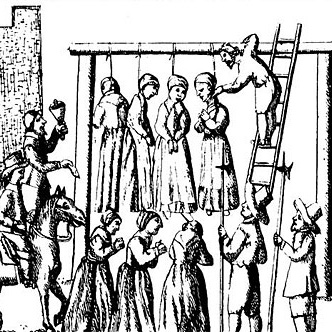
Killing Witches As The Best Way To Kill Witchcraft Cover Burning and hanging were the most popular forms of execution for accused witches in medieval Europe. Burning seems to have been most common in continental Europe while hanging was more common in Britain -- and thus also in the American colonies later as well. The death penalty was imposed on a wide variety of crimes in this era, but witchcraft in particular was punished by death on the basis of Exodus 22:18: "Thou shalt not suffer a witch to live" and Leviticus 20:27: "A man also or woman that hath a familiar spirit, or that is a wizard, shall surely be put to death: they shall stone them with stones."

The heretics who were the earlier targets of the Inquisition were almost never executed at first. They typically had a chance to repent and submit to the Church; only after relapsing into heresy did they generally become subject to execution. Even then, they might still be given another chance to repent. Witches received almost the exact opposite treatment: execution was typically applied after the first accusation and only rarely were accused witches allowed to go free after repenting.

This helps demonstrate the level of threat which the Church made out of witches and witchcraft. Witches couldn't be allowed to live no matter what -- not even if they were willing to admit all that they were accused of and fully repent. Their evil was too much of an existential threat to Christian society and they had to be completely excised, not unlike cancer which has to be cut out lest it kill the entire body. There was simply no tolerance or patience for the witches -- they had to be eliminated, whatever the cost.

Some have claimed that as many as nine million women were executed as witches, even though few could possibly have been truly guilty of witchcraft, and that because this represented a deliberate attempt to kill women generally it should be dubbed a "Women's Holocaust." More recent research demonstrates that many accused witches were men, not just women, and that number of those executed is far lower. Estimates today range from 60,000 to 40,000. Even if we are especially pessimistic, we probably can't go higher than 100,000 people killed across all Europe and over an extended period of time. That's obviously very bad, but not quite a "Holocaust."

Books You Might Enjoy:

William Godwin - The Lives Of The Necromancers
Dr Leo Martello - Weird Ways Of Witchcraft
William Butler Yeats - The Secret Rose And Rosa Alchemica
Allen Greenfield - A True History Of Witchcraft
Michael Harrison - The Roots Of Witchcraft

Popular Posts