Showing posts with label magic library. Show all posts

Thursday, October 21, 2010

Comselha An Enochian Macrocosmic Ritual

Comselha An Enochian Macrocosmic Ritual Cover

Book: Comselha An Enochian Macrocosmic Ritual by Benjamin Rowe
The purpose of this ritual exercise is to invoke the transcendental power of the Enochian god, to transform it in turn through all the macrocosmic powers within the Elemental Tablets, and to organize them into a balanced form. At the same time, these powers are conditioned so that they express a particular view of the creation of which they are a part. As the final step, these energies are directed so that they energize the magician himself.

The magickal records covering the results of the first use of this exercise are available separately.

I have received several complaints about my published rituals recently. Some complain that they are too elaborate, others that they are too simple, and some question whether they really qualify as magickal rituals in the traditional sense.

The complaints of over-elaborateness stem from the fact that it is impossible to perform any significant part of the works in a single session. This is perfectly correct, and is done deliberately. My experience has been that the rewards given to the magician by the "angels" of the Enochian system are very precisely gauged to the amount of care and effort the magician puts into the work. Works that are planned, rehearsed, and carried out over a period of weeks or months are much more likely to produce significant initiations than any number of single-session efforts. The present work was designed to be performed in stages, with the expectation that each stage will be performed until the powers invoked achieve a self-sustaining presence in the magician’s temple before he passes on to the next stage. It can be expected that the rewards will be commensurate with the effort involved.

Complaints of excessive simplicity derive from lack of the pompous verbiage typically found in formal rituals, and the dearth of advice concerning symbols, implements, and materiel that would help to fire the imagination of the magician. There is a decidedly bare-bones feel to the descriptions. This is perhaps an expression of my own character as a magician; I find that complex pomp and ceremony put me off rather than enhancing the work. I have complete faith that every magician’s imagination and intuition will provide him with enhancements appropriate to his or her own character and style, and so see no need to provide more than the minimum schema necessary to accomplish the work successfully.

The differences between these rituals and more traditional forms derives from the nature of Enochian magick. In most systems, the primary difficulty is in producing a flow of the desired power. The major portions of the rituals are dedicated to simply getting the power to appear. Once it does appear, its direction to the desired end is a relatively simple matter.

In contrast, the Angelic Calls and Names provide a means by which even a beginning magician can easily call up a strong flow of force. But the forces involved are much more ambiguous than in other systems. Each appears to have many different natures depending on the level and orientation from which they are viewed; their manifestations seem to be potentially infinite. The primary work of a ritual must accordingly be to focus, direct, and condition them, through the use of the imagination, so that they manifest in a clear and manageable way. This work conforms to that necessity.

Additionally, the specific form used makes this work something resembling an inverse path-working exercise, going top-down rather than bottom-upwards. And as Frater Azoth has pointed out, there are resemblances to the mandala-workings and chakra-visualizations used in Tibetan Buddhism. They are certainly very similar in intent, though the similarity of form was unintentional.

Download Benjamin Rowe's eBook: Comselha An Enochian Macrocosmic Ritual

Books in PDF format to read:

Josh Norton - Charging An Enochian Tablet
Benjamin Rowe - Comselha An Enochian Macrocosmic Ritual

Monday, October 11, 2010

Crystal Vision Through Crystal Gazing

Crystal Vision Through Crystal Gazing Cover

Book: Crystal Vision Through Crystal Gazing by Frater Achad

1923. Or the Crystal as a Stepping Stone to Clear Vision. A Practical Treatise on the Real Value of Crystal Gazing. Contents: The lesser crystal sphere; The greater crystal sphere; Universal crystalline sphere; A consideration of the ancient methods; Further considerations the methods of Dr. Dee and Sir Edward Kelly; Attainment of Crystal Vision; The ultimate crystal.

Achad writes for two audiences, the exoteric occult dabbler that wants to scry and the esoteric mystic who is gazing more deeply than into an orb of stone. It is a treatise on spiritual growth and finding out who you really are - whether you do it in Meditation With your legs crossed or by staring at a crystal, the results are the same for the student of truth. Fascinating!

I found this book to be more than a guide to crystal gazing. It was a warning for those who do not take things of a spiritual nature seriously. And a guide and tease in that it made you want to go deeper into your own spiritualness, but explained that you would have to search farther as well as develop or evolve into a higher place to receive the answers. This will be required text for my children.

Download Frater Achad's eBook: Crystal Vision Through Crystal Gazing

Downloadable books (free):

Saint Synaptics - Metaclysmia Discordia Or The Chaonomicon
Benjamin Rowe - A Ritual Of The Heptagram
Tom Peete Cross - Witchcraft In North Carolina
Frater Ahyhhgyg - Manipulation Through Astral Correspondences
Frater Achad - Crystal Vision Through Crystal Gazing

Tuesday, October 5, 2010

Solitary Wicca For Life Complete Guide To Mastering The Craft On Your Own

Solitary Wicca For Life Complete Guide To Mastering The Craft On Your Own Cover

Book: Solitary Wicca For Life Complete Guide To Mastering The Craft On Your Own by Arin Murphy Hiscock

If you prefer a solitary approach to worship and Witchcraft, this is the book for you. You need sound guidance and tools as you work alone to deepen your knowledge and strengthen your abilities.

Author Arin Murphy-Hiscock provides you with everything you need to take your spiritual practice to the next level. Solitary Wicca for Life encourages you to reach beyond the ordinary and create a unique path of worship, using techniques that go further than other texts:

- Advanced Circle Casting-advanced techniques and applications, plus methods for creating sacred space when a circle isn't necessary
- Enriching Ritual-tools and techniques that bring new depth to personal practice, including sacred drama, masks, ritual garb, and symbols
- Crafting Liturgy-Wiccan ritual defined stage by stage, as well as guidelines for writing invocations, prayers, meditations, and personalized rituals for esbats, sabbats, rites of passage, and more
- Drawing Down Deities-invoking deities for guidance, communion, worship, etc.
- Growing as a Solitary Wiccan-the means by which you'll enhance your spiritual growth and reach out to the world at large.

Solitary Wicca for Life is the essential reference handbook you need to reach deeper, go farther, and strengthen your solitary path-one day at a time.

I read lots of Wicca 101 books, especially those that seem to be aimed at the Solitary Practitioner. With many of them, I will find some points that I think the average solitary practitioner may relate to, or that someone, somewhere, will relate to. Many times, however, the material does not "click" with my own personal beliefs, or they do not take the "Traditional Path" when it comes to Wicca, but rather they are "Wiccanish". This is OK for someone else, but not necessarily for me. But I do not judge by my standards alone, but rather the viewpoint that everyone needs material that will relate to them personally.

Reading this book, however, there was more material here that I found I agreed with, related to and found to be "Traditional" with a Solitary spin than other books of this kind. And this, to me, was a big plus.

Ms. Murphy-Hiscock has taken Wicca back to the roots and explores adaptation to the Solitary way of practice. This is a Wicca 101 book, so it makes a good first handbook for the average new Solitary practitioner and yet, it provides some material that the advanced practitioner may want to review because of its accuracy, to augment their Wiccan practice, to add elements of the Traditional or just because it is well written and has much to ponder and contemplate.

I especially enjoyed her overview of Wicca Origins, and her separation of Traditional Wicca from the Eclectic practices that Wicca has evolved into. She covers well the Tenets of Wicca, discusses common metaphors and myths and separates some of the more widely accepted but none the less mistaken beliefs and practices that have crept into modern Wicca. She gives you a good idea of how to go back to the beginning, re-examine the issues and maybe take away a better representation of what it is that Wicca is really all about.

Arin Murphy-Hiscock has been a practicing Wiccan for ten years, five of those years as a solitary practitioner. She is the series editor of the For Life series and the author of Power Spellcraft for Life: The Art of Crafting and Casting for Positive Change. She lives in Montreal, Canada.

Buy Arin Murphy Hiscock's book: Solitary Wicca For Life Complete Guide To Mastering The Craft On Your Own

Free eBooks (Can Be Downloaded):

Pauline Bradford Mackie Hopkins - Ye Lyttle Salem Maide A Story Of Witchcraft Ocr Version
Janet Farrar - A Witches Bible The Complete Witches Handbook
Anthony Arndt - Blotar A Brief Guide To Asatru Ritual
Aj Drew - Wicca For Couples Making Magick Together
Right - Travel In Spiritual Worlds A Complete Guide On Astral Travels

Saturday, October 2, 2010

Drawing Down The Moon Witches Druids Goddess Worshippers And Other Pagans In America

Drawing Down The Moon Witches Druids Goddess Worshippers And Other Pagans In America Cover

Book: Drawing Down The Moon Witches Druids Goddess Worshippers And Other Pagans In America by Margot Adler

Popular demand for this clear-sighted compendium of information about the rebirth of Pagan religions hasn't waned since its initial publication in 1979. Distinguished by the journalism of National Public Radio columnist Margot Adler, Drawing Down the Moon explains this diverse and burgeoning religion's philosophies and activities while dispelling stereotypes that have long been associated with it. Most people don't realize that pagan simply refers to pre-Christian polytheistic nature religions, such as the various Native American creeds, Japanese Shinto, Celtic Druid, and Western European Wicca. Originally, the word pagan meant "country dweller" and was a derogatory term in Rome in the third century A.D., not unlike calling someone a hick today. If you find yourself feeling queasy when you hear the words witch or pagan, a healthy dose of reeducation via Drawing Down the Moon could be the cure.

I read this book when it was first published and recommned it to anyone who wants to become more enlightened about the topic. I have a social science background, and thus a general understanding of the various world views of traditional societies who are in my opinion closer to old Mother Earth than most of us "moderns" who spend far too much time caught up in our technology. Margot Adler (granddaughter of the famous psychologist) went exploring (ethnographic field work) and this book is the result.

She does not promote any of the world views she describes, she plays the good ethnographer and records what she finds. She participates on several occasions, and thus becomes the "participant observer" recorder. I didn't know much about the revival of "paganism" and had never heard of Wicca before I read Adler's book. I learned that in spite of the professed enlightenment of our modern age, many fear the practices described. Why? Basically, the practice of Wicca seems to be a female oriented way of life--focusing on nature, life, a spiritual path. I for one am continuing to read about Wicca and explore what others are doing.

I figure some of the so-called witches etc. are not what they purport to be, just as some of the agressive so-called Christians driving with bumper stickers that advertise their "faith" are not what they purport to be. I recommend Adler's book if you are interested in comparative religion, are looking for a new way of living or just curious about a somewhat maligned and often persecuted group of mostly women.

Buy Margot Adler's book: Drawing Down The Moon Witches Druids Goddess Worshippers And Other Pagans In America

Free eBooks (Can Be Downloaded):

Mw Macdowall - Asgard And The Gods The Tales And Traditions Of Our Northern Ancestors Ver 2
Leo Joachim Frachtenberg - Allusions To Witchcraft And Other Primitve Beliefs In The Zoroastrian Literature
Robin Artisson - Dance Of The Witches Opening The Devil Eye
Gerina Dunwich - A Witchs Guide To Ghost And The Supernatural
Damon Leff - A Pagan Witches Touchstone Witchcraft And Witch Hunts In South Africa

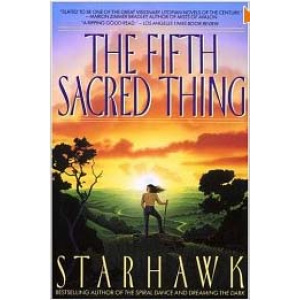
The Fifth Sacred Thing

The Fifth Sacred Thing Cover

Book: The Fifth Sacred Thing by Starhawk

I love this book. I didn't like it at first, but I decided to give it an hour before I made up my mind. Now I am really glad I stuck with it, because it is one of the richest, most thought-provoking books I have ever read.

I had this book on my shelf for several years before I actually read it. Although it obviously sounded good enough at the time I bought it, I feared that it would be preachy and overbearing. It was nothing of the sort. The characters are complex; flawed at times, saintly at others. The story is compelling, combining plots about the personal growth of the various characters, adventure stories as Bird escapes from prison and Madrone ventures into the southern wilds to help the freedom fighters, and the ultimate show down between the San Franciscans and the Stewards. It is a bit simplistic, perhaps, but that didn't stop me from wishing things in reality were more like they are in Maya and Madrone's world. The attempts to portray this world as one free of any racial or sexual bigotry do get a bit heavy handed at times, but never so much that it interfered with my enjoyment of the story. I would recommend this book to anyone, and in fact immediately after I finished Ran out and bought a copy to give as a gift this Christmas.

One of the greatest questions is - how do people resist the violent advances of others without becoming violent themselves? We can look to others for inspiration - HH the Dalai Lama, Gandhi, MLK - there have been a few who have managed to hold on to their ideals despite the crimes inflicted upon them. But how do we do this ourselves? How do we maintain peace within ourselves?

This book discusses these issues on a societal level, but the wisdom you will gain can be applied on a personal level. You will likely find yourself rethinking how you view numerous things - from illness to monogamy.

And the story is interesting and creative, with characters you will come to care about. This is a fantastic book. Go ahead and give it some time - you will probably love it, too!

Buy Starhawk's book: The Fifth Sacred Thing

Free eBooks (Can Be Downloaded):

Friedrich Max Muller - The Sacred Books Of The East
Solomonic Grimoires - The Book Of Secrets
Aleister Crowley - His Secret Sin

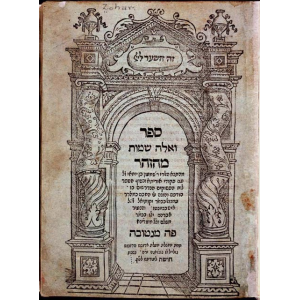
Sefer Ha Zohar Idra Zuta Qadusha Lesser Holy Assembly

Sefer Ha Zohar Idra Zuta Qadusha Lesser Holy Assembly Cover

Book: Sefer Ha Zohar Idra Zuta Qadusha Lesser Holy Assembly by Rabbi Shimon Bar Yochai

Idra Zuta Qadusha (Lesser Holy Assembly), or simply Idra Zuta - the next layer of the core of the five-volume mystical exegesis Sefer HaZohar.

The Sefer HaZohar (Book of Splendor, often referred to simply as "the Zohar") is a five-volume mystical exegesis written in Rashi Aramaic on the five books of the Torah. Like the Sefer Yetzirah, the date and original author of the Zohar are subjects for academic debate. Many qabalistic scholars, such as Gershom Scholem, believe the Zohar to be a new work produced by Moses De Leon, circa 1250 CE in Spain.Scholem, Gershom. Kabbalah, Keter Publishing, Jerusalem, 1974. Others believe that it was dictated by its pivotal figure Rabbi Shimeon Ben Yochai to his son Rabbi Abba in the first century CE, while they and their group of rabbis hid in caves for thirteen years in Piquin, Israel to avoid Roman persecution. Hence, there are also those who would take the intermediary position that De Leon redacted and published a work that had a much earlier time of origin.

The Sefer HaZohar is central to Kabbala that has influenced all mystical movements within Judaism. Many Kabbalists invest it with a sanctity normally accorded only to the Torah and the Talmud. Written mostly in Aramaic, it is believed to be mainly the work of Moses de Leon. The main part of the Zohar provides a mystical and symbolic interpretation of biblical texts, especially the Torah, the book of Ruth, and the Song of Solomon. Other sections deal with the mystery of creation, the problem of evil, and the cosmic significance of prayer and good deeds.

The text of the Zohar is presented as a series of dialogues among a group of rabbis. These rabbis were the embodiments of the various Sefiroth (spheres) on the Tree of Life (see Diagram). Hence, the "flavor" of the respective Sefirah (sphere) colors each rabbi's remarks and questions. Like the Sefer Yetzirah, the Zohar has its own distinct set of names for the Sefiroth, most of which come from the Sefer HaShmoth, and are later echoed in the Torah and Ketuvim (Writings). Those names may be described as various qualities of the Divine, such as Wisdom, Beauty, Glory, and Mercy. The Zoharic names for the Sefiroth are the most commonly known and used among all types of Qabalists.

The body of the five volumes of the Zohar emanates from a core of three extraordinary texts. The innermost layer and heart of the Zohar is a small text called the Sifra Detzniyutha (Book of THAT Which is Concealed). This book contains the single greatest exposition on the negatively existent Mysterious Unknown (called Ayn, and also "The NOT") among all written works of the Mystical Qabalah. The next layer of the core of the Zohar is a text called Idra Rabba Qadusha (Greater Holy Assembly), or simply Idra Rabba; and the third layer of the core is called Idra Zuta Qadusha (Lesser Holy Assembly), or simply Idra Zuta. The Idra Rabba and Idra Zuta expand greatly upon the anthropomorphic allusions introduced in the Sifra Detzniyutha. The "Greater Holy Assembly" is the entire Tree of ten Sefiroth. The "Lesser Holy Assembly" is the upper seven Sefiroth only.

Download Rabbi Shimon Bar Yochai's eBook: Sefer Ha Zohar Idra Zuta Qadusha Lesser Holy Assembly

Free eBooks (Can Be Downloaded):

Solomonic Grimoires - Lemegeton I The Lesser Key Of Solomon Goetia
Aleister Crowley - Liber 017 Fake Liber Iao Or The Book Of Holy Kisses
Rabbi Shimon Bar Yochai - Sefer Ha Zohar Sifra Detzniyutha Book Of That Which Is Concealed
Rabbi Shimon Bar Yochai - Sefer Ha Zohar Idra Rabba Qadusha Greater Holy Assembly
Rabbi Shimon Bar Yochai - Sefer Ha Zohar Idra Zuta Qadusha Lesser Holy Assembly

Thursday, September 30, 2010

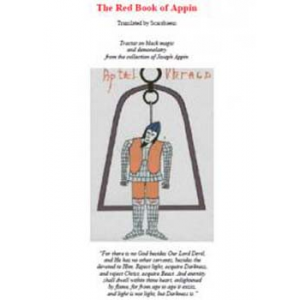
The Red Book Of Appin

The Red Book Of Appin Cover

Book: The Red Book Of Appin by Medieval Grimoires

Translated by Scarabaeus, but the date of the original manuscript is unknown. The Grimoire, primarily a dark Grimoire, is in two parts. The first part concerns the requirements to become an adept who follows a wizard (evil spirit) who initiates the adept into the secrets of the book. The second part of the book introduces Superior Demons and evil spirits together with their seals and invocations.

“Some say that The Red Book had been dictated by Vlad Tepes himself to some monk Kirill. If it is so or not, we cannot say, but the devil-worshipping of the great romanian general is an unquestionable fact, which no serious black adept can deny. It is well known that this document, enwrapped in blood-red leather of some unknown creature (according to rumors , that was one of lower demons, invoked by Vlad specially for this purpose), was kept by the english merchant Joseph Appin (from this comes the title of the book), who died in 1689 and bequeathed to bury it together with him.

Having accomplished their father`s behest, two of his sons afterwards digged his grave out in order to get the access to the source of terrible transcendent knowledge, but found no book there. It is possible that the book had been stolen by some offspiring of Vlad, and since then it was imparted from father to son until the year 1869, when it got into the hands of the Hungarian secret community , which afterwards turned to one of branches of the Great Black Lodge under the abbreviation A.C.C. The copy had been imparted to the Pontiphic of the Lodge Johan Kellenheim in 1901 and translated to polish and German.

The further destinity of the original is unknown. It`s written in the purest version of the enochian language, in comparison with which the language of John Dee is just a pitiable senseless murmuring, and not with enochian symbols but with latin letters, which confirms the version of writing it by the monk, unfamiliar with the Heavenly Language.” If you play with these rituals, you will get burned severely. Before attempting any form of magick, know the theory. Information is Power, please handle it with care.

Download Medieval Grimoires's eBook: The Red Book Of Appin

Free eBooks (Can Be Downloaded):

Aleister Crowley - The Book Of Lies
Ralph Blum - The New Book Of Runes
Anonymous - The Secret Book Of Artephius
Michael Ford - The Book Of Cain
Medieval Grimoires - The Red Book Of Appin

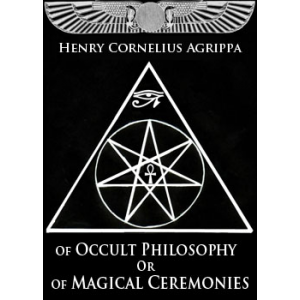
Of Occult Philosophy Or Of Magical Ceremonies The Book Iv

Of Occult Philosophy Or Of Magical Ceremonies The Book Iv Cover

Book: Of Occult Philosophy Or Of Magical Ceremonies The Book Iv by Henry Cornelius Agrippa

Of Occult philosophy Or Of Magical Ceremonies The Book IV of The Three Book of Occult Philosphy by Henry Cornelius Agrippa

The Three Book of Occult Philosphy purports to be the work of Henry Agrippa, the 16th century author of "Three Books of Occult Philosophy". But the 4th Book was obviously not written by Agrippa and bears no resemblance to his style of writing. Although it can be traced back to the 16th century as it is mentioned by Agrippa's student, Johann Weyer in his "De Praestigiis Daemonum", the work remains of uncertain provencance.

In part a partial summary of some of Agrippa's writings, this facsimile of the English translation by the 17th century Cambridge scholar Robert Turner, comprises spurious essays on Geomancy and Magick under the name of Agrippa, The Heptameron of Peter of Abano, and books on Astrology and Demonolgy, concluding with the Arbatel, a largely Judeo-Christian outlook on the dangers of magic.

It is a very quick and easy read, despite the portions dealing with Geomancy and Astrology that even those serious about such subjects would find largely frustrating and incomprehensible.

The work largely remains of pure historical interest with not much of serious substance to an undertanding of Magic and Occult Philiosphy.

This volume is a facsimile of Robert Turner's English translation (1654); the original volume first appeared (in Latin) in Marburg around 1554. The original volume included a large number of short texts of varying interest, but Robert Turner's (1654) (for unclear reasons) decided only to translate a few of them. This edition includes 6 short texts: Of Geomancy (H.C. Agrippa); Of Occult philosophy the Three Book (pseudo-Agrippa); Heptameron or Magical Elements (pseudo-Peter de Abano); Isagoge: An Introductory Discourse on the Nature of ... Spirits... (Georg Pictorius Villinganus); Of Astronomical Geomancy (Gerard of Cremona); and the Anonymous Arbatel of Magic. Only the Geomancy is actually by Agrippa, and it doesn't fit well with the other texts. The Three Book is, as another reviewer noted, certainly spurious; it purports to be Agrippa's "secret key" to the Occult Philosophy, of which he spoke in a letter to a friend. The Heptameron and the Arbatel are grimoires of some interest for those interested in black magic, as indeed is the Three Book itself; the Isagoge is a rather dull dialogue about spirits; and the Astronomical Geomancy is more or less impenetrable but perhaps interesting in a peculiar way. There have been a number of reprints of this volume, some now surprisingly valuable despite their modernity; all, however, have trimmed out one or more of the already few texts. As such, this is probably the best edition available. It is, like all Kessinger products, a cheaply-bound xerox facsimile of the original 17th-century text, but it's readable and includes everything. If you collect grimoires or magical texts, this is a very famous one, and you ought to have it; copies of the various Latin printings turn up with some regularity, and those with access to Latin would do better with those, although they are of course quite expensive. If you're looking for works by Agrippa, the Geomancy is all you'll find here, but it's interesting in a number of respects. If you want to know about Agrippa's ceremonial magic, however, you need to read book 3 of the Occult Philosophy, available in a nice Llewellyn edition.

Download Henry Cornelius Agrippa's eBook: Of Occult Philosophy Or Of Magical Ceremonies The Book Iv

Free eBooks (Can Be Downloaded):

Henry Cornelius Agrippa - Occult Philosophy And Magick Book Iii
Henry Cornelius Agrippa - Occult Philosophy And Magick Book Ii
Henry Cornelius Agrippa - Occult Philosophy And Magick Book I
Henry Cornelius Agrippa - Occult Philosophy And Magick Book Iv
Henry Cornelius Agrippa - Of Occult Philosophy Or Of Magical Ceremonies The Book Iv

Wednesday, September 29, 2010

The Golden Verses Of Pythagoras

The Golden Verses Of Pythagoras Cover

Book: The Golden Verses Of Pythagoras by Antoine Fabre Dolivet

This is english translation of The Golden Verses of Pythagoras by Antoine Fabre d'Olivet (December 8, 1767-March 25, 1825) a French author poet, and composer whose biblical and philosophical hermeneutics infuenced many occultists, such as Eliphas Lvi and Gerard Encausse (Papus), and Ren Gunon.

The Golden Verses of Pythagoras are a collection of moral exhortations. They comprise 71 lines written in hexameter verse and are traditionally attributed to Pythagoras.

The exact origins of the golden verses are unknown and there are varying opinions regarding their dating. It appears that the verses may have been known as early as the third century BC but their existence as we know them cannot be confirmed prior to the fifth century AD.

The golden verses enjoyed great popularity and were widely distributed in late antiquity being often quoted. Their renown persisted during the medieval ages and into the renaissance.
The Neoplatonists used the golden verses as part of their preparatory program of moral instruction and a number of neoplatonic commentaries on the verses are extant.


Download Antoine Fabre Dolivet's eBook: The Golden Verses Of Pythagoras

Free eBooks (Can Be Downloaded):

Anonymous - The Gospel Of Thomas
Anton Josef Kirchweger - The Golden Chain Of Homer
Samuel Croxall - The Secret History Of Pythagoras
Antoine Fabre Dolivet - The Golden Verses Of Pythagoras

Tuesday, September 28, 2010

The Pungo Witch

The Pungo Witch Cover The Pungo Witch, as she has come to be called, or in real life, Grace Sherwood, was accused of bewitching a neighbor's crop in 1698. Allegations of other 'witchy' things escalated over time in the Princess Anne County government. Her accusers decided to test her by 'ducking,' or, trial by water, her innocence or guilt determined by whether she floated or drowned. Drowning, by the way, was the GOOD outcome.

On July 10th, 1706 at ten o'clock, Grace Sherwood was tied by her thumbs, cross-bound and dropped into the western branch of the Lynnhaven River near what is now known as Witchduck Point in Virginia. Unfortunately for Sherwood, she floated. Guilty of being a duck? No, guilty of being a witch. She was imprisoned, and eventually released, but Sherwood lived the rest of her life quietly unvindicated, and died in 1740.

I guess they taught her a lesson, huh? Grace Sherwood was a midwife who would often wear men's clothing while working her own homestead. She went to court a dozen times to either defend herself or sue her neighbors for slander, yet never turned her back on a woman in need of her skills. She never married. Thus one can assume that then, as now, a woman who takes care of herself, a confident, competent woman, is suspect at best, ducked at worst, but always, apparently, in need of being taught to mind her place.

In 2006, she was pardoned by the Governor of Virginia, Timothy M Kaine--300 years after her ordeal. The wheels of justice sure do run slow, sometimes, but at least they turn.

Free eBooks (Can Be Downloaded):

Anonymous - The Laws For Witches
Margaret Alice Murray - The God Of The Witches
Alfred Elton Van Vogt - The Witch

Monday, September 27, 2010

Moon Eclipses

Moon Eclipses Cover A lunar eclipse occurs whenever the moon passes through some portion of the Earth’s shadow. This can only occur when the Sun, Earth and Moon are aligned exactly, or very closely, with the Earth in the middle. As such there is always a Full Moon on the night of a lunar eclipse. Every year there are at least two partial lunar eclipses, while total eclipses are much less common. The type and length of an eclipse depends upon the moon’s location relative to its orbit of the earth. As of writing this article the most recent total eclipse occurred on the 21st February 2008. The next eclipse, allbeit a partial one, will occur on the 16th August 2008. The next total eclipse is due on the 21st December 2010. Unlike a solar eclipse, which can only be seen from a number of small areas around the world, a lunar eclipse can be seen from anywhere on the night side of the Earth.

Free eBooks (Can Be Downloaded):

Charlotte Fell Smith - John Dee
Charles Baize - Pagan Scriptures
Nicolas Schreck - Demons Of The Flesh

Sunday, September 26, 2010

The Philosophers Stone

The Philosophers Stone Cover

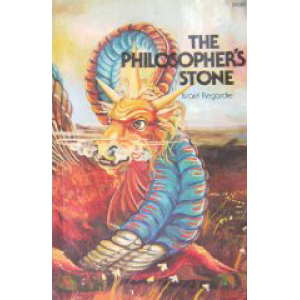
Book: The Philosophers Stone by Israel Regardie

My book has been praised as a good meaningful book by some reviewers and by many readers, to judge from the mail I have received during the past thirty years. It is patently an open sesame to one level of interpretation. The Occult Review, now defunct, published a critical review by Archibald Cockren who took me rather severely to task for asserting that alchemical texts should be interpreted solely in terms of psychological and mystical terms. He himself, I subsequently discovered, had written a book Alchemy Rediscovered and Restored. Of course I immediately procured a copy. Since I was peeved by his review, I did not feel that his book had very much to offer—so I dismissed both offhand. I was about to write the editor of The Occult Review a scorching letter, but reason intervened so that fortunately it never got written.

The opportunity is rarely given to an author in his lifetime “to eat crow” and to enjoy it. This lot, it pleases me to say, is mine—after thirty years. Not that I would significantly change much of what I wrote then. I admitted that I had not “proceeded to the praxis” but I felt then and still do that a mystical and psychological interpretation of some alchemical texts was legitimate. There is unequivocally this aspect of the subject. Certainly Jacob Boehme and Henry Khunrath, for example, cannot be interpreted except in these terms.

The Philosophers Stone with these preliminary comments, should answer a wide-felt need which has called forth this new edition. I hope, being in print once more, it will bring new light and knowledge and values to present-day students who may be still groping in the dark areas of the occult towards alchemy, where a guiding hand needs to be extended.
So, to close this Introduction, I must use the ancient Rosicrucian greeting, and the close of a Golden Dawn ritual:
May what we have partaken here sustain us in our search for the Quintessence; the Stone of the Philosophers, True Wisdom and perfect Happiness, the Summum Bonum.


Download Israel Regardie's eBook: The Philosophers Stone

Free eBooks (Can Be Downloaded):

Yogi Ramacharaka - Yogi Philosophy
Louis Claude De Saint Martin - Theosophic Correspondence
Andrew Lang - The Witch And Other Stories
John Mitchell - The Philosophy Of Witchcraft
Israel Regardie - The Philosophers Stone

Invincible Magick Spells Of The Afghan Mullah Sensees

Invincible Magick Spells Of The Afghan Mullah Sensees Cover

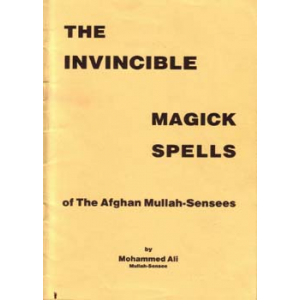
Book: Invincible Magick Spells Of The Afghan Mullah Sensees by Muhammad Ibn Arabi

All the spells and signs are from the mountains of Afghanistan and the surrounding areas. All have been handed down from generation to generation, student to student. All are in their original form and have not been translated or altered so as to preserve the originality and power.

Download Muhammad Ibn Arabi's eBook: Invincible Magick Spells Of The Afghan Mullah Sensees

Free eBooks (Can Be Downloaded):

Peter Carroll - The Magical Pact Of The Illuminnates Of Thanateros
Medieval Grimoires - The Black Pullet Or The Hen With The Golden Eggs
Mcgiolla Cathain - Secret Magic Spells Of The Romany Gypsies
Muhammad Ibn Arabi - Invincible Magick Spells Of The Afghan Mullah Sensees

Carl Llewellyn Weschcke Biography

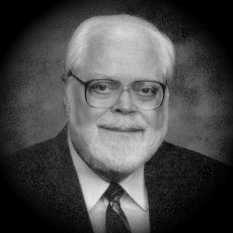
Carl Llewellyn Weschcke Biography Cover Carl Weschcke is president of Llewellyn Worldwide Ltd, one of the largest publishers of occult and New Age books in the world. He is also a Magician, a Tantric practitioner, a Pagan and a former Wiccan High Priest who played a leading role in the rise and spread of Wicca and Neo-Paganism in America during the 1960’s and 70’s.

Weschcke was born into a Roman Catholic family on the 10th of September 1930 in St. Paul, Minnesota. Early in his life his paternal grandfather, who at the time was vice-president of the American Theosophical Society, exposed him to metaphysics and the occult. For his 12th birthday he presented the young Weschcke with his own astrological chart, after and guided by his grandfather, he became fascinated with astronomy, religion, the occult and reincarnation. His parents were vegetarian naturalists who practiced mind reading techniques, and were happy to discuss occult subjects with him. Even one of the houses they lived in had strange and mysterious thumps and bangs in the night, which were attributed to the ghosts of the deceased former owners. Such were the influences that shaped Weschcke’s early life and future path.

Weschcke was educated at the St. Paul Academy and graduated in 1948. He then went on to study at the Babson Business Institute in Massachusetts graduating in 1951 with a Bachelor of Science degree in Business Administration. After graduating he went to work in the family’s Pharmaceutical business, but found the work unfulfilling. He had a dream of becoming a publisher, which led him back to school studying for a doctorate in philosophy at the University of Minnesota. However, his longing to get involved with publishing caused him to leave the university before completing his course, and in 1960 he purchased the little known Llewellyn Publishing Co.

The Llewellyn Publishing Co. was the brainchild of the Welsh astrologer, Lewellyn George, who founded the Llewellyn Publishing Co. in Portland, Oregon during 1901. At that time it was a small mail order business with a limited focus specializing in selling three Astrology books and Calendars. Lewellyn George later moved the company to Los Angeles where he died in 1954. Weschche purchased the business in 1960 and moved it to St. Paul in Minnesota where he began to rebuild it. He quickly expanded the business to include a complete line of books on Astrology and the Occult, and within a decade was publishing some thirty to fifty titles a year, including audio and videotapes. He also launched a series of magazines including: New Dimension, Gnostica, Astrology Now, New Times and New World.

In 1973, Weschcke helped to form and organize the 'Council of American Witches' and became its first Chairman. During his brief tenure as Chairman he drafted the now famous 'Thirteen Principles of Belief' statement, which he considers his proudest accomplishment for the Craft. The statement was later incorporated into the U.S. Army’s handbook for Chaplains. That same year his wife gave birth to their son who they named Gabriel.

By the mid-1970’s Weschcke began to wind down his public activities, feeling his publishing business was starting to stagnate. Weschcke believed his constant media publicity and its resulting attention was the cause of it, and so resolved to do something about it. Selling the haunted mansion on Summit Avenue he moved the family to the country where he could spend and devote more time to them. He restructured the business by closing the bookstore, dropping the festivals and increasing the number of book titles they were publishing. He also included computer software to his range of audio and videotapes.

The Weschckes continue to support the Wiccan and Pagan communities primarily through their publishing, and many of their Authors are sent out to organized conferences and activities. Today, most of their time is taken up by the demands of their business, which by the mid 1990’s had grown into a medium sized publishing house issuing about 100 new titles a year, spanning the general Spirituality and New Age markets. Their son Gabriel, holds a master’s degree in publishing science from Pace University, New York, and now works for the business as its regional sales manger.

Weschcke holds two honorary doctorates, one in magick, and was for a time the Grandmaster of Aurum Solis, an international magickal Order originally founded in England in 1897, but now based in St. Paul. He withdrew from the Order in 1991 and is currently not affiliated with any group. His media prominence during the 1960's and 70's did much to bring Wicca and paganism into the light of acceptability in a skeptical American society.

Free eBooks (Can Be Downloaded):

Valentina Izmirlieva - All The Names Of The Lord
Ann Moura - Green Witchcraft
Michael Night Sky - Carl Liewellyn Weschcke Bringing Magick To The Masses

Salem Witch Trials

Salem Witch Trials Cover

Book: Salem Witch Trials by Kirstie Alley

Salem, Massachusetts. A small town--with no clear governing body--became embroiled in a scandal that forever stands as one of the darkest chapters in American history. For those accused of witchcraft by their neighbors and friends, there was little chance of clearing their names; the mass paranoia that ravaged through the community took the lives of 19 innocent men and women. With an all-star cast of Kirstie Alley, Rebecca De Mornay, Kristin Booth, Shirley MacLaine, Peter Ustinov and Alan Bates, Salem Witch Trials dramatically revisits 1692 colonial America and the haunting legacy it holds.

"Salem Witch Trials" is a compelling 2003 CBS mini-series that featured many familiar and veteran actors and for the most part, stayed true to the historical events that came to be known as the Salem Witch Trials.

The mini-series begins on a rather odd note - it is right in the middle of a trial where the afflicted girls [who are the ones accusing people of witchcraft]go into hysterics and start wailing and screaming, then the accused start transforming into 'demons' [with rather striking make-up and 'flying' special effects]. Thankfully, this only lasts a couple of minutes [the production could have done without it], and viewers are taken back via flashback to six months prior where the events began.

The story focuses on the Puritans residing in the village of Salem, Massachusetts, and the year is 1691. There is no charter from England and hence, the Puritans basically govern themselves without any written law. Those who commit crimes or sins are publicly humiliated [there is a scene where women deemed guilty of sinful conduct are paraded naked whilst tied to a wagon]. The family that is the focal point in this series is the Putnam family - Ann Putnam [Kirstie Alley] gives birth to a stillborn child and is full of grief. Her husband Thomas Putnam [Jay O Sanders] is a bitter man, having lost a lot of his land and wealth to others who are more entrepreneurial. They have a son and daughter and young Annie Putnam [Katie Boland] senses the tension between her parents and finds herself being neglected, hence her desire to act out as a means of gaining attention.

The storyline is riveting and moves along at a steady but sure pace, building momentum as the horror unfolds - the acting is also solid and credible - Kirstie Alley's Ann Putnam is a conflicted and tortured soul. Her grief over her dead child causes her to turn to a village medicine woman, Bridgitte Bishop who is later accused as a witch, and this in turn causes her immense guilt [for turning 'away' from God]. She is by turns horrified and self-righteous at the situation in Salem. This is one of Alley's best dramatic performances to date. Henry Czerny's Rev Parris is credibly done, acting out the part of a so-called man of God who decries against self-interest whilst shamelessly practising it for self-preservation. Then there is young Katie Boland as Annie Putnam who incites revulsion for her performance as the misguided accuser.Rebecca de Mornay plays Rev Parris' wife who is mortified by the events in Salem and finally leaves her husband.

There are also veteran actors who have done an incredible job with their roles here - Shirley Maclaine plays the ill-fated Rebecca Nurse, one of the accused who also happens to be a pillar in society, a devout mother and elderly woman who maintains her faith and sense of humor in the bleakest of times. Peter Ustinov plays the Magistrate William Stoughton, a man so absorbed in proving the accused guilty that he never once questions his judgements. And there is Alan Bates playing Gvernor Sir William Phips, who initially acts the dandy and seems disinterested but who eventually realises something is seriously wrong in Salem.

The sets and costumes lend an authentic feel to the story, making the Salem of 1691-'92 come alive onscreen. All in all, this is a first-class production and will appeal to history buffs, educators [though with some nudity I'm not sure if it would be appropriate for classroom viewing] and period & historical drama fans.Highly recommended!

Buy Kirstie Alley's book: Salem Witch Trials

Free eBooks (Can Be Downloaded):

John Musick - The Witch Of Salem
Friedrich Adler - The Witchcraft Trial In Moscow
Marian Green - A Witch Alone

Monday, August 2, 2010

The Persian Mystics Jalaluddin Rumi

The Persian Mystics Jalaluddin Rumi Cover

Book: The Persian Mystics Jalaluddin Rumi by Frederick Hadland Davis

Rumi (1207-1273) was a Persian jurist and theologian best known for being perhaps the finest of all Sufi poets. His writings have been widely translated and remain especially popular in Iran, Afghanistan, and Tajikistan. Though written from a Sufi perspective, Rumi's poems on spiritual growth-here collected and edited by F. Hadland Davis and first published in 1907-cross all cultural and Religious bounds, and can still be heard today in many secular and religious settings.

The Persian Mystics: Jalalu'd-din Rumi includes selections from some of Rumi's most famous works, the "Divani Shamsi Tabriz" and the "Masnavi," as well as passages on his life and work, and the origin and nature of Sufism.

Download Frederick Hadland Davis's eBook: The Persian Mystics Jalaluddin Rumi

Free eBooks (Can Be Downloaded):

Reynold Nicholson - The Mystics Of Islam
Frederick Hadland Davis - The Persian Mystics Jami
Frederick Hadland Davis - The Persian Mystics Jalaluddin Rumi

Thursday, July 29, 2010

Your Magical Name

Your Magical Name Cover Why a Magical Name?:
Ah, the magical name. So many people find wicca and decide right off the bat that they’re going to name themselves Lady Such-and-Such or Lord Whatsis. Go to a pagan event and you’ll meet more fifteen-year-old Lady Morganas than you can shake a stick at. And it’s virtually guaranteed that within about three months, Lady Morgana will decide her magical name, sometimes called a craft name, is really supposed to be Starfluffle or Moongypsy, and she’ll change it.

In fact, she’ll probably change it two to three times a year.

The Name-of-the-Month Club:
This odd phenomenon, known as the Name-of-the-Month Syndrome, happens most often because the person in question hasn’t taken the time to research and learn, which is crucial to finding the right magical name.

A magical name is unique to the practitioner, and there are several ways to find yours. When you find the right name, you’ll keep it for a long time. In some traditions, it‘s customary to wait until you‘ve studied a year and a day before claiming your magical name. Some Pagans have two magical names -- one which they use in public and one which is known only to the gods and members of the person’s coven.

Think Long-Range:
One method by which people sometimes find their magical name is to simply choose something they like. A problem with this method is that what we like on one day, we may find silly a year down the road. If you’re going to choose a name based on whether it sounds cool or not, stop and think about it. What is it about the name that appeals to you? Ten years from now, are still going to feel comfortable saying, “Hi, I‘m Fairypuddle,” when you meet a new person?

Names with Meaning:
Choose a name not only for its sound, but its attributes as well. For example, someone wishing to convey strength in their name might include “oak“ or “iron“ as part of their moniker. A person who is highly creative might select a name that reflects their art or craft. You may want to choose a name based rooted in folklore or mythology. Many people include the name of an animal that resonates with them. A cautionary note here: in the Pagan community, certain animals pop up all the time. You’ll meet two dozen Ravens and just as many Cats, but it’s unlikely you’ll encounter anyone calling himself Wombat or Penguin.

Names to Avoid:
Another bit of advice -- generally, the titles Lord and Lady are reserved for people who are elders or have a significant amount of leadership experience under their belt. To name oneself Lady So-and-So without any credentials is considered presumptuous by many Pagans. Likewise, in many traditions it’s seen as hubris to give oneself the name of a deity. You may want to choose a name that indicates your dedication to a god or goddess, but don’t co-opt their names. It’s just rude. If you're a dedicant to Apollo, don't call yourself Master Apollo, call yourself something like Apollonius instead.

Using Your Birth Number:
Another popular method of finding a magical name is to choose one that corresponds with your birth number. To find your birth number, begin by adding the digits of your birth date.

If your birthday was September 1, 1966, you would start with the numbers 911966 = 9 + 1 + 1 + 9 + 6 + 6 = 32.

Now take those two numbers (3 and 2), and bring it down to a single digit: 3 + 2 = 5. That number -- in this case, 5 -- is your birth number.

Use the grid below to find a name that corresponds to the number 5, by calculating the sum of the corresponding letters.

1 = A, J, S

2 = B, K, T

3 = C, L, U

4 = D, M, V

5 = E, N, W

6 = F, O, X

7 = G, P, Y

8 = H, Q, Z

9 = I, R

Let’s say you’ve decide you like the name Willow. Using the letters in “Willow” you would take the numbers 5 + 9 + 3 + 3 + 6 + 5 = 32. From there, 3 + 2 = 5. If the name you like doesn’t match your birth numbers, try some creative or alternate spellings to see what happens.

A Gift from the Gods:
In some cases, you may be fortunate enough to have your new name bestowed upon you by a god or goddess. In these instances, you may encounter someone in a dream or a vision who tells you, “Your name is Such-and-such.” While you may choose to add to it or come up with a variation on it later, if this happens to you, accept the name as the gift that it is.

Whatever method you end up using, think carefully before you finalize your new name. While it’s okay to change your name later on as you evolve spiritually, changing your name every few weeks or every time you see a new episode of “Charmed” is probably not the best course of action. Find the name that is right for you -- and when it IS the right one, you will know.


Books You Might Enjoy:

Anonymous - Meditation Of The Four Magickal Weapons
Jarl Fossum - Seth In The Magical Texts
Anonymous - The Mystical Qabbalah
Kenneth Grant - Magical Revival
Aninymous - The Angelical Alphabet

Friday, July 23, 2010

Who Burned The Witches

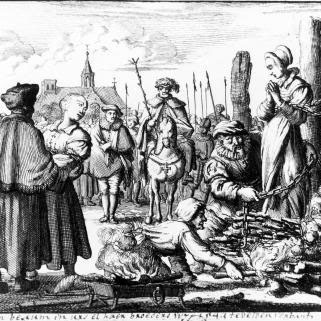
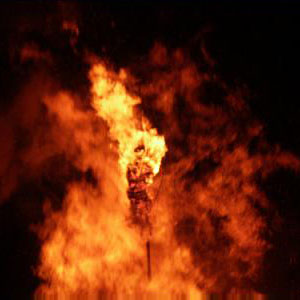
Who Burned The Witches Cover The 30,000 to 50,000 casualties of the European witch-hunts were not distributed uniformally through time or space, even within particular jurisdictions. Three-quarters of Europe saw not a single trial. witch persecution spread outward from its first center in alpine Italy in the early 15th century, guttering out in Poland, where witchcraft laws were finally repealed in 1788. The center had generally stopped trying witches before the peripheries even started.

The Spanish Road stretching from Italy to the Netherlands was also a "witch-road." The Catholic-ruled Spanish Netherlands (today's Belgium) saw far worse persecutions than the Protestant-ruled United Provinces of the Netherlands, which had stopped burning convicted witches by 1600. There were early panics in the German cities of Brandenburg and Mecklenburg, as well as in Lorraine, France, and parts of Switzerland and Scotland. The Rhineland and Southwest Germany suffered severe outbreaks, with German ecclesiastical territories hit hardest. Three-quarters of all witchcraft trials took place in the Catholic-ruled territories of the Holy Roman Empire. But Catholic Portugal, Castile and Spanish-ruled Italy, and the Orthodox lands of Eastern Europe saw virtually none. The panic in Salem, Massachusetts, was as bad as anything in England, but there seem to have been no executions in the Latin colonies of the New World.

The regional tolls demonstrated the patchwork pattern of witch-hunting. The town of Baden, Germany, for example, burned 200 witches from 1627 to 1630, more than all the convicted witches who perished in Sweden. The tiny town of Ellwangen, Germany, burned 393 witches from 1611 to 1618, more than Spain and Portugal combined ever executed. The Catholic prince-bishop of Wurzburg, Germany, burned 600 witches from 1628 to 1631, more witches than ever died in Protestant Sweden, Norway, Finland, and Iceland combined. The Swiss canton of Vaud executed about 1,800 witches from 1611 to 1660, compared with Scotland's toll of between 1,300 and 1,500 and England's toll of 500. The claim of some Catholic apologists that Elizabeth I executed 800 witches a year is gross slander. In Southwest Germany alone, 3,229 people were executed for witchcraft between 1562 and 1684 -- more than were executed for any reason by the Spanish, Portuguese, and Roman Inquisitions between 1500 and 1800. (All three of these Inquisitions burned fewer than a dozen witches in total.)

The most-dreaded lay witch-hunter was Nicholas Remy, attorney general of Lorraine, who boasted of sending 900 persons to the stake in a single decade (1581-1591). But the all-time grand champion exterminator of witches was Ferdinand von Wittelsbach, Catholic prince-archbishop of Cologne, Germany, who burned 2,000 members of his flock during the 1630s.

Let no one argue that witch-hunting was a predominantly Protestant activity. Both Catholic and Protestant lands saw light and heavy hunts. Demonologists and critics alike came from both religious camps.


Books You Might Enjoy:

Ralph Blum - The New Book Of Runes
Marian Green - A Witch Alone
Tarostar - The Witchs Spellcraft Revised
Margaret Alice Murray - God Of The Whitches

Wednesday, July 21, 2010

The Witch Hunter Baedeker

The Witch Hunter Baedeker Cover Meanwhile, witch-hunters' manuals multiplied, most notably the infamous Malleus Maleficarum (Hammer of Witches), published in 1486. Its authors, Jacob Sprenger and Heinrich Kraemer, were experienced Dominican inquisitors who had burned 48 witches in one diocese alone and had obtained a papal bull approving their mission. Reversing the old principle of the Canon Episcopi, Sprenger and Kraemer proclaimed that not believing in the reality of witches was heresy. Witches regularly did physical as well as spiritual harm to others, they wrote, and allegiance to the devil defined witchcraft. Sprenger and Kraemer exhorted secular authorities to fight witches by any means necessary.

Malleus Maleficarum (notice the feminine possessive of "witches") was a vicious misogynist tract. It depicted women as the sexual playmates of Satan, declaring: "All witchcraft comes from carnal lust, which is in women insatiable." Ironically, Sprenger also had a deep devotion to Mary. He helped to shape the modern rosary and founded the first rosary confraternity.

Malleus Maleficarum did not cover its ground completely, failing to discuss the actual pact that witches made with the devil, the sabbat, familiars (imps in animal form who aided witches), and night-flying. But those elements did not always appear in witchcraft cases. By itself, the Malleus started no new witch-panics, but it was freely used by later witchcraft writers, Protestant and Catholic alike. The Spanish inquisitors were nearly alone in scoffing at its lack of sophistication.

The demonologists who absorbed the Malleus were highly cultured men, such as the Protestant Jean Bodin, "the Aristotle of the 16th century," and his contemporary, the Jesuit classicist Martin del Rio. Those theoreticians pounded home the principle of the crimen exceptum: Because witchcraft was so vile an offense, accused witches had no legal rights. "Not one witch in a million would be accused or punished," Bodin boasted, "if the procedure were governed by ordinary rules." Anyone who defended accused witches or denied their crimes deserved the same punishment as witches, Bodin wrote.

Socially elite persecutors, demonologists, and judges relentlessly hunted witches with the zeal of modern revolutionaries pursuing a political utopia. No cost was too great, because witch-hunting served the greater good of Christendom, in their view. They believed that witchcraft inverted society's key values, disturbed godly order, challenged the divine right of kings -- the ancient doctrine that rulers derive their right to rule from God -- and diminished the majesty of God. It was thought that witch-hunting saved souls and averted the wrath of God by purging society of evil as the End Times loomed.

Commoners, by contrast, simply wanted relief from the evildoers of folklore who, they believed, were harming them, their children, their cattle, and their crops. It was grassroots complaints that started most witch-hunts. If authorities were too slow to act, peasants were capable of lynching suspected neighbors.

Although maleficium -- physical harm -- loomed much larger than diabolism in common people's accusations against suspected witches, their folk beliefs cross-fertilized the learned ones of Bodin and others in complex ways. Through sermons, gossip, trial accounts, and luridly illustrated "witch-books" (especially popular in Germany), everyone learned what witches did and how to detect them.


Books You Might Enjoy:

Aleister Crowley - The Sixth Chakra Of The Human Body
Louise Huebner - Witchcraft For All
Aleister Crowley - The Winged Beetle
Tarostar - The Witchs Spellcraft Revised
Margaret Alice Murray - The Witch Cult In Western Europe

Thursday, July 15, 2010

How Many Died In Great Witches Hunt

How Many Died In Great Witches Hunt Cover "The most dramatic [recent] changes in our vision of the Great Hunt [have] centered on the death toll," notes Jenny Gibbons. She points out that estimates made prior to the mid-1970s, when detailed research into trial records began, "were almost 100% pure speculation." (Gibbons, Recent Developments.) "On the wilder shores of the feminist and witch-cult movements," writes Robin Briggs, "a potent myth has become established, to the effect that 9 million women were burned as witches in Europe; gendercide rather than genocide. [See, e.g., the witch-hunt documentary "The Burning Times".] This is an overestimate by a factor of up to 200, for the most reasonable modern estimates suggest perhaps 100,000 trials between 1450 and 1750, with something between 40,000 and 50,000 executions, of which 20 to 25 per cent were men." Briggs adds that "these figures are chilling enough, but they have to be set in the context of what was probably the harshest period of capital punishments in European history." (Briggs, Witches & Neighbours, p. 8.)

Brian Levack's book The Witch-Hunt in Early Modern Europe arrives at roughly similar conclusions. Levack "surveyed regional studies and found that there were approximately 110,000 witch trials. Levack focused on recorded trials, not executions, because in many cases we have evidence that a trial occurred but no indication of its outcomes. On average, 48% of trials ended in an execution, [and] therefore he estimated 60,000 witches died. This is slightly higher than 48% to reflect the fact that Germany, the center of the persecution, killed more than 48% of its witches." (Gibbons, Recent Developments.)

Nonetheless, in the view of Gendercide Watch, even such a reduced and diffused death-toll should be considered "gendercidal," in that it inflicted mass gender-selective killing on European women. Such killing does not need to be totalizing, either in its ambitions or its impact, to meet the definitions of gendercide and genocide that we use. Indeed, it is arguable that at no other time in European history have adult women been targeted selectively, on such a scale, for torture and annihilation.

Books You Might Enjoy:

Janet Farrar - A Witches Bible The Complete Witches Handbook
Paul Huson - Mastering Witchcraft
Carl Mccolman - The Well Read Witch
Marian Green - A Witch Alone

Popular Posts