Showing posts with label casting spells. Show all posts

Thursday, October 21, 2010

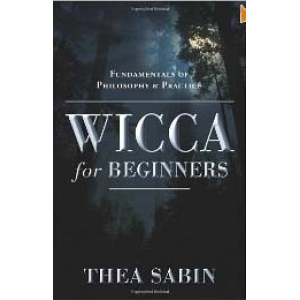
Wicca For Beginners Fundamentals Of Philosophy And Practice

Wicca For Beginners Fundamentals Of Philosophy And Practice Cover

Book: Wicca For Beginners Fundamentals Of Philosophy And Practice by Thea Sabin

In her first book-length work, Sabin presents a first-rate, fresh and thorough addition to the burgeoning field of earth-based Spiritual Practice volumes. Sometimes using examples that young people can relate to (SATs, dying grandmothers), she opens the door to this path for people of all ages who want concrete beginnings to "work actively and spiritually to develop as a person." Sabin covers well the familiar territory of the calendar, circle, pentagram, tools, etc., but she shines distinctively in several areas. The first is in Wiccan history, written in a light, informative style that magically mines depth, breadth and brevity. Another is in the emphasis on personal will and ethical practices that transcend reliance on external paraphernalia. She also deftly shows how the various tools and spells can be put into use, but always encourages practitioners to utilize their own experiences, environment and spiritual intelligence to shape their practice. Especially helpful are the criteria to assess groups and potential teachers, and the volume is capped by a fine bibliography. Sabin advocates consistent study, practice and evolved learning. Gently admonishing her reader not to become a "one-book wonder," Sabin has nearly voided her own advice with this important first effort that is perfect for novice Wiccans.

As a teacher of Wicca for many years, I'm always looking for better materials to use for training. I am grateful to Ms. Sabin for providing what will undoubtedly be the introductory book I will recommend for the foreseeable future. She presents the basics without pushing any given path or tradition, often presenting varying Interpretations and viewpoints in a non-judgemental manner. This is a solid foundation for seekers to use as a springboard to whatever flavor of Wicca they choose to explore. I appreciate that she addresses ethics within Wicca, which many authors seem to avoid, or present in a highly simplistic manner. The book is clearly meant for beginners, hence the title, and is possibly the best overall introduction I have yet seen.

I bought this book to learn more about the Wiccan Religion as my girlfriend is wiccan and I had no prior (correct) knowledge of the religion. This book offers an excellent intro to the history, philosophy and basic practices of the religion as the title suggest. Its also doesn't read like a textbook so its fun and to read. In general I would reccomend this book to anyone just starting out who wants to learn more about the religion.

Buy Thea Sabin's book: Wicca For Beginners Fundamentals Of Philosophy And Practice

Free eBooks (Can Be Downloaded):

Henry Cornelius Agrippa - Occult Philosophy And Magick Book I
Johannes Kepler - Concerning The More Certain Fundamentals Of Astrology
Anonymous - Wicca Beliefs And Practices

Saturday, October 9, 2010

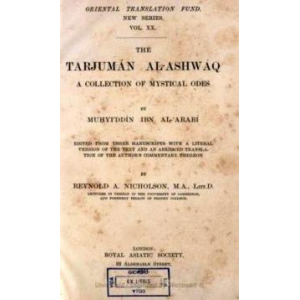
Tarjuman Al Ashwaq A Collection Of Mystical Odes

Tarjuman Al Ashwaq A Collection Of Mystical Odes Cover

Book: Tarjuman Al Ashwaq A Collection Of Mystical Odes by Muhammad Ibn Arabi

The Tarjuman al-Ashwaq (Muhyi al-Din Muhammad ibn 'Ali Ibn al-'Arabi) with the Arabic text, translated by Reynold A. Nicholson Together With a partial translation of the commentary by Ibn 'Arabi'

The Tarjuman al-Ashwaq or "Interpreter of Desires" by Ibn 'Arabi is acknowledged as one of the major works of Sufi literature, alongside those of the great Persian poets Attar, Jalaluddin Rumi, Hafiz and Jami.

In keeping with the poetical tradition of Islam, there is a continuing ambiguity in the verses as to whether they are love poems disguised as mystical odes, or Mystical Odes expressed in the language of human love. The timeless beauty and imagery of the verses cannot be denied, and may be interpreted at many levels. "Gnostics," says Ibn 'Arabi, "cannot impart their feelings to other men; they can only indicate them symbolically to those who have begun to experience the like." In response to the accusation by a religious scholar that these were just sensual poems, Ibn 'Arabi wrote a commentary on the Tarjuman which is partially translated here.

This was one of the first Translations of a book by Ibn 'Arabi into a European langauage, made by the great translator of Rumi's Mathnawi, Reynold A. Nicholson. In both cases his translation was of such outstanding quality that it was more than fifty years before other translators began to try their hands at these texts, and his translations still stand the test of time.

Download Muhammad Ibn Arabi's eBook: Tarjuman Al Ashwaq A Collection Of Mystical Odes

Free eBooks (Can Be Downloaded):

Basil Valentine - Triumphal Chariot Of Antimony
Hilda Roderick Ellis - Road To Hel A Study Of The Conception Of The Dead
Right - Travel In Spiritual Worlds A Complete Guide On Astral Travels
Mark Ludwig Stinson - Heathen Gods A Collection Of Essays Ver 2
Muhammad Ibn Arabi - Tarjuman Al Ashwaq A Collection Of Mystical Odes

Sunday, October 3, 2010

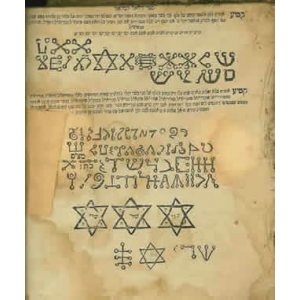
The Book Of Raziel The Angel Or Sefer Raziel Hamalakh

The Book Of Raziel The Angel Or Sefer Raziel Hamalakh Cover

Book: The Book Of Raziel The Angel Or Sefer Raziel Hamalakh by Medieval Grimoires

The Book of Raziel the Angel is a medieval Hebrew Grimoire originally written in Hebrew and Aramaic. We understand that ther is a Latin translation titled Liber Razielis Archangeli, produced under Alfonso X in the 13th century. Like many other mystical manuscripts the Book of Raziel has suffered many from the production of many versions.

The Grimoire contains five Books which cover such secrets as, the mysteries of creation, the production of magical talismans, the angels, the Zodiac, Gematria and the names of God. It draws heavily on the Sepher Yetzirah and Sepher Ha-Razim.

The Book was reputed to have been given to Adam by the Angel Raziel in order to teach Adam the spiritual laws of nature, knowledge of the planets, stars and the spiritual laws of creation. Raziel also taught Adam the knowledge of the power of speech, thought, the Hebrew alphabet and how to co-exist harmously with the physical and spiritual worlds.

The Book is still available today, and a Hebrew version may be obtained from any good Jewish bookshop for it is still believed that the book has power. However, it is forbidden to open the book or read it because of its inherent power. Therefore many keep their copies sealed. Finally, by tradition no charge may be taken for the book!

Download Medieval Grimoires's eBook: The Book Of Raziel The Angel Or Sefer Raziel Hamalakh

Free eBooks (Can Be Downloaded):

Benjamin Rowe - The Book Of The Seniors
Michal Jerabek - The Book Of Enoch Vol V The Epistle Of Enoch
Medieval Grimoires - The Book Of Raziel The Angel Or Sefer Raziel Hamalakh

Saturday, October 2, 2010

What Is A Spell

What Is A Spell Cover A spell is a spoken or written formula that when used in an act of magick is intended to cause or influence a particular course of events. Belief in and the use of spells are universal and have been an integral part of religious practices since ancient times. Methods vary according to culture but all spell work is based on ritual.

Spells are closely related to Prayers, which are rituals consisting of a petition to the Gods or deities (whatever the religion or faith) for a desired outcome. It involves the visualization of a goal, a statement of desire for the goal, and ritualized movements of body positions (e.g., the bowing of the head, the clasping of the hands, the closing of the eyes etc). In magick, spells are closely related to various methods of mind power such as: creative visualization, positive thinking, and positive imaging (see “What is Magick”). All of which emphasize our mental images of the goal and our identification with it, repetition of our intent to achieve this goal, projection of our will, and a petition to the spirits, deities, or the divine force for their aid.

These types of spells are commonly used on a daily bases, the simple lighting of a candle starting the ritual process. Such daily spells constitute minor magick's such as: blessings, self-help, positive thoughts and the sending of helpful healing energies to others. Used on a daily bases it is not therefore necessary to undertake the cumbersome task of a full circle casting ritual (see Circle Casting).

Spells can be beneficial or harmful and can be worked on people, animals, and nature. Their purposes are limitless and include: healing, love, money, success, fertility, longevity, and protection from disaster, ill fortune, and evil. They can also be used to exorcise ghosts and spirits, for victory in battle, truth in divination, weather control, and the accomplishment of supernatural feats. When directed against enemies, spells can be used to cause illness, destruction, loss of love, impotence, barrenness, failure and even death. Spells can be cast to affect the self, or directed to affect another person.

A positive spell is often called a blessing, although such archaic terms as bewitchment and enchantment are still sometimes used. Negative spells are generally known as hexes or curses. A binding spell is one intended to prevent harm, avoid danger, or to stop someone from performing particular acts (e.g., halting a murder, preventing a rape, or even stopping the spread of gossip).

In most cultures, Witches, Sorcerers, Witch doctors, Magicians, and other magically empowered peoples, cast both beneficial and harmful spells as the need dictates. However in contemporary Paganism and Witchcraft, a set of ethics exists that prohibits the use of curses and negative spells against another (see the “Wiccan Rede” and the “Three Fold Law”). The acceptability of binding spells is divided, and is widely debated throughout the community.

Free eBooks (Can Be Downloaded):

Anonymous - Hypnotism Spells
Arthur Edward Waite - What Is Alchemy
Stephen Mcnallen - What Is Asatru

Thursday, September 30, 2010

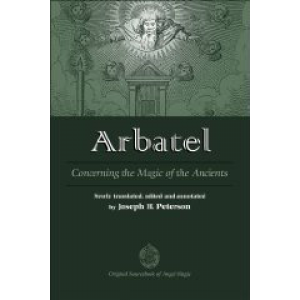
Arbatel Of Magic Or The Spiritual Wisdom Of The Ancients

Arbatel Of Magic Or The Spiritual Wisdom Of The Ancients Cover

Book: Arbatel Of Magic Or The Spiritual Wisdom Of The Ancients by Medieval Grimoires

A magical ritual published at Basle in 1575. The text is in Latin and appears to have been influenced by Paracelsus. It is of Christian, not Jewish, origin, and although the authorship is unknown, it is probably the work of an Italian. Only one of its nine volumes still exists: dealing with the institutions of magic, the work is entitled Isagoge, which means "essential or necessary instruction."

The book introduces the ritual of the Olympic spirits who dwell in the air and among the stars and who govern the world. There are, we are told, 196 Olympic provinces in the universe: thus Aratron has 49; Bethor, 42; Phaleg 35; Och, 28; Hagith, 21; Ophiel, 14; and Phul, 7. Each of the Olympic spirits rules alternately for 490 years. They have natural sway over certain departments of the material world, but outside these departments they perform the same operations magically.

Thus Och, the ruler of solar affairs, presides over the preparation of gold naturally in the soil. At the same time, he presides magically over the preparation of that metal by means of alchemy. The Arbatel states that the sources of occult wisdom are to be found in God, spiritual essences, and corporeal creatures, as well as in nature, but also in the apostate spirits and in the ministers of punishment in Hell and the elementary spirits. The secrets of all magic reside in these, but magicians are born, not made, although they are assisted by contemplation and the love of God.

It is sufficient to describe the powers and offices of one of these spirits. Aratron governs those things that are ascribed astrologically to Saturn. He can convert any living thing into stone, can change coals into treasure, gives familiar spirits to men, and teaches alchemy, magic, medicine, and the secret of invisibility and long life. He should be invoked on a Saturday in the first hour of the day. The Arbatel was said to be one of the best authorities on spiritual essences and their powers and degrees.

Download Medieval Grimoires's eBook: Arbatel Of Magic Or The Spiritual Wisdom Of The Ancients

Free eBooks (Can Be Downloaded):

Frater Astrum - Temple Of Flame The Ritual Opening Of The Veil
Eliphas Levi - The Magic Ritual Of The Sanctum Regnum
Medieval Grimoires - Libellus Magicus Or The True Magical Work Of The Jesuits
Medieval Grimoires - Arbatel Of Magic Or The Spiritual Wisdom Of The Ancients

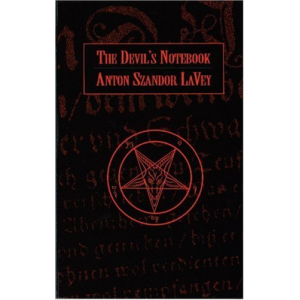
The Devil Notebook

The Devil Notebook Cover

Book: The Devil Notebook by Anton Szandor Lavey

Anton Szandor LaVey was a man full of biting wit, iconoclastic insight and, above all, a most astute and adroit observer of human folly and misinterpretation, himself being subjected to the latter more than anyone in recent memory.

In this book, published after two decades of inactivity (to the world of print), LaVey sheds light on many interesting topics, bringing his usual dose of sardonic humor to the printed page.

A particular essay comes to mind when I think of this book- it's called "Hatha Toilet Seat Meditaion," and if it doesn't solicit laughter from you, nothing will. For those of you who are familiar with it, I'm certain you're grinning right now. For those who aren't, read the book and find out why.

Other essays focus on some pretty forbiding topics, and the level of candor expressed by LaVey never lets us forget that while the media may have portrayed him as several things- none of which were especially flattering- we will continue to respect him for the insight he shared with us, remembering the first time we read the "Satanic Bible," a book that for many of us described the thoughts we'd always thought, but never knew anyone else did.

In general The Devil Notebook is very useful and practical black magic book that does explain (with some deals hidden) the ways of satanic practices. The author knows the material, and its well laid out with clear - but as I say some missing - instructions. However, the book does deliver much material. I read an interesting but rare satanic gem called the Question of Lucifer, about how far Lucifer has penetrated into the upper ranks of power and elite. It was fascinating, and very, very scary, depending on if you are on the White or black magic side. That book unknowingly exposed some satanic secrets and left a lot open for us to see, more than the author expected - if you are willing to read it. Be warned!

Download Anton Szandor Lavey's eBook: The Devil Notebook

Free eBooks (Can Be Downloaded):

Mark Mirabello - The Odin Brotherhood
Rabbi Michael Laitman - The Open Book
Anton Szandor Lavey - The Devil Notebook

Wednesday, September 29, 2010

The Golden Verses Of Pythagoras

The Golden Verses Of Pythagoras Cover

Book: The Golden Verses Of Pythagoras by Antoine Fabre Dolivet

This is english translation of The Golden Verses of Pythagoras by Antoine Fabre d'Olivet (December 8, 1767-March 25, 1825) a French author poet, and composer whose biblical and philosophical hermeneutics infuenced many occultists, such as Eliphas Lvi and Gerard Encausse (Papus), and Ren Gunon.

The Golden Verses of Pythagoras are a collection of moral exhortations. They comprise 71 lines written in hexameter verse and are traditionally attributed to Pythagoras.

The exact origins of the golden verses are unknown and there are varying opinions regarding their dating. It appears that the verses may have been known as early as the third century BC but their existence as we know them cannot be confirmed prior to the fifth century AD.

The golden verses enjoyed great popularity and were widely distributed in late antiquity being often quoted. Their renown persisted during the medieval ages and into the renaissance.
The Neoplatonists used the golden verses as part of their preparatory program of moral instruction and a number of neoplatonic commentaries on the verses are extant.


Download Antoine Fabre Dolivet's eBook: The Golden Verses Of Pythagoras

Free eBooks (Can Be Downloaded):

Anonymous - The Gospel Of Thomas
Anton Josef Kirchweger - The Golden Chain Of Homer
Samuel Croxall - The Secret History Of Pythagoras
Antoine Fabre Dolivet - The Golden Verses Of Pythagoras

Astronomical Geomancy

Astronomical Geomancy Cover

Book: Astronomical Geomancy by Gerald Cremonensis

Astrological geomancy is an ancient method of divination. The word geomancy means earth divination and is believed to have come from the use of sand to generate the geomantic figures, the basis of prediction in geomancy. This also accounts for its Arabic name, ilm al-raml, literally the science or wisdom of the sand.

In the modern era the ancient art of divinatory geomancy has been confused with Chinese feng shui which is not a method of divination, but a science of spatial arrangement, architecture and landscaping. Divinatory geomancy has also had its name appropriated by the modern New Age study of ley lines and earth "energies" which are also not techniques of divination.
Contemporary practitioners of the traditional Western art of geomancy have taken to referring to it as divinatory or astrological geomancy to differentiate it from these more modern uses of the term. Astrological geomancy is a particularly appropriate term as much of the divinatory methodology used in geomancy comes from traditional astrology.

The origins of geomancy are shrouded in mystery, but the first manuscripts describing the practice appear in the 9th century AD in the advanced Islamic civilization of the Middle East. From there it spread to Europe in the 11th and 12th centuries as part of the reception of many arts and sciences, including the occult arts of astrology, alchemy and magic by the rapidly civilizing West. Known in Arabic as ilm al-raml, literally the science or wisdom of the sand, geomancy became quite popular as a divinatory technique because of its ease of learning and use. Here is an interesting article in pdf form by the Dutch academic Wim van Binsbergen on the Astrological Origin of Islamic Geomancy. Because of its close connection to astrology, geomancy has been called "the Daughter of Astrology" and known as terrestial astrology.

Download Gerald Cremonensis's eBook: Astronomical Geomancy

Free eBooks (Can Be Downloaded):

Anonymous - Gerald Cremonensis On Astrological Geomancy
Henry Cornelius Agrippa - Of Geomancy
Nick Farrell - Notes On Geomancy
Gerald Cremonensis - Astronomical Geomancy

The Magic Of Armadel

The Magic Of Armadel Cover

Book: The Magic Of Armadel by Solomonic Grimoires

The grimoire of Armadel translated from the original French and Latin of a manuscript in the Biblotheque l'Arsenal in Paris. This is classed as a Christian Grimoire and contains many important seals and sigils of the various demons and planetary spirits. First translated by S.L. McGregor Mathers in the late 1890’s. The Grimoire of Armadel remained unpublished until 1980.

What follows is an unabridged introduction taken directly from the version of the Grimoire by Frator Alastor:

“…….When Mathers made his translation he notice that the title page was the last page of the Grimoire, so he moved to the front but keep the rest of the chapters in the same order. He also notice that this Grimoire began speaking about the magick circle like if it where something that the reader should already know. Now it is my believe that the whole Grimoire was written backward, this is to say that you should read the last page first (the title page) then the last chapter and so on. If you read it this way you will see that make a lot of sense. In Mathers version the first chapter is a reference to the magick circle and the License to depart, it make no sense to begin a Grimoire that way since the license to depart is the last think that a magician read. Also if you fallow the Latin titles in Mathers version the text begin with the Sanhedrin, Jesus and go on to the creation of Adam and the demons and the angels etc. This order is completely the opposite of that one on the bible this is god first, then the angels, the demons, Adam, Jesus, the Crucifixion and the Sanhedrin. So neither to say I had inverted the orders of the chapters in Mathers version under the believing that this is the way that the magic was intended to be read.”

Download Solomonic Grimoires's eBook: The Magic Of Armadel

Free eBooks (Can Be Downloaded):

William Blake - The Marriage Of Heaven And Hell
John Musick - The Witch Of Salem
Reynold Nicholson - The Mystics Of Islam
Aubrey Bell - The Magic Of Spain
Solomonic Grimoires - The Magic Of Armadel

Sunday, September 26, 2010

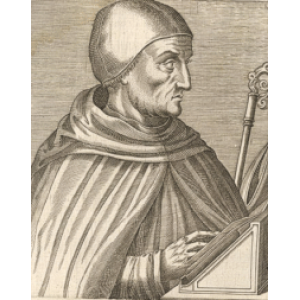
Albertus Magnus Biography

Albertus Magnus Biography Cover Albertus Magnus (1193-1206? - 1280) also known as “Albert the Great” was a German scholar of theology, philosophy, natural science, medicine, alchemy, astrology, chemistry and physics. He was also an alleged magician who believed in the benefits of botany, claiming that various plants, rocks and amethysts improved clairvoyance. He was known as “Doctor Universalis” (“Universal Doctor”) because of the breadth of his knowledge, and was especially noted for introducing Greek and Arabic science and philosophy to the medieval world. He was the most prolific writer of his century and was the only scholar of his time to be called “the Great”, a title that was used even before his death.

Albertus Magnus was born Albert de Groot, in Lauingen, Bavaria, the eldest son of the Count of Bollstadt, a military lord in the service of Emperor Frederick II. Later contemporaries such as Roger Bacon (1214-1294) applied the latinised name of “Albertus Magnus” out of respect for his immense reputation as a scholar and philosopher. Nothing about his primary or preparatory education is known but it is thought he was privately tutored at home before being sent to Bologna University in Italy for his formal education. He then moved to Padua University where he studied the liberal arts and teachings of the Greek philosopher Aristotle.

While there in 1223, he was recruited by the Blessed Jordan of Saxony, the second Master General of the recently formed Dominican Order of Friar Preachers (founded by St Dominic in 1214), who was doing the rounds of major universities in Europe recruiting the best young scholars into the Dominican Order. The Order at that time was less than ten years old, and had only been granted ecclesiastical approval in 1216. Magnus was ordained in a Dominican convent house in Cologne, Germany, from where he quickly advanced through the ranks of the Order.

After leaving Padua, Magnus taught theology at several convent houses throughout Germany including: Regensburg, Freiburg, Strasbourg, Hildesheim and lastly at the convent house in Cologne, were he reinterpreted Peter Lombard’s “Book of the Sentences” (Magister Sententiarum), the theological textbook used in most of the medieval universities. He then moved on to the University of Paris were he became Master of Theology in 1245.

His most famous pupil at the University of Paris was Thomas Aquinas, who later in 1248 joined him at the new Studium Generale in Cologne, in which Magnus was appointed Regent and were Aquinas became his second professor and Magister Studentium (Master of Students). Magnus went on to become an influential Church administrator, teacher and preacher, and travelled throughout Western Europe on behalf of the Dominican Order.

In 1254 Magnus was made provincial of the Dominican Order in Germany, and in 1256 journeyed to Rome to defend the Mendicant Orders against an attack by William of St. Amour, who sought to have the Dominican’s right to alms removed. Magnus succeeded in having his book treatise “De novissimis temporum periculis” condemned by Pope Alexander IV on the 05th October 1256. During his short stay in Rome, he also filled the position of Master of the Sacred Palace, from were he preached on the Gospel of St. John and the Canonical Epistles.

A year later in 1257, Magnus resigned the office of Provincial in Germany to devote himself to his studies and teaching, although he remained a leading force in the Order. At a General meeting of the Dominicans held in Valenciennes, France in 1258, with Thomas Aquinas and Peter of Tarentasia (later Pope Innocent V), he drew up rules for the direction of studies and determined the future system of graduation to be used throughout the Order.

In 1260 Magnus was called by the Pope Alexander IV to serve as the Bishop of Regensburg, a position he resigned from in 1262, in order return to his convent in Cologne, there once again to concentrate on his scholarly interests. However from 1263 to 1264 he was made a legate of Pope Urban IV, and sent to preach the crusades throughout Germany and Bohemia, where subsequently he lectured at Wurzburg and at Strasbourg.

On his journeys around Europe, Magnus showed an intense interest in natural phenomena, and was consumed by the scientific writings of Aristotle. He examined his works, commented on them, and occasionally contradicted them based on the evidence of his own observations. In his laboratory in Cologne he carried out his own experiments in chemistry, mineralogy and physics, and built up a collection of plants, insects and chemical compounds. Of his experiments he is said to have discovered the metallic element of arsenic, caustic potash, and was the first person to determine the chemical composition of cinnabar, minium and white lead.

As a theologian and philosopher, Magnus was outstanding among his contemporaries but not as innovative as his star pupil Thomas Aquinas. Magnus attempted to bring Aristotelian doctrines together with Christian teachings, and in his Summa Theologiae (1270) he maintained that human reason could not contradict revelation, but defended the philosopher’s right to investigate divine mysteries.

In 1274 Magnus was called by Pope Gregory X to attend the ecumenical Council of Lyon, where he had to defend the orthodoxy of his former pupil Thomas Aquinas and the Aristotelian doctrines that both he and Aquinas held to be true. While there he received the sad news that Aquinas had died on his way to the same Council. The news was a heavy blow to Magnus who declared, “that a shining light of the Church had been extinguished”. In 1277 when it was announced that critics wished to condemn and writings of Aquinas, believing that his teachings were too favourable to unbelieving philosophers, Magnus again travelled to Paris to defend his good name.

Magnus suffered serious health problems in 1278 and later died in Cologne on the 15th of November 1280. He was buried in a crypt tomb at the Dominican Church of St. Andreas in Cologne, while his relics were held at Cologne Cathedral. Much later in 1622 he was beatified, and later still declared a Saint by Pope Pius XI in 1931, at which time he was also acclaimed an official Doctor of the Church. In 1941 Pope Pius XII made him the Patron Saint of Natural Sciences.

In the centuries after his death, many myths and stories were told about Magnus the alchemist and magician. On the subject of alchemy and chemistry, he had written mant treaties, including: Alchemy; Metals and Materials; the Secrets of Chemistry; the Origin of Metals; the Origins of Compounds, and Concordance, which is a collection of Observations on the philospher's stone. Other alchemical and chemistry topics were collected under the name of Theatrum Chemicum.

Magnus believed that stones had occult properties, as he related in his work De mineralibus. However there is little actual evidence that he personally performed alchemical experiments. Most of the modern myths are the result of later works, such as the alchemical work known as the Secreta Alberti or the Experimenta Alberti, which were falsely attributed to Magnus by their authors in order to increase their prestige through association. According to one myth, Magnus is said to have discovered the Philosopher’s Stone and passed it on to his pupil Thomas Aquinas. While Magnus made observations about the stone in his writings, he does not mention ever discovering or owning it, although he did record that he witnessed the creation of gold by “transmutation”.

Magnus was also deeply interested in astrology, as were most academics in his day. In the high Middle Ages and well into the early modern period, few intellectuals questioned the basic theories of astrology i.e. that humans lived within a web of celestial influences that affect their bodies, and motivates them to behave in certain ways. They believed that astrology could be used to predict the probable future of a human being. Magnus made this a central component of his philosophical system, arguing that an understanding of celestial influences could help us to live our lives more in accord with Christian precepts. His astrological beliefs can be found in a work he authored around 1260, now known as the Speculum astronomiae. However, details of these beliefs can be found in almost everything he wrote, from his early Summa de bono to his last work the Summa theologiae.

The works of Albertus Magnus represents the entire body of European knowledge, as was extent during his time, not only in theology but also in philosophy and the natural sciences. His importance to the history of medieval academia consists in his bringing Aristotelian doctrines to the fore against the reactionary tendencies of his contemporaries. But it was by his writings on the natural sciences that he exercised his greatest influence. Albertus Magnus must be regarded as unique in his time for having made accessible and available the Aristotelian knowledge of nature and for having enriched it by his own observations. A pre-eminent place in the history of science was accorded to him when because of his achievements, he was canonised and made the Patron Saint of Natural Sciences.

Free eBooks (Can Be Downloaded):

Aleister Crowley - Liber 132 Liber Apotheosis
Anonymous - The Lawes Against Witches
Aleister Crowley - Liber 011 Nu With Commentary
Aleister Crowley - Eight Lectures On Yoga
Aleister Crowley - Liber 666 The Master Therion A Biographical Note
Alex Sanders Biography

Alex Sanders Biography Cover Alex Sanders – the “King of the Witches” as he became known - was responsible for founding the Alexandrian Tradition of Wicca, now one of the main traditions of the Wicca/Witchcraft movement. But his reign was fraught with criticism and controversy.

Alex Sanders was born Orrel Alexander Carter on the 06th June 1926 in a house on Moon St, Birkenhead. He was the eldest of six children to parents Hannah and Harold Carter. His father Harold Carter was a music hall entertainer who suffered from alcoholism, and soon after the birth of Alex, moved the family to Grape St in Manchester, there he unofficially changed the family name to Sanders. Alex was unaware of his official surname until he applied for a passport later in life, at which time he officailly changed his name to Sanders by deed poll.

As a young boy Sanders suffered with tuberculosis and would regularly visit with his grandmother in Wales, where he could benefit from the Welsh fresh air. At the age of seven, he is believed to have happened upon his grandmother “Mary Biddy” performing some sort of pagan ritual. Taken by surprise she immediately swore young Sanders to secrecy, and initiated him on the spot claiming, “Now, you are one of us”. Thus he became her student and started on the path of the Old Religion.

Sanders was a natural psychic who learned all he could from his grandmother. He claimed that she gave him her “Book of Shadows” to copy and taught him all the rites and magic of the witches including clairvoyance by scrying in inky water and using his grandmother's crystal. Sanders also claimed that following the Blitz during WWII and just a few months before her death at age 74, his grandmother conferred upon him the second and third grade initiations involving ritual sex. After her death he tried to contact other witches, and though failing continued with his studies while working for a time as a healer in Spiritualist Churches under the pseudonym of Paul Dallas.

In the early 60’s, Sanders is reported to have sought entrance to some Gardnerian covens (see Gerald Gardner), including that run by "Patricia and Arnold Crowther", who refused to accept him. Not to be put off so easily, he somehow managed to obtain a copy of the Gardnerian Book of Shadows. This he copied (badly from all accounts) and embellished it with a few of his own amendments. He then used this as the bases to found his own coven, claiming it to be a copy of his grandmother’s Book of Shadows.

Sanders was a born showman who avidly courted publicity. In September of 1962 he even succeeded in convincing the Manchester Evening News to run a front-page article about Wicca. As a result he soon attracted a large following. During this period Sanders and his coven worked from his home at 24 Egerton Road North, Chorlton-cum-Hardy, Manchester. One of his initiates was "Maxine Morris", a Roman Catholic 20 years his junior. After her initiation, they handfasted and she became his High Priestess. They were married in a civil ceremony in 1968 and moved into a basement flat near Nottinghill Gate, London. Later that same year, Maxine bore him a daughter they called "Maya".

From their new home the Sanders’ ran his London coven and taught training classes, he claimed to have initiated more than 1,623 witches working in 100 covens around the country, all-practicing what had become known as the Alexandrian Tradition. At one meeting, a gathering of sixteen of his covens, Sanders was bestowed with the title of “King of the Witches”. Sanders frequently appeared in ritual photos as robed or wearing only a loincloth while Witches surrounding him were naked. His explanation for this was that the old “Witch laws” required that the Elder of a coven should be easily identifiable from the other coven members.

In 1968-69, Sanders with Maxine appeared in and gave technical advice on a film called “Legend of the Witches”. During the press preview of the film, they met with and were introduced to "Stewart Farrar", then a reporter for the Reveille. Stewart would later be initiated by Maxine, and move on to become famous himself as a witch and author.

Without doubt Alex Sanders was a controversial and flamboyant man, who without scruples plagiarized the work of others to embellish he own. Whither he did so with malice, remains a question? Personally I don’t think so. More I assume through innocuous indifference, and mainly for the benefit of his students, even though it resulted in criticism from many in the craft. He was also without doubt a very skilled witch, and powerful magician, whose contribution to the newly evolving movement, brought witchcraft back into the public arena and changed the face of Wicca. He helped to influence many newcomers entering the craft and Alexandrian Wicca remains today one of the largest traditions of the craft.

Free eBooks (Can Be Downloaded):

Aleister Crowley - Alice An Adultery
Albert Pike - Morals And Dogma
Aleister Crowley - Alexandra

Salem Witch Trials

Salem Witch Trials Cover

Book: Salem Witch Trials by Kirstie Alley

Salem, Massachusetts. A small town--with no clear governing body--became embroiled in a scandal that forever stands as one of the darkest chapters in American history. For those accused of witchcraft by their neighbors and friends, there was little chance of clearing their names; the mass paranoia that ravaged through the community took the lives of 19 innocent men and women. With an all-star cast of Kirstie Alley, Rebecca De Mornay, Kristin Booth, Shirley MacLaine, Peter Ustinov and Alan Bates, Salem Witch Trials dramatically revisits 1692 colonial America and the haunting legacy it holds.

"Salem Witch Trials" is a compelling 2003 CBS mini-series that featured many familiar and veteran actors and for the most part, stayed true to the historical events that came to be known as the Salem Witch Trials.

The mini-series begins on a rather odd note - it is right in the middle of a trial where the afflicted girls [who are the ones accusing people of witchcraft]go into hysterics and start wailing and screaming, then the accused start transforming into 'demons' [with rather striking make-up and 'flying' special effects]. Thankfully, this only lasts a couple of minutes [the production could have done without it], and viewers are taken back via flashback to six months prior where the events began.

The story focuses on the Puritans residing in the village of Salem, Massachusetts, and the year is 1691. There is no charter from England and hence, the Puritans basically govern themselves without any written law. Those who commit crimes or sins are publicly humiliated [there is a scene where women deemed guilty of sinful conduct are paraded naked whilst tied to a wagon]. The family that is the focal point in this series is the Putnam family - Ann Putnam [Kirstie Alley] gives birth to a stillborn child and is full of grief. Her husband Thomas Putnam [Jay O Sanders] is a bitter man, having lost a lot of his land and wealth to others who are more entrepreneurial. They have a son and daughter and young Annie Putnam [Katie Boland] senses the tension between her parents and finds herself being neglected, hence her desire to act out as a means of gaining attention.

The storyline is riveting and moves along at a steady but sure pace, building momentum as the horror unfolds - the acting is also solid and credible - Kirstie Alley's Ann Putnam is a conflicted and tortured soul. Her grief over her dead child causes her to turn to a village medicine woman, Bridgitte Bishop who is later accused as a witch, and this in turn causes her immense guilt [for turning 'away' from God]. She is by turns horrified and self-righteous at the situation in Salem. This is one of Alley's best dramatic performances to date. Henry Czerny's Rev Parris is credibly done, acting out the part of a so-called man of God who decries against self-interest whilst shamelessly practising it for self-preservation. Then there is young Katie Boland as Annie Putnam who incites revulsion for her performance as the misguided accuser.Rebecca de Mornay plays Rev Parris' wife who is mortified by the events in Salem and finally leaves her husband.

There are also veteran actors who have done an incredible job with their roles here - Shirley Maclaine plays the ill-fated Rebecca Nurse, one of the accused who also happens to be a pillar in society, a devout mother and elderly woman who maintains her faith and sense of humor in the bleakest of times. Peter Ustinov plays the Magistrate William Stoughton, a man so absorbed in proving the accused guilty that he never once questions his judgements. And there is Alan Bates playing Gvernor Sir William Phips, who initially acts the dandy and seems disinterested but who eventually realises something is seriously wrong in Salem.

The sets and costumes lend an authentic feel to the story, making the Salem of 1691-'92 come alive onscreen. All in all, this is a first-class production and will appeal to history buffs, educators [though with some nudity I'm not sure if it would be appropriate for classroom viewing] and period & historical drama fans.Highly recommended!

Buy Kirstie Alley's book: Salem Witch Trials

Free eBooks (Can Be Downloaded):

John Musick - The Witch Of Salem
Friedrich Adler - The Witchcraft Trial In Moscow
Marian Green - A Witch Alone

Sunday, August 22, 2010

Am I Really A Witch

Am I Really A Witch Cover According to some old Elizabethan superstition, if you possess all of these you were considered to be a witch.

Superstition 1 - Witches were able to fly ( this explained how witches could move quickly across impossible distances. A broomstick was then added to the superstition as these became common household Articles used by women) - Well, I do clean with a broom (me).

Superstition 2 - A witch was often portrayed as an old crone or hag ( with no man to defend her against accusations of witchcraft) - I don't have a man (yet) and I do feel old these days (me).

Superstition 3 - Witches are closely associated with living alone (house in the wood) - I live alone in a place made of wood (me).

Superstition 4 - Witches were known to keep animals like the Cat, Frog, Pig, Raven, Goat, Wolf, Goose, Crow, Bat and Mouse which were believed to be the forms adopted by a Witches Familiar (an evil spirit, in animal form, who was used by the witch to perform evil deeds and cast malevolent spells) - I do own three cats and you know if I could, I would own every one of these (me).

Superstition 5 - Witches brewed magic potions over a cauldron (Wise women had knowledge of herbs such as mandrake, datura, monkshood, cannabis, belladonna, henbane and hemlock) - And I love cooking and brewing up good food and some include herbs (me).

And last but not least, my very own and I bet you haven't noticed this...I do have a mole on my nose. Fact. :)

EEEEK! I'M A WITCH! I quote Practical Magic....."there's a little witch in all of us". :) Are you one? :)

Books You Might Enjoy:

Anonymous - So My Kid Is A Witch
Carl Mccolman - The Well Read Witch
Marian Green - A Witch Alone

Tuesday, August 17, 2010

The Mysterious Pentagram

The Mysterious Pentagram Cover The Pentagram means different things to different people. Some may argue as to what it represents, but I will tell you the real meanings of it. The Pentagram right side up represents God ruling over the world of matter. The 5 points represent the 5 places that Christ was wounded. This is why Devils are afraid of it! It also represents the Microcosmic man with his arms stretched out.

Let us not forget that it also represents the elements Spirit, Water, Air, Earth, and Fire as shown below.
This is used by most people in Witchcraft.

Now there is also the upside-down Pentagram. It represents Satan or the world of matter ruling over God. It is the same as denouncing God. To wear it is to attract evil around you. It will not bring good spirits around you. Normally it is only worn by Satanists or devil worshipers. So if you wish to attract good spirits around you... wear it right side up!

Many mainstream religion believers think that they are both evil and represent the Devil. But that is because they are so... ignorant and blind to the fact that there is a difference. It shows their lack of study on the true facts of history. I wear the right side up Pentagram and I personally have had many people come up to me and ask me if I am a Devil worshiper! This really pisses me off! But I explain the reality to them.

Free eBooks (Can Be Downloaded):

Reynold Nicholson - The Mystics Of Islam
Greg Wotton - A Mystery Of The Pentalpha
Captain William Morgan - The Mysteries Of Freemasonry
Franz Cumont - The Mysteries Of Mithra

Friday, August 13, 2010

Summoning Spirits The Art Of Magical Evocation

Summoning Spirits The Art Of Magical Evocation Cover

Book: Summoning Spirits The Art Of Magical Evocation by Konstantinos

If you are interested in summoning up elementals,Planetary spirits, Angels and Goetic beings this is the book to get. Though I do a diffrent ceremony for goetic spirits. I do use the methods in this book for the other beings. The auther gives very good and solid information on the Elementals, Angels, Planetary spirits and Goetic beings. But dont be decieved sometimes evoking these beings are not very easy at all. Be prepared for successes as well as failures. This is a great book to get on the subject of evoking these forces. Now you can learn how to evoke and communicate with 50 spirit entities and make use of their abilities, when you get Summoning Spirits by Konstantinos.

Evoking spirits is one of the Most Powerful magical techniques you can use-but, until now, most of the material available on evocation has been virtually unusable because it was written by those with little practical evocation experience. Summoning Spirits was written by a practicing magician who has successfully performed many evocations. With his guidance and clear directions, performing evocations will be easy and safe for anyone.

- Learn to safely evoke powerful spirits to aid you with any task
- Create sigils charged with the energy of spirits to magnify the effects of your evocations
- Make an etheric egregore, a manufactured spirit that will perform the task of your choice
- Perform easy exercises to train your magical abilities and to develop clairvoyance and clairaudience
- Construct, prepare, and use special magical tools to aid your evocations

Summoning Spirits is a complete manual for evoking entities to effect positive changes in your life. Learn how the spirits that dwell on the other planes can be evoked to the astral and physical planes to help you obtain mystical abilities, locate hidden "treasure," and even command a spirit "army" to protect your home while you're away.

Summoning Spirits describes the specific attributes and abilities of 50 entities that you can evoke to uncover valuable knowledge, and who will help you succeed in nearly any task, magical or mundane.

Whether you need help to face life's challenges or to work a minor miracle, you will find the art of Magical Evocation a tremendously potent tool for change. Included are information and theory, as well as full instructions for all the rituals you will need to prepare for and then evoke spirits. No other book makes this ancient magical technique as easy to understand and use, as does this one. That's why you must get Summoning Spirits.

"Summoning Spirits" is the one of best books I have read so far in regards to the ancient and powerful art of magickal evocation. Although I have only just recently purchased this book, I have found it to be very informative, educational and interesting. As an individual aspiring to master this ancient magickal art, and science, I had found Konstantinos's advice and guidance quite beneficial about only working with benevolent spirits such as Angelic, Planetary and Elementary entities. However, I will be looking forward to summoning the Goetic entities as well, as I believe that a magician should have a 'magickal and spiritual balance' between both benevolent and malevolent entities, in addition to mastering them. All in all, a great book for a magician wishing to practice magickal evocation. In addition, I am especially looking forward to evoking the divine and beautiful Archangels and striving to unite and become 'one' with Divinity, which Konstantinos mentions is the 'true' defintion and purpose of magick. A truly magickal and spiritually inspiring book. I know that I will always enjoy and value keeping it as part of my personal magickal library to cherish, reflect upon, and treasure the ancient magickal wisdom and power within it.

Buy Konstantinos's book: Summoning Spirits The Art Of Magical Evocation

Free eBooks (Can Be Downloaded):

Jarl Fossum - Seth In The Magical Texts
Phil Hine - Aspects Of Evocation
John Dee - The Practice Of Enochian Evocation
Malcolm Mcgrath - Practical Magickal Evocation
Konstantinos - Summoning Spirits The Art Of Magical Evocation

Thursday, July 29, 2010

Your Magical Name

Your Magical Name Cover Why a Magical Name?:
Ah, the magical name. So many people find wicca and decide right off the bat that they’re going to name themselves Lady Such-and-Such or Lord Whatsis. Go to a pagan event and you’ll meet more fifteen-year-old Lady Morganas than you can shake a stick at. And it’s virtually guaranteed that within about three months, Lady Morgana will decide her magical name, sometimes called a craft name, is really supposed to be Starfluffle or Moongypsy, and she’ll change it.

In fact, she’ll probably change it two to three times a year.

The Name-of-the-Month Club:
This odd phenomenon, known as the Name-of-the-Month Syndrome, happens most often because the person in question hasn’t taken the time to research and learn, which is crucial to finding the right magical name.

A magical name is unique to the practitioner, and there are several ways to find yours. When you find the right name, you’ll keep it for a long time. In some traditions, it‘s customary to wait until you‘ve studied a year and a day before claiming your magical name. Some Pagans have two magical names -- one which they use in public and one which is known only to the gods and members of the person’s coven.

Think Long-Range:
One method by which people sometimes find their magical name is to simply choose something they like. A problem with this method is that what we like on one day, we may find silly a year down the road. If you’re going to choose a name based on whether it sounds cool or not, stop and think about it. What is it about the name that appeals to you? Ten years from now, are still going to feel comfortable saying, “Hi, I‘m Fairypuddle,” when you meet a new person?

Names with Meaning:
Choose a name not only for its sound, but its attributes as well. For example, someone wishing to convey strength in their name might include “oak“ or “iron“ as part of their moniker. A person who is highly creative might select a name that reflects their art or craft. You may want to choose a name based rooted in folklore or mythology. Many people include the name of an animal that resonates with them. A cautionary note here: in the Pagan community, certain animals pop up all the time. You’ll meet two dozen Ravens and just as many Cats, but it’s unlikely you’ll encounter anyone calling himself Wombat or Penguin.

Names to Avoid:
Another bit of advice -- generally, the titles Lord and Lady are reserved for people who are elders or have a significant amount of leadership experience under their belt. To name oneself Lady So-and-So without any credentials is considered presumptuous by many Pagans. Likewise, in many traditions it’s seen as hubris to give oneself the name of a deity. You may want to choose a name that indicates your dedication to a god or goddess, but don’t co-opt their names. It’s just rude. If you're a dedicant to Apollo, don't call yourself Master Apollo, call yourself something like Apollonius instead.

Using Your Birth Number:
Another popular method of finding a magical name is to choose one that corresponds with your birth number. To find your birth number, begin by adding the digits of your birth date.

If your birthday was September 1, 1966, you would start with the numbers 911966 = 9 + 1 + 1 + 9 + 6 + 6 = 32.

Now take those two numbers (3 and 2), and bring it down to a single digit: 3 + 2 = 5. That number -- in this case, 5 -- is your birth number.

Use the grid below to find a name that corresponds to the number 5, by calculating the sum of the corresponding letters.

1 = A, J, S

2 = B, K, T

3 = C, L, U

4 = D, M, V

5 = E, N, W

6 = F, O, X

7 = G, P, Y

8 = H, Q, Z

9 = I, R

Let’s say you’ve decide you like the name Willow. Using the letters in “Willow” you would take the numbers 5 + 9 + 3 + 3 + 6 + 5 = 32. From there, 3 + 2 = 5. If the name you like doesn’t match your birth numbers, try some creative or alternate spellings to see what happens.

A Gift from the Gods:
In some cases, you may be fortunate enough to have your new name bestowed upon you by a god or goddess. In these instances, you may encounter someone in a dream or a vision who tells you, “Your name is Such-and-such.” While you may choose to add to it or come up with a variation on it later, if this happens to you, accept the name as the gift that it is.

Whatever method you end up using, think carefully before you finalize your new name. While it’s okay to change your name later on as you evolve spiritually, changing your name every few weeks or every time you see a new episode of “Charmed” is probably not the best course of action. Find the name that is right for you -- and when it IS the right one, you will know.


Books You Might Enjoy:

Anonymous - Meditation Of The Four Magickal Weapons
Jarl Fossum - Seth In The Magical Texts
Anonymous - The Mystical Qabbalah
Kenneth Grant - Magical Revival
Aninymous - The Angelical Alphabet

Saturday, July 24, 2010

Who Was Responsible For Great Witches Hunt

Who Was Responsible For Great Witches Hunt Cover The medieval witch-hunts have long been depicted as part of a "war against women" conducted exclusively or overwhelmingly by men, especially those in positions of central authority. Deborah Willis notes that "more polemical" feminist accounts "are likely to portray the witch as a heroic protofeminist resisting patriarchal oppression and a wholly innocent victim of a male-authored reign of terror designed to keep women in their place." (Willis, Malevolent Nurture, p. 12.)

In fact, the stigmatizing, victimizing, and murdering of accused "witches" is more accurately seen as a collaborative enterprise between men and women at the local level. "The historical record suggests that both men and women found it easiest to fix these fantasies [of witchcraft], and turn them into horrible reality, when they were attached to women. It is really crucial to understand that misogyny in this sense was not reserved to men alone, but could be just as intense among women." Most of the accusations originated in "conflicts [that] normally opposed one woman to another, with men liable to become involved only at a later stage as ancillaries to the original dispute." Briggs adds that "most informal accusations were made by women against other women, ... [and only] leaked slowly across to the men who controlled the political structures of local society." At the trial level, his research on the French province of Lorraine found that

women did testify in large numbers against other women, making up 43 per cent of witnesses in these cases on average, and predominating in 30 per cent of them. ... A more sophisticated count for the English Home Circuit by Clive Holmes shows that the proportion of women witnesses rose from around 38 per cent in the last years of Queen Elizabeth to 53 per cent after the Restoration. ... It appears that women were active in building up reputations by gossip, deploying counter-magic and accusing suspects; crystallization into formal prosecution, however, needed the intervention of men, preferably of fairly high status in the community." (Briggs, Witches & Neighbours, pp. 264-65, 270, 273, 282.)

Deborah Willis's study of "Witch-Hunting and Maternal Power in Early Modern England" similarly finds it "clear ... that women were actively involved in making witchcraft accusations against their female neighbours":

[Alan] Macfarlane finds that as many women as men informed against witches in the 291 Essex cases he studied; about 55 percent of those who believed they had been bewitched were female. The number of witchcraft quarrels that began between women may actually have been higher; in some cases, it appears that the husband as "head of household" came forward to make statements on behalf of his wife, although the central quarrel had taken place between her and another woman. ... It may, then, be misleading to equate "informants" with "accusers": the person who gave a statement to authorities was not necessarily the person directly quarreling with the witch. Other studies support a figure in the range of 60 percent. In Peter Rushton's examination of slander cases in the Durham church courts, women took action against other women who had labeled them witches in 61 percent of the cases. ... J.A. Sharpe also notes the prevalence of women as accusers in seventeenth-century Yorkshire cases, concluding that "on a village level witchcraft seems to have been something peculiarly enmeshed in women's quarrels." To a considerable extent, then, village-level witch-hunting was women's work. (Willis, Malevolent Nurture, pp. 35-36.)

These comments and data serve as a reminder that gendercide against women may be initiated and perpetrated, substantially or predominantly, by "other women," just as gendercide against men is carried out overwhelmingly by "other men." The case of female infanticide can also be cited in this regard. Patriarchal power, however, was ubiquitous at all later stages of witchcraft proceedings. Men were exclusively the prosecutors, judges, jailers, and executioners -- of women and men alike -- in Europe's emerging modern legal system.

Books You Might Enjoy:

Thomas Moore - Candle Magick For Love
Richard Weiss - Recipes For Immortality
Marian Green - A Witch Alone
Thomas Muldoon - Numerology For The 21st Century
Janet Farrar - A Witches Bible The Complete Witches Handbook

Friday, July 23, 2010

Hubble Bubble Pardoned From Trouble

Hubble Bubble Pardoned From Trouble Cover It's Halloween and, consequently, one of my favorite days of the year. There are some things that have become inexorably linked to this holiday: candy, costumes, watching It's the Great Pumpkin Charlie Brown and, of course, witches.

Modern culture has really taken the witch in interesting places. From the evil Wicked Witch of the West in the original Wizard of Oz to the Not-Really-Wicked-But-Misunderstood Witch of the West Elphaba in the book and play Wicked, it is clear that witches can take on any number of personas. Today, witches can be good, bad, cutesy, goofy, and cunning. But not so long ago, the term "witch" was not taken so lightly.

Here at the Museum of Jewish Heritage, we often talk about scapegoating. If one looks at the history of the witch, this term comes to the fore pretty quickly. In Europe, between approximately 1480 and 1700, between 40,000 and 100,000 women and men were put to death on the charge of witchcraft. Accusations often arose as a result of an unexplained natural phenomenon--such as a failed crop or sick livestock-- or simply out of the malicious desire to seek revenge on another person.

Today, campaigners will petition Justice Secretary Jack Straw to posthumously pardon the 2,400 women and men wrongfully put to death for witchcraft in England and Scotland before the Witchcraft Act put an end to the practice in 1735. (Read full article here.) These campaigners follow the example of Swiss groups who successfully urged the government to pardon Anna Goeldi, the last woman in Europe on record to be put to death for witchcraft in 1782. While such pardons are, of course, entirely symbolic, I think this gesture is an important one. Not only does it officially clear the names of innocent victims, but makes a stand against scapegoating and lets everyone know that this injustice has no place in today's society.

Books You Might Enjoy:

John White - Toward Homo Noeticus
Ea Wallis Budge - Egyptian Ideas Of The Future Life
Aleister Crowley - Songs For Italy

Wednesday, July 21, 2010

The Witch Hunter Baedeker

The Witch Hunter Baedeker Cover Meanwhile, witch-hunters' manuals multiplied, most notably the infamous Malleus Maleficarum (Hammer of Witches), published in 1486. Its authors, Jacob Sprenger and Heinrich Kraemer, were experienced Dominican inquisitors who had burned 48 witches in one diocese alone and had obtained a papal bull approving their mission. Reversing the old principle of the Canon Episcopi, Sprenger and Kraemer proclaimed that not believing in the reality of witches was heresy. Witches regularly did physical as well as spiritual harm to others, they wrote, and allegiance to the devil defined witchcraft. Sprenger and Kraemer exhorted secular authorities to fight witches by any means necessary.

Malleus Maleficarum (notice the feminine possessive of "witches") was a vicious misogynist tract. It depicted women as the sexual playmates of Satan, declaring: "All witchcraft comes from carnal lust, which is in women insatiable." Ironically, Sprenger also had a deep devotion to Mary. He helped to shape the modern rosary and founded the first rosary confraternity.

Malleus Maleficarum did not cover its ground completely, failing to discuss the actual pact that witches made with the devil, the sabbat, familiars (imps in animal form who aided witches), and night-flying. But those elements did not always appear in witchcraft cases. By itself, the Malleus started no new witch-panics, but it was freely used by later witchcraft writers, Protestant and Catholic alike. The Spanish inquisitors were nearly alone in scoffing at its lack of sophistication.

The demonologists who absorbed the Malleus were highly cultured men, such as the Protestant Jean Bodin, "the Aristotle of the 16th century," and his contemporary, the Jesuit classicist Martin del Rio. Those theoreticians pounded home the principle of the crimen exceptum: Because witchcraft was so vile an offense, accused witches had no legal rights. "Not one witch in a million would be accused or punished," Bodin boasted, "if the procedure were governed by ordinary rules." Anyone who defended accused witches or denied their crimes deserved the same punishment as witches, Bodin wrote.

Socially elite persecutors, demonologists, and judges relentlessly hunted witches with the zeal of modern revolutionaries pursuing a political utopia. No cost was too great, because witch-hunting served the greater good of Christendom, in their view. They believed that witchcraft inverted society's key values, disturbed godly order, challenged the divine right of kings -- the ancient doctrine that rulers derive their right to rule from God -- and diminished the majesty of God. It was thought that witch-hunting saved souls and averted the wrath of God by purging society of evil as the End Times loomed.

Commoners, by contrast, simply wanted relief from the evildoers of folklore who, they believed, were harming them, their children, their cattle, and their crops. It was grassroots complaints that started most witch-hunts. If authorities were too slow to act, peasants were capable of lynching suspected neighbors.

Although maleficium -- physical harm -- loomed much larger than diabolism in common people's accusations against suspected witches, their folk beliefs cross-fertilized the learned ones of Bodin and others in complex ways. Through sermons, gossip, trial accounts, and luridly illustrated "witch-books" (especially popular in Germany), everyone learned what witches did and how to detect them.


Books You Might Enjoy:

Aleister Crowley - The Sixth Chakra Of The Human Body
Louise Huebner - Witchcraft For All
Aleister Crowley - The Winged Beetle
Tarostar - The Witchs Spellcraft Revised
Margaret Alice Murray - The Witch Cult In Western Europe

Tuesday, July 20, 2010

The Salem Witchhunts And Drugs

The Salem Witchhunts And Drugs Cover After researching the Salem witch Hunts, I’ve come to the conclusion that teenagers will be teenagers regardless of when they existed in History. Teenage girls circa 1690’s living in colonial Salem had a pretty drab life. All these girls did was chores and attend church. And “an idle mind is the devil’s work shop”…no pun intended. Can you imagine today’s teenagers doing just that? Boredom filled their days until they met a slave from the West Indies named Tituba. Tituba had thrilling and spellbinding stories she shared with these girls. The stories of faraway places and exotic people captivated the girls. As the days progressed, the more peculiar Tituba’s stories got. With a lot of drama, and flare, Tituba spoke of forbidden practices such as witchcraft, sorcery, voodoo, and other dark practices. This made an impression on these young girls.

salemwitchSoon the girls exhibited odd behavior at home. They’d kicked and screamed, had fainting spells, spoke to apparitions, and complained of being bitten, and strangled by unseen hands. The more attention their families gave them, the more bizarre the outbursts. Just like a teenager… Soon the families and church became concerned and the only explanation they had for this was…it’s the devil’s work, and it must be stopped. After being questioned by their families and the church elders, the girls claimed that “witches” were the cause. The church leaders went on the hunt for the witches. They identified who they thought was a witch, most of which were elderly women. The poor women didn’t stand a chance…they all were tried (if you want to call it a trial) and hanged. In all, 20 women were hanged. These hunts and hangings went on for 2 years. The frenzy in these hunts was so bad that soon dogs were being accused of witchcraft. Two poor dogs were found guilty of witchcraft and were hanged.

How did this travesty happen? What motivated these young girls to do such a thing? The answer may lie in drugs. Some historians believe that the problem was Ergotism. Ergot is a fungus which grows in moldy grain and contains a mind-altering drug. Ergotism outbreaks, which affected entire regions, were common in Europe during the middle ages. But little was known of Ergot’s hallucinogenic effects in 17th century America. Today, ergot is used in drugs that help those with migraine headaches. If ergot is taken in its pure state, it becomes a powerful hallucinogenic. It is known to also cause disorientation, and even death.

The theory is that Tituba knew about the powerful drug in ergot, and introduced the young girls to the drug. Since Tituba knew a lot about sorcery, and voo-doo, it is speculated that she also knew of toxins, their sources, and effects. Historians believe that the girls were introduced to the grain and that they continued to consume it in greater quantities on their own. This can very well explain their bizarre behavior. Can we say that Tituba was also responsible for the 20 innocent women who were hanged? I believe that Tituba was playing with fire when she dabbled with the dark world and the drug world as well. I don’t think she ever expected what happened. But 20 innocent women paid the price nonetheless.

Books You Might Enjoy:

Anonymous - Healing Gemstones And Crystals
Jaroslav Nemec - Witchcraft And Medicine
Alice Bailey - Initiation Human And Solar
Kathryn Paulsen - Witches Potions And Spells

Popular Posts