Showing posts with label wiccan store. Show all posts

Thursday, October 21, 2010

Comselha An Enochian Macrocosmic Ritual

Comselha An Enochian Macrocosmic Ritual Cover

Book: Comselha An Enochian Macrocosmic Ritual by Benjamin Rowe

The purpose of this ritual exercise is to invoke the transcendental power of the Enochian god, to transform it in turn through all the macrocosmic powers within the Elemental Tablets, and to organize them into a balanced form. At the same time, these powers are conditioned so that they express a particular view of the creation of which they are a part. As the final step, these energies are directed so that they energize the magician himself.

The magickal records covering the results of the first use of this exercise are available separately.

I have received several complaints about my published rituals recently. Some complain that they are too elaborate, others that they are too simple, and some question whether they really qualify as magickal rituals in the traditional sense.

The complaints of over-elaborateness stem from the fact that it is impossible to perform any significant part of the works in a single session. This is perfectly correct, and is done deliberately. My experience has been that the rewards given to the magician by the "angels" of the Enochian system are very precisely gauged to the amount of care and effort the magician puts into the work. Works that are planned, rehearsed, and carried out over a period of weeks or months are much more likely to produce significant initiations than any number of single-session efforts. The present work was designed to be performed in stages, with the expectation that each stage will be performed until the powers invoked achieve a self-sustaining presence in the magician’s temple before he passes on to the next stage. It can be expected that the rewards will be commensurate with the effort involved.

Complaints of excessive simplicity derive from lack of the pompous verbiage typically found in formal rituals, and the dearth of advice concerning symbols, implements, and materiel that would help to fire the imagination of the magician. There is a decidedly bare-bones feel to the descriptions. This is perhaps an expression of my own character as a magician; I find that complex pomp and ceremony put me off rather than enhancing the work. I have complete faith that every magician’s imagination and intuition will provide him with enhancements appropriate to his or her own character and style, and so see no need to provide more than the minimum schema necessary to accomplish the work successfully.

The differences between these rituals and more traditional forms derives from the nature of Enochian magick. In most systems, the primary difficulty is in producing a flow of the desired power. The major portions of the rituals are dedicated to simply getting the power to appear. Once it does appear, its direction to the desired end is a relatively simple matter.

In contrast, the Angelic Calls and Names provide a means by which even a beginning magician can easily call up a strong flow of force. But the forces involved are much more ambiguous than in other systems. Each appears to have many different natures depending on the level and orientation from which they are viewed; their manifestations seem to be potentially infinite. The primary work of a ritual must accordingly be to focus, direct, and condition them, through the use of the imagination, so that they manifest in a clear and manageable way. This work conforms to that necessity.

Additionally, the specific form used makes this work something resembling an inverse path-working exercise, going top-down rather than bottom-upwards. And as Frater Azoth has pointed out, there are resemblances to the mandala-workings and chakra-visualizations used in Tibetan Buddhism. They are certainly very similar in intent, though the similarity of form was unintentional.

Download Benjamin Rowe's eBook: Comselha An Enochian Macrocosmic Ritual

Books in PDF format to read:

Josh Norton - Charging An Enochian Tablet
Benjamin Rowe - Comselha An Enochian Macrocosmic Ritual

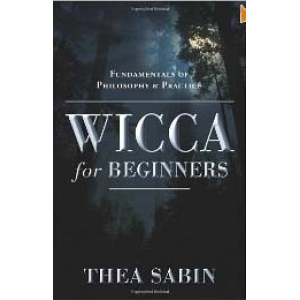
Wicca For Beginners Fundamentals Of Philosophy And Practice

Wicca For Beginners Fundamentals Of Philosophy And Practice Cover

Book: Wicca For Beginners Fundamentals Of Philosophy And Practice by Thea Sabin

In her first book-length work, Sabin presents a first-rate, fresh and thorough addition to the burgeoning field of earth-based Spiritual Practice volumes. Sometimes using examples that young people can relate to (SATs, dying grandmothers), she opens the door to this path for people of all ages who want concrete beginnings to "work actively and spiritually to develop as a person." Sabin covers well the familiar territory of the calendar, circle, pentagram, tools, etc., but she shines distinctively in several areas. The first is in Wiccan history, written in a light, informative style that magically mines depth, breadth and brevity. Another is in the emphasis on personal will and ethical practices that transcend reliance on external paraphernalia. She also deftly shows how the various tools and spells can be put into use, but always encourages practitioners to utilize their own experiences, environment and spiritual intelligence to shape their practice. Especially helpful are the criteria to assess groups and potential teachers, and the volume is capped by a fine bibliography. Sabin advocates consistent study, practice and evolved learning. Gently admonishing her reader not to become a "one-book wonder," Sabin has nearly voided her own advice with this important first effort that is perfect for novice Wiccans.

As a teacher of Wicca for many years, I'm always looking for better materials to use for training. I am grateful to Ms. Sabin for providing what will undoubtedly be the introductory book I will recommend for the foreseeable future. She presents the basics without pushing any given path or tradition, often presenting varying Interpretations and viewpoints in a non-judgemental manner. This is a solid foundation for seekers to use as a springboard to whatever flavor of Wicca they choose to explore. I appreciate that she addresses ethics within Wicca, which many authors seem to avoid, or present in a highly simplistic manner. The book is clearly meant for beginners, hence the title, and is possibly the best overall introduction I have yet seen.

I bought this book to learn more about the Wiccan Religion as my girlfriend is wiccan and I had no prior (correct) knowledge of the religion. This book offers an excellent intro to the history, philosophy and basic practices of the religion as the title suggest. Its also doesn't read like a textbook so its fun and to read. In general I would reccomend this book to anyone just starting out who wants to learn more about the religion.

Buy Thea Sabin's book: Wicca For Beginners Fundamentals Of Philosophy And Practice

Free eBooks (Can Be Downloaded):

Henry Cornelius Agrippa - Occult Philosophy And Magick Book I
Johannes Kepler - Concerning The More Certain Fundamentals Of Astrology
Anonymous - Wicca Beliefs And Practices

Saturday, October 9, 2010

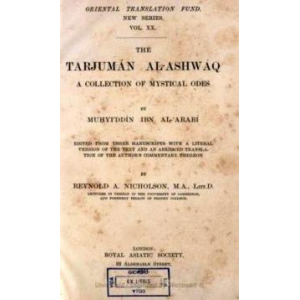
Tarjuman Al Ashwaq A Collection Of Mystical Odes

Tarjuman Al Ashwaq A Collection Of Mystical Odes Cover

Book: Tarjuman Al Ashwaq A Collection Of Mystical Odes by Muhammad Ibn Arabi

The Tarjuman al-Ashwaq (Muhyi al-Din Muhammad ibn 'Ali Ibn al-'Arabi) with the Arabic text, translated by Reynold A. Nicholson Together With a partial translation of the commentary by Ibn 'Arabi'

The Tarjuman al-Ashwaq or "Interpreter of Desires" by Ibn 'Arabi is acknowledged as one of the major works of Sufi literature, alongside those of the great Persian poets Attar, Jalaluddin Rumi, Hafiz and Jami.

In keeping with the poetical tradition of Islam, there is a continuing ambiguity in the verses as to whether they are love poems disguised as mystical odes, or Mystical Odes expressed in the language of human love. The timeless beauty and imagery of the verses cannot be denied, and may be interpreted at many levels. "Gnostics," says Ibn 'Arabi, "cannot impart their feelings to other men; they can only indicate them symbolically to those who have begun to experience the like." In response to the accusation by a religious scholar that these were just sensual poems, Ibn 'Arabi wrote a commentary on the Tarjuman which is partially translated here.

This was one of the first Translations of a book by Ibn 'Arabi into a European langauage, made by the great translator of Rumi's Mathnawi, Reynold A. Nicholson. In both cases his translation was of such outstanding quality that it was more than fifty years before other translators began to try their hands at these texts, and his translations still stand the test of time.

Download Muhammad Ibn Arabi's eBook: Tarjuman Al Ashwaq A Collection Of Mystical Odes

Free eBooks (Can Be Downloaded):

Basil Valentine - Triumphal Chariot Of Antimony
Hilda Roderick Ellis - Road To Hel A Study Of The Conception Of The Dead
Right - Travel In Spiritual Worlds A Complete Guide On Astral Travels
Mark Ludwig Stinson - Heathen Gods A Collection Of Essays Ver 2
Muhammad Ibn Arabi - Tarjuman Al Ashwaq A Collection Of Mystical Odes

Sunday, October 3, 2010

The Garnerian Book Of Shadows

The Garnerian Book Of Shadows Cover

Book: The Garnerian Book Of Shadows by Gerald Gardner

This is the text of the Gardnerian Book of Shadows. In one sense, this is the central sacred text of the Wicca religion. However, it is important to point out that there is no 'official' Book of Shadows. Typically each coven has a hand-written copy of a Book of Shadows, sometimes in cypher or code, which reflects its own practices and knowledge. This particular text is derived from a file posted on the Internet in the early 90s, and quotes previously published material which was known to be in use by Gardner and his group.

The book of shadows was attributed by Gardner to an ancient, clandestine witch cult, which he claimed to have been initiated into. However, modern researchers have concluded that it was composed by Gardner. The text shows influences from English and Celtic Folk-lore, the Enochian system of John Dee, Thelema, the Golden Dawn, Stregaria, Tantric Yoga, the KJV Bible and even Kipling. This version organizes the material in chronological order and has estimated dates for each section, ranging from 1949 to 1961.

The copyright status of this text can best be described as 'orphaned.' This version was compiled by Aidan A. Kelly. It was originally posted on the Internet in the mid-90s as part of the Internet book of shadows material. Text in square brackets is Kelly's commentary.

Download Gerald Gardner's eBook: The Garnerian Book Of Shadows

Free eBooks (Can Be Downloaded):

Franz Bardon - The Golden Book Of Wisdom
Sasha Fierce - The Book Of Shadows
Sekhet Sophia - The Alexandrian Book Of Shadows
Gerald Gardner - The Garnerian Book Of Shadows

Saturday, October 2, 2010

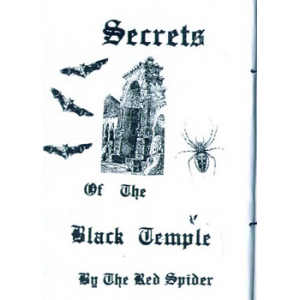
Secrets Of The Black Temple

Secrets Of The Black Temple Cover

Book: Secrets Of The Black Temple by Basil Crouch

Warning this book can be dangerous. Persons in ill health or suffering any mental illness should not have access to this book. Be warned this is a not fiction book it can lead into dark waters if the instructions are not followed. I cannot be help responsible for any damage or ill health through reading this book. You alone are responsible for your actions (Basil E. Crouch)

Download Basil Crouch's eBook: Secrets Of The Black Temple

Free eBooks (Can Be Downloaded):

Opus Majus - The Book Of The Black Serpent
Walter Gibson - Witchcraft A History Of The Black Art
Carroll Runyon - The Secret Of The Dark Mirror
Basil Crouch - Secrets Of The Black Temple

Thursday, September 30, 2010

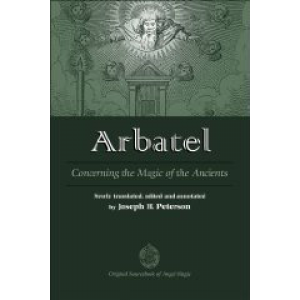
Arbatel Of Magic Or The Spiritual Wisdom Of The Ancients

Arbatel Of Magic Or The Spiritual Wisdom Of The Ancients Cover

Book: Arbatel Of Magic Or The Spiritual Wisdom Of The Ancients by Medieval Grimoires

A magical ritual published at Basle in 1575. The text is in Latin and appears to have been influenced by Paracelsus. It is of Christian, not Jewish, origin, and although the authorship is unknown, it is probably the work of an Italian. Only one of its nine volumes still exists: dealing with the institutions of magic, the work is entitled Isagoge, which means "essential or necessary instruction."

The book introduces the ritual of the Olympic spirits who dwell in the air and among the stars and who govern the world. There are, we are told, 196 Olympic provinces in the universe: thus Aratron has 49; Bethor, 42; Phaleg 35; Och, 28; Hagith, 21; Ophiel, 14; and Phul, 7. Each of the Olympic spirits rules alternately for 490 years. They have natural sway over certain departments of the material world, but outside these departments they perform the same operations magically.

Thus Och, the ruler of solar affairs, presides over the preparation of gold naturally in the soil. At the same time, he presides magically over the preparation of that metal by means of alchemy. The Arbatel states that the sources of occult wisdom are to be found in God, spiritual essences, and corporeal creatures, as well as in nature, but also in the apostate spirits and in the ministers of punishment in Hell and the elementary spirits. The secrets of all magic reside in these, but magicians are born, not made, although they are assisted by contemplation and the love of God.

It is sufficient to describe the powers and offices of one of these spirits. Aratron governs those things that are ascribed astrologically to Saturn. He can convert any living thing into stone, can change coals into treasure, gives familiar spirits to men, and teaches alchemy, magic, medicine, and the secret of invisibility and long life. He should be invoked on a Saturday in the first hour of the day. The Arbatel was said to be one of the best authorities on spiritual essences and their powers and degrees.

Download Medieval Grimoires's eBook: Arbatel Of Magic Or The Spiritual Wisdom Of The Ancients

Free eBooks (Can Be Downloaded):

Frater Astrum - Temple Of Flame The Ritual Opening Of The Veil
Eliphas Levi - The Magic Ritual Of The Sanctum Regnum
Medieval Grimoires - Libellus Magicus Or The True Magical Work Of The Jesuits
Medieval Grimoires - Arbatel Of Magic Or The Spiritual Wisdom Of The Ancients

Wednesday, September 29, 2010

The Golden Verses Of Pythagoras

The Golden Verses Of Pythagoras Cover

Book: The Golden Verses Of Pythagoras by Antoine Fabre Dolivet

This is english translation of The Golden Verses of Pythagoras by Antoine Fabre d'Olivet (December 8, 1767-March 25, 1825) a French author poet, and composer whose biblical and philosophical hermeneutics infuenced many occultists, such as Eliphas Lvi and Gerard Encausse (Papus), and Ren Gunon.

The Golden Verses of Pythagoras are a collection of moral exhortations. They comprise 71 lines written in hexameter verse and are traditionally attributed to Pythagoras.

The exact origins of the golden verses are unknown and there are varying opinions regarding their dating. It appears that the verses may have been known as early as the third century BC but their existence as we know them cannot be confirmed prior to the fifth century AD.

The golden verses enjoyed great popularity and were widely distributed in late antiquity being often quoted. Their renown persisted during the medieval ages and into the renaissance.
The Neoplatonists used the golden verses as part of their preparatory program of moral instruction and a number of neoplatonic commentaries on the verses are extant.


Download Antoine Fabre Dolivet's eBook: The Golden Verses Of Pythagoras

Free eBooks (Can Be Downloaded):

Anonymous - The Gospel Of Thomas
Anton Josef Kirchweger - The Golden Chain Of Homer
Samuel Croxall - The Secret History Of Pythagoras
Antoine Fabre Dolivet - The Golden Verses Of Pythagoras

Her Hidden Children The Rise Of Wicca And Paganism In America

Her Hidden Children The Rise Of Wicca And Paganism In America Cover

Book: Her Hidden Children The Rise Of Wicca And Paganism In America by Chas Clifton

I found this book among many in my local bookstore and purchased it on the fact that the cover was eerily close to a vision in a dream I had over a year ago. I have never been happier to have had such a dream! This book, I found, was completely amazing.

While many books on Paganism focus on practice, perhaps a few focusing on philosophy, very few focus on any actual scholarship. This specific book focuses on the history of contemporary Paganism, from Gerald Gardner to more modern influential groups, such as the Church of All Worlds. The depths the author, Mr. Chas S. Clifton, provides for anyone interested in history and Pagan academia runs deeps.

Since the release of Ronald Hutton's "Triumph of The Moon" back in 2000, I have yearned for a book that would take an in-depth look at the history of modern Paganism in America. So I was more than a little excited and hopeful when I heard that Pagan academic Chas Clifton was rising to the task in his new book "Her Hidden Children: The Rise of Wicca and Paganism in America". Finally a book that would take a look at how modern Paganism and Wicca took root in American soil and became one of the fastest growing faiths in the country.

Clifton - knowing that he could in no way cover everything that has happened from the 1930s to the present - has chosen with this book to lay down some basic parameters for talking about modern Pagan history in America. First he concentrates on Wicca: it being the largest and most influential modern Pagan religion in America. Secondly, when moving out from Wicca he generally stays with groups that claim to follow "nature" or "earth" religions. Not getting much attention in this history are the "reconstructionist" Pagan faiths and feminist Wicca.

The author begins with examining Gerald Gardner and the beginning of British Wicca, looking at both Gardner's claims of a long-line of witches and historical evidence to this claim. Following this, the author discusses how Wicca came to America and how it spread.

The second chapter focuses on the change of Wicca from a Mystery Religion to a "nature" religion. The author brings to use the idea that Wicca combined a triple-form of nature, ranging from the Cosmic, Natural (Earthly), and Erotic. He shows us how Wicca became changed through the changing social changes affecting America during this time.

Throughout the rest of the book, Mr. Clifton shows his readers the struggles and effects Wicca has had in America (such as, for example, the effort to change the image of the popular "Witch), the influence Paganism has had in Popular Culture (and vice versa), and a look at other Pagan groups that have influenced Paganism on a whole (which may, or may not, have started before Wicca).

If one is interested in the history of Paganism, specifically Wicca, this is a great book to sate that interest. This book is a wonderful example of Pagan scholarship so needed in the Pagan community. I highly recommend this book to anyone wishing to be a Pagan, claiming to be a Pagan, or vaguely interested in knowing about Pagans.

Buy Chas Clifton's book: Her Hidden Children The Rise Of Wicca And Paganism In America

Free eBooks (Can Be Downloaded):

Michael Ford - The Calling To The First Of Witch Blood An Invocation Of Cain
Sirona Knight - A Witch Like Me The Spiritual Journeys Of Today Pagan Practitioners
Lawton Winslade - Teen Witches Wiccans And Wanna Blessed Be
Abner Cheney Goodell - Further Notes On The History Of Witchcraft In Massachusetts
Al Selden Leif - 6 Questions On Wicca And Paganism

Historical Summary Of The European Witch Hunts

Historical  Summary Of The European Witch Hunts Cover The European witch Craze started roughly during conclusion of the 15th century and peaked during the first half of the seventeenth century. The belief that women were sinful and had the power of the devil within them developed out of the Middle Ages. The Reformation further promoted the idea of a satanic kingdom of evil on earth with which to justify persecutions. Theologians sought to prove that accused witches represented the devil.

The first and most significant written cumulative concept of witchcraft available to a large audience was the Malleus Maleficarum written by Sprenger and Kraemer. It was first published in 1486 and reprinted fourteen times before 1520. The document made an important contribution to the widespread witch hunt. Most people accused of witchcraft were rural, poor, and single women. The hunts are often seen as a massive effort to keep women in their place. Women were seen as evil, and unclean people whose weakness could summon the devil for sexual intercourse.

The Malleus Maleficarum document ignited a widespread hunt for the so-called witches described in it. During the hunt, witches were accused of "impractical" and "traceless" crimes such as intercourse with the devil, unregistered babies from hidden pregnancies who were supposedly eaten or sacrificed, and even natural disasters. However there is no record of any solid evidence for any of these accused crimes.

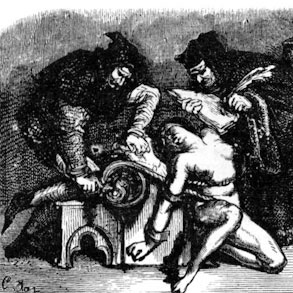
Often these hunts were instigated by hysterical children, or nuns who accused relatives, and neighbors of these outrageous crimes. Witnesses were often bribed or threatened in order to prosecute the accused. The accused would then be tortured until they confessed. The methods of torture were very cruel and painful, and almost all who were put through the various devices would confess. In some cases the accused would die of torture, and very few survived the ordeal without confessing. However, the accused was set free if they survived the torture without a confession. After the forced confession, the trial took place. These trials were run by genuine believers of witchcraft. The aim of the trial was to exterminate the witches as conspirators with the devil. When the accused was declared guilty, they were usually executed.

Although, there are many estimates as to how many actual people were killed during these hunts, most estimates show the number well below the one-million mark. The actual number of documented executions, is generally considered to be under one hundred thousand. Of all that were executed, only a minority were men, and of those men, many are those who tried to protect accused women from the hunters.

Free eBooks (Can Be Downloaded):

Sharynne Nicmacha - The Star Of Life A Historical And Spiritual History Of The Pentagram
Martin Van Buren Perley - A Short History Of The Salem Village Witchcraft Trials
Tuesday Lobsang Rampa - Wisdom Of The Ancients
Michael Bailey - Historical Dictionary Of Witchcraft
Charles Kirkpatrick Sharpe - A Historical Account Of The Belief In Witchcraft In Scotland

Tuesday, September 28, 2010

Maxine Sanders Queen Of The Witches

Maxine Sanders Queen Of The Witches Cover Maxine Sanders is the famous Alexandrian High Priestess from England . I strongly identify with her, for I believe she was born with the Witchblood. As a teenager in the 1960’s, she defied the stereotype of the hag witch with the youth, beauty, and charisma of the Enchantress. Partnered with Alex Sanders, she was instrumental in bringing the old religion to public consciousness and the eventual quasi-acceptability we have today. Her lifetime of dedication to the Mysteries as healer, teacher, Initiator, and muse in the face social antagonism, media sensationalism, public adulation and envy, makes for one of the truly remarkable life stories of our time.

Free eBooks (Can Be Downloaded):

Bernard King - Meanings Of The Runes
Thomas Potts - Discovery Of Witches
George Lincoln Burr - Narratives Of The Witchcraft Cases
Michael Magee - Robin Hood And The Witches
Margaret Alice Murray - The God Of The Witches

Monday, September 27, 2010

The Book Of Forbidden Knowledge

The Book Of Forbidden Knowledge Cover

Book: The Book Of Forbidden Knowledge by Basil Crouch

This is the most dangerous book you will ever hold in you hands. It is books of secret rituals. The ceremonies are powerful beyond belief. They can be dangerous if treared lightly, but if directions are faithfully followed then no barm should befall you. After reading this books you life will never be same, its magic will change you life merely by reading it.

Whoosover steps one foot on this pathway stays forever. It is beyond life, beyond death, beyond eternity, beyond heaven, it it taught in the beginning so shall it remain until the stars fall from sky, and all life on Earth is destroyed.

This books deals with life and death, it deals with health and sickness, it deals with wealth, it can make you rich beyond you wildest dreams; it can also destriy you, body and mind, so be warned. Treat it with care and understanding, use it to better you life, use it for become rich, better station in life, and if necessary use it to destroy your enemies.

Buy Basil Crouch's book: The Book Of Forbidden Knowledge

Free eBooks (Can Be Downloaded):

Sasha Fierce - The Book Of Shadows
Idres Shah - The Book Of Power
Anonymous - Black Book Of Forbidden Knowledge Lucid Dreaming
Basil Crouch - The Book Of Forbidden Knowledge

Sunday, September 26, 2010

Albertus Magnus Biography

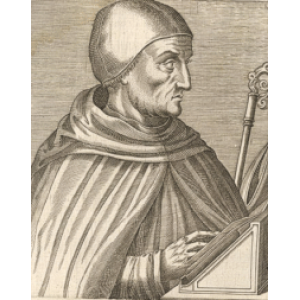
Albertus Magnus Biography Cover Albertus Magnus (1193-1206? - 1280) also known as “Albert the Great” was a German scholar of theology, philosophy, natural science, medicine, alchemy, astrology, chemistry and physics. He was also an alleged magician who believed in the benefits of botany, claiming that various plants, rocks and amethysts improved clairvoyance. He was known as “Doctor Universalis” (“Universal Doctor”) because of the breadth of his knowledge, and was especially noted for introducing Greek and Arabic science and philosophy to the medieval world. He was the most prolific writer of his century and was the only scholar of his time to be called “the Great”, a title that was used even before his death.

Albertus Magnus was born Albert de Groot, in Lauingen, Bavaria, the eldest son of the Count of Bollstadt, a military lord in the service of Emperor Frederick II. Later contemporaries such as Roger Bacon (1214-1294) applied the latinised name of “Albertus Magnus” out of respect for his immense reputation as a scholar and philosopher. Nothing about his primary or preparatory education is known but it is thought he was privately tutored at home before being sent to Bologna University in Italy for his formal education. He then moved to Padua University where he studied the liberal arts and teachings of the Greek philosopher Aristotle.

While there in 1223, he was recruited by the Blessed Jordan of Saxony, the second Master General of the recently formed Dominican Order of Friar Preachers (founded by St Dominic in 1214), who was doing the rounds of major universities in Europe recruiting the best young scholars into the Dominican Order. The Order at that time was less than ten years old, and had only been granted ecclesiastical approval in 1216. Magnus was ordained in a Dominican convent house in Cologne, Germany, from where he quickly advanced through the ranks of the Order.

After leaving Padua, Magnus taught theology at several convent houses throughout Germany including: Regensburg, Freiburg, Strasbourg, Hildesheim and lastly at the convent house in Cologne, were he reinterpreted Peter Lombard’s “Book of the Sentences” (Magister Sententiarum), the theological textbook used in most of the medieval universities. He then moved on to the University of Paris were he became Master of Theology in 1245.

His most famous pupil at the University of Paris was Thomas Aquinas, who later in 1248 joined him at the new Studium Generale in Cologne, in which Magnus was appointed Regent and were Aquinas became his second professor and Magister Studentium (Master of Students). Magnus went on to become an influential Church administrator, teacher and preacher, and travelled throughout Western Europe on behalf of the Dominican Order.

In 1254 Magnus was made provincial of the Dominican Order in Germany, and in 1256 journeyed to Rome to defend the Mendicant Orders against an attack by William of St. Amour, who sought to have the Dominican’s right to alms removed. Magnus succeeded in having his book treatise “De novissimis temporum periculis” condemned by Pope Alexander IV on the 05th October 1256. During his short stay in Rome, he also filled the position of Master of the Sacred Palace, from were he preached on the Gospel of St. John and the Canonical Epistles.

A year later in 1257, Magnus resigned the office of Provincial in Germany to devote himself to his studies and teaching, although he remained a leading force in the Order. At a General meeting of the Dominicans held in Valenciennes, France in 1258, with Thomas Aquinas and Peter of Tarentasia (later Pope Innocent V), he drew up rules for the direction of studies and determined the future system of graduation to be used throughout the Order.

In 1260 Magnus was called by the Pope Alexander IV to serve as the Bishop of Regensburg, a position he resigned from in 1262, in order return to his convent in Cologne, there once again to concentrate on his scholarly interests. However from 1263 to 1264 he was made a legate of Pope Urban IV, and sent to preach the crusades throughout Germany and Bohemia, where subsequently he lectured at Wurzburg and at Strasbourg.

On his journeys around Europe, Magnus showed an intense interest in natural phenomena, and was consumed by the scientific writings of Aristotle. He examined his works, commented on them, and occasionally contradicted them based on the evidence of his own observations. In his laboratory in Cologne he carried out his own experiments in chemistry, mineralogy and physics, and built up a collection of plants, insects and chemical compounds. Of his experiments he is said to have discovered the metallic element of arsenic, caustic potash, and was the first person to determine the chemical composition of cinnabar, minium and white lead.

As a theologian and philosopher, Magnus was outstanding among his contemporaries but not as innovative as his star pupil Thomas Aquinas. Magnus attempted to bring Aristotelian doctrines together with Christian teachings, and in his Summa Theologiae (1270) he maintained that human reason could not contradict revelation, but defended the philosopher’s right to investigate divine mysteries.

In 1274 Magnus was called by Pope Gregory X to attend the ecumenical Council of Lyon, where he had to defend the orthodoxy of his former pupil Thomas Aquinas and the Aristotelian doctrines that both he and Aquinas held to be true. While there he received the sad news that Aquinas had died on his way to the same Council. The news was a heavy blow to Magnus who declared, “that a shining light of the Church had been extinguished”. In 1277 when it was announced that critics wished to condemn and writings of Aquinas, believing that his teachings were too favourable to unbelieving philosophers, Magnus again travelled to Paris to defend his good name.

Magnus suffered serious health problems in 1278 and later died in Cologne on the 15th of November 1280. He was buried in a crypt tomb at the Dominican Church of St. Andreas in Cologne, while his relics were held at Cologne Cathedral. Much later in 1622 he was beatified, and later still declared a Saint by Pope Pius XI in 1931, at which time he was also acclaimed an official Doctor of the Church. In 1941 Pope Pius XII made him the Patron Saint of Natural Sciences.

In the centuries after his death, many myths and stories were told about Magnus the alchemist and magician. On the subject of alchemy and chemistry, he had written mant treaties, including: Alchemy; Metals and Materials; the Secrets of Chemistry; the Origin of Metals; the Origins of Compounds, and Concordance, which is a collection of Observations on the philospher's stone. Other alchemical and chemistry topics were collected under the name of Theatrum Chemicum.

Magnus believed that stones had occult properties, as he related in his work De mineralibus. However there is little actual evidence that he personally performed alchemical experiments. Most of the modern myths are the result of later works, such as the alchemical work known as the Secreta Alberti or the Experimenta Alberti, which were falsely attributed to Magnus by their authors in order to increase their prestige through association. According to one myth, Magnus is said to have discovered the Philosopher’s Stone and passed it on to his pupil Thomas Aquinas. While Magnus made observations about the stone in his writings, he does not mention ever discovering or owning it, although he did record that he witnessed the creation of gold by “transmutation”.

Magnus was also deeply interested in astrology, as were most academics in his day. In the high Middle Ages and well into the early modern period, few intellectuals questioned the basic theories of astrology i.e. that humans lived within a web of celestial influences that affect their bodies, and motivates them to behave in certain ways. They believed that astrology could be used to predict the probable future of a human being. Magnus made this a central component of his philosophical system, arguing that an understanding of celestial influences could help us to live our lives more in accord with Christian precepts. His astrological beliefs can be found in a work he authored around 1260, now known as the Speculum astronomiae. However, details of these beliefs can be found in almost everything he wrote, from his early Summa de bono to his last work the Summa theologiae.

The works of Albertus Magnus represents the entire body of European knowledge, as was extent during his time, not only in theology but also in philosophy and the natural sciences. His importance to the history of medieval academia consists in his bringing Aristotelian doctrines to the fore against the reactionary tendencies of his contemporaries. But it was by his writings on the natural sciences that he exercised his greatest influence. Albertus Magnus must be regarded as unique in his time for having made accessible and available the Aristotelian knowledge of nature and for having enriched it by his own observations. A pre-eminent place in the history of science was accorded to him when because of his achievements, he was canonised and made the Patron Saint of Natural Sciences.

Free eBooks (Can Be Downloaded):

Aleister Crowley - Liber 132 Liber Apotheosis
Anonymous - The Lawes Against Witches
Aleister Crowley - Liber 011 Nu With Commentary
Aleister Crowley - Eight Lectures On Yoga
Aleister Crowley - Liber 666 The Master Therion A Biographical Note

Tuesday, August 17, 2010

The Mysterious Pentagram

The Mysterious Pentagram Cover The Pentagram means different things to different people. Some may argue as to what it represents, but I will tell you the real meanings of it. The Pentagram right side up represents God ruling over the world of matter. The 5 points represent the 5 places that Christ was wounded. This is why Devils are afraid of it! It also represents the Microcosmic man with his arms stretched out.

Let us not forget that it also represents the elements Spirit, Water, Air, Earth, and Fire as shown below.
This is used by most people in Witchcraft.

Now there is also the upside-down Pentagram. It represents Satan or the world of matter ruling over God. It is the same as denouncing God. To wear it is to attract evil around you. It will not bring good spirits around you. Normally it is only worn by Satanists or devil worshipers. So if you wish to attract good spirits around you... wear it right side up!

Many mainstream religion believers think that they are both evil and represent the Devil. But that is because they are so... ignorant and blind to the fact that there is a difference. It shows their lack of study on the true facts of history. I wear the right side up Pentagram and I personally have had many people come up to me and ask me if I am a Devil worshiper! This really pisses me off! But I explain the reality to them.

Free eBooks (Can Be Downloaded):

Reynold Nicholson - The Mystics Of Islam
Greg Wotton - A Mystery Of The Pentalpha
Captain William Morgan - The Mysteries Of Freemasonry
Franz Cumont - The Mysteries Of Mithra

Thursday, July 29, 2010

Your Magical Name

Your Magical Name Cover Why a Magical Name?:
Ah, the magical name. So many people find wicca and decide right off the bat that they’re going to name themselves Lady Such-and-Such or Lord Whatsis. Go to a pagan event and you’ll meet more fifteen-year-old Lady Morganas than you can shake a stick at. And it’s virtually guaranteed that within about three months, Lady Morgana will decide her magical name, sometimes called a craft name, is really supposed to be Starfluffle or Moongypsy, and she’ll change it.

In fact, she’ll probably change it two to three times a year.

The Name-of-the-Month Club:
This odd phenomenon, known as the Name-of-the-Month Syndrome, happens most often because the person in question hasn’t taken the time to research and learn, which is crucial to finding the right magical name.

A magical name is unique to the practitioner, and there are several ways to find yours. When you find the right name, you’ll keep it for a long time. In some traditions, it‘s customary to wait until you‘ve studied a year and a day before claiming your magical name. Some Pagans have two magical names -- one which they use in public and one which is known only to the gods and members of the person’s coven.

Think Long-Range:
One method by which people sometimes find their magical name is to simply choose something they like. A problem with this method is that what we like on one day, we may find silly a year down the road. If you’re going to choose a name based on whether it sounds cool or not, stop and think about it. What is it about the name that appeals to you? Ten years from now, are still going to feel comfortable saying, “Hi, I‘m Fairypuddle,” when you meet a new person?

Names with Meaning:
Choose a name not only for its sound, but its attributes as well. For example, someone wishing to convey strength in their name might include “oak“ or “iron“ as part of their moniker. A person who is highly creative might select a name that reflects their art or craft. You may want to choose a name based rooted in folklore or mythology. Many people include the name of an animal that resonates with them. A cautionary note here: in the Pagan community, certain animals pop up all the time. You’ll meet two dozen Ravens and just as many Cats, but it’s unlikely you’ll encounter anyone calling himself Wombat or Penguin.

Names to Avoid:
Another bit of advice -- generally, the titles Lord and Lady are reserved for people who are elders or have a significant amount of leadership experience under their belt. To name oneself Lady So-and-So without any credentials is considered presumptuous by many Pagans. Likewise, in many traditions it’s seen as hubris to give oneself the name of a deity. You may want to choose a name that indicates your dedication to a god or goddess, but don’t co-opt their names. It’s just rude. If you're a dedicant to Apollo, don't call yourself Master Apollo, call yourself something like Apollonius instead.

Using Your Birth Number:
Another popular method of finding a magical name is to choose one that corresponds with your birth number. To find your birth number, begin by adding the digits of your birth date.

If your birthday was September 1, 1966, you would start with the numbers 911966 = 9 + 1 + 1 + 9 + 6 + 6 = 32.

Now take those two numbers (3 and 2), and bring it down to a single digit: 3 + 2 = 5. That number -- in this case, 5 -- is your birth number.

Use the grid below to find a name that corresponds to the number 5, by calculating the sum of the corresponding letters.

1 = A, J, S

2 = B, K, T

3 = C, L, U

4 = D, M, V

5 = E, N, W

6 = F, O, X

7 = G, P, Y

8 = H, Q, Z

9 = I, R

Let’s say you’ve decide you like the name Willow. Using the letters in “Willow” you would take the numbers 5 + 9 + 3 + 3 + 6 + 5 = 32. From there, 3 + 2 = 5. If the name you like doesn’t match your birth numbers, try some creative or alternate spellings to see what happens.

A Gift from the Gods:
In some cases, you may be fortunate enough to have your new name bestowed upon you by a god or goddess. In these instances, you may encounter someone in a dream or a vision who tells you, “Your name is Such-and-such.” While you may choose to add to it or come up with a variation on it later, if this happens to you, accept the name as the gift that it is.

Whatever method you end up using, think carefully before you finalize your new name. While it’s okay to change your name later on as you evolve spiritually, changing your name every few weeks or every time you see a new episode of “Charmed” is probably not the best course of action. Find the name that is right for you -- and when it IS the right one, you will know.


Books You Might Enjoy:

Anonymous - Meditation Of The Four Magickal Weapons
Jarl Fossum - Seth In The Magical Texts
Anonymous - The Mystical Qabbalah
Kenneth Grant - Magical Revival
Aninymous - The Angelical Alphabet

Tuesday, July 27, 2010

Witches Misogyny And Patriarchy

Witches Misogyny And Patriarchy Cover The persecution of witches reached its zenith at a time when Christianity's attitudes against sex had long since turned into full-blown misogyny. It is amazing how celibate men became obsessed with the sexuality of women. As it is stated in Malleus Maleficarum: "All witchcraft comes from carnal lust, which is in women insatiable." Another section describes how witches were known to "...collect male organs in great numbers, as many as twenty or thirty members together, and put them in a bird's nest."

Evidently they were not entirely stingy with their collections -- there is the story of a man who went to a witch to have his lost penis restored: "She told the afflicted man to climb a certain tree, and that he might take which he like out of a nest in which there were several members. And when he tried to take a big one, the witch said: You must not take that one; adding, because it belonged to a parish priest."

And some people say that religion isn't really all about wishful thinking!

These sentiments were nothing unique or unusual -- indeed, they are a result of centuries of mean-spirited sexual pathology on the part of church theologians. The philosopher Boethius, for example, wrote in The Consolation of Philosophy that "Woman is a temple built upon a sewer." Later, in the tenth century, Odo of Cluny stated "To embrace a woman is to embrace a sack of manure."

Women were regarded as impediments to true spirituality and union with God, which helps explain why investigators focused on women more than men. The church had a long-standing prejudice against women, and this was given vent when the doctrine of devil worship was emphasized as an enemy which the church had to confront and destroy. This animus hasn't entirely disappeared even today. Women aren't persecuted and tortured, but they are deliberately kept out of positions of authority and responsibility reserved exclusively for men.

Books You Might Enjoy:

William Blake - The Marriage Of Heaven And Hell
Vovim Baghie - The Grand Satanic Ritual
Walter Scott - Letters On Demonology And Witchcraft
Frater Fp - Sigils In Theory And Practice

Monday, July 26, 2010

Witch Hunts Today

Witch Hunts Today Cover Few people are aware that witch-hunts still claim thousands of lives every year, especially in the countries of sub-Saharan Africa, and above all in South Africa.

Witch-hunts in South Africa have become "a national scourge," according to Phumele Ntombele-Nzimande of the country's Commission on Gender Equality. (Quoted in Gilbert Lewthwaite, "South Africans go on witch hunts," Baltimore Sun, September 27, 1998.) The phenomenon is centered in the country's poverty-stricken Northern Province, where "legislators counted 204 witchcraft-related killings [from 1985-95] ... Police counted 312 for the same period. Everybody agreed both numbers were gross underestimates." (Neely Tucker, "Season of the Witch Haunts Africa," The Toronto Star, August 1, 1999.) In 1996 The Observer (UK) reported that "the precise statistics are not known, but the deaths from witch-burning episodes number in the hundreds each year and the trend appears to be on the rise." (David Beresford, "Ancient superstitions, fear of witches cast spell on new nation," reprinted in The Ottawa Citizen, June 18, 1996.)

As with its European predecessor, witch-hunting in South Africa is closely tied not only to prevailing superstitions, but to socio-economic pressures, natural disasters, and personal jealousies. In the Northern Province, "among the poorly educated rural residents, traditional healers and clairvoyants claiming supernatural powers hold broad sway. And hunger, poverty, and unemployment can create jealousies that can quickly turn to anger and vengeance." (Lewthwaite, "South Africans go on witch hunts.") Likewise, Peter Alexander reports that "In a region of intense poverty and little education, villagers are quick to blame any adverse act of fate on black magic." These traditional tendencies have been exacerbated by a recent hysteria (extending to Kenya and Zimbabwe) over the very real phenomenon of "ritual killings related to witchcraft," which "include the removal of organs and limbs from the victims -- the genitals, hands or the head, all of which are believed to bring good luck." (Alexander, "'Witches' get protection from superstitious mobs," The Daily Telegraph, May 26, 1997.) Such ritual murders often bring "retribution" against innocents accused of witchcraft.

The intensity of the persecution and vigilantism in South Africa has reached such levels that no fewer than ten villages have been established in the Northern Province, populated exclusively by accused "witches" whose lives are at risk in their home communities. One such settlement, Helena, counted among its residents 62-year-old Esther Rasesemola, who "was accused in 1990 of being a witch after lightning struck her village":

A group of people visited the Inkanga [village witch-doctor] to see who was responsible. When they returned, it was my brother-in-law who told the rest of the village that I was responsible. He owed me money and I think he did it to get rid of me because he did not want to pay the money back. People in the village became convinced I was a witch. They came to my house at night and burnt it down and took all my belongings. Then they put me in a truck and drove me to a deserted place and dropped me off with my husband and my three children. They told me never to come back to the village or they would kill me. My husband died two years after we were expelled. My children have gone away and now I have nothing. I don't believe in witchcraft. It is just superstitious belief. (Quoted in Alexander, "'Witches' get protection.")

Gilbert Lewthwaite of the Baltimore Sun described the case of Violet Dangale, a 42-year-old woman who "was driven from her home 30 months ago by relatives and neighbours who accused her of being a witch growing rich from the work of zombies, as the 'living dead' are known." Now she was "penniless and in fear for her life," living in Tshilamba, another of the refuges for accused witches. Her "main accuser was her uncle. He first accused her father of using zombies to enrich himself. Then he turned on her, suggesting that she enjoyed her share of the family's wealth through witchcraft. ... As the accusations and threats grew stronger, the Dangale family fled their homes in Dzimauli." "They said I was a witch," Dangale told Lewthwaite. "I don't know anything about witchcraft. I don't believe in zombies. Since I was born, I never saw a zombie." (Lewthwaite, "South Africans go on witch hunts.")

Both of these women were luckier than 65-year-old Linah Seabi, "a sorghum beer brewer ... [who] was charged with killing an elderly woman with a poisonous potion. More than 200 villagers stormed Seabi's house in late May [1991], beat her and burned her to death with straw thatch from the roof of her house." (Nina Shapiro, "Wave of witch hunts sweeps South African countryside," The Toronto Star, September 19, 1991.) In December 1998, "Francina Sebatsana, 75, and Desia Mamafa, 55 ... were burned to death on pyres of wood in the village of Wydhoek," in the Northern Province, for alleged witchcraft. "Eleven men, ages 21 to 50" were charged with her murder. (Lewthwaite, "South Africans go on witch hunts.")

The gendering of the European witch-hunts appears to be closely duplicated in the South African case. As the above accounts suggest, "traditionally, it is women who are accused of witchcraft" (Alexander, "'Witches' get police protection"). Especially vulnerable are "defenceless elderly women, against whom the actions are taken without resistance," according to Northern Province Premier Ngoako Ramatlhodi. "That women most often are the victims of witch hunts stems from attitudes toward gender," writes Nina Shapiro of The Toronto Star:

"In our culture, men go out in the afternoon, women remain in the home," said Russell Molefe, a local journalist. People believe women sit at home concocting potions, he said. Older women are suspected, according to Lebowa police lieutenant Mohlabi Tlomatsana, simply because they are alive. "People will think 'Why has she not died? Probably because she is a witch.'" (Shapiro, "Wave of witch hunts.")

However, as in the European case-study, "these days almost a third of victims of men" (Alexander, "'Witches' get police protection.") Nonetheless, approximately 30 percent of accused witches are male -- reflecting men's prominence as nangas, or traditional healers. Anton La Guardia describes the case of "Credo Mutwa, southern Africa's best-known practising healer ... [who] said he had been accosted by a mob and stabbed several times. He lay bleeding on the ground and waited helplessly to die as his assailants poured petrol and prepared to set it alight. Mr. Mutwa ... said he was saved by the same superstition which was about to claim his life. 'A young man shouted, "His ghost will haunt you." They vanished, leaving me like a fish on dry land.'" (La Guardia, "South Africa's non-political witch-hunts," The Daily Telegraph, September 9, 1998.)

As in all these campaigns, it is difficult to assign particular responsibility for fuelling the anti-witch hysteria. Although they may themselves be accused of witchcraft, it is also generally the nangas who are called upon to point out "suspicious" persons who can be accused as witches: according to one South African police sergeant, "Generally, if people believe there is a witch in their village, they will consult the [witch-doctor]. He or she will then 'sniff out' the witch. The person who is accused will then be killed or ordered to leave the village." (Alexander, "'Witches' get police protection.") Village males usually carry out the murders and other acts of terrorism. But as in the European case-study, patterns of gossip and rumour are central to the process -- and to shielding the perpetrators from justice. South African police inspector Matome Mamabolo reports: "If someone is accused of murdering a witch, the community tends to support them by supplying money for an advocate when the case comes to court. There is a solidarity there -- after all, that person is accused of ridding the village of a witch." (Quoted in Alexander, "'Witches' get police protection.")

Much the same pattern is evident in Tanzania, Zimbabwe, and Kenya, although the gender of the victims may be more even. In August 1999, Paul Harris of the Sunday Telegraph reported that

Lynch mobs have killed hundreds of Tanzanians whom they accuse of witchcraft as black magic hysteria sweeps East Africa. Most of the usually elderly victims have been beaten or burnt to death by gangs of youths. Some old women have been singled out simply because they have red eyes -- regarded as a sign of sorcery by their assailants. The condition is actually caused by years of toiling in smoky kitchens cooking family meals. ... Police say 357 suspected witches have been killed in the past 18 months, but the Ministry of Home Affairs believes that the true figure is much higher. A departmental survey said as many as 5,000 people were lynched between 1994 and 1998. (Paul Harris, "Hundreds burnt to death in Tanzanian witch-hunt," Sunday Telegraph, August 22, 1999.)

In Zimbabwe, as in neighbouring South Africa, the witch-hunts also seem closely related to "the black market demand for human body parts, which are used in making evil potions." The upsurge in such practices, the ritual murders they require, and the vengefulness that results against accused "witches," are all linked to the country's precipitous economic decline. "It's obvious the cause is economic," says Gordon Chavanduka, head of the Zimbabwe National Traditional Healers Association (which counts 50,000 members). "The worse the economy gets, the more political tension there is in society, the more frustrated and frightened people get. They turn to witchcraft to gain riches or to hurt their enemies." (Neely Tucker, "Season of the witch haunts Africa," The Toronto Star, August 1, 1999.)

In the Kenyan case, as was also true in a handful of European countries, the witch-hunts appear predominantly to target males. A British sociologist, J.F.M. Middleton, records the conviction of the Lugbara tribe of Kenya that

a witch is a man [emphasis added] who perverts a mystical power of kinship for his own selfish ends and is therefore an evil person. Witches in general are given both physical and moral attributes: a witch has greyish skin, red eyes, a physical deformity; he may travel about upside down; he is bad tempered, secretive, petty and jealous; he is thought to practice incest and cannibalism. The distinction between witchcraft, a mystical activity, and sorcery, the use of material objects, was widespread in eastern Africa, Dr. Middleton said. When, as in Lugbara, the basic principles of organization were unilineal descent and seniority by generation it would be expected that men were believed to practise witchcraft, whereas women should have the less important role of sorcerer. ("How to recognize witches," The Times [UK], September 5, 1997.)

In Kenya in 1993, killings among the Gusii tribe were occurring at the rate of one a week. "In most cases ... village mobs several hundred strong locked the victims inside thatch-roof houses and set them on fire. ... According to tribal elders, the Gusii have always executed people found to be witches. Sanslaus Anunda, a 99-year-old tribal elder, said that during his youth, villagers had a foolproof method for determining guilt. The most respected men in the community would call a meeting. Next, they would smear local herbs on the hands of the suspect and that of a second, innocent man [emphasis added]. Both men would be ordered to dip their hands into a pot of boiling water, then return in five days. If the suspect was a witch, burns would appear on his hands. However, Anunda insists, the innocent man's hands would remain unscarred." (Tammerlin Drummong, "Kenya: Dozens die in witch hunts," The Ottawa Citizen, August 28, 1993.)

A trend of predominantly male victimization may also be evident in West Africa, where a bizarre wave of accusations of "penis-snatching" has come to light. The Reuters news agency reported in 1996 that "eight men in Accra, Ghana, were accused of using witchcraft to snatch penises. Their motivation was allegedly to return the sexual organs in return for cash. Mobs attacked them ... two died and six were seriously injured. The police examined all the alleged victims and found their genitals intact. ... [But] the 'victims' believed that sorcerers only had to touch them to make the genitals shrink or disappear completely." ("'Witches' steal penises in Ghana," Reuters dispatch, January 17, 1996.) D. Trull reported in 1997 that "the killings of alleged 'penis snatchers'" had been reported "along the west coast from Cameroon to Nigeria." (See Trull, "Witches Protection Program".)

Books You Might Enjoy:

Phil Hine - Aspects Of Evocation
Aleister Crowley - The Sixth Chakra Of The Human Body
Richard Johnson - The Zodiac Stellar Stories
Gerald Gardner - Witchcraft Today
Thursday, July 22, 2010

The Witch Hunts Of Early Modern Europe

The Witch Hunts Of Early Modern Europe Cover For three centuries of early modern European history, diverse societies were consumed by a panic over alleged witches in their midst. Witch-hunts, especially in Central Europe, resulted in the trial, torture, and execution of tens of thousands of victims, about three-quarters of whom were women. Arguably, neither before nor since have adult European women been selectively targeted for such largescale atrocities.

The witch-hunts of early modern Europe took place against a backdrop of rapid social, economic, and religious transformation. As we will see in the modern-day case-studies below, such generalized stress -- including the prevalence of epidemics and natural disasters -- is nearly always central to outbreaks of mass hysteria of this type. Jenny Gibbons' analysis ties the witch-hunts to other "panics" in early modern Europe:

Traditional [tolerant] attitudes towards witchcraft began to change in the 14th century, at the very end of the Middle Ages. ... Early 14th century central Europe was seized by a series of rumor-panics. Some malign conspiracy (Jews and lepers, Moslems, or Jews and witches) was attempting to destroy the Christian kingdoms through magick and poison. After the terrible devastation caused by the Black Death [bubonic plague] (1347-1349), these rumors increased in intensity and focused primarily on witches and "plague-spreaders." Witchcraft cases increased slowly but steadily from the 14th-15th century. The first mass trials appeared in the 15th century. At the beginning of the 16th century, as the first shock-waves from the Reformation hit, the number of witch trials actually dropped. Then, around 1550, the persecution skyrocketed. What we think of as "the Burning Times" -- the crazes, panics, and mass hysteria -- largely occurred in one century, from 1550-1650. In the 17th century, the Great Hunt passed nearly as suddenly as it had arisen. Trials dropped sharply after 1650 and disappeared completely by the end of the 18th century. (Gibbons, "Recent Developments in the Study of the Great European Witch Hunt".)

Gibbons' allusion to the Reformation reminds us that the clash between institutional Catholicism and emergent Protestantism contributed to the collapse of a stable world-view, which eventually led to panic and hyper-suspiciousness on the part of Catholic and Protestant authorities alike. Writes Nachman Ben-Yehuda, "This helps us understand why only the most rapidly developing countries, where the Catholic church was weakest, experienced a virulent witch craze (i.e., Germany, France, Switzerland). Where the Catholic church was strong (Spain, Italy, Portugal) hardly any witch craze occurred ... the Reformation was definitely the first time that the church had to cope with a large-scale threat to its very existence and legitimacy." But Ben-Yehuda adds that "Protestants persecuted witches with almost the same zeal as the Catholics ... Protestants and Catholics alike felt threatened." It is notable that the witch-hunts lost most of their momentum with the end of the Thirty Years War (Peace of Westphalia, 1648), which "gave official recognition and legitimacy to religious pluralism." (Ben-Yehuda, "The European Witch Craze of the 14th to 17th Centuries: A Sociologist's Perspective," American Journal of Sociology, 86: 1 [July 1980], pp. 15, 23.)

Books You Might Enjoy:

John Moore - A Modern Master Extract
Will Herberg - The Writings Of Martin Buber
Nathan Johnston - The Devil And Demonism In Early Modern England
Margaret Alice Murray - The Witch Cult In Western Europe
Diane Purkiss - The Witch In History Early Modern And Twentieth Century Representations

Wednesday, July 21, 2010

The Witch Hunter Baedeker

The Witch Hunter Baedeker Cover Meanwhile, witch-hunters' manuals multiplied, most notably the infamous Malleus Maleficarum (Hammer of Witches), published in 1486. Its authors, Jacob Sprenger and Heinrich Kraemer, were experienced Dominican inquisitors who had burned 48 witches in one diocese alone and had obtained a papal bull approving their mission. Reversing the old principle of the Canon Episcopi, Sprenger and Kraemer proclaimed that not believing in the reality of witches was heresy. Witches regularly did physical as well as spiritual harm to others, they wrote, and allegiance to the devil defined witchcraft. Sprenger and Kraemer exhorted secular authorities to fight witches by any means necessary.

Malleus Maleficarum (notice the feminine possessive of "witches") was a vicious misogynist tract. It depicted women as the sexual playmates of Satan, declaring: "All witchcraft comes from carnal lust, which is in women insatiable." Ironically, Sprenger also had a deep devotion to Mary. He helped to shape the modern rosary and founded the first rosary confraternity.

Malleus Maleficarum did not cover its ground completely, failing to discuss the actual pact that witches made with the devil, the sabbat, familiars (imps in animal form who aided witches), and night-flying. But those elements did not always appear in witchcraft cases. By itself, the Malleus started no new witch-panics, but it was freely used by later witchcraft writers, Protestant and Catholic alike. The Spanish inquisitors were nearly alone in scoffing at its lack of sophistication.

The demonologists who absorbed the Malleus were highly cultured men, such as the Protestant Jean Bodin, "the Aristotle of the 16th century," and his contemporary, the Jesuit classicist Martin del Rio. Those theoreticians pounded home the principle of the crimen exceptum: Because witchcraft was so vile an offense, accused witches had no legal rights. "Not one witch in a million would be accused or punished," Bodin boasted, "if the procedure were governed by ordinary rules." Anyone who defended accused witches or denied their crimes deserved the same punishment as witches, Bodin wrote.

Socially elite persecutors, demonologists, and judges relentlessly hunted witches with the zeal of modern revolutionaries pursuing a political utopia. No cost was too great, because witch-hunting served the greater good of Christendom, in their view. They believed that witchcraft inverted society's key values, disturbed godly order, challenged the divine right of kings -- the ancient doctrine that rulers derive their right to rule from God -- and diminished the majesty of God. It was thought that witch-hunting saved souls and averted the wrath of God by purging society of evil as the End Times loomed.

Commoners, by contrast, simply wanted relief from the evildoers of folklore who, they believed, were harming them, their children, their cattle, and their crops. It was grassroots complaints that started most witch-hunts. If authorities were too slow to act, peasants were capable of lynching suspected neighbors.

Although maleficium -- physical harm -- loomed much larger than diabolism in common people's accusations against suspected witches, their folk beliefs cross-fertilized the learned ones of Bodin and others in complex ways. Through sermons, gossip, trial accounts, and luridly illustrated "witch-books" (especially popular in Germany), everyone learned what witches did and how to detect them.


Books You Might Enjoy:

Aleister Crowley - The Sixth Chakra Of The Human Body
Louise Huebner - Witchcraft For All
Aleister Crowley - The Winged Beetle
Tarostar - The Witchs Spellcraft Revised
Margaret Alice Murray - The Witch Cult In Western Europe

Saturday, July 17, 2010

Joan Of Arc Witch And Heretic

Joan Of Arc Witch And Heretic Cover Although accusations of witchcraft seem to have been most commonly made against older women who lived on the margins of society and who may have become socially troublesome, there is also evidence that women who were too powerful could become targets as well. Joan of Arc is one famous example of a woman who achieved a great deal but was then burned as a witch for her trouble.

Joan of Arc, who has become the patron saint of France, was a peasant girl who experienced mystical visions of St. Michael, St. Catherine, and St. Margaret during the Hundred Years War which convinced her that she was destined by God to lead the French to victory over the English invaders.

In 1429 she convinced the dauphin Charles VII to let her demonstrate that she had the ability to match her ambitions and she led French forces to liberate the city of Orleans from an English siege. She was eventually taken prisoner by the Burgundians, allies of England, and turned over to the English who burned her at the stake as a witch on the argument that her claims of direct communication with God were heretical and an act of disobedience to the Church.

Not until June 16, 1456, did Pope Callistus III declare Joan of Arc to be innocent on the charges of heresy and witchcraft. It can be difficult for powerful institutions to admit error of any sort, but especially when the errors involve grave injustices that cause the suffering and death of innocent people. Everyone likes to think of themselves are pure of heart and doing good work, even when they are hurting others. Sometimes the need to justify one's actions leads one to justifications of brutality, cruelty, and violence in general -- and thus a betrayal of whatever moral principles they thought they held to begin with.

Books You Might Enjoy:

Paul Huson - Mastering Witchcraft
Gabor Klaniczay - Witchcraft Mythologies And Persecutions
John Yarker - The Anglo Saxon Chronicle
Marian Green - A Witch Alone

Saturday, July 10, 2010

Are Witches Really Condemned To Hell

Are Witches Really Condemned To Hell Cover If you walk a pagan path, sooner or later you'll be told by a Christian friend or family member that practicing witchcraft or magic will "condemn you to Hell." Christians feel this way because they THINK it's what their Bible teaches. Most will quote the following infamous scripture that appears to support this belief: "Thou shalt not suffer a witch to live" (Exodus 22:18).

Obviously, in the original Hebrew language this word did not mean 'witch'. It actually referred to someone who used poisonous herbs to harm others. In Greek, this same word is translated as 'pharmacopeia'- someone who cast curses, and provided people with poisonous herbs to harm others. Today, we might call that person a drug dealer, and a more accurate modern translation might read 'Thou shalt not suffer a drug dealer to live'. The passage was NOT intended to condemn people who used herbs and magic to help others. So, unless you are dealing in poisonous herbs or drugs with the intent to cause harm, this scripture really does not apply to YOU!

Other passages that appear to condemn Witchcraft are also just victim of poor translation or interpretation. ALL of them refer to specific actions that cause harm in some way. For example, in the scriptures people were told to avoid fortunetellers. This was because most of them were fakes who gave false prophecy for money. THAT action was being condemned. The advice was never ment to denounce prophecy, but rather to encourage people to live in the NOW and place their focus on their current situation rather than worry about future and/or past events. Throughout the scriptures it is very clear that prophecy is considered a Divine gift. If you have this gift, you are blessed, not cursed.

Finally, as most already know, the title Magi or Magician originally meant 'wise-one' and was actually a position that commanded great respect. If you are helping others and making the world around you a better place, you deserve that same respect. Don't let anyone convince you your actions are condemned by the Divine.

Books You Might Enjoy:

John Dee - Testament Of John Dee To John Gwynn
Jaroslav Nemec - Witchcraft And Medicine
Douglas Ezzy - Practising The Witchs Craft Real Magic Under A Southern Sky
Marian Green - A Witch Alone
Kathryn Paulsen - Witches Potions And Spells

Popular Posts