Showing posts with label wicca and witchcraft. Show all posts

Sunday, October 3, 2010

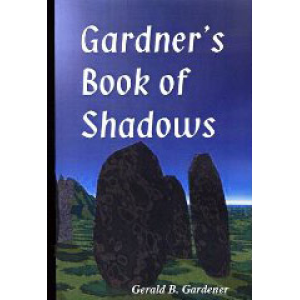
The Garnerian Book Of Shadows

The Garnerian Book Of Shadows Cover

Book: The Garnerian Book Of Shadows by Gerald Gardner

This is the text of the Gardnerian Book of Shadows. In one sense, this is the central sacred text of the Wicca religion. However, it is important to point out that there is no 'official' Book of Shadows. Typically each coven has a hand-written copy of a Book of Shadows, sometimes in cypher or code, which reflects its own practices and knowledge. This particular text is derived from a file posted on the Internet in the early 90s, and quotes previously published material which was known to be in use by Gardner and his group.

The book of shadows was attributed by Gardner to an ancient, clandestine witch cult, which he claimed to have been initiated into. However, modern researchers have concluded that it was composed by Gardner. The text shows influences from English and Celtic Folk-lore, the Enochian system of John Dee, Thelema, the Golden Dawn, Stregaria, Tantric Yoga, the KJV Bible and even Kipling. This version organizes the material in chronological order and has estimated dates for each section, ranging from 1949 to 1961.

The copyright status of this text can best be described as 'orphaned.' This version was compiled by Aidan A. Kelly. It was originally posted on the Internet in the mid-90s as part of the Internet book of shadows material. Text in square brackets is Kelly's commentary.

Download Gerald Gardner's eBook: The Garnerian Book Of Shadows

Free eBooks (Can Be Downloaded):

Franz Bardon - The Golden Book Of Wisdom
Sasha Fierce - The Book Of Shadows
Sekhet Sophia - The Alexandrian Book Of Shadows
Gerald Gardner - The Garnerian Book Of Shadows

The Sword Of Moses An Ancient Hebrew Aramaic Book Of Magic

The Sword Of Moses An Ancient Hebrew Aramaic Book Of Magic Cover

Book: The Sword Of Moses An Ancient Hebrew Aramaic Book Of Magic by Moses Gaster

Sword of Moses (originaly SEPHER REZIAL HEMELAK - The Book of the Angel Rezial) - RARE 19th century edition was printed in Yozefof in 1873, it is a tall hardback with a GORGEOUS recent Fine binding, leather spine (rich Harmatan goat) on marbled boards, THE TEXT IS COMPLETELY IN HEBREW , with lovely decorative border on title page, there are a few tiny wormholes, also four pages are trimmed at bottom (which does not affect the text at all), otherwise an unusually Nice copy, extremely attractive, tight recent binding, one full page plate plus several diagrams of ancient Hebrew talismans.

This is the famous magical Hebrew grimoire text, sometime called The Sefer Razial or Raziel, and according to Hebrew legend, the Sepher Raziel was presented to Adam in the Garden of Eden, given by the hand of God and delivered by the angel Rezial. The myth suggests that this is the first book ever written, and of direct divine provenance. A diverse compendium of ancient Hebrew magical lore, this book was quite possibly the original source for later, traditional literature on angelic hierarchy, astrology, Qabalah and Gematria. Moses Gaster mentions this in his introduction to the Sword of Moses (1896) suggesting that the Sepher Rezial could be a primary source for many magic and qabalistic books of the Middle Ages. Sepher Rezial Hemelach is a compilation of five books, being The Book of the Vestment, The Book of the Great Rezial, The Holy Names, The Book of the Mysteries (Sepher HaRazim), and The Book of the Signs of the Zodiac. It includes extensive explanatory text on the holy names of God, the divisions of Heaven and Hell, the names and hierarchy of the angels and spirits, as well as symbolic intepretations of both the Book of Genesis and Sepher Yetzirah. It also includes material on astronomy, astrology, Gematria and various magical talismans, most notably those used for protection during childbirth.

Of interest to students of the occult, kabbalah ( qabala - qabalah ) and ritual magic, also the works of Arthur Edward Waite, Eliphas Levi and Aleister Crowley.

Download Moses Gaster's eBook: The Sword Of Moses An Ancient Hebrew Aramaic Book Of Magic

Free eBooks (Can Be Downloaded):

William Butler Yeats - The Secret Rose And Rosa Alchemica
Eliphas Levi - The Doctrine Of Transcendental Magic
Lincoln Order Of Neuromancers - Apikorsus An Essay On The Diverse Practices Of Chaos Magick
Lisa Mcsherry - The Alchemy Of Abundance Practical Money Magic
Moses Gaster - The Sword Of Moses An Ancient Hebrew Aramaic Book Of Magic

Biddy Early Biography

Biddy Early Biography Cover Biddy Early was a famous Irish seer and healer, a cunning woman of the nineteenth century, often identified as Biddy 'The Healer', 'The Wise Woman' or 'The Witch'. Much of what is known about her has been passed down from oral tradition and blended into myth and folklore, as such, there is much “poetic licence” used to recount her life. However, in real life she does seem to have had some genuine powers of healing and clairvoyance, for she was widely consulted for her cures and council. Many believed she was of the sidhe (fairies).

Born Bridget Ellen Connors in lower Faha near Kilanena in 1798, Biddy was the daughter of a small land farmer, John Thomas Connors and his wife Ellen Early. Biddy is described as being small in statue and pretty, a woman who kept her good looks throughout her life. While married four times, she always used her mother's maiden name, believing that her gifts were inherited through the female line. Her mother taught her all about herbs and how to make potions, just as her own mother had taught her.

At the age of 16 when her parents died, Biddy was evicted from their home and forced to work as a serving girl in the nearby towns of Feakle and Ennis. In 1817 she met and married widower Pat Mally, a middle-aged man from Gurteenreagh, who died a short time later. After the death of her first husband, she married his son, her “stepson”, John Mally with whom she had a son called Paddy. Her son Paddy died when he was just 8 years old, of the fever (typhus), a common sickness in those times. After which Biddy started to use her healing powers, giving out herbal cures tied-up in small sachets, and liquid potions in small bottles with strict instructions for how they should be used.

Biddy’s powers of clairvoyance are credited to a mysterious dark bottle. How this “magic” bottle came into her possession, has since become part of her myth and legend. Some believe her late husband Pat Mally gave it to her before he died, or her son before he died; others believe it came to her from the “sidhe” (fairies). There are some stories that say she was away with the sidhe, and went to live among them for a time as a child. As a little girl it was said she could see and talk to the sidhe in their own language, which was different from Gaelic and that they taught her how to use her gifts.

She was instructed that by looking into the bottle with one eye and keeping the other eye open, she would be able to see what ailed people and view the future. In exchange for this ability, she was never to charge money for her services, or she would lose the power. She could accept gifts, but was to give away whatever was left over from her own needs. She must never allow others to look into the bottle, or else they would either die or go mad. By using the bottle, Biddy always knew when a person was about to visit her, and whether they had gone to a doctor or a priest first. If they had, then she usually refused to treat them unless she was in a good mood.

In 1840, her second husband died of a liver ailment, most likely due to an excess consumption of alcohol. Biddy quickly married again, her third husband was Tom Flannery from Carrowroe in County Clare. She and Tom moved into a cottage on Dromore Hill in Kilbarron, overlooking Kilbarron Lake that locally became known as Biddy Early's Lake. By this time Biddy’s reputation as a healer and seer had spread, for it was here that she created her most powerful cures, and hundreds of people came to seek her out. It is said the road to her house was always full of those traveling to see her.

Biddy also brought relief to animals, and treated them with great care. In her time, the death of an animal could bring particular hardship to people living in a mainly rural farming community. Animals were relyed upon for everyday living, and to lose one could lead to eviction if farming chores were not compelted. Many of the stories about Biddy include tales of her healing a family’s most important horse or cow. She also helped many people restore their wells, often the only source of clean water, to solve problems that women ran into while churning butter. Water and butter were also vital to a peasant’s everyday life.

During the nineteenth century, superstitious belief in fairies and all things apparently supernatural was very strong, and when something happened that appeared to be miraculous, without the aid of the church, it was commonly and easily attributed to witchcraft and the devil. As such the local church viewed Biddy with suspicion, and all the local clergy were totally opposed to her. As her fame spread they even tried to warn off people who went to visit her. One story of the churches opposition occurred in 1865. While visiting friends in Ennis, Biddy was charged with Witchcraft under the 1586 statute, however the case was dismissed due to a lack of sufficient evidence. Many of the local people stood their ground against the clergy, maintaining she did nothing but good works.

In 1868, her third husband Tom died, but Biddy now seventy years old, still only looked fifty, and a year later married her fourth husband Thomas Meaney. However he too got sick and died within the year. Many believed her husbands all died from alcohol abuse, as there was so much whiskey and other strong liquors brought to her in payment. Her husbands did not need to work as she herself provided everything through her healing work. After her last husband died, Biddy’s own health slowly deteriorated, she died in April 1874 with a rosary around her neck and her mysterious dark bottle wrapped in a red shawl beside her.

Before her death and despite their differences, Biddy had befriended one of the local priests and asked him not to let her bottle fall into the wrong hands when she died. According to her wishes, the priest took the bottle and hurled it into Kilbarron Lake. Since then, such was the belief in Biddy’s legend, many attempts to trawl the lake in search of the bottle have been made, but to this day it has never been found.

Free eBooks (Can Be Downloaded):

Michael Prescott - Darklore
Anonymous - The Legal Basis For Wicca
Janus Lacinius Therapus - The New Pearl Of Great Price.pdf
Saturday, October 2, 2010

Secrets Of The Black Temple

Secrets Of The Black Temple Cover

Book: Secrets Of The Black Temple by Basil Crouch

Warning this book can be dangerous. Persons in ill health or suffering any mental illness should not have access to this book. Be warned this is a not fiction book it can lead into dark waters if the instructions are not followed. I cannot be help responsible for any damage or ill health through reading this book. You alone are responsible for your actions (Basil E. Crouch)

Download Basil Crouch's eBook: Secrets Of The Black Temple

Free eBooks (Can Be Downloaded):

Opus Majus - The Book Of The Black Serpent
Walter Gibson - Witchcraft A History Of The Black Art
Carroll Runyon - The Secret Of The Dark Mirror
Basil Crouch - Secrets Of The Black Temple

Sefer Ha Zohar Idra Zuta Qadusha Lesser Holy Assembly

Sefer Ha Zohar Idra Zuta Qadusha Lesser Holy Assembly Cover

Book: Sefer Ha Zohar Idra Zuta Qadusha Lesser Holy Assembly by Rabbi Shimon Bar Yochai

Idra Zuta Qadusha (Lesser Holy Assembly), or simply Idra Zuta - the next layer of the core of the five-volume mystical exegesis Sefer HaZohar.

The Sefer HaZohar (Book of Splendor, often referred to simply as "the Zohar") is a five-volume mystical exegesis written in Rashi Aramaic on the five books of the Torah. Like the Sefer Yetzirah, the date and original author of the Zohar are subjects for academic debate. Many qabalistic scholars, such as Gershom Scholem, believe the Zohar to be a new work produced by Moses De Leon, circa 1250 CE in Spain.Scholem, Gershom. Kabbalah, Keter Publishing, Jerusalem, 1974. Others believe that it was dictated by its pivotal figure Rabbi Shimeon Ben Yochai to his son Rabbi Abba in the first century CE, while they and their group of rabbis hid in caves for thirteen years in Piquin, Israel to avoid Roman persecution. Hence, there are also those who would take the intermediary position that De Leon redacted and published a work that had a much earlier time of origin.

The Sefer HaZohar is central to Kabbala that has influenced all mystical movements within Judaism. Many Kabbalists invest it with a sanctity normally accorded only to the Torah and the Talmud. Written mostly in Aramaic, it is believed to be mainly the work of Moses de Leon. The main part of the Zohar provides a mystical and symbolic interpretation of biblical texts, especially the Torah, the book of Ruth, and the Song of Solomon. Other sections deal with the mystery of creation, the problem of evil, and the cosmic significance of prayer and good deeds.

The text of the Zohar is presented as a series of dialogues among a group of rabbis. These rabbis were the embodiments of the various Sefiroth (spheres) on the Tree of Life (see Diagram). Hence, the "flavor" of the respective Sefirah (sphere) colors each rabbi's remarks and questions. Like the Sefer Yetzirah, the Zohar has its own distinct set of names for the Sefiroth, most of which come from the Sefer HaShmoth, and are later echoed in the Torah and Ketuvim (Writings). Those names may be described as various qualities of the Divine, such as Wisdom, Beauty, Glory, and Mercy. The Zoharic names for the Sefiroth are the most commonly known and used among all types of Qabalists.

The body of the five volumes of the Zohar emanates from a core of three extraordinary texts. The innermost layer and heart of the Zohar is a small text called the Sifra Detzniyutha (Book of THAT Which is Concealed). This book contains the single greatest exposition on the negatively existent Mysterious Unknown (called Ayn, and also "The NOT") among all written works of the Mystical Qabalah. The next layer of the core of the Zohar is a text called Idra Rabba Qadusha (Greater Holy Assembly), or simply Idra Rabba; and the third layer of the core is called Idra Zuta Qadusha (Lesser Holy Assembly), or simply Idra Zuta. The Idra Rabba and Idra Zuta expand greatly upon the anthropomorphic allusions introduced in the Sifra Detzniyutha. The "Greater Holy Assembly" is the entire Tree of ten Sefiroth. The "Lesser Holy Assembly" is the upper seven Sefiroth only.

Download Rabbi Shimon Bar Yochai's eBook: Sefer Ha Zohar Idra Zuta Qadusha Lesser Holy Assembly

Free eBooks (Can Be Downloaded):

Solomonic Grimoires - Lemegeton I The Lesser Key Of Solomon Goetia
Aleister Crowley - Liber 017 Fake Liber Iao Or The Book Of Holy Kisses
Rabbi Shimon Bar Yochai - Sefer Ha Zohar Sifra Detzniyutha Book Of That Which Is Concealed
Rabbi Shimon Bar Yochai - Sefer Ha Zohar Idra Rabba Qadusha Greater Holy Assembly
Rabbi Shimon Bar Yochai - Sefer Ha Zohar Idra Zuta Qadusha Lesser Holy Assembly

Thursday, September 30, 2010

Of Occult Philosophy Or Of Magical Ceremonies The Book Iv

Of Occult Philosophy Or Of Magical Ceremonies The Book Iv Cover

Book: Of Occult Philosophy Or Of Magical Ceremonies The Book Iv by Henry Cornelius Agrippa

Of Occult philosophy Or Of Magical Ceremonies The Book IV of The Three Book of Occult Philosphy by Henry Cornelius Agrippa

The Three Book of Occult Philosphy purports to be the work of Henry Agrippa, the 16th century author of "Three Books of Occult Philosophy". But the 4th Book was obviously not written by Agrippa and bears no resemblance to his style of writing. Although it can be traced back to the 16th century as it is mentioned by Agrippa's student, Johann Weyer in his "De Praestigiis Daemonum", the work remains of uncertain provencance.

In part a partial summary of some of Agrippa's writings, this facsimile of the English translation by the 17th century Cambridge scholar Robert Turner, comprises spurious essays on Geomancy and Magick under the name of Agrippa, The Heptameron of Peter of Abano, and books on Astrology and Demonolgy, concluding with the Arbatel, a largely Judeo-Christian outlook on the dangers of magic.

It is a very quick and easy read, despite the portions dealing with Geomancy and Astrology that even those serious about such subjects would find largely frustrating and incomprehensible.

The work largely remains of pure historical interest with not much of serious substance to an undertanding of Magic and Occult Philiosphy.

This volume is a facsimile of Robert Turner's English translation (1654); the original volume first appeared (in Latin) in Marburg around 1554. The original volume included a large number of short texts of varying interest, but Robert Turner's (1654) (for unclear reasons) decided only to translate a few of them. This edition includes 6 short texts: Of Geomancy (H.C. Agrippa); Of Occult philosophy the Three Book (pseudo-Agrippa); Heptameron or Magical Elements (pseudo-Peter de Abano); Isagoge: An Introductory Discourse on the Nature of ... Spirits... (Georg Pictorius Villinganus); Of Astronomical Geomancy (Gerard of Cremona); and the Anonymous Arbatel of Magic. Only the Geomancy is actually by Agrippa, and it doesn't fit well with the other texts. The Three Book is, as another reviewer noted, certainly spurious; it purports to be Agrippa's "secret key" to the Occult Philosophy, of which he spoke in a letter to a friend. The Heptameron and the Arbatel are grimoires of some interest for those interested in black magic, as indeed is the Three Book itself; the Isagoge is a rather dull dialogue about spirits; and the Astronomical Geomancy is more or less impenetrable but perhaps interesting in a peculiar way. There have been a number of reprints of this volume, some now surprisingly valuable despite their modernity; all, however, have trimmed out one or more of the already few texts. As such, this is probably the best edition available. It is, like all Kessinger products, a cheaply-bound xerox facsimile of the original 17th-century text, but it's readable and includes everything. If you collect grimoires or magical texts, this is a very famous one, and you ought to have it; copies of the various Latin printings turn up with some regularity, and those with access to Latin would do better with those, although they are of course quite expensive. If you're looking for works by Agrippa, the Geomancy is all you'll find here, but it's interesting in a number of respects. If you want to know about Agrippa's ceremonial magic, however, you need to read book 3 of the Occult Philosophy, available in a nice Llewellyn edition.

Download Henry Cornelius Agrippa's eBook: Of Occult Philosophy Or Of Magical Ceremonies The Book Iv

Free eBooks (Can Be Downloaded):

Henry Cornelius Agrippa - Occult Philosophy And Magick Book Iii
Henry Cornelius Agrippa - Occult Philosophy And Magick Book Ii
Henry Cornelius Agrippa - Occult Philosophy And Magick Book I
Henry Cornelius Agrippa - Occult Philosophy And Magick Book Iv
Henry Cornelius Agrippa - Of Occult Philosophy Or Of Magical Ceremonies The Book Iv

The Sacred Magic Of Abramelin The Mage Book 3

The Sacred Magic Of Abramelin The Mage Book 3 Cover

Book: The Sacred Magic Of Abramelin The Mage Book 3 by Abramelin The Mage

Volume III of The Book of the Sacred Magic of Abramelin the Mage.

The Book of Abramelin tells the story of an Egyptian mage named Abramelin, or Abra-Melin, who taught a system of magic to Abraham of Worms, a German Jew presumed to have lived from c.1362 - c.1458. The system of magic from this book regained popularity in the 19th and 20th centuries due to the efforts of Mathers' translation, The Book of the Sacred Magic of Abramelin the Mage, its import within the Hermetic Order of the Golden Dawn, and later within the mystical system of Thelema (created in 1904 by Aleister Crowley).

Unfortunately, Mathers used the least-reliable manuscript copy as the basis for his translation, and it contains many errors and omissions. The later English translation by Georg Dehn and Steven Guth, based on the earliest and most complete sources, is more scholarly and comprehensive. Dehn attributed authorship of The Book of Abramelin to Rabbi Yaakov Moelin (Hebrew ca. 1365–1427), a German Jewish Talmudist.

Structure of the book

The grimoire is framed as a sort of epistolary novel or autobiography in which Abraham of Worms describes his journey from Germany to Egypt and reveals Abramelin's magical and Kabbalistic secrets to his son Lamech. Internally the text dates itself to the year 1458.

The story involves Abraham of Worms passing his magical and Kabbalistic secrets on to his son, and tells how he acquired his knowledge. Abraham recounts how he found Abramelin The Mage living in the desert outside an Egyptian town, Arachi or Araki, which borders the Nile. Abramelin's home sat atop a small hill surrounded by trees. He was an Egyptian mage and taught a powerful form of Kabbalistic magic to Abraham. He was a "venerable aged man", and very courteous and kind. He discussed nothing but "the Fear of God", leading a well-regulated life, and the evils of the "acquisition of riches and goods."

Abramelin extracted a promise from Abraham that he would give up his "false dogmas" and live "in the Way and Law of the Lord." He then gave Abraham two manuscript books to copy for himself, asking for ten gold florins, which he took with the intention of distributing to seventy-two poor persons in Arachi. Upon his return fifteen days later, after having disposed of the payment money, Abramelin extracted an oath from Abraham to "serve and fear" the Lord, and to "live and die in His most Holy Law." After this, Abramelin gave Abraham the "Divine Science" and "True Magic" embedded within the two manuscripts, which he was to follow and give to only those whom he knew well.

Origin of the manuscript

The book exists in the form of six manuscripts and an early printed edition. The provenance of the text has not been definitively identified. The earliest manuscripts are two versions that date from about 1608, are written in German and are now found in Wolfenbuttel Another two manuscripts are in Dresden, and date from about 1700 and 1750 respectively.

The first printed version, also in German, dates to 1725 and was printed in Cologne by Peter Hammer. A partial copy in Hebrew is found in the Bodleian Library in Oxford, and dates from around 1740. A manuscript copy existed in French in the Bibliotheque de l'Arsenal in Paris, an institution founded in 1797. The French copy has since disappeared, but is available on microfilm.

All German copies of the text consist of four books: an autobiographical account of the travels of Abraham of Worms to Egypt, a book of assorted materials from the corpus of the practical Kabbalah (including some which is duplicated in the German-Jewish grimoire called "The Sixth and 7th Books of Moses") and the two books of magic given by Abramelin to Abraham. The well-known English translation by S.L. MacGregor Mathers from the French Manuscript in Paris contains only three of the four books. The Hebrew version in Oxford is limited to Book One, without reference to the further books.

Of all the extant sources, the German manuscripts in Wolfenbuttel and Dresden are taken by scholars to be the authoritative texts. According to respected Kabbalah scholar Gershom Scholem, the Hebrew version in Oxford was translated into Hebrew from German. An analysis of the spelling and language usage in the French manuscript indicates that it dates to the 18th century, and that it was also likely copied from a German original. Although the author quotes from the Jewish Book of Psalms, the version given is not from the Hebrew; rather, it is from the Latin Vulgate, a translation of the Bible employed by Roman Catholics at that time.

The German esoteric scholar Georg Dehn has argued that the author of The Book of Abramelin was Rabbi Yaakov Moelin (Hebrew 1365–1427), a German Jewish Talmudist and posek (authority on Jewish law). (ref Georg Dehn, The Book of Abramelin: A New Translation, transl. by Steven Guth, Ibis Publishing, 2006)

Magic word squares

The practical magic of Abramelin (found in both Book III of the French text, and Book IV of the German original) centers around a set of talismans composed of magic word squares. These are similar to traditional magic squares, though the latter are usually composed of numbers, while Abramelin's squares contain letters. Commonly word squares are used as puzzles or as teaching aids for students. In the context of Abramelin, the focus becomes mystical—so that each square should contain words or names that relate to the magical goal of the square. A parallel is found in the famous Sator Arepo Tenet Opera Rotas word square, an altered version of which is also found among Abramelin's squares.

For example, a square entitled "To walk under water for as long as you want" contains the word MAIAM, the Hebrew and Arabic word for "water". A square for recovering treasures of jewelry begins with the word TIPHARAH (a variant of Tiferet), which can mean "golden ring" in Hebrew and is also the name of the sphere of "Beauty" on the Kabbalistic Tree of Life.

Download Abramelin The Mage's eBook: The Sacred Magic Of Abramelin The Mage Book 3

Free eBooks (Can Be Downloaded):

Aleister Crowley - The Sixth Chakra Of The Human Body
Manly Palmer Hall - The Secret Teachings Of All Ages
Solomonic Grimoires - The Magic Of Armadel
Abramelin The Mage - The Sacred Magic Of Abramelin The Mage Book 2
Abramelin The Mage - The Sacred Magic Of Abramelin The Mage Book 3

Wednesday, September 29, 2010

Historical Summary Of The European Witch Hunts

Historical  Summary Of The European Witch Hunts Cover The European witch Craze started roughly during conclusion of the 15th century and peaked during the first half of the seventeenth century. The belief that women were sinful and had the power of the devil within them developed out of the Middle Ages. The Reformation further promoted the idea of a satanic kingdom of evil on earth with which to justify persecutions. Theologians sought to prove that accused witches represented the devil.

The first and most significant written cumulative concept of witchcraft available to a large audience was the Malleus Maleficarum written by Sprenger and Kraemer. It was first published in 1486 and reprinted fourteen times before 1520. The document made an important contribution to the widespread witch hunt. Most people accused of witchcraft were rural, poor, and single women. The hunts are often seen as a massive effort to keep women in their place. Women were seen as evil, and unclean people whose weakness could summon the devil for sexual intercourse.

The Malleus Maleficarum document ignited a widespread hunt for the so-called witches described in it. During the hunt, witches were accused of "impractical" and "traceless" crimes such as intercourse with the devil, unregistered babies from hidden pregnancies who were supposedly eaten or sacrificed, and even natural disasters. However there is no record of any solid evidence for any of these accused crimes.

Often these hunts were instigated by hysterical children, or nuns who accused relatives, and neighbors of these outrageous crimes. Witnesses were often bribed or threatened in order to prosecute the accused. The accused would then be tortured until they confessed. The methods of torture were very cruel and painful, and almost all who were put through the various devices would confess. In some cases the accused would die of torture, and very few survived the ordeal without confessing. However, the accused was set free if they survived the torture without a confession. After the forced confession, the trial took place. These trials were run by genuine believers of witchcraft. The aim of the trial was to exterminate the witches as conspirators with the devil. When the accused was declared guilty, they were usually executed.

Although, there are many estimates as to how many actual people were killed during these hunts, most estimates show the number well below the one-million mark. The actual number of documented executions, is generally considered to be under one hundred thousand. Of all that were executed, only a minority were men, and of those men, many are those who tried to protect accused women from the hunters.

Free eBooks (Can Be Downloaded):

Sharynne Nicmacha - The Star Of Life A Historical And Spiritual History Of The Pentagram
Martin Van Buren Perley - A Short History Of The Salem Village Witchcraft Trials
Tuesday Lobsang Rampa - Wisdom Of The Ancients
Michael Bailey - Historical Dictionary Of Witchcraft
Charles Kirkpatrick Sharpe - A Historical Account Of The Belief In Witchcraft In Scotland

Tuesday, September 28, 2010

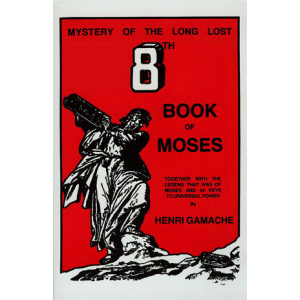
The 8th Book Of Moses

The 8th Book Of Moses Cover

Book: The 8th Book Of Moses by Ancient Grimoires

The Eighth Book of Moses, a magical treatise that otherwise has nothing to do with Moses and which is found in Greek Magical Papyrus (PGM) xiii in two versions. The end of this papyrus also mentions the "Hidden Book of Moses Concerning the Great Name," which may be another lost Moses work.

Download Ancient Grimoires's eBook: The 8th Book Of Moses

Free eBooks (Can Be Downloaded):

Solomonic Grimoires - The Book Of Secrets
Ancient Grimoires - The 6th And 7th Book Of Moses
Ancient Grimoires - The 8th Book Of Moses

Monday, September 27, 2010

Moon Eclipses

Moon Eclipses Cover A lunar eclipse occurs whenever the moon passes through some portion of the Earth’s shadow. This can only occur when the Sun, Earth and Moon are aligned exactly, or very closely, with the Earth in the middle. As such there is always a Full Moon on the night of a lunar eclipse. Every year there are at least two partial lunar eclipses, while total eclipses are much less common. The type and length of an eclipse depends upon the moon’s location relative to its orbit of the earth. As of writing this article the most recent total eclipse occurred on the 21st February 2008. The next eclipse, allbeit a partial one, will occur on the 16th August 2008. The next total eclipse is due on the 21st December 2010. Unlike a solar eclipse, which can only be seen from a number of small areas around the world, a lunar eclipse can be seen from anywhere on the night side of the Earth.

Free eBooks (Can Be Downloaded):

Charlotte Fell Smith - John Dee
Charles Baize - Pagan Scriptures
Nicolas Schreck - Demons Of The Flesh

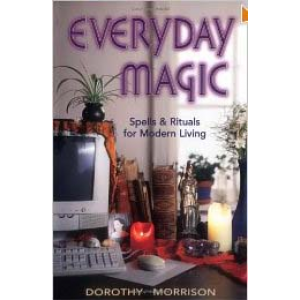
Everyday Magic Spells And Rituals For Modern Living

Everyday Magic Spells And Rituals For Modern Living Cover

Book: Everyday Magic Spells And Rituals For Modern Living by Dorothy Morrison

Is it time for a change? Is it time to improve your life with a better job, a happier home, or more romance? Then you need Everyday Magic by Dorothy Morrison! This is magic for modern Wiccans, and for everyone regardless of their religious affiliation. It is filled with hundreds of spells, chants, rituals, charms and formulas for incenses and oils. Every one is tested and powerful yet easy to use.

Everyday Magic is a well written book and it fit into my everyday living just as if it had been written for me personally. The modern day methods of dealing with the "old ways" of the craft amazed me. To go to a thrift store and pick up a cheap blender instead of trying to do so many herbal blends with the mortar. I was so mermerized with so many of Dorothy's modern gimmicks. Being able to improvise has always been big with me, Dorothy seems to do the same in her book.

Sure, there are spells for romance and prosperity. Those are as important today as they were a thousand years ago. But this book also presents magic that deals with today's problems. Speed up your computer's modem. Make sure your luggage arrives safely; ease labor pains; free yourself from anger; find a parking spot. These are all things we need and that you can do by following the simple instructions in this book!

One of the roadblocks to successful magical workings that many people face is finding the proper oils and incenses. Morrison's solution: Make them yourself! But don't use the old techniques that take hours, days, or even weeks to accomplish. Instead, you'll learn how to use common appliances such as a drip coffee maker, a blender, and a crock pot to create your own powerful incenses, oils, washes, brews, and more. What a practical timesaver!

And saving time in today's world is what this book is all about. Of course, if the spells, charms, rituals and techniques weren't practical and effective, saving time would be meaningless. Well, what you'll learn here is powerful -- and is presented by a woman who has been a Witch for more than 20 years and taught on two continents!

Dorothy Morrison has a daring point of view that magic is not just compatible with technology--the two can actually help one another. Since technology has made our lives more productive, surely it can enhance our magic too. (Have you ever thought of making your herbal infusions in an automatic-drip coffeemaker?) Technological assistance with magic is only part of the story. Morrison has filled a grimoire with charms that protect from car trouble and ensure the safe and timely arrival of luggage while traveling, and spells to keep a computer from crashing, which makes life in the 20th century a little less harrowing. Rather than fighting the progress of the electronic age, Morrison has tapped into the wealth it has to offer, and she shares her discoveries with anyone adventurous enough to try them.

The spells and rituals in here are all based on today's available materials. Trying to find something called dragon's blood was not easy for me. In this book, Dorothy makes it all so simple and still so effective. Spells of interest to the modern twentieth century housemate and businessperson. Spells and rituals that make so much sense and are so easily adaptable for my and others active lives.

I recommend, as I have many times, reading this book. I have read many and find this one to my liking on a high rating of "Way to go, Dorothy Morrison"
Excellent book and will keep an eye and ear open of reports of others from D. Morrison. Age, gender, and type of path are not even a stoppage point here. For all and then some.

Buy Dorothy Morrison's book: Everyday Magic Spells And Rituals For Modern Living

Free eBooks (Can Be Downloaded):

Kveldulf Gundarsson - Teutonic Magic The Magical And Spiritual Practices Of The Germanic Peoples
Tupman Tracy Ward - Theatre Magick Aleister Crowley And Rites Of Eleusis
Richard Alan Miller - The Magical And Ritual Use Of Herbs
Talismagick - Love Spells And Rituals For Love And Relationships

Sunday, September 26, 2010

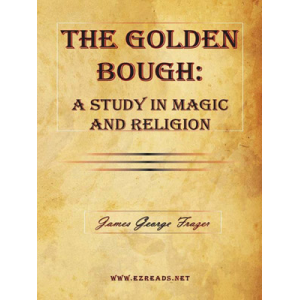
The Golden Bough A Study Of Magic And Religion

The Golden Bough A Study Of Magic And Religion Cover

Book: The Golden Bough A Study Of Magic And Religion by Sir James George Frazer

The Golden Bough: A Study in Magic and Religion is a wide-ranging, comparative study of mythology and religion, written by Scottish anthropologist Sir James George Frazer (1854–1941). It first was published in two volumes in 1890; the third edition, published 1906–15, comprised twelve volumes. It was aimed at a broad literate audience raised on tales as told in such publications as Thomas Bulfinch's The Age of Fable, or Stories of Gods and Heroes (1855). It offered a modernist approach to discussing religion, treating it dispassionately as a cultural phenomenon rather than from a theological perspective. The impact of The Golden Bough on contemporary European literature was substantial.

The book scandalized the British public upon its first publication, because it included the Christian story of Jesus in its comparative study, thus inviting an agnostic reading of the Lamb of God as a relic of a pagan religion. Frazer removed his analysis of the Crucifixion to a speculative appendix for the third edition, and it was entirely missing from the single-volume abridged edition.

Its influence on the emerging discipline of anthropology was pervasive and undeniable. For example, Bronislaw Malinowski, stricken with tuberculosis shortly after receiving his doctorate in physics and mathematics, read Frazer's work in the original English to distract himself from his illness. "No sooner had I read this great work than I became immersed in it and enslaved by it. I realized then that anthropology, as presented by Sir James Frazer, is a great science, worthy of as much devotion as any of her elder and more exact studies and I became bound to the service of Frazerian anthropology."

Despite whatever controversy the work may have generated, and its critical reception amongst other scholars, The Golden Bough had a tremendous effect on the literature of the period. Robert Graves adapted Frazer's concept of the dying king who is sacrificed for the good of the kingdom to the romantic idea of the poet's necessary suffering for the sake of his Muse-Goddess in his Frazer-esque book on poetry, rituals, and myths, The White Goddess, which was published in 1948. William Butler Yeats makes reference to it in his poem, "Sailing to Byzantium." H. P. Lovecraft mentions the book in his short story "The Call of Cthulhu." T. S. Eliot acknowledged indebtedness to Frazer in his first note to his poem The Waste Land. William Carlos Williams references it as well in Book Two, part two, of his extended poem in five books, Paterson. James Joyce, Ernest Hemingway, D. H. Lawrence, Aleister Crowley, Ezra Pound, Mary Renault, Joseph Campbell, Naomi Mitchison (in her The Corn King and the Spring Queen), and Camille Paglia are but a few authors deeply influenced by The Golden Bough. Its literary impact has given it continued life, even as its direct influence in anthropology has waned.

Download Sir James George Frazer's eBook: The Golden Bough A Study Of Magic And Religion

Free eBooks (Can Be Downloaded):

Lynn Thorndike - A History Of Magic And Experimental Science
Robert Ellwood - The Encyclopedia Of World Religions
Susan Greenwood - The Nature Of Magic An Anthropology Of Consciousness
Don Karr - The Study Of Solomonic Magic In English
Sir James George Frazer - The Golden Bough A Study Of Magic And Religion

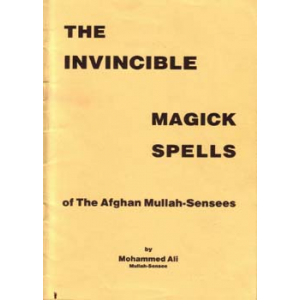
Invincible Magick Spells Of The Afghan Mullah Sensees

Invincible Magick Spells Of The Afghan Mullah Sensees Cover

Book: Invincible Magick Spells Of The Afghan Mullah Sensees by Muhammad Ibn Arabi

All the spells and signs are from the mountains of Afghanistan and the surrounding areas. All have been handed down from generation to generation, student to student. All are in their original form and have not been translated or altered so as to preserve the originality and power.

Download Muhammad Ibn Arabi's eBook: Invincible Magick Spells Of The Afghan Mullah Sensees

Free eBooks (Can Be Downloaded):

Peter Carroll - The Magical Pact Of The Illuminnates Of Thanateros
Medieval Grimoires - The Black Pullet Or The Hen With The Golden Eggs
Mcgiolla Cathain - Secret Magic Spells Of The Romany Gypsies
Muhammad Ibn Arabi - Invincible Magick Spells Of The Afghan Mullah Sensees

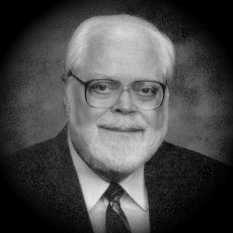
Carl Llewellyn Weschcke Biography

Carl Llewellyn Weschcke Biography Cover Carl Weschcke is president of Llewellyn Worldwide Ltd, one of the largest publishers of occult and New Age books in the world. He is also a Magician, a Tantric practitioner, a Pagan and a former Wiccan High Priest who played a leading role in the rise and spread of Wicca and Neo-Paganism in America during the 1960’s and 70’s.

Weschcke was born into a Roman Catholic family on the 10th of September 1930 in St. Paul, Minnesota. Early in his life his paternal grandfather, who at the time was vice-president of the American Theosophical Society, exposed him to metaphysics and the occult. For his 12th birthday he presented the young Weschcke with his own astrological chart, after and guided by his grandfather, he became fascinated with astronomy, religion, the occult and reincarnation. His parents were vegetarian naturalists who practiced mind reading techniques, and were happy to discuss occult subjects with him. Even one of the houses they lived in had strange and mysterious thumps and bangs in the night, which were attributed to the ghosts of the deceased former owners. Such were the influences that shaped Weschcke’s early life and future path.

Weschcke was educated at the St. Paul Academy and graduated in 1948. He then went on to study at the Babson Business Institute in Massachusetts graduating in 1951 with a Bachelor of Science degree in Business Administration. After graduating he went to work in the family’s Pharmaceutical business, but found the work unfulfilling. He had a dream of becoming a publisher, which led him back to school studying for a doctorate in philosophy at the University of Minnesota. However, his longing to get involved with publishing caused him to leave the university before completing his course, and in 1960 he purchased the little known Llewellyn Publishing Co.

The Llewellyn Publishing Co. was the brainchild of the Welsh astrologer, Lewellyn George, who founded the Llewellyn Publishing Co. in Portland, Oregon during 1901. At that time it was a small mail order business with a limited focus specializing in selling three Astrology books and Calendars. Lewellyn George later moved the company to Los Angeles where he died in 1954. Weschche purchased the business in 1960 and moved it to St. Paul in Minnesota where he began to rebuild it. He quickly expanded the business to include a complete line of books on Astrology and the Occult, and within a decade was publishing some thirty to fifty titles a year, including audio and videotapes. He also launched a series of magazines including: New Dimension, Gnostica, Astrology Now, New Times and New World.

In 1973, Weschcke helped to form and organize the 'Council of American Witches' and became its first Chairman. During his brief tenure as Chairman he drafted the now famous 'Thirteen Principles of Belief' statement, which he considers his proudest accomplishment for the Craft. The statement was later incorporated into the U.S. Army’s handbook for Chaplains. That same year his wife gave birth to their son who they named Gabriel.

By the mid-1970’s Weschcke began to wind down his public activities, feeling his publishing business was starting to stagnate. Weschcke believed his constant media publicity and its resulting attention was the cause of it, and so resolved to do something about it. Selling the haunted mansion on Summit Avenue he moved the family to the country where he could spend and devote more time to them. He restructured the business by closing the bookstore, dropping the festivals and increasing the number of book titles they were publishing. He also included computer software to his range of audio and videotapes.

The Weschckes continue to support the Wiccan and Pagan communities primarily through their publishing, and many of their Authors are sent out to organized conferences and activities. Today, most of their time is taken up by the demands of their business, which by the mid 1990’s had grown into a medium sized publishing house issuing about 100 new titles a year, spanning the general Spirituality and New Age markets. Their son Gabriel, holds a master’s degree in publishing science from Pace University, New York, and now works for the business as its regional sales manger.

Weschcke holds two honorary doctorates, one in magick, and was for a time the Grandmaster of Aurum Solis, an international magickal Order originally founded in England in 1897, but now based in St. Paul. He withdrew from the Order in 1991 and is currently not affiliated with any group. His media prominence during the 1960's and 70's did much to bring Wicca and paganism into the light of acceptability in a skeptical American society.

Free eBooks (Can Be Downloaded):

Valentina Izmirlieva - All The Names Of The Lord
Ann Moura - Green Witchcraft
Michael Night Sky - Carl Liewellyn Weschcke Bringing Magick To The Masses

Thursday, July 29, 2010

How And Why I Became A Witch

How And Why I Became A Witch Cover I created this lens to allow others to peek into the life of a typical American witch, what we do, what we are and basic beliefs. I certainly do not speak for other witches, their beliefs or opinions. We are all individuals just like anyone else. I am trying to explain (not defend) witchcraft, some facts about real witches, discuss "wanna-be witches," black and white magick, and more. I also feature recommended products, tools, music, links of interest and other information. To learn how to perform your own spells, whether you're a witch or not (it doesn't matter) visit this guide to spellcrafting for witches or non-witches.
I am a solitary witch. I am not Wiccan, per se. I have a few different beliefs but many are similar to Wicca. I really don't label myself into any particular denomination but the closest to any would be Traditional. It has taken me several years to truly believe I am most likely a Natural Witch. This doesn't make me bad or good, it just makes me who I am. This is who I was born to be.

Please feel free to question, comment or share your own stories in the comment section. Recommend your own witch, pagan or spiritual links there, too. I'd love to hear from you, witch or non-witch!

Books You Might Enjoy:

Michael Magee - Robin Hood And The Witches
Anton Szandor Lavey - The Satanic Rituals
Howard Phillips Lovecraft - Cults Of Cthulhu
Ann Moura - Green Witchcraft

Wednesday, July 21, 2010

The Witch Hunter Baedeker

The Witch Hunter Baedeker Cover Meanwhile, witch-hunters' manuals multiplied, most notably the infamous Malleus Maleficarum (Hammer of Witches), published in 1486. Its authors, Jacob Sprenger and Heinrich Kraemer, were experienced Dominican inquisitors who had burned 48 witches in one diocese alone and had obtained a papal bull approving their mission. Reversing the old principle of the Canon Episcopi, Sprenger and Kraemer proclaimed that not believing in the reality of witches was heresy. Witches regularly did physical as well as spiritual harm to others, they wrote, and allegiance to the devil defined witchcraft. Sprenger and Kraemer exhorted secular authorities to fight witches by any means necessary.

Malleus Maleficarum (notice the feminine possessive of "witches") was a vicious misogynist tract. It depicted women as the sexual playmates of Satan, declaring: "All witchcraft comes from carnal lust, which is in women insatiable." Ironically, Sprenger also had a deep devotion to Mary. He helped to shape the modern rosary and founded the first rosary confraternity.

Malleus Maleficarum did not cover its ground completely, failing to discuss the actual pact that witches made with the devil, the sabbat, familiars (imps in animal form who aided witches), and night-flying. But those elements did not always appear in witchcraft cases. By itself, the Malleus started no new witch-panics, but it was freely used by later witchcraft writers, Protestant and Catholic alike. The Spanish inquisitors were nearly alone in scoffing at its lack of sophistication.

The demonologists who absorbed the Malleus were highly cultured men, such as the Protestant Jean Bodin, "the Aristotle of the 16th century," and his contemporary, the Jesuit classicist Martin del Rio. Those theoreticians pounded home the principle of the crimen exceptum: Because witchcraft was so vile an offense, accused witches had no legal rights. "Not one witch in a million would be accused or punished," Bodin boasted, "if the procedure were governed by ordinary rules." Anyone who defended accused witches or denied their crimes deserved the same punishment as witches, Bodin wrote.

Socially elite persecutors, demonologists, and judges relentlessly hunted witches with the zeal of modern revolutionaries pursuing a political utopia. No cost was too great, because witch-hunting served the greater good of Christendom, in their view. They believed that witchcraft inverted society's key values, disturbed godly order, challenged the divine right of kings -- the ancient doctrine that rulers derive their right to rule from God -- and diminished the majesty of God. It was thought that witch-hunting saved souls and averted the wrath of God by purging society of evil as the End Times loomed.

Commoners, by contrast, simply wanted relief from the evildoers of folklore who, they believed, were harming them, their children, their cattle, and their crops. It was grassroots complaints that started most witch-hunts. If authorities were too slow to act, peasants were capable of lynching suspected neighbors.

Although maleficium -- physical harm -- loomed much larger than diabolism in common people's accusations against suspected witches, their folk beliefs cross-fertilized the learned ones of Bodin and others in complex ways. Through sermons, gossip, trial accounts, and luridly illustrated "witch-books" (especially popular in Germany), everyone learned what witches did and how to detect them.


Books You Might Enjoy:

Aleister Crowley - The Sixth Chakra Of The Human Body
Louise Huebner - Witchcraft For All
Aleister Crowley - The Winged Beetle
Tarostar - The Witchs Spellcraft Revised
Margaret Alice Murray - The Witch Cult In Western Europe

Saturday, July 17, 2010

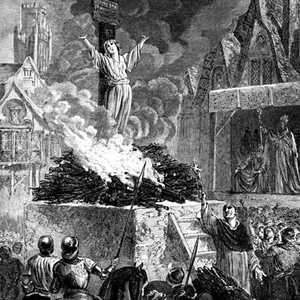
Joan Of Arc Witch And Heretic

Joan Of Arc Witch And Heretic Cover Although accusations of witchcraft seem to have been most commonly made against older women who lived on the margins of society and who may have become socially troublesome, there is also evidence that women who were too powerful could become targets as well. Joan of Arc is one famous example of a woman who achieved a great deal but was then burned as a witch for her trouble.

Joan of Arc, who has become the patron saint of France, was a peasant girl who experienced mystical visions of St. Michael, St. Catherine, and St. Margaret during the Hundred Years War which convinced her that she was destined by God to lead the French to victory over the English invaders.

In 1429 she convinced the dauphin Charles VII to let her demonstrate that she had the ability to match her ambitions and she led French forces to liberate the city of Orleans from an English siege. She was eventually taken prisoner by the Burgundians, allies of England, and turned over to the English who burned her at the stake as a witch on the argument that her claims of direct communication with God were heretical and an act of disobedience to the Church.

Not until June 16, 1456, did Pope Callistus III declare Joan of Arc to be innocent on the charges of heresy and witchcraft. It can be difficult for powerful institutions to admit error of any sort, but especially when the errors involve grave injustices that cause the suffering and death of innocent people. Everyone likes to think of themselves are pure of heart and doing good work, even when they are hurting others. Sometimes the need to justify one's actions leads one to justifications of brutality, cruelty, and violence in general -- and thus a betrayal of whatever moral principles they thought they held to begin with.

Books You Might Enjoy:

Paul Huson - Mastering Witchcraft
Gabor Klaniczay - Witchcraft Mythologies And Persecutions
John Yarker - The Anglo Saxon Chronicle
Marian Green - A Witch Alone

How To Make A Witchs Ladder

How To Make A Witchs Ladder Cover A witch's ladder is one of those nifty things we sometimes hear about but rarely see. Its purpose is similar to that of a rosary - it's basically a tool for meditation and ritual, in which different colors are used as symbols for one's intent. It's also used as a counting tool, because in some spell workings there is a need to repeat the working a particular number of times. You can use the ladder to keep track of your count, running the feathers or beads along as you do so. Traditionally, the witch's ladder is made with red, white and black yarn, and then nine different colored feathers woven in.

Here's How:

1. Realistically speaking, it makes more sense to use yarn colors that have a significance to you and your working. Also, finding nine differently colored feathers can be tricky if you're looking for them out in the wild -- you can't just go plucking feathers from local endangered species -- and that means a trip to the craft store and some oddly tinted feathers. I'd recommend using either found feathers of any color, or something else entirely -- beads, buttons (see our discussion on the magical uses of buttons), bits of wood, shells, or other items you have around your home.

2. To make your basic witch's ladder, you'll need:
* Yarn or cord in three different colors
* Nine items that are similar in property but in different colors (nine beads, nine shells, nine buttons, etc)

Cut the yarn so that you have three different pieces in a workable length - usually a yard or so is good. Although you can use the traditional red, white and black, there's no hard and fast rule that says you must. Tie the ends of the three pieces of yarn together in a knot.

3. Begin braiding the yarn together, tying the feathers or beads into the yarn, and securing each in place with a sturdy knot. Some people like to chant or count as they braid and add the feathers. If you wish, you can say something like this variation on the traditional chant:

By knot of one, the spell's begun.
By knot of two, the magic comes true.
By knot of three, so it shall be.
By knot of four, this power is stored.
By knot of five, my will shall drive.
By knot of six, the spell I fix.
By knot of seven, the future I leaven.
By knot of eight, my will be fate.
By knot of nine, what is done is mine.

4. As the feathers are tied into knots, focus your intent and goal. As you tie the final and ninth knot, all your energy should be directed into the cords, the knots and the feathers. The energy is literally stored within the knots of the witch's ladder. When you've completed the string and added all nine feathers or beads, you can either knot the end and hang the ladder up, or you can tie the two ends together forming a circle.

If you'd like your ladder to be more like a rosary string, I'd highly recommend picking up a copy of pagan Prayer Beads by John Michael Greer and Clare Vaughn.

What You Need:

* Yarn or cord in three different colors
* 9 Feathers or other items to braid into your ladder

Books You Might Enjoy:

June Johns - King Of The Witches The World Of Alex Sanders
Heinrich Kramer - The Malleus Maleficarum Or The Witch Hammer
Tarostar - The Witchs Spellcraft Revised
Paul Huson - Mastering Witchcraft
Marian Green - A Witch Alone

Wednesday, June 30, 2010

Lemegeton Iv Ars Almadel

Lemegeton Iv Ars Almadel Cover

Book: Lemegeton Iv Ars Almadel by Solomonic Grimoires

Almadel of Solomon: The fourth book deals with the evocation of the angels of the four "Altitudes" which has been interpreted as the angels of the four cardinal points. These angels also rule the equinoctial and solstice points, the seasons, and the signs of the Zodiac.
The fourth book also introduced the Almadel a magical technique of using a wax tablet, to contact the celestial spirits. In the production of the Almadel, correct colours of the angels had to be applied to be successful.. The fourth book has a major effect upon Dr. john dee (circa 17th Century), which he developed into his renowned “Enochian” or Angelic system of magic.

Download Solomonic Grimoires's eBook: Lemegeton Iv Ars Almadel

Free eBooks (Can Be Downloaded):

Solomonic Grimoires - The Magic Of Armadel
Solomonic Grimoires - Lemegeton V Ars Nova
Solomonic Grimoires - Lemegeton Iv Ars Almadel

Saturday, June 26, 2010

The 13 Principles Of Wiccan Belief

The 13 Principles Of Wiccan Belief Cover 1.We practice rites to attune ourselves with the natural rhythm of life forces marked by the phases of the Moon and the seasonal Quarters and Cross Quarters.

2.We recognize that our intelligence gives us a unique responsibility toward our environment. We seek to live in harmony with nature in ecological balance offering fulfillment to life and consciousness within an evolutionary concept.

3.We acknowledge a depth of power far greater than that apparent to the average person. Because it is far greater than ordinary it is sometimes called ‘supernatural’, but we see it as lying within that which is naturally potential to all.

4.We conceive of the Creative Power in the universe as manifesting through polarity – as masculine and feminine – and that this same Creative Power lies in all people and functions through the interaction of the masculine and the feminine. We value neither above the other knowing each to be supportive of the other. We value sex as pleasure as the symbol and embodiment of life, and as one of the sources of energy used in magical practice and religious worship.

5.We recognize both outer worlds and inner, or psychological worlds sometimes known as the Spiritual World, the Collective Unconsciousness, the Inner Planes etc – and we see in the interaction of these two dimensions the basis for paranormal phenomena and magical exercises. We neglect neither dimension for the other, seeing both as necessary for our fulfillment.

6.We do not recognize any authoritarian hierarchy, but do honor those who teach, respect those who share their greater knowledge and wisdom, and acknowledge those who have courageously given of themselves in leadership.

7.We see religion, magick and wisdom in living as being united in the way one views the world and lives within it – a world view and philosophy of life which we identify as witchcraft – the Wiccan Way.

8.Calling oneself ‘Witch’ does not make a Witch – but neither does heredity itself, nor the collecting of titles, degrees and initiations. A Witch seek to control the forces within her/himself that make life possible in order to live wisely and without harm to others and in harmony with nature.

9.We believe in the affirmation and fulfillment of life in a continuation of evolution and development of consciousness giving meaning to the Universe we know and our personal role within it.

10.Our only animosity towards Christianity, or towards any other religion or philosophy of life, is to the extent that its institutions have claimed to be ‘the only way’ and have sought to deny freedom to others and to suppress other ways of religious practice and belief.

11. As American Witches, we are not threatened by debates on the history of the craft, the origins of various terms, the legitimacy of various aspects of different traditions. We are concerned with our present and our future.

12.We do not accept the concept of absolute evil, nor do we worship any entity known as ‘Satan’ or ‘the Devil’ as defined by Christian tradition. We do not seek power through the suffering of others, nor accept that personal benefit can be derived only by denial to another.

13.We believe that we should seek within Nature that which is contributory to our health and well-being.

Free eBooks (Can Be Downloaded):

Michael Harrison - The Roots Of Witchcraft
Anonymous - Basic Principles Of The Craft
Howard Williams - The Superstitions Of Witchcraft

Popular Posts